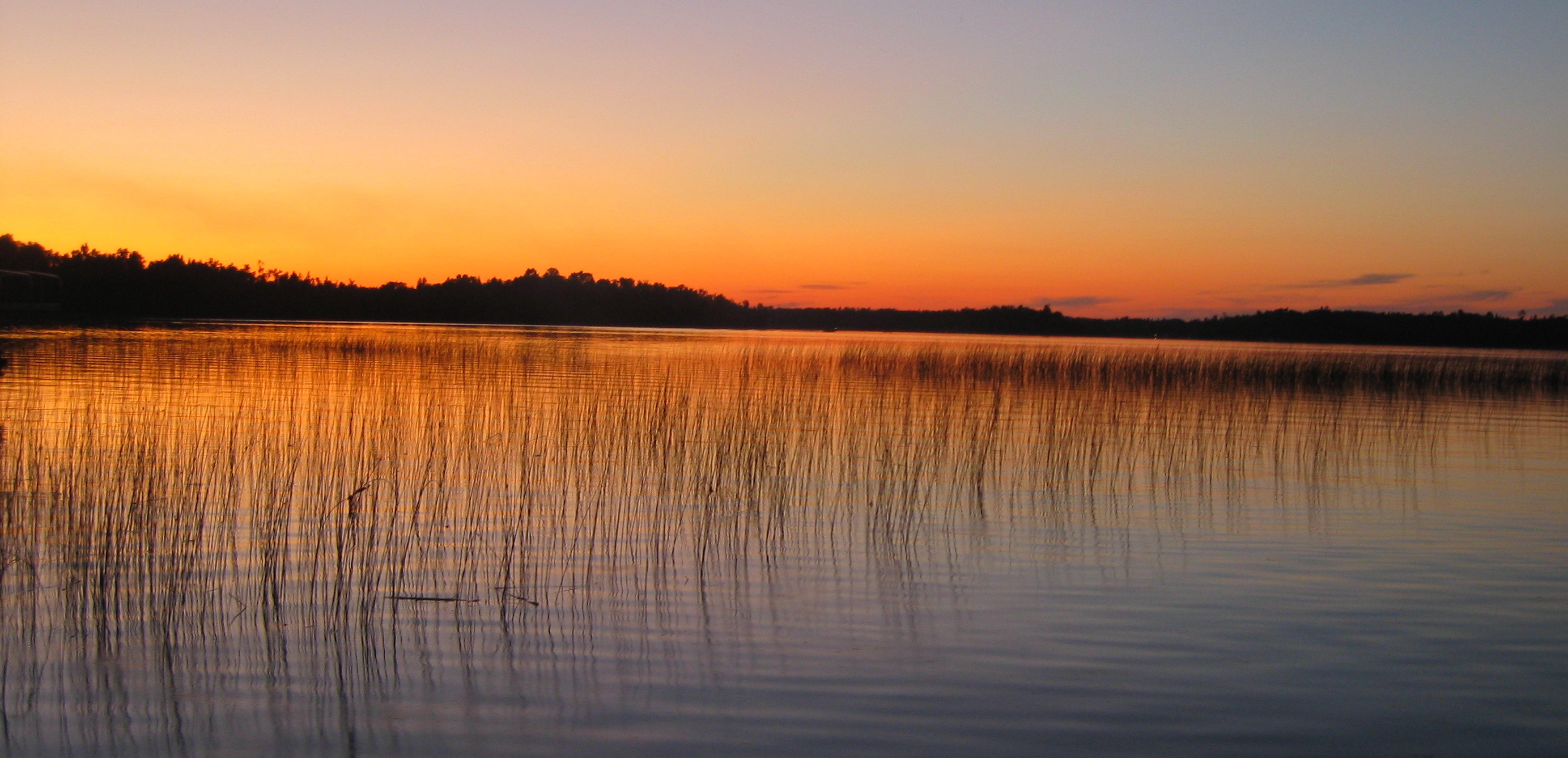
Fall at the Cabin

If it’s MEA weekend, that means a trip to the cabin, right?  Never mind that we no longer have kids in school, and want to take advantage of the teachers’ convention days off.  It is still a fall ritual.

Knowing this was coming, we debated whether to leave the water system running after our previous visit.  I don’t know if it was laziness or foresight that led us to take the risk.  After all, one can’t argue the niceties of running water.  Watching the temperatures dip to 14 degrees some nights Up North, I admit to being a bit nervous about our decision.  But all was well upon our arrival, and we did appreciate the convenience.

Late October is not the most attractive time of year at the cabin.  Fall leaves are down, grass is beginning to turn brown, skies can be gray.  But it also has its compensations.  As our son Erik said, there is good reason to keep a fire burning in the fireplace, and yet it’s not freezing cold when you step outside.  On one of our requisite hikes, our feet swished through the fallen leaves, or trampled the quieter blanket of pine needles, depending on the nature of the surrounding trees.  The lack of leaves provided greater views, exposing the environs that are usually hidden.  We saw stark evidence of the July storms that blew down vast numbers of trees in the area, and the frequency with which they were snapped mid-way down their trunk.  That left the tree tops either skirting the ground, dangling in mid-air or caught in between by other trees.  A prime example was situated right on the edge of the trail.  A huge tree was snapped in two and its top half rested on two other trees, one of which was right next to the trail.  It’s branches were trimmed to allow us to pass, but bright red plastic tape adorned the branches and announced “Killer Tree” all along its length.  We understood its meaning – its perch was precarious and the tree could easily topple unexpectedly.  We’d just never seen it so spelled out so literally!  I only wish I’d taken a picture.

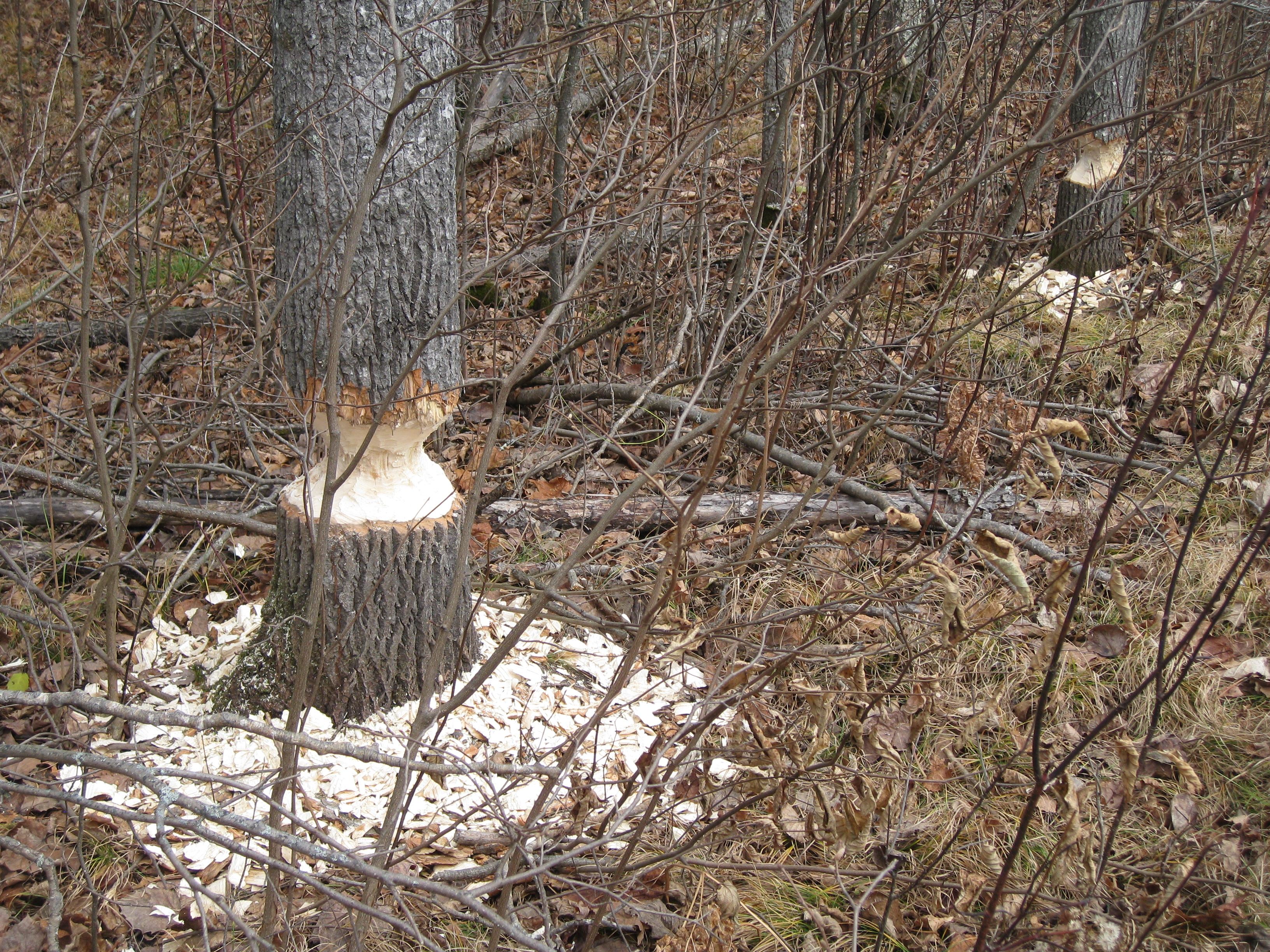
Our next  discovery was beaver territory.  We came upon an opening that was littered with trees chewed by beavers.  Some had toppled, and were further gnawed along the trunk while accessible on the ground.  Others were poised to fall, their trunks thinned to a narrow stalk.  What was so unique was how recent the activity was – the exposed wood was creamy white and the wood chips were fresh and moist.  We could see the teeth marks, and discovered that we could pull apart tree layers in the supple chips.  It wasn’t hard to spot the nearby beaver mound in the lake, and we retreated down the trail hoping to witness their activity, but the beavers declined to oblige.

At the conclusion of the weekend, it truly was time to winterize the cabin.  No point in pressing our luck further.  It was opportune to have Erik there, so Rich could show him the ropes.  Plunging into the chilly lake water to remove the water intake, laying the hoses out in the yard, and disconnecting the few pipes under the cabin.  It’s time to pass on the knowledge.  After all, we intend to keep coming for MEA weekend for years to come.

Going Above and Beyond

An honest citizen and a creative, resourceful policeman just turned a stressful situation into a happy ending.  First, I admit that I brought all this on myself.  It was a beautiful afternoon, and I headed out on a 30-mile bike ride to enjoy the nice weather.  With the fall leaves beginning to peak, I brought along my small compact camera as well as my cell phone which I always take in case of an emergency.  But I forgot to zip the little bag on the back of my bike.  Can you see where this is going?  Sure enough, when I returned home the camera and phone were missing.  Somewhere in the 30 miles behind me they had fallen out onto the road.  The question was where?

Tired as I was, I immediately began to retrace my route by bike, since it began on a portion of road currently closed to cars.  I was sure I knew where they had fallen out, as I had bounced along a washboard-like section of dirt road.  But my search was fruitless.  Not a sign of my missing items.  I returned home to start Plan B – had I enabled “Find my iPhone?”  Who ever thinks they will really need it?  If not, I would try calling the phone.  I was in mid-action when my husband, Rich, got a phone call.  “Are you calling about my wife’s lost phone?”  I heard him say.  His voice didn’t give anything away, but my heart did a flip when he replied “Yes, Officer.”  Hallelujah!  It was news just too good to be true!  An honest citizen had turned in both my camera and my iPhone, but that was only half the story.

Just minutes later, less than an hour after I made my dismaying discovery, the police officer was at our door, camera and phone in hand.  But his tactics for getting them back to us were just short of amazing.  First, my iPhone is password protected, so it was locked and he was unable to use it to find my contact information.  So he checked the pictures on the camera.  He finally located a picture with a van in the background and a legible license plate number.  How resourceful!  But when he ran the number, it came up blank – our daughter and her husband have a new van, and it was too recent for the plates to be in the database yet.  Dead end.  On to more pictures – this time he found photos from our Trans-Superior Cycling Tour, with the title boldly emblazoned on our cycling jerseys.  A google search quickly located Rich’s blog entries about our trip, and revealed our names.  Bingo!  He ran our names through the 911 database, and found a call that Rich made in 2010, which gave him Rich’s cell phone number.  Only he doesn’t use that phone any more.  Fortunately, Rich did leave his new number on his voicemail message.

Even though we offered to come pick up the items, the office delivered them right to our home. Our anxiety melted away when we heard how he had tracked us down, and our faith in people was reaffirmed – both by the person who found the items, and the officer who returned them to us.  We weren’t able to meet the first, but we did entice the latter to sample our homemade apple pie bars.  It was a sweet ending for all of us.

And I checked.  I do have “Find my iPhone” enabled and it works.


Canoe Route – By the Stats

Having waxed eloquent on my last two posts about this Boundary Waters canoe trip, I think it’s time to delve more into the raw details of the trip. For those of you interested in routes, logistics and statistics, this post is right up your alley.

Overview:
48.5 Total Miles
28 Portages
2,201 Rods of Portaging (6.88 Miles)
Net Elevation Change +313 ft

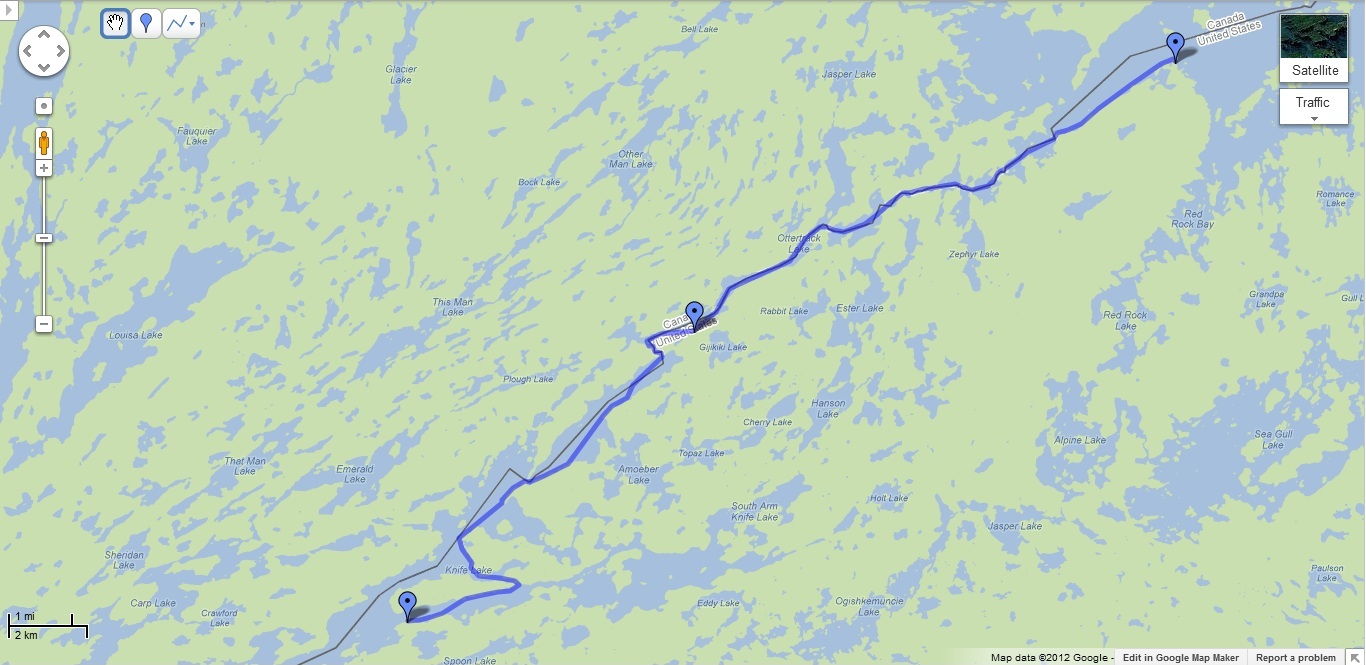
This was a four-day trip, starting with an overnight stay in a bunkhouse at Tuscarora Lodge.  After a hearty breakfast there, we took advantage of their tow to American Point on Saganaga Lake. It gave us a good head start on a huge lake, and allowed us to venture further afield.  The route took us in a circle that followed the Canadian border, then dipped south to travel through smaller lakes and head back east again to finish on Round Lake at the lodge.

Day 1:
18.1 Total Miles
4 Portages
95 Rods of Portaging (0.28 Miles)
Net Elevation Change -49 ft
Major lakes – Saganaga, Ottertrack, and Knife

This was our longest day of paddling and fewest portages. We were fortunate to have calm waters, which made for rapid progress and easy navigation through big lakes. We were on the popular border route, with Canadian shores on our right, and US soil on the left. Other canoes were common, but it was far from crowded, and there was no danger of coming up short when it came to finding an available campsite. Much of the area we traveled through was “burn zone” from earlier forest fires. Regrowth was evident and healthy, but the tall barren trunks of charred trees still towered over the new greenery. While not exactly attractive, particularly in contrast with untouched forest, it was a measure of reality and the natural forces of nature. It was fascinating to see the stark boundaries of the burn zone, leaving the mystery of why some areas burned and adjacent trees did not.
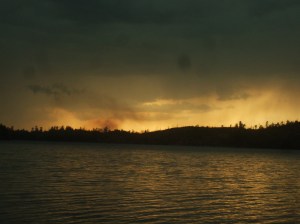
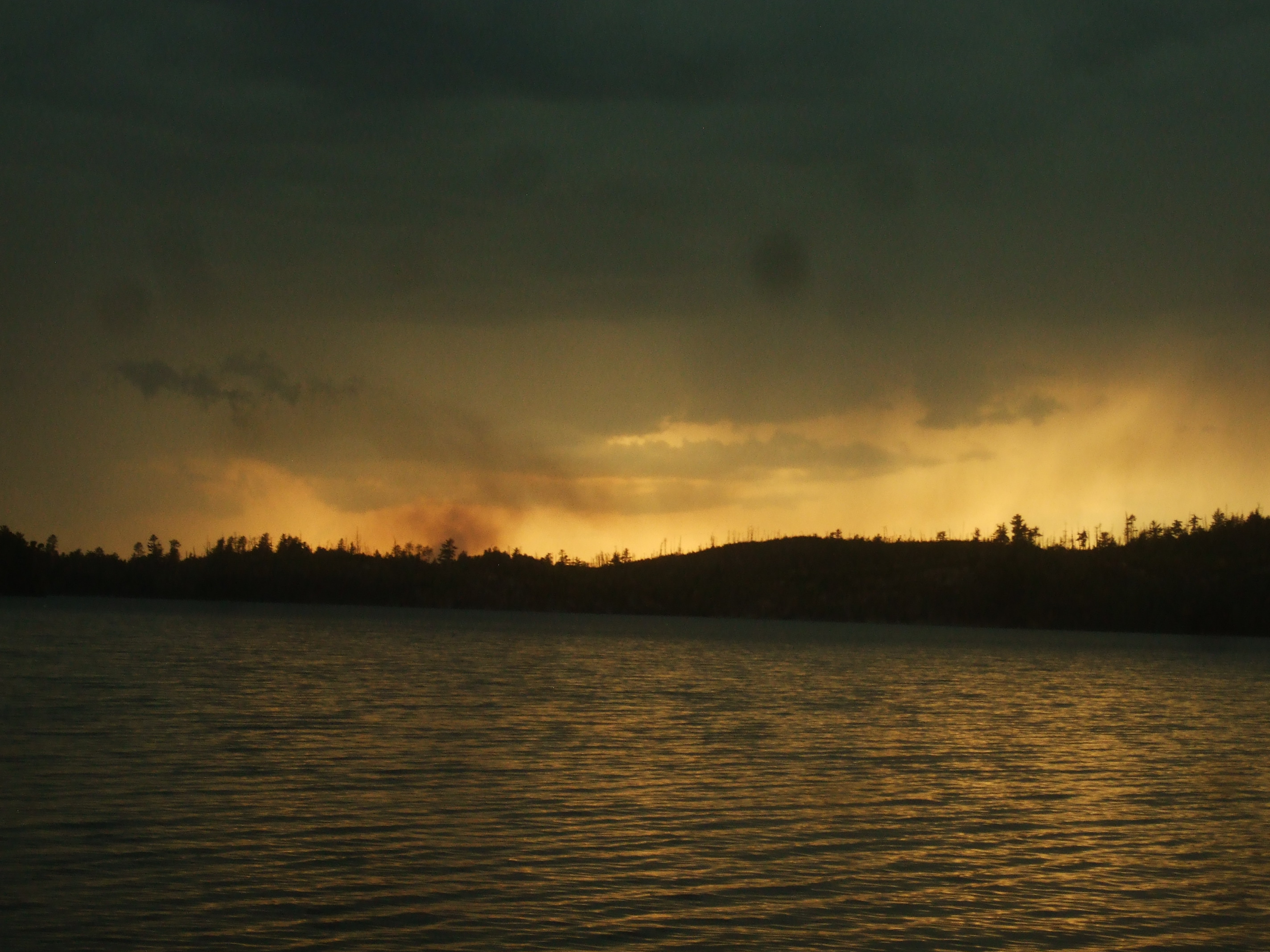
We camped on Knife Lake and set up camp just in time to see and hear thunderstorms rolling in all around us. We watched the skies, waiting and wondering if it was going to come our way. To our North, the sky turned yellow below the clouds. A dark form developed and rose into the sky, looking unmistakably like smoke. Our suspicions were confirmed at the conclusion of our trip when we learned that the storms had ignited forest fires on the Canadian side. Rain did come our way, but later gave way to a clear and calm evening with a deep red sunset. Our final reward of the day was a green display of Northern Lights that mimicked the shape of the island opposite us, moving and undulating along that wavy line.
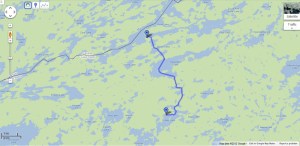
Day 2:
7.6 Total Miles
9 Portages
393 Rods of Portaging (1.23 Miles)
Net Elevation Change +148 ft
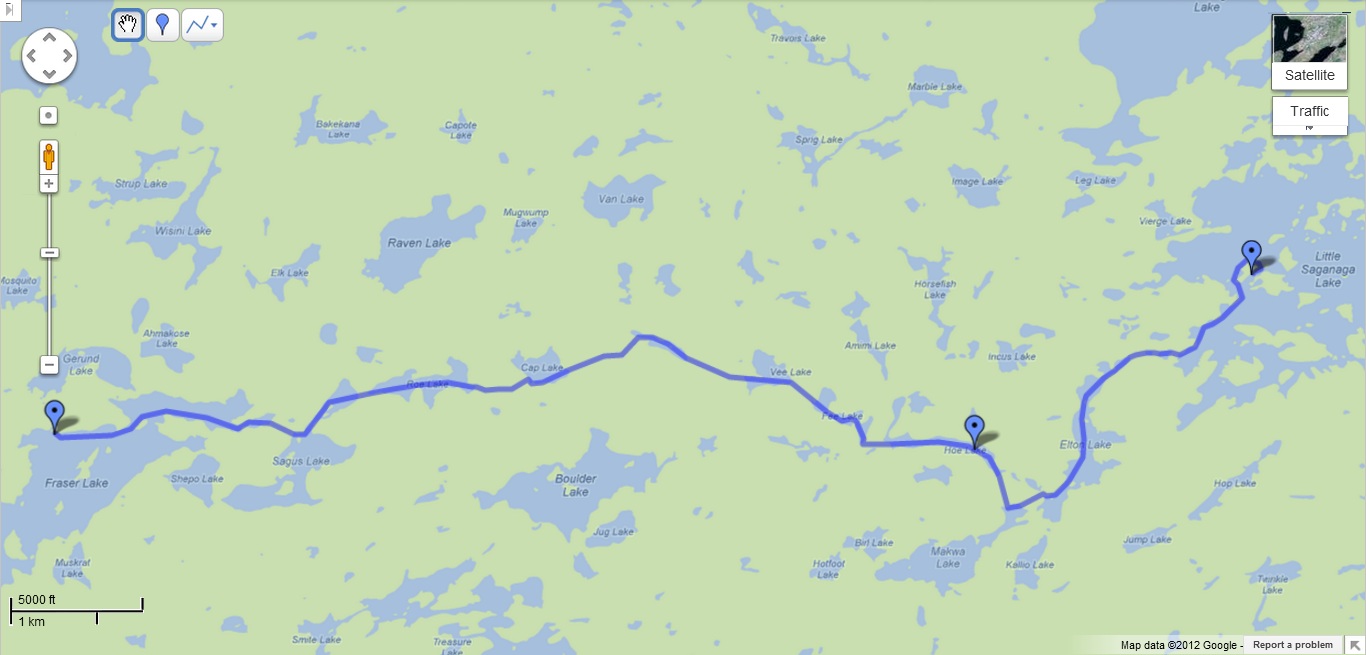
Major lakes – Knife, Kekekabic, and Fraser

We awoke to a strong wind, which remained with us throughout our paddling this day. We were mostly on smaller lakes, however, which helped reduce the impact of the wind.  The exception was Kekekabic Lake, which challenged us with stiff resistance and big waves.  We had more portages, but they were still fairly short. It was gradual training for what was to come in later days. We had hoped to canoe out of the burn zone, but it persisted on at least some shores all day. In selecting our campsite on Fraser Lake, we made sure that it was not within our view. We had left the border route, but we were still within close enough range that canoes were still a fairly common sight.

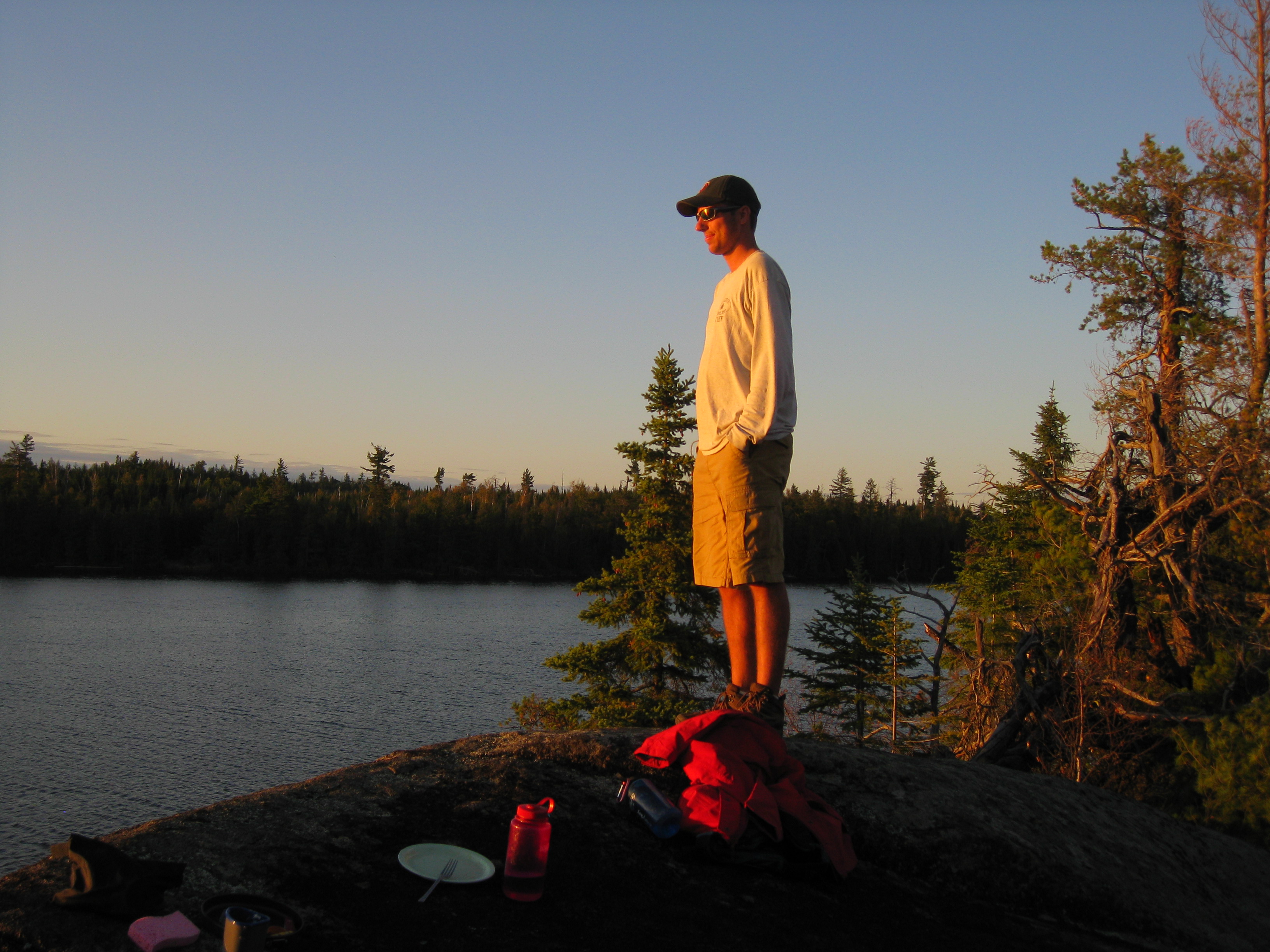
This was our shortest day of canoeing, both in distance and time. We reached our campsite by 12:30, leaving us a lazy afternoon in which to hunker down alongside the lake with a good book. All intentions to go for a swim waned as the day cooled off. So instead, we roused ourselves for a short paddle across the lake to have our dinner and watch the sunset from a large rock outcropping high above the lake. We did find one advantage to being in the proximity of the burn zone – firewood was plentiful and dry. Our campfires ignited instantly and never lacked for fuel.
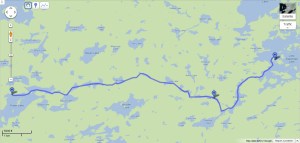
Day 3:
10.9 Total Miles
11 Portages
925 Rods of Portaging (2.89 Miles)
Net Elevation Change +64 ft
Major lakes – Fraser, Sagus, Makwa, Elton, and Little Saganaga

The morning was clear, chilly and calm with mist rising off the lake and the sun’s golden glow on the opposite shore.  It was beautiful to be out on the water in the early morning hours.  Today’s route included numerous small lakes linked by frequent portages, and growing in length.  By this time, we’d left all other canoeists behind and enjoyed the solitude of tree-ringed lakes, alternating pine and deciduous forests.  Portages bore the mark of infrequent use, overgrown with bushes and branches that challenged the height of the overturned canoe as it navigated the path.  Fall began to manifest itself, with golden leaves carpeting the surface of one trail.  To us, the added impediments were worth it for the isolation.

Our lesser traveled route also presented other challenges.  What appeared to be the long arm of a lake on the map felt more like a marshland.  But it was navigable.  What looked like it should be a clear blue lake was shallow and filled with lily pads.  We canoed over them.  What should have been a portage wasn’t.  It was a swamp.  So we canoed through it, dodging dead trees.  We ultimately found a path to the next lake, but not where it was marked on the map.

We finished up on Little Saganaga Lake.  It was a beautiful lake filled with enough islands to make it especially attractive but confusing to navigate.  Paddling around islands and peninsulas we located a beautiful campsite that afforded us expansive views.  At sunset, we had colorful displays in multiple directions.  We were also serenaded by a lone wolf, who howled continuously and was answered only by the loons on the lake.  He repeated his performance in the middle of the night.

Day 4:
11.9 Total Miles
7 Portages
793 Rods of Portaging (2.48 Miles)
Net Elevation Change +150 ft
Major lakes – Little Saganaga, Mora, Crooked, Tuscarora, and Round

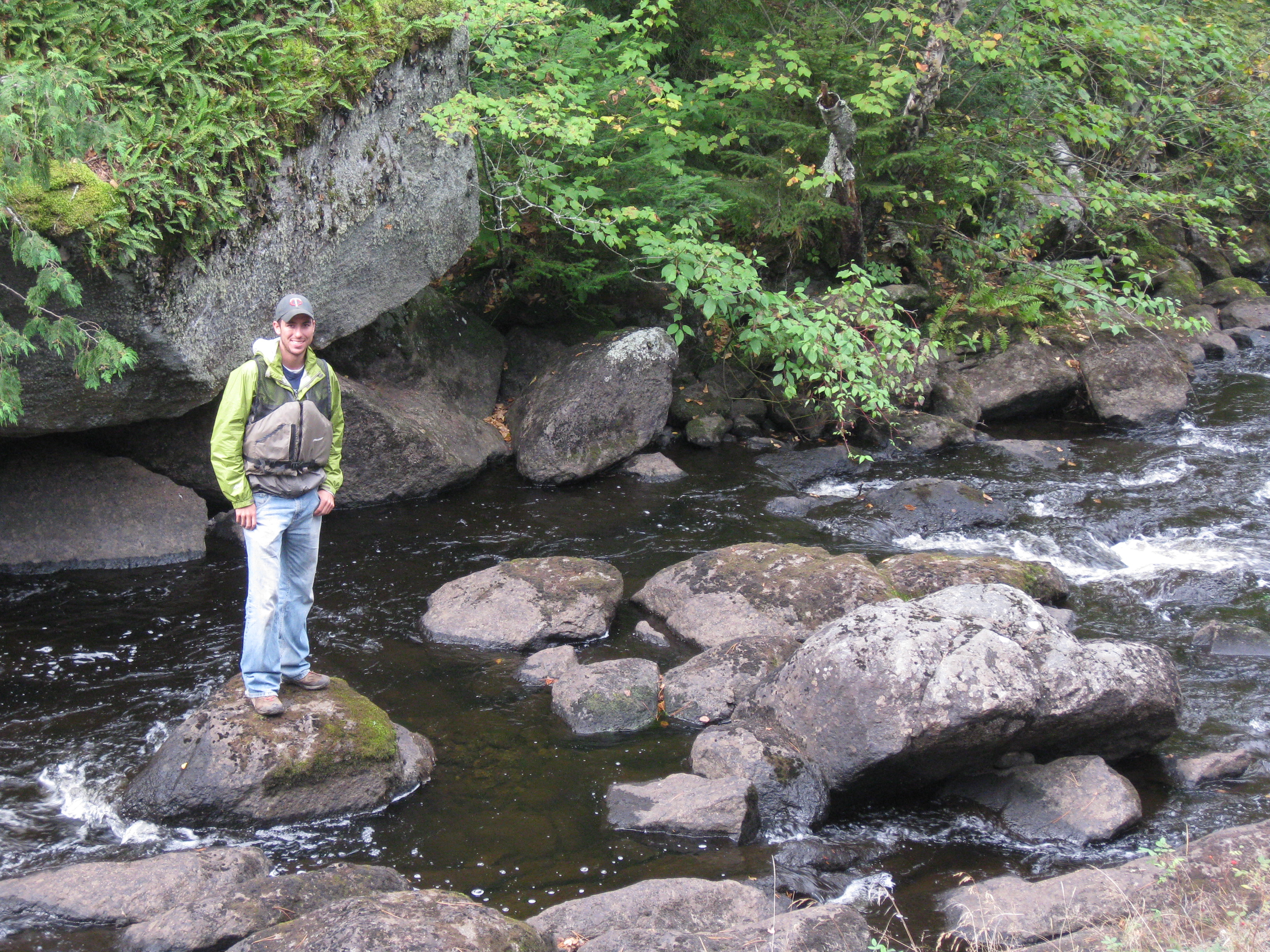
Our final day provided a wide range of weather.  While the morning was calm and misty, the wind came up by the time we launched our canoe, and clouds filled the sky.  We pushed our way across the open waters of Little Saganaga, and moved on into smaller lakes.  We traveled along Carl’s favorite portage, from Little Saganaga to Mora Lake.  Covered in pines and following alongside a briskly flowing river that tumbled over rocks, it was definitely the most scenic of our trip.  The further we went that day, the more we re-encountered burn zone and reached more populated lakes.  It wasn’t the kind of day that encourage lingering, so we paddled on in quiet appreciation of our surroundings.
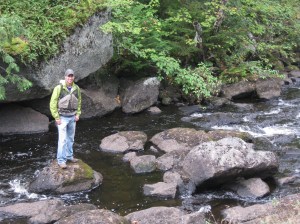
Reaching Tuscarora Lake, we hit a double-whammy.  The rain began in earnest, and the wind whipped across the wide expanse of water.  Fortunately the shower was short in duration, although it provided a good drenching – the first of our trip, so we couldn’t complain. By hiding behind islands, we avoided as much wind as possible.  And our reward?  The Tuscarora portage.  The Big One.  Approximately 428 rods in length with uphill to start and mud in the middle.  Its length defines its difficulty.  But it’s also a badge of honor to complete.  We encountered a veritable traffic jam at its start, with a solo canoeist following in our footsteps (he was glad to talk to us after 10 days on his own), and four heavily laden guys completing the portage from the other direction.  We were back in civilized territory.

We conquered the portage, which left us just two lakes and a lesser portage to our final destination.  It was bittersweet to paddle that section – a feeling of completion and satisfaction over the success of our trip mixed with the sad reality that it was coming to an end.  We had a shower, dry clothes and a good meal to look forward to.  But we both would have traded it all for another four days of canoeing in our grubby gear.
Making Memories in the BWCA

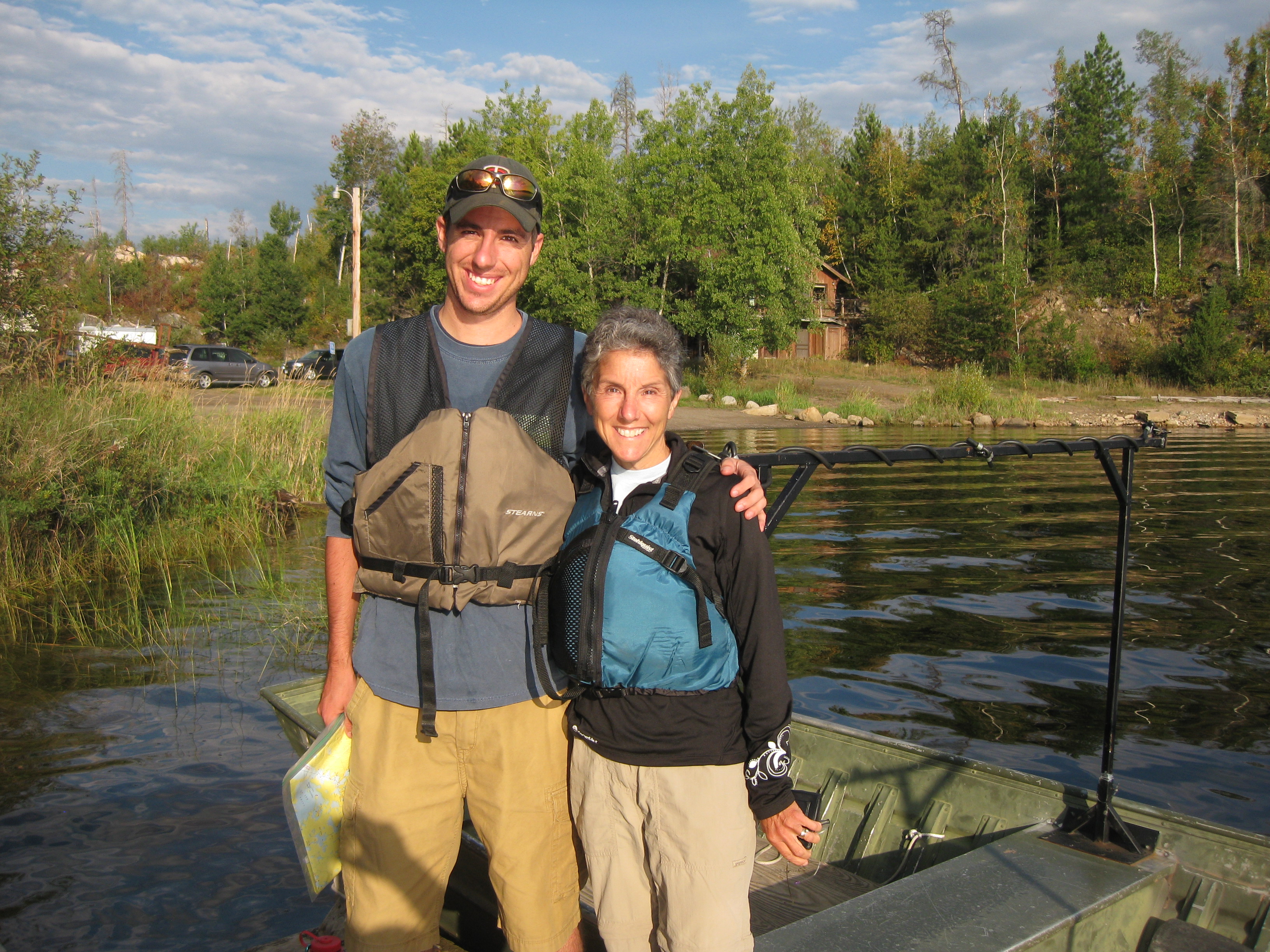
This canoe trip was a gift from the three men in my life.  My husband, Rich, graciously supported me in venturing off with our son for four days in the BWCA – a place he also adores and would much rather have been than staying home and putting in long, grueling days on a big project approaching its go-live at work.  I’m not sure I could have buried my envy as well as he did.  Our youngest son, Erik, generously offered up his new hiking equipment, the latest in backpacking technology.  I clearly benefited from his warm yet compact down sleeping bag and sleep mat, and we relished the way his lightweight tent practically assembled itself each night.  And finally, our oldest son Carl, who shared four days with me in his favorite wilderness and made the whole trip possible.

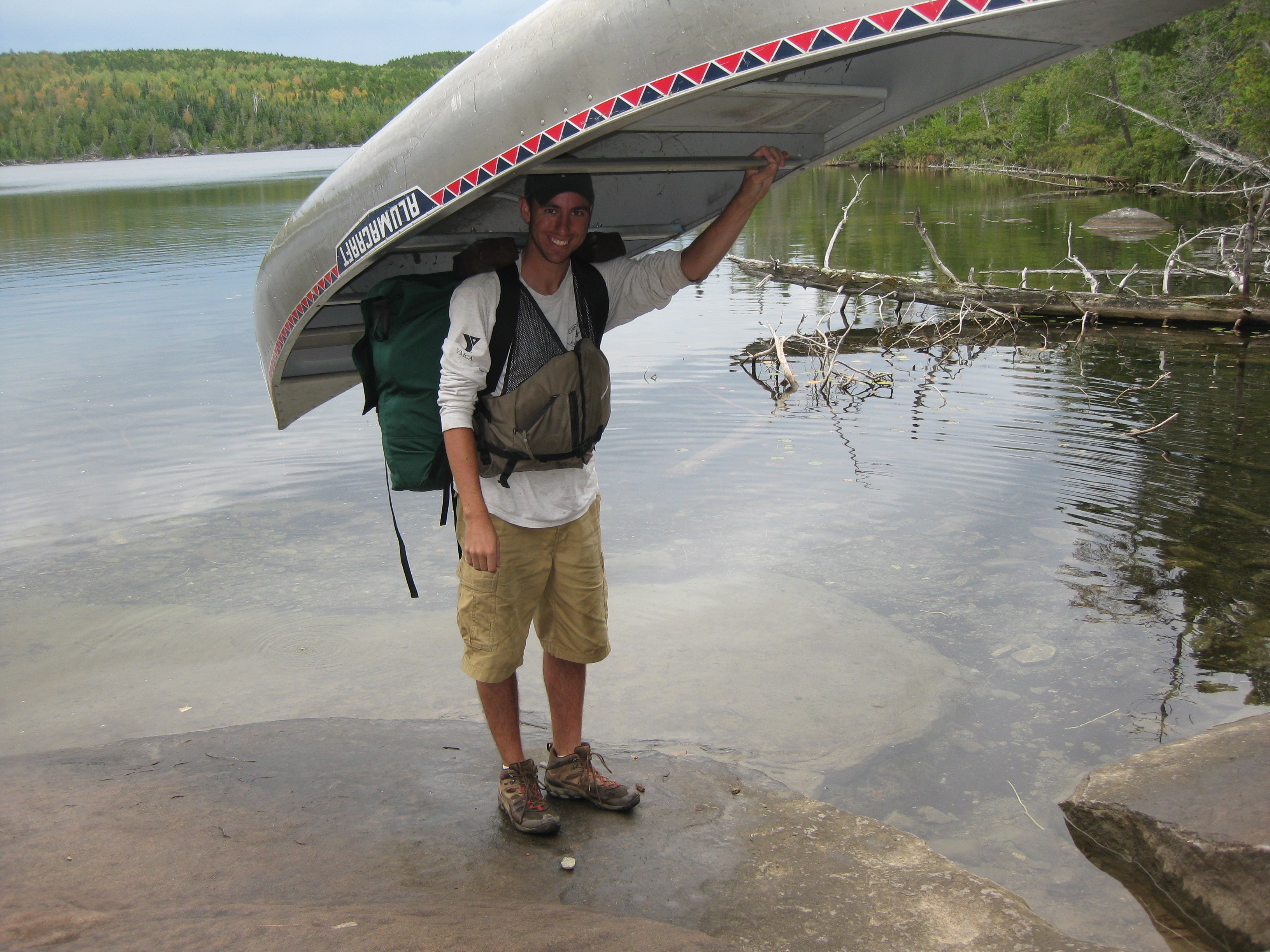
Despite the fact that I am passionate about exercise and religiously run, cycle, swim or ski significant distances nearly every day, my fitness level does not necessarily translate to physical strength.  And size has to figure into this as well – at 5’1″ I was no match for Carl’s over 6′ frame.  So when it came time to divide up our carefully selected gear, Carl stacked the deck by strategically placing all the heavier equipment and food in his large “Duluth Pack,” leaving me the clothing and lighter weight fill for my backpack.  Add to that the fact that he portaged the canoe as well, he really carried a load – nearly 100 lb. he figures, which probably compares to about 25 lb. for me.  It amazed me how he could swing that canoe overhead in a single motion to rest on his shoulders which already bore the weight of his pack.  Ah, youth!  Down the portage trail he would hike, at a rigorous pace which left me following at a much slower and deliberate speed.

Balance has never been a strong point for me, and at first the added weight distribution of the backpack left me teetering over rocks and clumsily choosing my footing among the frequent roots crossing the trail.  But Carl showed infinite patience, waiting for me at the next lake with a cheery greeting for my efforts.  But it didn’t end there.  He loaded and unloaded my pack from the canoe at each juncture, and held it out for me to slip into, just like he was helping me into a mink coat.  And he always positioned the canoe so I had the best vantage point for getting in and out without slipping.  While I longed for the days when that was not necessary, I chose to relish being pampered and so well looked after.

We canoed long miles and tackled numerous portages, one as long as 425 rods.  I was amazed to learn after the fact that we paddled 18 miles on our first day out!  It helped that we had calm waters and traveled through large lakes with few portages to interrupt our progress.  Another day was the opposite – it felt like hiking with a bit of canoeing to tie the bits of land together.  But we were both eager to go the distance.  To explore.  To see new lakes and forests.  To just be in the Boundary Waters.  Energy and endurance were never an issue.  We always had capacity to do more.  Even if I knew Carl’s paddling strokes were doing more to carry us forward than mine, I was still eager to do my part and earn my keep in the canoe.

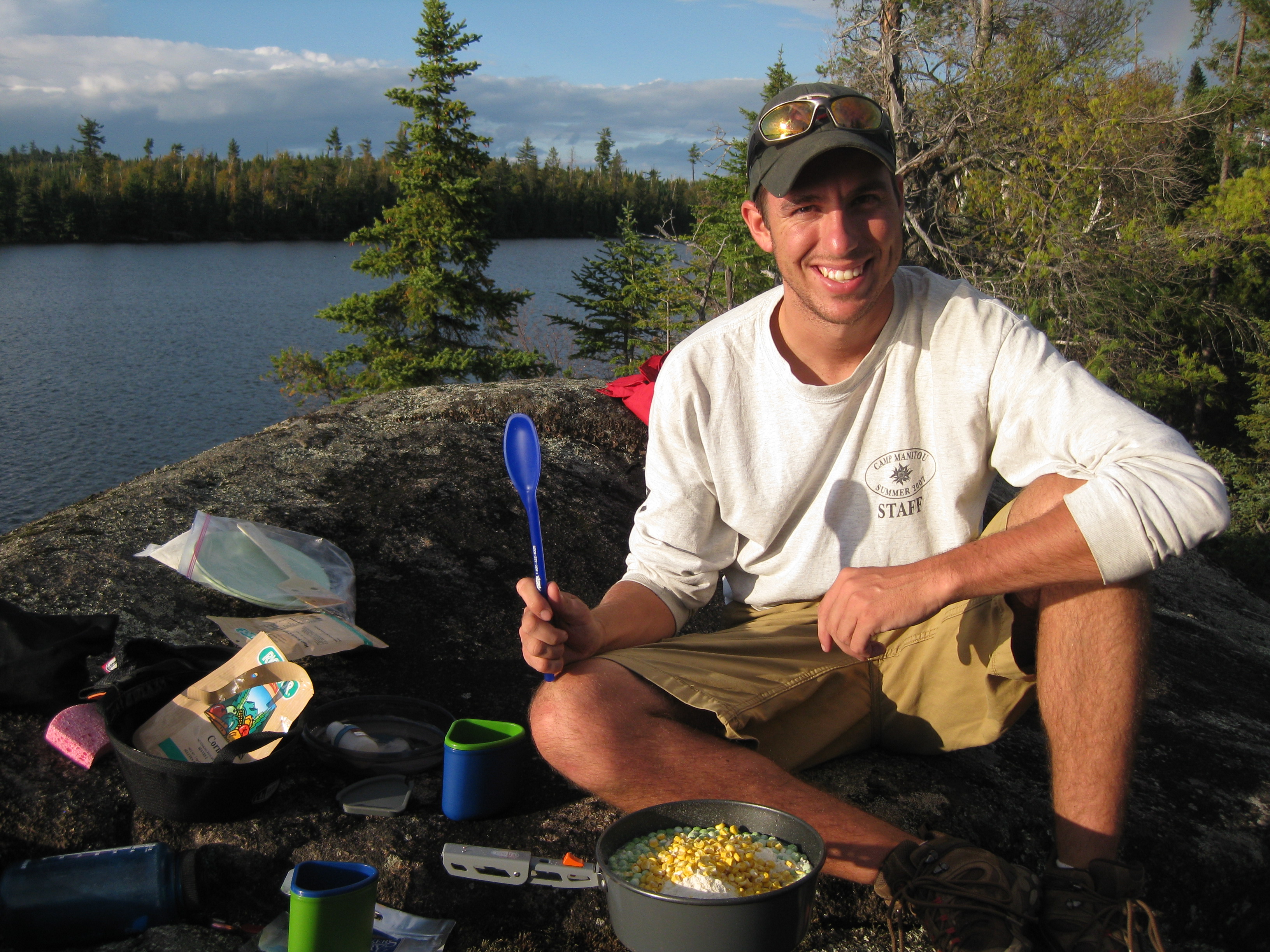
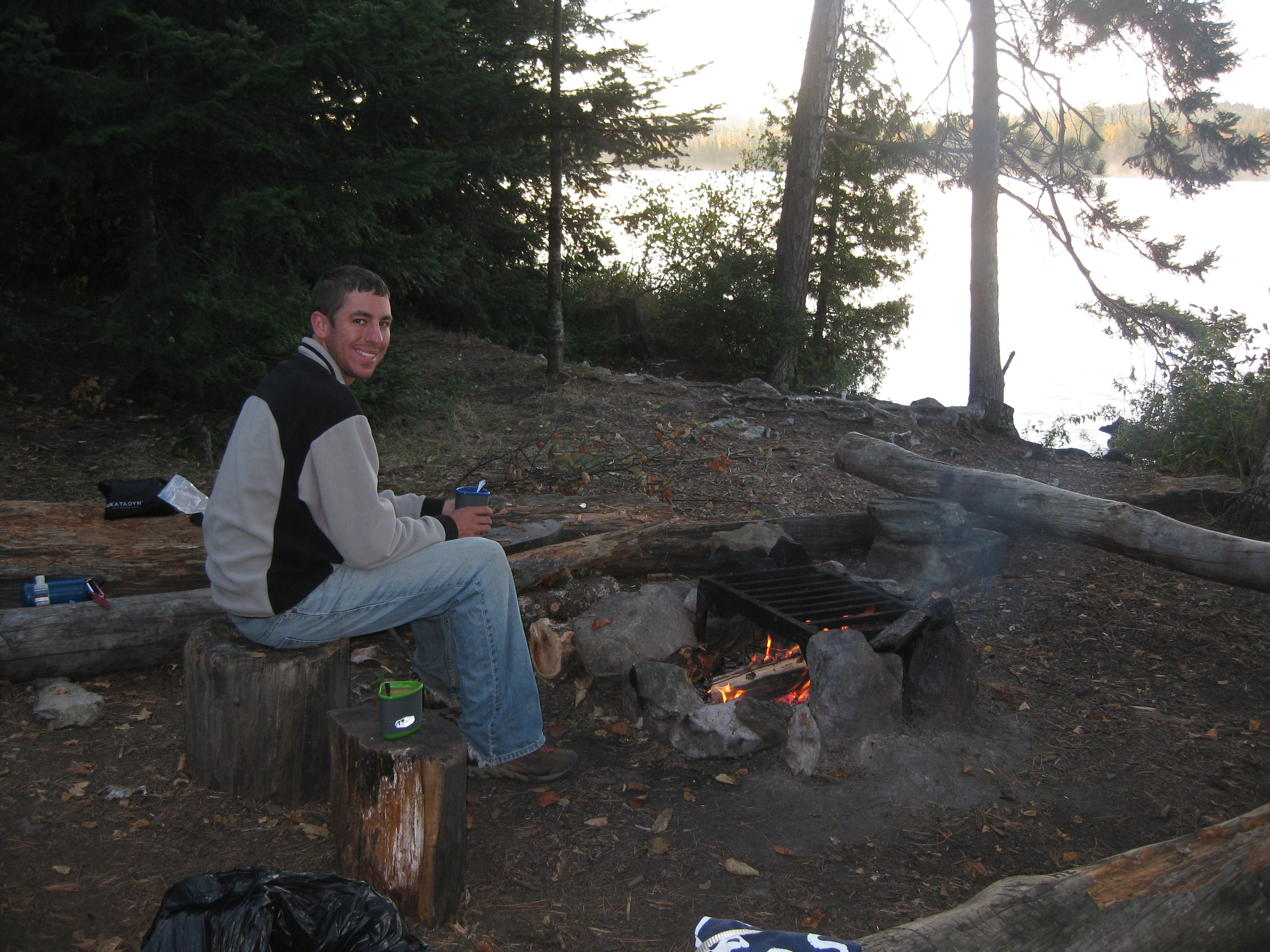
Camp time was equally important as that spent on the water.  Carl displayed his prowess in building fires, creative cooking over the camp stove, and carving out time to relax and read in beautiful surroundings with views of the water.  Mornings, while I packed our gear in the tent, Carl would start a fire and announce “Hot water is ready for coffee.”  What great service!  One afternoon he proposed a “remote dinner” which took us across the lake to an enormous rock rising out of the lake.  We scaled up the back to perch on the edge towering over the water – a glorious site for our dinner and nightly sunset.

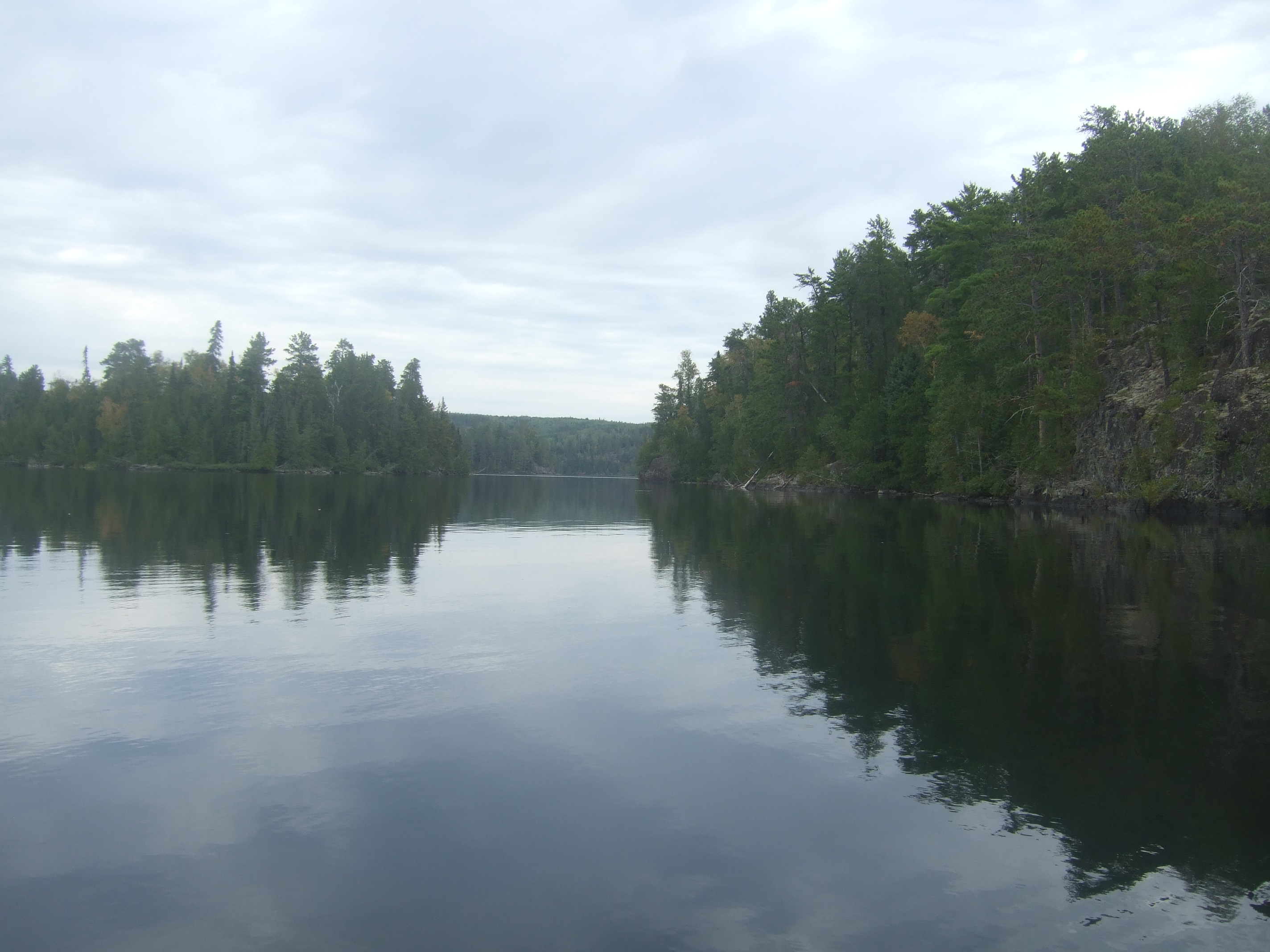
And speaking of sunsets, they were both prolific and memorable.  Each night was different.  Each night was special.  And we never grew tired of watching the sun paint colors in the sky that reflected in the pure waters below.  The brilliance of the sun was matched only by the campfires that followed.  We spent hours staring into the coals, watching them glow, flicker and spark.  I think evenings were our favorite part of the day.

When I thought about it, Carl probably carried as much and worked as hard as he would on one of his solo canoe trips.  So perhaps from that perspective it was like doing a solo trip with a companion.  But the shared experiences and resulting memories can’t be measured.  The mutual enthusiasm over the trip, the wonder in admiring our surroundings, the camaraderie when faced with challenges, the unspoken agreement over the division of chores, the prevailing positive attitudes, the companionable silences, the good company – they will remain with me forever.

Boundary Waters Basics

Trees, rocks, water and sky.  And a canoe in which to explore it all.  That’s all it takes, and it’s all one needs.  Okay, a few extras like a tent, camp stove and freeze dried food come in handy.  But completing our fourth day in the Boundary Waters Canoe Area today really drove home how it’s all about simplicity and back to the basics.

I loved how we were able to reduce our lives to only the essentials that we needed and could carry on a single portage.  (No double portaging for this duo!)  Getting up in the morning consisted of wriggling back into the same clothes in the warmth of a sleeping bag.  A quick brush of my teeth and running a damp wash cloth over my face constituted my daily makeup routine.  Question: If my hair looks a mess in the Boundary Waters and there is only my son to see it, is it still messy?  Answer: It doesn’t matter!

Life’s biggest concern was weather.  Is it calm or windy?  Is it sunny or raining?  Is it warm or cold?  We had some of each every day.  And we enjoyed it all.  Our greatest decisions were selecting a campsite.  Requirements were 1) a good view, 2) nice environs, 3) a fire ring with ample sitting benches,  4) open to the breeze to keep the few bugs away, 5) a good sunning rock.  We canoed further if necessary in search of one that met our criteria.  Meals were easy –  which flavor bagel to have, or what dinner packet to open.  It all tasted fantastic.

Long periods would go by in silence.  That is the beauty of it all.  Conversation is not necessary.  It is enough to be lost in one’s own thoughts.  And there is plenty of time for thought when spending all day in the outdoors.  Silence also invited in nature’s sounds – the flapping of a hundred geese’s wings flying overhead in impeccable V-formation, the lapping of the water against the shore, the melodic cry of the loons, and even the howling of a lone wolf at dusk.

Sunsets were the highlight of our days, and the evening’s entertainment.  If our campsite didn’t afford a good view, we canoed to a spot that did.  Campfires were our bedtime stories.  Filled with movement, color, heat and a mesmerizing glow, they lulled us into sleepiness.  The only things that could draw us away were splendid showings of Northern Lights or skies filled with brilliant stars.  And we saw both.

The longer we were there the better it got.  Everything else melted away and assumed a status of insignificance.  The Boundary Waters Canoe Area is a national treasure.  But more important is the personal treasure it gives in return.  Trees, rocks, water and sky.  And a return to basics.

From Pedals to Paddles

We’ve been home from our bike trip less than a week, and I’m already packing again for another adventure.  I’m trading in my husband’s company for that of our oldest son, Carl, and switching from pedaling to paddling.  Having immersed himself in the Boundary Waters Canoe Area for four months last summer by working at Tuscarora Lodge and Canoe Outfitters and spending every day off work out on the water in a canoe, Carl developed a new passion.  Now that he is a working man with a real job out in DC, his opportunities to canoe are much rarer.  So when he decided he wanted to come home for a canoe trip and was looking for others to join him, I volunteered immediately.  There is a lot to be said for this retired status!

I will readily admit that I am not as well conditioned for this one as for the cycling trip.  The closest to training I’ve come is a couple of mild kayak outings at our cabin.  But somehow I’m sure I will manage.

I fee like I’m going on a trip with a real guide.  After all his experience last summer, Carl knows the ropes well – what gear to bring, how best to pack, what dried foods taste the best, and how to portage efficiently.  I know I’m in good hands.  He’s already done all the planning for the route.  All I need do is pack my stuff, hop in the car and shove off with him.

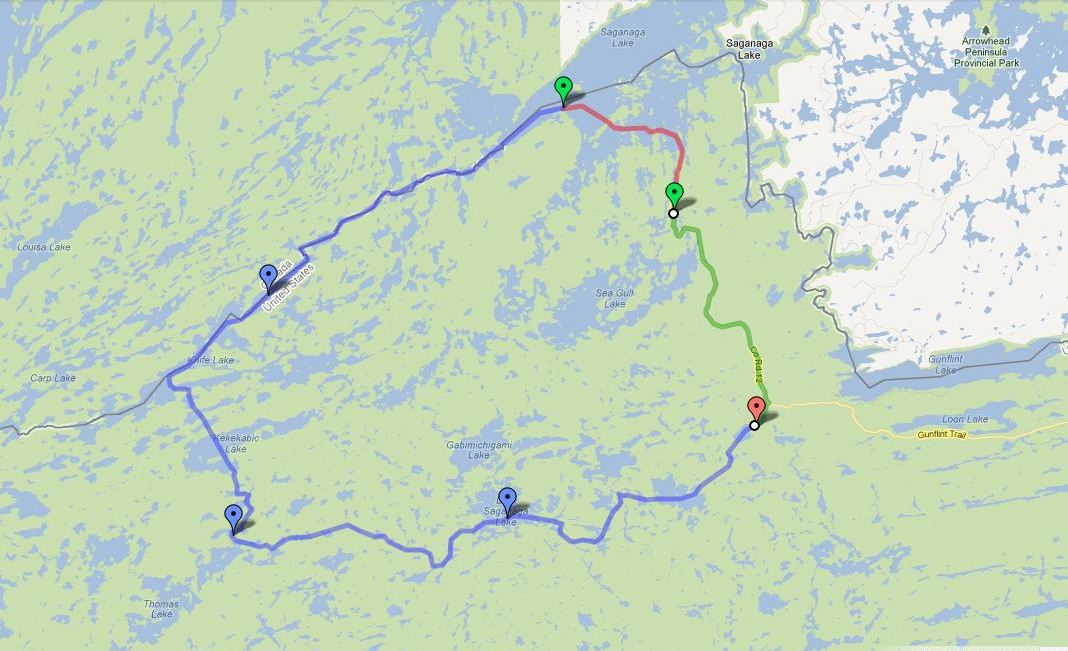
We’ll be starting off at Tuscarora Lodge – of course.  After a night in a bunk house, and availing ourselves of a hot and plentiful French Toast breakfast, we will begin our trip.  Carl has arranged for us to get a tow to our starting point.  So first we get a ride to Saganaga Lake (the green line), then they tow us in with our canoe to a remote staring point (the red line) – cool, I’ve never done that before!  From there, we will spend four days canoeing back to Tuscarora on Round Lake (the blue line).  I haven’t delved into the details too much (I’ve been a bit distracted with that little bike ride we did) but I’m sure it is an aggressive route.  Carl wouldn’t want to do it any other way, and I’m game.

I’m looking forward to unplugging.  Even on our bike trip, we each hunkered down with our iPads and wrote blog posts each night.  There’s no choice on this trip.  Any posts will have to wait until after we’re back to civilization.  Carl may do a little fishing.  If it stays warm enough, we’ll hop in for a swim.  We’re bringing paperback books and a deck of cards.  Evenings are for staring into campfires and stargazing.

I feel very privileged to be going on this trip.  How many twenty-something guys are willing to go on a canoe trip with their mom?   I’m glad mine is.

It’s Farmers Market Season!

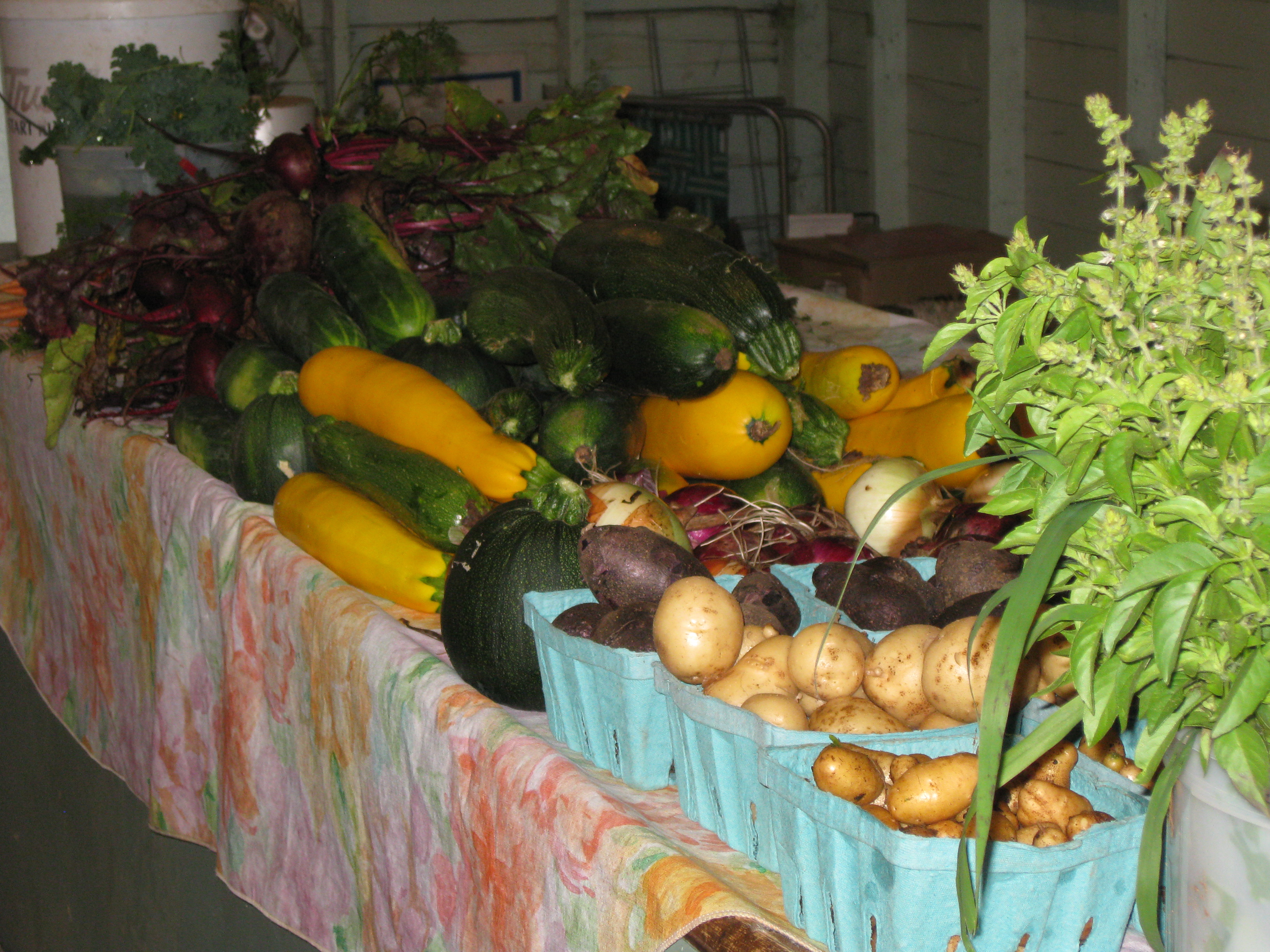
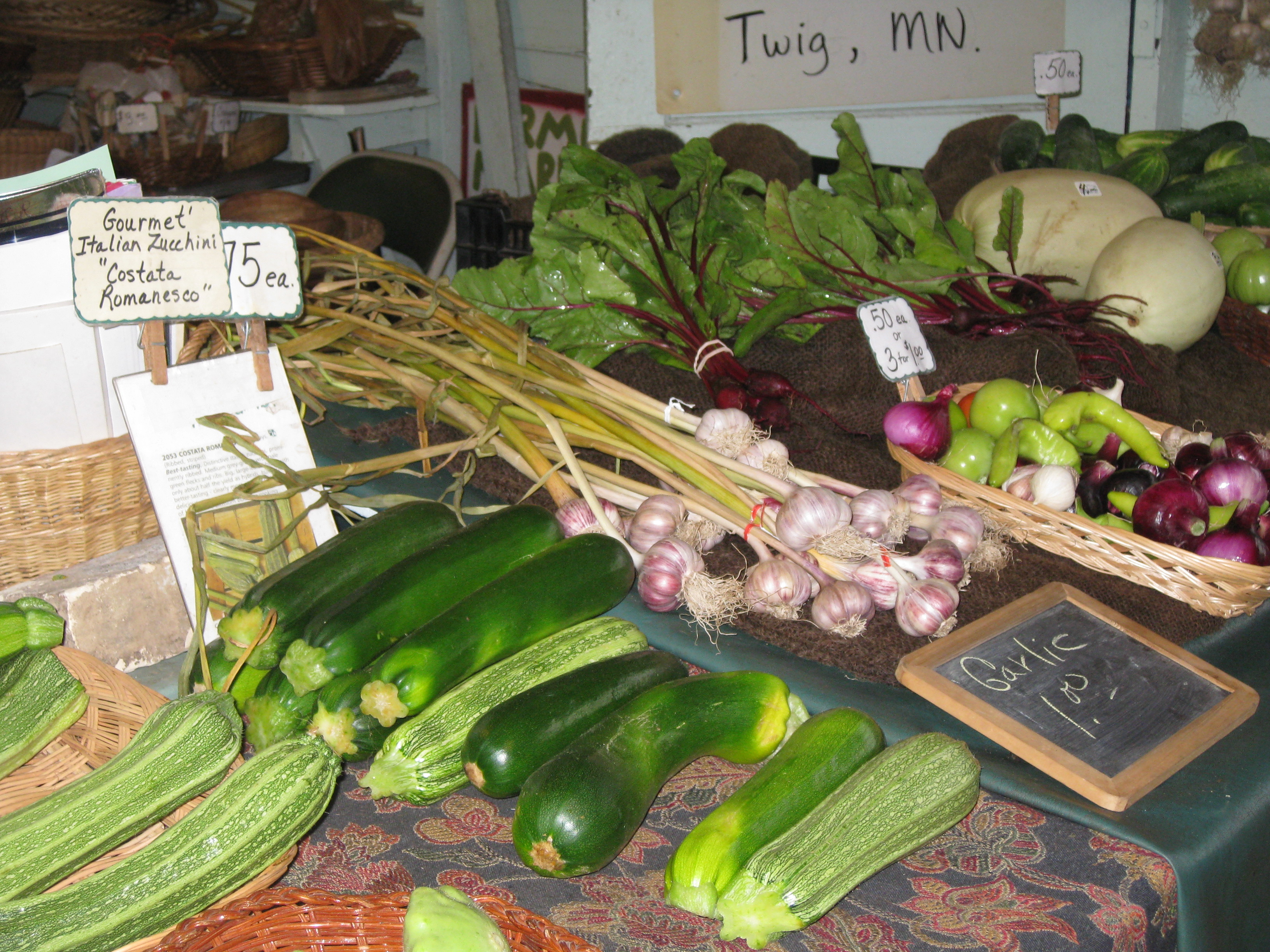
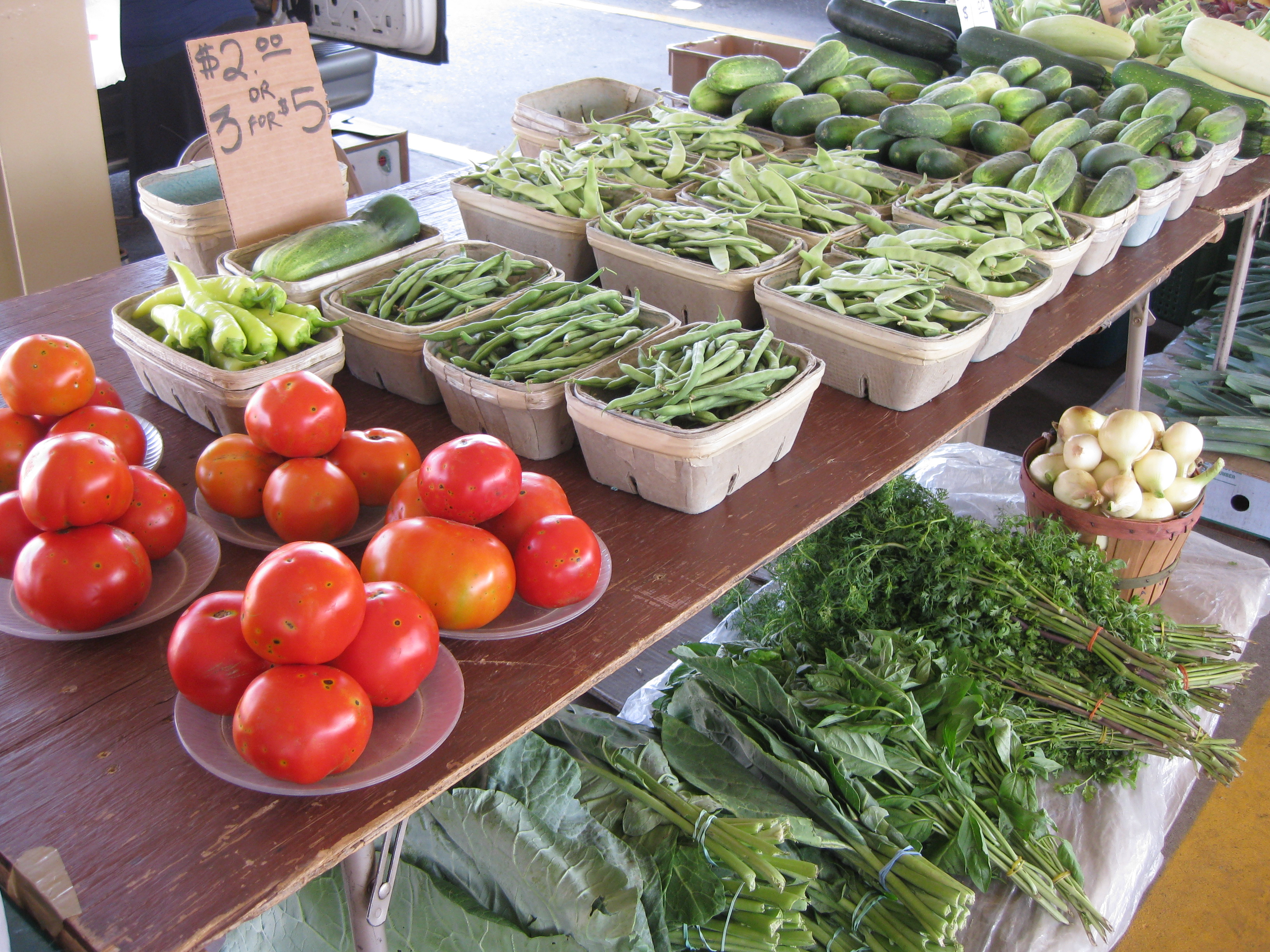
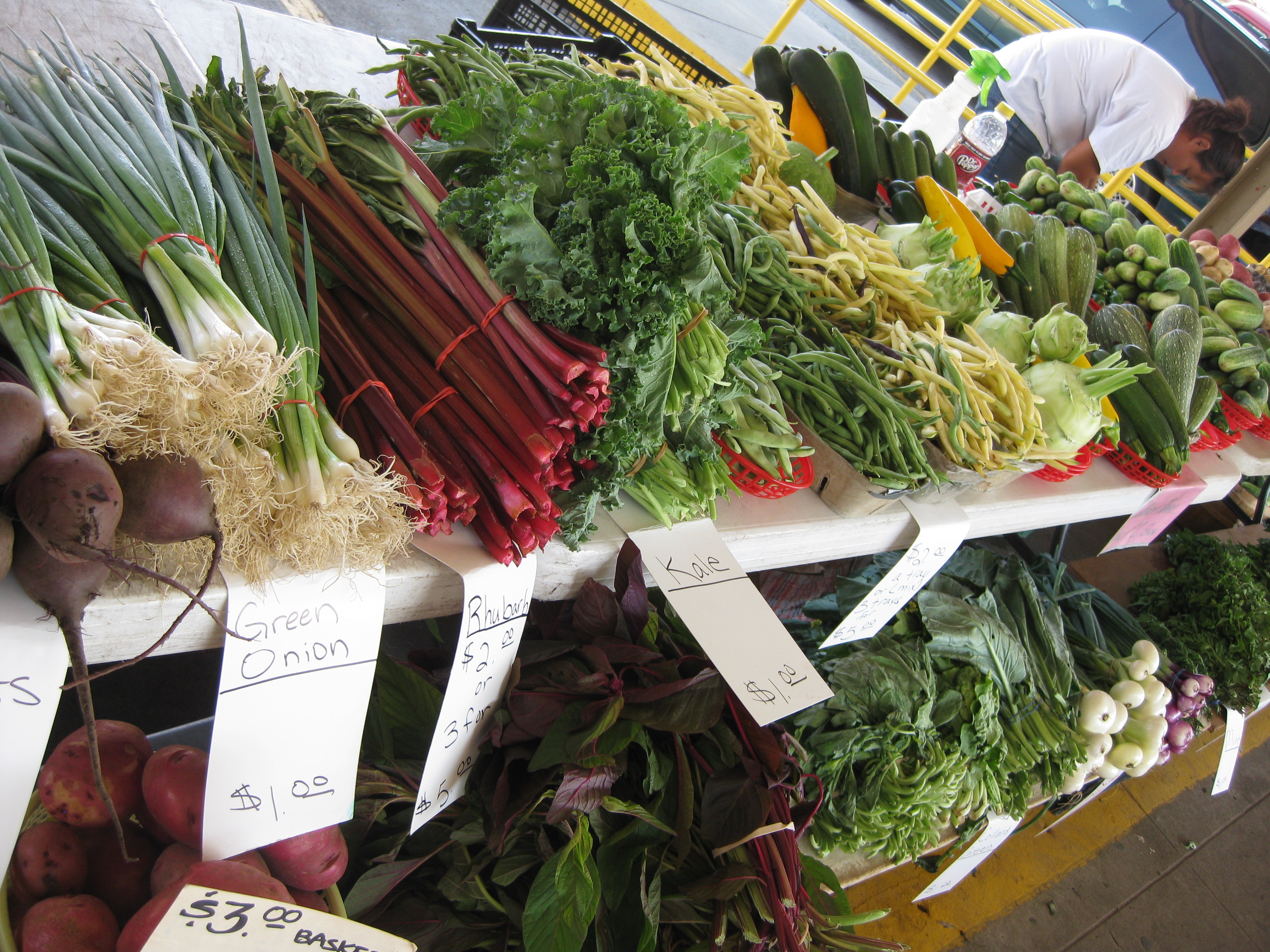
I love the Farmers Market. The sights, the sounds, the colors, and smells. Being there first thing in the morning is the best.

I remember going to the Duluth Farmers Market with my mom or dad early on Saturday mornings. The humble structure filled with friendly farmers and all their freshest produce was humming with activity. Being regulars meant knowing each stall, talking to the vendors and finding out what was best to buy that morning.

Living in the Twin Cities for many years, I frequented the Minneapolis Farmers Market. Although everyone seems to flock to the market on Saturdays, it feels more like a festival than a market to me. The craft vendors and extras all detracted from the experience. And it’s really crowded. I prefer weekday mornings. In the cool temperatures of the early morning, with the sun shining in at a low angle, it’s just the real farmers, tables of vegetables and rows of flowers. I’m competing for space with only a few shoppers inspecting the goods and making their selections. Even though I was usually on my way to work, it was the ideal time out. I could never feel hurried, and I felt inspired by all the fresh and wholesome goods surrounding me.

I’m pleased so see a resurgence of Farmers Markets. They are cropping up in small towns, suburban communities and roadside stands. All the better for the farmers and shoppers like me. I’m eager to get reacquainted with the Duluth Farmers Market. Maybe one day I too will know all the locals selling the wonderful fresh produce.

All Things Lake Superior

There are plenty of commercial websites and publications about the Lake Superior region. But sometimes personal accounts, photos and tips are more interesting and entertaining. This is information provided by people enthusiastic about the lake and with no incentive to sell you anything. Now there is a website that has been created to lead you to just such a collection. The Lake Superior Waves website is a repository of personal, non-commercial resources about Lake Superior.

Need some examples?

  • Photography – there are numerous amateur photographers who share their Lake Superior area pictures on the web
  • Blogs – personal accounts that focus on our beloved lake, ranging from weather to outdoor activities
  • History and Information – educational resources on various lake themes

In addition, the site is searchable. So if you have an interest in cycling, a search on this site will render results for cycling out of all the material linked to the site. And by definition, it will be information on cycling in the Lake Superior area.

If you have a blog, website, photos or other material that would fit this category, there is a form to submit to be included on the site. The more material included, the richer this site will be.

My SuperiorFootprints blog is included. But then – truth be told – the site was created by my husband. We’re both Lake Superior lovers. With this site he hopes to create a growing repository to appeal to like-minded lake enthusiasts.

Check it out!  Lakes Superior Waves

Experiencing Habitat for Humanity

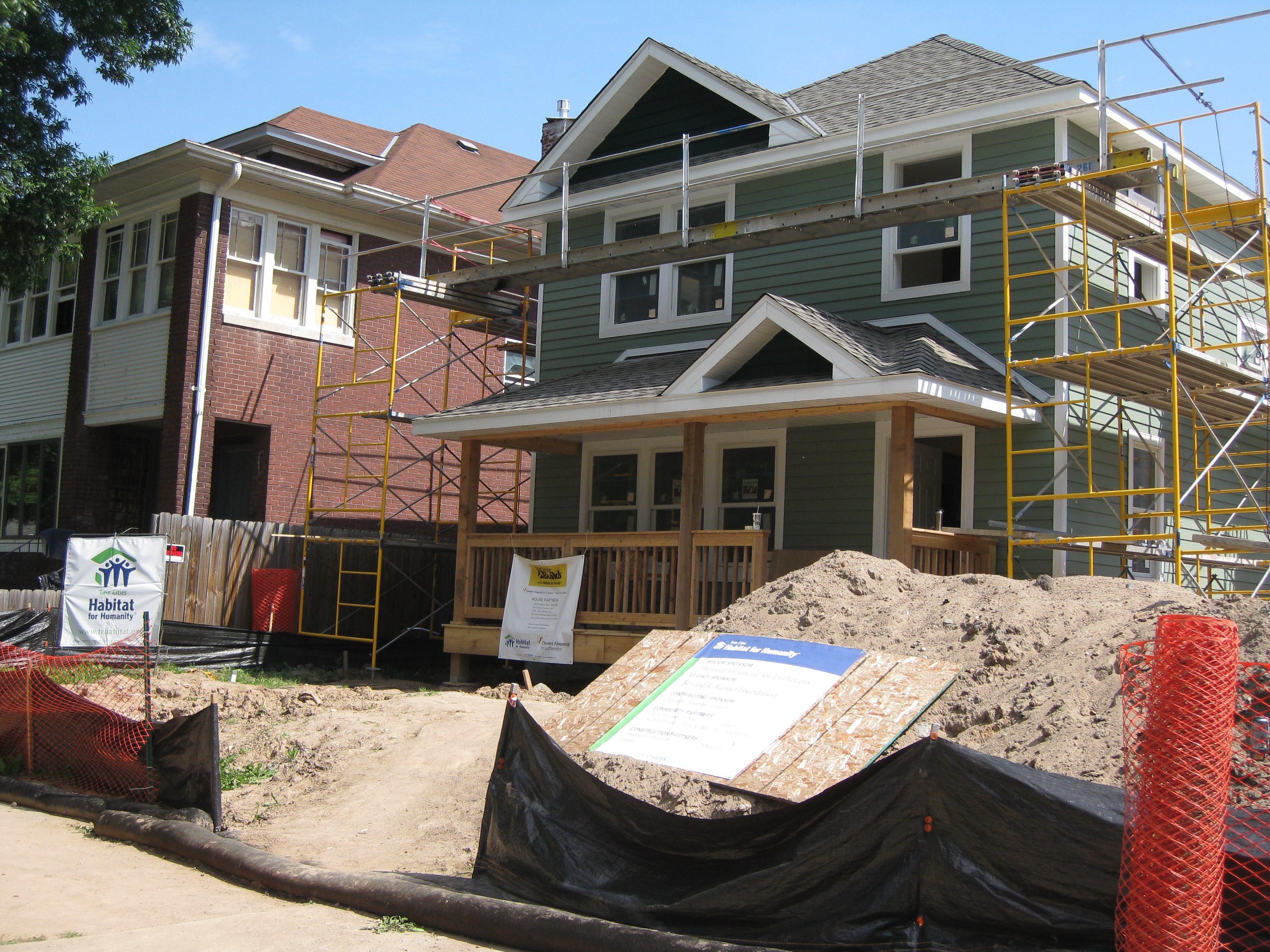
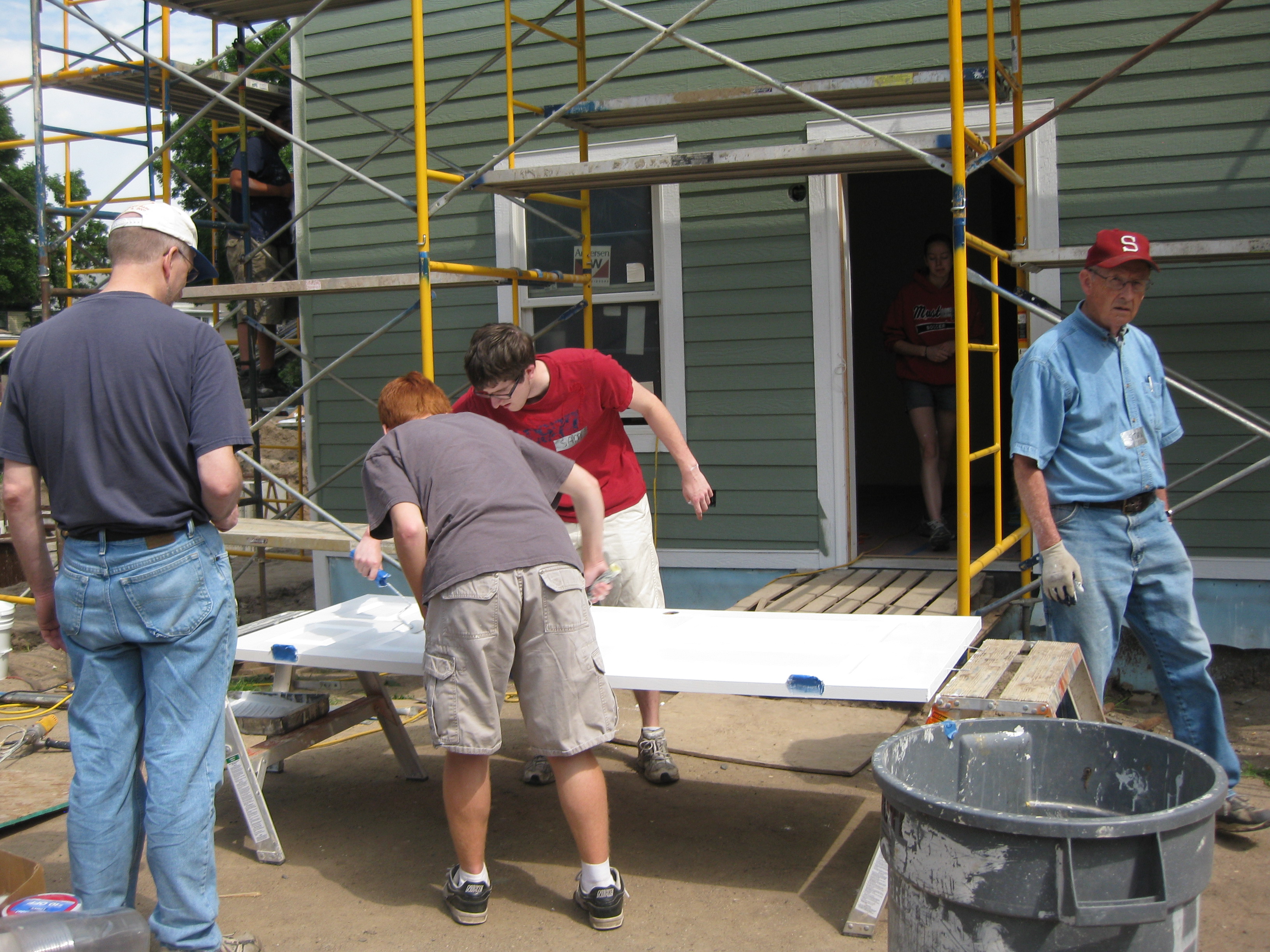
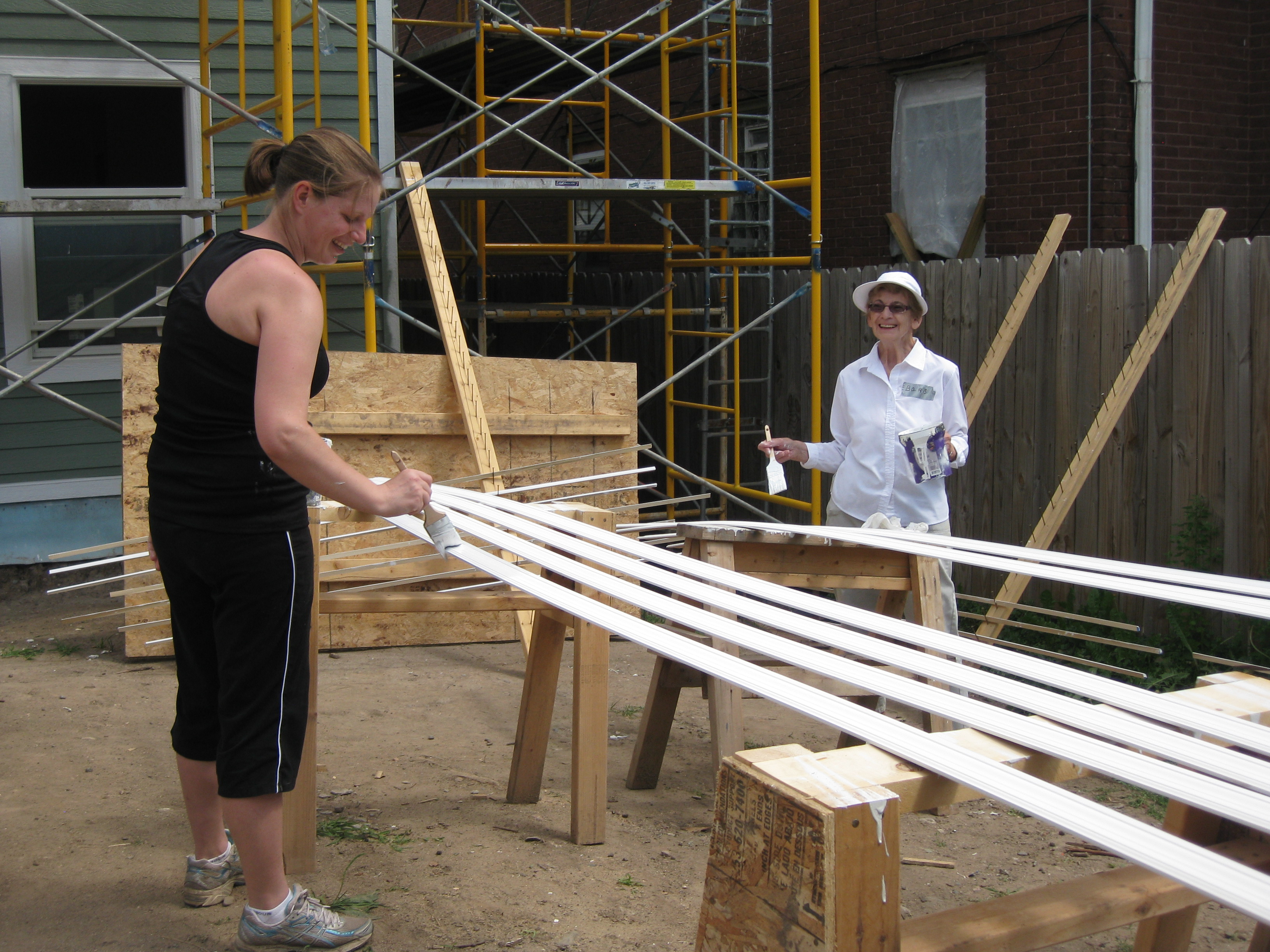
It was my first time volunteering to help build a house. I know nothing about construction, but I was warmly welcomed and put to work. In this case, the project was nearing completion – after only 8 “volunteer weeks” the house was ready for indoor finishing work. I spent two and a half days wielding a paint brush, coating countless feet of trim and interior doors with coat after coat of semi-gloss paint. It was not exactly challenging, but it was work that needed to be done and it was a task that felt safe and comfortable for me. On my final afternoon, however, that changed. Without doubting my capabilities, the site supervisor assigned me and a young partner to trim the doorways. In no time, we were measuring, cutting, mitering corners and hefting powerful nail guns powered by compressed air. What looked so simple when he demonstrated for us took a lot more thinking on our parts, but we mastered it! And the result was not bad. I may have felt timid at first, but the resulting sense of accomplishment was the highlight of my tenure on that project.

But I gained a whole lot more than that out of the experience. I learned that Habitat for Humanity is as much about the humanity as the habitat. Like most people, I did not really know how the organization operated. It’s not just building affordable houses, it’s setting up new homeowners to succeed. Habitat families must put in 300-500 hours of sweat equity, helping build their own home and other Habitat houses. They must meet specific income requirements, and qualify for their mortgage. They attend classes on managing their finances and home maintenance. It put the homes in a whole new perspective.

But there was another side of the humanity. Working alongside other volunteers, I met people from a variety of backgrounds. We were encouraged to talk, take breaks and eat lunch together. Each day I partnered with different individuals, learning more about them through the course of our work day and I was inspired by their stories. I worked alongside a young woman who was just diagnosed with MS. Despite dealing with the side effects of her new medications and the lurking uncertainty over her future health, she worked tirelessly and eagerly. A young architecture student was putting in 8 weeks at Habitat this summer, gaining practical knowledge for her future profession. Retired folks were there for the entire week, some lending expertise from their former careers. One of them put in over 60 days on Habitat houses last year. One man took a day of vacation from his job to work with us. A Hmong brother and sister, college students, chipped in for a day. We were a motley crew, but made to feel appreciated.

I wonder what I’ll learn next time?

Nature Lessons

Being at the cabin is not like home.  There is so much more to experience, particularly outdoors.  This past week we were able to indulge our love of nature in many different ways.

Watching the loons and hearing their hauntingly beautiful cry was one of them. Seeing baby loons in early summer is always a treat. Looking for the bald eagles is a favorite. Going over to inspect the eagles’ nest in the next section of the lake is a ritual. Over the years we have watched numerous baby eagles peering over the edge of the enormous nest, and seen some of their earliest flights. Sadly, this year the tree that was home to their nest has finally succumbed to its awkward angle and fallen into the lake. But fortunately, they are not the only nesting pair on this lake. One evening, I saw an eagle in the distance swoop down and catch a fish. He brought it to a tree not far away from where I was kayaking, and I was able to get close enough to watch him devour his meal.

This cabin week we were treated to one of the sunniest and warmest ever. Every morning but one, as I gradually gained consciousness I could peer out our bedroom window to see the sun coming up over the glassy calm lake. Sometimes I caught a beautiful red sunrise. The sunsets were equally spectacular, particularly when I had enough energy left at the end of the day to kayak out to see it from a better vantage point.

On one of our bike rides around the area, my husband and I cycled through a swarm of butterflies!  Shortly after we turned onto a little used road, there were thousands of Red Admiral butterflies perched on and along the side of the road.  Most of them were lined up just to the right of the white line.  As we approached, each one took flight until they filled the air around us and occasionally careened into us.  It went on for well over a mile, and then ended as abruptly as it began.

It’s the nature of a cabin to bring the outdoors into close proximity.  And we love the first-hand lessons that come along with it.