Tucson on 2 Wheels

The good news is that Tucson has an extensive network of bike lanes.  They go everywhere, are well marked, and respected by cars.  The not so good news is that there is a lot of traffic.  Even out in on the fringes of town, in the Catalina Foothills, the roads are heavily traveled and cars whiz by constantly.  Hailing from Duluth, I am just not used to that level of population.

The Loop by Rillito Rivery

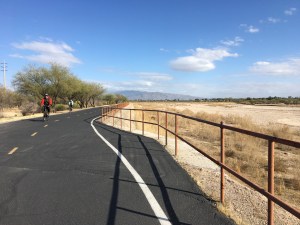
Enter The Loop.  The 55 mile loop that circles the city has just been completed, but it’s much more than that. It is a network with 131 miles of wide, paved, shared use trails that run across vast portions of the city.  Most legs run along “washes” – dry river beds that fill with runoff during the rainy season.  In fact, The Loop grew out of the 1983 flood disaster.  Realizing the need to reinforce the banks of the major washes, the county took the opportunity to create river parks and trails atop the new soil-cement banks.  It has become one of Pima County’s most popular recreational features.

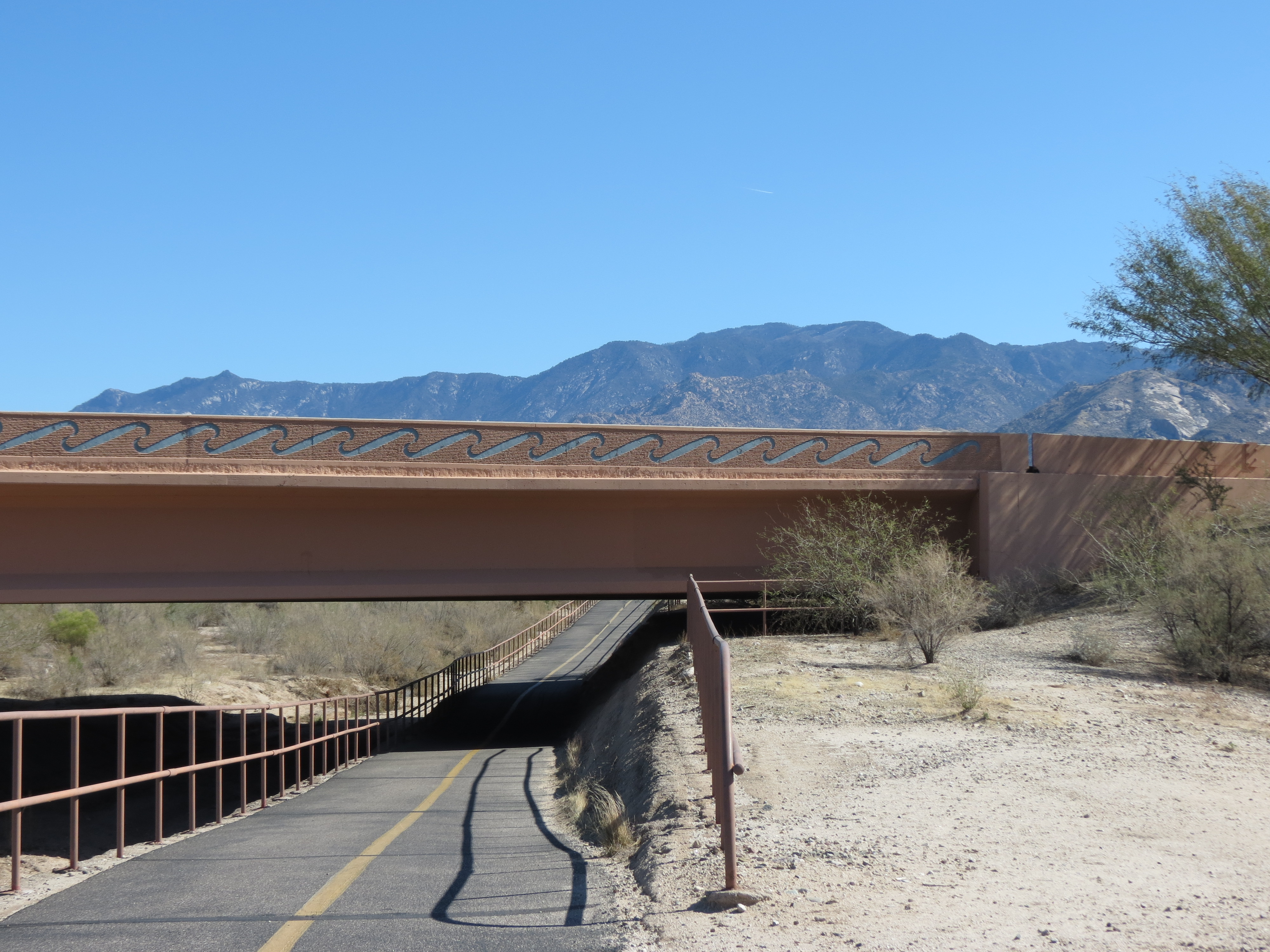
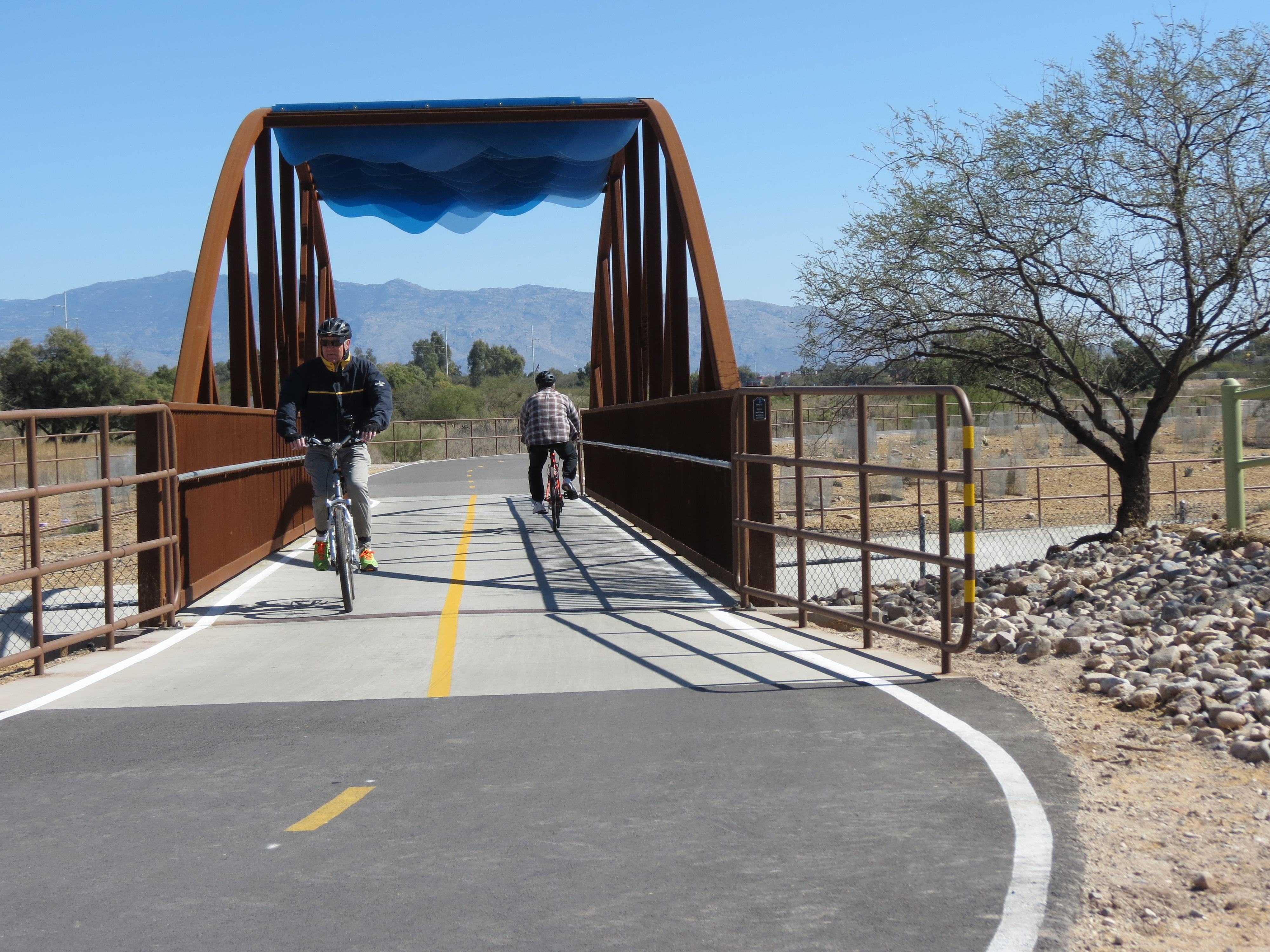
It’s not often that bicycle trails are truly vehicle-free.  But great pains have been taken to shelter The Loop.  The trail dips under streets and bridges cross over side washes.  Many stretches are landscaped with gardens or simply feature desert environs.  Railings carefully guard users from the steep banks that dip into the wash.The Loop going under a bridge The Loop going through a bridge

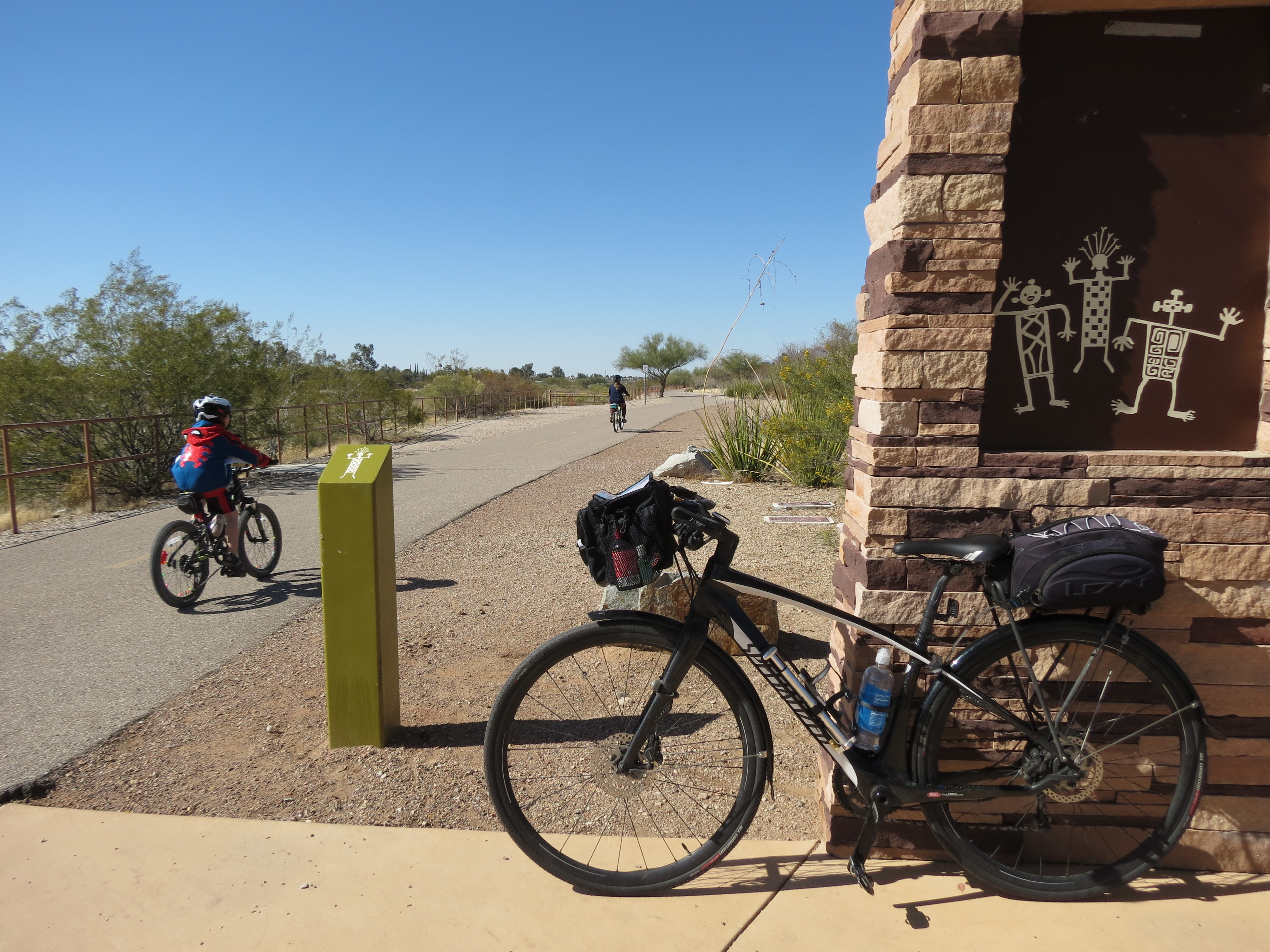
The nearest entry point to The Loop is 4.5 miles from our condo.  It is worth navigating that stretch of bike lanes to reach carefree cycling.  So far, I have covered only about 50 miles of The Loop, but have returned to some sections multiple times.  Coordinating a ride with Rich one day allowed me to venture further afield, from our place all the way out to Catalina State Park – a good 30 mile stretch.

The Loop TrailThe Loop is open to any non-motorized use, and just in the last two days I have seen all types of transport gracefully coexist on its paths.  There were plenty of cyclists, runners and walkers of course.  I also passed strollers, scooters, recumbent tricycles and dog walkers.  The most unusual was a woman on a standing elliptical bike, doing her first 50-mile ride!  It is cycling at its easiest – level with good pavement and well signed.

Molly with bike at Sabino Canyon

Despite the appeal of The Loop, sometimes challenge beckons.  Then I return to Sabino Canyon to climb into its depths during cycling hours.  Or I find my way onto smaller local roads.  Inevitably they rise and fall.  We are in the foothills after all.

It was well worth the long drive to bring our bikes on this trip.  I’ve spent many hours in the saddle this week, exploring Tuscon on two wheels.

Owning the Sabino Canyon

I’ve traded tall pines for stately saguaro cacti.   A frozen creek for dry riverbeds.  Cross-country skis for my bike.  Winter storm warnings and deep snow for sunshine that warms my bare limbs. A woodland park for a desert canyon.

Sabino Canyon 1

It’s this last trade-off that feels significant.  We bought our lot across from Amity Creek for its proximity to nature, the convenience of the trails, the white noise of the waterfalls at night.  Living next to Lester-Amity Park is a statement about who we are, and what we like to do.

Seeking a mid-winter warm-up, Rich and I chose a condo on the outskirts of Tucson, nestled in the foothills of the Catalina Mountains.  Within minutes of unloading the car, we set out exploring, and Sabino Canyon Recreation Area – just a mile away – quickly became our neighborhood park.

Sabino Canyon 2

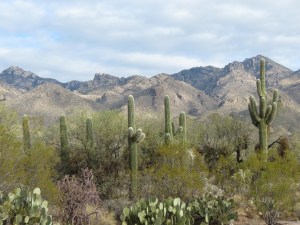
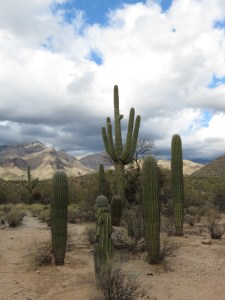
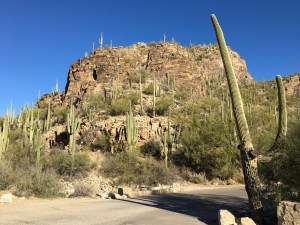
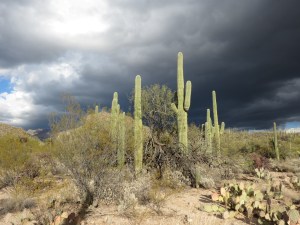
The park has one 3.5 mile road that snakes up into the canyon. The road mostly winds uphill.  There are undulations to provide a bit of climbing relief, but the pitch is reasonable – at least until the last half mile.  It travels through dry mountainsides populated by the mighty saguaro, prickly pear, barrel and other abundant cacti.  Mountains rise in every direction, rocky angled faces dotted with small bits of vegetation.

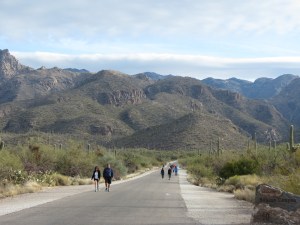
Pedestrians walking Sabino CanyonFrom 9-5 daily, open air shuttles own the road, carting hikers to their trailheads or sightseers merely wanting an easy narrated tour.  Pedestrians are allowed on the road, but bicycles are restricted to the park hours before 9 or after 5.  It doesn’t take me long to discover that those are the prime hours anyway.  The golden hours.

Sabino Canyon sunrise

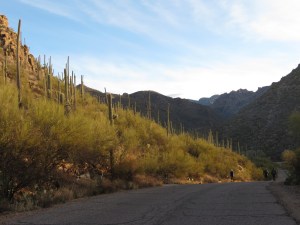
Early mornings are my favorite for cycling or running the road.  I have plenty of company, as a whole generation of gray haired hikers seems to be striding purposefully up and down each morning.  It’s brisk out there, with temperatures  registering in the 30s and the canyon still in the shade of the mountains until well into my workout.  The sun gradually finds its way onto the hillsides, illuminating select bits of the landscape as it works its way above the opposite mountain range.

Sabino Canyon morning

Numerous stone bridges mark my progress.  Having arrived in town following a 3-day rainy spell, the normally dry riverbed is still brimming with flowing water.  As designed, the current flows right over the bridge surfaces, and I follow the example of the hikers who plow right on through.  It’s a cold, wet sensation.  Even on my bike, it’s deep enough to splash my feet.

I save the afternoons for less strenuous pursuits.  A hike on one of the many trails or a slow shorter bike ride up the road still gives me access to the day’s fading light.

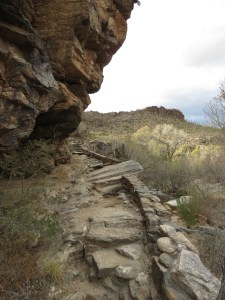
Hiking Sabino Canyon

Sabino Canyon sunset

Proximity is everything.  We’ve explored and enjoyed other parks and wilderness areas here, but this one easily keeps calling us back.  It’s our own park away from home.

October Lightkeeping

What a difference a year makes. Last October we occupied this same spot, performed the same lightkeeping duties and camped in the same tent. But the similarities end there.

Last year five days of mostly cloudy skies, a fair amount of rain and temperatures in the 40s left us shivering despite our winter jackets and long underwear. Our down sleeping bags were our saviors at night. Dark skies challenged the solar power system, which drained away from lack of sun and struggled to regain any power from dim bursts of sun. The challenges did not diminish our love for this gig, nor did it deter us from signing on for another year. But we felt rather foolish for choosing another stint in October.

Fortunately, history did not repeat itself. Far from it. We have enjoyed five days of sunshine, moderate temperatures on the 50s-60s and Lake Superior in her finest blue. I happily resumed my early morning writing sessions on the beach.Molly writing on beach Rich raising the flag Crisp Point wavesOur visitor count is up considerably over last year. We welcomed over 200 guests. All who come lend a new perspective. They hail from as far away as Wyoming and Beijing. Others have local ties and have been coming since before any restoration began in 1998. They know more of the lighthouse’s history than we do, and we love hearing their first-hand experiences. They especially appreciate all the work that the Crisp Point Light Historical Society has put into preserving and enhancing this site. Newcomers never fail to be impressed.
Lighthouse in setting sunWe marvel at the folks who come merely at the suggestion of a lighthouse on a new highway sign. Little do they know the conditions of the dirt road approach, but all agree it was worth the journey. They buy our best selling sticker, “I survived the drive to Crisp Point Lighthouse.”

Thinking that the week could not be more ideal, we are treated to a grand finale. We witness a deep pink sunset from the beach. We have the biggest blazing bonfire yet. Two classic ore boats parade by, illuminated stem to stern with white lights. We watch a glowing sunrise from the lighthouse tower. And the day is balmy and warm.
Lighthouse pink sunset Crisp Point bonfire Sunrise from lighthouseSuddenly October doesn’t feel like such a crazy choice. But just for kicks we signed up for August next year.
Lightkeepers

Lightkeeper’s Haven

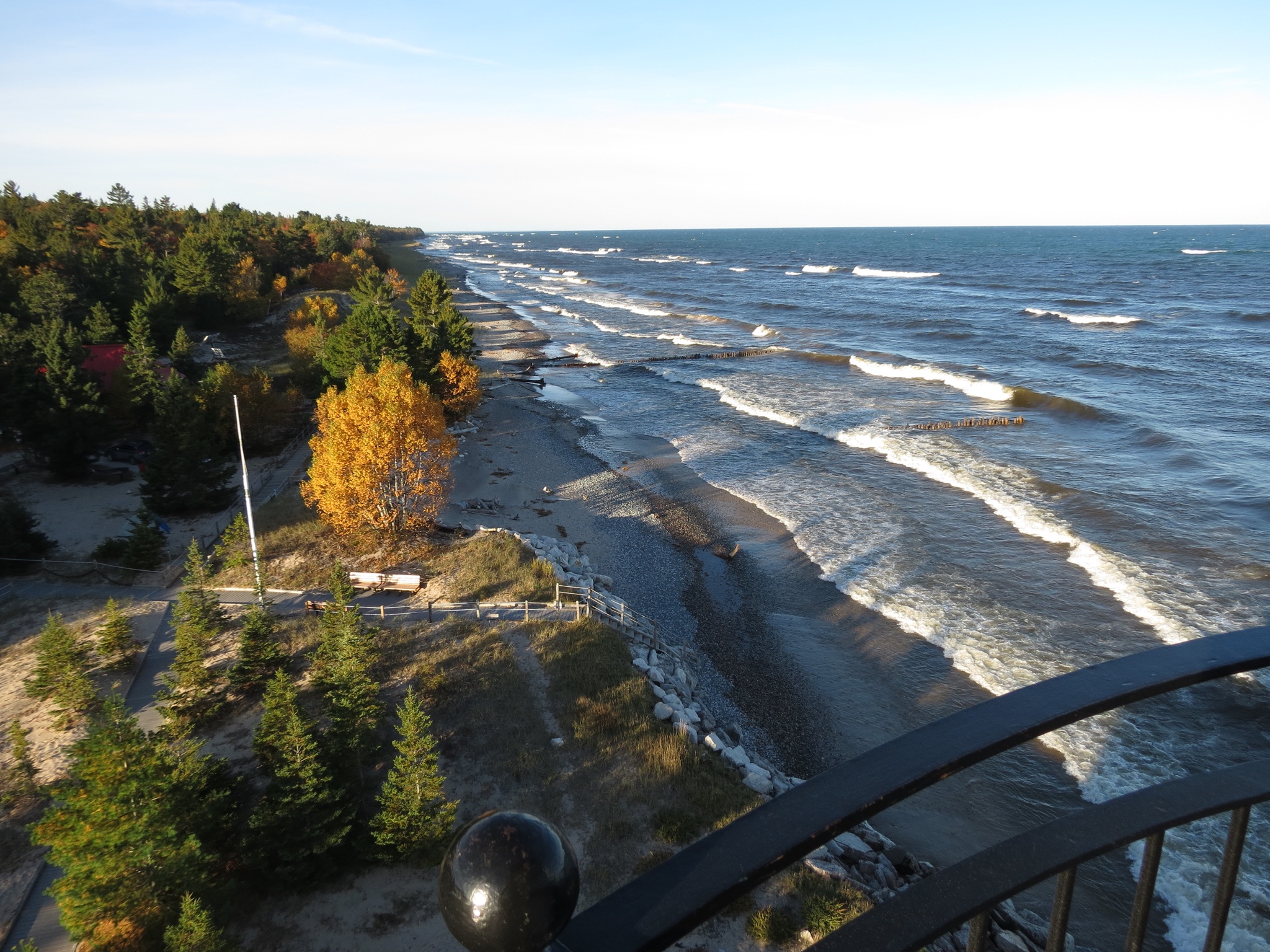
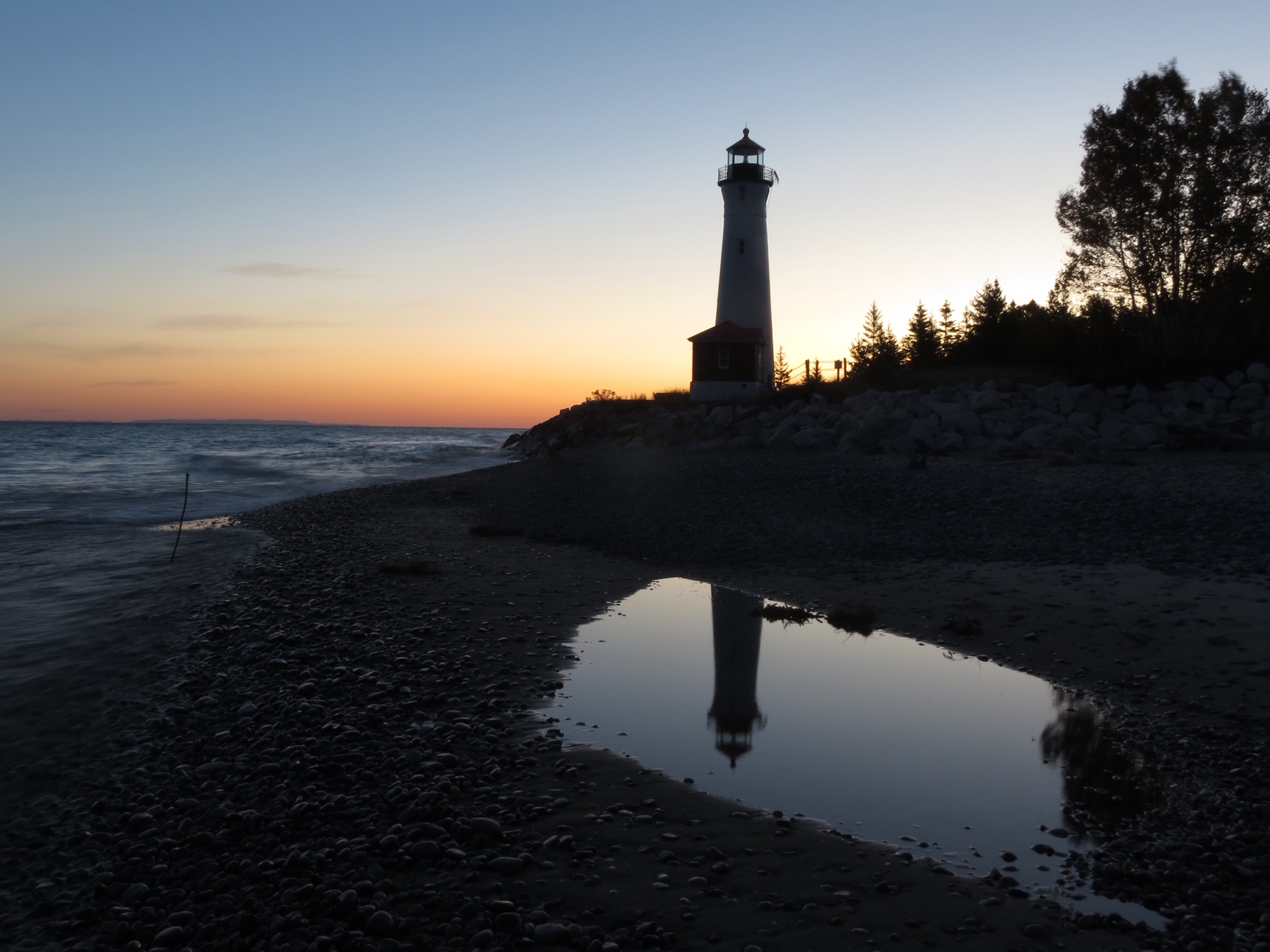
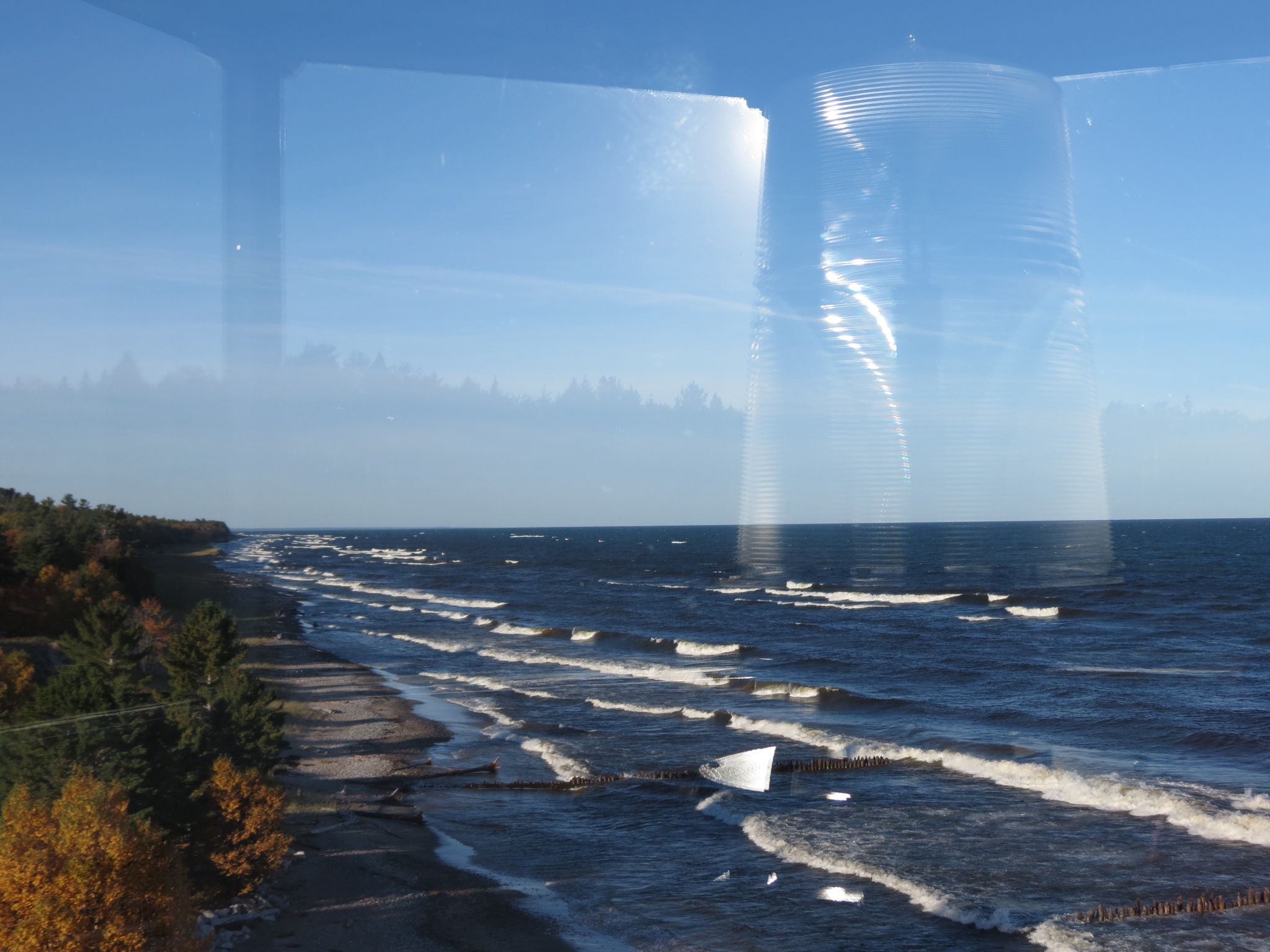
Perched high above the shoreline I own the landscape. Lake Superior relinquished her pounding waves overnight leaving mere ripples on the surface and gentle pulses kissing the sand. Long shadows cross the beach and the neighboring trees are bathed in the glow of the low sun. The water’s sound competes only with the wind as it whistles through the open doors to the catwalk. Morning’s cool fresh air contrasts with the warmth of the sun on my back.
View from lighthouseIt is a rare privilege to claim a lighthouse for one’s own, even if only for five days. From 10am – 6pm we share this beauty with others seeking to explore her, acting as light keepers and welcoming visitors. But the early morning hours and evenings are ours.

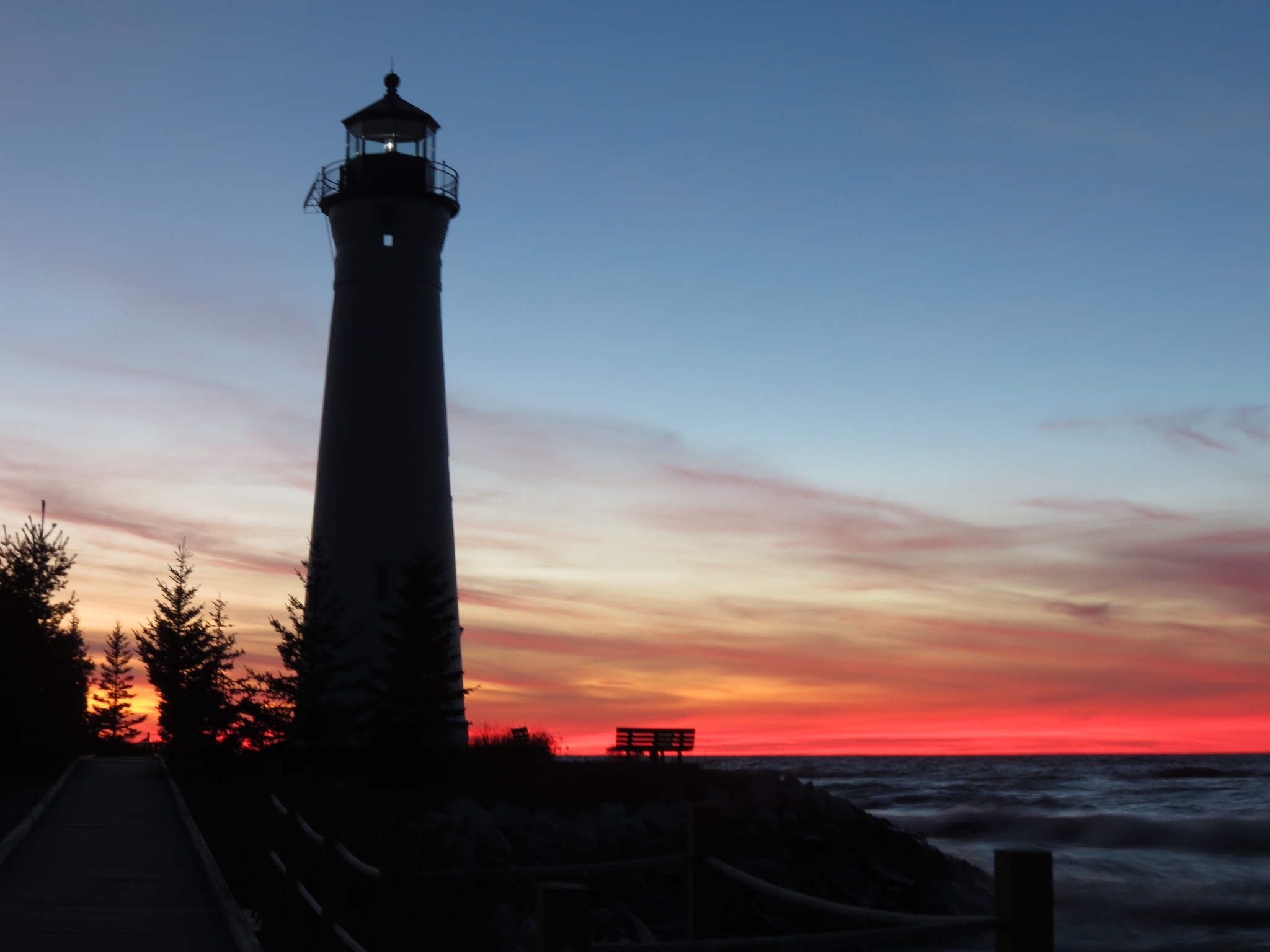
My morning began while the stars still dominated the sky. Emerging from our tent, wet with an overnight ground fog, the intermittent beam from the lighthouse was the only source of illumination. I could barely make out the rocks on the beach as I picked my way down the waterfront while the eastern skies took on their first rosy glow. On my return the orange hues crept up around the lighthouse to meet the velvety dark blue above.
Lighthouse sunrise reflectionWalking the opposite side, I took in the handiwork of the lake, reconfiguring the shoreline even since last year. The high water level has eaten its way up into the dunes, carving off the front slope to reveal multi-colored sand strata in its new vertical edge.

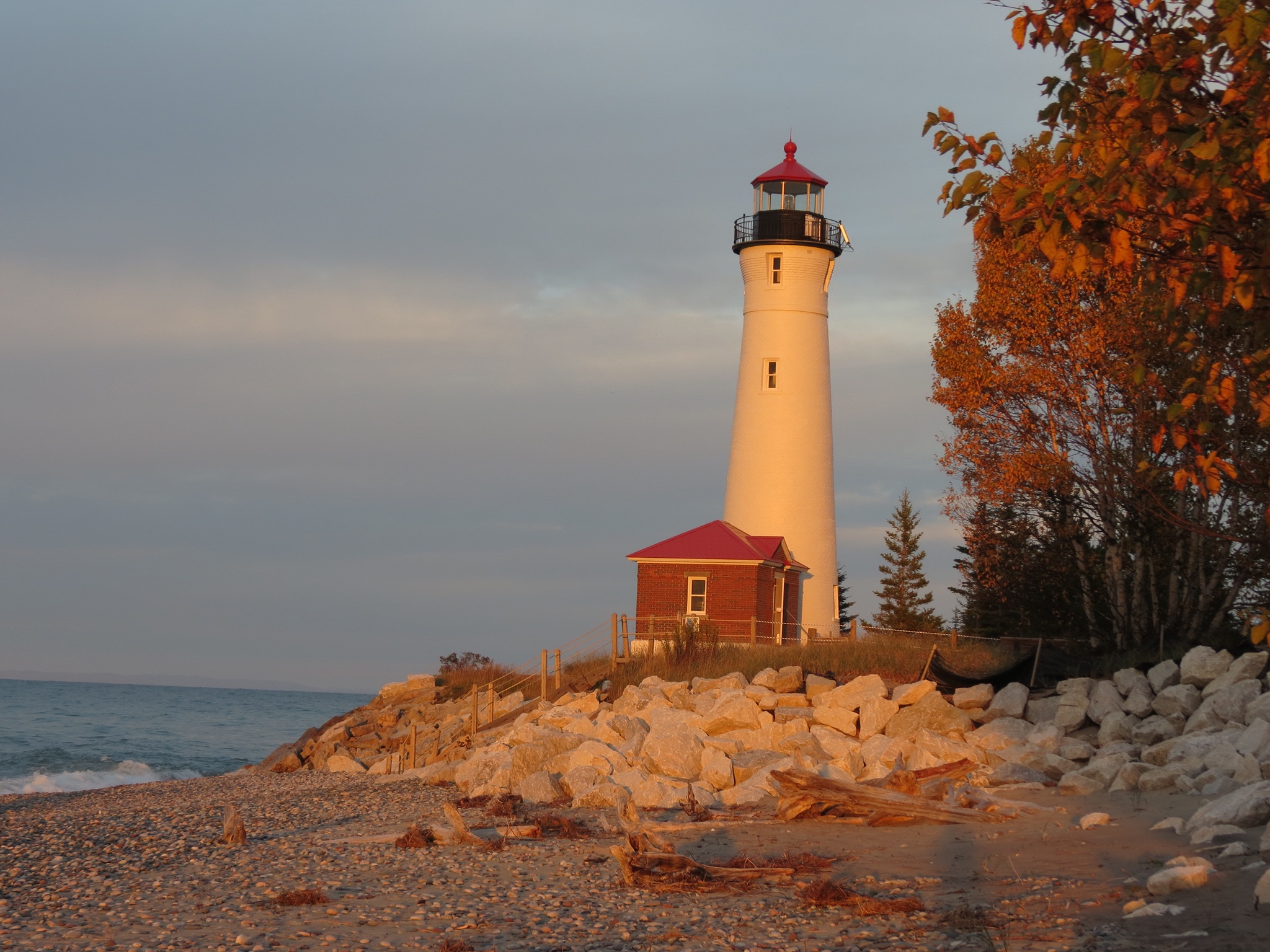
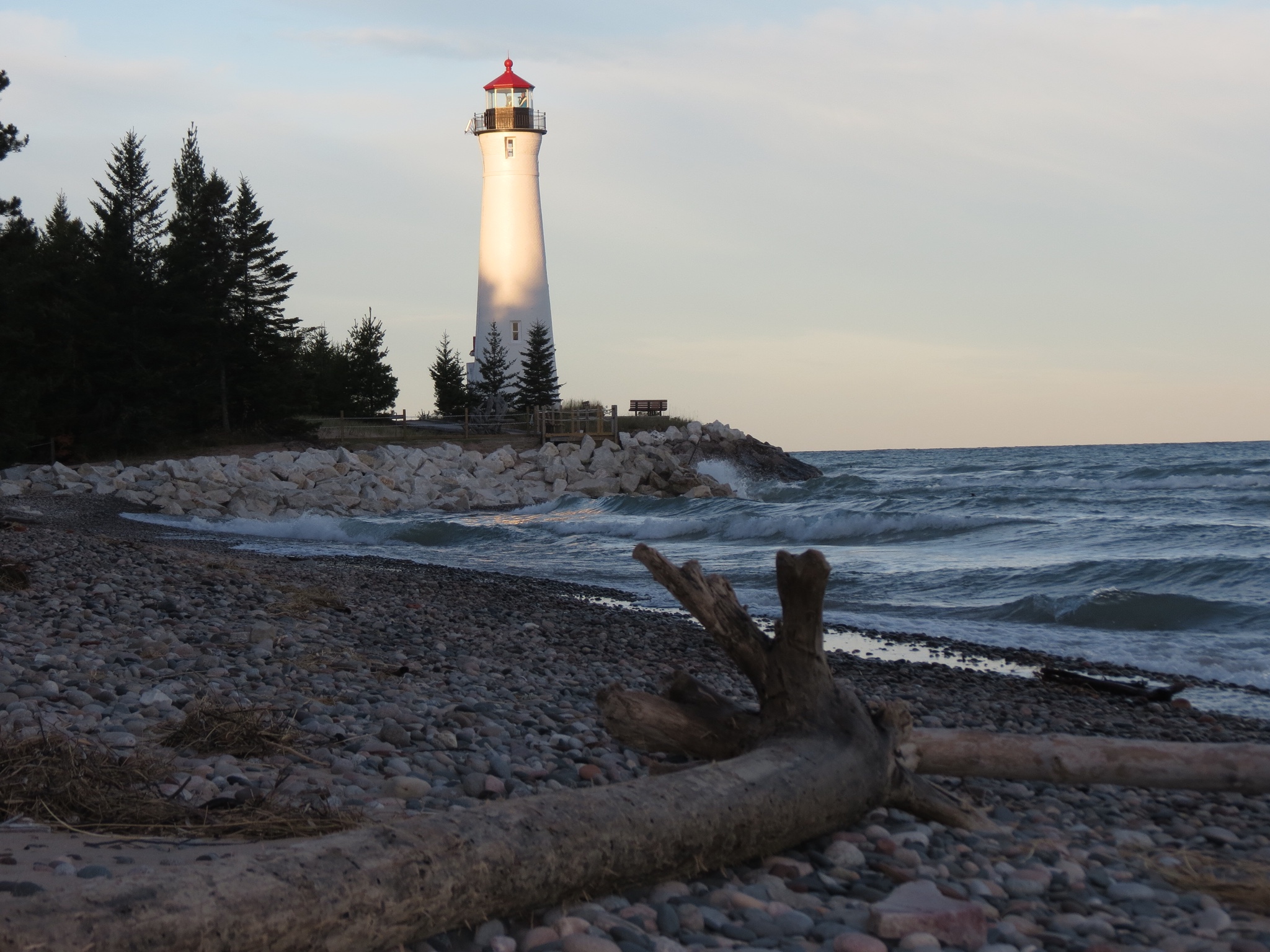
Once more my return yielded new views of the lighthouse. The sun embraced its red cap and glass face, walking gently down its elongated white body. Soon only the shadows of the nearest trees remained and stubbornly lingered.
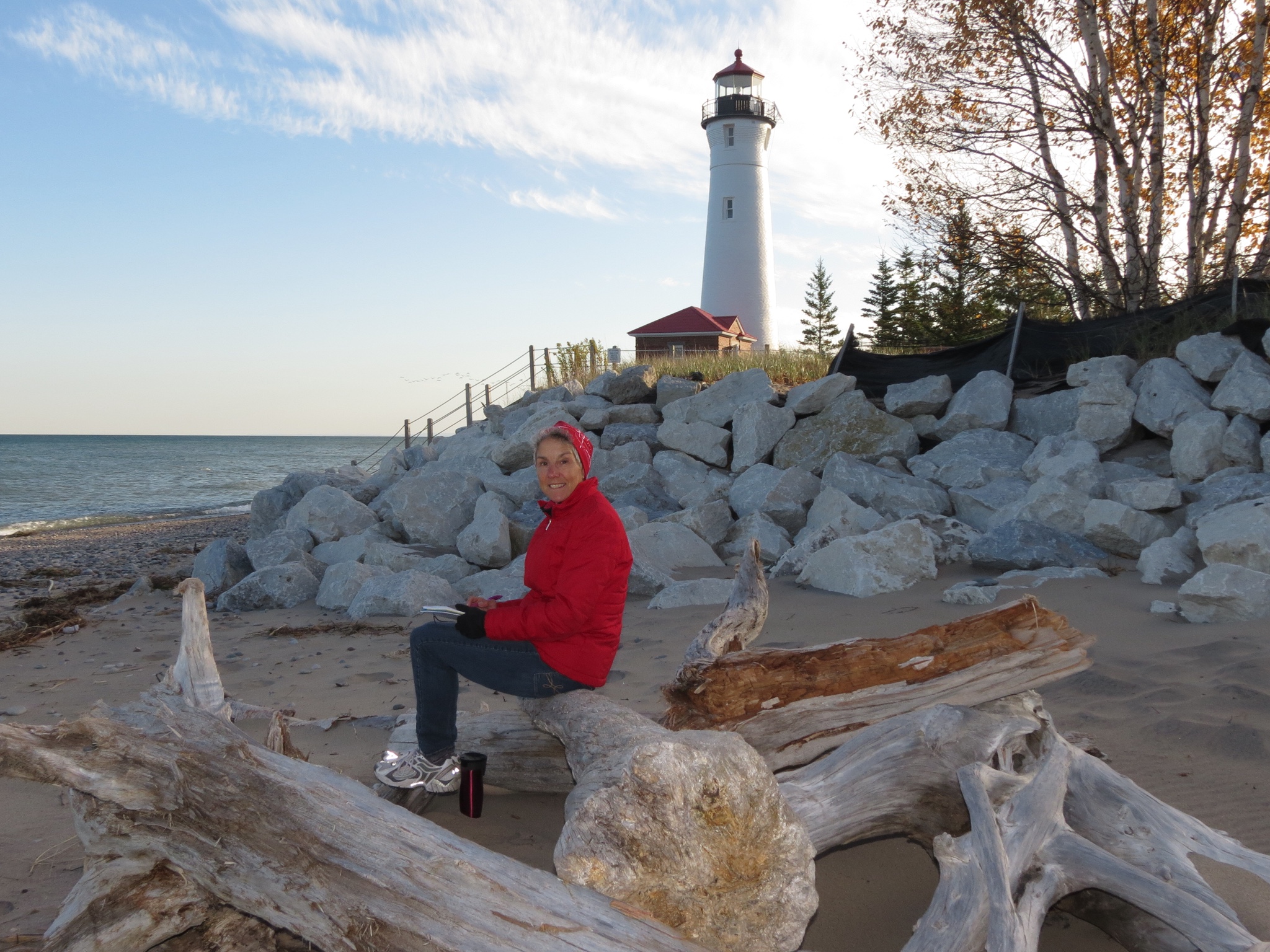
Sun on lighthouseThe morning’s light show complete, it is time for my final retreat. Ditching my usual spot on a driftwood seat on the beach, I climb the lighthouse, coffee mug in hand, writing tools at the ready. Here I sit, sheltered from the wind with the world at my feet. The moments are precious. I do not take my keeper’s privileges for granted. Soon I will relinquish my private haven – the public awaits.

Hello Again Crisp Point

The road is a test. On a good day its 18 miles of dirt merely dissuade the meek. The bumps and sand require patience and slow travel. No one reaches Crisp Point Lighthouse by happenstance. You have to really want to come here.

On this day the road challenges have been multiplied. Two days of heavy rain have transformed the sandy surface into mud and littered its length with water hazards. To call them puddles would be an injustice. Approaching each of these seas raises the same question, “How deep is it?” A certain technique evolves, starting with a prayer of thanks for all-wheel drive followed by a confident burst of speed through the most promising spot. With splashes and waves in our wake, another satisfied sigh, “Oh, pretty deep.”

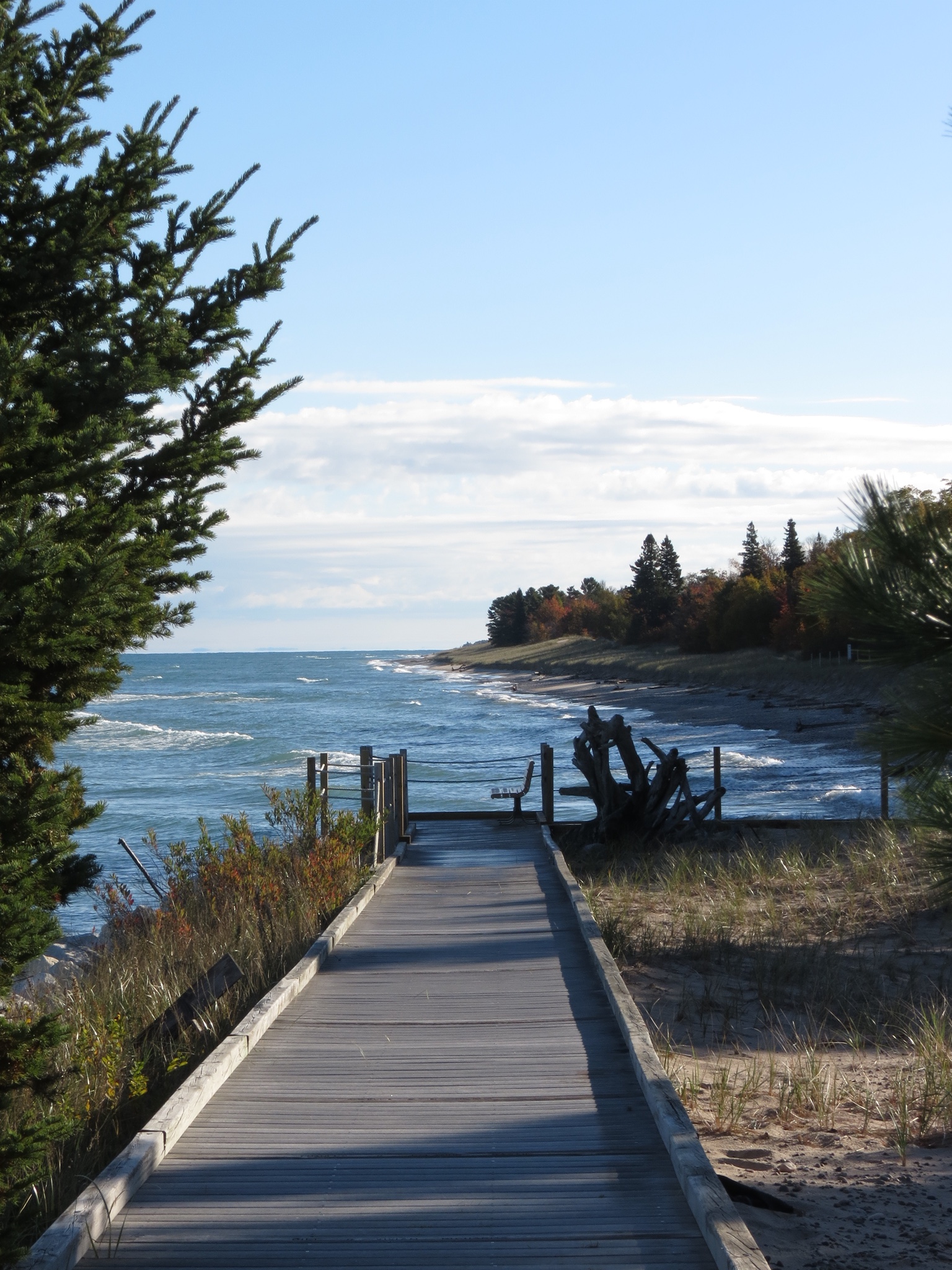
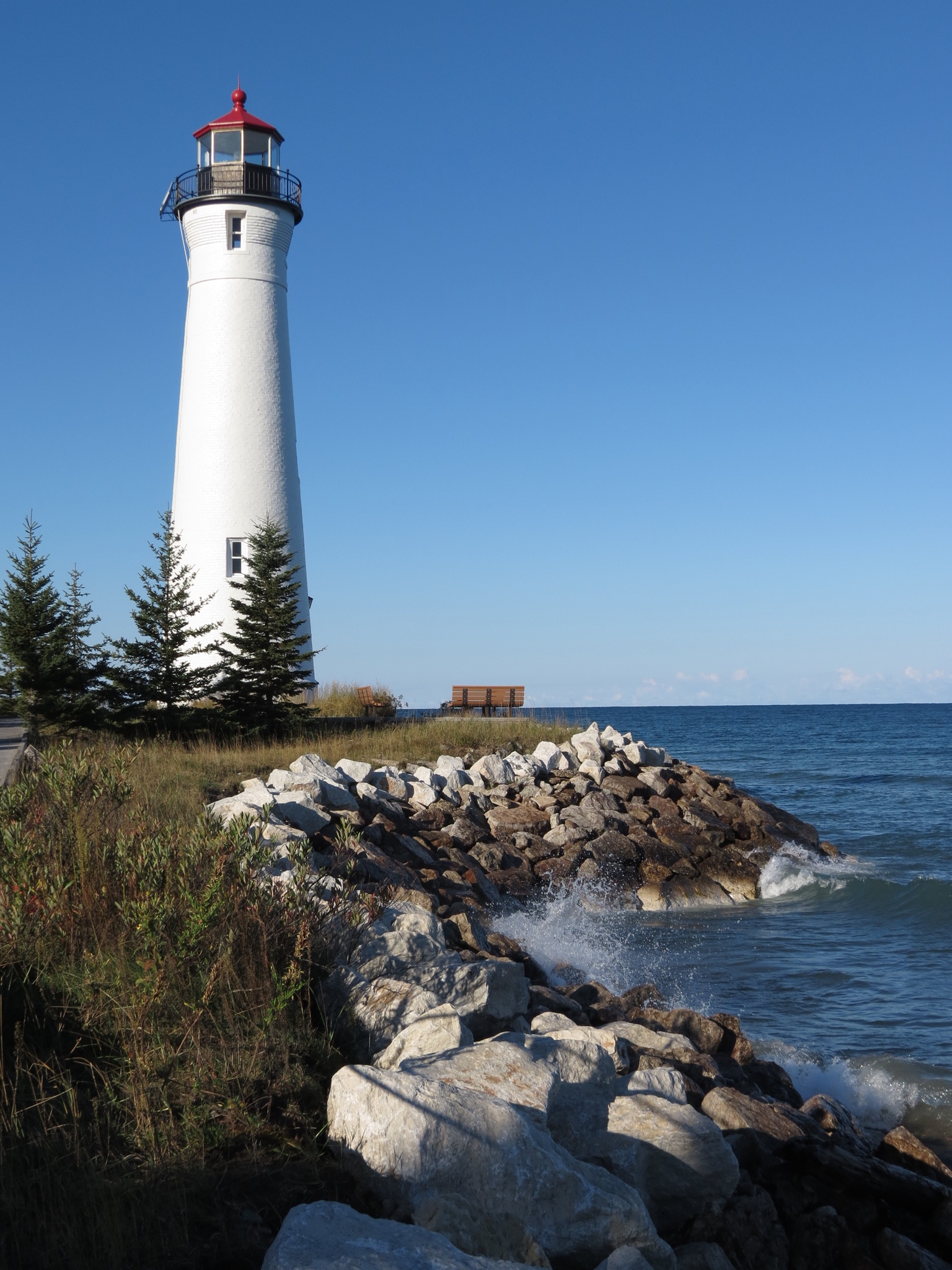
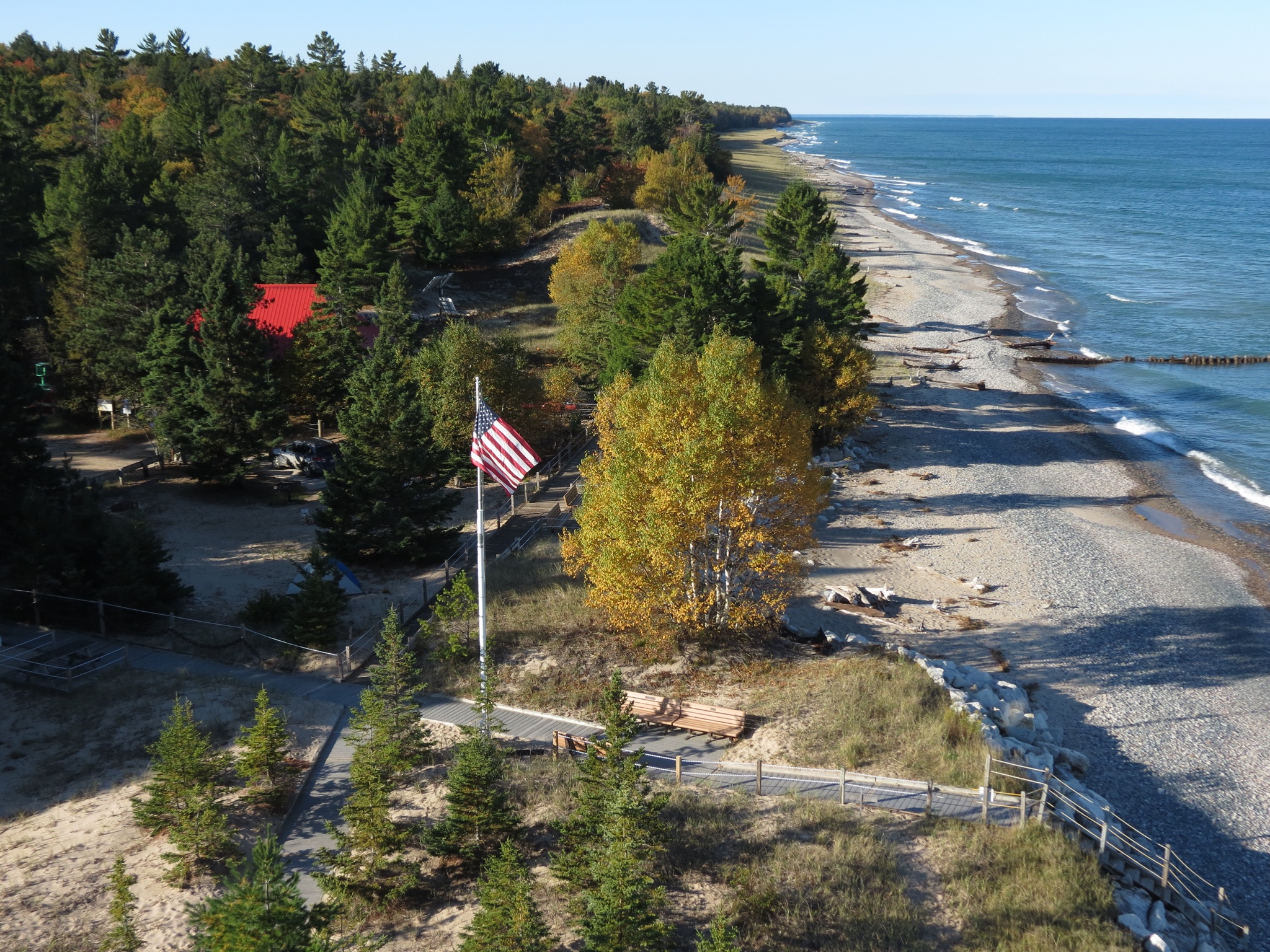
It is our fourth time returning to Crisp Point Lighthouse on the far western end of Lake Superior as volunteer lighthouse keepers. Arriving early in the morning for our five days of duty, the lighthouse greets us bathed in early morning sunlight. It is like seeing an old friend. Rapidly, before visitor hours begin, we reacquaint ourselves with every inch of the site.Lighthouse on arrivalLighthouse close-upLake Superior churns against the sandy pebbly shore. Remnants of the recent winds, the waves curl in white foamy regularity, its thunderous noise filling my ears. Fall colors are peaking; yellows and reds pierce the more prevalent pine landscape against the shore. The sun lends a welcome warmth to the near freezing air.Waves from tower Boardwalk and beachOver it all towers the lighthouse. Freshly painted it stands determined against the shore, daring the waves that now crash at its base. Those waves have already eaten away 12 of the original 15 acres that once surrounded this light and buffered it from the greedy lake. A new layer of boulders has been added to the line of defense, a constant battle waged by the dedicated volunteers of the Crisp Point Light Historical Society.Lighthouse defensesOur campsite awaits, a single spot reserved for the keepers. Our home away from home with all the amenities – sandy soft tent site, fire ring, barbecue grill, picnic table and Lake Superior views.Campsite from lighthouseOnly the mud-caked car reminds us of our journey to get here. We aced that test and this is our reward.

A Google Guest

We met through a Google search using two terms, “Lake Superior” and “ferries.”  The second result yielded my story in Bicycle Times about our Lake Superior Half-Tour using the Isle Royale ferries to cross the lake.  From there it was an easy leap for Tony to find us on Warm Showers.

If that all sounds a bit like gibberish, you are probably not a touring cyclist.  But to those of us of that cult, it all makes perfect sense.  In fact, it’s the epitome of traveling by bicycle – meeting great people in the most unexpected ways.

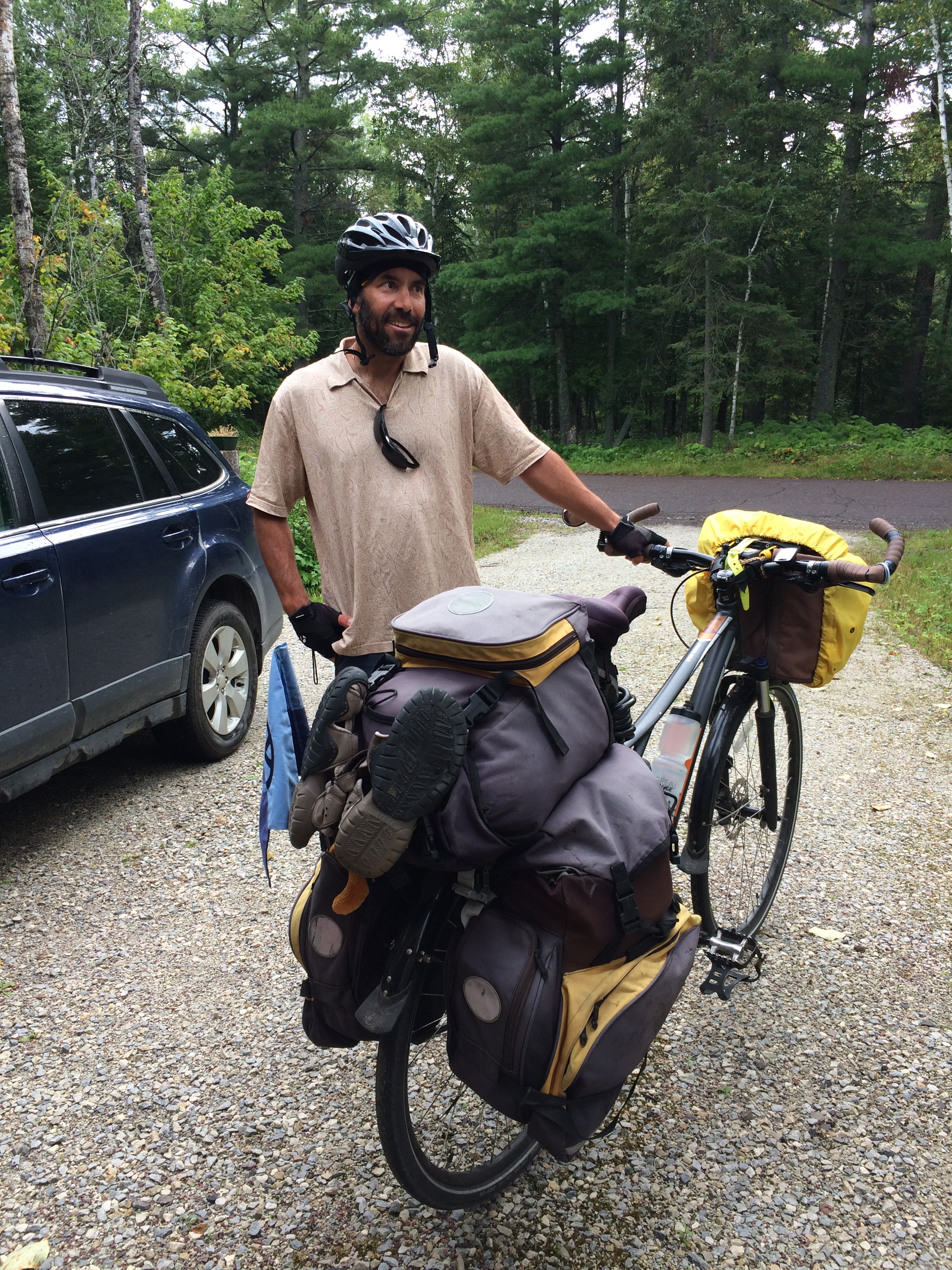
Tony is in midst of a cycling trip across the US.  In the spirit of his easy going nature, he makes up his route as he goes, taking advantage of opportunities as they arise and dealing with what nature delivers. By the time he reached northern Minnesota, he had heard enough about the dangerous section of the Trans-Canada Highway above Lake Superior to know he wanted to avoid it.  Hence his Google search.  And my story.

A quick check on the Warm Showers app confirmed his suspicion that we were indeed members – part of the cyclists who hosts cyclists network that exists world-wide.  A few keystrokes later, it was all arranged.  Tony would cycle 90 miles and stay with us the next night.

Living in Duluth, we are not on a heavily traveled cycle route, so we have cycling guests only a few times each summer.  But the routine is always the same:  Provide a bedroom, offer up shower and laundry facilities, serve a bountiful dinner to replenish their depleted calories, and engage in lively conversation about where our respective cycle tours have taken us.  It never fails to be an entertaining evening.

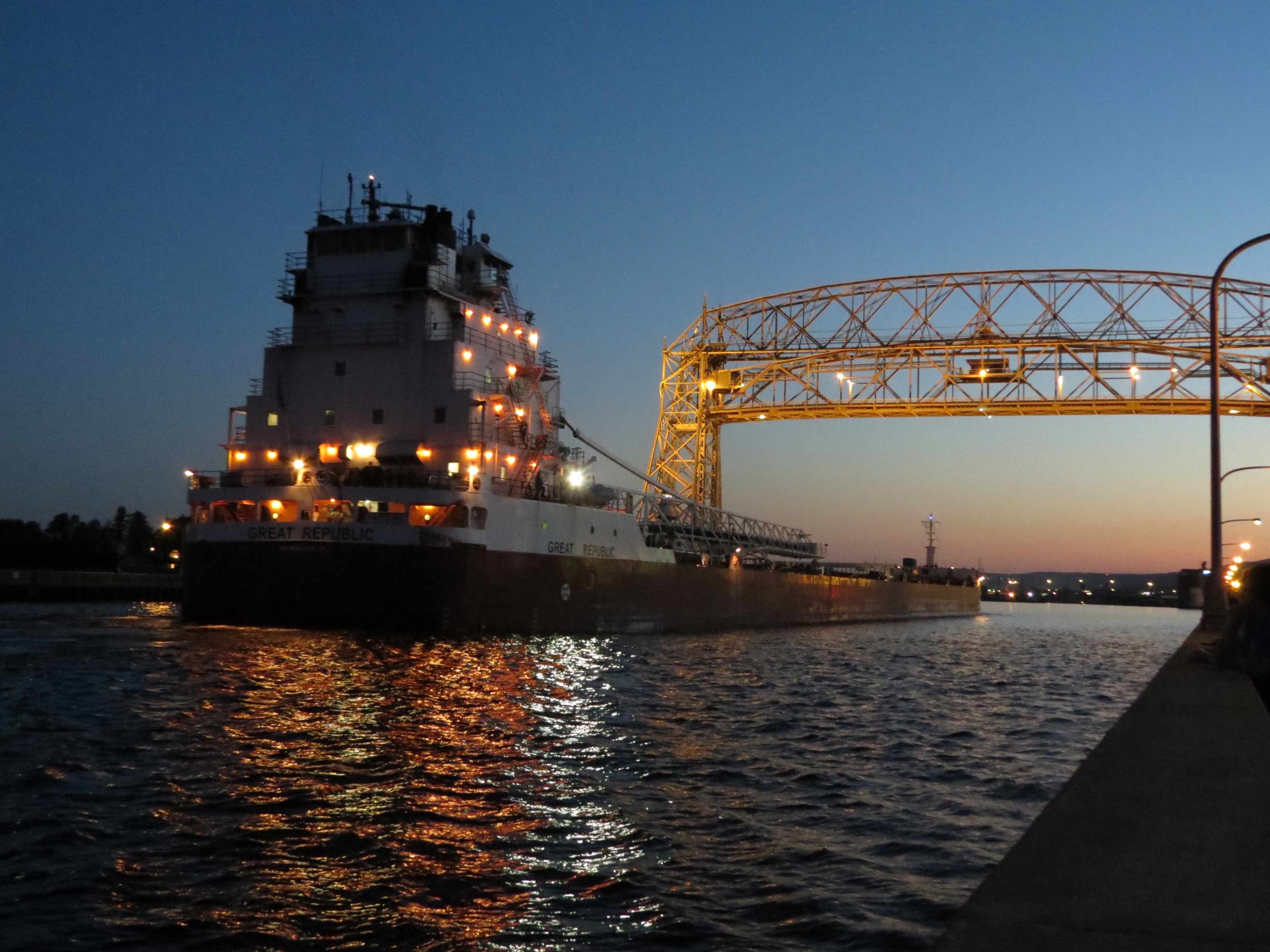
Evening Arrival under the bridgeThat night, Duluth provided a perfect summer twilight.  Not only was it still warm, but the lake was unusually calm.  Best of all, a boat was headed for the Aerial Bridge.  We were able to give Tony the ultimate local experience.

We sent Tony off with a big cyclist’s breakfast in the morning.  But he didn’t get far.  A broken spoke turned out to be evidence of more serious wheel damage, and replacement parts would not arrive until morning.  Tony took it in stride, and we took Tony back in.  Another evening of sharing, a walk along Amity Creek and good vibes of friendship ensued.Tony FossatiIt’s always a pleasure to welcome cyclists to our home.  Countless others have done the same for us.  No matter how we find each other.

Yellowhead Tour in Retrospect

We’ve seen in all before. It’s the same but different. With the ferry ride back from Haida Gwaii our Yellowhead Cycling Tour is officially complete. We have been reunited with our car and are retracing our route east toward home. As we unravel all the miles we just cycled, it inevitably conjures up reflections.

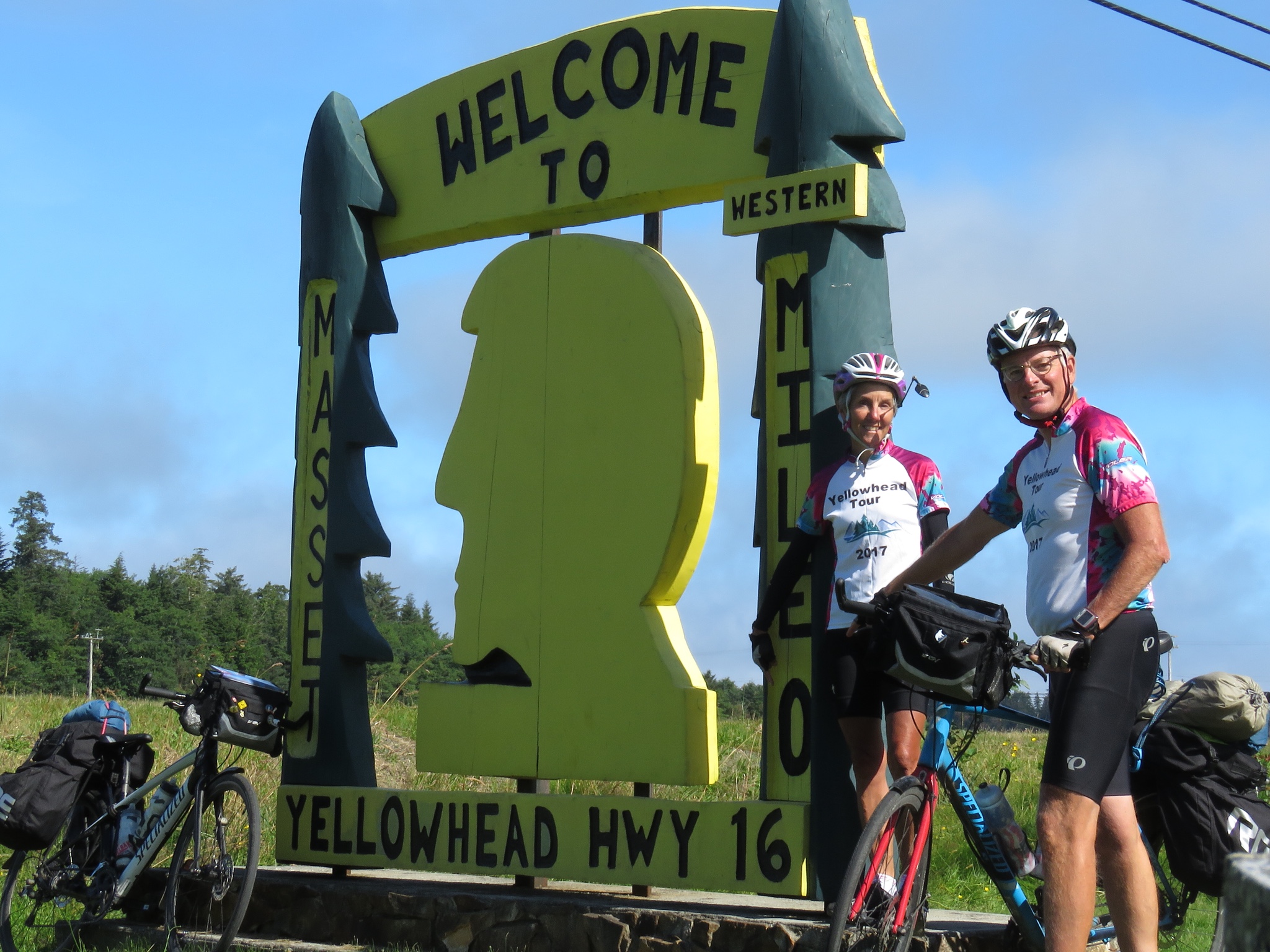
We actually began retracing our route while still on Haida Gwaii. At the top of the island stands a sign marking Mile 0 for the Yellowhead Highway. Completing the highway was a milestone but not the end. We doubled our pleasure on that stretch, returning to our starting point at the ferry landing.

Yellowhead Mile 0

This is the first time we have driven the exact same route that we cycled. It is an odd sensation, flying over the miles – one hour for each day we spent on our bikes. Our eyes are glued to the road, the sights, the eateries and the lodgings we knew so well at that slower pace. Memories flash by as rapidly as the miles.

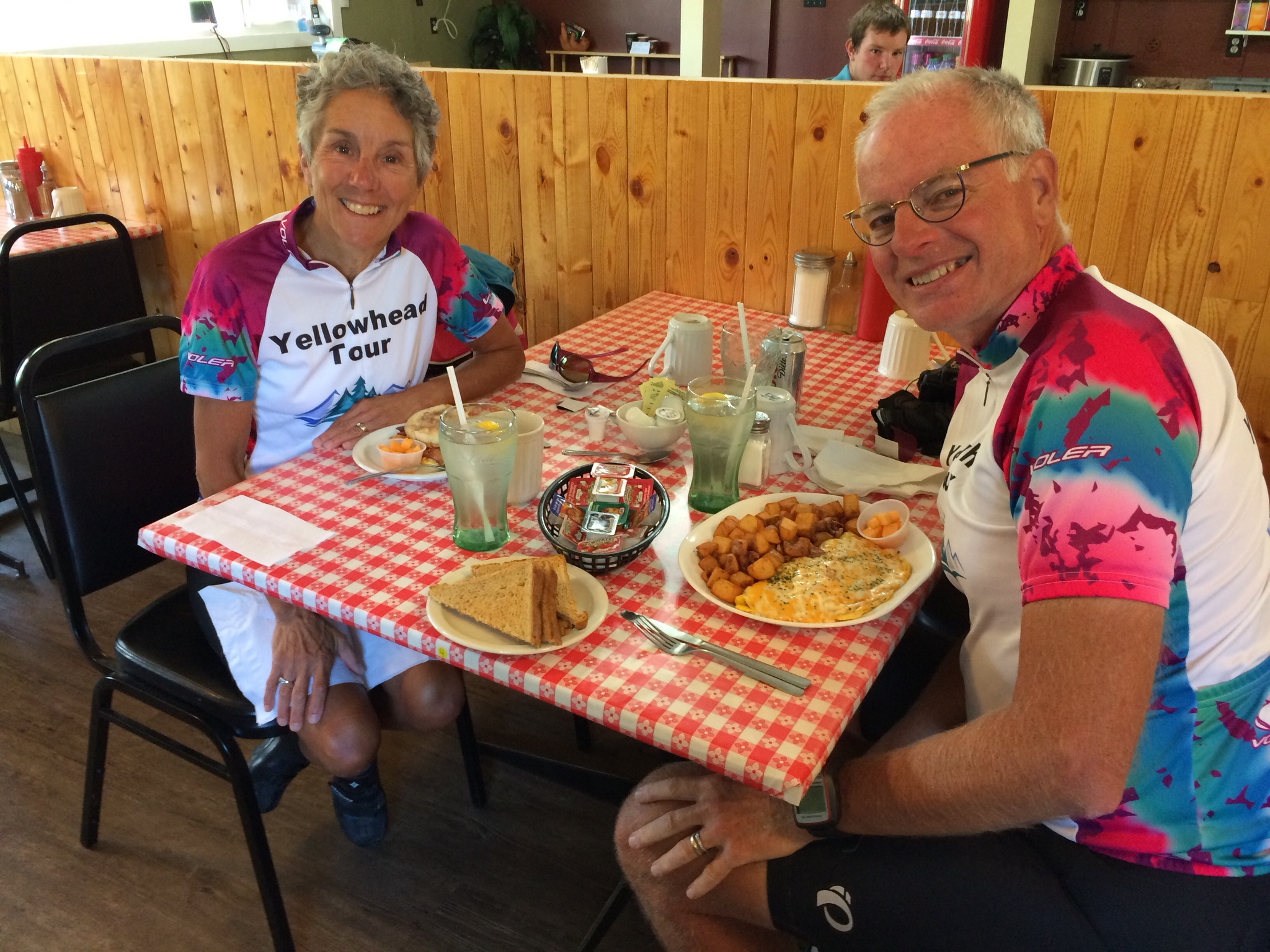
In the car, we have far more options. We can chose any restaurant we like, even if it is not on our route. And yet, we find ourselves yearning to revisit our favorites. It is surprising to discover just how well we had chosen when limited to venues in close proximity.

Restaurant stop

As we move rapidly eastward, we are reminded of the day by day changes we witnessed in the topography and population density. Starting our cycling in Prince George, we endured the congestion, heavy trucks, well worn roads and crumbling shoulders that spill out of a good size city. It was a good two days before we shed that density of civilization. The further west across British Columbia we went, the fewer the people. The more dramatic the scenery. The more remote it became. The better the cycling. The Yellowhead transitioned from busy trans-Canada highway to a quiet link between small communities. It was all so very gradual on our bicycles.

Molly roadside
River and mountains

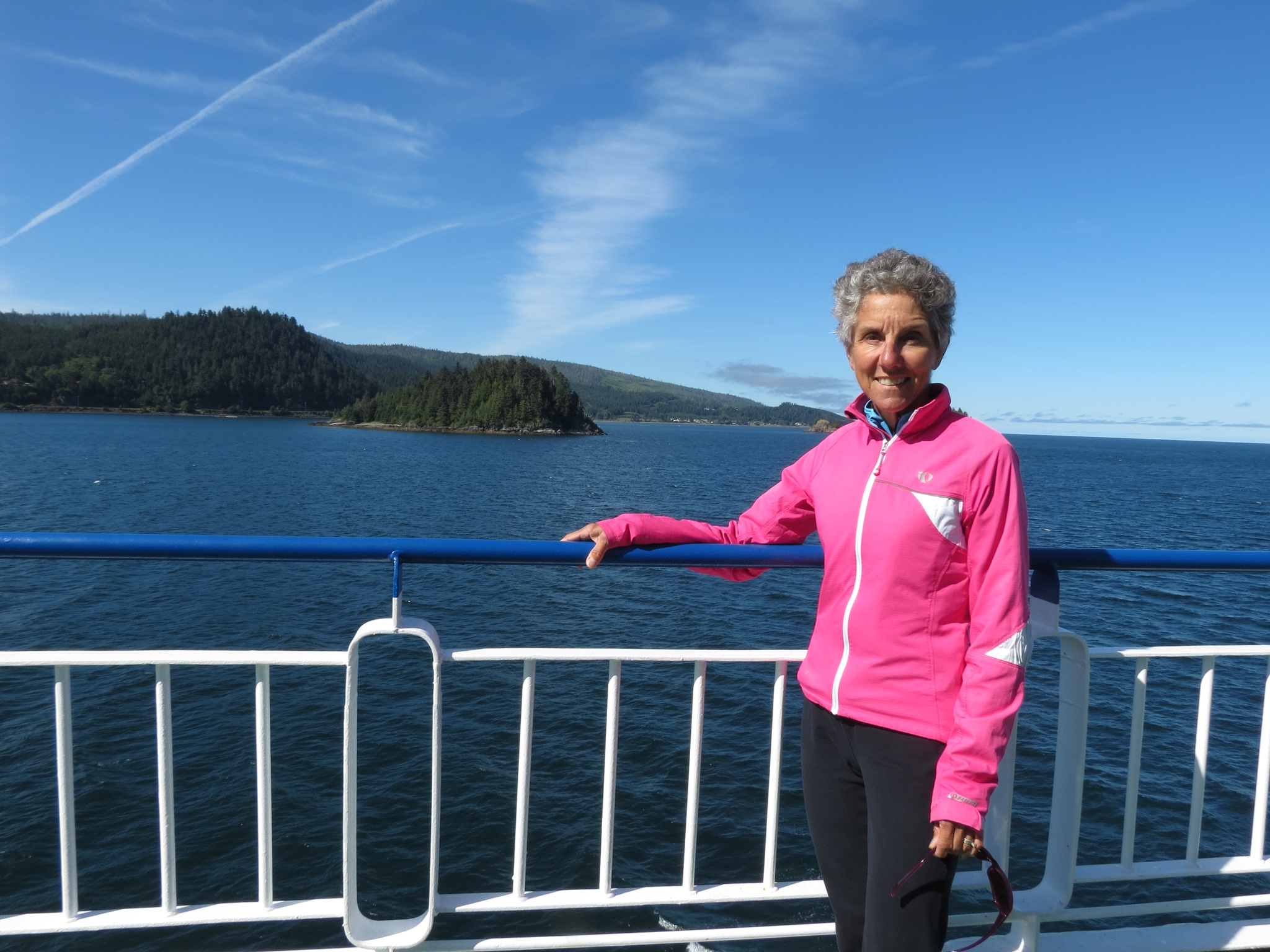
The more western section was clearly our favorite. It had all the top features we value on our cycling tours. Water – passing lakes, following rivers. Scenery – mountains and wilderness. Safety – little traffic, good shoulders and pavement. Our finale on Haida Gwaii elevated all that to greater heights. We loved it as much as everyone said we would. And despite the dire warnings of turbulent ferry crossings, we had calm waters in both directions – much to the relief of my sensitive system.

Morning ply and beach
Morning Loy on ferry

The most stark message that comes through is our extreme good fortune with the weather. In the 15 days of cycling, we had a total of 30 minutes with a rain shower. Each day we reveled in the sunshine and clear skies, knowing it was highly unusual and incredibly good weather luck. And that certainly was true. But it was only part of the story.

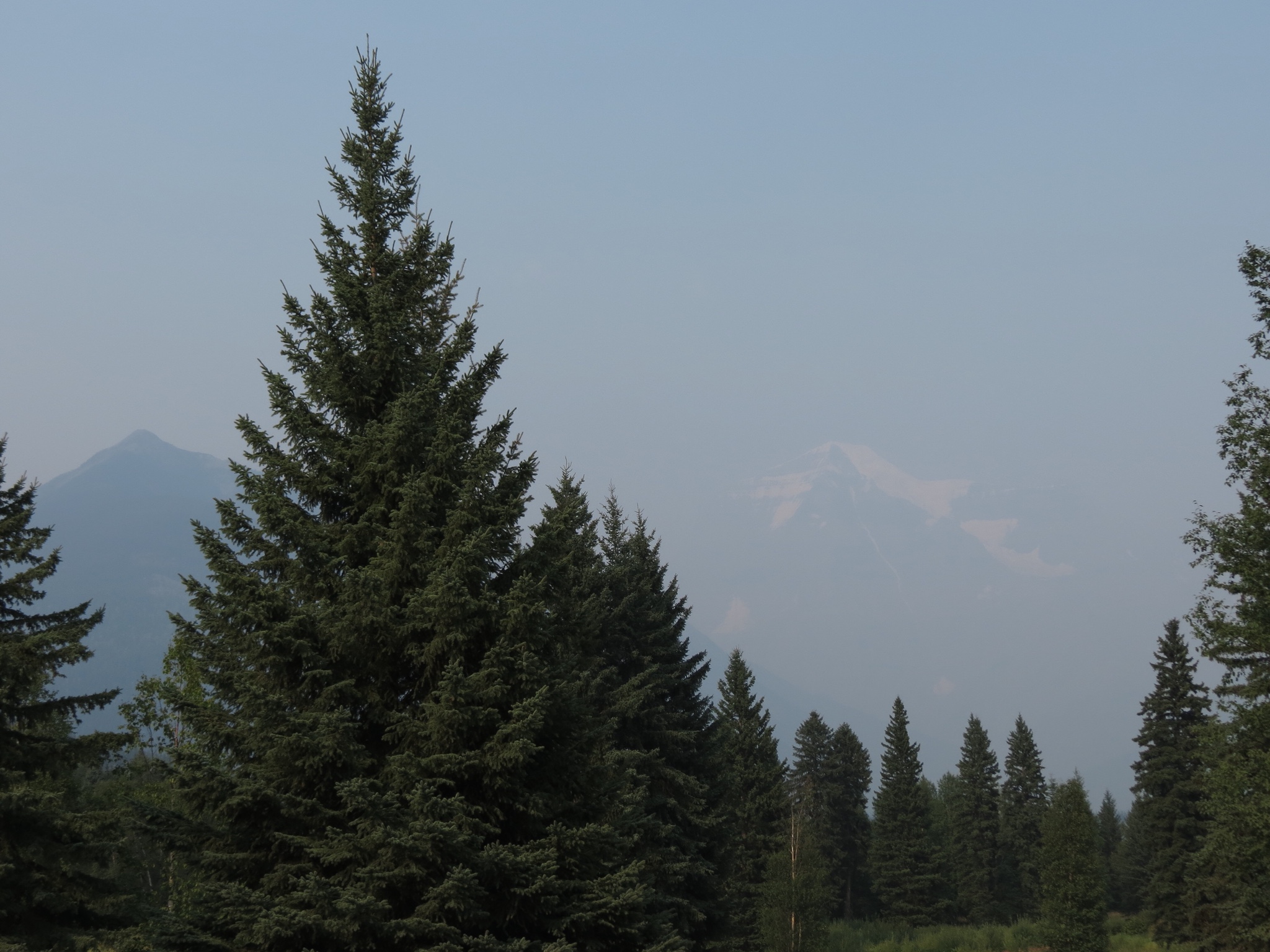
All the while we cycled, wildfires were blazing south of us in BC. Now, the smoke from those fires blankets the area. The blue sky and unlimited views that we enjoyed are no longer visible. The mountains are dim shadows in the distance, more an idea than a reality. Even the near hills are obscured as if in fog. The air is thick. The sky a uniform opaque white, despite the fact that it is still a “sunny” day.

Through a sheer happenstance in timing, we had idyllic conditions for the Yellowhead Tour. It could just as easily have gone the other way.

Before and after smoke
Mountains in smoke

In retrospect, we were blessed. We were able to see God’s creation in all it’s pure glory. The Yellowhead Tour is now history. Another one for the memory books.

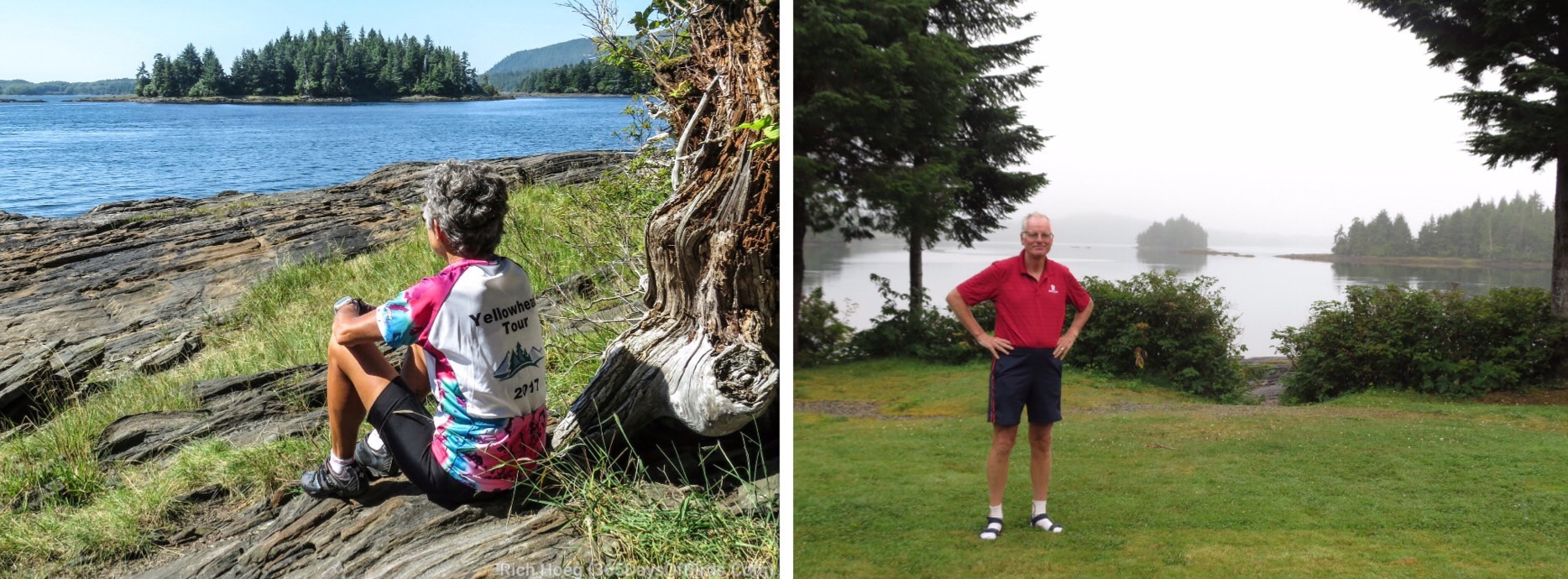
Molly and Rich Yellowhead Tour


Haida Ravens and Eagles

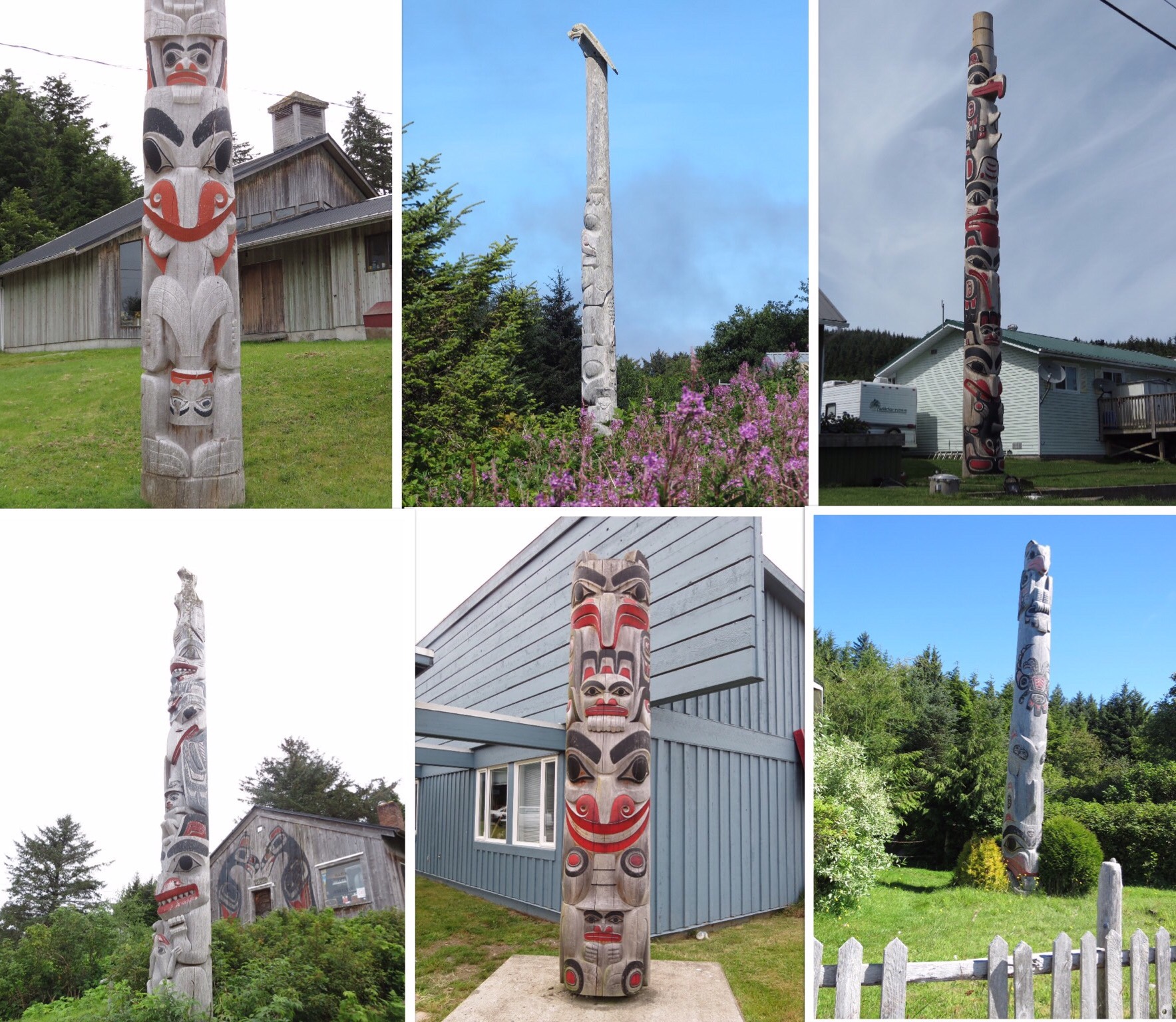
Tall and symbolic. Colorful and artfully crafted. We found carved poles throughout Haida Gwaii, the most frequent reminder of the Haida culture. To visit the islands is to be steeped in the heritage of the Haida Nation. This is what sets it apart from any other group of beautiful islands.

Throughout their history, the Haida have been known for their art. Blessed with a temperate climate and bountiful resources, they had the benefit of time to invest in developing their crafts.

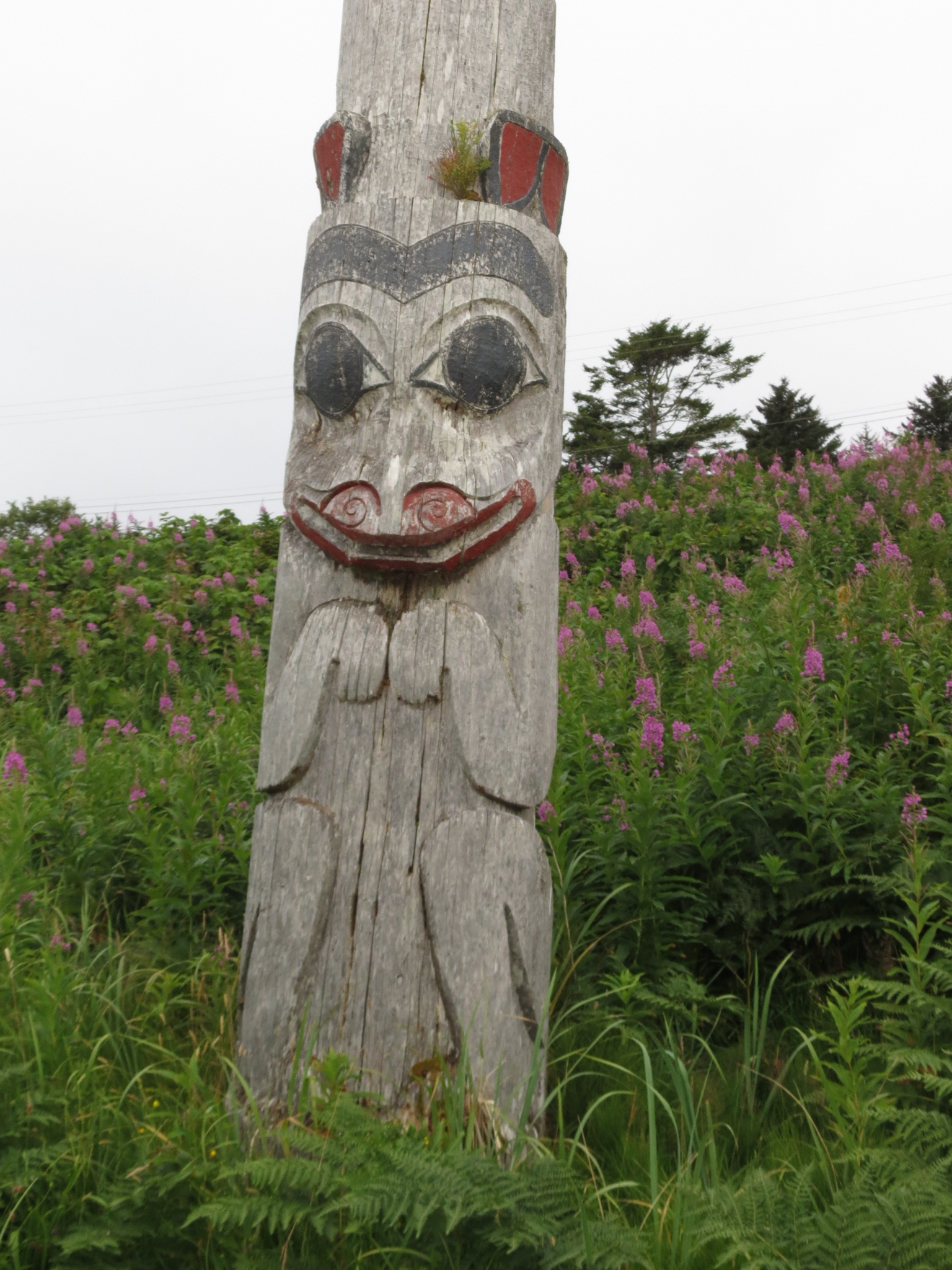
Today the Haida populations are concentrated in Skidegate in the south, and Masset to the north. In those commmunities we found visible artistic expression on display. Haida poles appeared just about anywhere in town – front yards, community buildings, signs, and cemeteries. Many were memorials. One was a Chieftanship pole. Another a medicine pole. These poles are commonly called totem poles, but are more accurately named crest poles as they feature crests – figures of animals, birds and mythic beings that identify the pole's owner and his moiety or social group, Raven or Eagle.

While eagles and ravens are easily identified in nature, carved on a pole they are sometimes harder to recognize. The Old Massett sign features one of each. An eagle on the left, with a sharply curved beak. On the right is a raven, with a straight beak.

This detail is from a pair at the end of a soccer field in Old Massett.

Outdoor Haida art is not confined to poles. Buildings too are adorned with painted or carved symbols. I found these on community structures, homes and galleries.

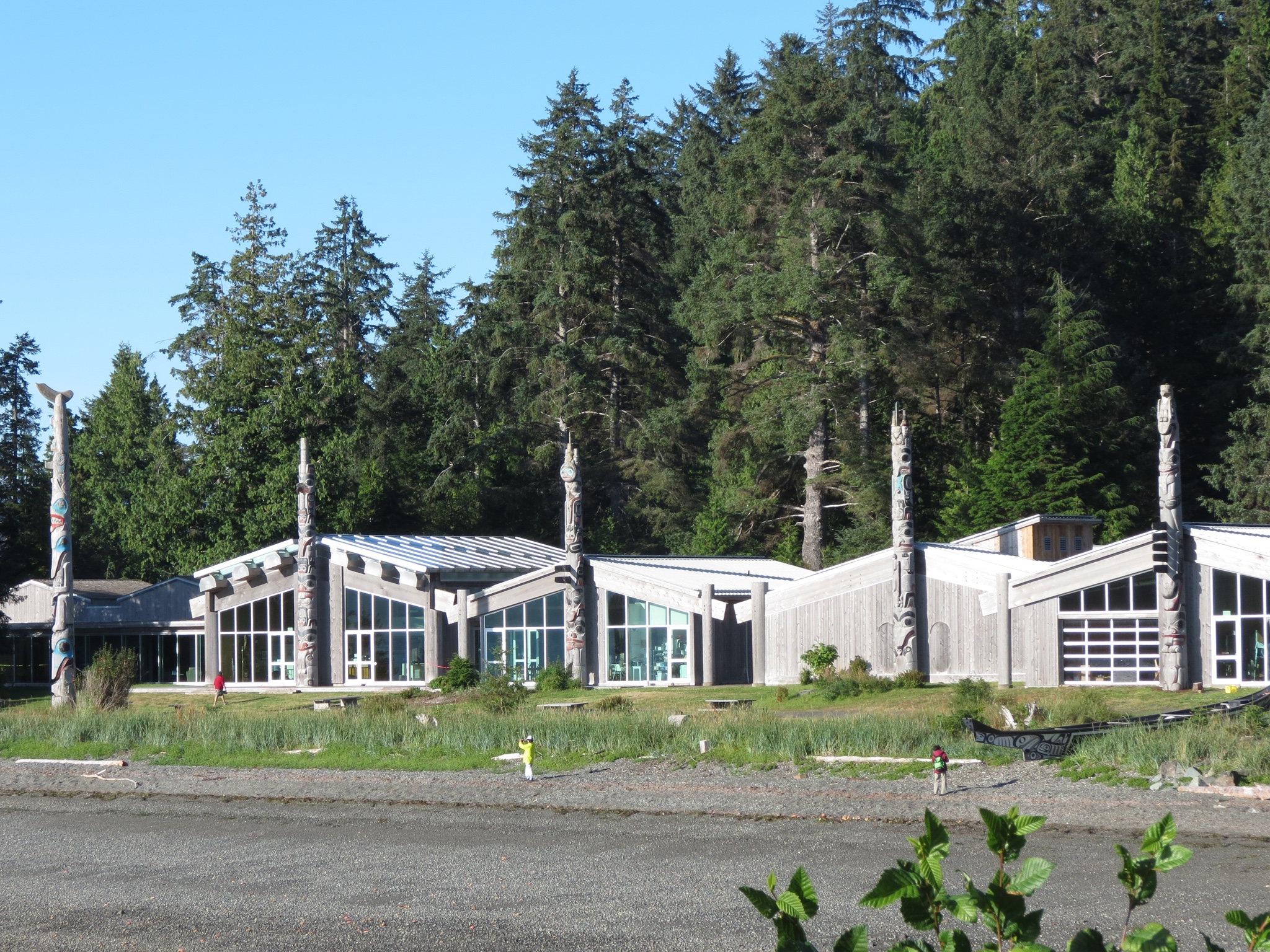
The best source of information and displays of Haida culture is the Haida Heritage Center. It is an ideal first stop after arriving on the ferry to get a good grounding in the Haida Nation. This recently built museum and resource center houses collections of Haida artifacts and detailed displays to preserve and share their history. Its buildings include a carving shed, where I was able to watch a craftsman carving a new totem pole. Seeing its design etched on the log and coming to three-dimensional life under his tools was the highlight of my visit to this center.

The ravens and eagles of Haida art were also in abundance live on the island. I've never seen so many bald eagles! It became commonplace to look up and see one flying overhead. Or many. On our first day Rich counted 29 eagles on the 2-mile stretch between the ferry dock and Skidegate. But on our return, it was even better.

I stopped on Front Street in Skidegate to inspect a pole. Opposite the houses, in a community grassy area on the water were numerous bald eagles noisily squawking and circling overhead. We soon noticed the nest in a tall dead tree, with eaglets eager to be fed. Rich was in his element. This was bird photography at its best, and he was anxious to capture it.

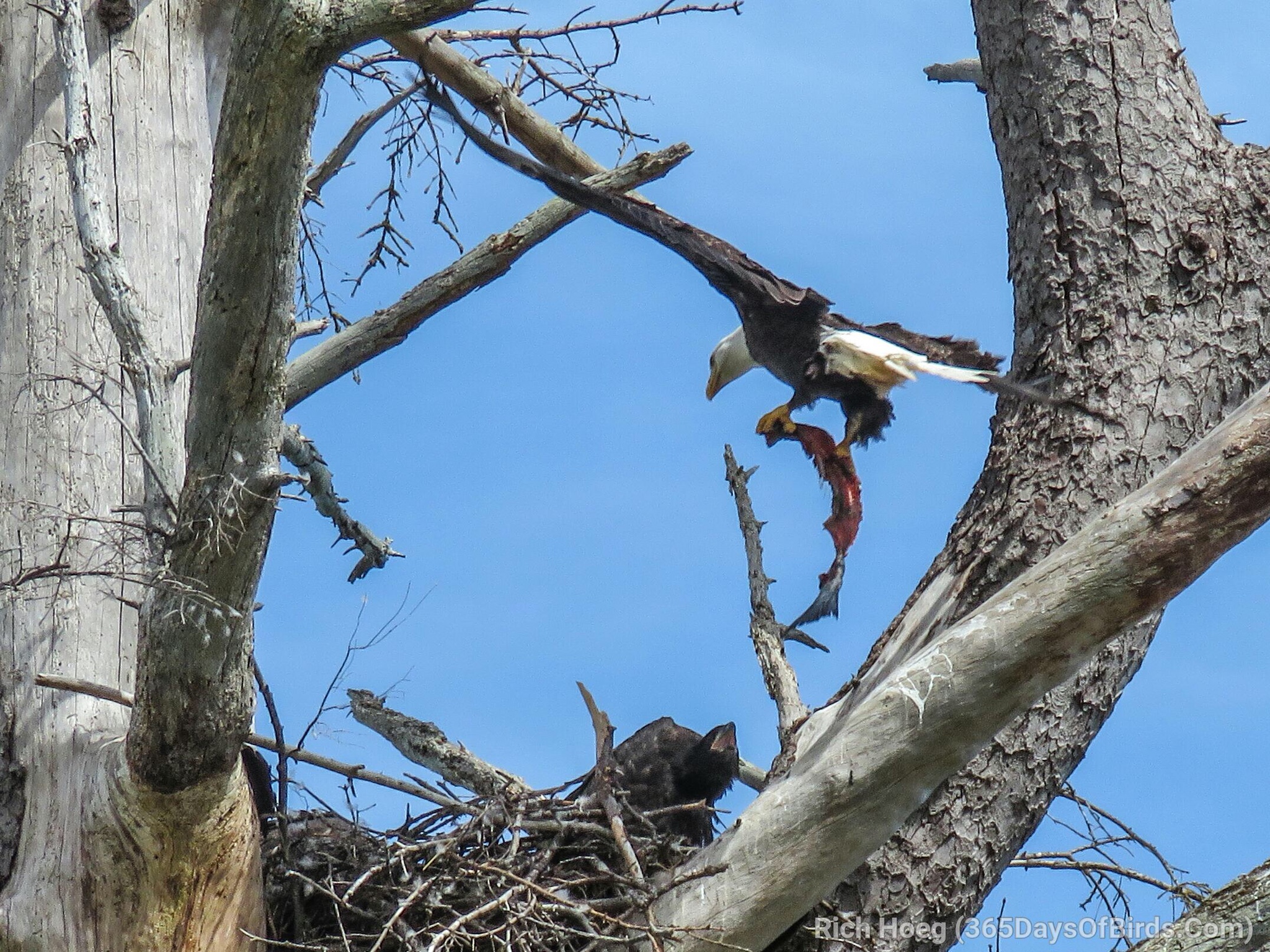
Eagles flew overhead with fish parts, while others approached with talons extended and poised to steal the tasty morsels. I watched as one eagle parent fought off his competition and successfully delivered his meal to the eaglets in the nest.

Eagle nest
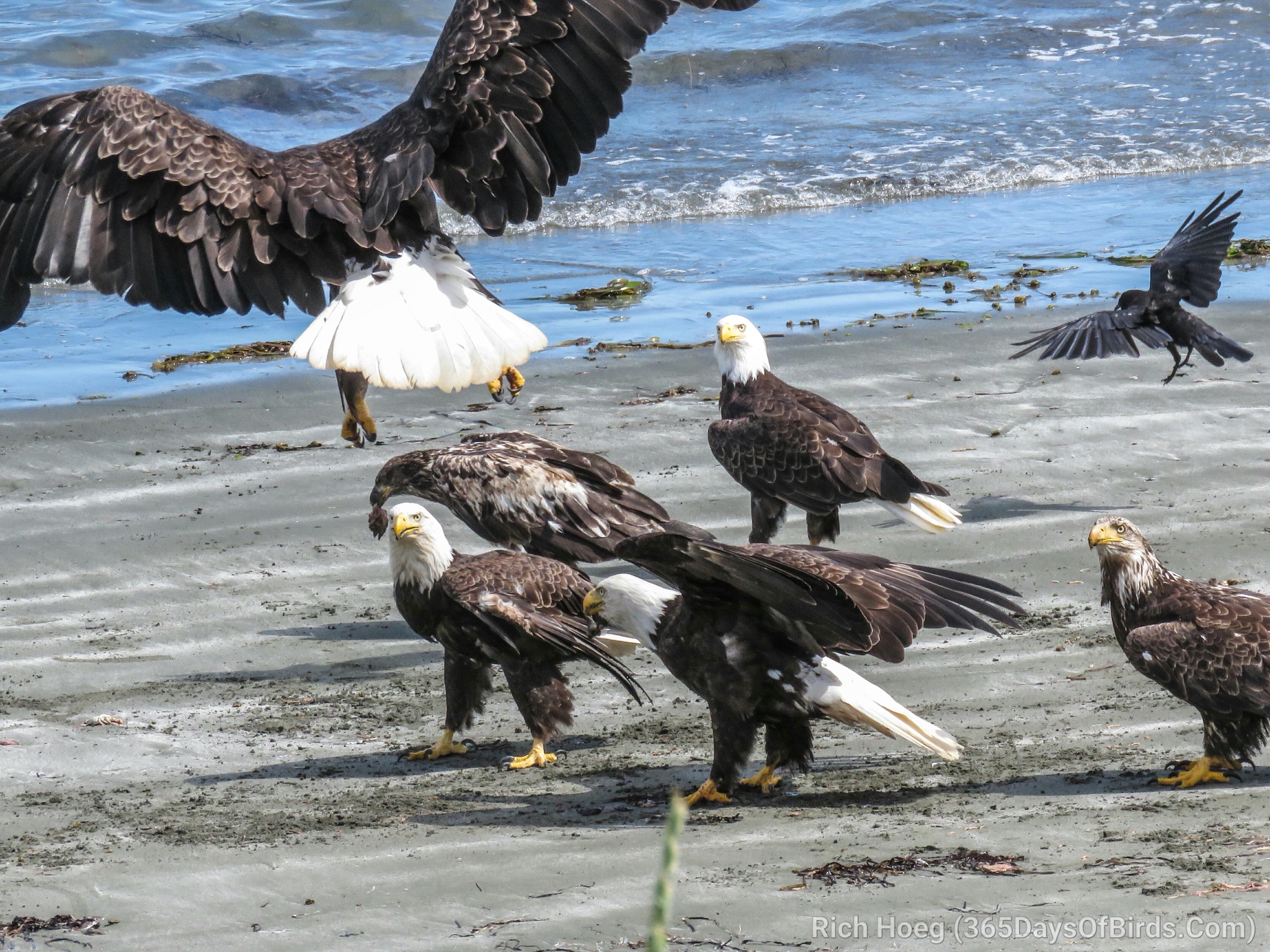
Ultimately Rich noticed the source of this display and headed over to the action. One of the residents was feeding the birds – no wonder there was such a congregation. Apparently he does so “the same time every day. And the eagles know it.” The ravens joined in the fray as well. We thanked him for the show, and I have Rich to thank for these dramatic photos.
Eagles fight for food

It was quite a unique experience, and somehow seemed a fitting way to complete our stay on Haida Gwaii, with the ravens and eagles.


The Waters of Haida Gwaii

It didn't take long to get into the relaxed mode of life on Haida Gwaii. With four days and only 70 some miles of paved roads available, there was no reason to hurry. No need to push on to the next locale. Only time to savor the journey. The mood permeated our days. We stopped more and lingered longer. On the out-and-back trip we found different natural attractions in each direction. Not too surprisingly, water became the common theme.

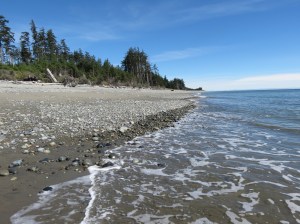
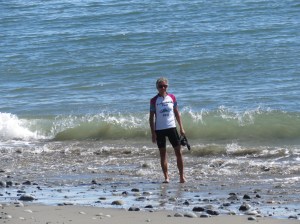
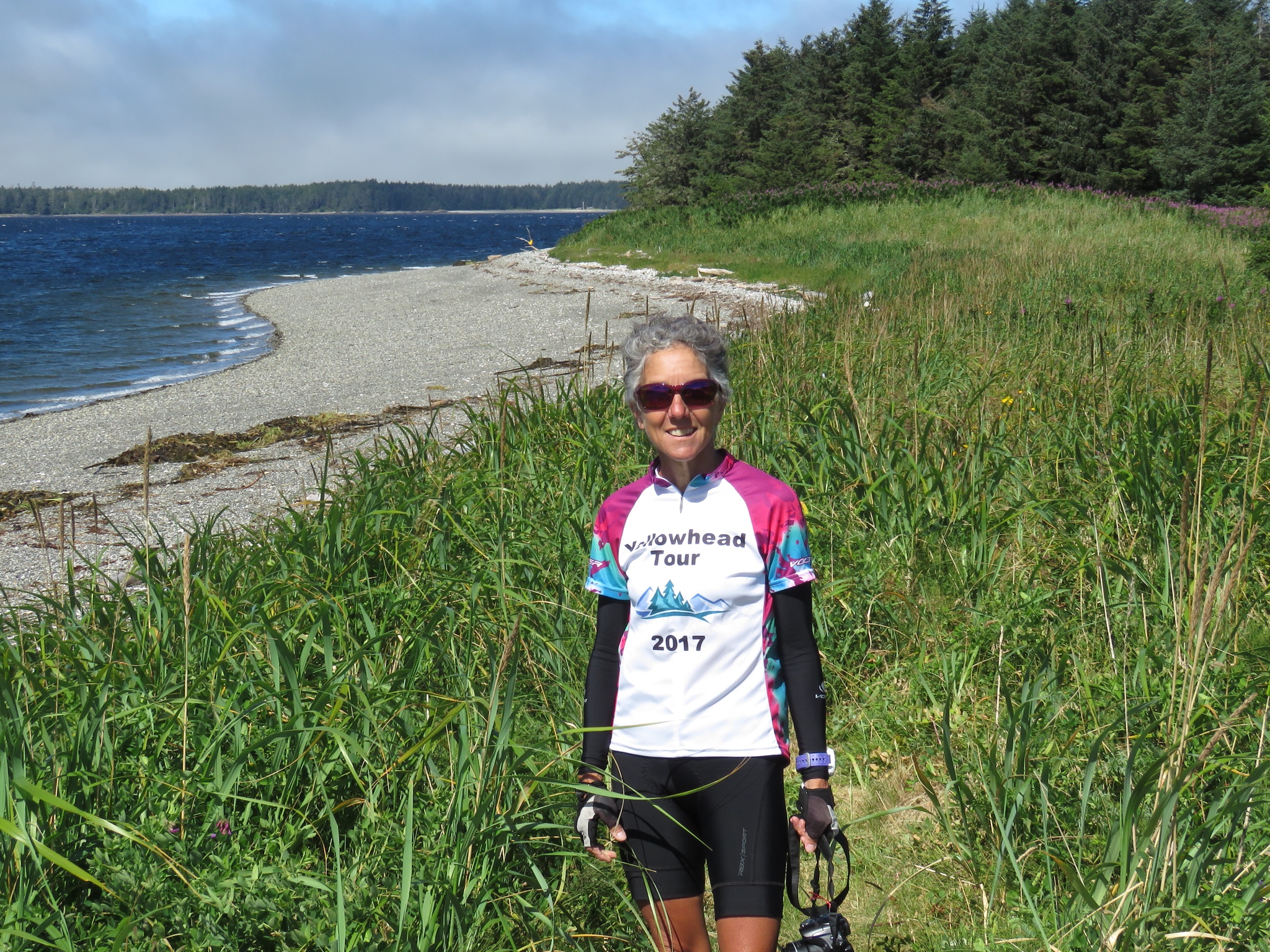
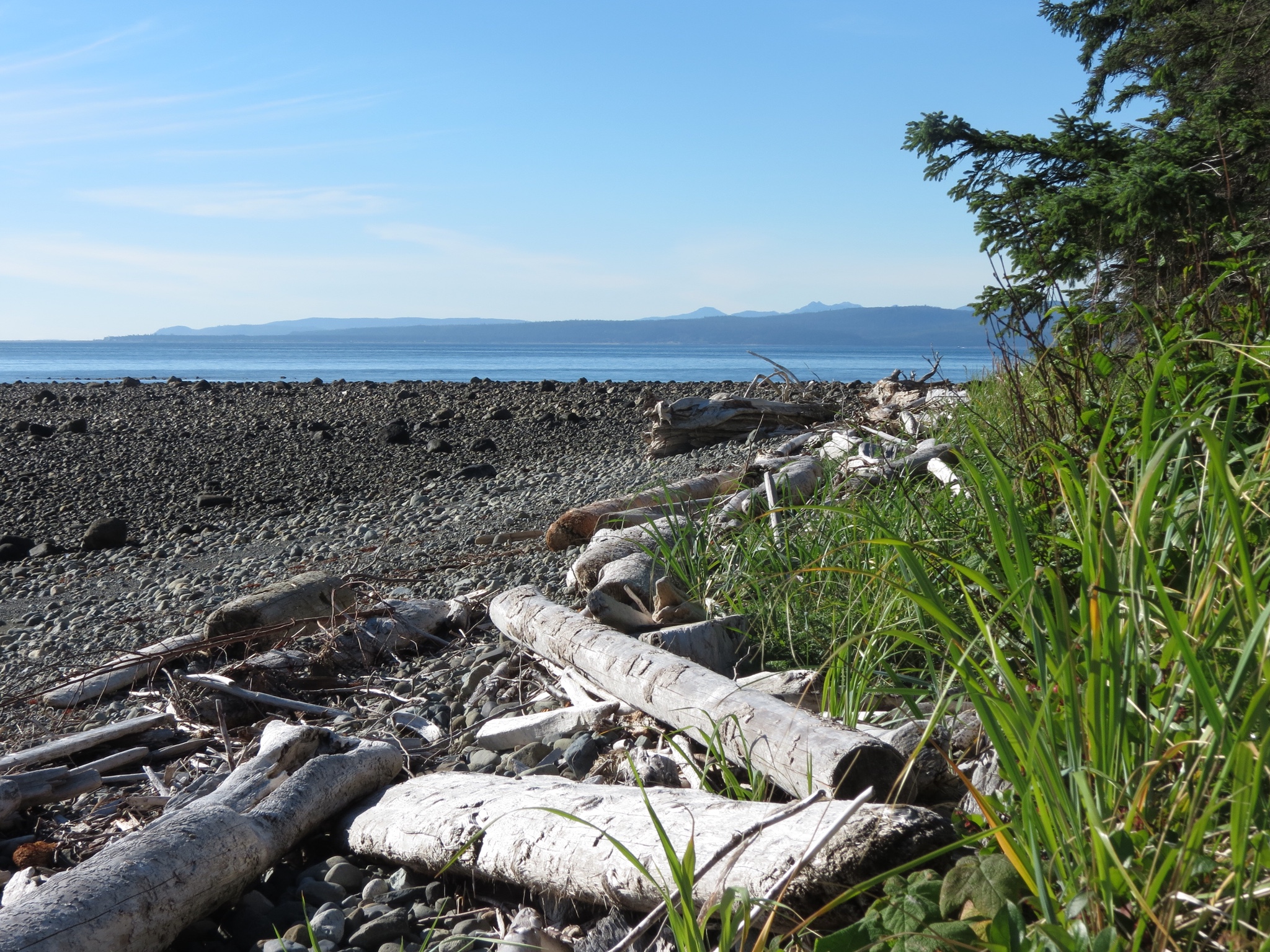
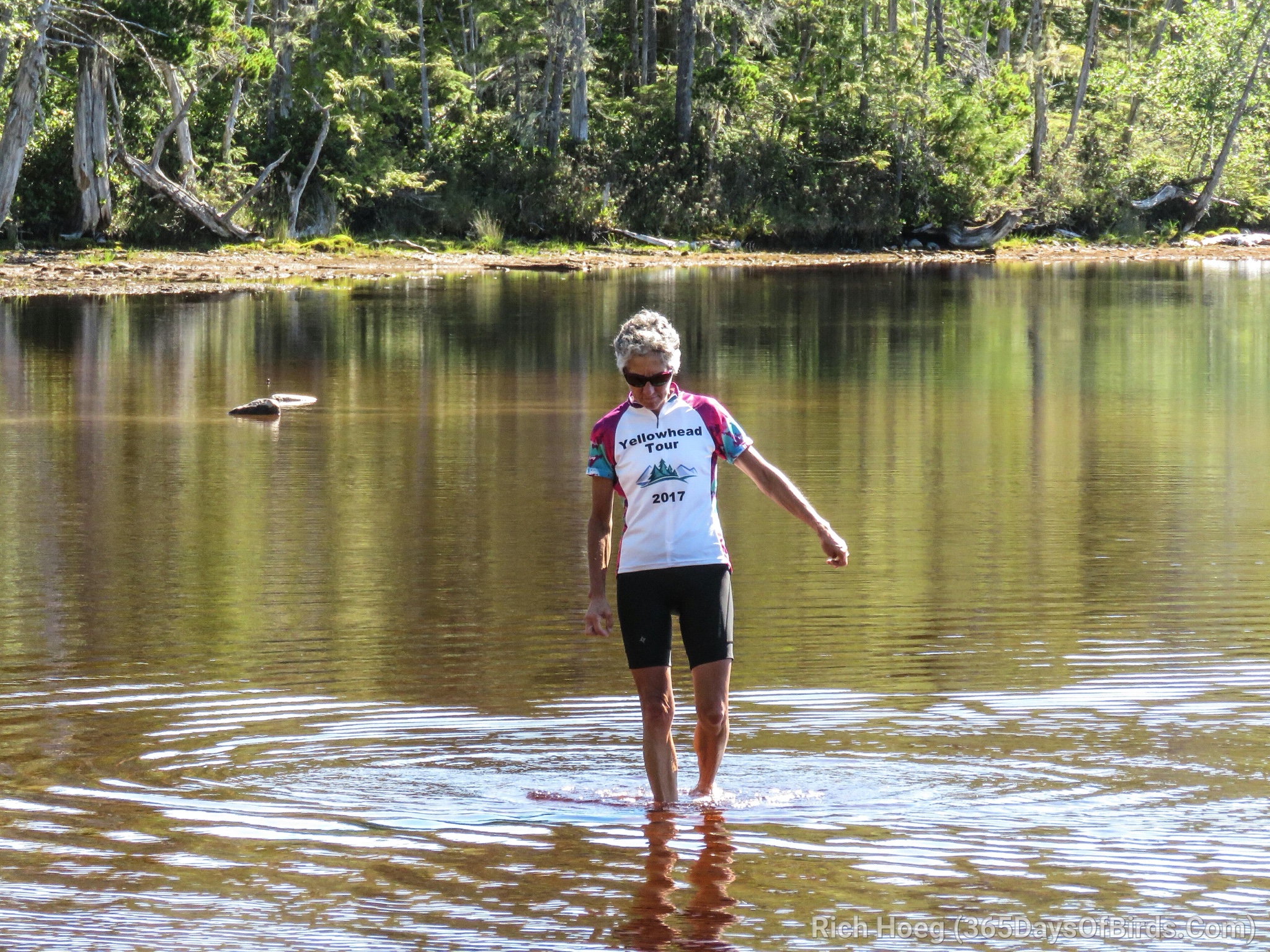
For starters, we had miles of unbroken cycling along the eastern beaches. With the sun pouring down and the tidal pull of blue waters lapping the shore, it was all the scenery I needed. At first, we passed rough and rocky shoreline. Jaggedy dark rocks of medium size covered in calcified barnacles obliterated the sand. The shape of the beachfront changed constantly at the whim of the waves. It looked uninviting to my tender feet. But I admired it from a distance. Biding my time, the beach morphed once again. This time sandy shores beckoned and I called a time-out. The protected spot was quiet and calm. I shed my shoes and socks and the sun-warmed water lapped my feet as I wandered the beach.
Rich cycling Haida Gwaii
Rocky beach
Sandy beach
Molly walking beach

Near that same beach, the Crow's Nest in Tlell was an unexpected find. What showed up on the map was a Post Office. In reality, it had a bakery, light cafe, organic groceries and espresso drinks! Their still warm sausage rolls in flakey pastry hit the spot, especially as we had anticipated a long stretch before finding food. I lingered luxuriously while horses grazed contentedly in a pasture behind me.

Molly at Crows Nest

Coffee shops are a natural magnet when we are cycling. Not only do I get my latte, but frequently we strike up conversations with locals. It was while sipping my brew one day that I met a friendly couple who answered my question about the rocky and sandy beaches. “They are constantly changing,” they explained. The rocks were thrown up on shore by a large storm. Next week they could be swept away again. The swimming area they currently enjoy at high tide may be gone tomorrow.

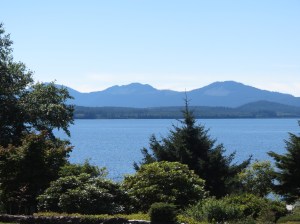
Crossing the island, we reached the Masset Inlet, a long tidal opening reaching down from the northern coast. Overnighting in Port Clements on its shores, we had ample opportunity to meander its shores and dine overlooking its waters. One of the villagers explained to me how she came to be the third generation to relocate to Haida Gwaii. “Groceries are really expensive here because everything has to be brought in,” she admitted. “But there are no other demands on my pocketbook. There are no malls. I walk the beach for entertainment. And there is such strong community here.” She didn't mind being “cut off” from the rest of the world. Neither did we.
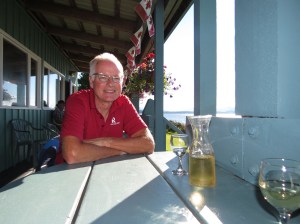
Rich at Yakoun River Pub
Masset Inlet
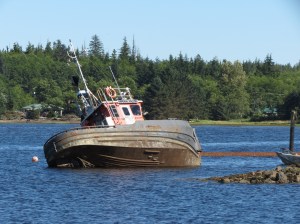
Port Clements boat

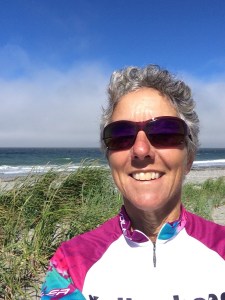
Reaching Masset on the north end, I was especially keen to get to the North Beach and camp there. I also had my heart set on hiking up Tow Hill for its amazing view. Both are iconic sights on Haida Gwaii. But it wasn't to be. The road out there turned to rough gravel for the final eight miles. It was not bicycle friendly for our touring bikes, so I had to let go of that vision. But I didn't give up entirely. Although most of the coast up to that point was privately owned, I stumbled on an opening. A tiny community park had a trail which I couldn't resist following.

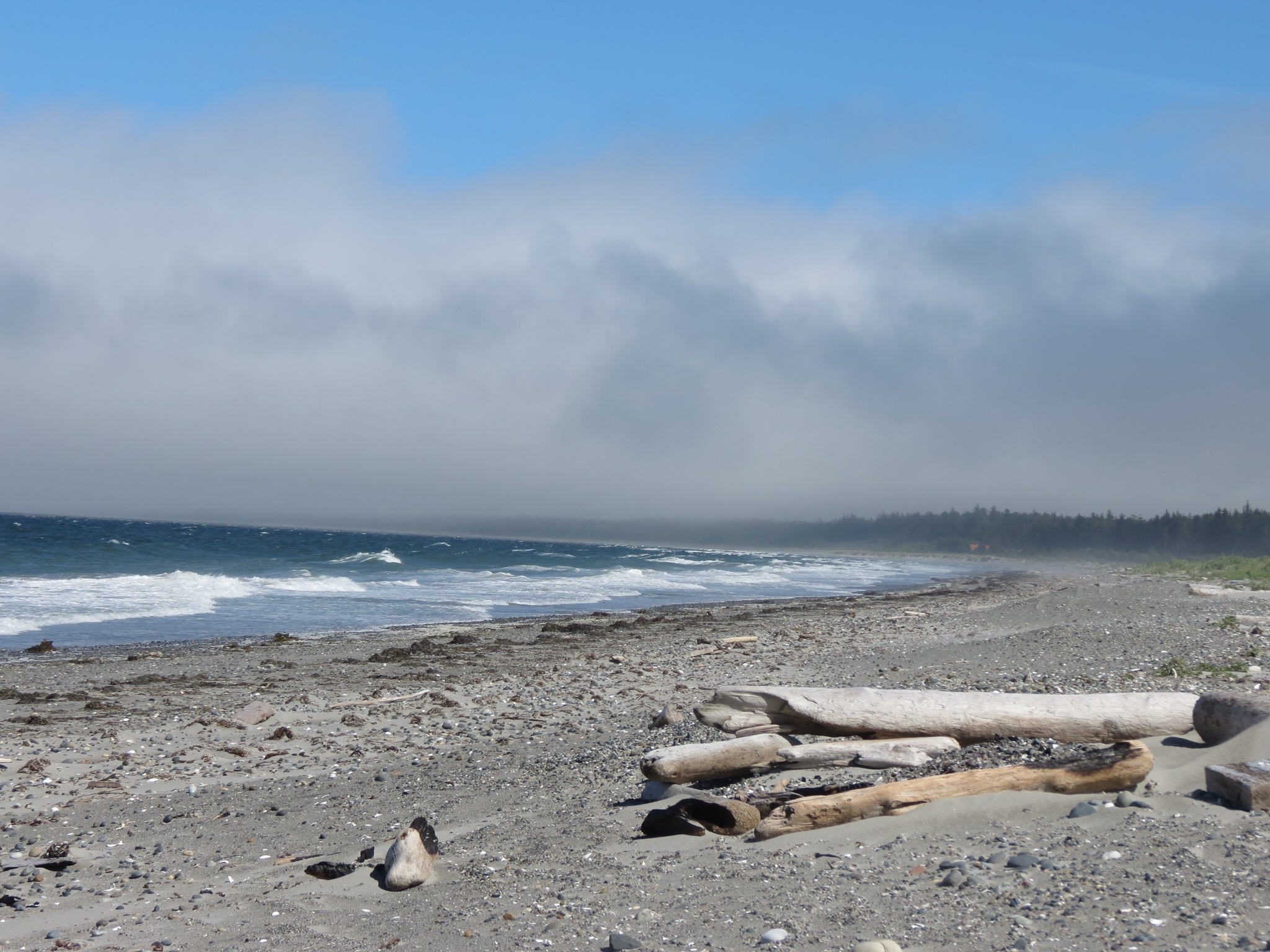
Weaving through dark old growth forest, it emerged onto the dunes and beyond lay the beach! The scene before me was entirely different from the east coast. Here was a raging sea. The wind was fierce and waves crashed on a beach strewn with seaweed, shells, rocks and driftwood. I didn't linger long by the water, choosing to retreat to a sheltered spot on the dune where I could observe nature's fury. Although I had blue skies overhead, a low line of fog and clouds rested on the water. Looking to the far end of the beach, it disappeared into the same fog bank. Tow Hill was nowhere to be seen, cloaked in mist. Perhaps it wasn't the best day for camping after all. That salved my disappointment, slightly.
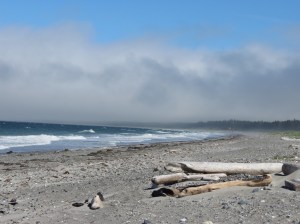
North Beach
Molly at North Beach

The most refreshing water I found was not salty at all. Pure Lake was just a short hike from the road and offered a small stunningly blue lake. My coffee shop friends had mentioned it was warm and good for swimming. Wading through its clear shallow waters was not enough. I just had to take the plunge!

Pure Lake
Molly wading Pure Lake
Molly swim Pure Lake
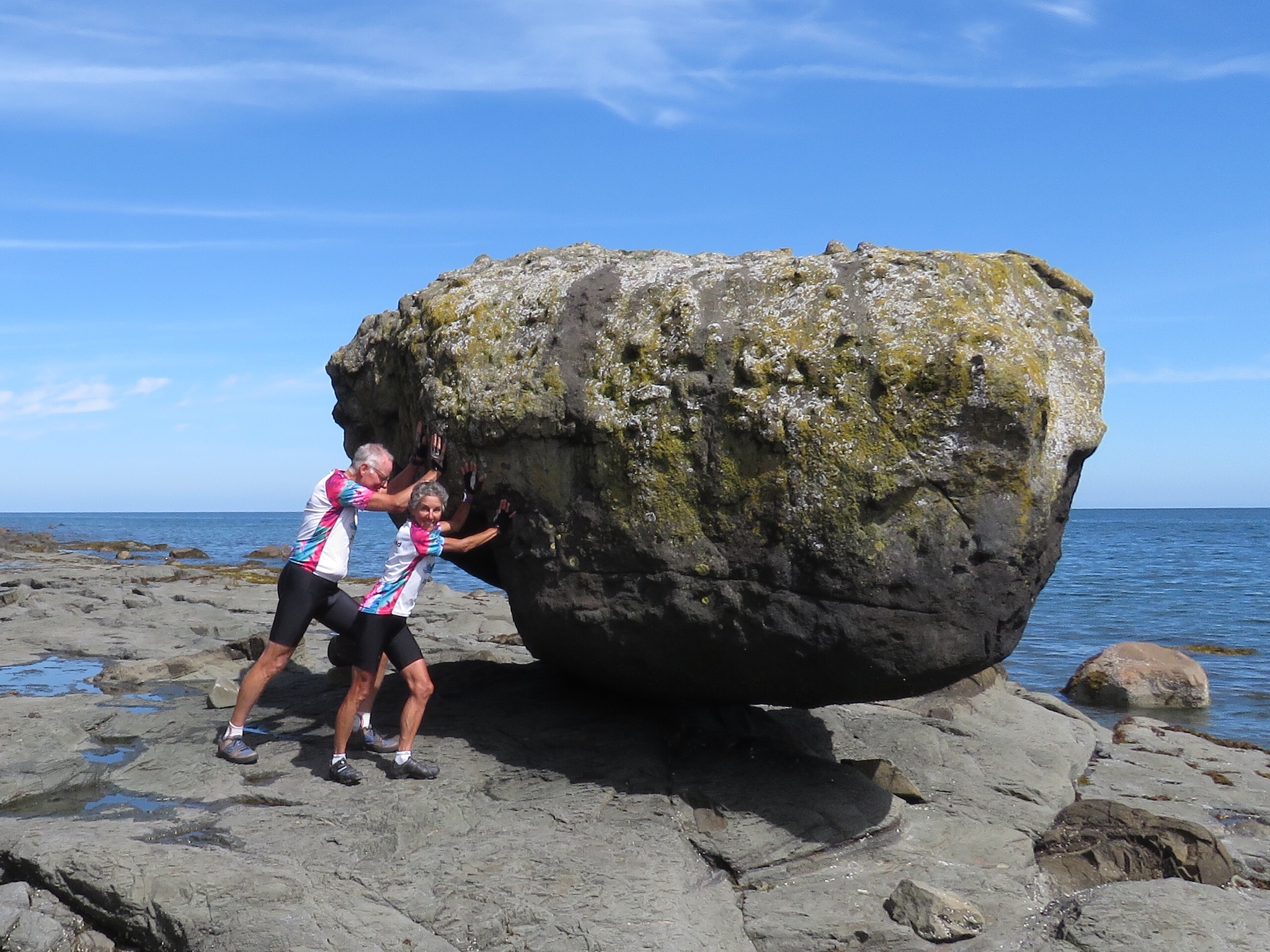
For our final aquatic encounter we sought out Balance Rock. Precariously perched on a logistically minute corner, it hovers over a flat rock bed that reminded me of Lake Superior's North Shore. The last glacial retreat is credited with leaving this van-sized boulder here.
Balance Rock

Haida Gwaii offers endless opportunities for outdoor pursuits. Fishing, hiking, kayaking, surfing, crabbing and back country camping attract enthusiasts of all kinds, although its remote location ensures that it is never crowded. Our four days and bicycle transport limited us from partaking in these other alluring activities, but I think we did justice to the waters of Haida Gwaii.

 

Intro to Haida Gwaii

“You're going to love Haida Gwaii.” We heard it over and over again as we cycled through British Columbia. Everyone sang its praises, heightening our anticipation for the finale stretch of our Yellowhead Cycling Tour.

Two months ago I'd never heard of the place. While studying our planned route on Google maps, I zoomed in on Prince Rupert and the ferry landing. I thought that was the end of the road for us. But oddly enough, the Yellowhead Highway continued into the water. Seriously? So I followed the dotted line. Out, out, out into the ocean it went, and ended on a group of Islands called Haida Gwaii. There the highway continued another 70 miles to its end. Or beginning. Kilometer zero is at the top of the northernmost island. One quick Google search was all it took to convince me. We had to go there.

Haida Gwaii is about 60 miles off the coast of mainland British Columbia and is made up of two large islands and over 400 additional islands. Graham Island to the north hosts six communities and the final stretch of the Yellowhead Highway. Moresby Island to its south has one community on its north edge. The remainder of the archipelago is wilderness. 4,500 people live on Haida Gwaii, and about half of those are native Haida people. Theirs is a long and difficult history during which their culture and language were nearly wiped out.

Fortunately they have succeeded in reclaiming their heritage which now thrives on these islands. Long known as the Queen Charlotte Islands, in an official Giving Back the Name Ceremony in 2010 the Haida Nation literally returned that name to the Crown to become Haida Gwaii. It means Islands of the People.

Logging, fishing and tourism are the primary means of earning a living. And there is a thriving arts community, creating and selling both traditional and modern art based on native designs.

This land of wilderness surrounded by water with a passionate native culture and community peaked my interest.

My first views of the island were from the ferry then cycling the few miles to the village of Queen Charlotte. It was a small quiet road that meandered along the calm inlet between the two large islands. The first words that came to mind were lush, green, peaceful and natural. I already sensed the slower pace of life. The focus on the outdoors. And the lack of commercialism. I couldn't wait to explore this intriguing land.
We settled into our lodgings which hid behind a veil of flowers. Dinner was on the deck of a small restaurant overlooking the harbor. Boats bobbed in the quiet waters as the sun dipped low. There were no gates to bar us from the docks, so we meandered among the motley collection of fishing and pleasure craft. Moresby beckoned across the water.
Queen Charlotte Harbor sunset 1
Queen Charlotte harbor sunset 2

Morning brought more calm views from our balcony. I should have lingered to soak it up, but I was too anxious to get on my bike to explore the island.

Queen Charlotte lodgings
Balcony view

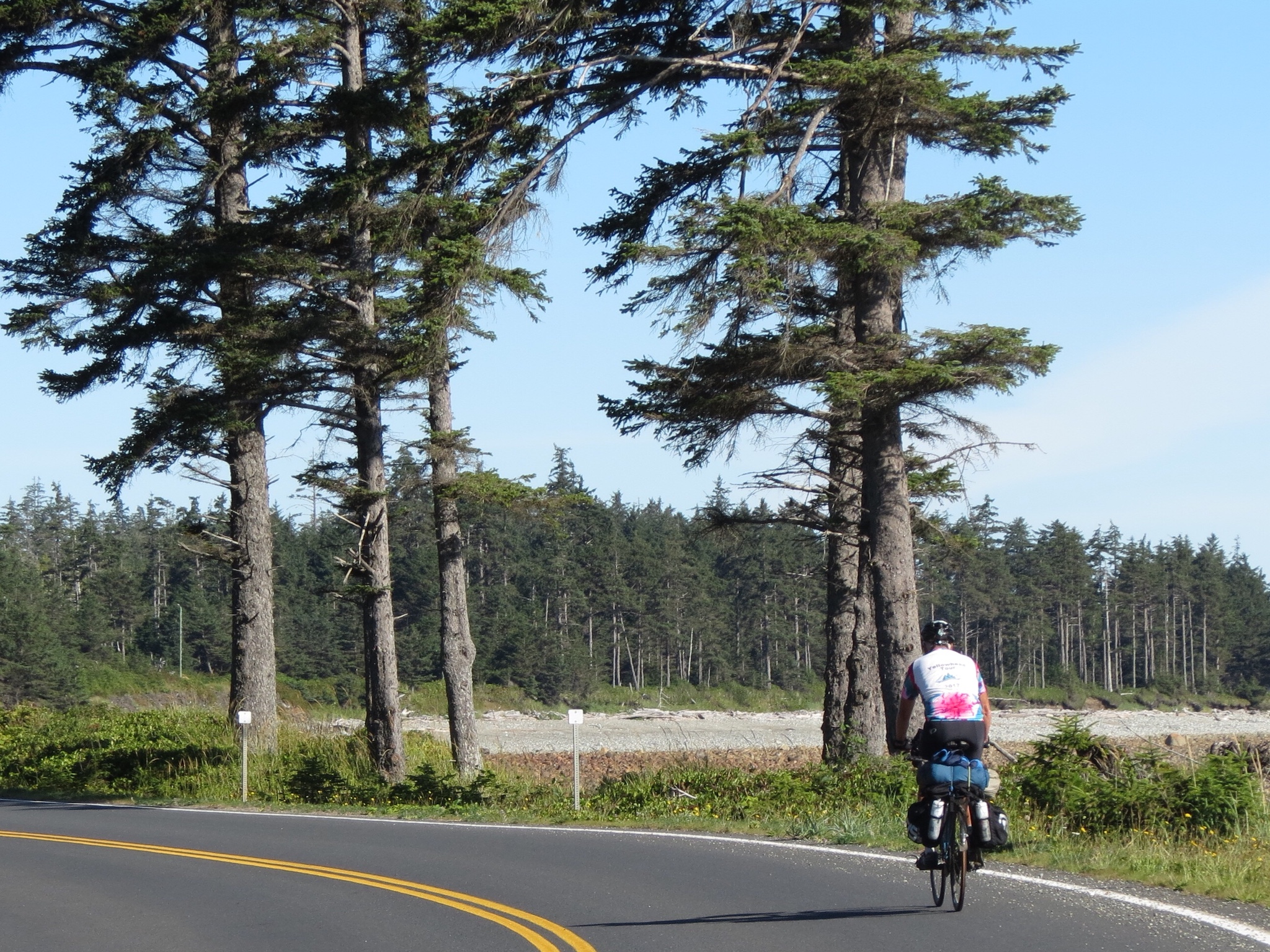
Cycling on Haida Gwaii would take us from the southern end of Graham Island to the north and back again. We had four days of discovery ahead of us. I'd had enough of an introduction. I was ready to experience the real thing.

Molly cycling Haida Gwaii