A Sudden Change of Plans

Service at the coffee shop was efficient and quick.  But my need for a latte changed the trajectory of our entire day.

We had set out to explore a number of waterfalls, starting with Rainbow Falls just west of Hilo.  When we left our guesthouse, Google informed us it was a 33-minute drive.  But shortly after I emerged with my beloved caffeine, we were informed with a familiar “plunk” that there was now a shorter route, and we were to turn left at the next intersection.  It turns out we had no choice in the matter.  The flashing blue lights and hand directions from the police forced us onto a local street to avoid whatever it was that had transpired on the main road and summoned the emergency vehicles we saw flying by.

Suddenly we were crawling along behind an endless stream of cars, creeping through neighborhoods on a narrow road that lost its center line and bits of its pavement.  Progress was imperceptible, frustration high.  There was no escape, only the inexorable inching forward.  The next 4.5 miles took us an hour and a half, and by then we had a new plan.  When our creeping serpentine of cars turned right hoping to regain the main road, we turned left.  Forget the waterfalls.  We were going to Hawaii Volcanoes National Park!

We felt liberated as we flew down the road toward our new destination, and I desperately thumbed through my guidebook to gain as much knowledge as possible before we arrived.  We had planned to visit the National Park during our stay, it just had not yet come up yet on our loose agenda.  But a quick consultation at the Visitor Center quickly gave us good direction.

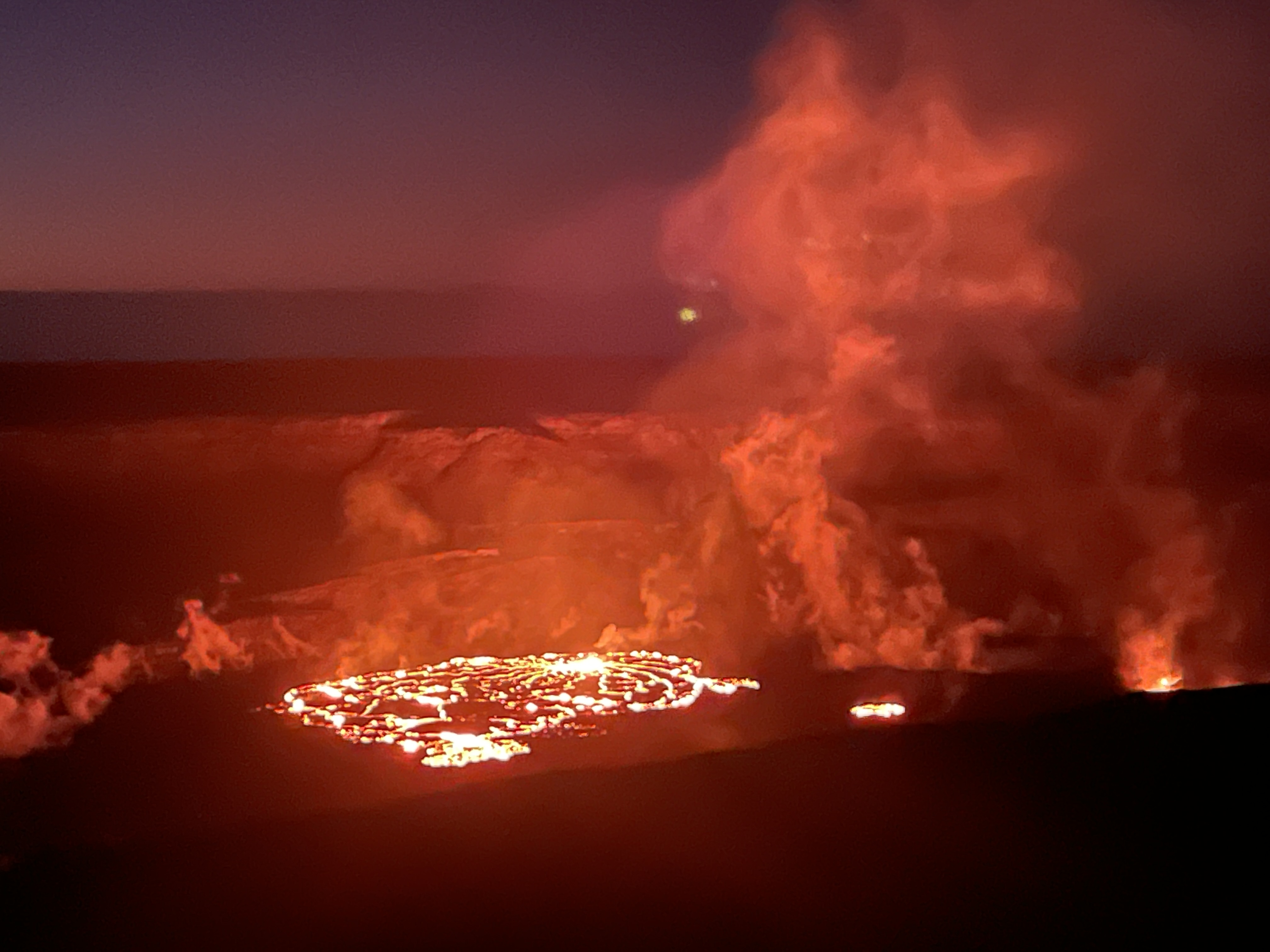
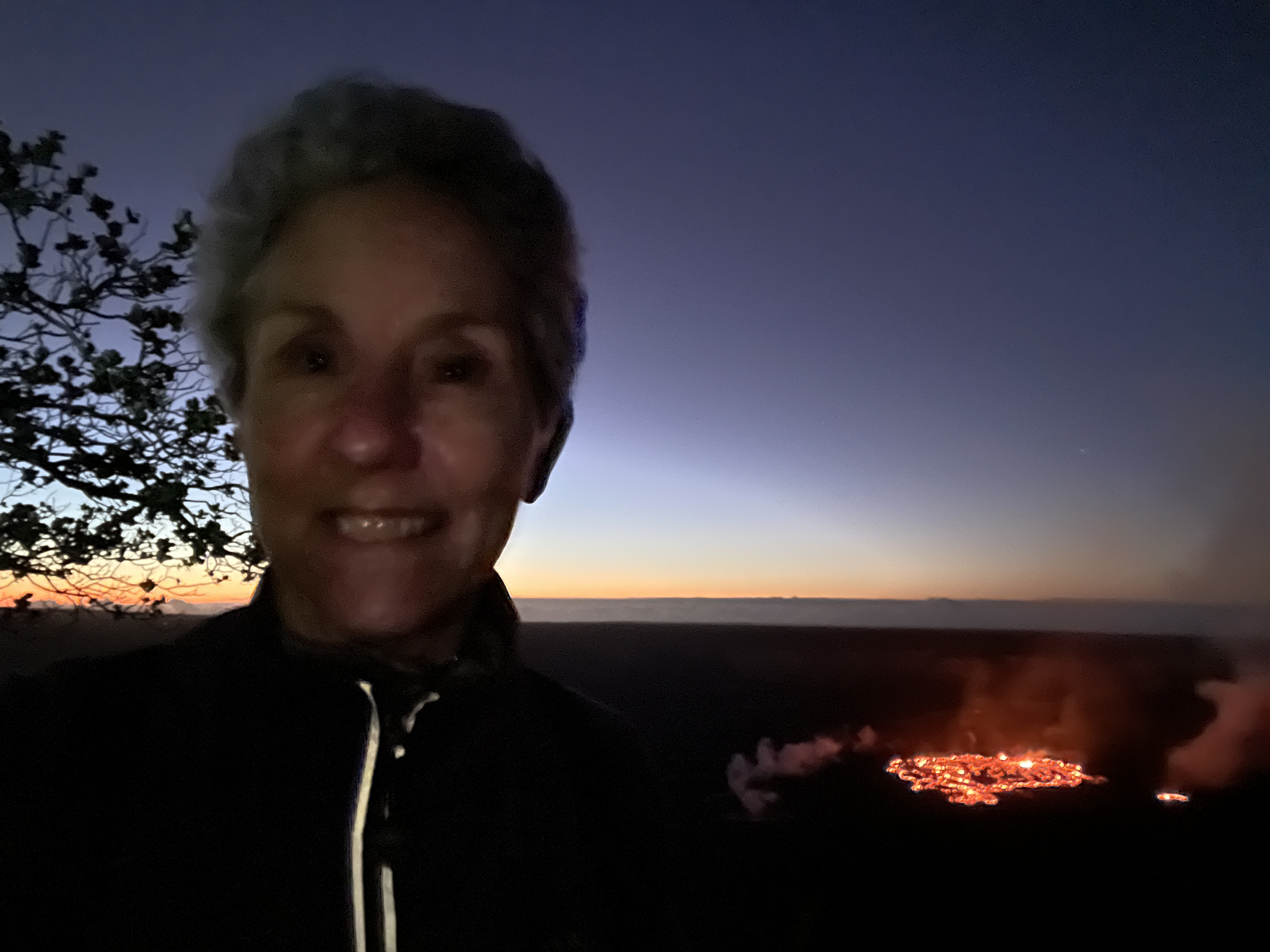
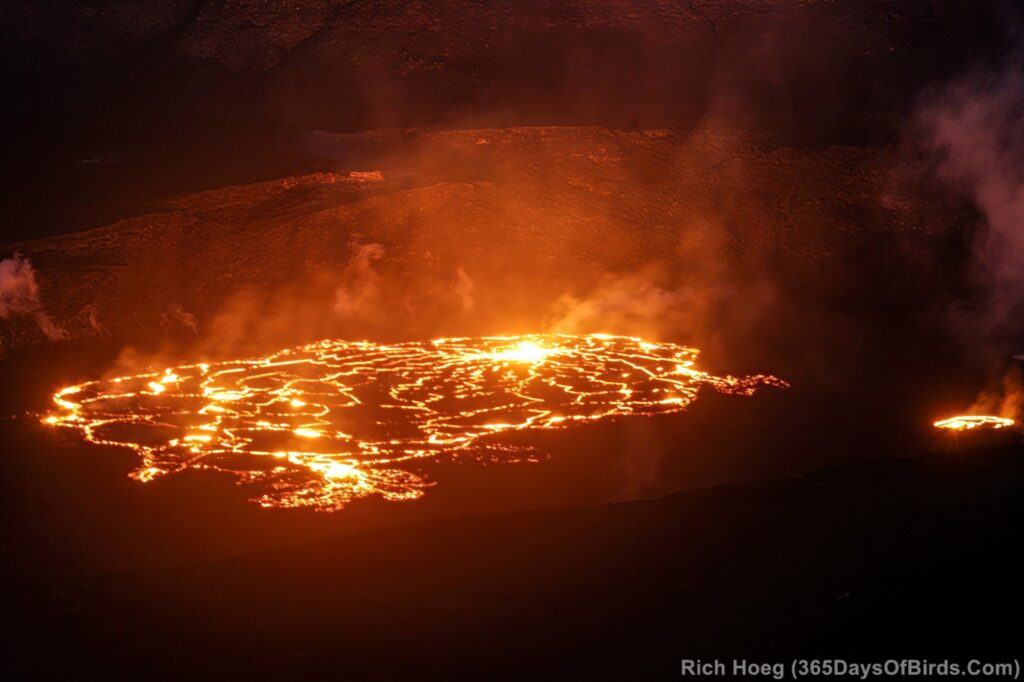
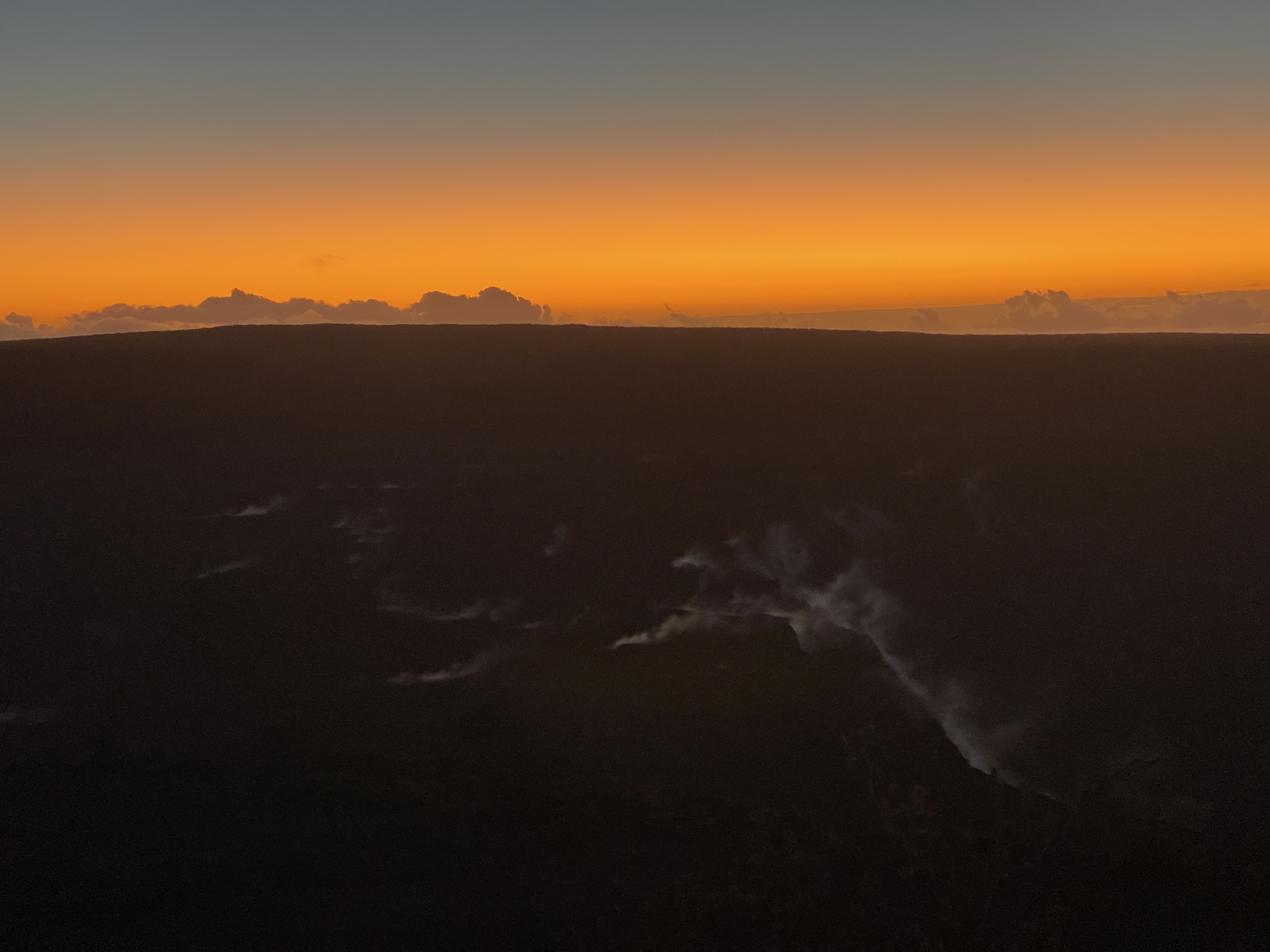
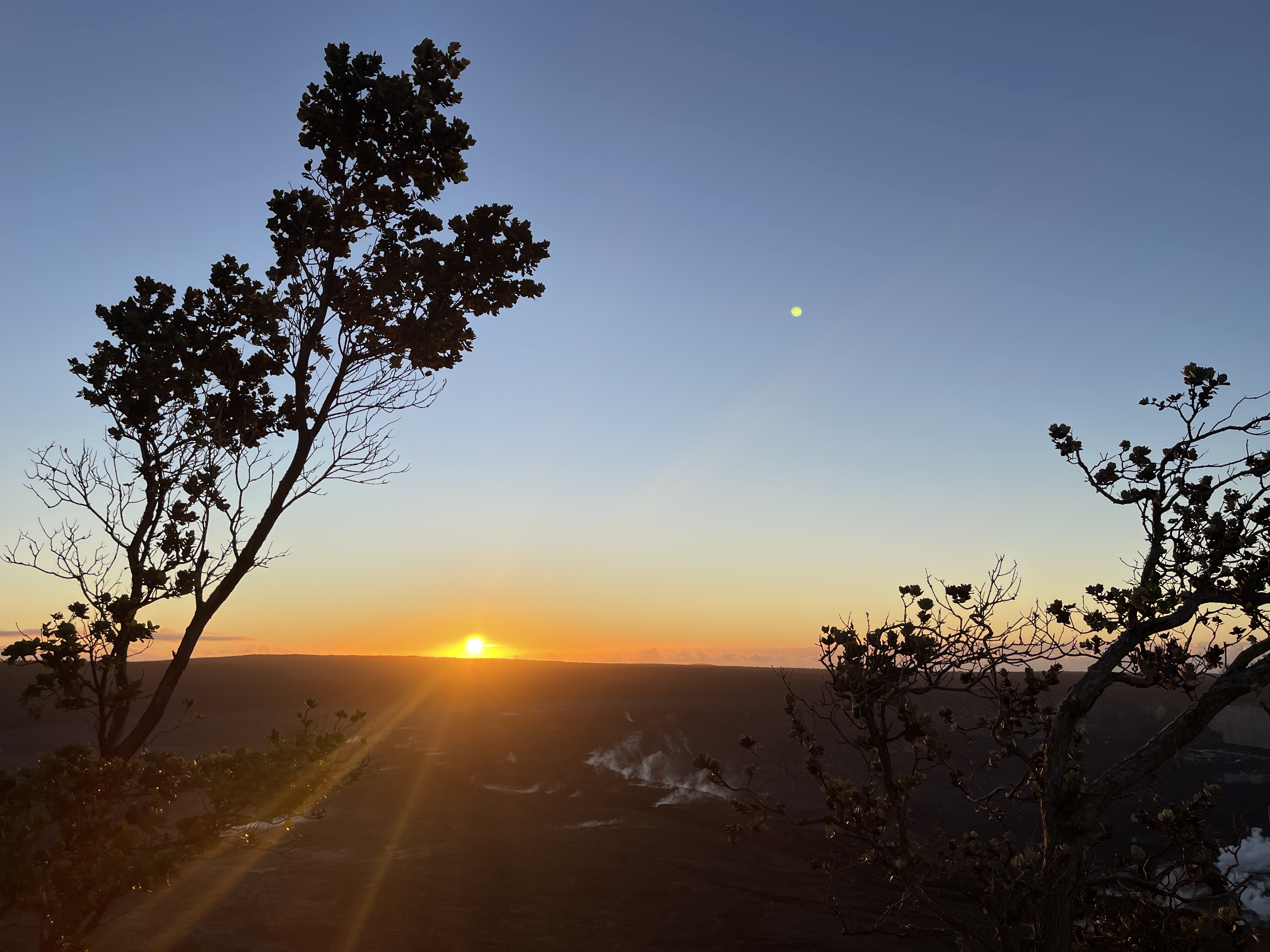
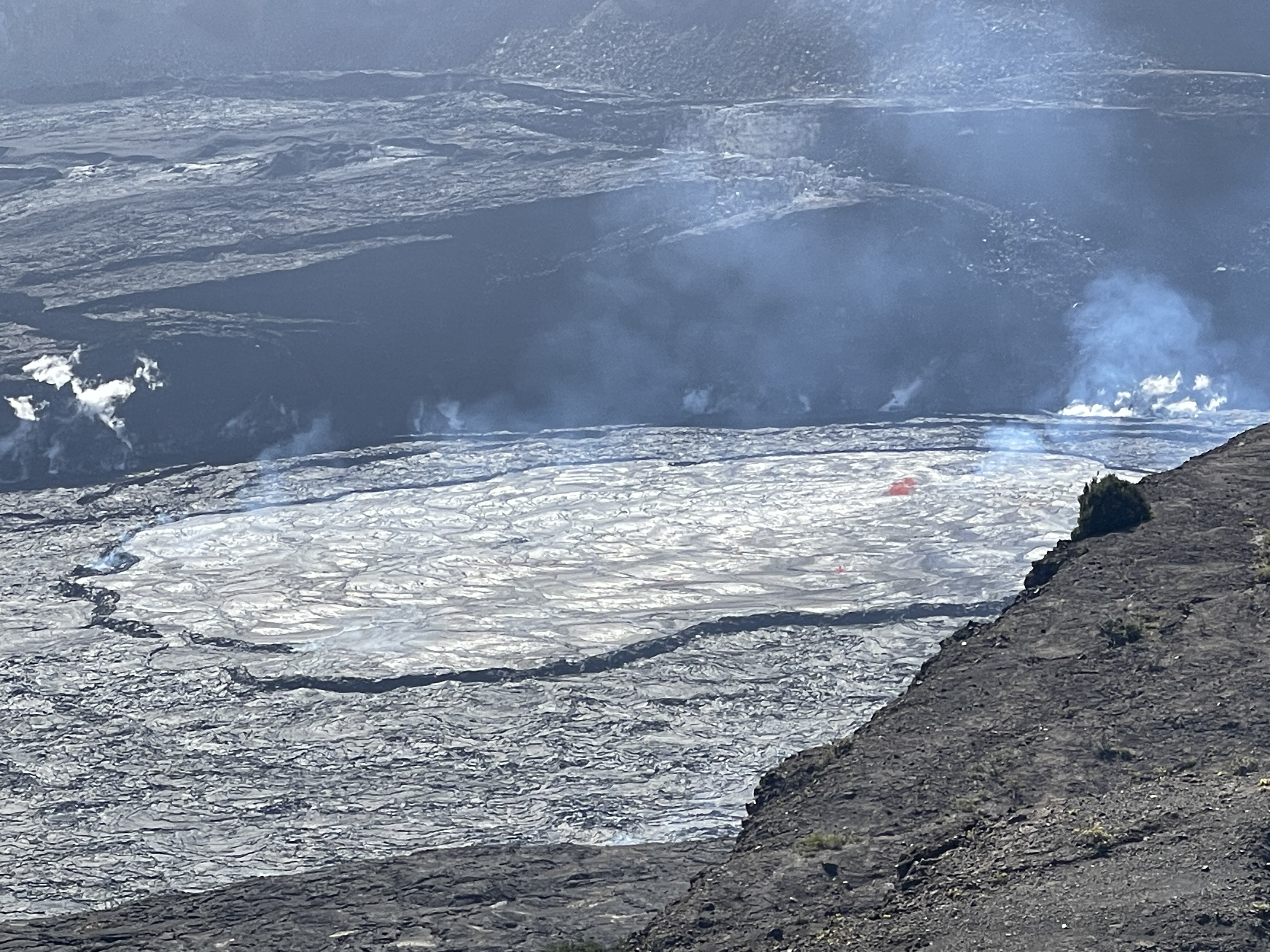
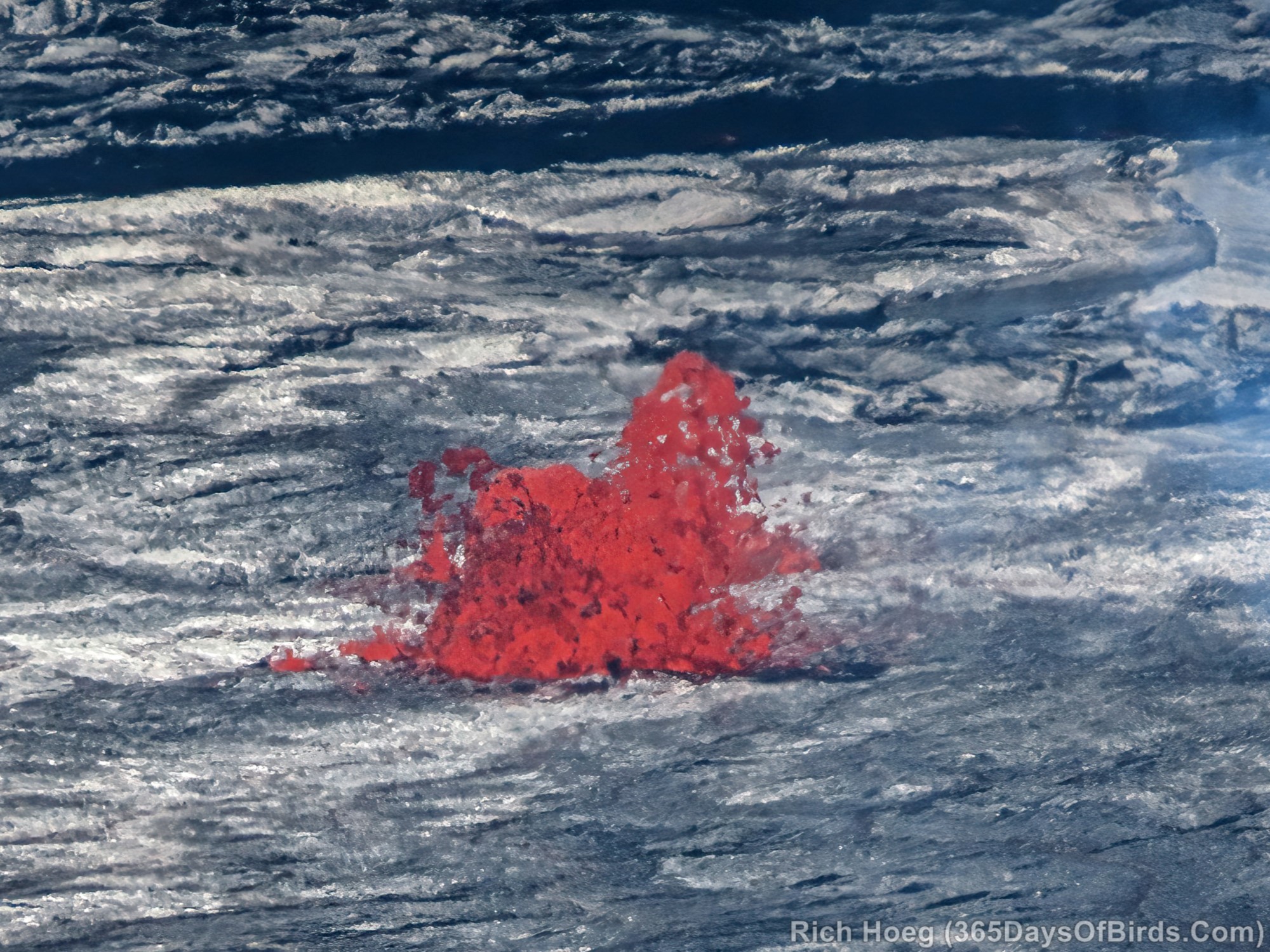
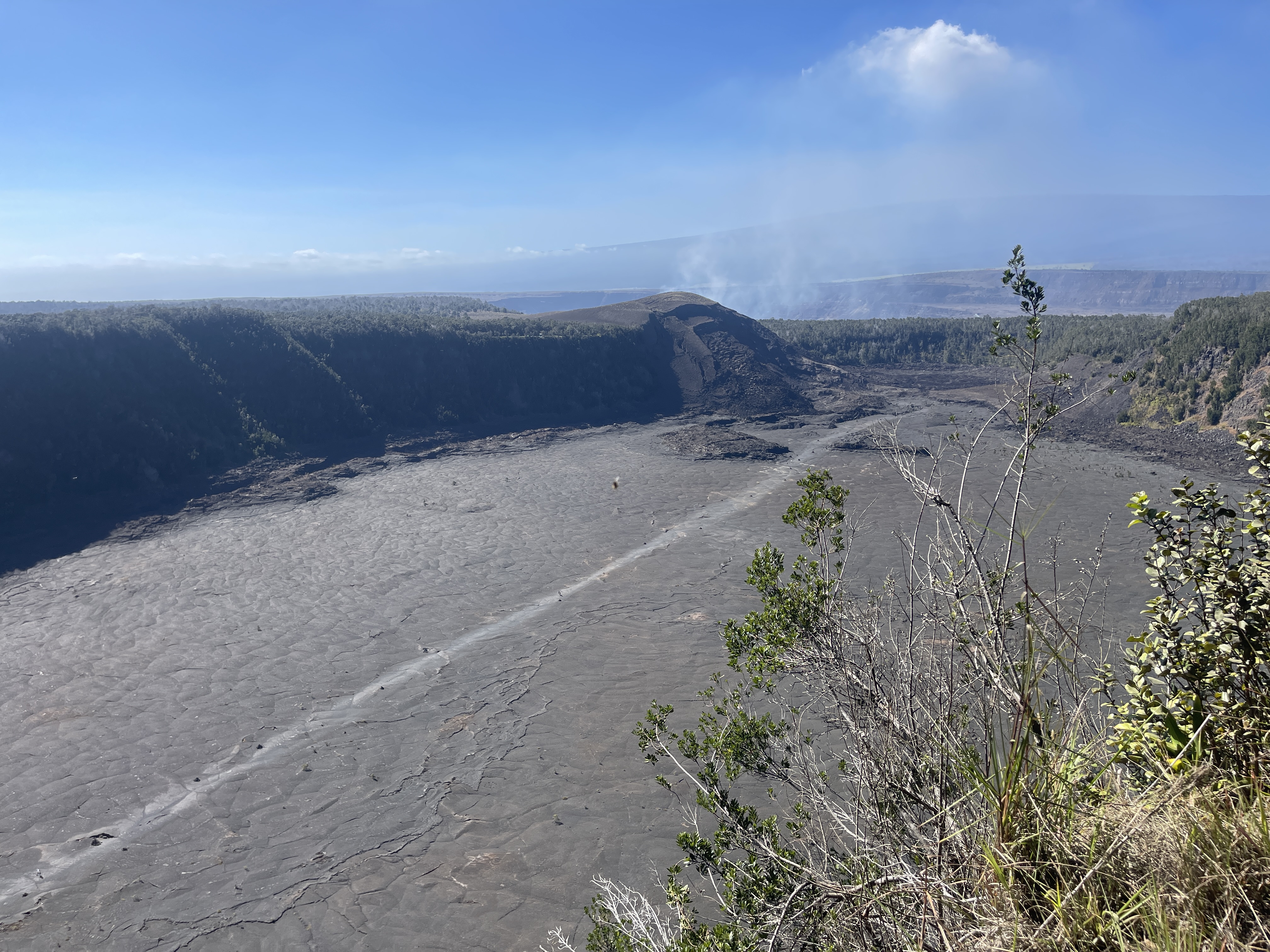
Our first destination was the Kilauea Overlook.  “The view is especially good at this time of day,” the young ranger assured us.  The volcano had returned to active status just eight days prior, and although we were eager to see a “live volcano” we were unprepared for the sight.  As soon as we reached the roped off area overlooking the crater, we could see what looked like flames dancing in the oval shaped area of activity.  Thanks to Rich’s binoculars we could see lava bubbling up, flowing over and spilling out.  A real lava flow!  Even with our naked eyes, we spotted other areas of lava that seemed to come and go on the oval floor of the crater.  It was all over the place!  We had no idea that we would be watching a live volcano that day.  The fact that it was far away did little to diminish our fascination, and we made a firm commitment to return in the dark when we could see it glow.

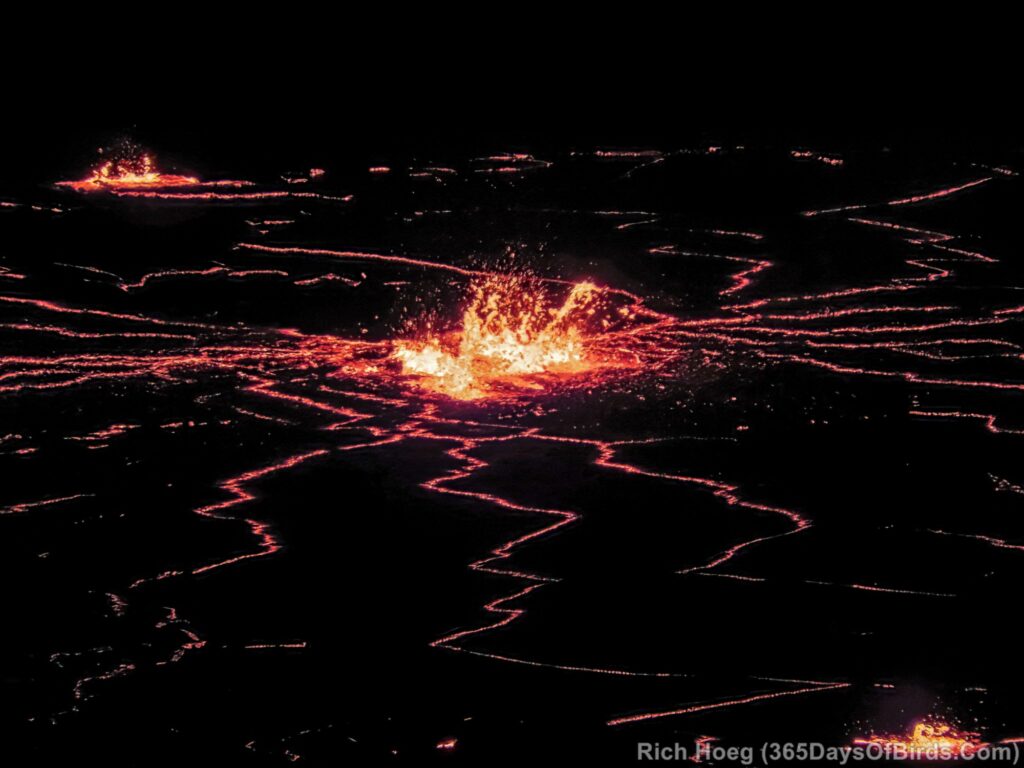
Rich was able to get more detail on the bubbling lava with his telephoto lens.

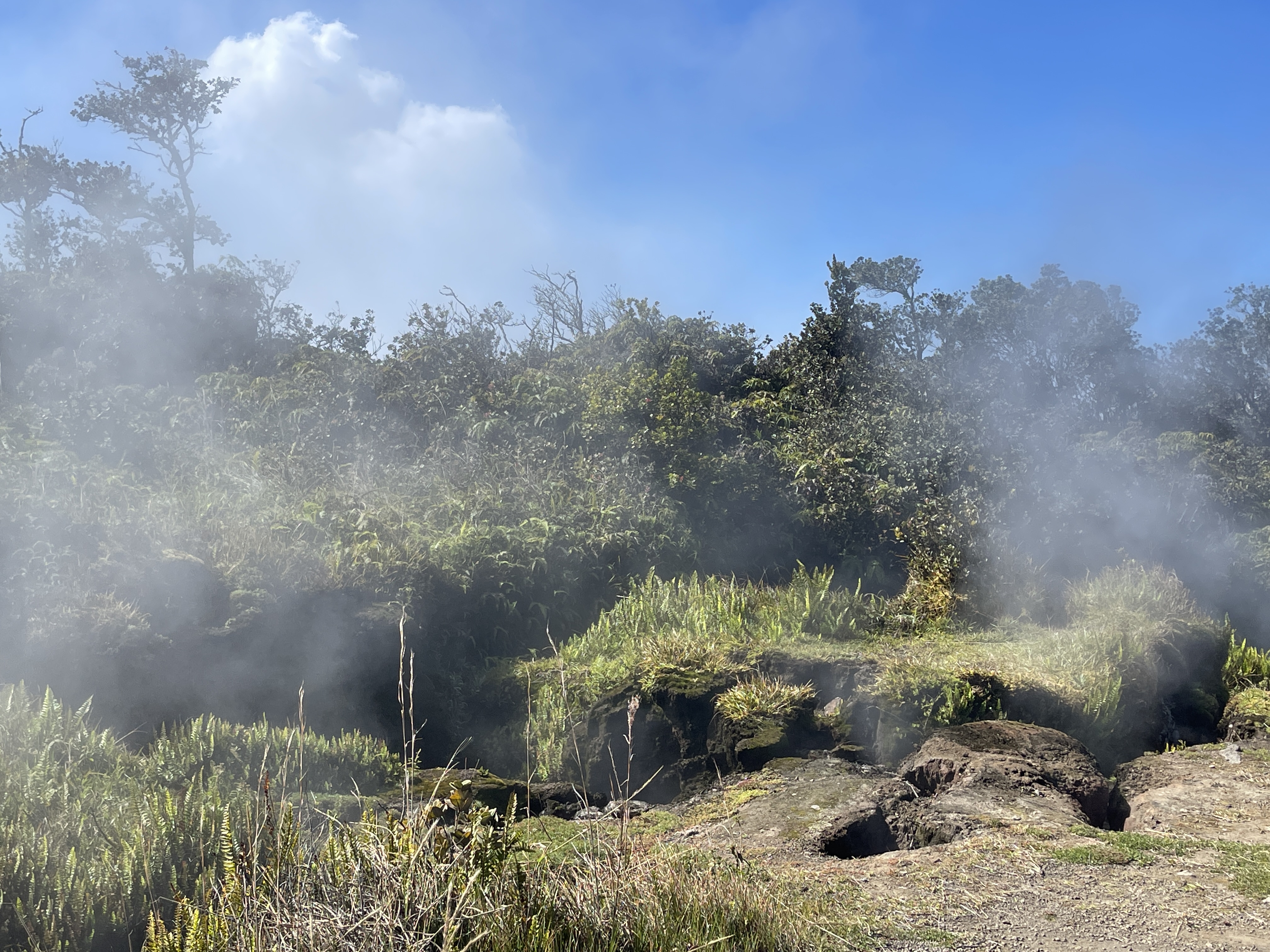
I wanted to stop and see the Steam Vents on the way back.  Out on the edge of the crater, the cervices pumped out white steam, hot warm humidity.  They were interesting, but even better was the conversation I had with a Park Volunteer who was happily spending 3 months in Hawaii instead of her home in Iceland.  We happily commiserated on the cold and snow back home.  Better yet, she gave me some great tips on where to watch the sunset when we returned for our night viewing.

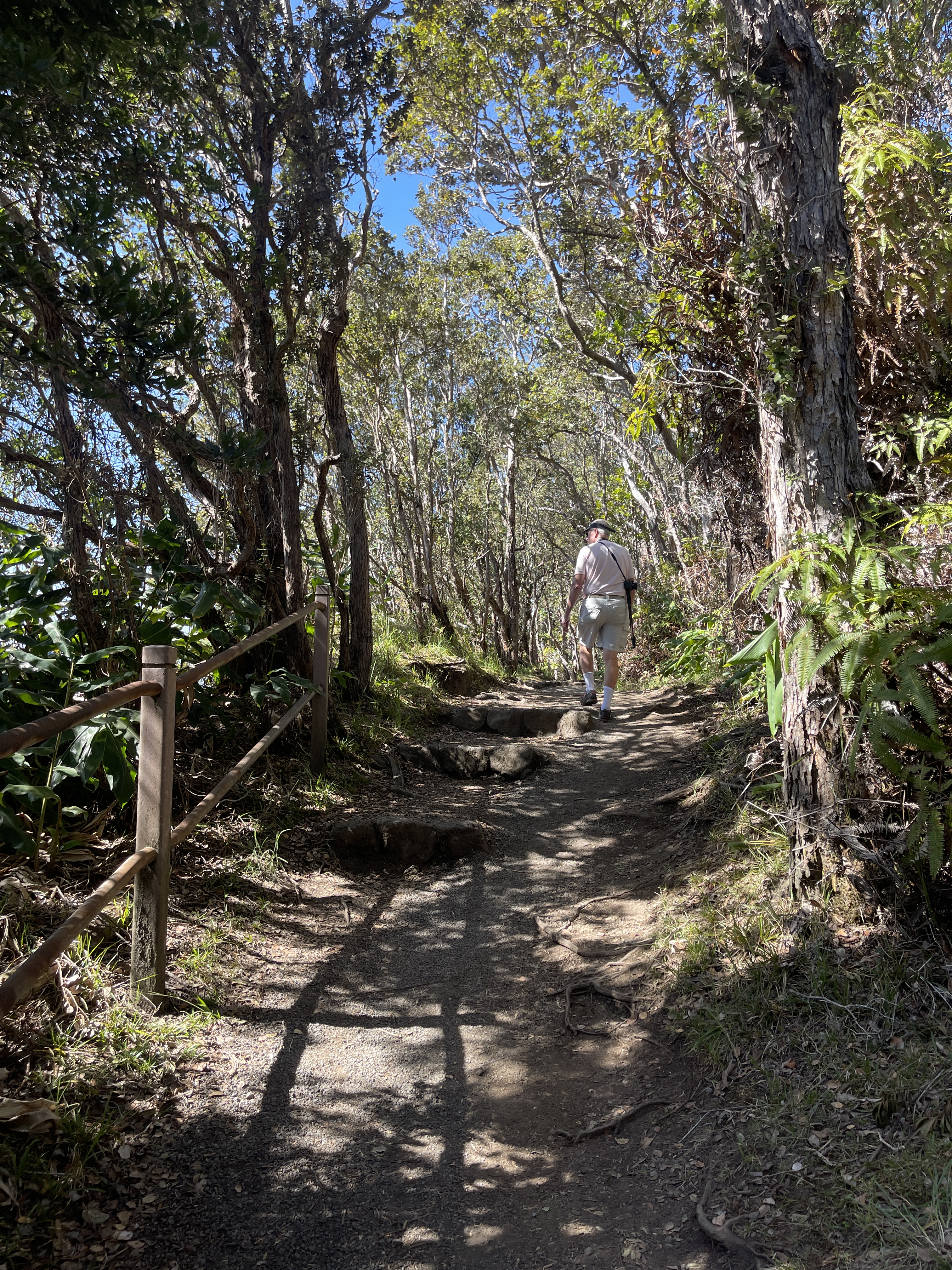
I was eager to do the 3.5 mile Kilauea Iki Crater hike, reported to be one of the best hikes in the park (and endorsed by our son Erik and his wife Katie from their recent visit).  It was reported to be an “easy, okay maybe moderate” hike in my guidebook.  But Rich would beg to differ.  We started in a shady forest, lush with greenery and a smooth path to follow.  It was easy going at the high elevation far above the crater’s floor and a pleasant walk. 

When we reached the far end of the crater, we began our descent.  Although there were helpful steps to ease the drop, it was undeniably rough and steep, and the forest greenery soon gave way to crusty lava.  I inched my way down, finding some drops a bit long for my short legs while Rich extended a hand to help.  We met some young men making their way up.  They had just crossed the lava lake.  “It’s like a relationship I had,” one told us.  “It just kept going on and on and never ended.”  We had to laugh at their attitude and assured them that better terrain lay ahead for them.

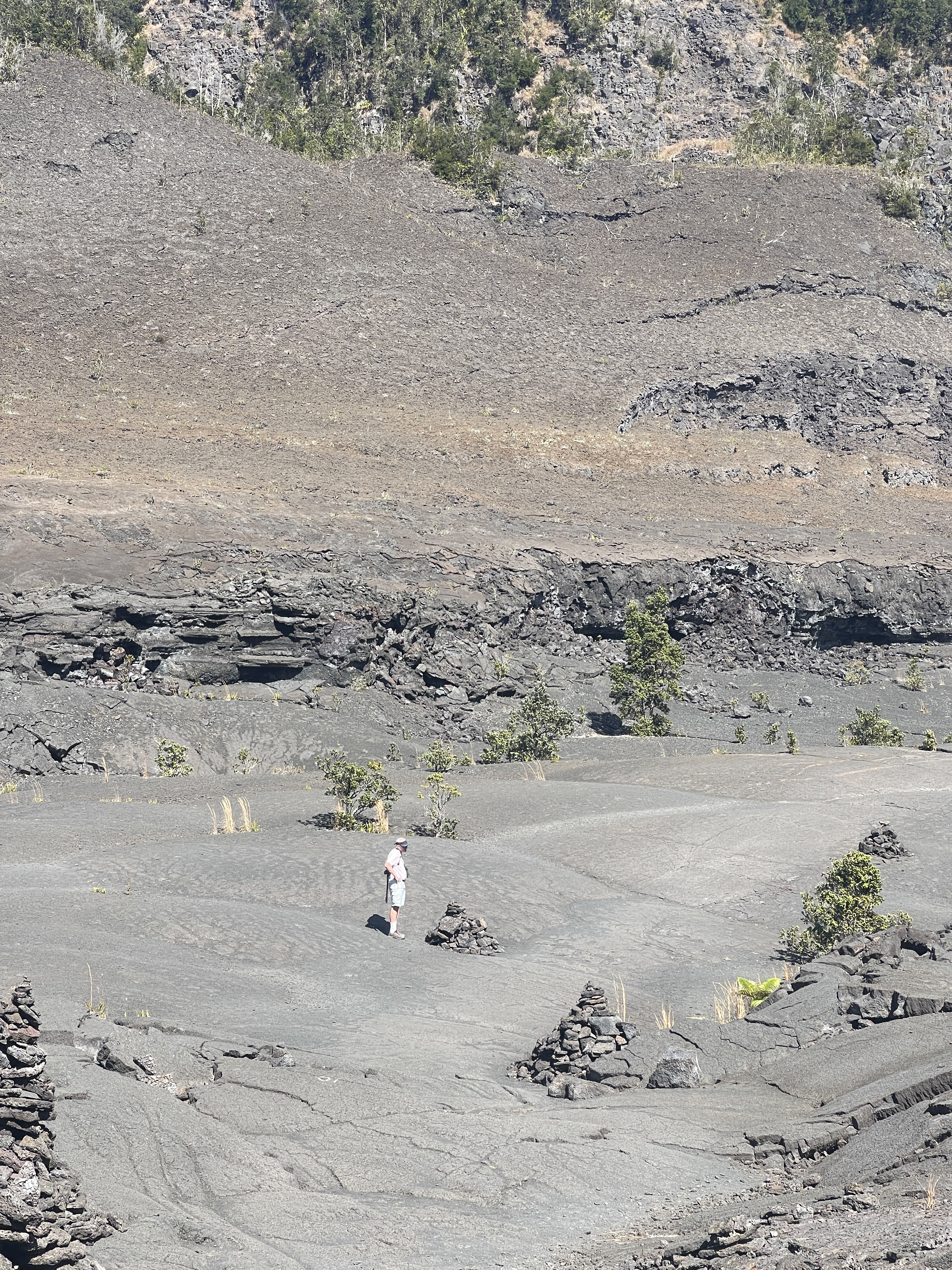
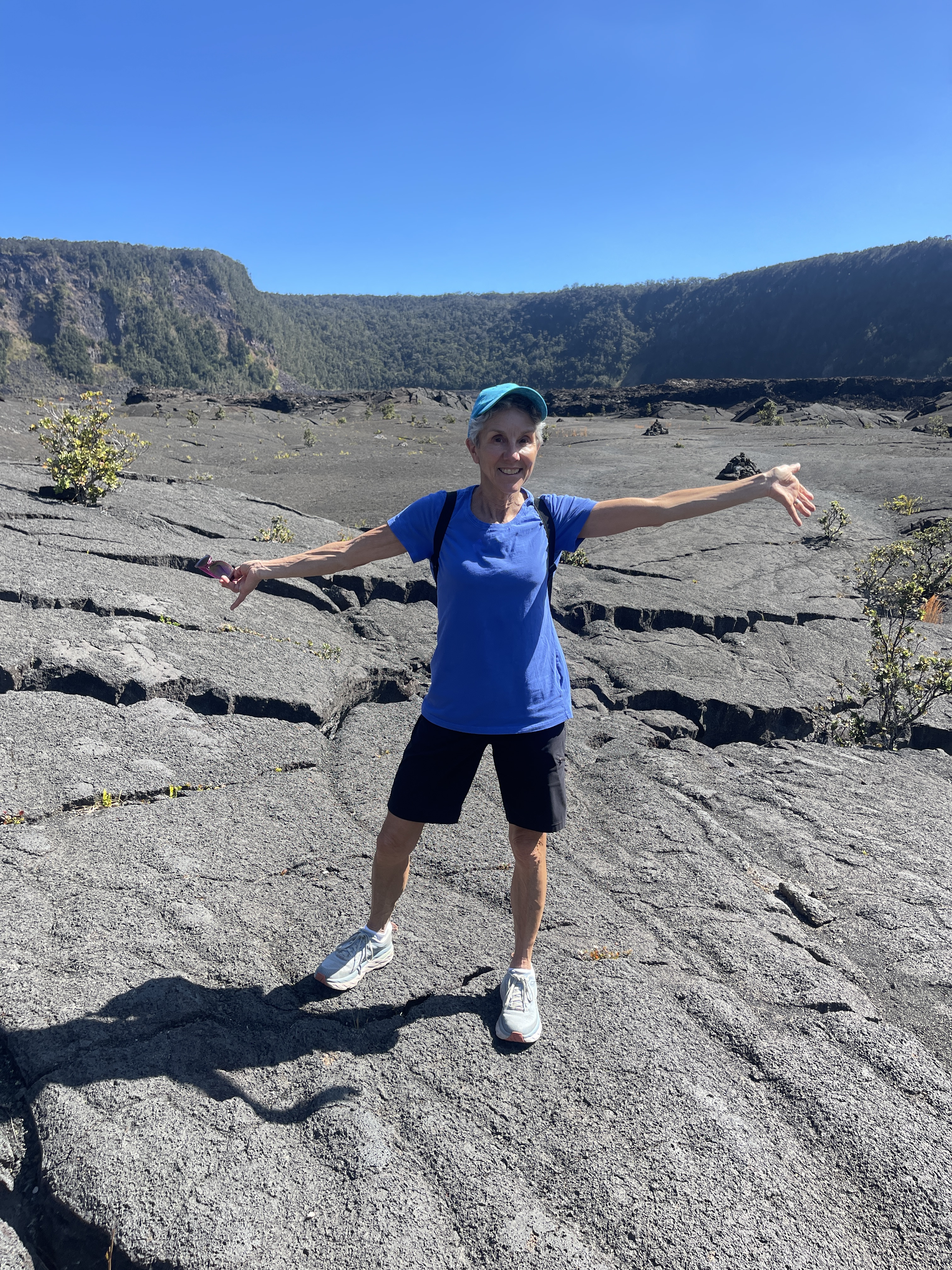
Once down on the floor of the crater, we picked our way across the rough lava, keeping to the rock cairns or “ahu” as the stacked rocks are known here.  In time that gave way to smooth lava flows, the lava lake that formed at the bottom of the crater.  The hot, unprotected sun beat down but was offset by cooling winds.  By the time we reached the other end, the tree coverage felt heavenly.  The ascent is said to be more gentle there due to the switchbacks which keep it to a milder grade. But it is still a formidable vertical distance.  Over 550 feet, as Rich points out.
Even so, I had to agree with the guidebook.  If you do only one hike in the park, that’s the one to do.  After all, how often do you get to walk across a lava lake?  Not a bad alternative to a waterfall.  Especially when there is a sudden change of plans.

Lava Lessons

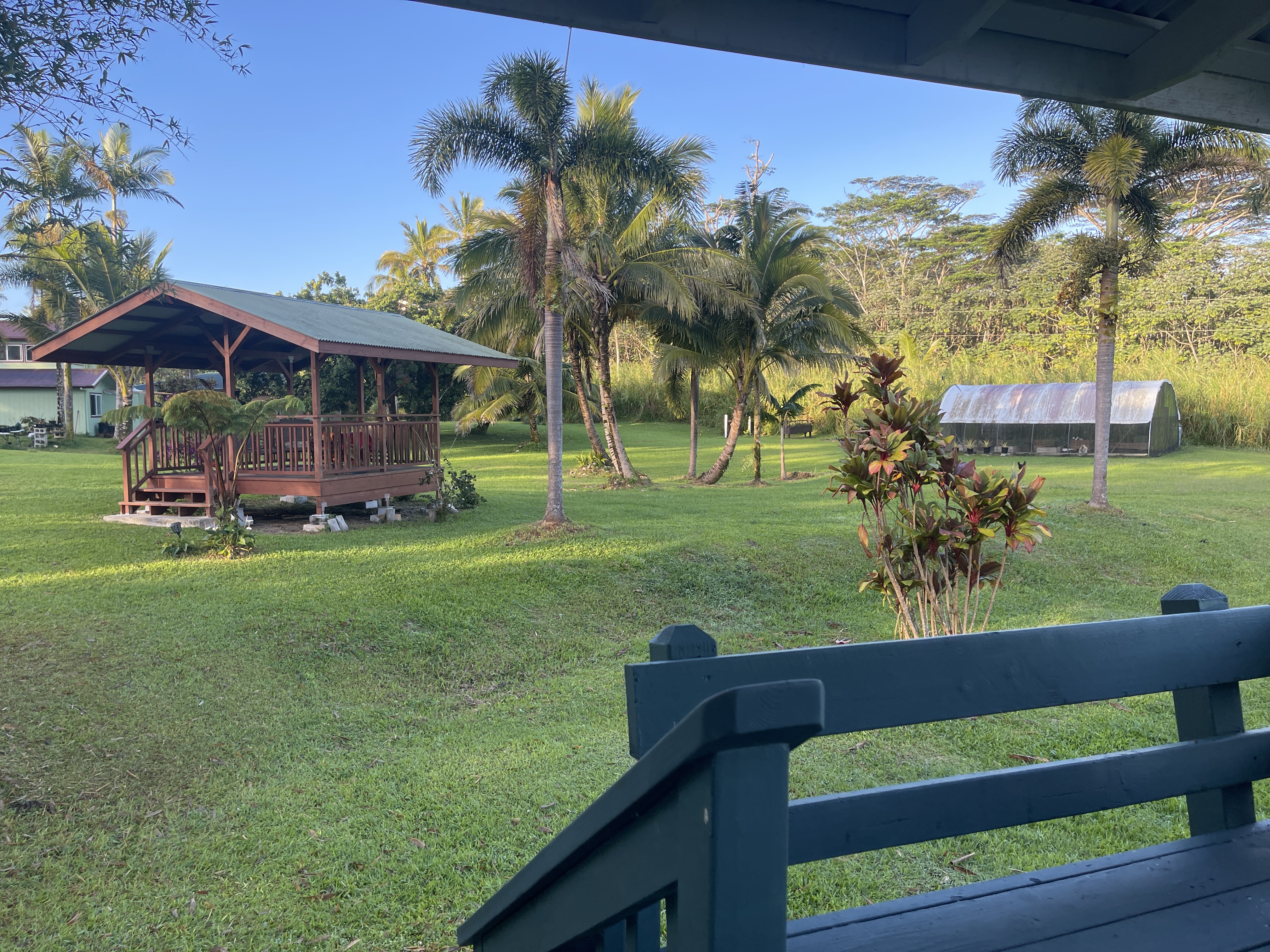
Hello Hawaii!  We arrived in the dark, so this morning was our first real view of our surroundings here on the Big Island.  Our guesthouse is in a lush green yard with exotic plants alive with birdsong and surrounded by thick tropical forest, immediately adjacent to Lava Tree State Park.  The peace, seclusion and privacy in addition to the warm climate gave us an immediate feel of laid back island life.  So it was with great surprise, we learned about its near-miss in the 2018 volcano lava flow.

Our hosts, Kent and Melanie, welcomed us with open arms and Melanie immediately brought me into their home to show me aerial photos taken just four days after the eruption.  The juxtaposition of green and black painted a stark picture of the devastation.  Just 1/8 mile away the lava advanced inexorably, crossing roads, changing the landscape forever.  In order to see it for ourselves, Melanie gave us directions for a driving loop which we quickly followed.

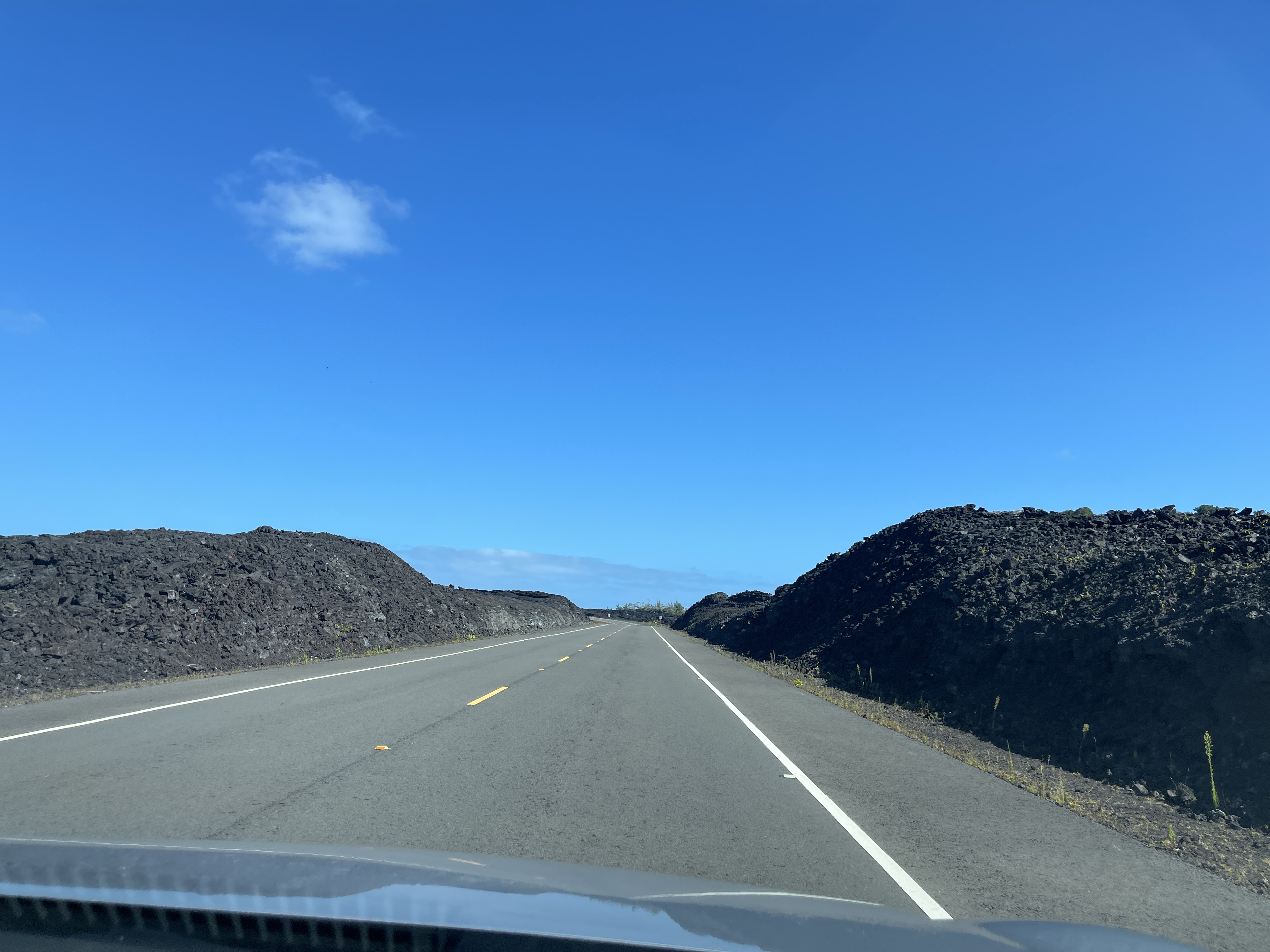
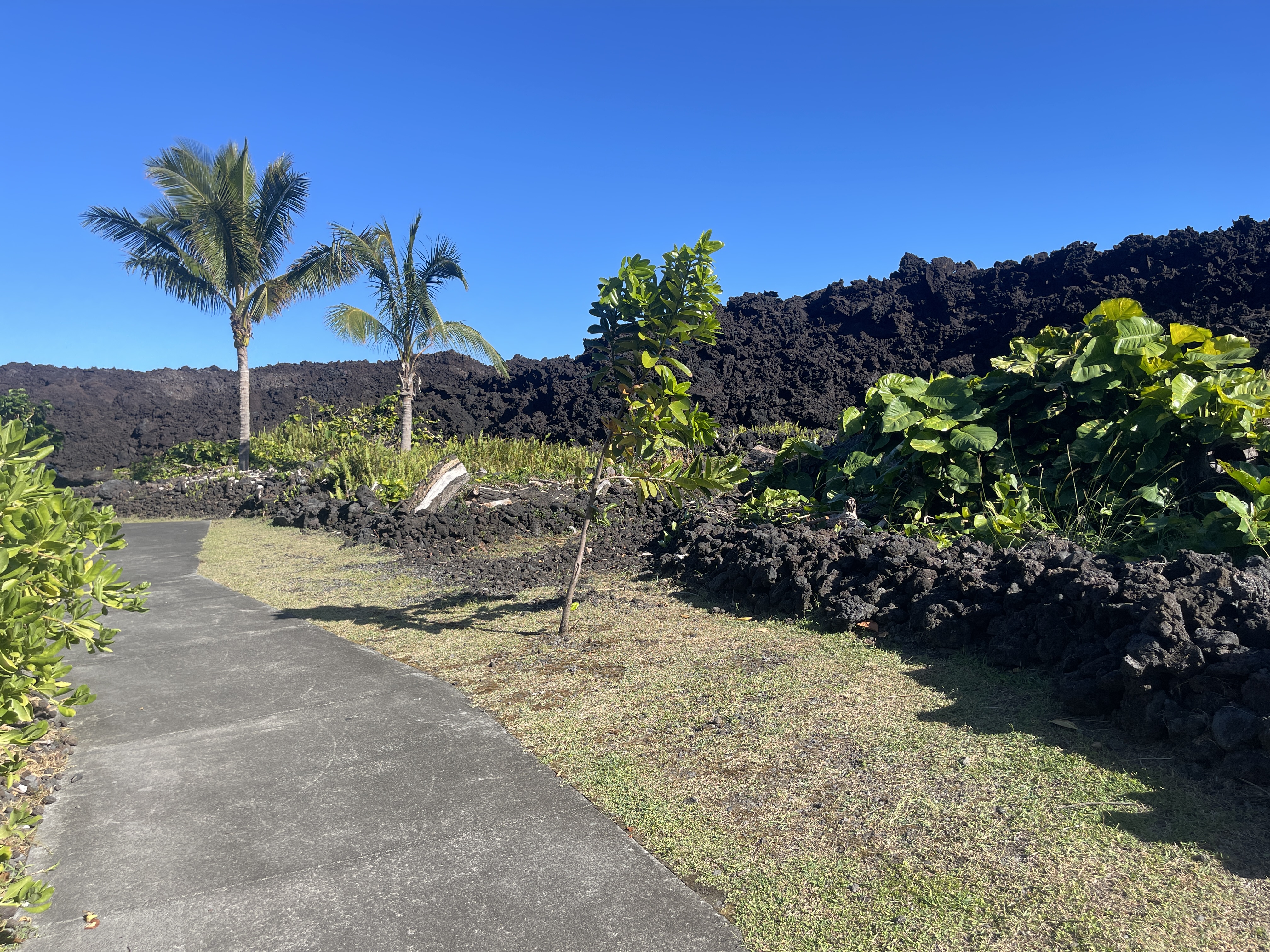
We took the main road away from Pahoa, which Google labels with “End of the Road” just a short distance away.  It is literally covered by lava beyond that point. Taking the other fork toward the coast, the road has been rebuilt right through the lava.  Roadside views quickly transition from homes and greenery to solid lava lining both sides of the road.  It is easy to see the lava’s path, what trees and structures were spared and where it all lies buried beneath the black devastation.  A stark reality.

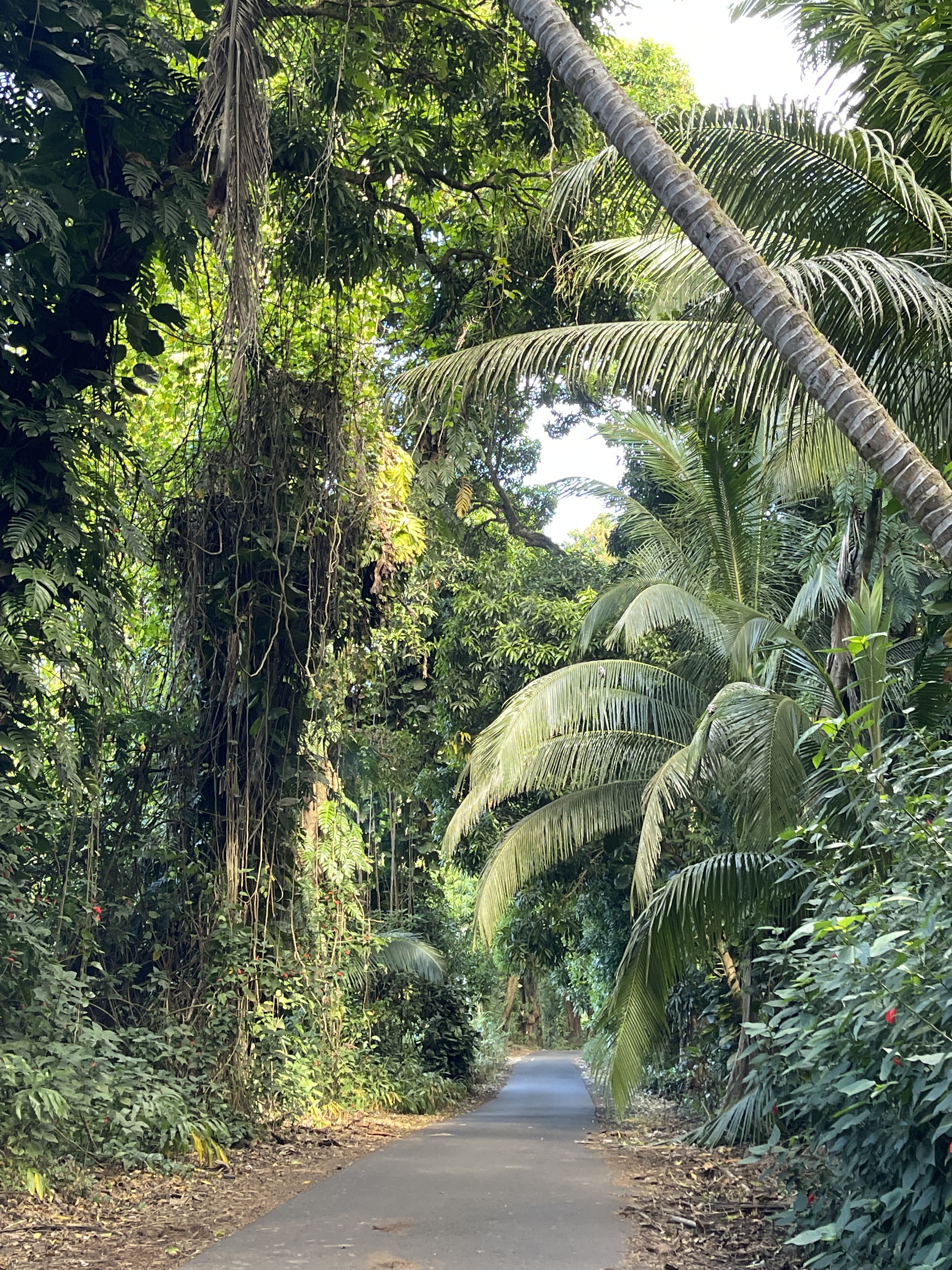
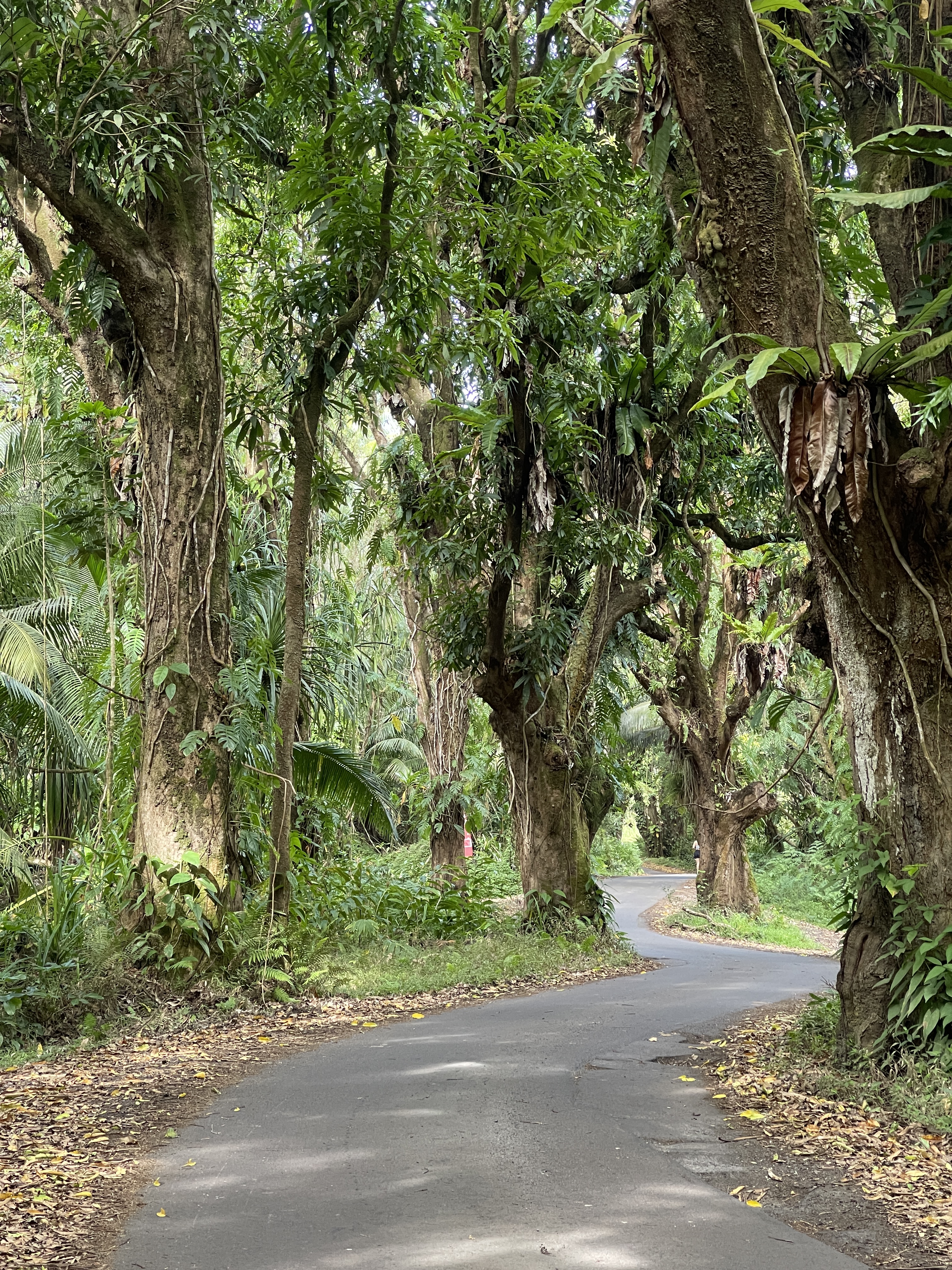
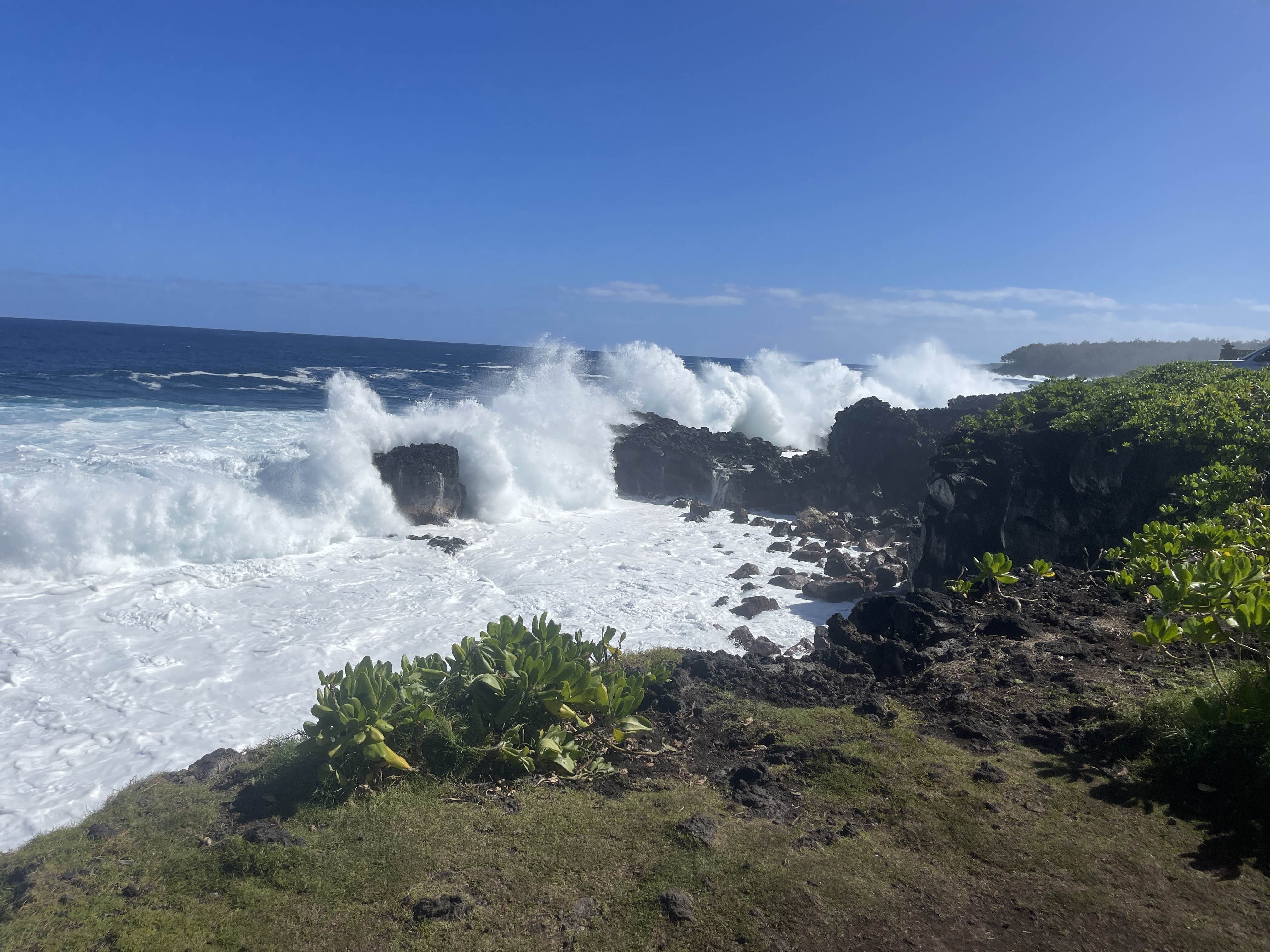
As we neared the end of the lava flow, the road took a sharp left turn and an equally sharp transformation.  Government Beach Road had major portions covered in lava, but was laboriously rebuilt in 2019 despite challenges including encountering still-hot surface temperatures.  The narrow road travels through a green canopy of tropical trees and plants, lending it seclusion as well as serenity with its 15 mph speed limit and the need for pull-outs to allow cars to pass.  When it reached the ocean, gigantic waves crashed against the shoreline.  We spent a long time watching the force of nature pounding against those rocky lava cliffs.

For the afternoon, I chose to drive down to the southern shore of Puna.  Prior to 2018 it would have been a short drive, but the road closure forced me into a round about approach.  However that took me along another narrow drive, paralleling the shore this time in closer proximity to the water.  There I was able to witness the impacts of both new and old lava.

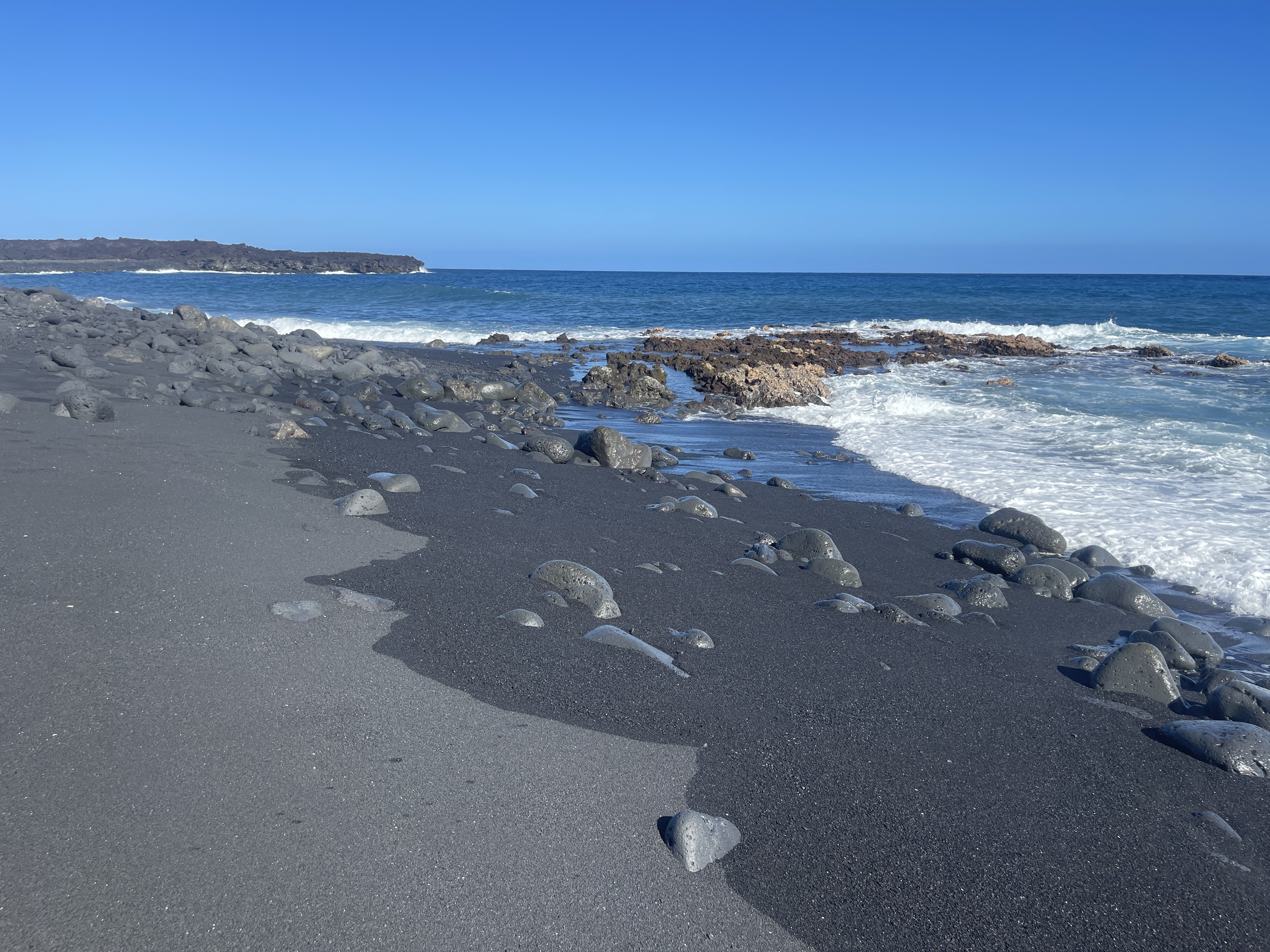
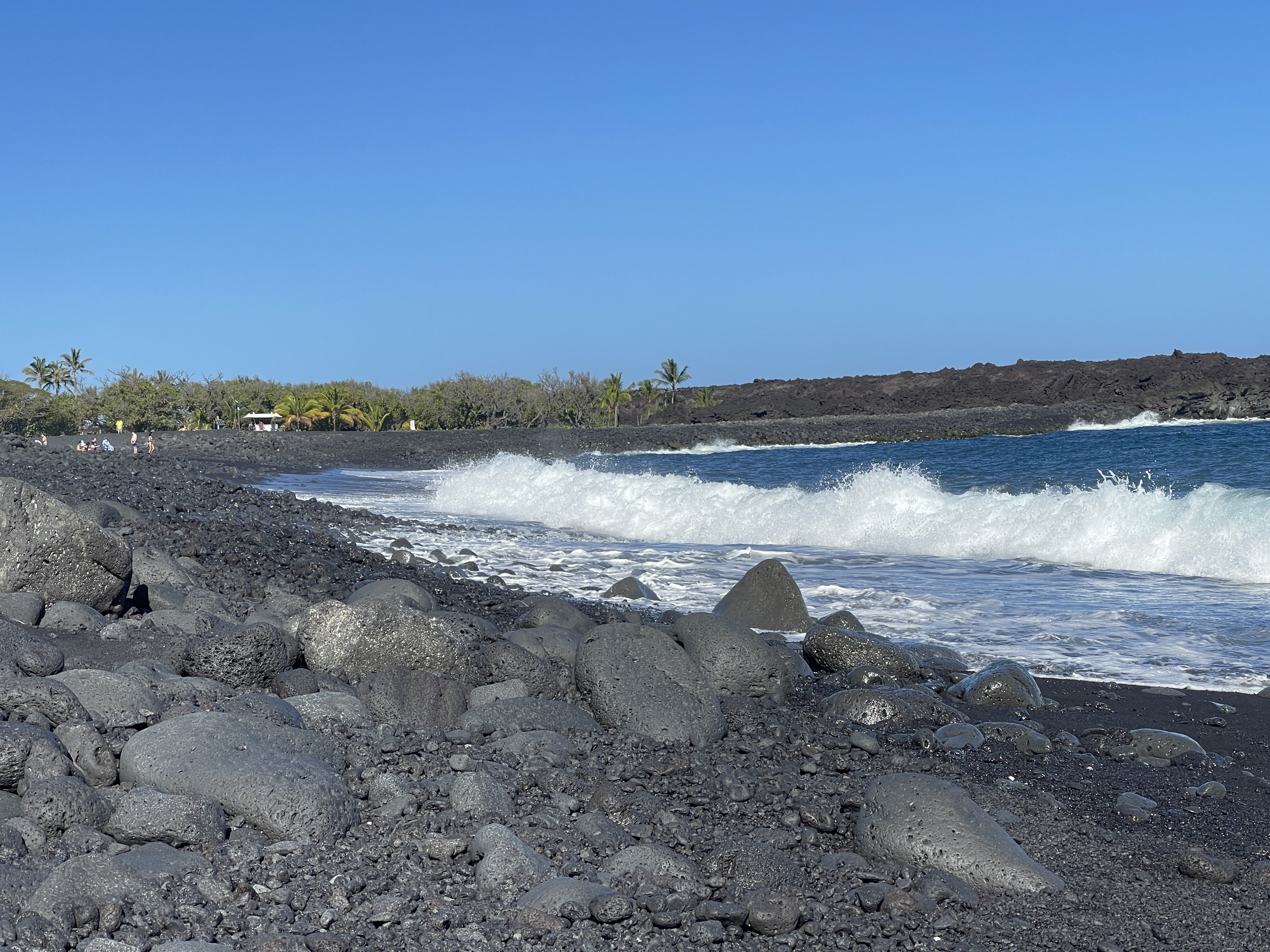
The initial part of the drive was lush and green, as the tropical forest found footholds in old lava flows and reclaimed its dominance.  In some spots, pillars of lava poked up through the plantings, a reminder of the part it played in this geography. Continuing on, the path of the 2018 lava was evident once again.  The road passes through one section, re-emerges then eventually ends at Isaac Hale Park.  There the lava created the island’s newest black sand beach, which I explored.  Smooth fine sand mixed with harsh larger chunks of lava made for tricky walking, but didn’t stop sunbathers from stretching out their towels.  The picnic areas of the park had walkways that wound through flowering plants but often ended abruptly at lava walls.  And the altered layout of the park hindered my search for the warm springs that supposedly were there.  It gave me an eerie sense of life as a path interrupted.

I found myself fascinated by the co-existence of life and volcanoes.  When they choose to erupt, there is no stopping the flow, which follows no rules.  It reshapes the land, changes travel patterns, saves some areas and devastates others.  I can’t wait to explore more of Hawaii’s Big Island over the next two weeks.  I’m sure I will learn many more lava lessons.

Grounded below the Light

It never grows old. This was our eighth stint as keepers at Crisp Point Lighthouse, and the experience was as unique as the first.

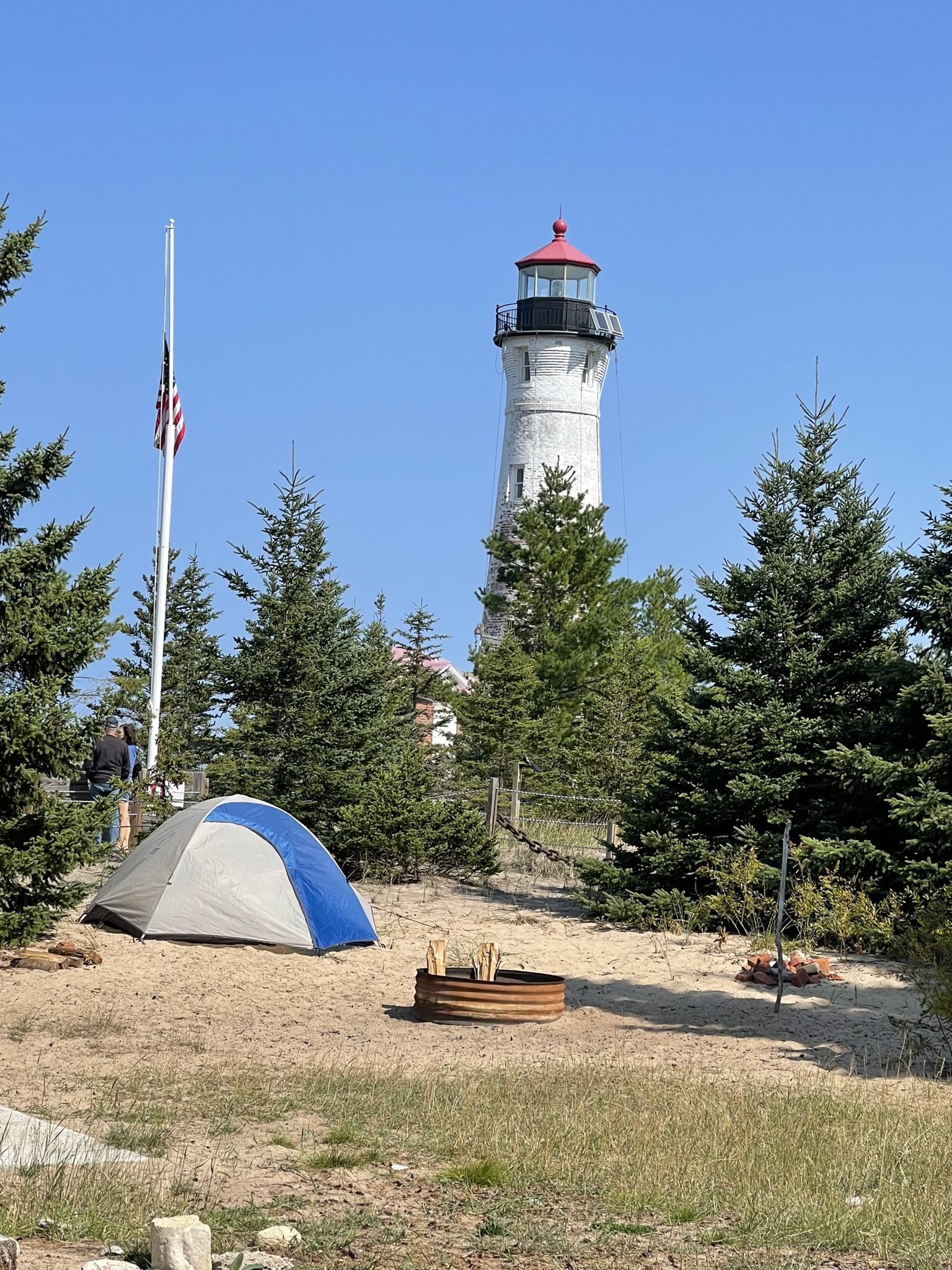
The first indication that this year would be different were the cables and floating platforms halfway up the lighthouse. On closer inspection we could see the hundreds of bricks that had been replaced, the painstaking work taking place to restore this magnificent tower to its strength and beauty. Restoration professionals who specialize in historic structures were plying their skills, high up in the air.

Over the course of our stay we got to know Bob and Josh, who stayed in a trailer at the edge of the parking lot, sharing our retreat on the edge of Lake Superior. From them we learned about the care and upkeep necessary for a lighthouse built in 1904 and managed by a non-profit historical society. We, as members, are responsible for its good health, and watched as they hung from the tower to ensure it endured for future generations to visit.

While they worked on the tower, our duties continued as usual. We still tended the busy Visitor Center where we sold souvenirs, chatted with visitors and answered their questions. We kept the place clean and well stocked, and directed them to the beach to find agates, Yooperlites and pretty rocks, or just go for a long walk on the sandy beach.

We also had to deliver the bad news. “The tower is currently closed, due to the restoration work.” I’ve always been amazed that visiting this lighthouse is completely free (although the 18-mile rough dirt road to reach it might be considered the price of admission). And visitors are normally allowed to go up inside the tower and out onto the catwalk at the top unaccompanied. There they may linger as long as they like, enjoying the view, taking in the long beaches and huge expanse of Lake Superior. I worried that visitors might be angry, denied the pleasure after that long drive. But mostly we met with good humor. People were just happy to be there, to see the lighthouse, to spend time on the beach, to soak it all in.

It also meant that the lighthouse was off limits to us as keepers. No reading out on the catwalk in the early morning sunshine before visitors arrive. No fancy photos through the windows, across the lens. No feeling the wind in my face as it whipped around the curved structure. No need to sweep out the circular staircase to remove the collection of sand from all the feet either. But I know it will be all the sweeter next year when we can do it again.

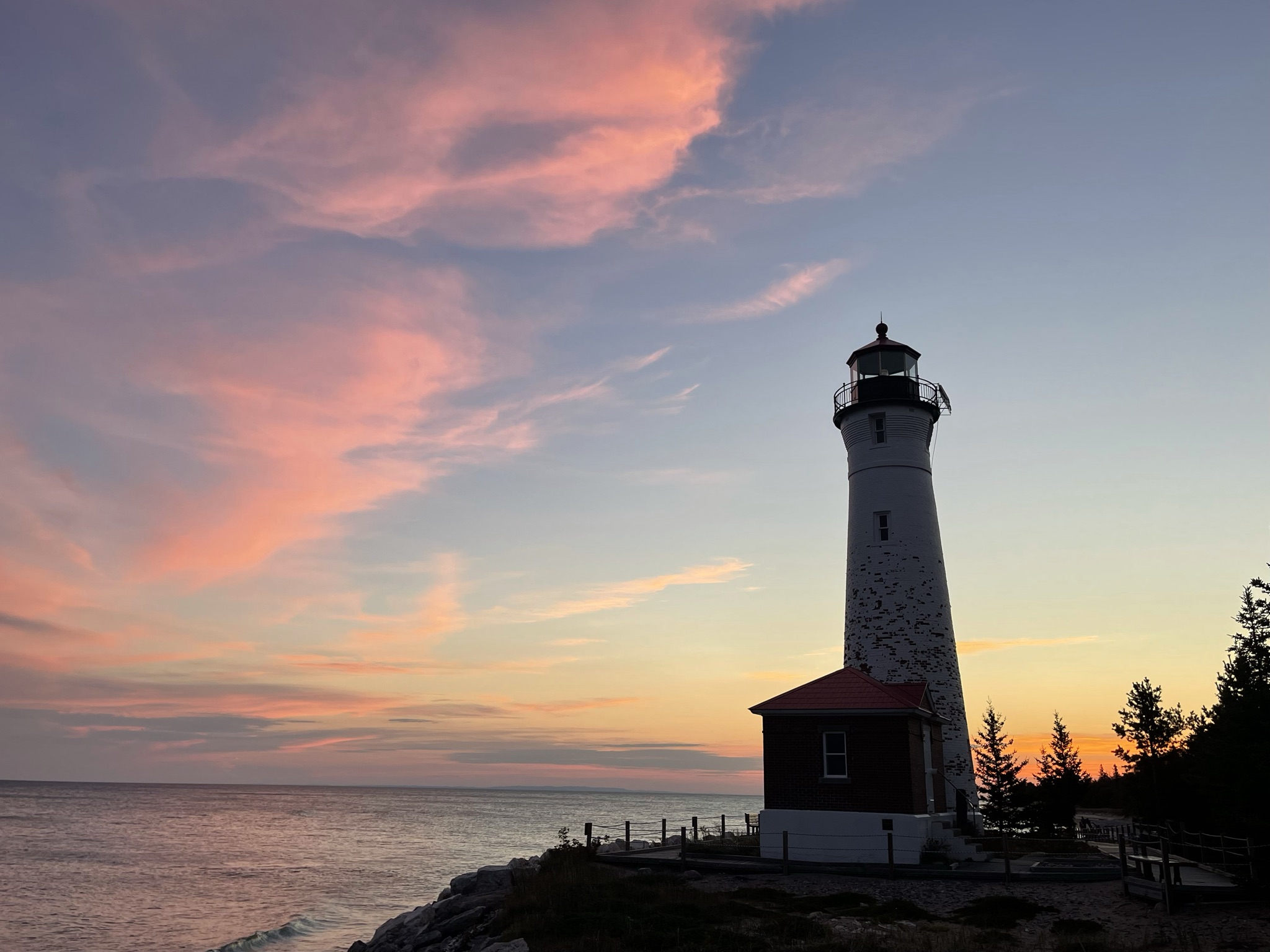
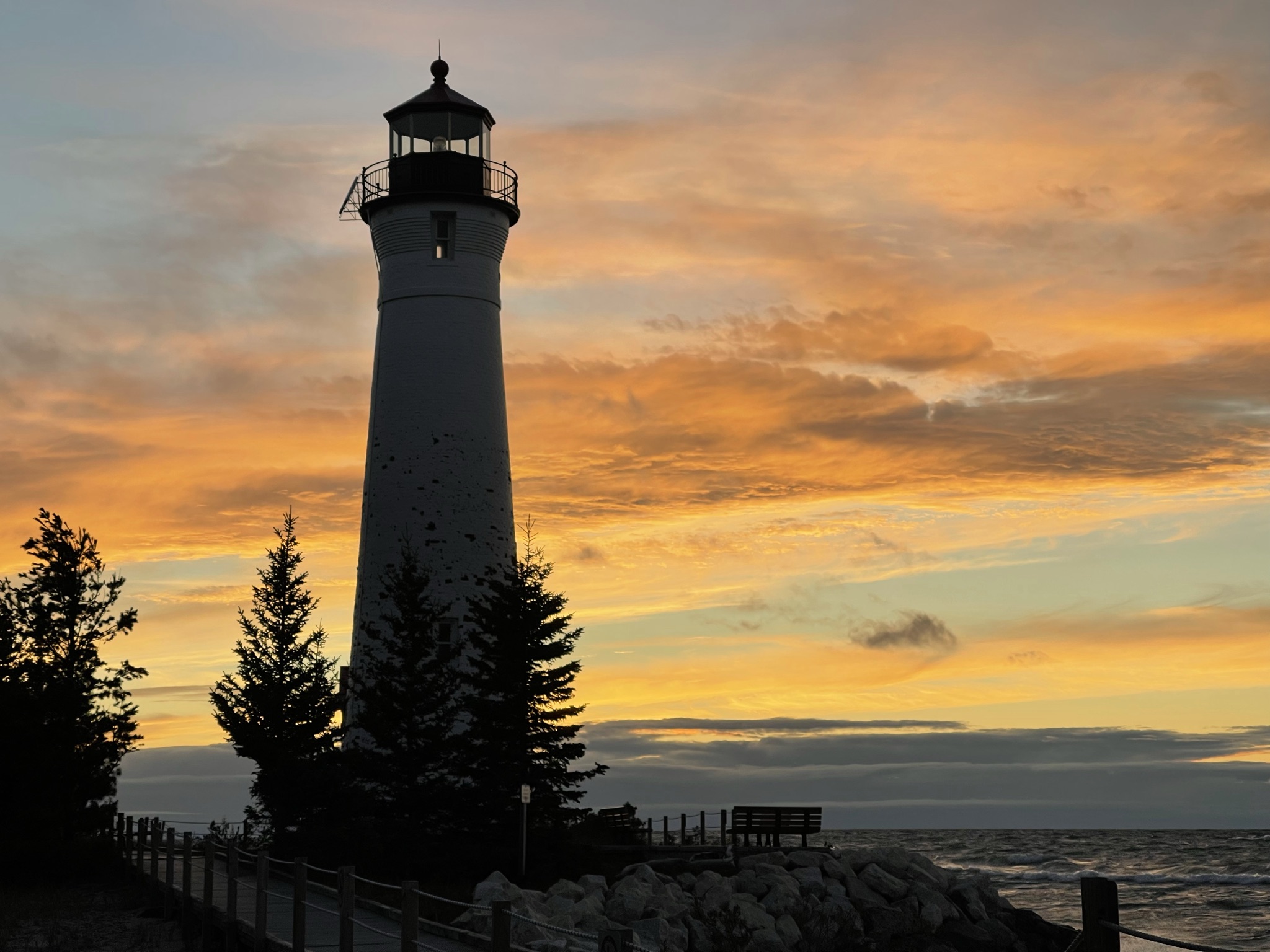
The restoration didn’t prevent me from admiring the lighthouse from all angles, lifting my eyes to take in its full height. And at sunrise and sunset, it was as majestic as ever. Silhouetted against the red, orange and pink colors in the sky, the cables, platform and unpainted new bricks on its face faded.

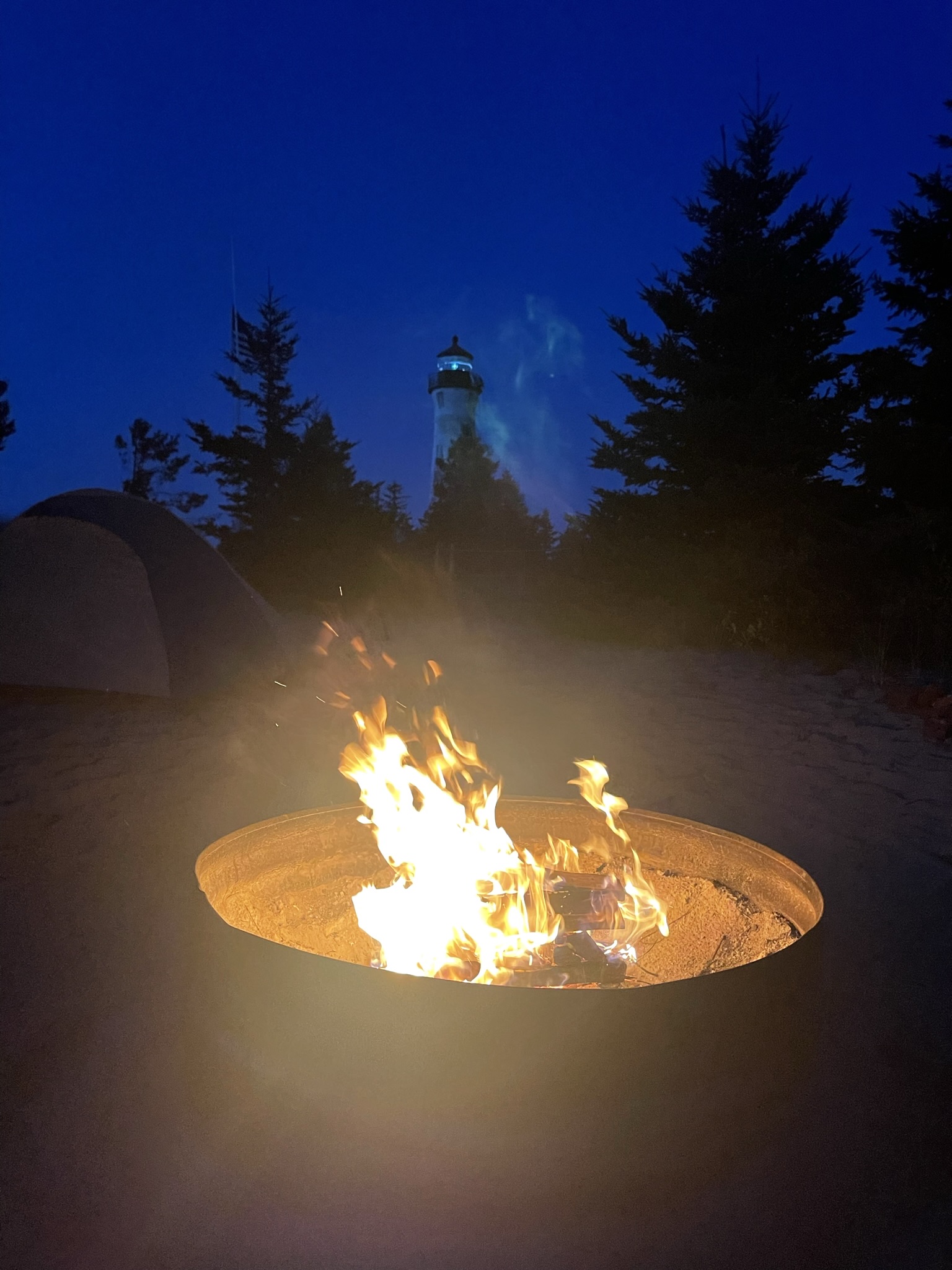
During our evening campfires, the beacon still pulsed above our heads while intense stars filled the sky.

Some things don’t change from year to year. We still had our private campsite on the beach, slept on the sand in our pup-tent, listened to the waves crash, cooked out and scoured the shore for Yooperlites at night. Beth spoiled me with French press coffee each morning, and I took restorative beach walks after sunrise. Rich found birds to photograph and Jon delighted in blowing sand off the boardwalk.

Next year we will return to a gleaming whitewashed lighthouse, and dash up the stairs to admire the view from the catwalk. No longer grounded.

Promises Kept

Friendship doesn’t come easily. It takes work to continue the bonds, to nurture the relationships and overcome time and distance. Especially when 49 years and thousands of miles stretch between us. But we’ve done it, three times now.

The six of us entered Knox College in the fall of 1973, all living in the same antiquated dorm with even more ancient rules and traditions. We swapped roommates over our four years, and as our finale we all lived in the same “suite” with a few more senior girls. Bonding over our shared experiences.

Nine years ago, we instituted our first mini-reunion, which we now dub our Knox ReUn. We gathered for a weekend in the Twin Cities where three of us lived at the time, sharing the hosting duties. We followed that four years later, renting a condo in Chicago where two more members lived. It resembled dorm life, sharing bedrooms, communal cooking and assigned clean-up duties.

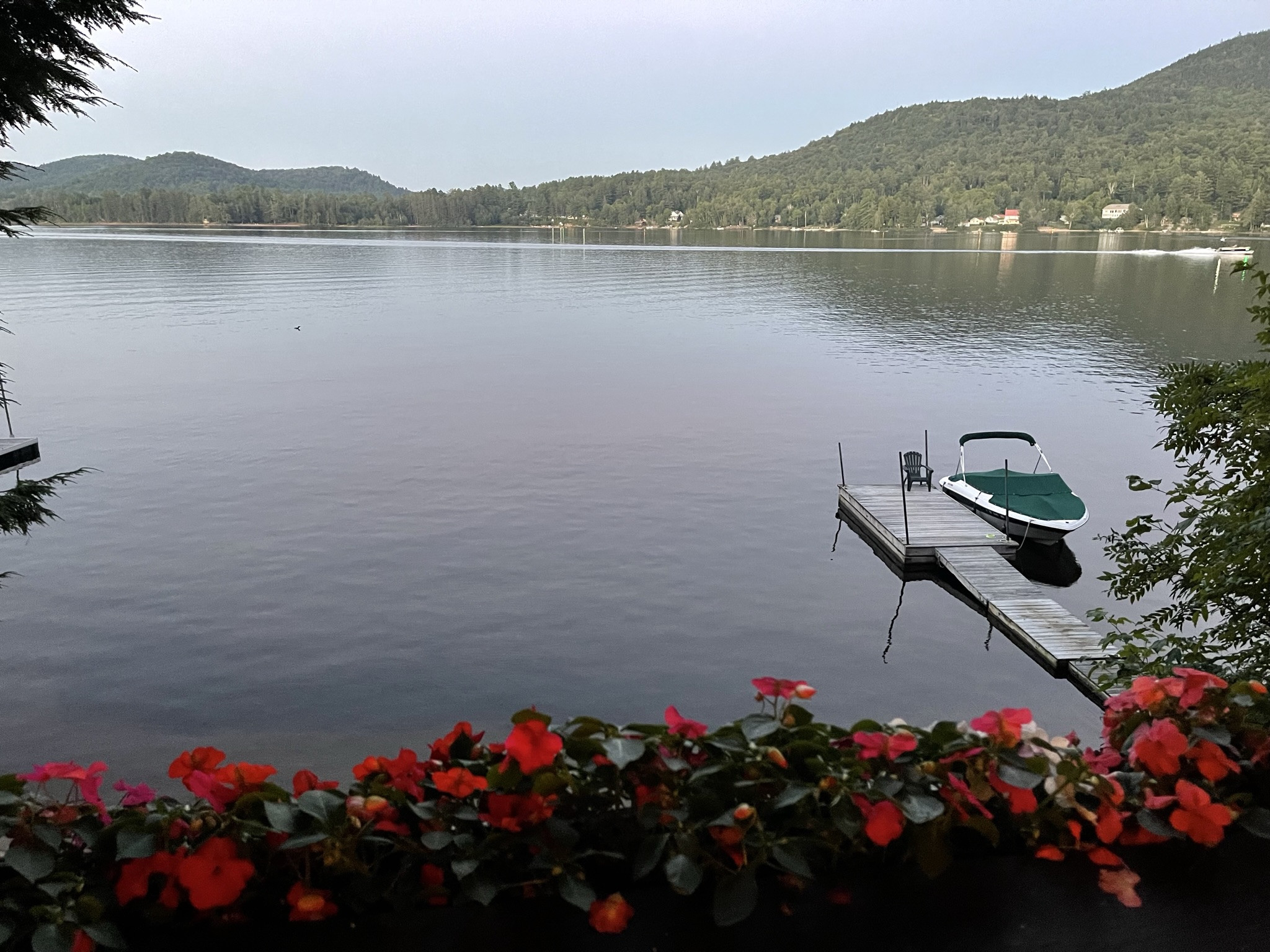
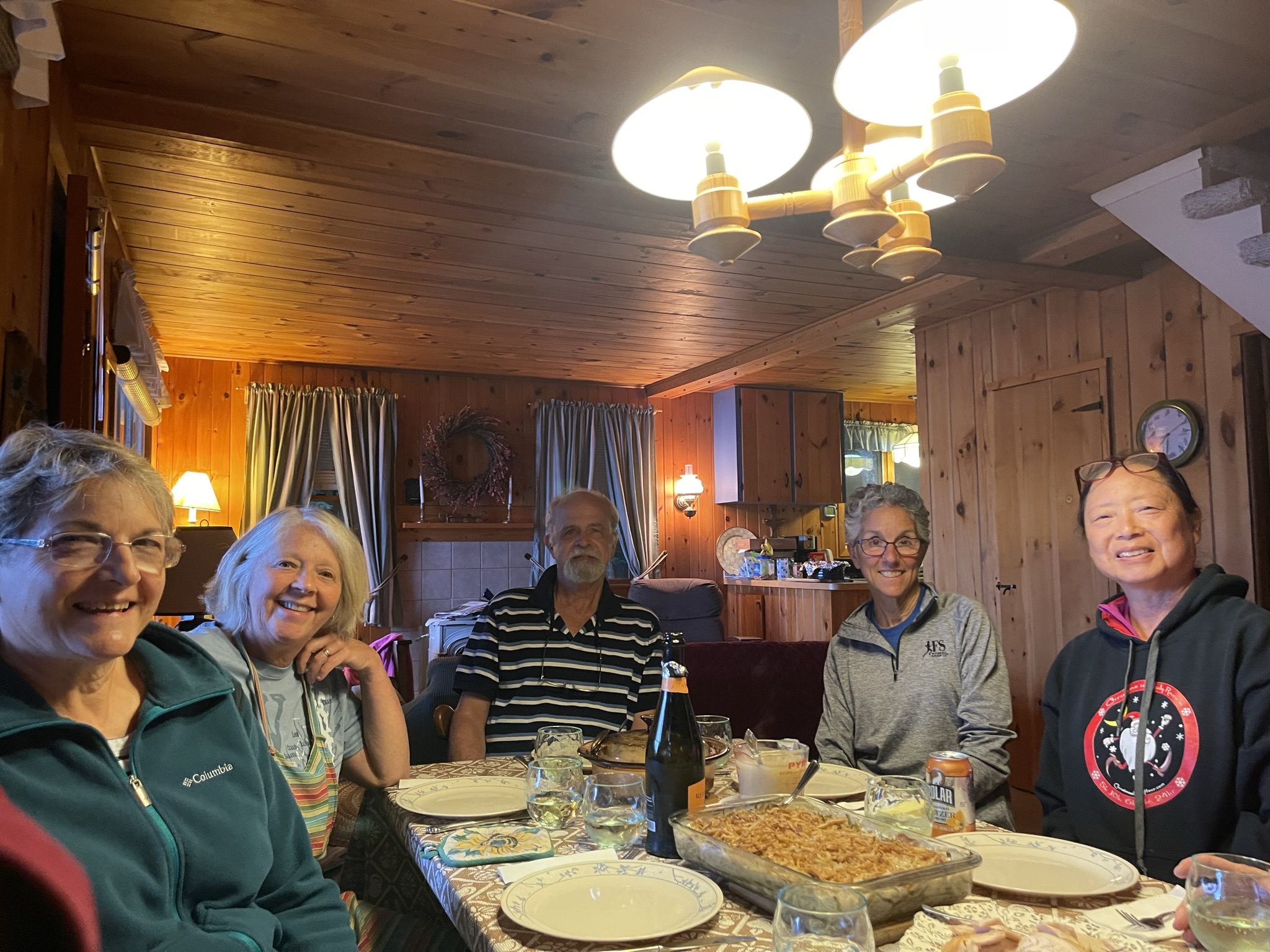
That left one locale – New York state, where Barb lives and better yet has a cabin in the Adirondack Mountains where she spent her summers since she was six years old. Promises were made, plans set in motion, airline tickets purchased and dozens of emails flew back and forth. Despite being delayed by Covid, five of us finally convened on Long Lake for the week.

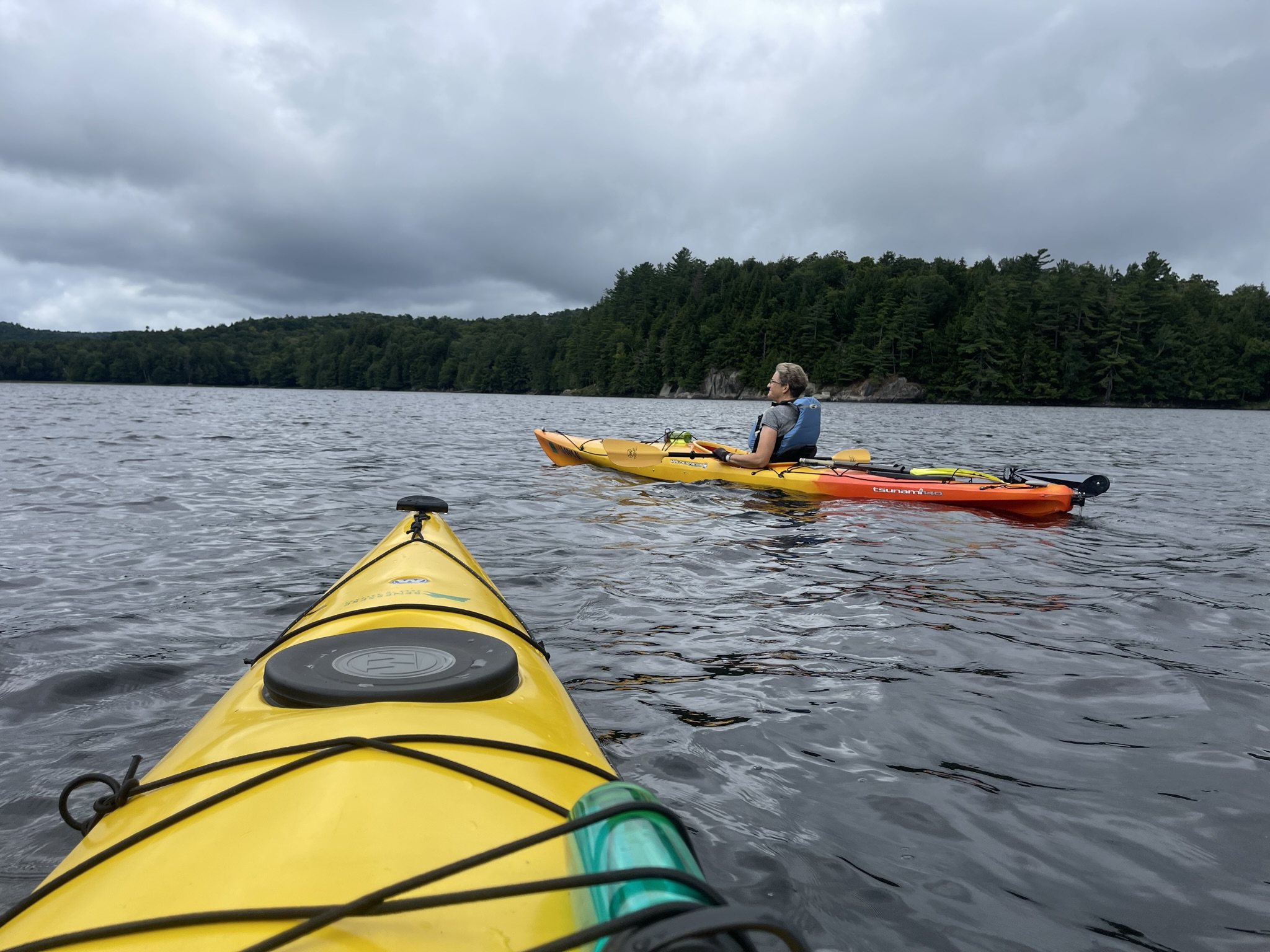
It felt different this time. Sequestered in a beautiful setting, surrounded by water and mountains and myriad options for outdoor adventure was liberating. We found ourselves mixing and matching in little groups for kayaking, swimming, hiking or just lounging in a hammock. There was an air of leisure, a lack of schedule and a shared feeling of relaxation. An ability to take life as it came – a far cry from our self-imposed rigid study regimes of yore.

For the first time, all of us are retired, save one. No one felt any pressure to make the most of every minute. It was enough to just be there. Together. Conversation flowed easily. We no longer had a need to talk work, to air the stress and pressure we felt or bemoan the challenges we navigated. Instead, we could savor this freedom and the ability to enjoy our retirement from the careers we earned with that college degree.

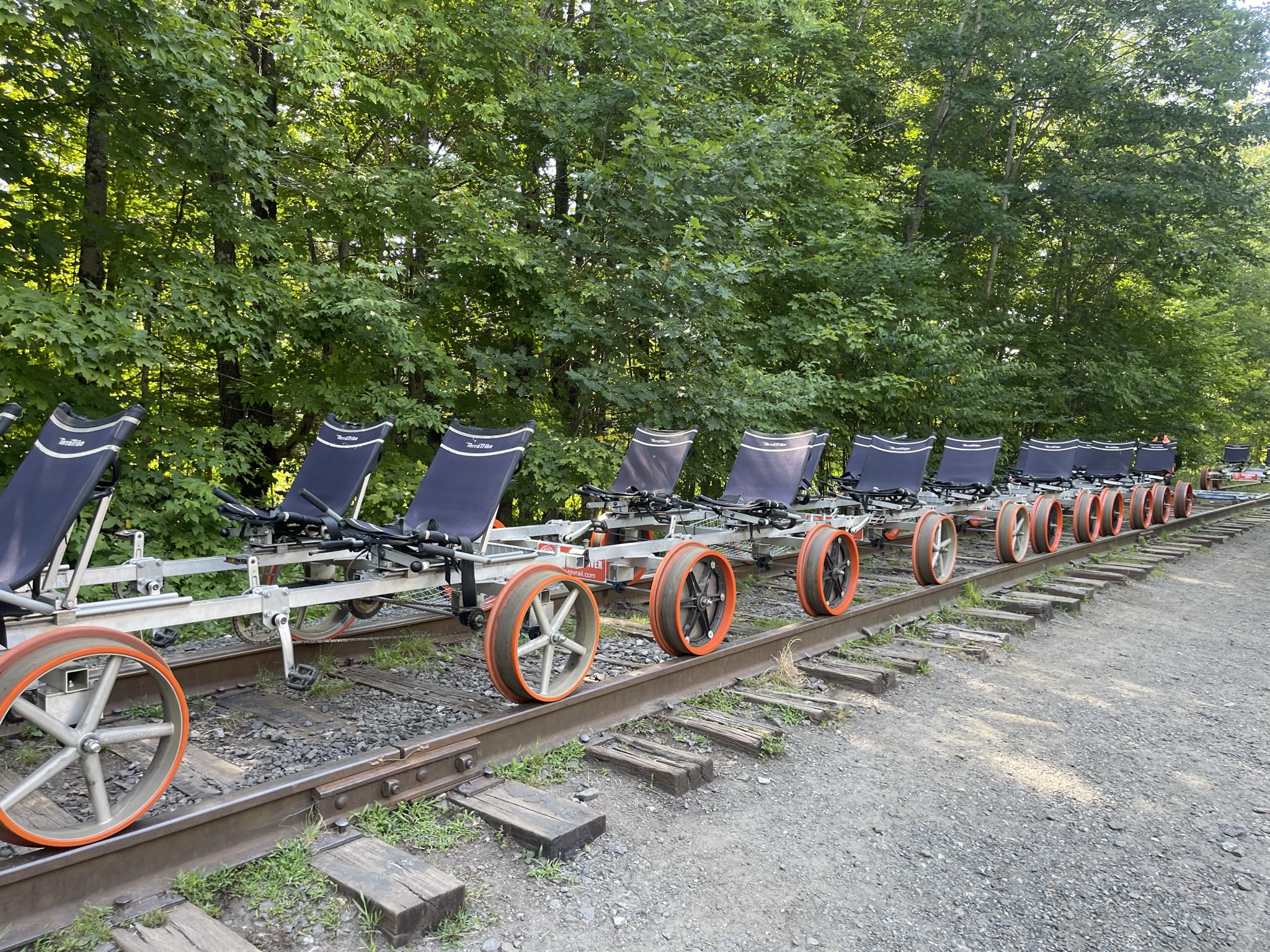
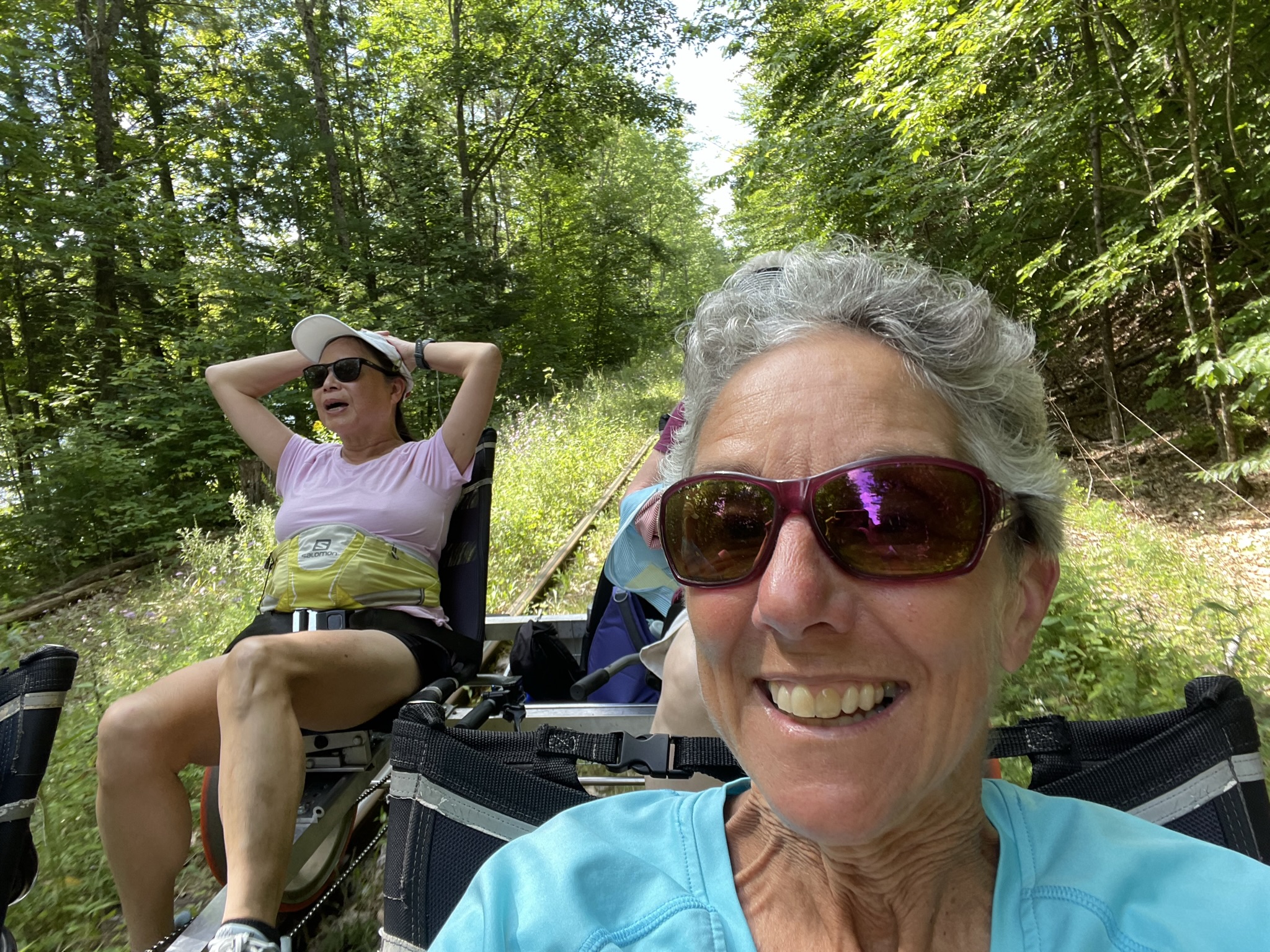
Silliness and fun was not only allowed but encouraged. Barb booked us on a Rail Biking adventure where we pedaled alongside the Hudson River. We floated in the water, buoyed by noodles. We slurped ice cream cones mid-afternoon. We roasted marshmallows and consumed s’mores by the campfire on the beach. We attempted stand-up paddle boarding, some with greater degrees of success than others! It was college antics all over again. Only better.

For me, the best part of the week was the true immersion. All that mattered was what was happening right around me. The rest of the world faded into the background, inconsequential for the moment. Responsibilities would wait, deadlines could be elastic, duties were avoided. Spending time with friends trumped all.

When I entered Knox and forged these friendships, I never foresaw the longevity of these ties. I never dreamed that 49 years later I would be sitting around a table sharing morning coffee, or piling into a speed boat together. It took a lot of dedication and persistence to make this happen. But we’re not done yet. We’ve already decided to reconvene in three years for a destination vacation. I can already see it happening. Because this group keeps its promises.

Arches, through Dad’s eyes

Dear Dad,

I felt you by my side these last few days as I was steeped in the geology of Utah, surrounded by stone edifices and in awe of rock formations. You spent your whole career immersed in the nature of minerals, focused on the engineering aspects of mining. I don’t think I ever absorbed much of that while growing up. Susie was always the rock hound, her pockets bulging with rocks every time we ventured outside. Every family picnic on The Rocks (now known as Brighton Beach) enticed her to return with abundant samples of the pebble beach.

But it all came to roost as I ventured into Arches National Park.

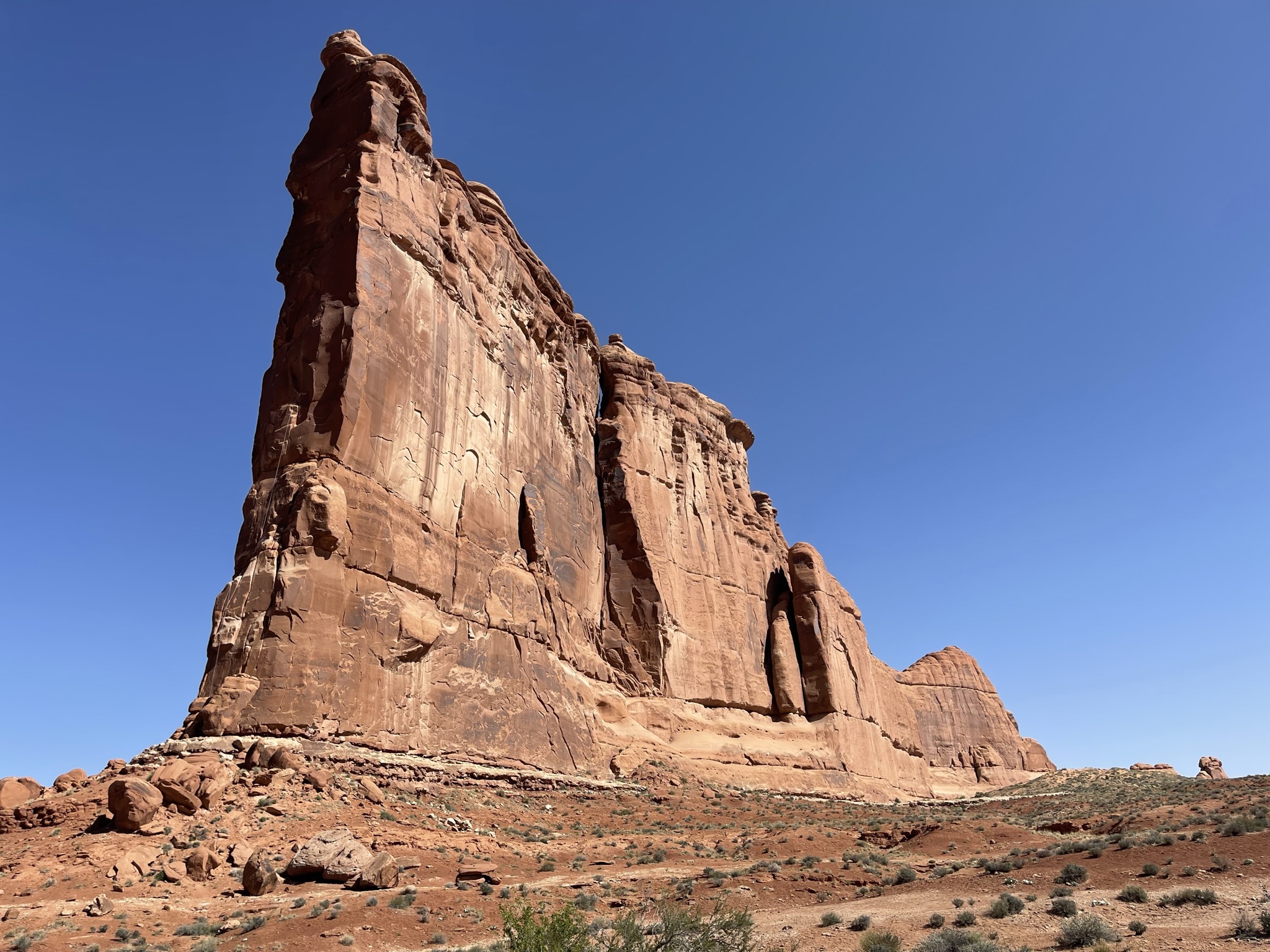
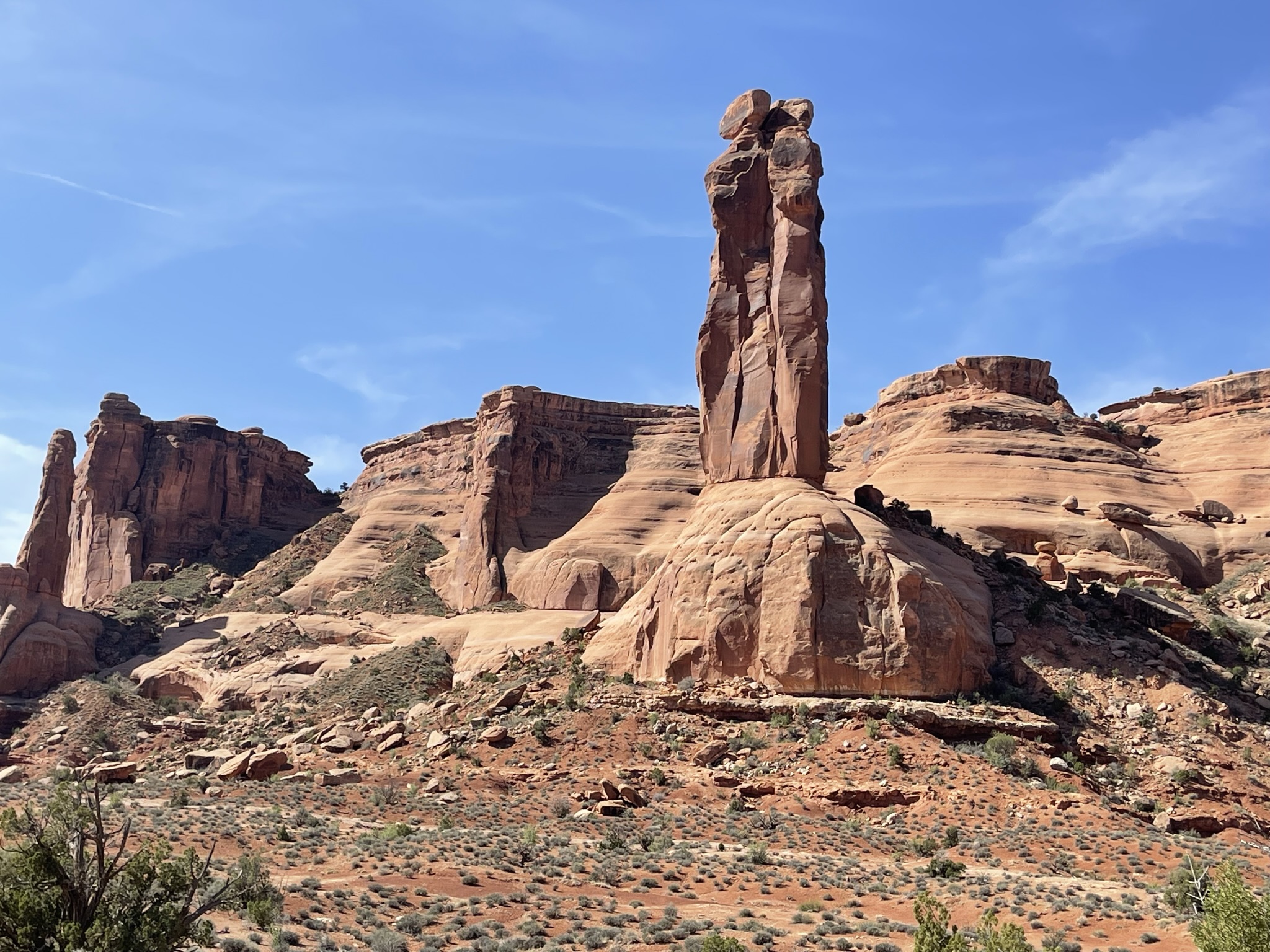
Like any tourist, I had come to see the natural stone arches that gave the park it’s name. Home to over 2,000 arches, it is one of the world’s greatest densities of natural arches. But the initial drive into the park soon revealed the larger scope of its majesty as I stared at massive red rock walls, towers that dwarfed the humans at their base, and rocks impossibly balanced atop delicate bases. With names like The Great Wall, Tower of Babel, and Courthouse Towers, I soon came to appreciate the fuller extent of nature’s creation.

Dad, I couldn’t help but be attracted to the layers of rock, easily evident in the faces of the formations, no doubt each telling a story of its era. I’m sure you could have explained it all to me, how the land evolved over time, and the unique composition of each layer. I had to be content with admiring nature’s sculpting skills.

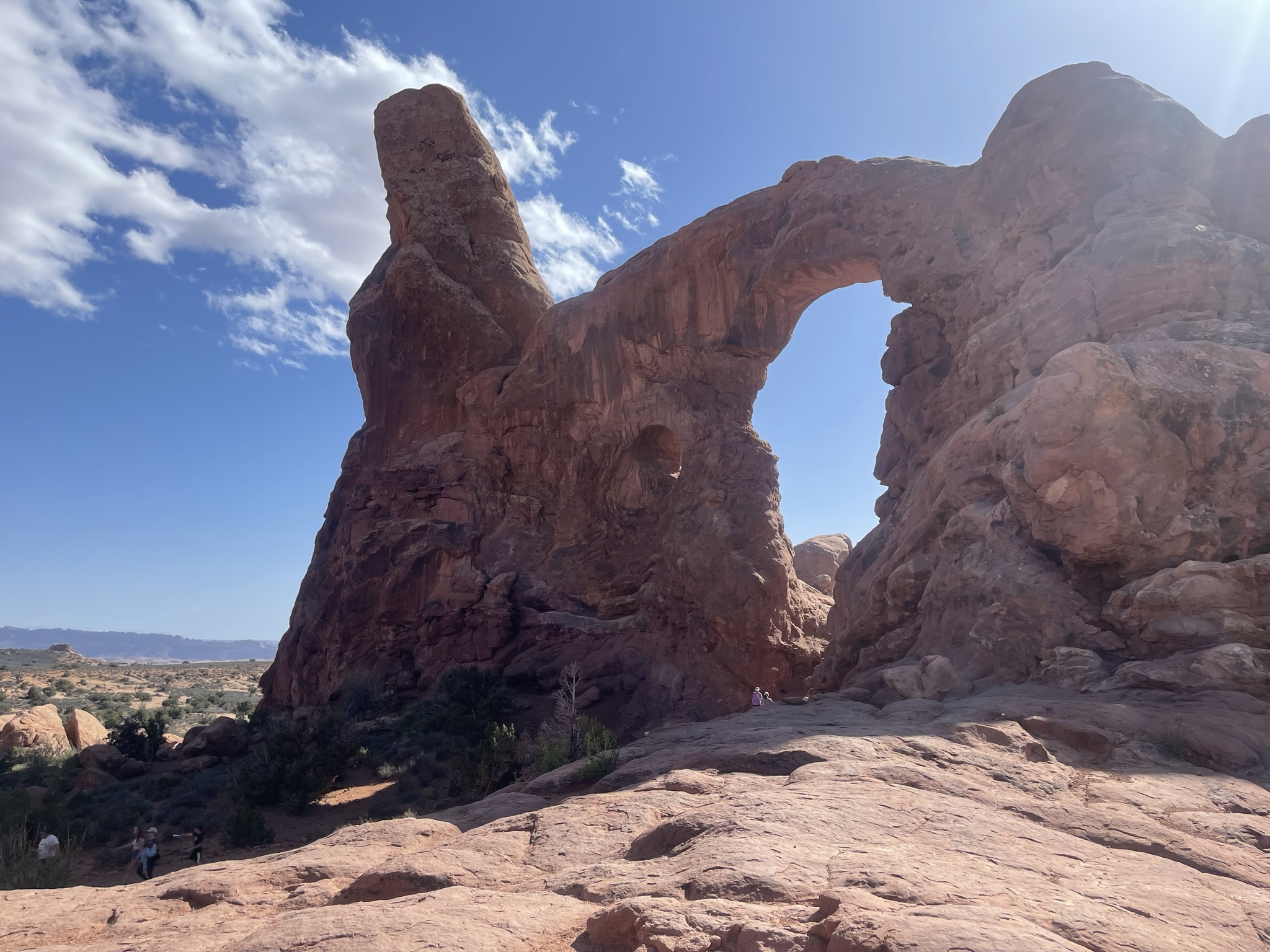
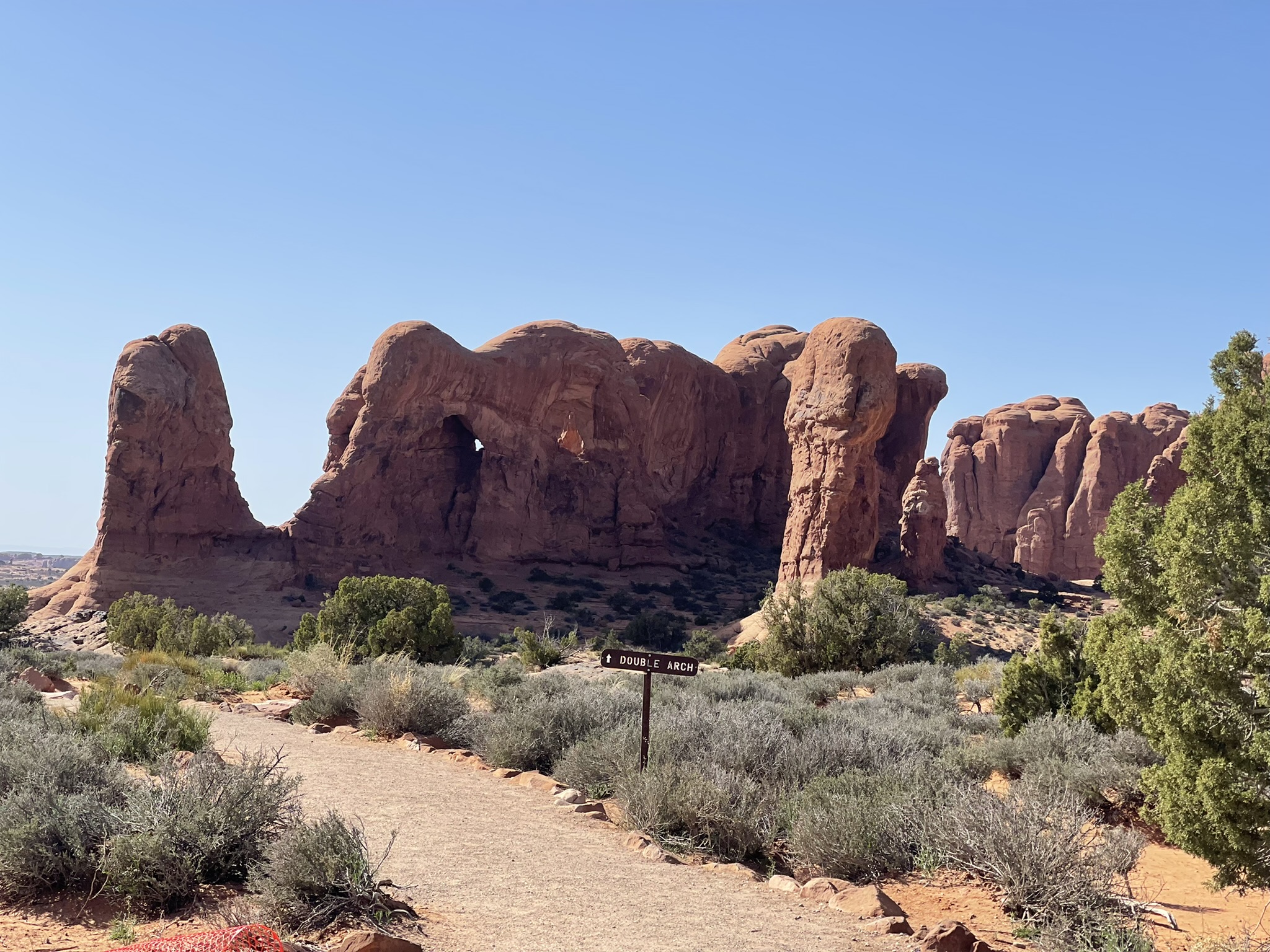
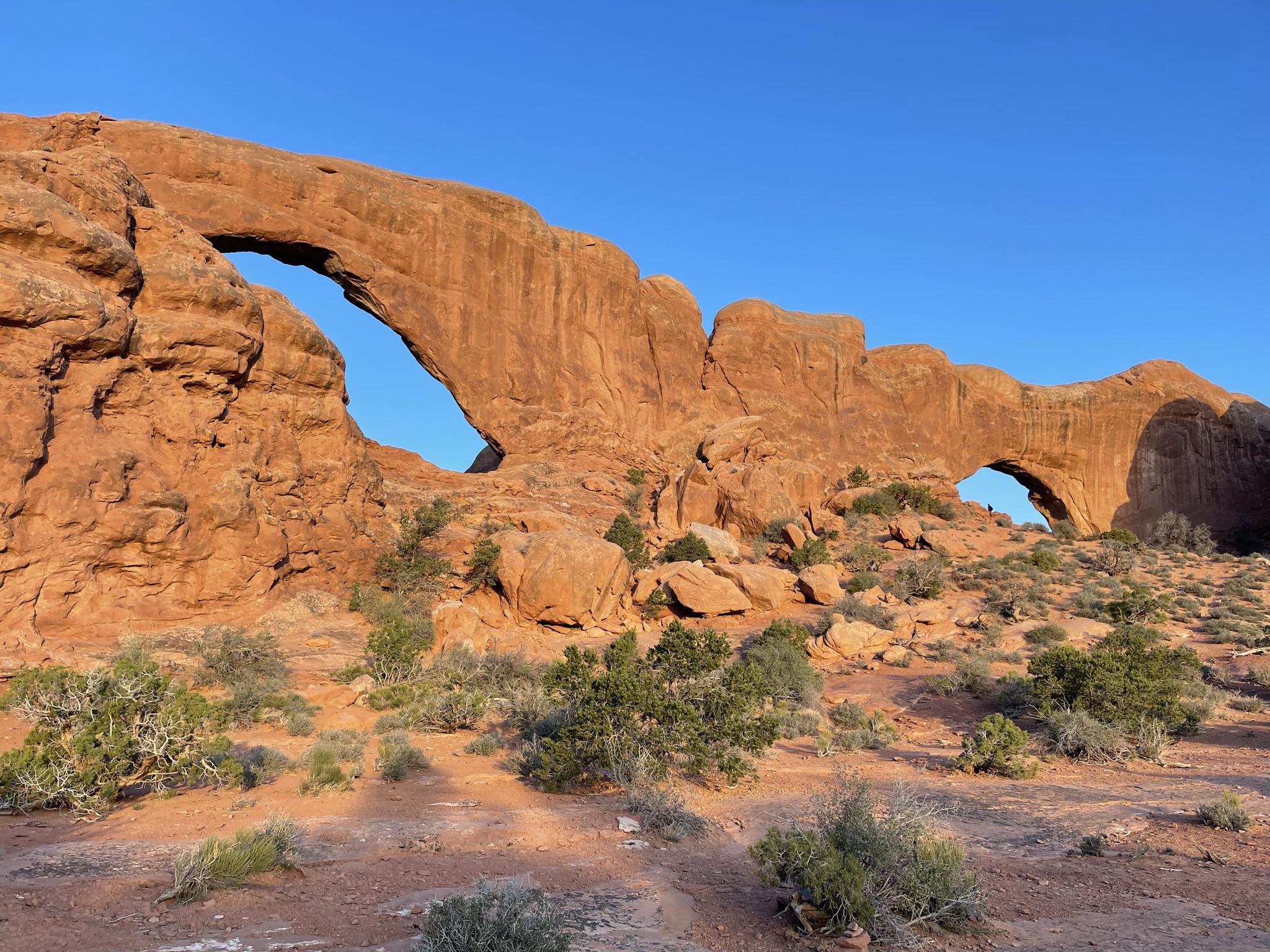
My destination for the first day was The Windows. It is the most accessible site of the famous arches, and had the bonus of several examples clustered in a small area. With a mid-afternoon entry ticket (they now have timed entry, to solve the problem of the park’s immense popularity) I wanted to make the best use of our limited time to explore. Nabbing a prime parking spot, I cajoled Rich up to the North Window where we followed the parade of sightseers up into its opening.

I continued on to explore the South Window and opposite those, Turret Arch.

I imagine you were silently whispering in my ear, Dad, as I continued to discover that the arches were just one attraction in this whole outdoor museum. The La Sal Mountains made a great backdrop for some of the other other-worldly rocks. And I could easily make out the Elephant Parade.

I had my heart set on being in the park at sunrise, to witness the beauty of the arches against the backdrop of the pre-dawn redness, and the glow of the nascent sunlight painting the stone monuments. That might not have sounded very appealing to you, Dad, as I had to get up at 4:45am to be in position well before sunrise. Rich seconded your sensibility, so the next morning I ventured out in the darkness on my own.

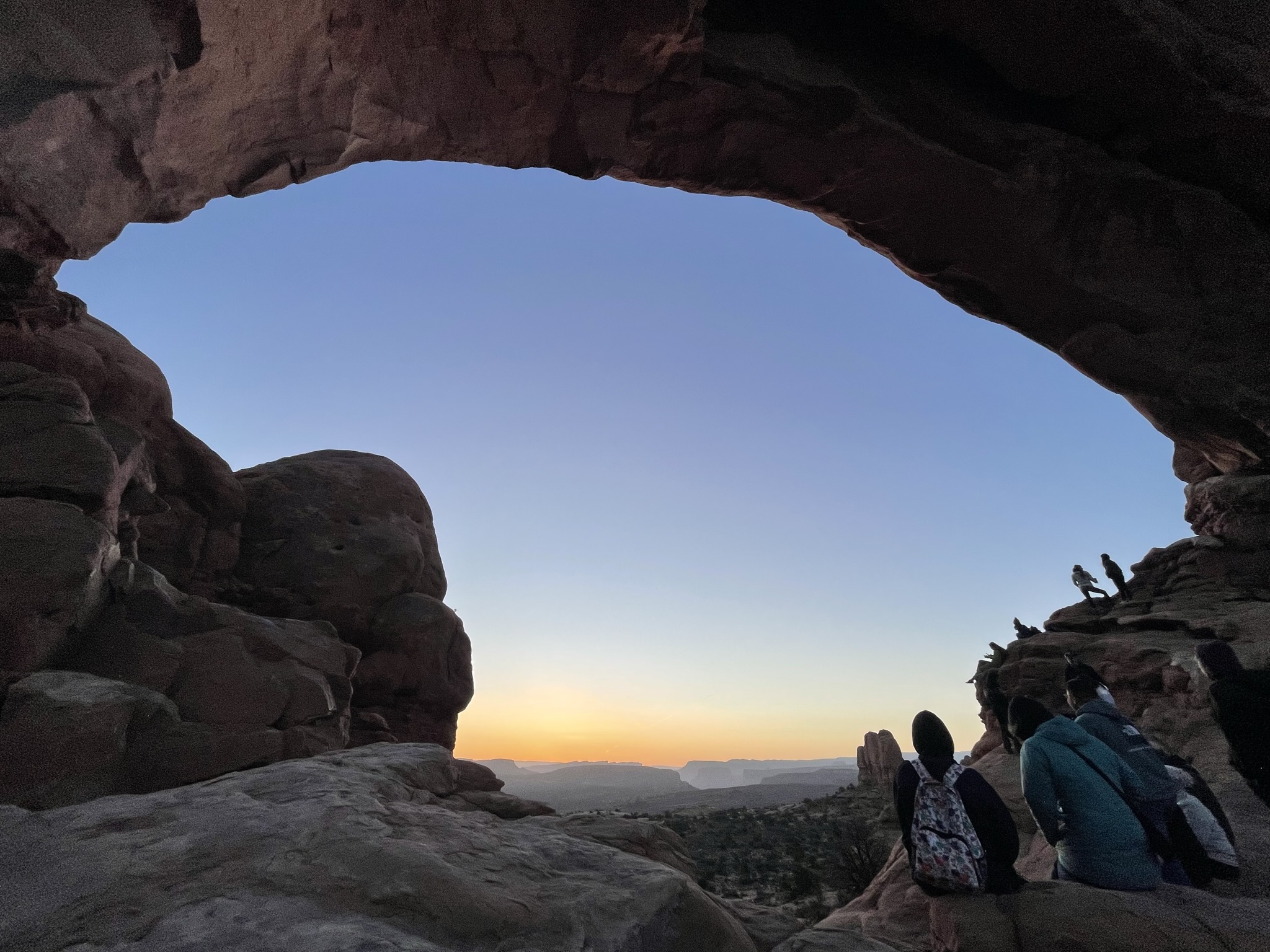
Returning to The Windows, I was one of the first to perch under the arch of the North Window where I could see the sky gradually increasing in color. The wind whipped through the opening, intensifying the 48-degree temperature, and I was thankful for my Minnesota layers. I was gradually joined by swarms of other sunrise-seekers, and I soon realized that while they just wanted to watch the sunrise, I wanted a dramatic photo. That spot wasn’t it. But in my retreat, I did capture the scene.

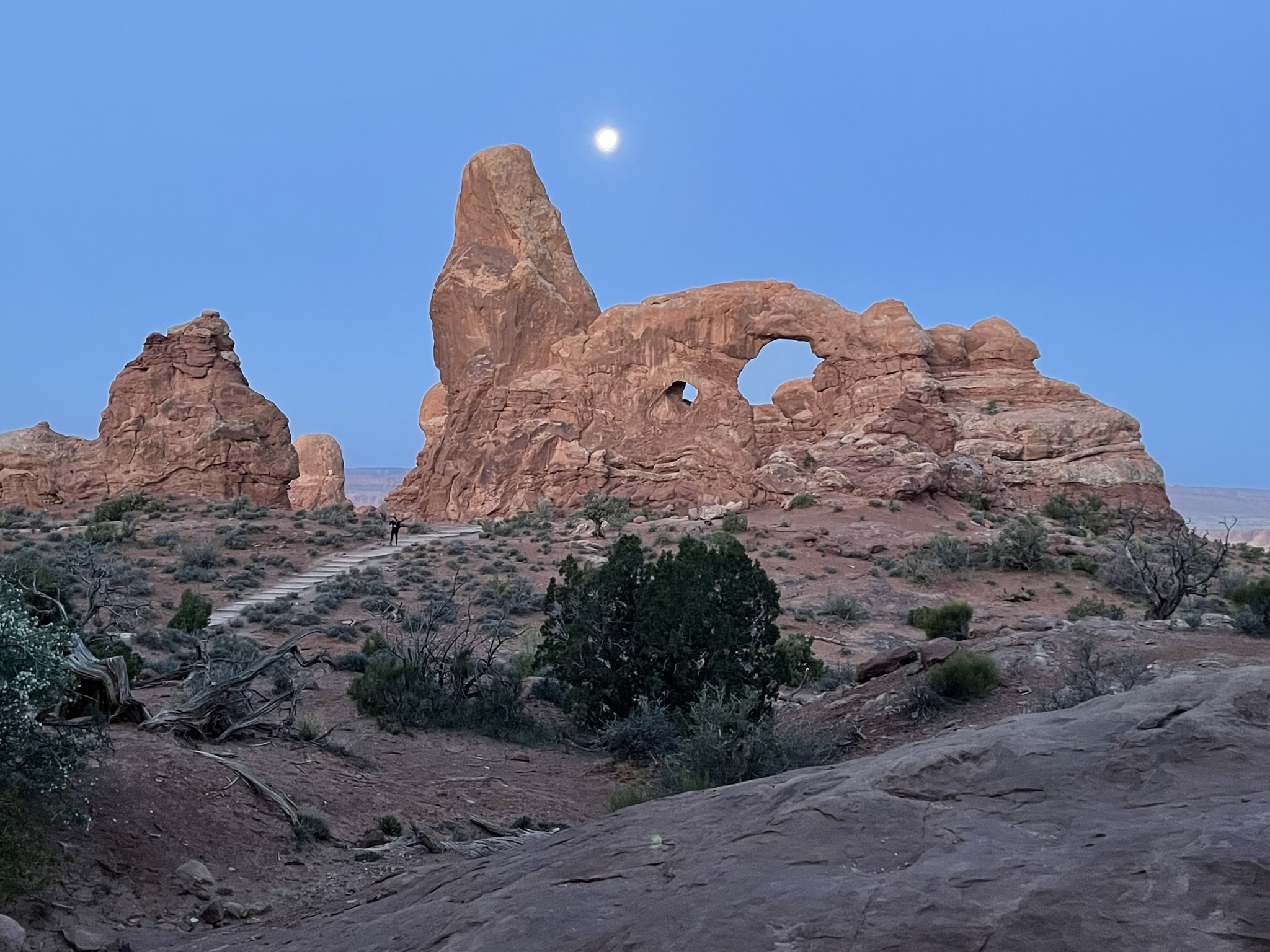
As I walked away, the moon was just setting behind Turret Arch. To me, that was just as good as a sunrise.

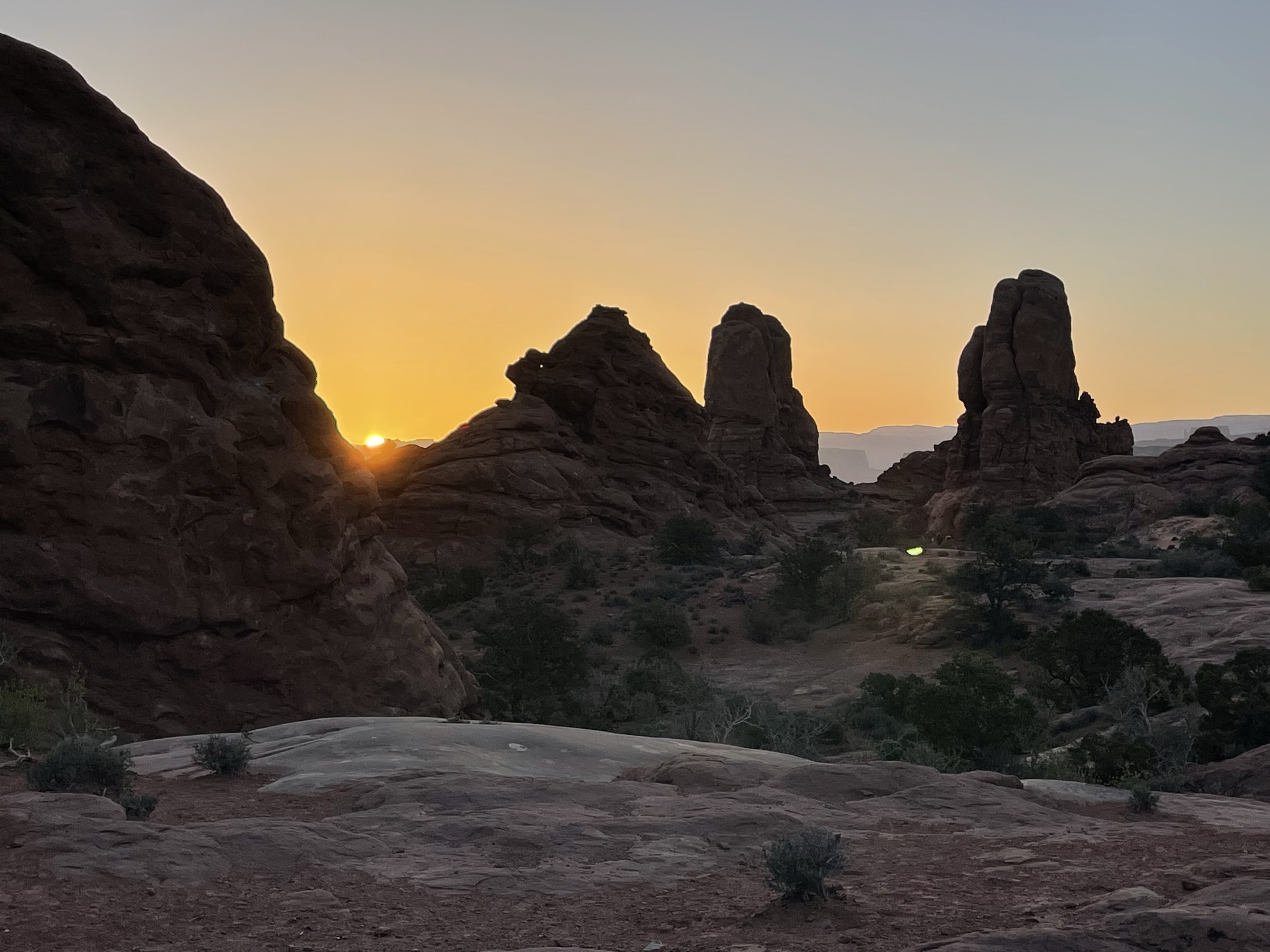
I found the sunrise to be more dramatic amid the towers and slabs nearby.

Taking the primitive trail around the back of the windows yielded the golden hour glow I was after, and further distanced me from the throngs above. It was well worth the early wake-up call, Dad, for these special moments with the rocks.

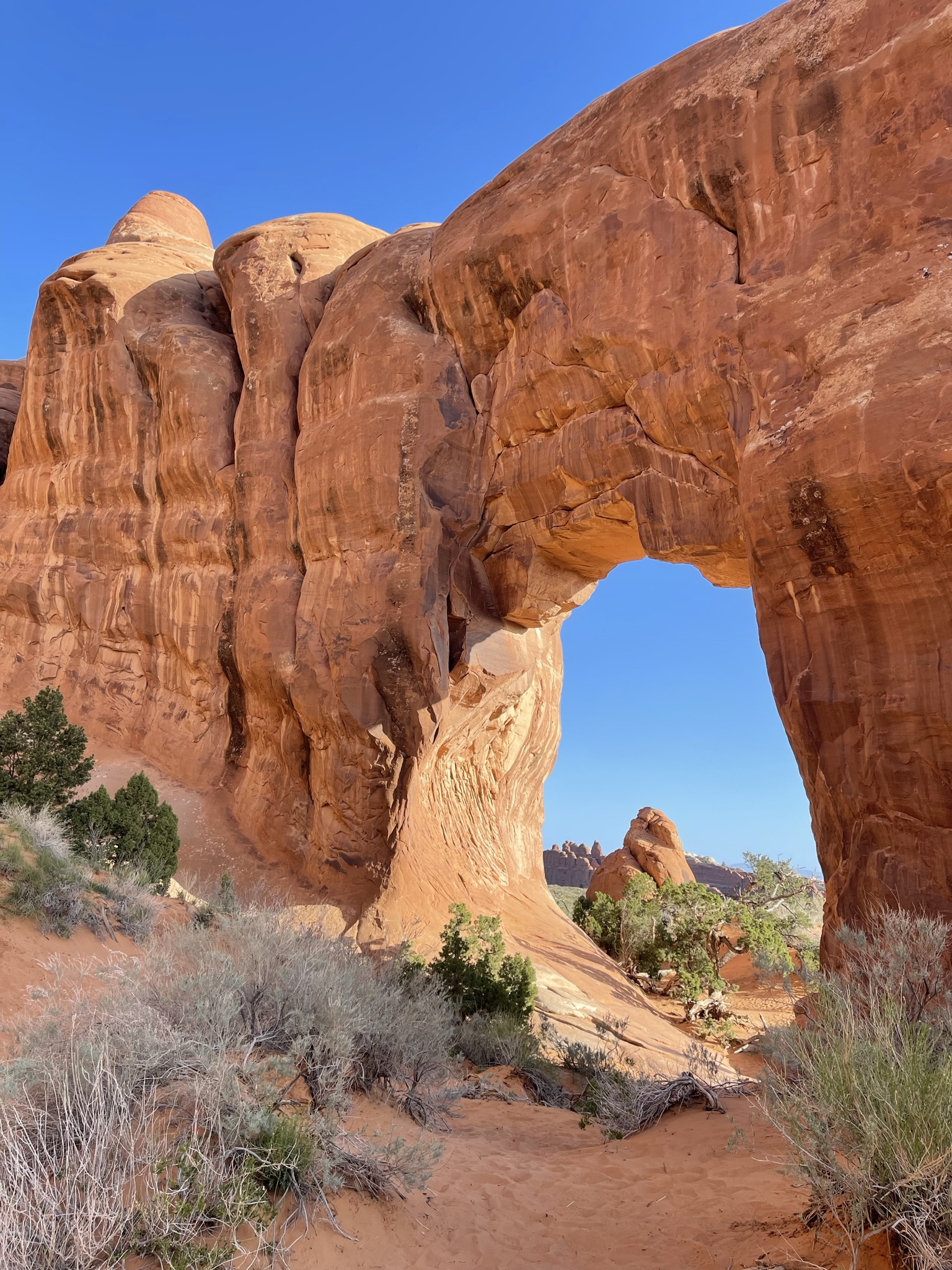
Leveraging my early start, I ventured further into the park to find more of the arches. On a short side-trail, I headed over to see Pine Tree Arch which proved to be one of my favorites for the view through the center.

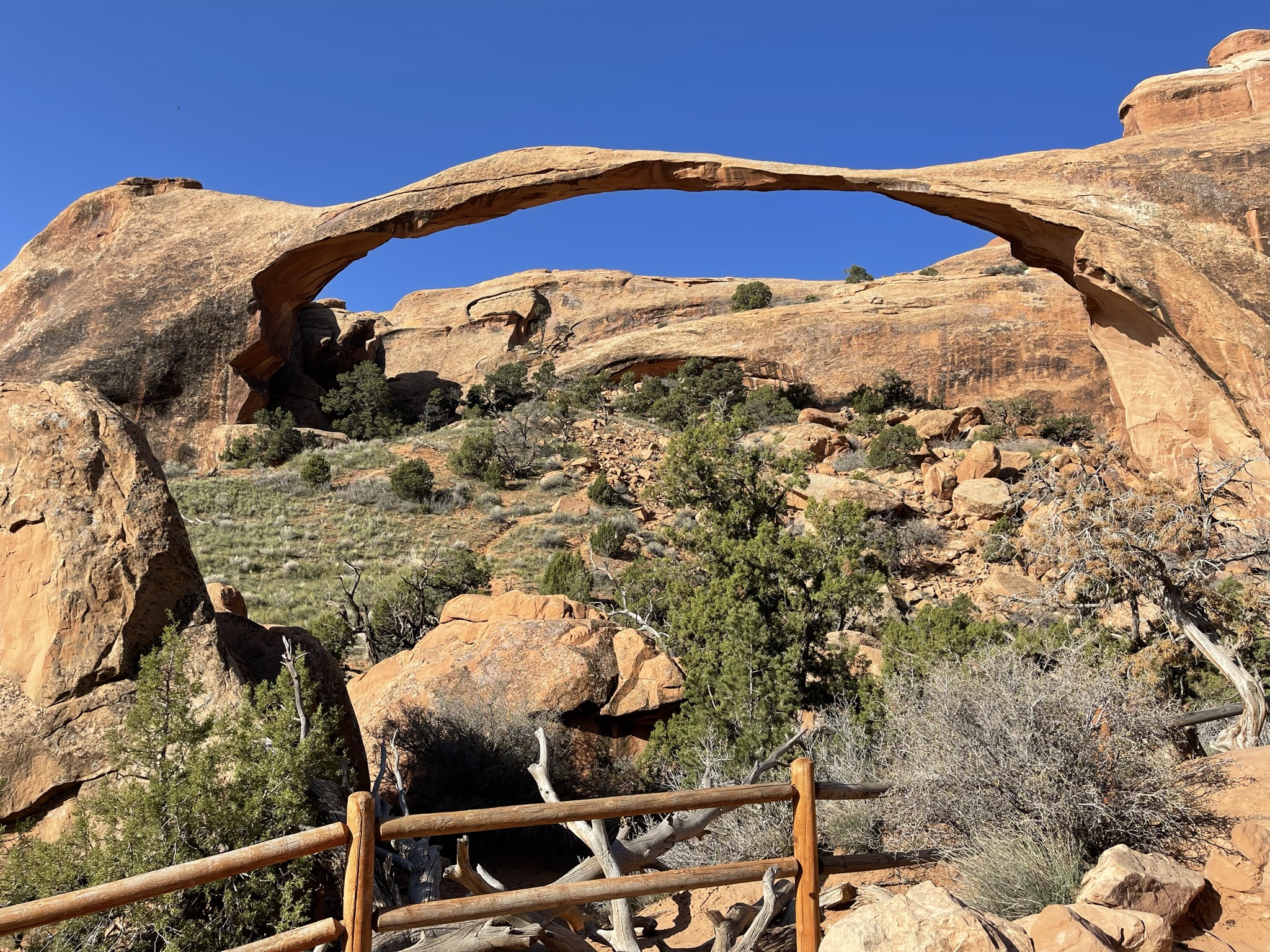
Beyond that, I reached Landscape Arch – the iconic view that graces the park’s brochure. You would have found the informational sign interesting, Dad, as it chronicled a section of the arch crumbling and falling in 1991, leaving it even thinner and more tenuous than before. A testament to the impermanence of all these rock structures – still changing with the forces of nature.

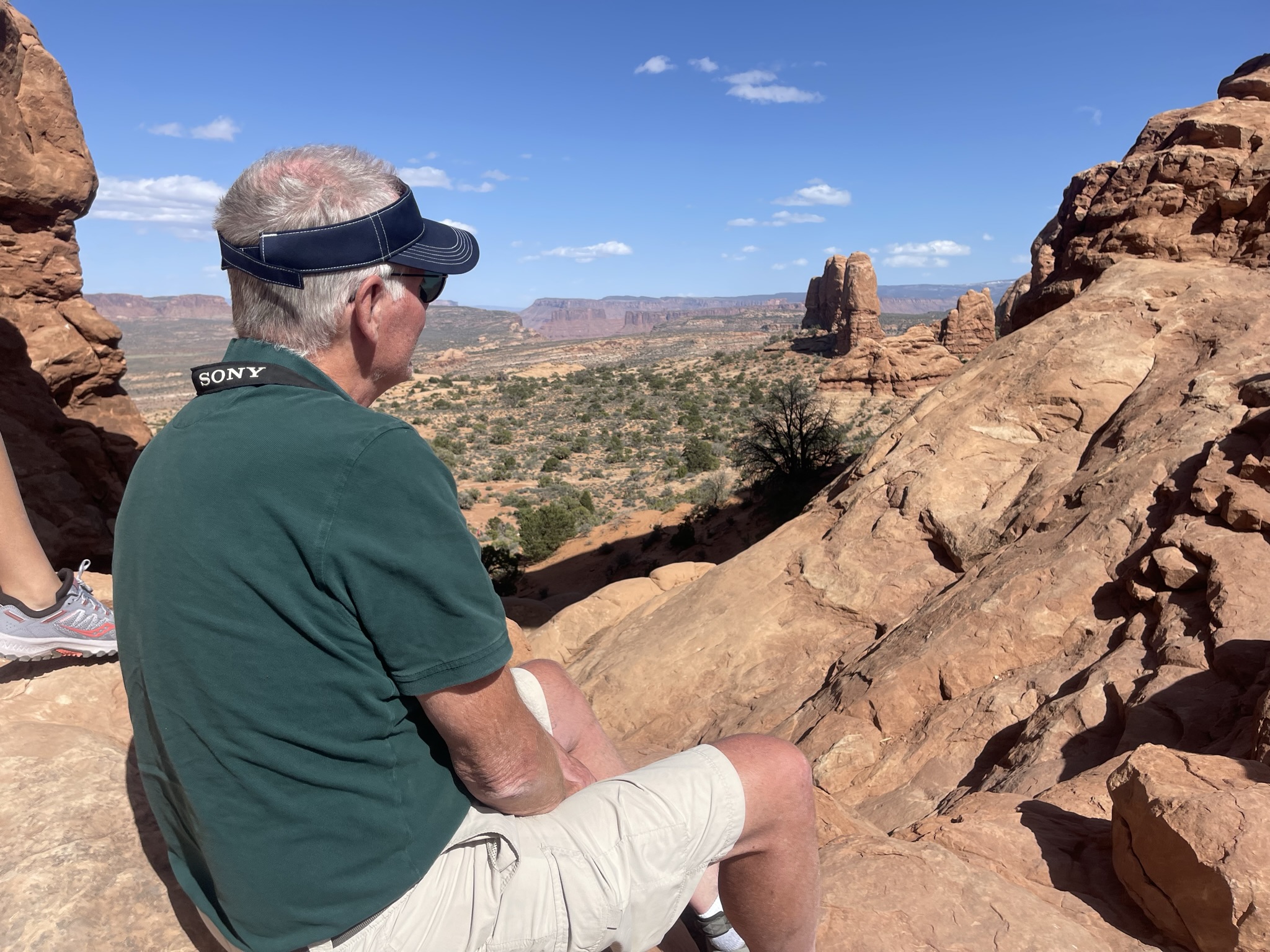
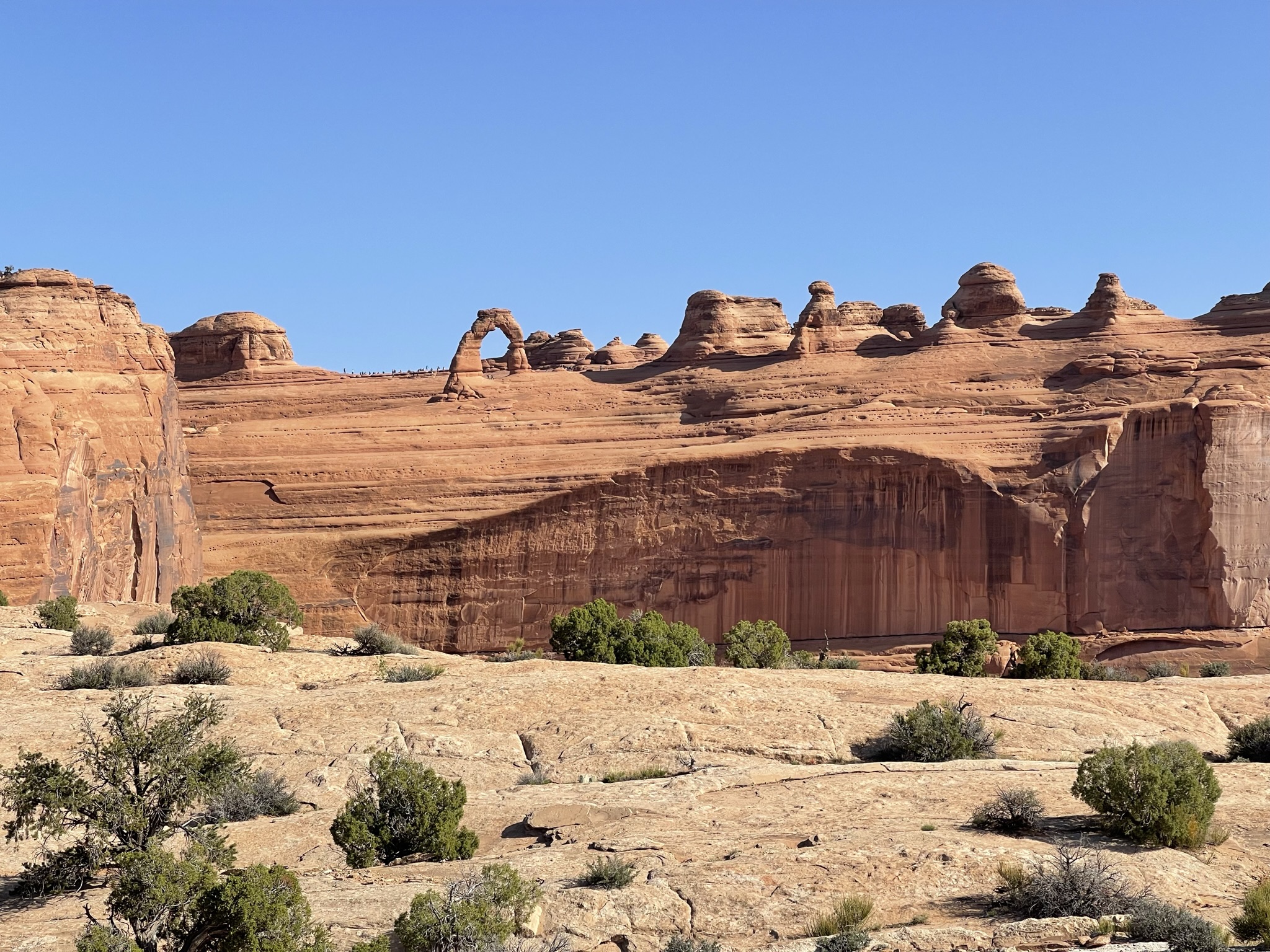
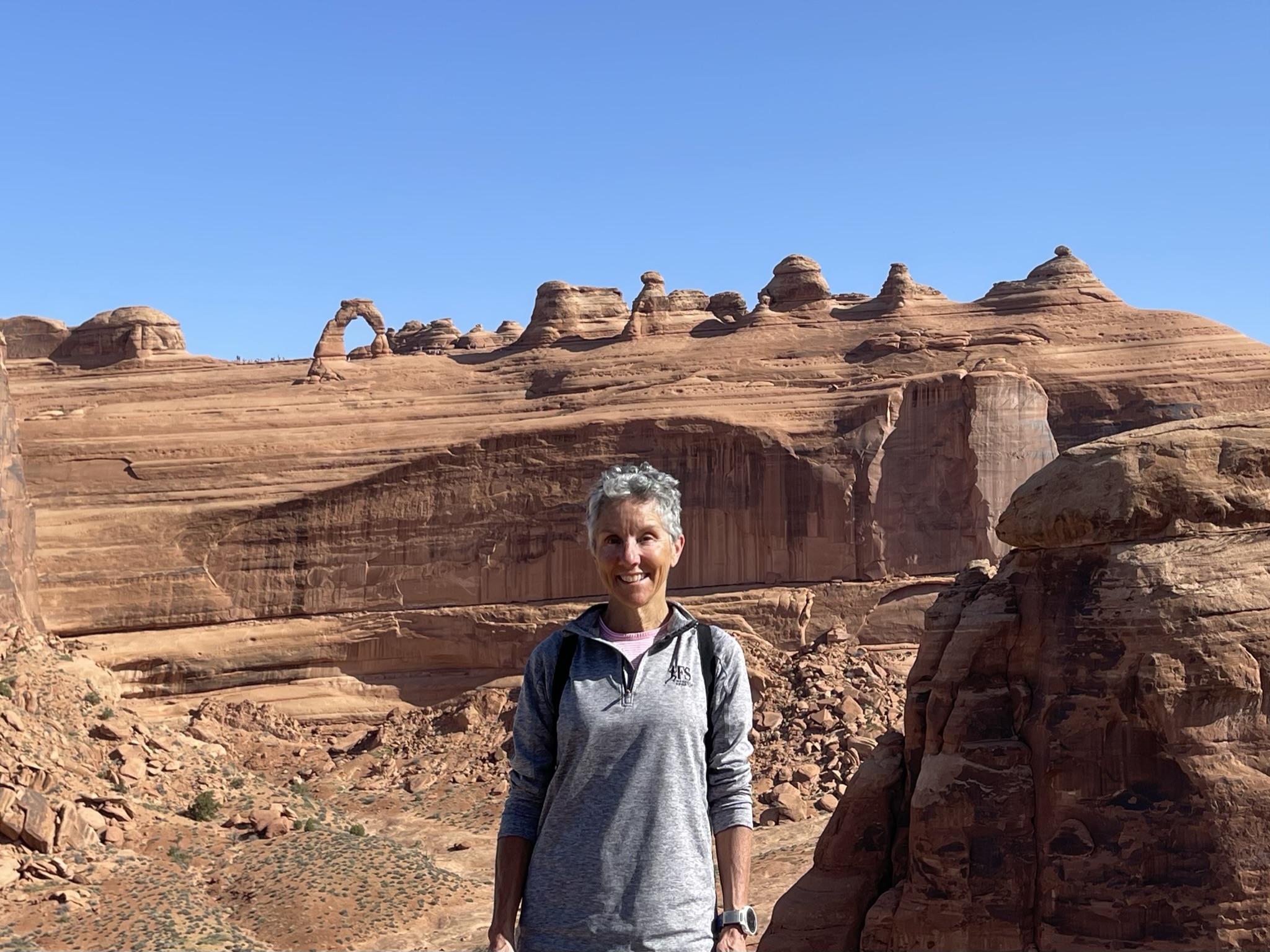
I couldn’t leave without seeing Delicate Arch. Since I was alone, I shied away from the hike right up to the arch which was described as “difficult with exposure to heights.” I think you would have seconded that, Dad. Instead I made my way to the upper viewpoint, and kept going out onto the rocky slabs to the rim of a canyon where Delicate Arch stood on the opposite side. By then the day had warmed nicely, and it seemed a fitting finale to my visit.

I don’t think you ever went to Arches, Dad. But I’m certain you would have loved it. I certainly did, especially seeing it through your eyes.

Love, Molly

It was Fate

The thought occurred to me in the middle of nowhere. It was one of those strange, inexplicable revelations that changed the course of our plans.

We had left Tucson that morning, heading for Moab. Deciding that the journey was too long for one day, Rich surveyed the thin options on our remote route and booked us a room at the Thunderbird Lodge in Chinle AZ. It is owned and operated by the Navajo Nation, and is situated on their land. It seemed more interesting than the standard motel fare in town.

Driving through the red rock formations of northern Arizona, it may have been the out-of-this-world environs that tickled my brain.

“Rich, do you remember someone told us about that ‘mini Grand Canyon?’ Do you think we will be near there?”

I got only a non-committal reply as he concentrated on the driving. But the idea had hijacked my brain.

I’m a list maker extraordinaire. I have an extensive packing list for traveling, carefully honed with each trip. En route, I document each day’s travels, where we stay, how far we drive, the restaurants we choose and our activities. Quickly mining the Notes app on my iPhone, I had my answer.

“Yes! It was the man who cleaned our room at Yavapai Lodge at the Grand Canyon.” That was back in 2017, five years ago.

“We chatted with him, and he told us about the Canyon de Chelly – how it rivaled the grandeur of the Grand Canyon but on a more intimate scale. It was in his home town of Chinle AZ.”

I was on fire now. “That’s it! That’s where we’re going!” In fact, the Thunderbird Lodge was at the entrance to the Canyon. The Rim Roads spun out from our very lodgings. We had time to spare the following day, and I just filled it.

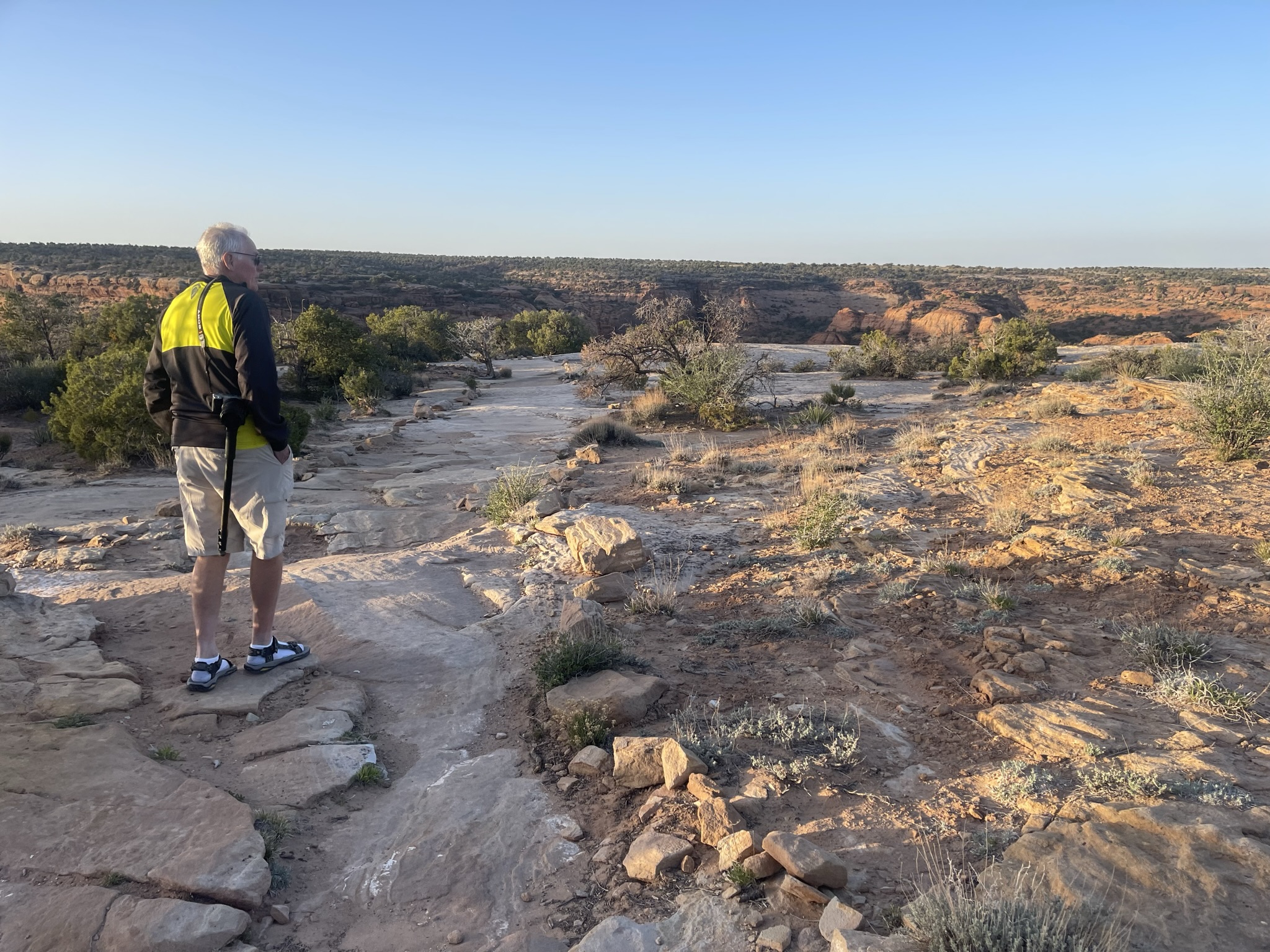
Up at first light, we threw on our clothes and headed out the door. The North Rim was said to be best in the mornings so we headed to the first overlook – Antelope House, just 8 miles away. We arrived to find a deserted parking lot and a rough sign pointing toward a scruffy area stating “Overlook 1/4 mile.” Setting out, we crossed the solid rock expanse dotted with scrub bushes. It felt like senseless wandering, until I noticed the sequence of rocks defining a path, showing us the way. I was further encouraged by a few man-made stone steps, and an arrow painted on a rock.

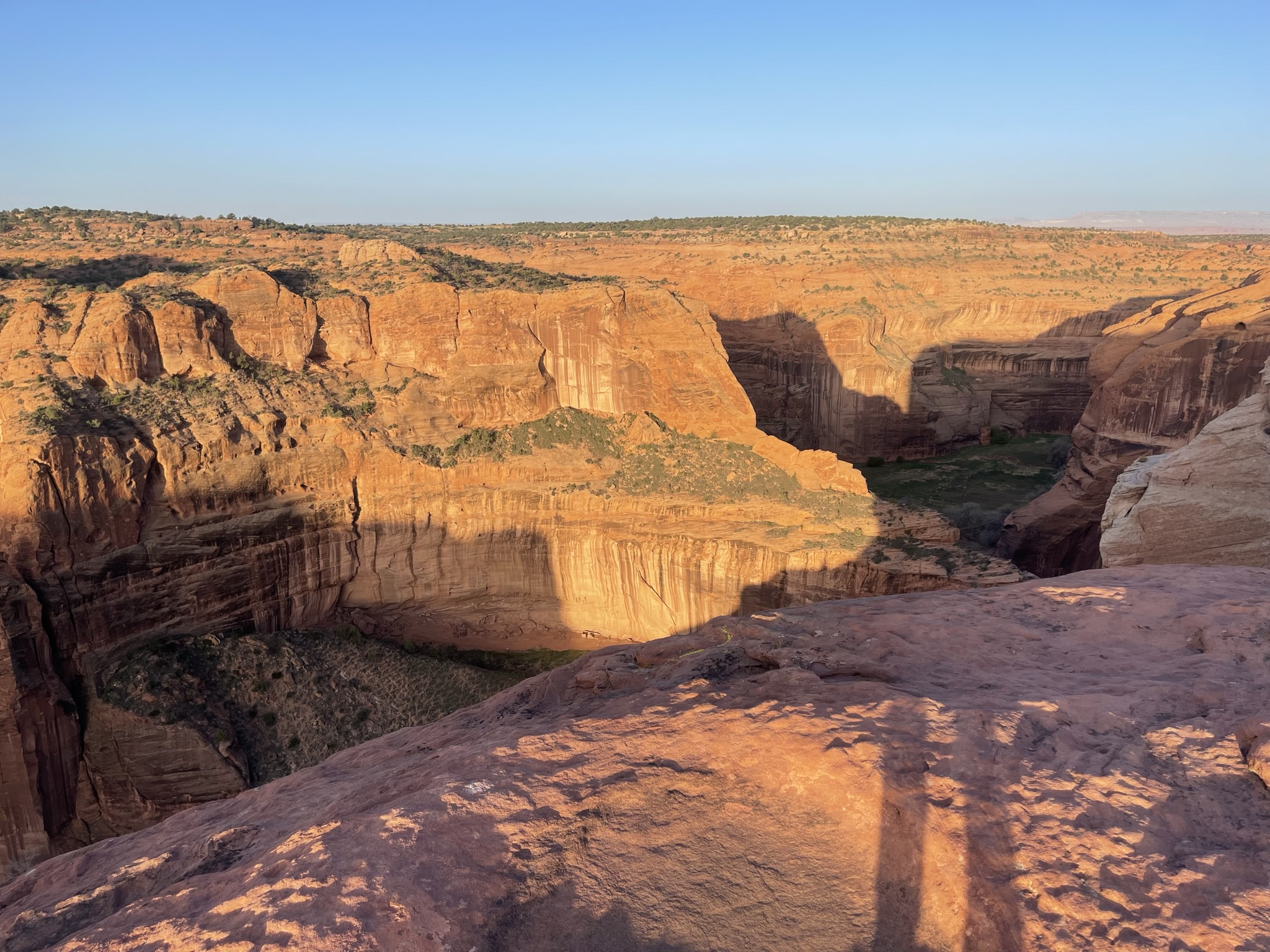
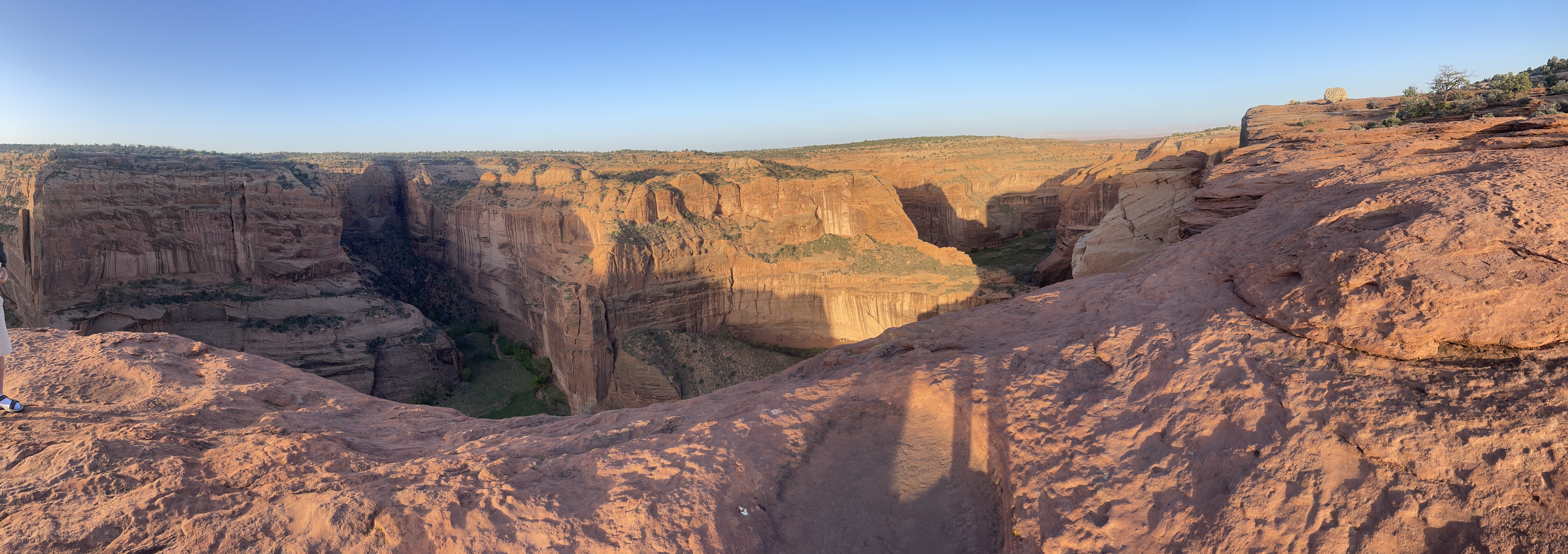
Then suddenly, we were there, perched on the edge. The world dropped away in front of me, the depths of the canyon yawning in the open expanse. The sun’s rays were just working their way down the walls of the canyon, illuminating the colors, glowing as only early morning sun can do. Sharp shadows in stark contrast.

True to that man’s words, it was majestic and grand. A beauty to behold, extensive and captivating in every direction. But that was not its magic.

It was the solitude. We competed with no one for the view. Silence reigned as we gazed out over the canyon. We had complete freedom to wander the terrain, to take in the depths from our choice of vantage point, to make the experience uniquely our own. To spend as long as we liked looking, thinking, pausing, appreciating.

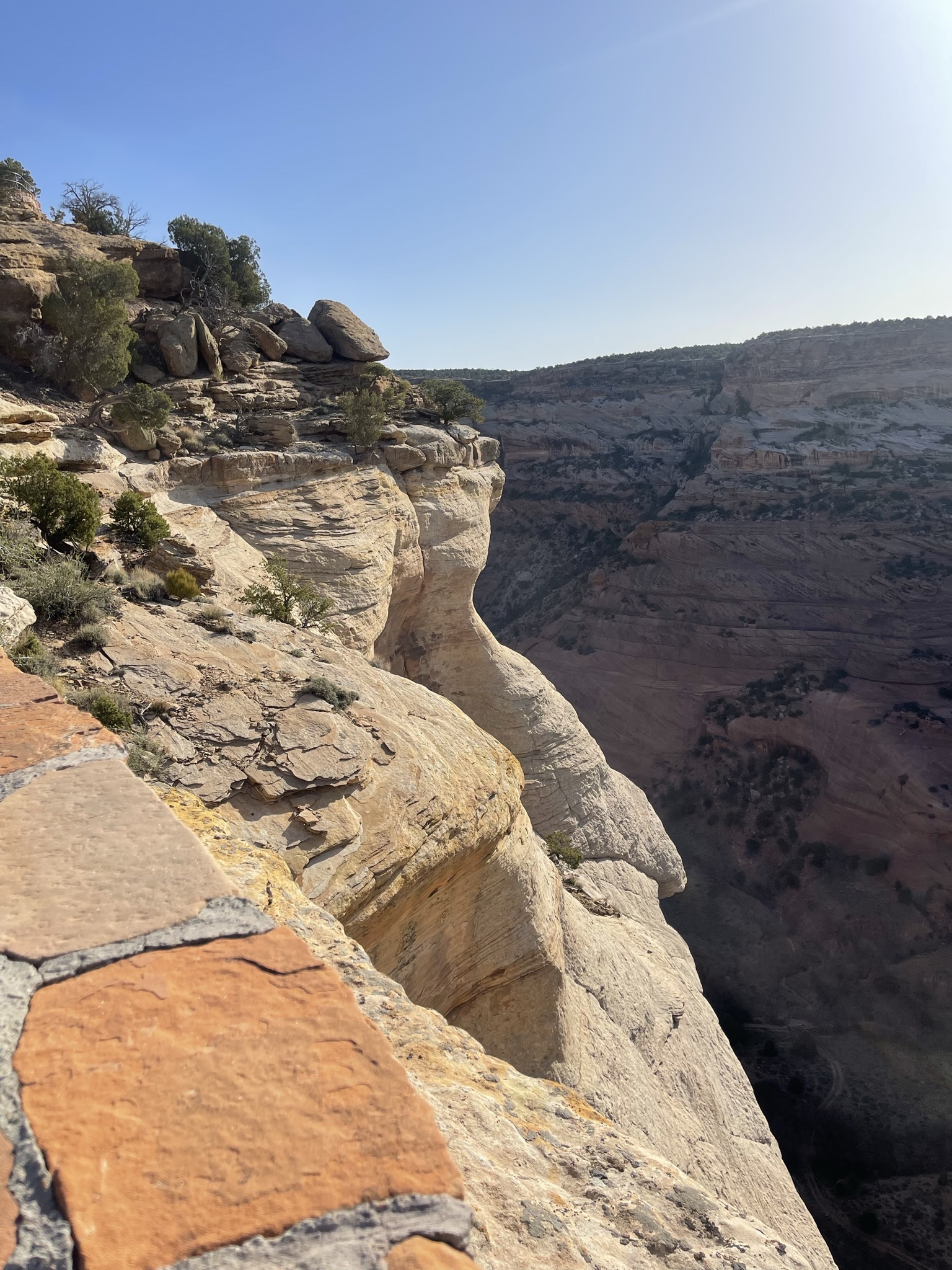
There was not a barrier in sight, save one promontory protected by short brick walls. No one to collect tickets, no lines waiting to enter.

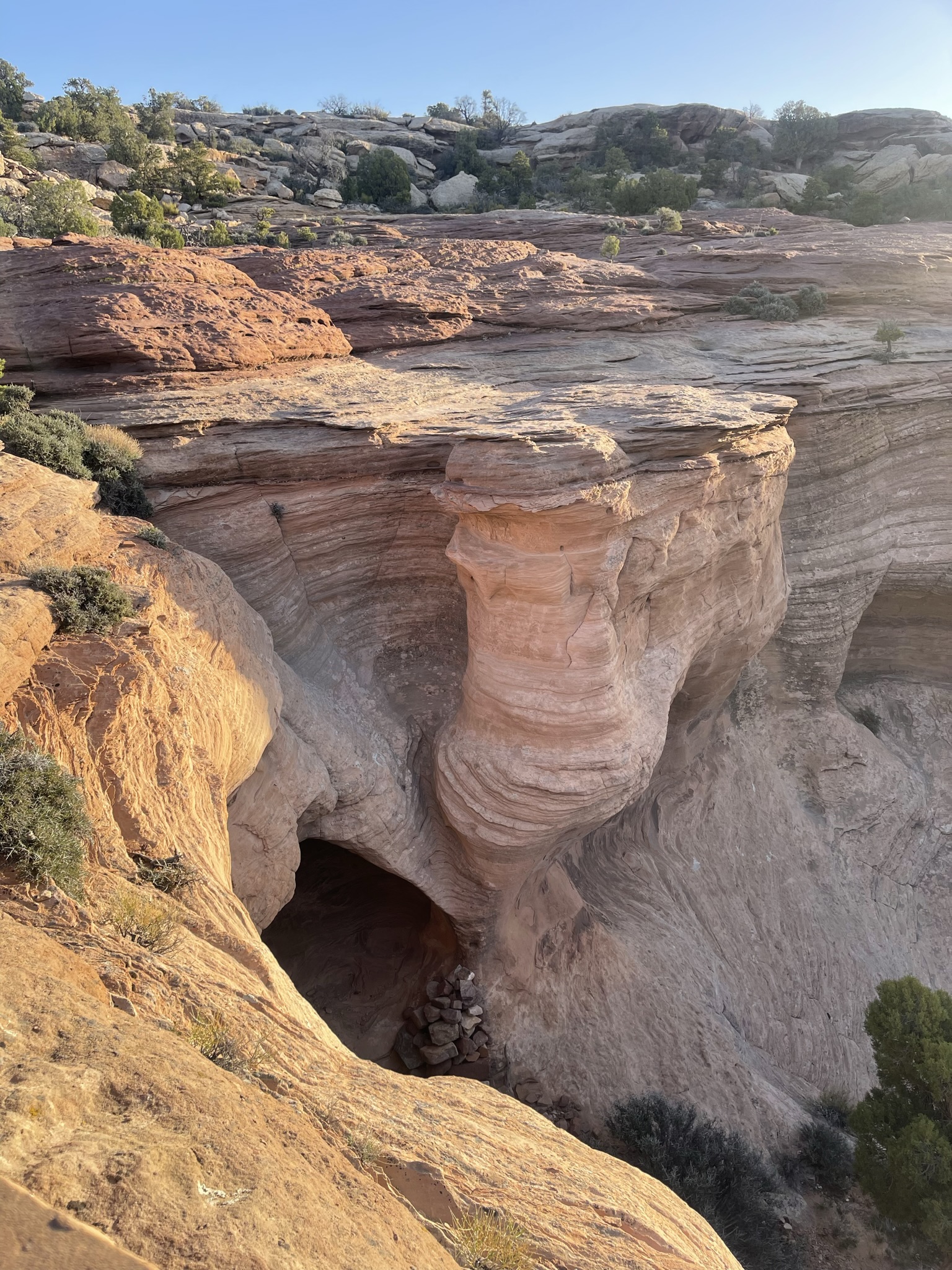
I felt entirely unrushed as I cruised over the thick slabs of rock. Playful but careful. I watched as the canyon came to life, changing colors before my eyes. Peering down over the edge, finding caves and imagining the rocks forming gates down below. Rich took his fill of photos, relishing the lack of interference from other onlookers.

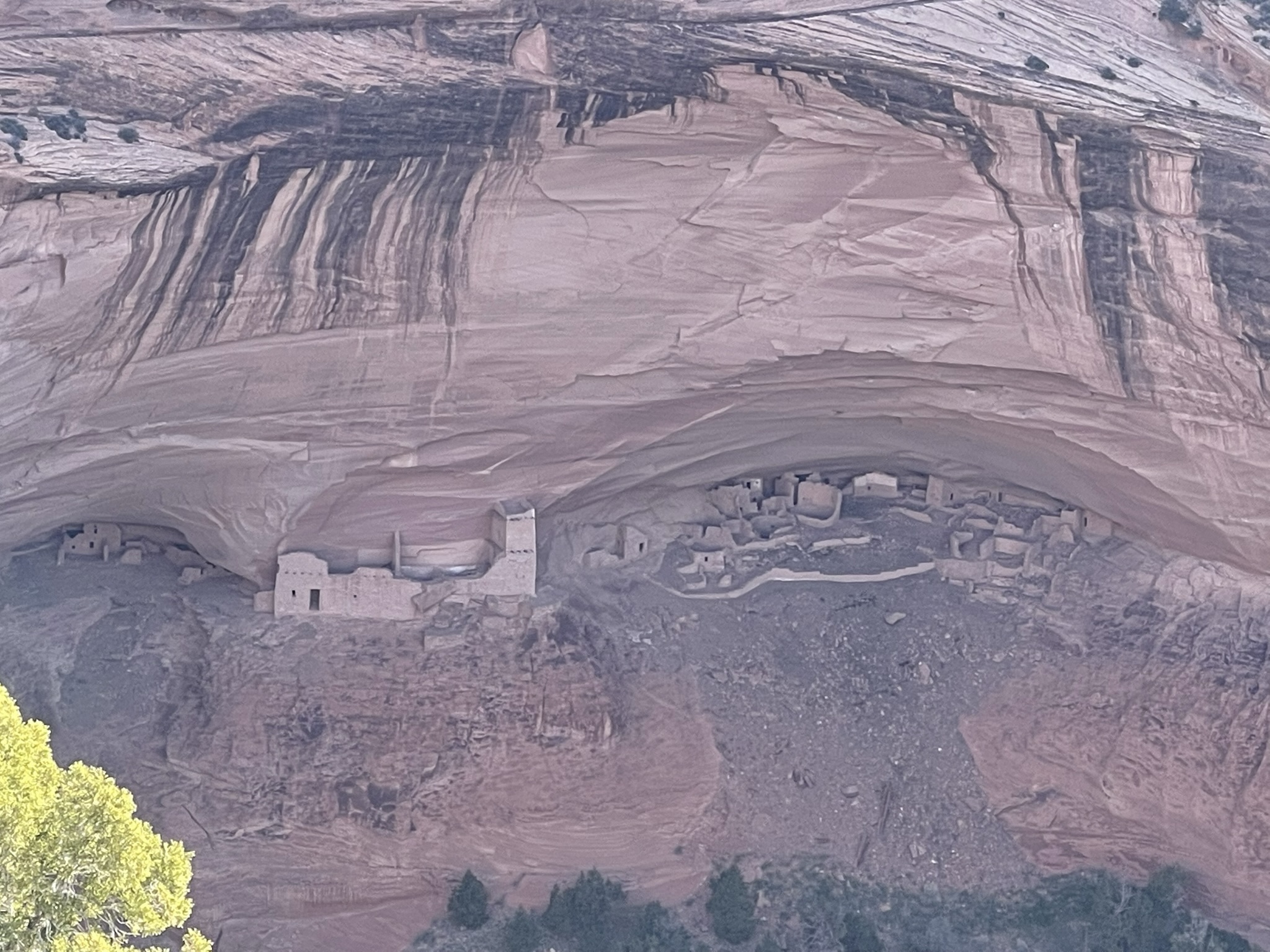
We eventually moved on to two more overlooks further down the rim. The views continued to impress, especially when we spied the remnants of early cliff dwellers across the way, looking like doll houses in the distance. And still we were solo visitors.

What will remain with me from that morning was the memory of that first overlook, feeling that we owned the canyon, had our own private showing. The freedom to wander unencumbered by fences or warning signs. The sense of awe we were allowed to absorb. I

t’s an experience that can’t be bought. Or planned. Clearly it was fate that brought it to us.

The Lure of the Loop

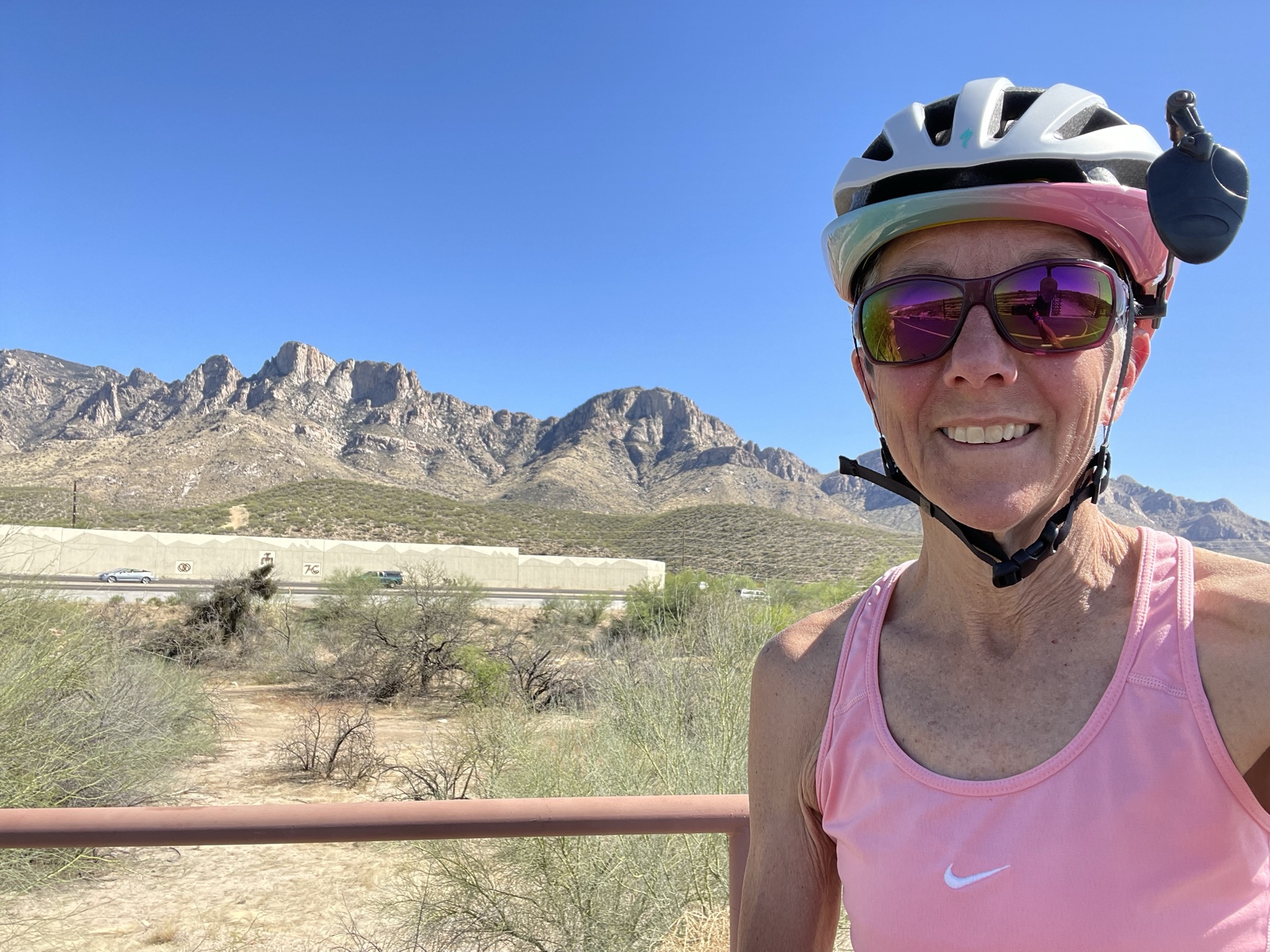
I am not a newcomer here. Despite a three year gap, I come laden with memories and expectations from two prior stays at the base of the Catalina Mountains on the outskirts of Tucson, Arizona. Escaping a winter that just won’t quit, the constant sunshine and warmth were the natural draw. But to me, that is only the backdrop for my cycling plans. I already know, I will head straight to The Loop.

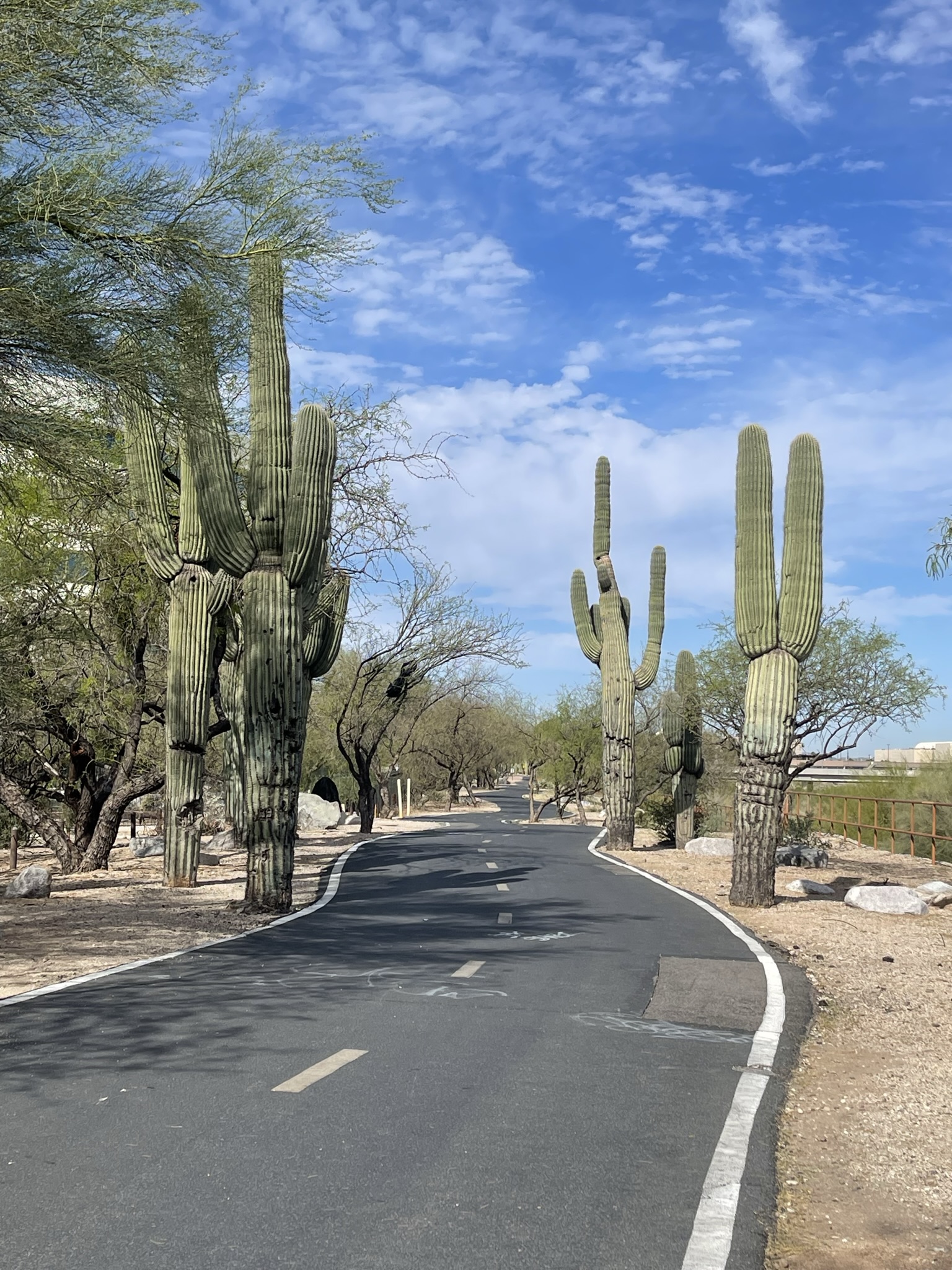
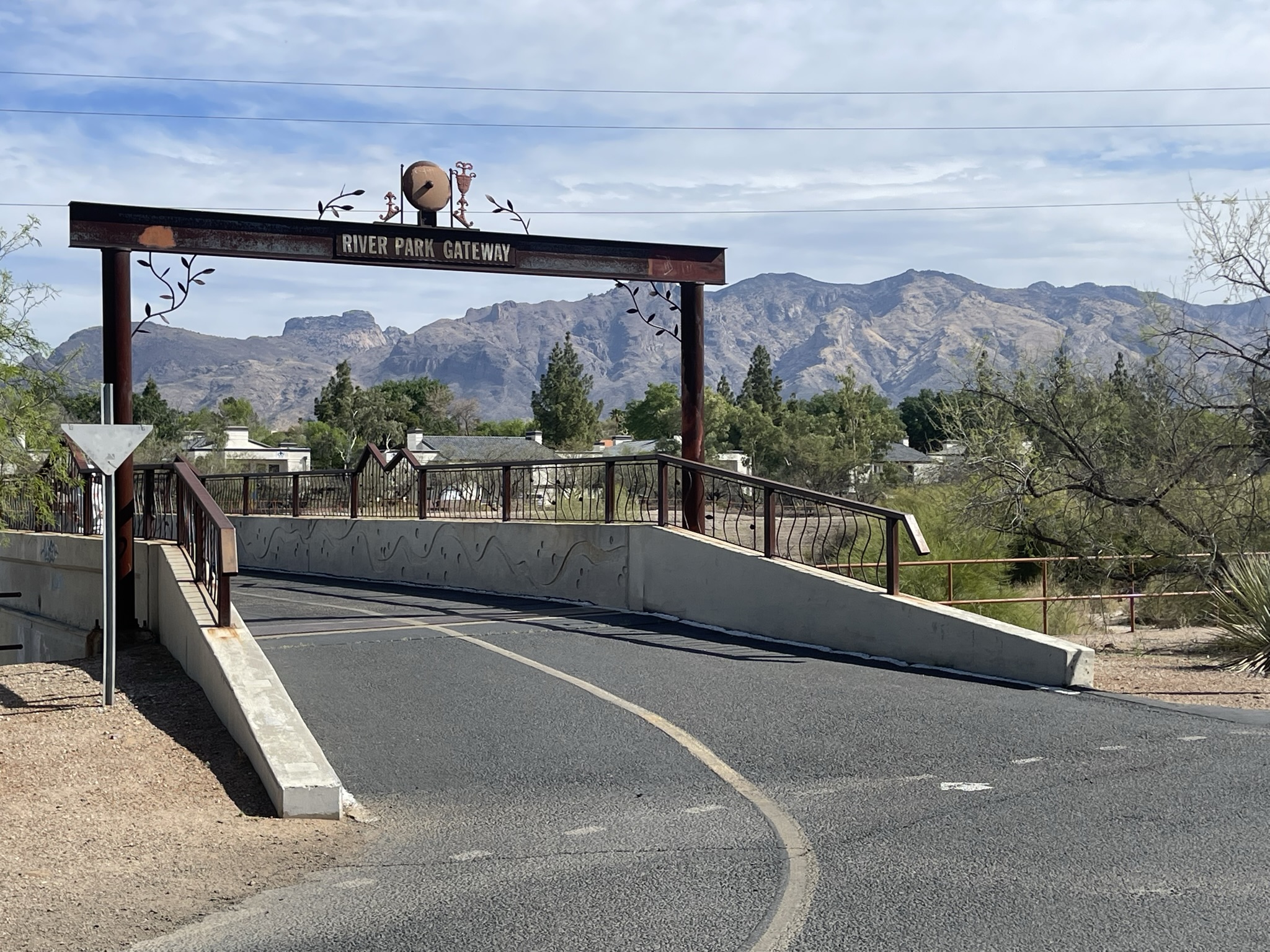
Tucson’s vast expanse of paved bike trails top the “washes” where flood waters are funneled during the rainy season. The Loop accounts for 131 miles of off-road trail, including a 55-mile long route that circles the city. I crossed that off my to-do list last time we were here, so instead I turn my focus to the three River Parks that radiate out from a central connecting point. Each has a distinct personality, which guides my selection each time I set out.

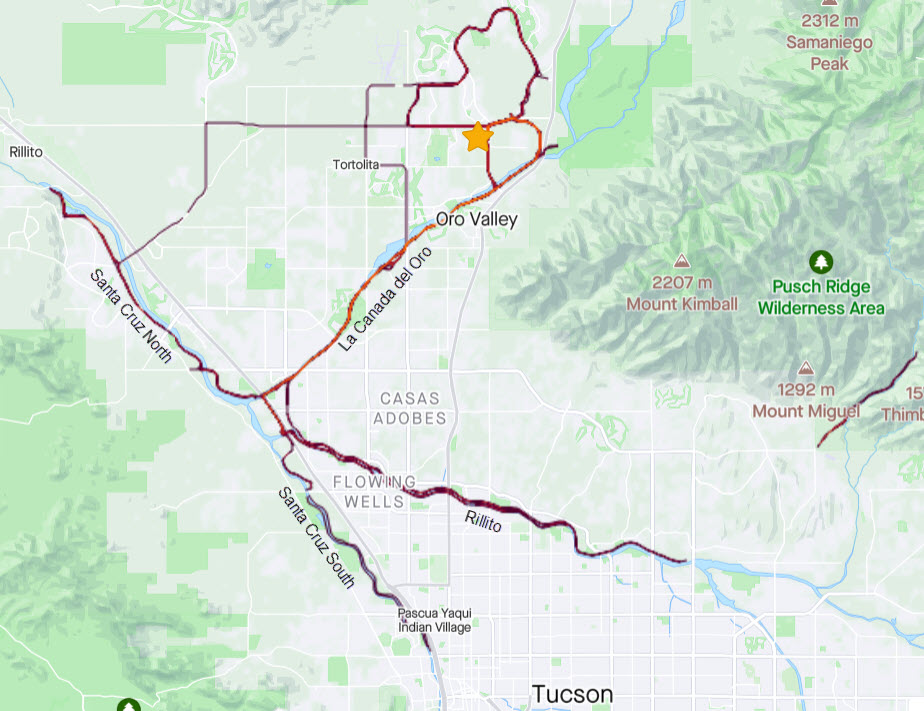
My biking routes over our 2-week stay

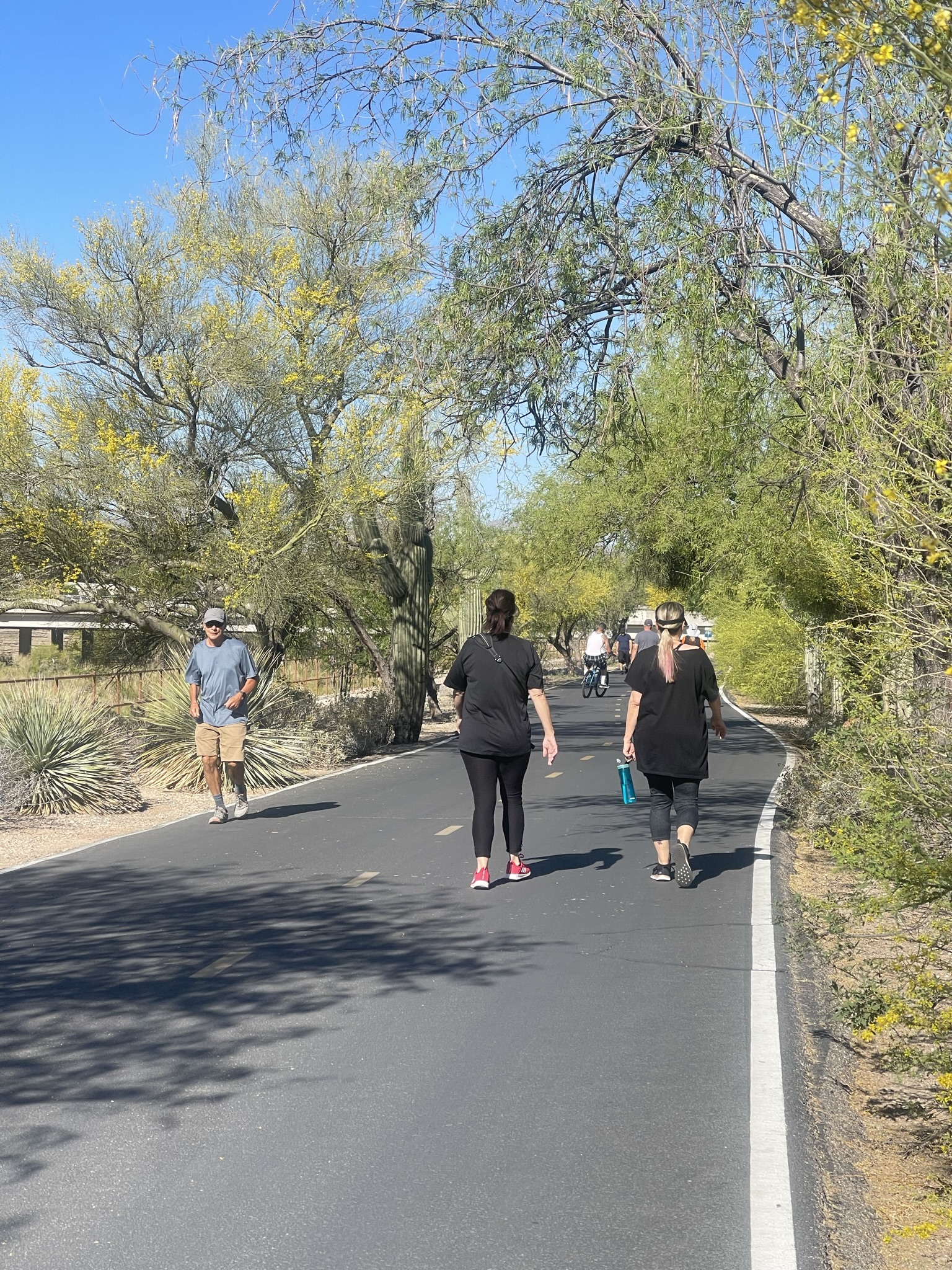
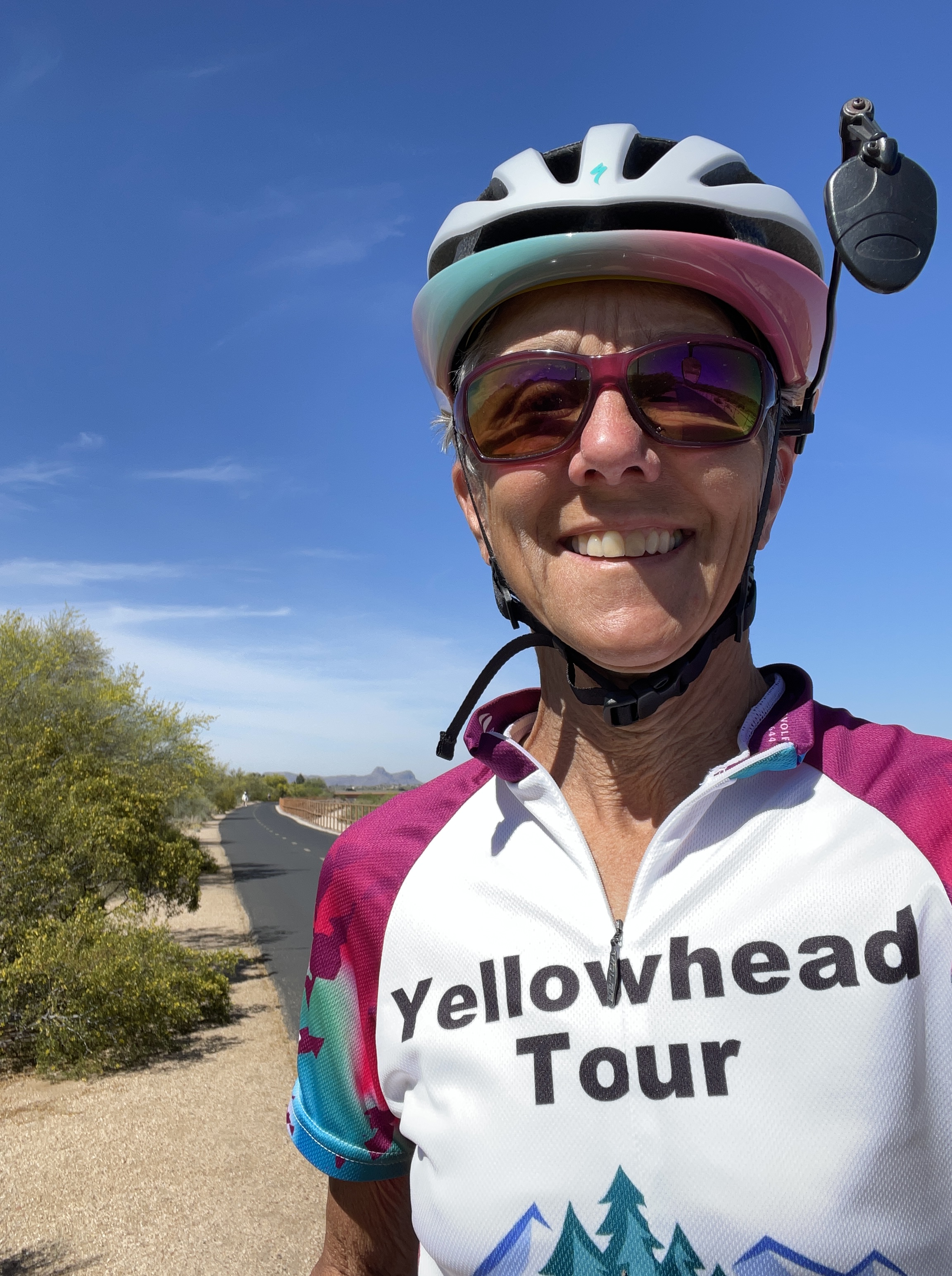
Our location in the Oro Valley is at the top of La Cañada del Oro River Park. Within a mile, I join the trail that I consider “my home trail.” I traverse this 12-mile trail down and back each time I seek out a route to cycle. Rich rolls his eyes, at my willingness to pedal 30-40 miles to explore each time I set out. But the terrain is flat, the pavement remarkably smooth, the cycling is easy and I’m just tickled to be out in the warm sunshine.

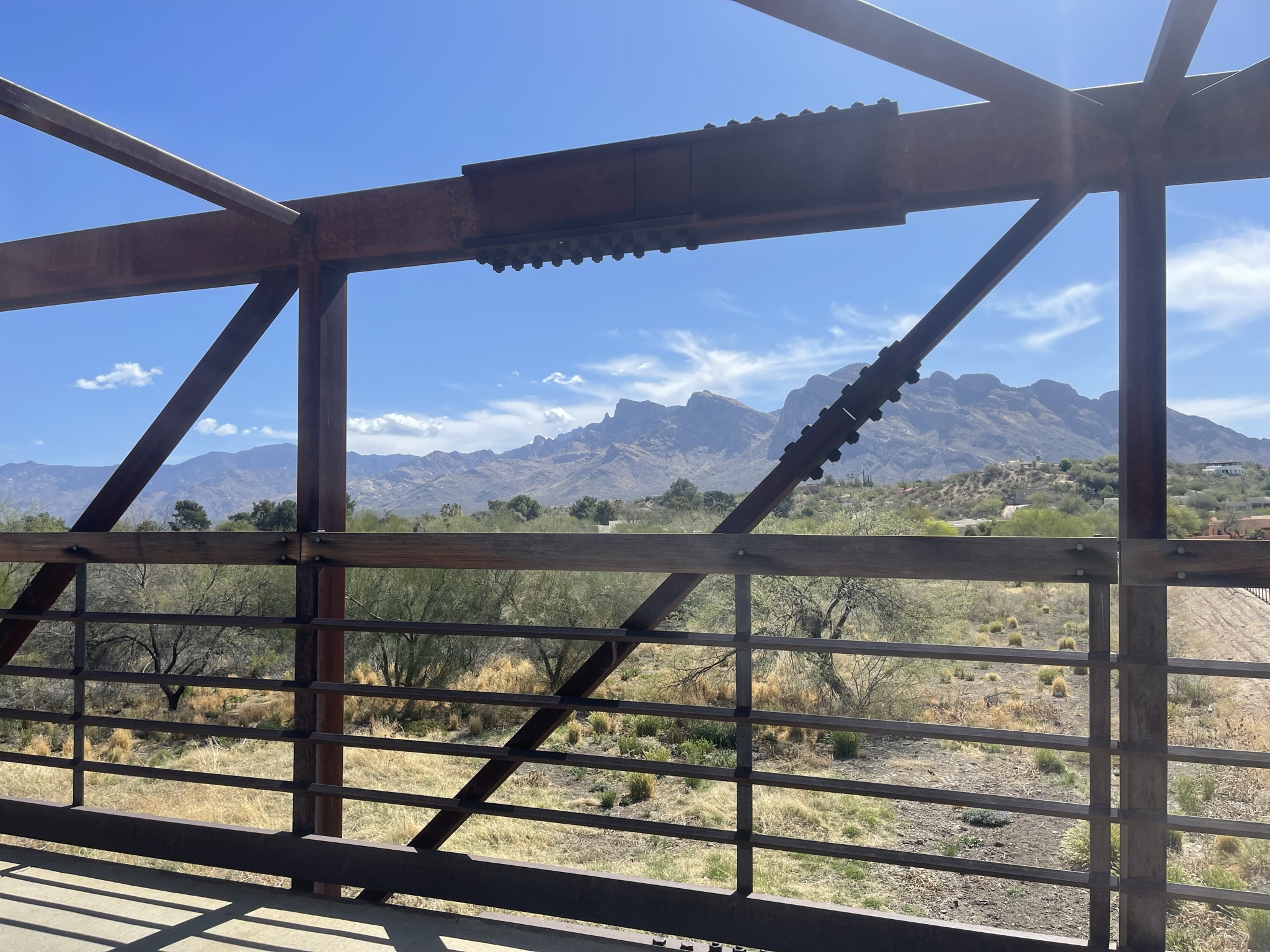
La Cañada del Oro heads southwest through suburban areas that exude prosperity. At the top, the rugged mountain peaks remain in close proximity, a tireless sight. Two golf courses flank the trail, spilling nice landscaping onto the sidelines and spawning narrow bridges to usher golf carts to the holes on the opposite side. An artsy park is a popular spot and a handy parking area for cyclists. And the path takes to the flats with a windy course flanked by desert shrubs, wildlife and birds. Before I know it, I’m alongside massive poles with netting to enclose Top Golf, with three decks of golf stations. That signals my approach to a decision point.

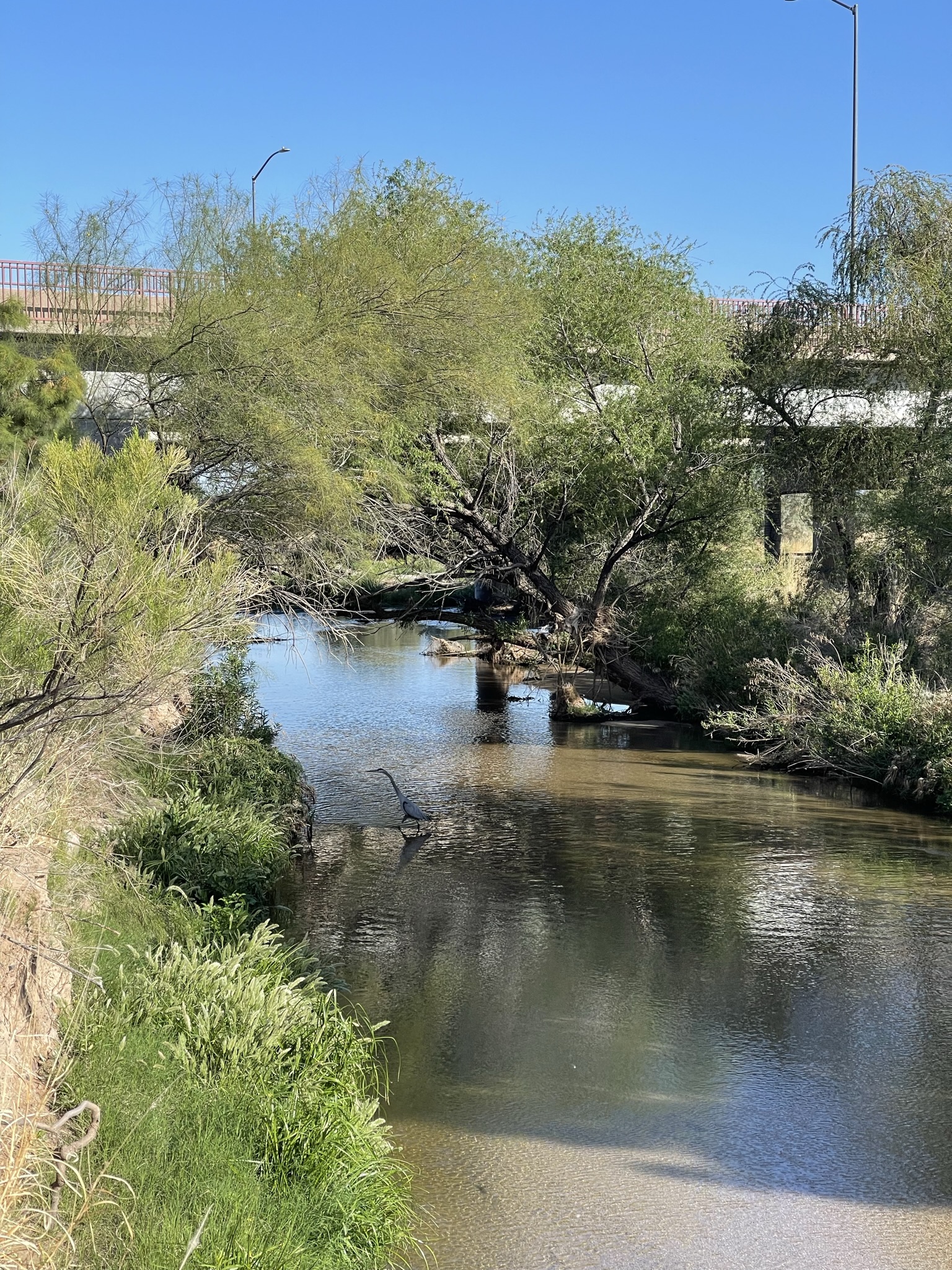
Turning to the right takes me to Santa Cruz River Park North. After enduring some industrial development, it leads to the flowing Santa Cruz River. Green lush trees and bushes line the banks of the river and the sound of flowing water is both a surprise and a treat. Cycling alongside this oasis I want it to continue forever, but the trail moves away and into local neighborhoods. I cycle behind houses for miles – most protected from view by stone walls – with desert scrub on the opposite side. More eye candy appears with the El Rio preserve and a seasonal lake. Another range of mountains looms close by. Like all my River Park routes, it’s an out-and-back proposition.

In the opposite direction, Santa Cruz River Park South is probably the most remote of the trails – at least for the portion I cycle. It starts with open pit digging of some kind, then takes off in a wilderness area where the trail quietly follows the wash down both sides. It passes Sweetwater Wetlands Park, popular for birding. But until it reaches the heart of the city, it remains quiet and unpopulated. I can cycle on autopilot through that section.

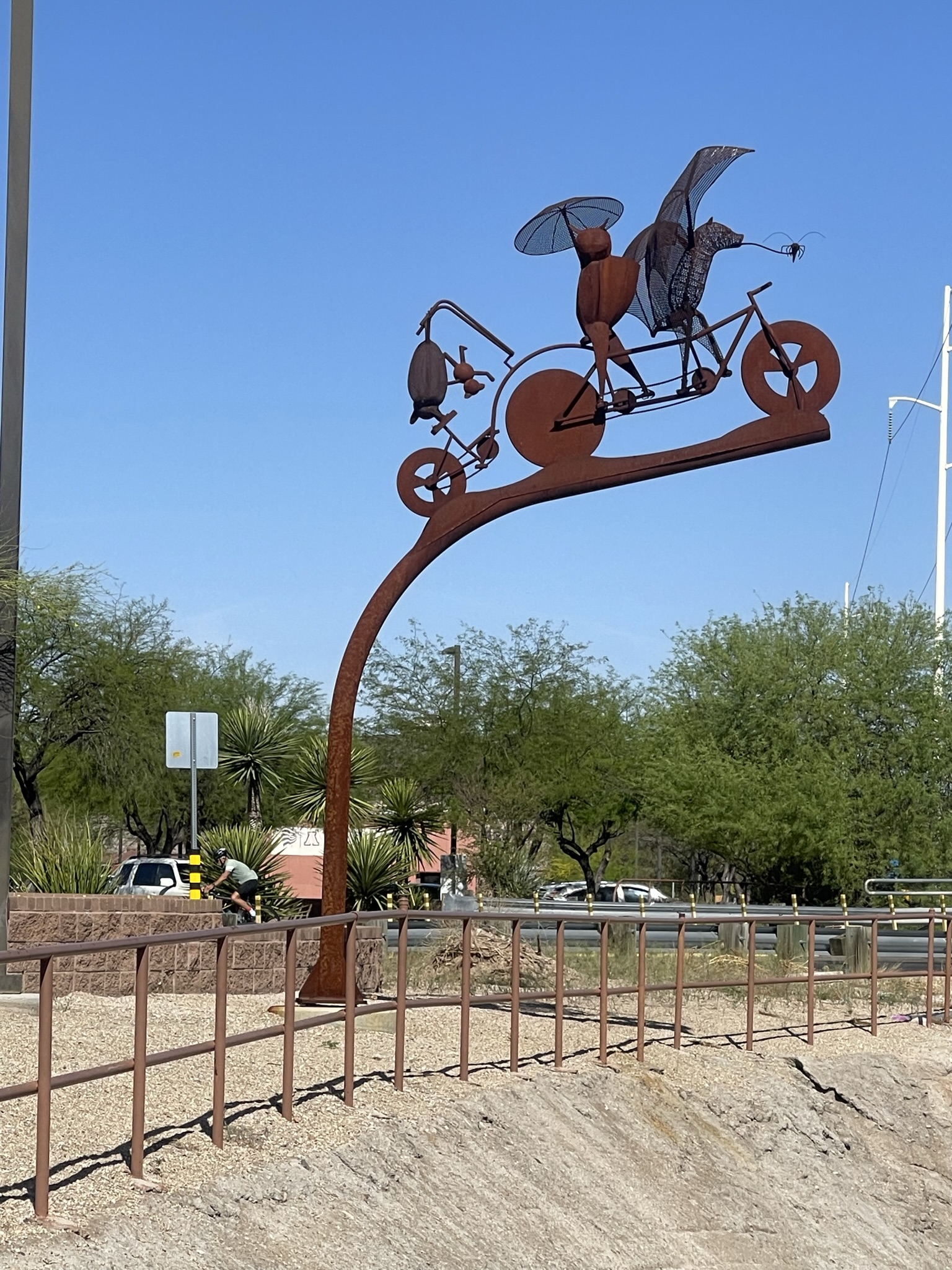
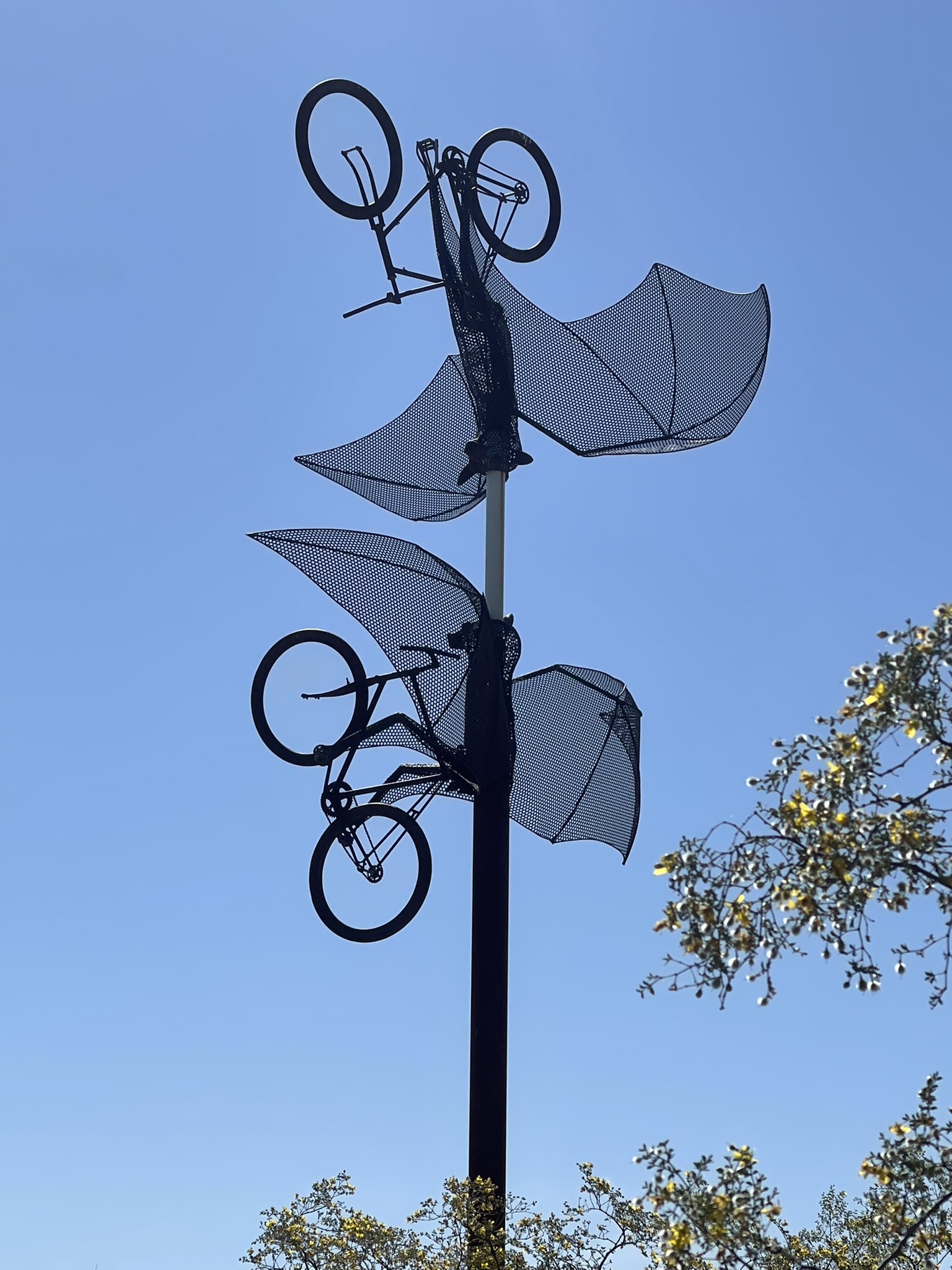
I’ve left my favorite for last, Rilitto River Park. This appears to be the most popular trail, with paths on both sides of the wash and there are plenty of walkers, runners and cyclists enjoying it at all times of the day. The south side is less populated, and has some fun artwork and landscaping along the way. The north side has numerous parks, playgrounds and ball fields that draw families. And the Ren Coffeehouse is a popular stopping spot for cyclists. Rilitto Park hosts a Farmers’ Market on Sundays, and I happened to be there on Bike to the Farmers Market Day. I couldn’t resist the opportunity to peruse the farm and ethnic foods on offer.

I took my last bike ride this morning, finishing with another pass on both sides of Rilitto. My new bicycle bell came in handy, dinging each time I passed a pedestrian or bike. It made me smile each time it rang, and garnered a wavy from those on the path. Tomorrow we leave to head back to the cold Northland. But I’m already looking forward to another visit, knowing I will be lured back to The Loop.

A Stroke of Luck

One more day.  Our time was up at the AirBnB in Ft. Myers but we had one too many days for our travel home.

“How about we splurge and stay right on the beach?”  I saw no point in leaving the beautiful weather any sooner than necessary. 

Rich feigned deafness.  He was bent over his tablet, intently searching, reading, expanding the map, searching again.  I knew it, my fate rested in his hands.

“Here, take a look at this,” he said, handing over his tablet.

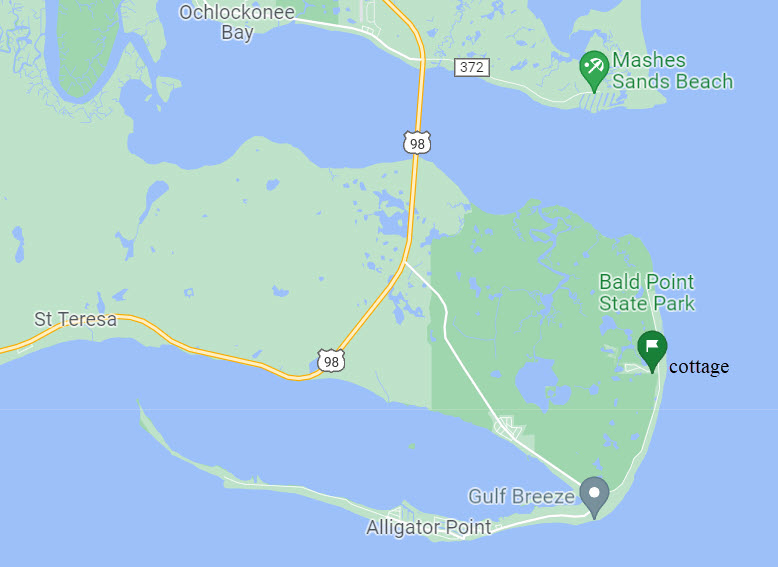
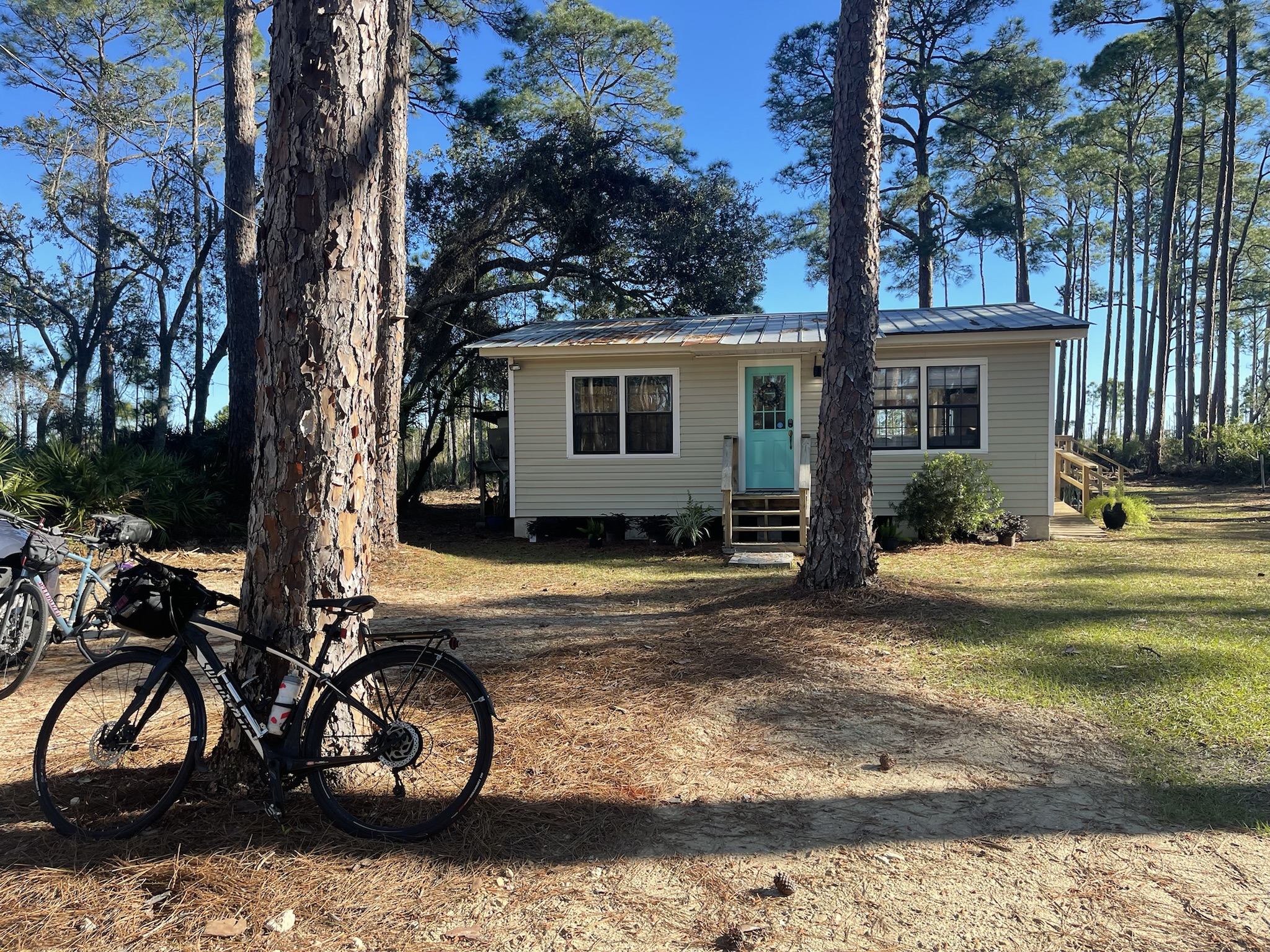
The charming cottage appealed to me, but it was the location that clinched it.  The small peninsula on the Gulf Coast was dominated by Bald Point State Park.  It had miles of beach, wetlands for Rich’s birding, trails for hiking and options for cycling.  My eyes traced 5-mile long Alligator Point, already planning my bike ride.  The cottage was wedged into this outdoor haven, surrounded by park land.

“Let’s book it!”

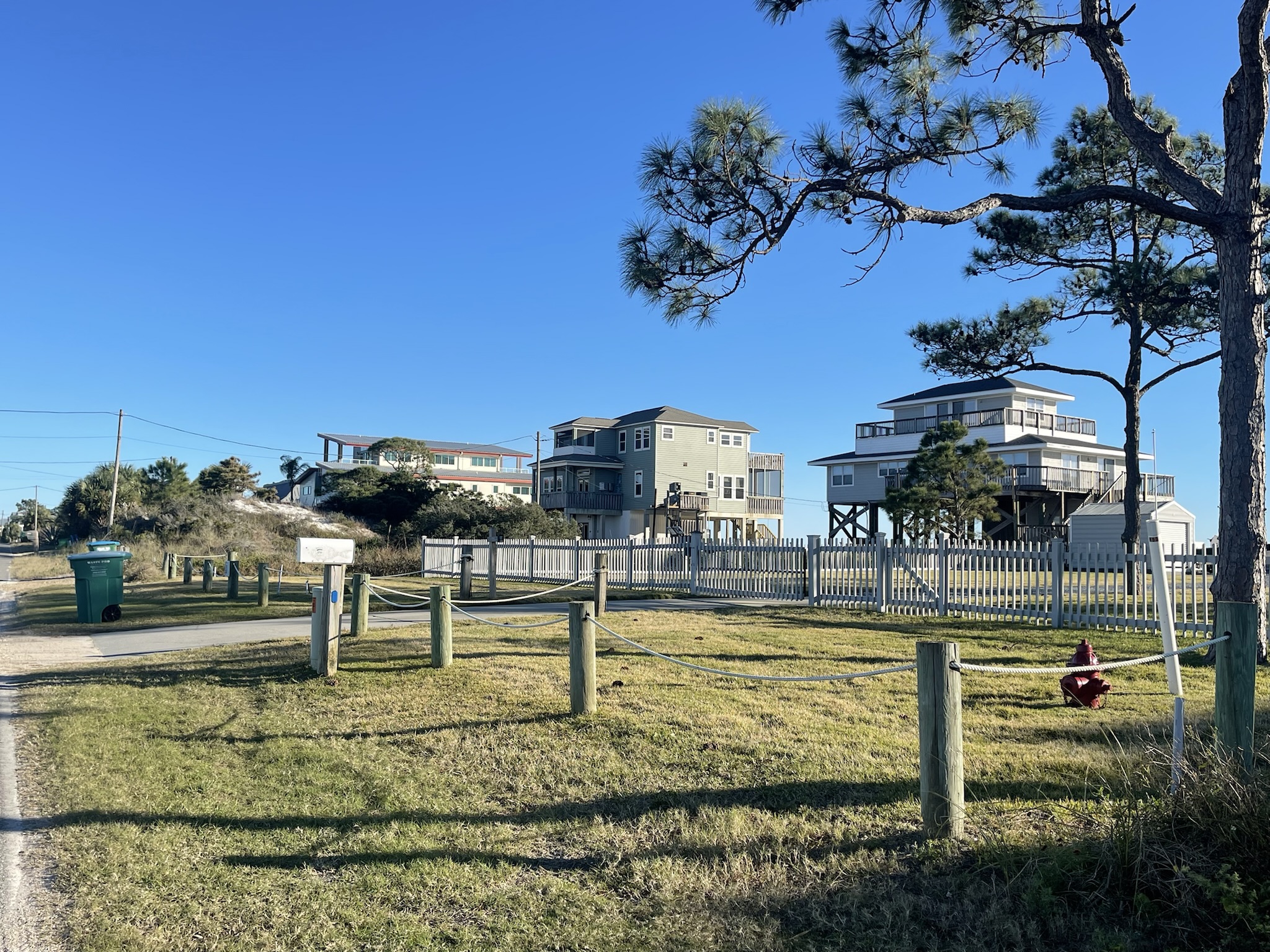
Turning off the Interstate toward Florida’s Panhandle on smaller roads, we lost traffic with each passing mile, and my muscles gradually unclenched after the tight game of leapfrog with the endless stream of semis.  By the time we turned onto the peninsula we had the road to ourselves.  After passing elaborate beach houses floating above impossibly tall stilts, we pulled into the grassy lot to find a humble cottage nestled among the wild Florida greenery.

This was a true cabin, Florida style.  The floor was tiled in a colorful pattern, heat rose through metal grates in the floor, there was a hand-sewn quilt on the bed and the quaint, comfy furnishings invited lingering.  The well supplied kitchen and modern conveniences ensured a comfortable stay.  It didn’t take us long to unload and venture out to explore.

We both set out on our bikes, but in opposite directions.  Rich headed into the park to check out the beach and marsh trails for birding options.  I had Alligator Point in my sights, eager to explore.  The road meandered down the narrow peninsula, first giving me views of the Gulf, threading down the middle, then following the bay sideThis was an old-time beach community.  Small ground level houses mixed with newer stilted monstrosities.  A community center, waterworks and marina were among the few commercial properties.  It was impossible to hurry despite the lack of traffic.  My head swiveled to take in the ambiance and culture of this local culture.

It didn’t take me long to determine that this was a different Florida.  Having traveled significantly north, the temperature had dropped significantly, especially when combined with the chilly wind off the Gulf.  The highs were in the 50s not the 80s.  Being from Northern Minnesota it still felt balmy to us, but was not yet inviting to other tourists.  As a result, there were very few people around.  It was quiet.  For years we have tried to “think un” when we planned vacations.  This time we nailed it.

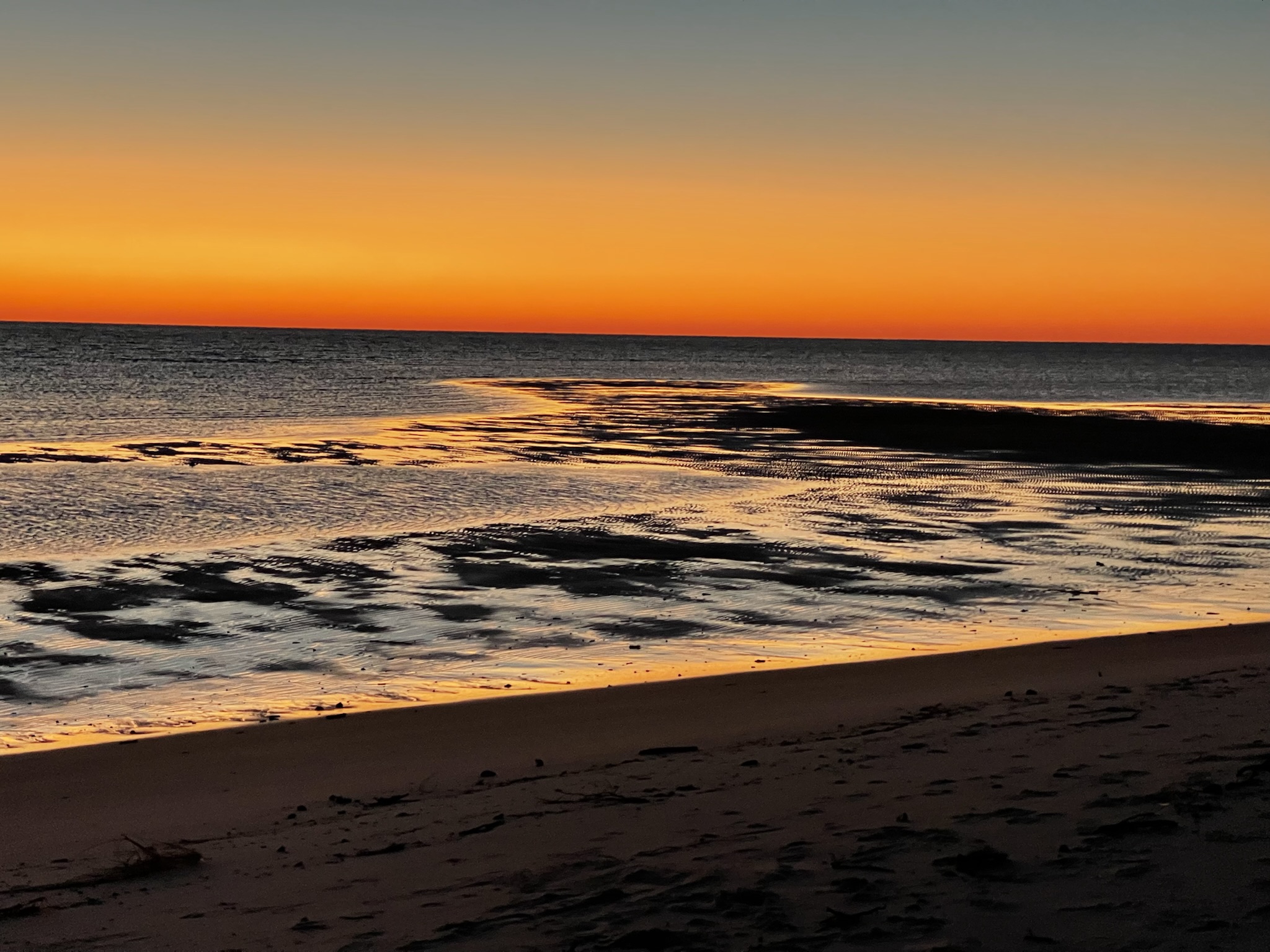
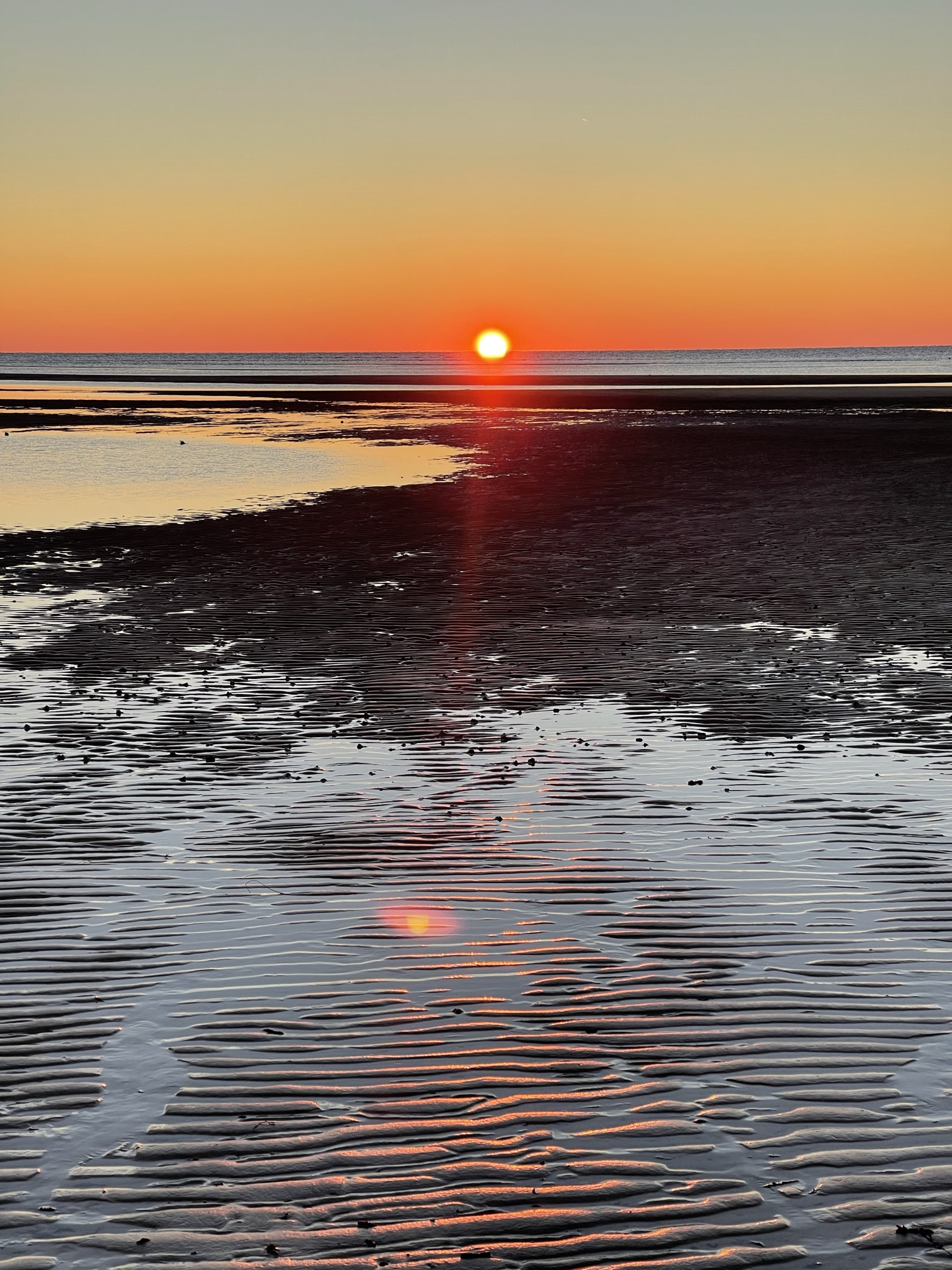
I woke early the next morning, intent on walking the beach at sunrise.  Noting the 38-degree temp I donned my winter jacket, hat and mittens and covered the short distance to the sand that stretched as far as I could see.  Already the horizon was ablaze, the cloudless sky waking fiercely with the sun’s impending rays. The tide was well on its way out, leaving behind ripple patterns, tidal pools and sand islands that reflected the orange glow and blue hues of the water.  It wasn’t the barefoot saunter I might have envisioned, occasionally splashing through the retreating waves.  Instead, I headed downwind, braced myself against the chill and found my warmth in movement.  Perhaps all the better in its uniqueness.

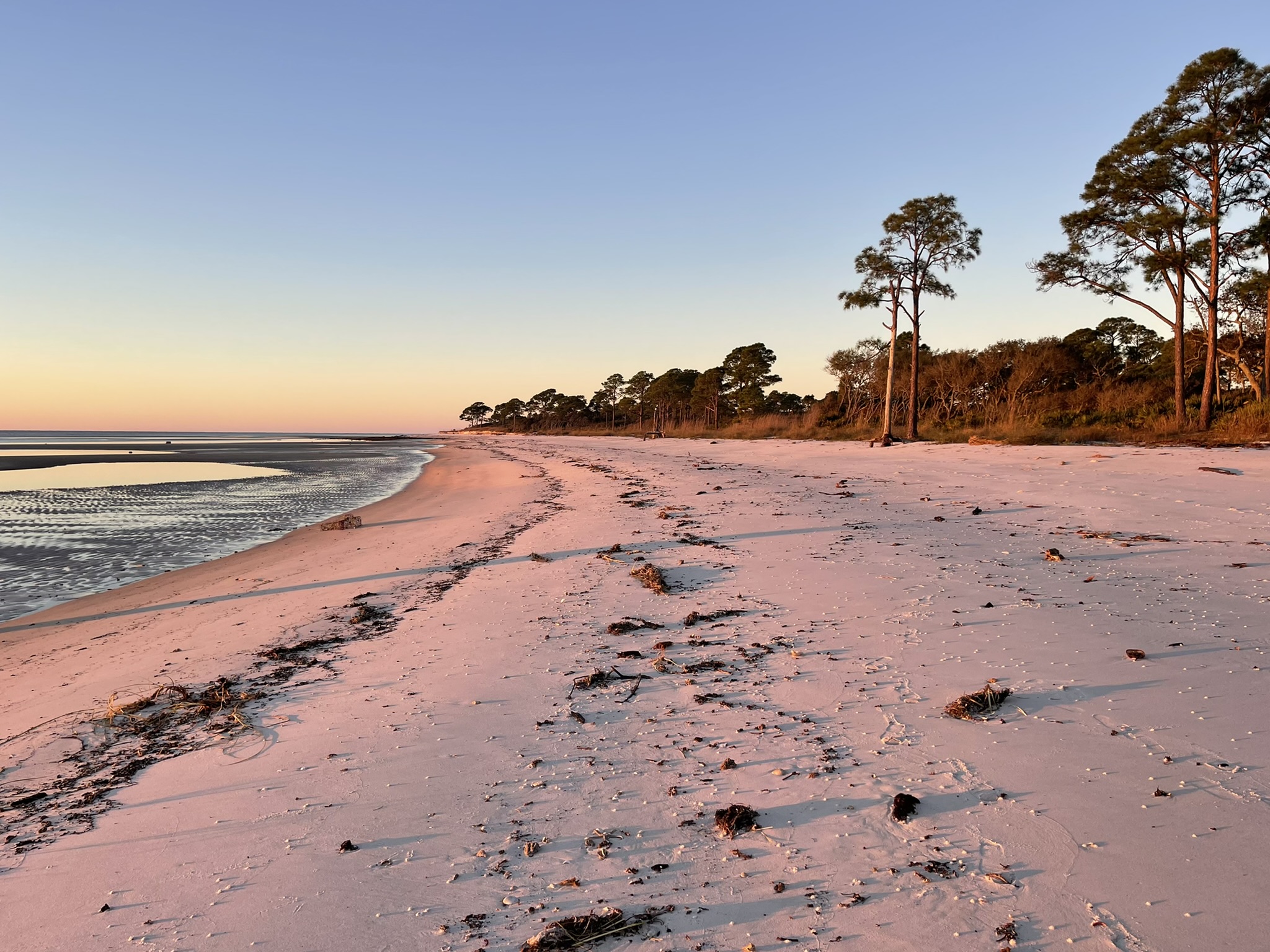
Over a mile down the beach, the sun finally peeped above the horizon, a yellow orb that rose quickly.  And with it the beach glowed in its initial pastels.  Transformed.

Lingering over my breakfast in the cottage as the sun streamed in, I perused the park maps and settled on a hike.  The closest trail was the loop around Tucker and Little Tucker Lakes, and I liked the idea of seeing water along the way.  I must have been in a Minnesota mindset, picturing narrow paths lined with trees and easy views of the lakes.  But this was Florida.

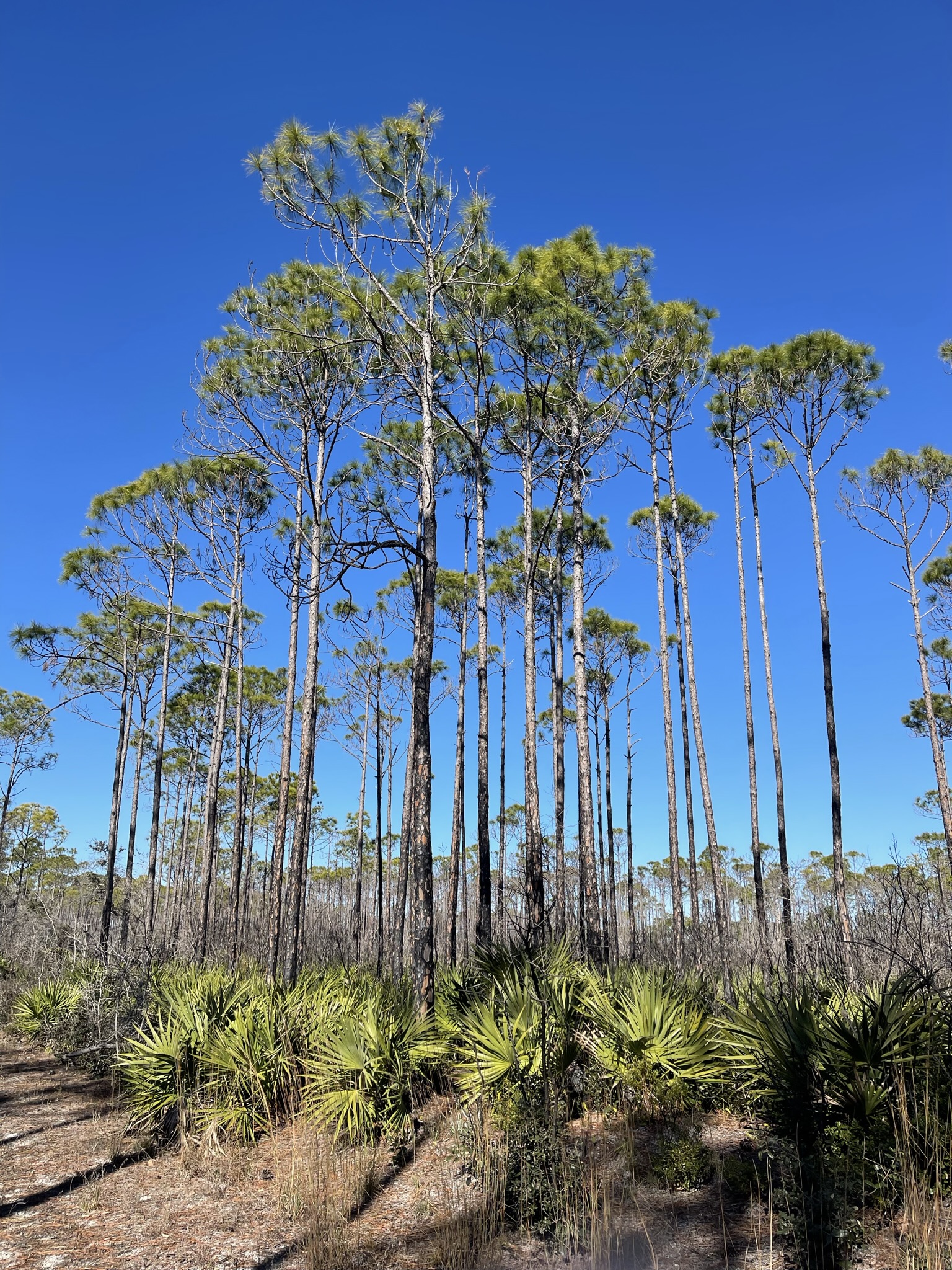
I set off down a swath wide enough for a highway, looking more like a dirt road than a path.  It became grassier at times but never lost its width.  The tall pines that populated these woods seemed to emulate palm trees, with impossibly tall barren trunks that branched out into a rounded canopy of needles and huge pinecones.  I admired those tall soldiers in a huge battalion.  At their base swarms of palm bushes blanketed the ground, high enough to obscure my view of the lakes.  But the sun beat down, I shed several layers and pushed onward – never seeing another soul on the trail.

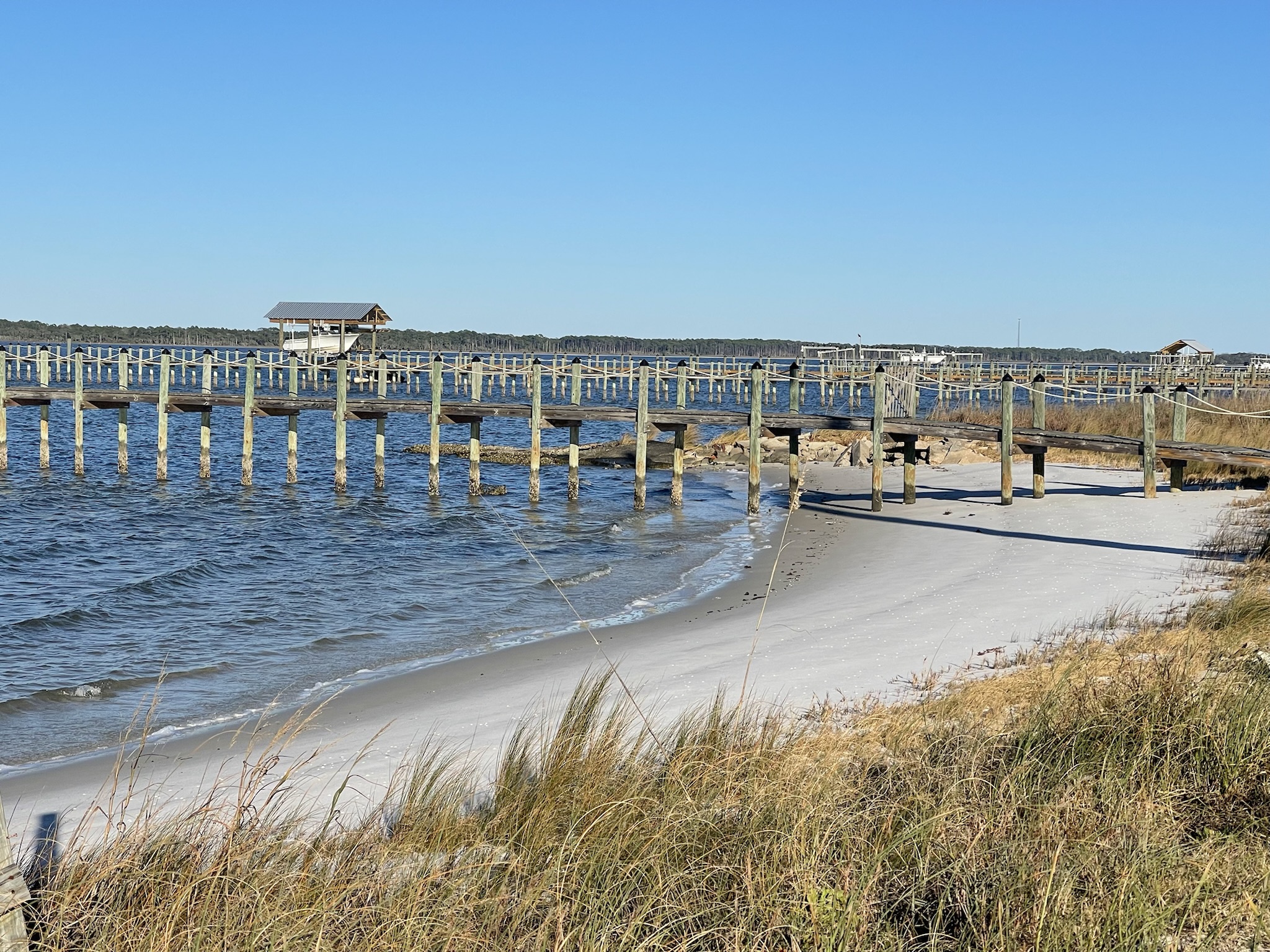
A final short bike ride included a visit to the main entrance of the park.  I pushed my bike out one of the beach entrances, where I could see the beach wrapping around the end of the peninsula.  Boardwalks traversed the marsh, and a long wooden pier extended into the water.  So much more to explore. Someday.

Sometimes the best experiences can’t be planned.  What started as a solution to a problem turned into an unexpected pleasure.  A peaceful coda on the end of a melodic symphony.  A chance to unwind, to engage with nature and retreat from the more populated world.  A stroke of luck.

Sunrise, Sunset

Being a volunteer lighthouse keeper has its perks, particularly in the off-duty hours. Fortunately, no matter what month I am at Crisp Point Lighthouse, sunrise and sunset fall squarely within my free time. And I make sure I am at the ready to witness and photograph both. Highlights of each day.

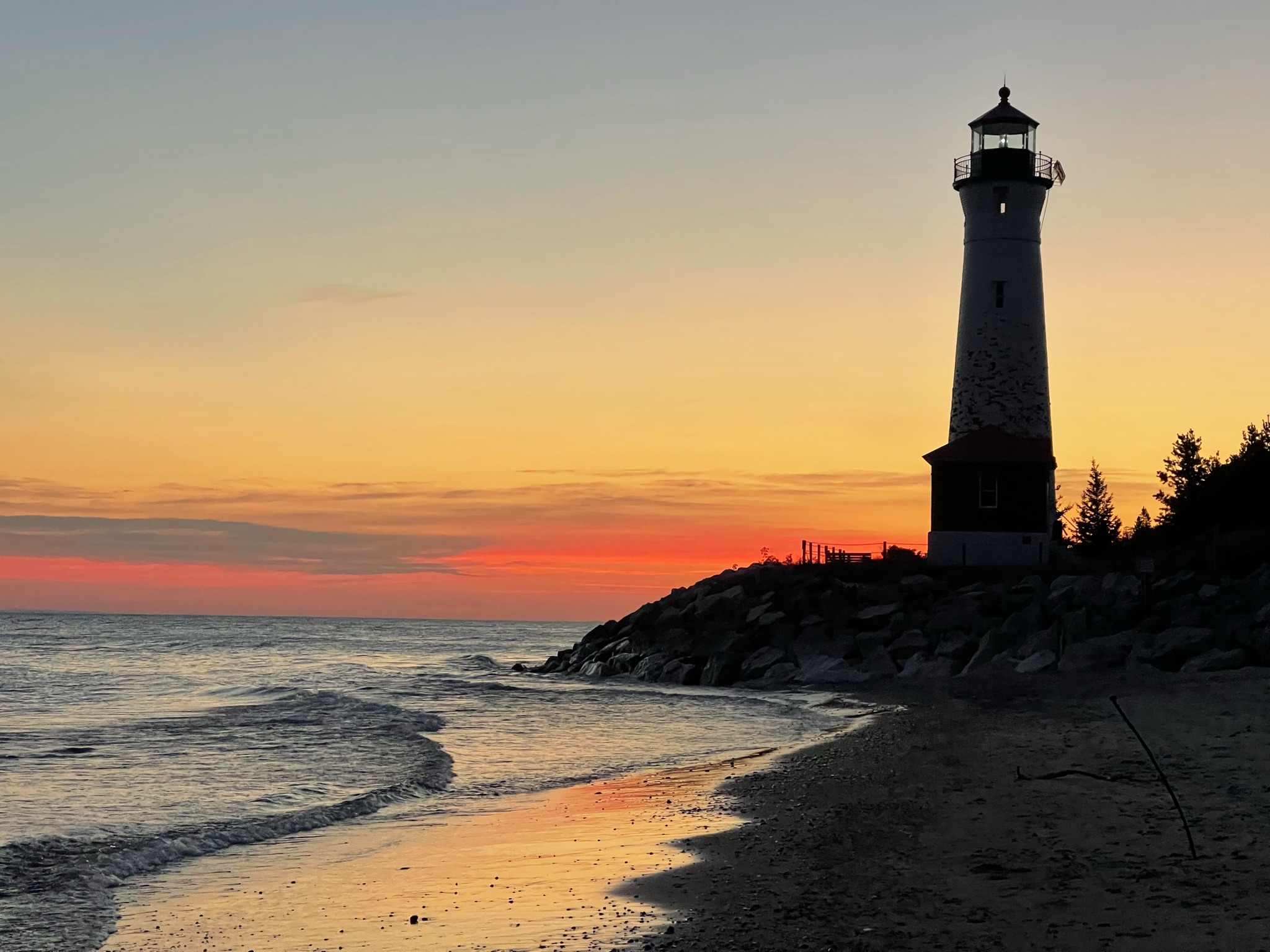
Being keepers in September this year means a more sociable hour for sunrise. Scrambling out of the tent by 6:45am still nets me a front row seat to an inspiring light show. I start on the west side of the lighthouse, watching the oranges infiltrate the clouds and silhouette the tower.

Making my way past the lighthouse to the opposite side, I turn back to watch the sun crawl its way down the lighthouse, illuminating it with the glow of the low morning sun and reflect on the water.

Another morning delivers fiery red hues that mutate into pink cotton candy in the clouds overhead, just 13 minutes later. I never tire of this scene. It’s worth the brisk morning chill, the sleep still in my eyes and the fact that I haven’t had a chance to brush my teeth yet.

At the other end of the day, sunsets provide lingering entertainment that only starts with the sun dipping below the clouds.

The real show begins five minutes later when the sun drops below the horizon and shoots its brilliance into the clouds above, and intensifies with the accompaniment of crashing waves.

The variety is never ending. Some mornings and evenings are duds, scuttled by clouds blanketing the horizon. Others lack clouds completely, robbing the sun of targets to reflect its brilliant rays. But when the conditions are right, it’s downright magic and never the same twice. God’s majesty at work.

Photographing these scenes is half the fun, the game of seeing if I can replicate the image. In the past, I’d point my Canon Powershot SX40 camera at these displays, struggling to get the settings right, focus carefully, keep the camera still and hope for a good photo. Usually with mixed results. This time the camera stays in the car. Instead, I whip out my iPhone 12 Pro Max and hold it up for the shot. Click, I got it. Click, another for good measure. Click, catch the changing light. It certainly lowers my stress level, enhancing my appreciation for these solar events. And I have to say, that phone does a credible job and is always at the ready in my pocket. It’s my new standard to ensure I capture those sunrise, sunset moments.

Sharing the Light

The incessant wind drives tumbling waves onto the shore, cresting in white foaminess that contrasts the water’s deep blue. The morning chill on the beach is mitigated by the warm sun on my back. In my peripheral vision the tall tower stands guard over this sacred spot. Good morning, Lake Superior. Hello, Crisp Point Lighthouse. I’m back!

It’s been two years since I was last here. Our streak of 7 annual stints as lighthouse keepers was interrupted by Covid, like so many aspects of our lives. Even this year’s trip was a leap of faith as the virus continues to rage. But armed with vaccines, masking and distancing protocols in place, we felt willing to answer the call.

With the long slow drive down the infamous 18 miles of rough dirt road, the world began to recede. Shaded by towering pines and leaves rimmed with a touch of color, weaving through forest regrowth, I anxiously awaited that first sight of the lighthouse. The early morning calm and solitude of the site reminded me how much I love this place.

And yet it’s different this year. With extra duties imposed by Covid, we invited our friends Jon and Beth to join us. They were willing and eager participants, even knowing the rustic camping conditions – or perhaps even because of them. We erected our tents in unison before the onslaught of visitors – ours on the sand, theirs on the bed of their truck. A quick climb up the lighthouse clenched the sale as we gazed out over the miles of sand and rock beach stretching to the horizon in both directions, and took in the endless blue expanse of Lake Superior. Welcome, Jon and Beth, to our little slice of heaven.

The “Keeper’s Residence” below the lighthouse
View from the catwalk

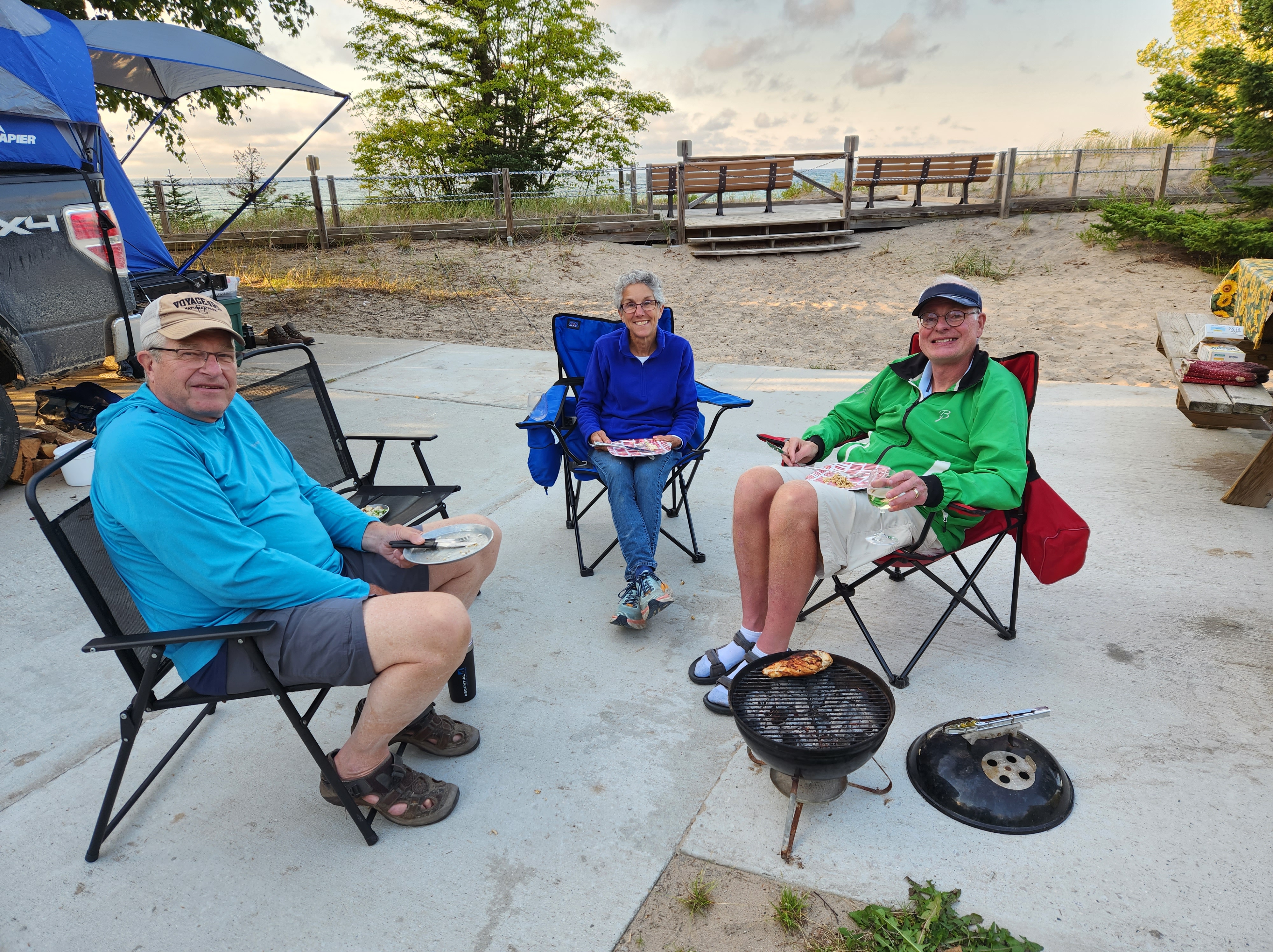
The arrival of visitors plunged us into our duties, manning the Visitor Center, dispensing information about the lighthouse, selling souvenirs and cleaning jobs. Jon and Beth quickly became ambassadors, greeting folks, learning where they were from and how they found the lighthouse. It was a novel experience to be able to trade off and spell one another for bursts of freedom to walk the beach, climb the tower or read on a bench overlooking the beach. And the constant companionship was especially welcome in the evenings when we’d share dinner and linger by the bonfire. I knew the invitation had been a success when Jon and I manned the campstove cooking breakfast under an awning in the rain, and Jon leaned over to say, “Even this is fun!”

Jon restocking the bathrooms
Molly and Rich tending the shop
Ladies walking the beach
Dinner together
Campfire time

I admit it took a bit of adjusting. I had always equated our off-hours at the lighthouse with solitude. Morning walks and reflection, followed by time spent writing by the water. Evenings mesmerized by the flickering flames and glowing coals after Rich retreated to the tent. Reading while crunched down in the catwalk high above the lapping waves. Rare quite time I intentionally allowed myself in this retreat.

But after over a year of forced seclusion, having company was a treat. We ribbed Jon over his raging battle against the sand on the boardwalks and lighthouse steps. I relished Beth’s company on my morning beach walk, opening our hearts and sharing common woes. They taught me how to be an engaging host. We lent them our LED black light to find Yooperlites (which they did), and Rich gave them tips on seeing the Northern Lights (which failed to show). Laughter reigned. It felt so good.

I meant to consult Rich, but forged ahead without it. “Do you want to come again next year?” The answer came out in unison, “Yes!” It’s settled. We’ll be back next year, sharing the light with good company.