Lava Lessons

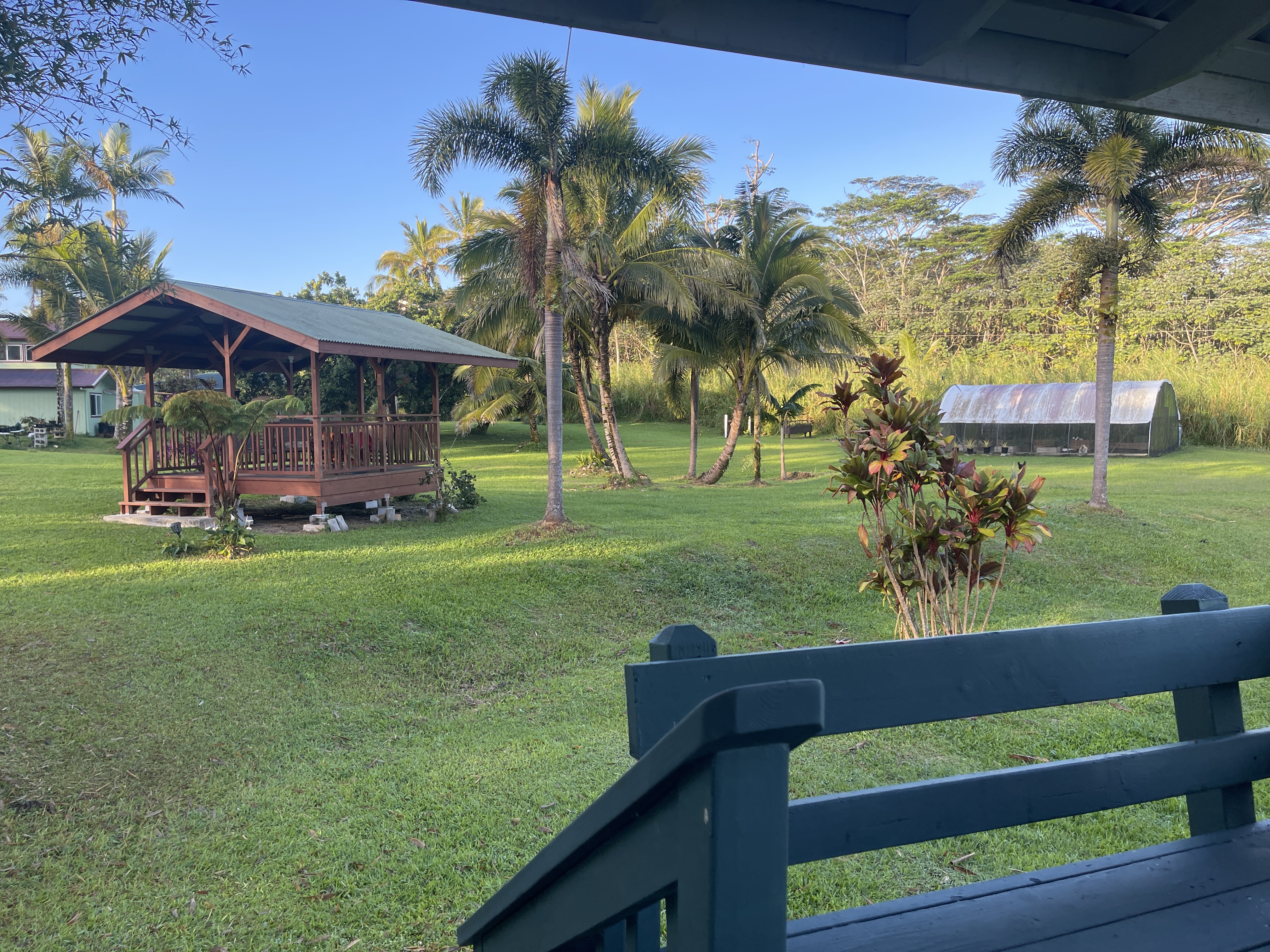
Hello Hawaii!  We arrived in the dark, so this morning was our first real view of our surroundings here on the Big Island.  Our guesthouse is in a lush green yard with exotic plants alive with birdsong and surrounded by thick tropical forest, immediately adjacent to Lava Tree State Park.  The peace, seclusion and privacy in addition to the warm climate gave us an immediate feel of laid back island life.  So it was with great surprise, we learned about its near-miss in the 2018 volcano lava flow.

Our hosts, Kent and Melanie, welcomed us with open arms and Melanie immediately brought me into their home to show me aerial photos taken just four days after the eruption.  The juxtaposition of green and black painted a stark picture of the devastation.  Just 1/8 mile away the lava advanced inexorably, crossing roads, changing the landscape forever.  In order to see it for ourselves, Melanie gave us directions for a driving loop which we quickly followed.

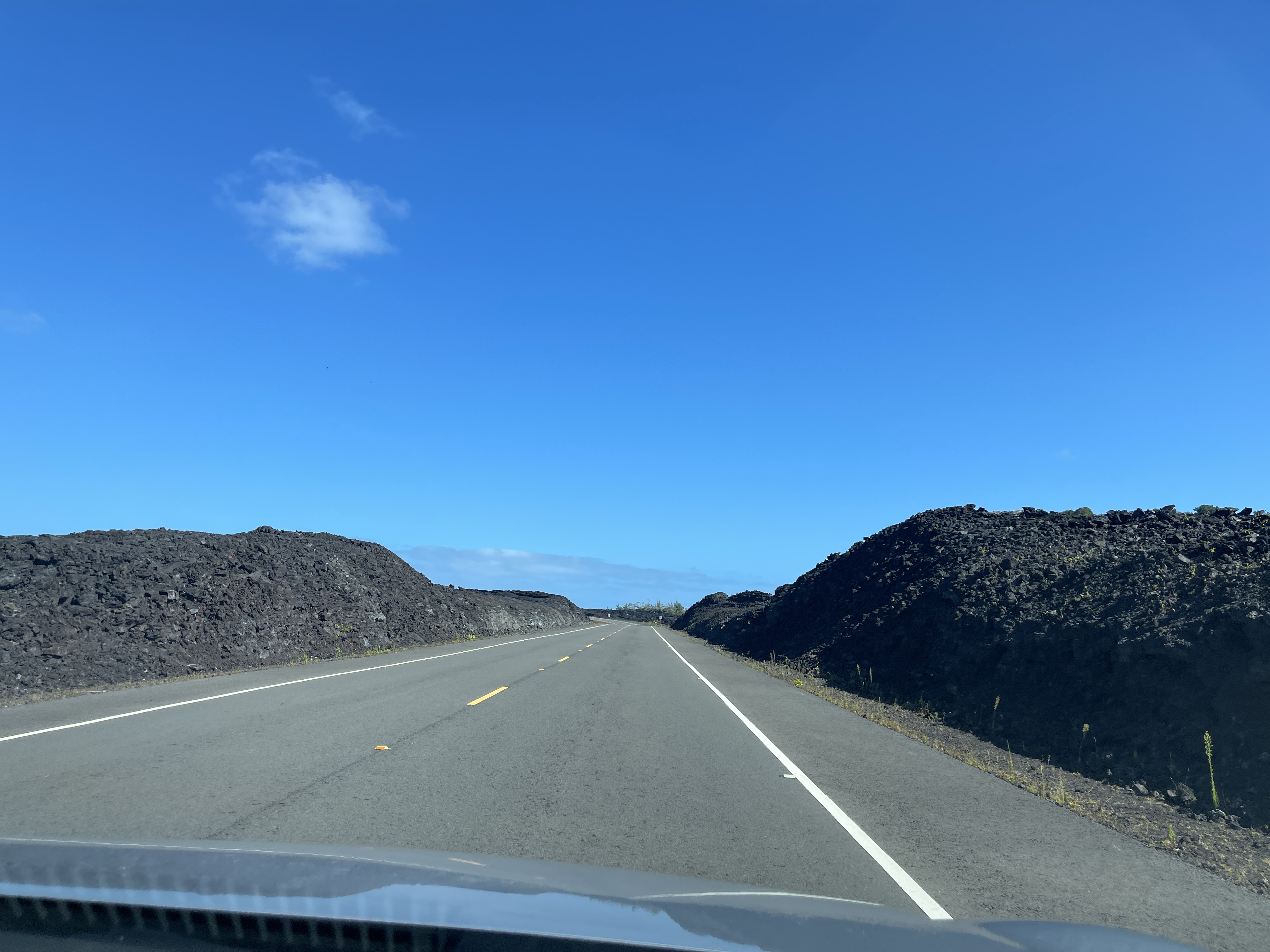
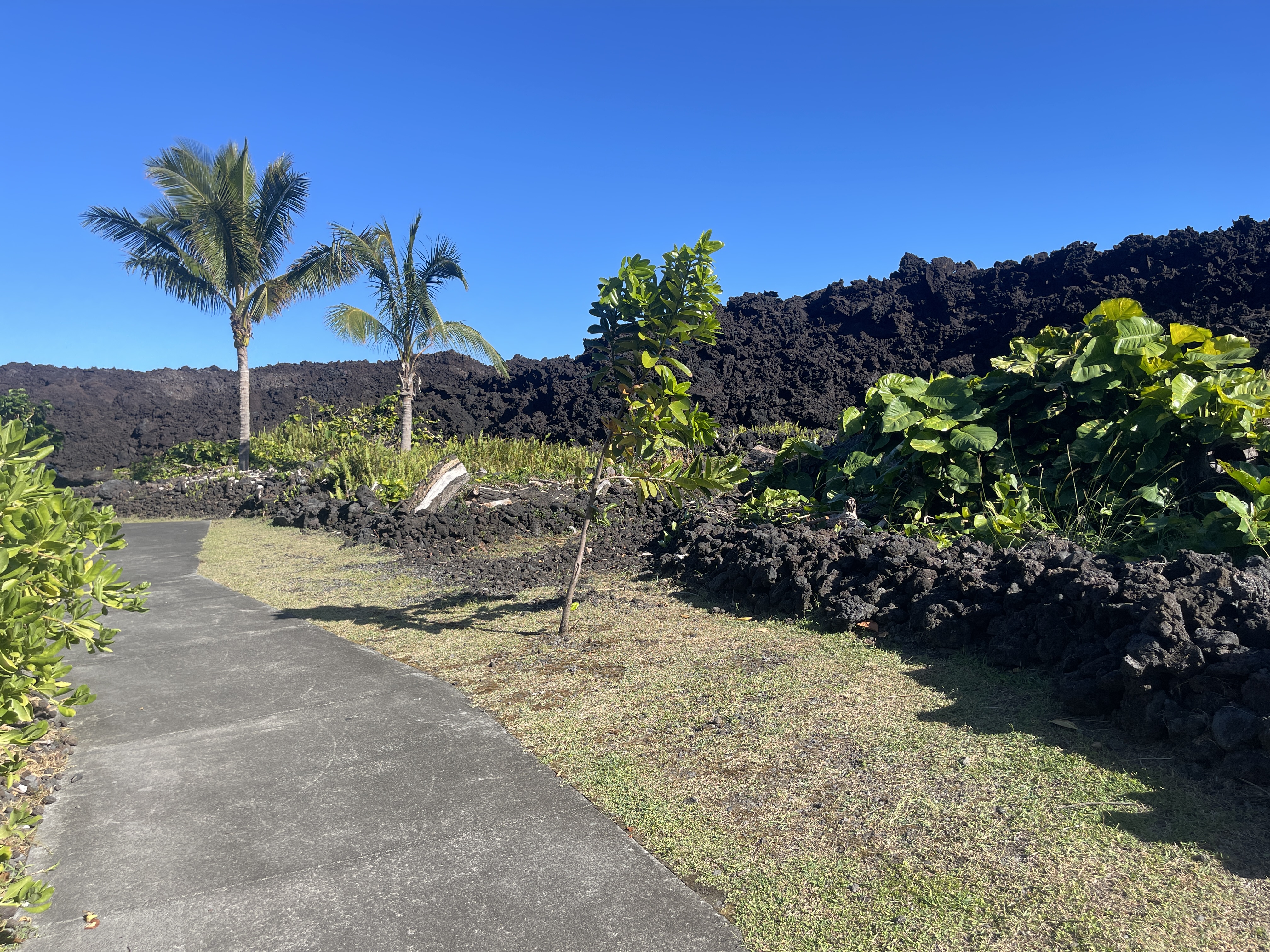
We took the main road away from Pahoa, which Google labels with “End of the Road” just a short distance away.  It is literally covered by lava beyond that point. Taking the other fork toward the coast, the road has been rebuilt right through the lava.  Roadside views quickly transition from homes and greenery to solid lava lining both sides of the road.  It is easy to see the lava’s path, what trees and structures were spared and where it all lies buried beneath the black devastation.  A stark reality.

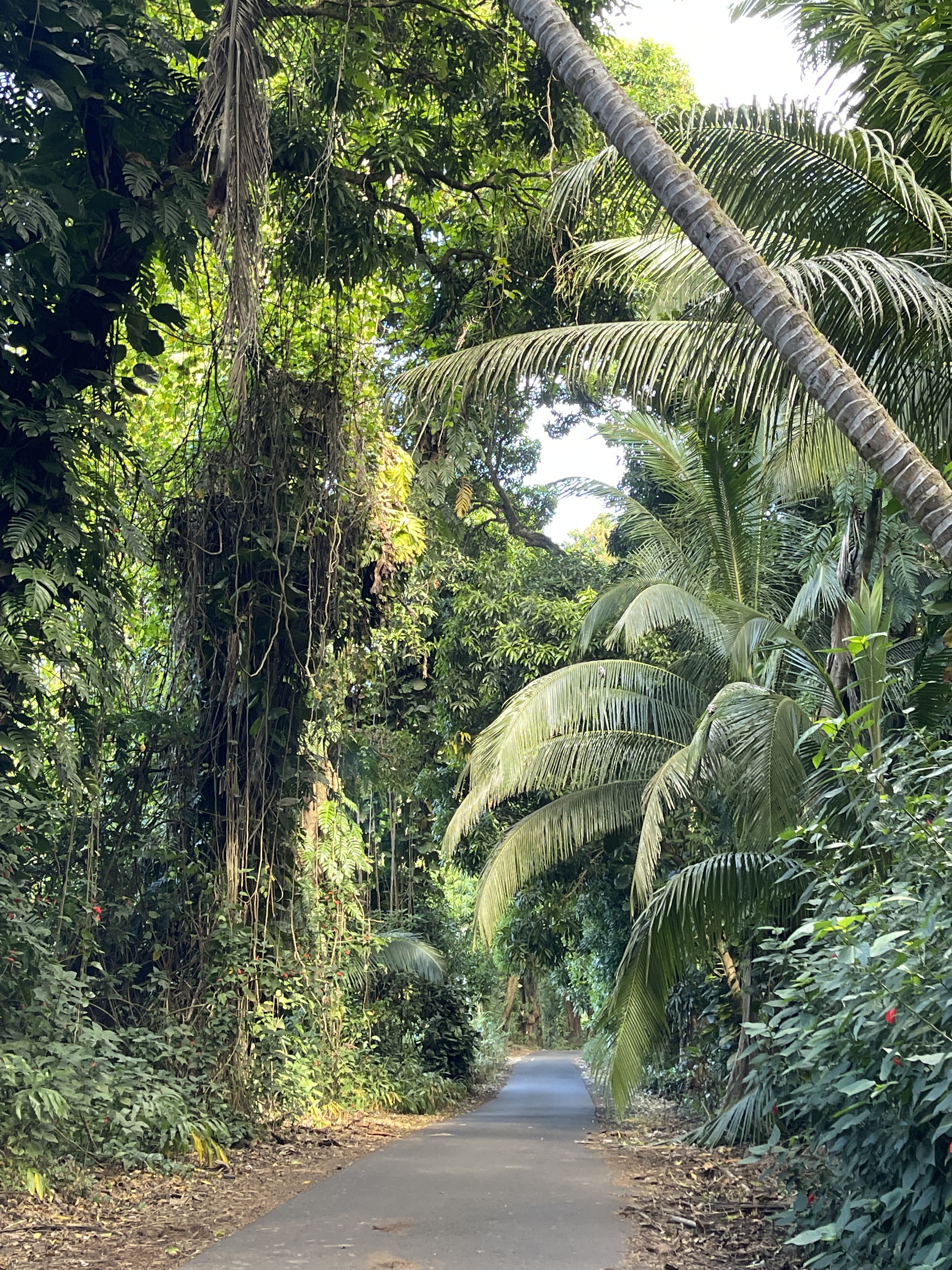
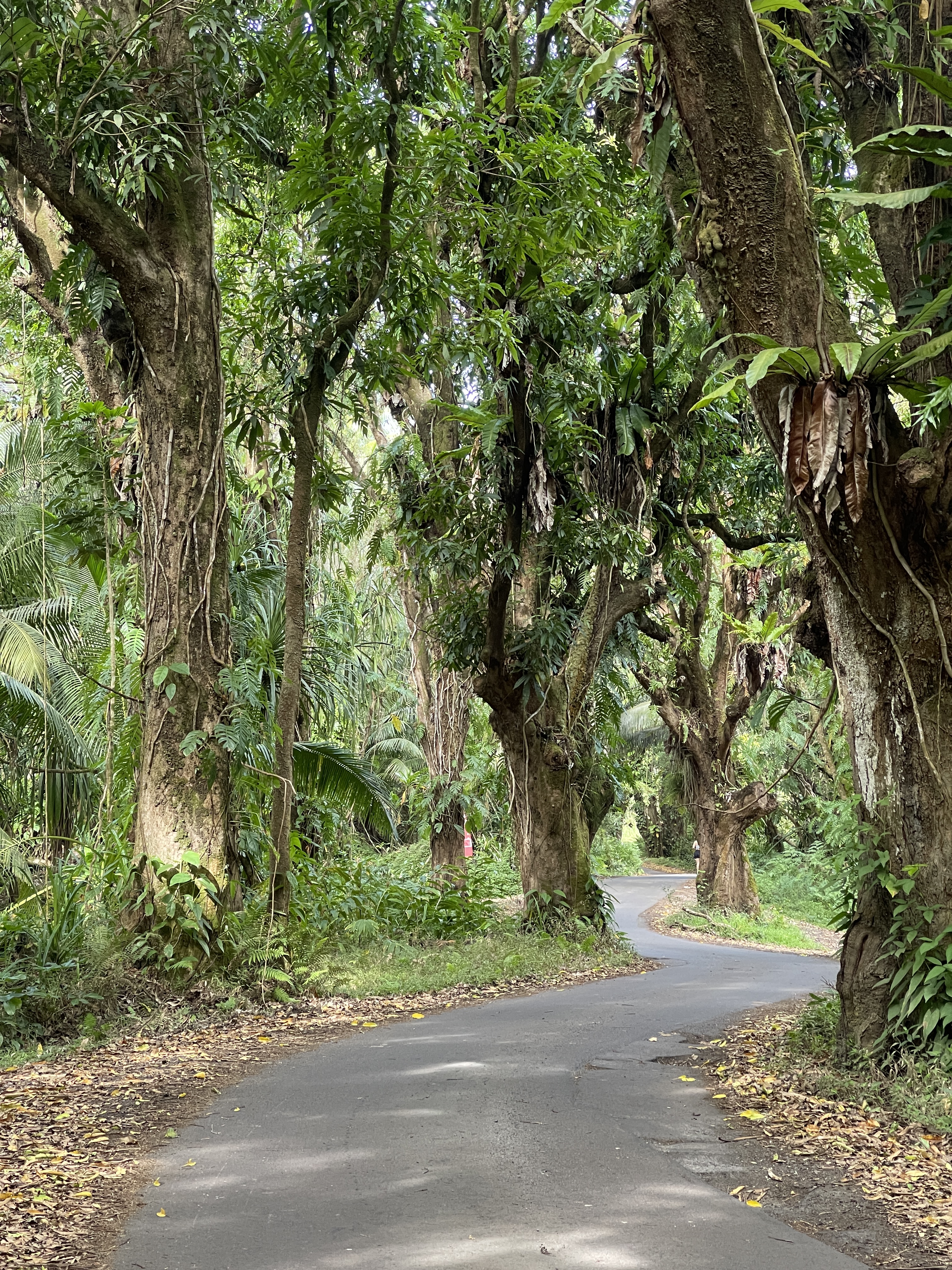
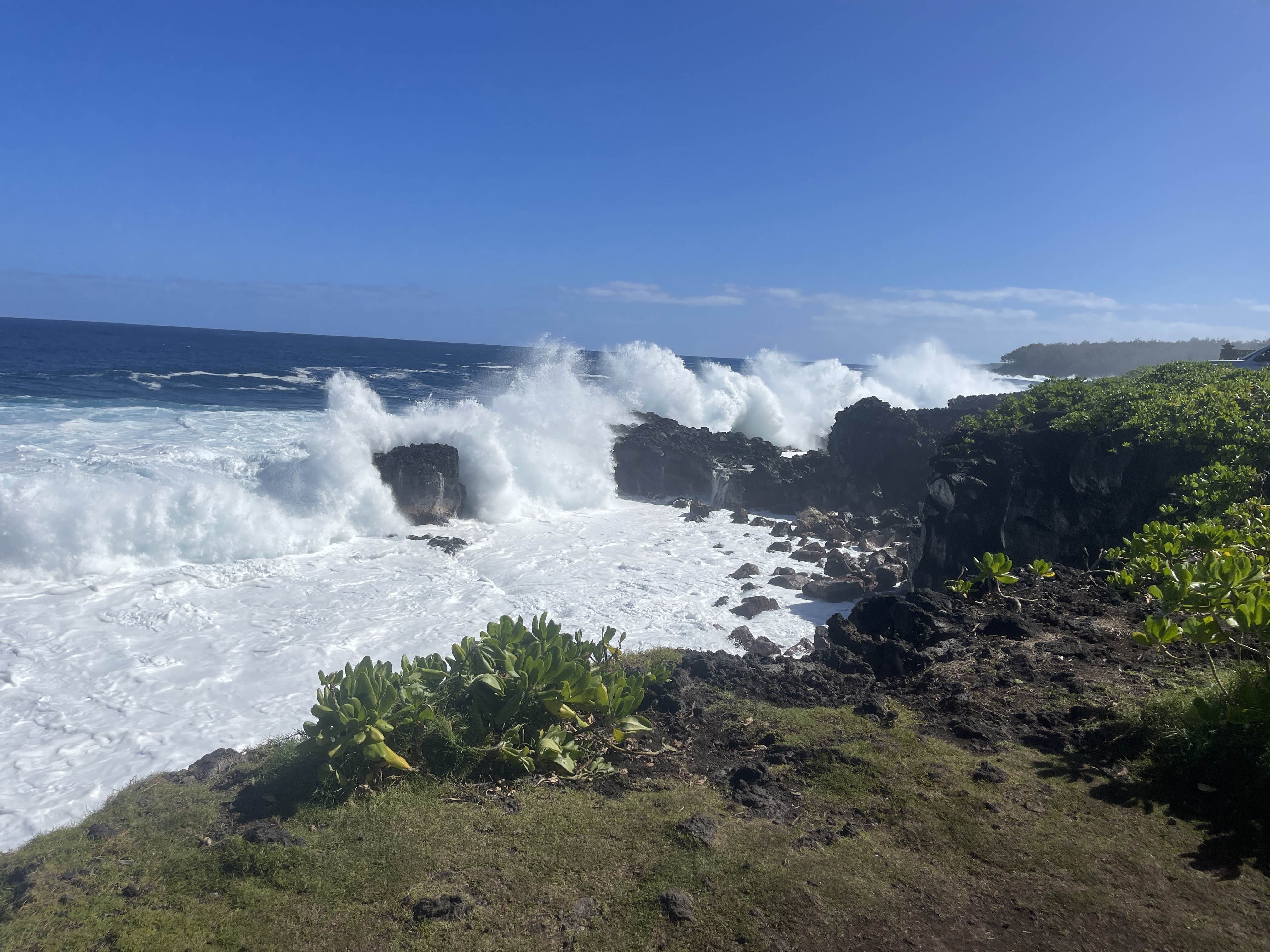
As we neared the end of the lava flow, the road took a sharp left turn and an equally sharp transformation.  Government Beach Road had major portions covered in lava, but was laboriously rebuilt in 2019 despite challenges including encountering still-hot surface temperatures.  The narrow road travels through a green canopy of tropical trees and plants, lending it seclusion as well as serenity with its 15 mph speed limit and the need for pull-outs to allow cars to pass.  When it reached the ocean, gigantic waves crashed against the shoreline.  We spent a long time watching the force of nature pounding against those rocky lava cliffs.

For the afternoon, I chose to drive down to the southern shore of Puna.  Prior to 2018 it would have been a short drive, but the road closure forced me into a round about approach.  However that took me along another narrow drive, paralleling the shore this time in closer proximity to the water.  There I was able to witness the impacts of both new and old lava.

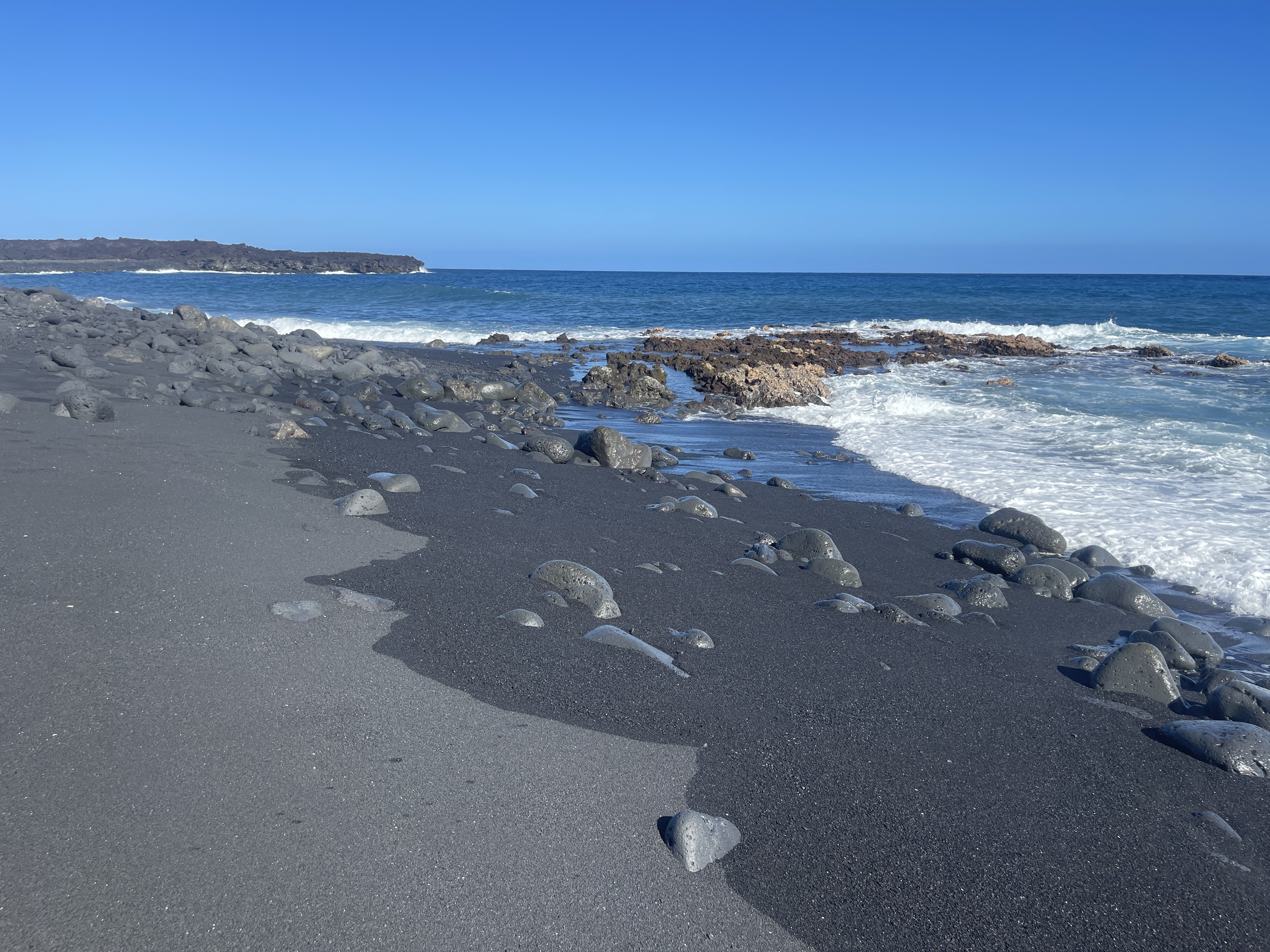
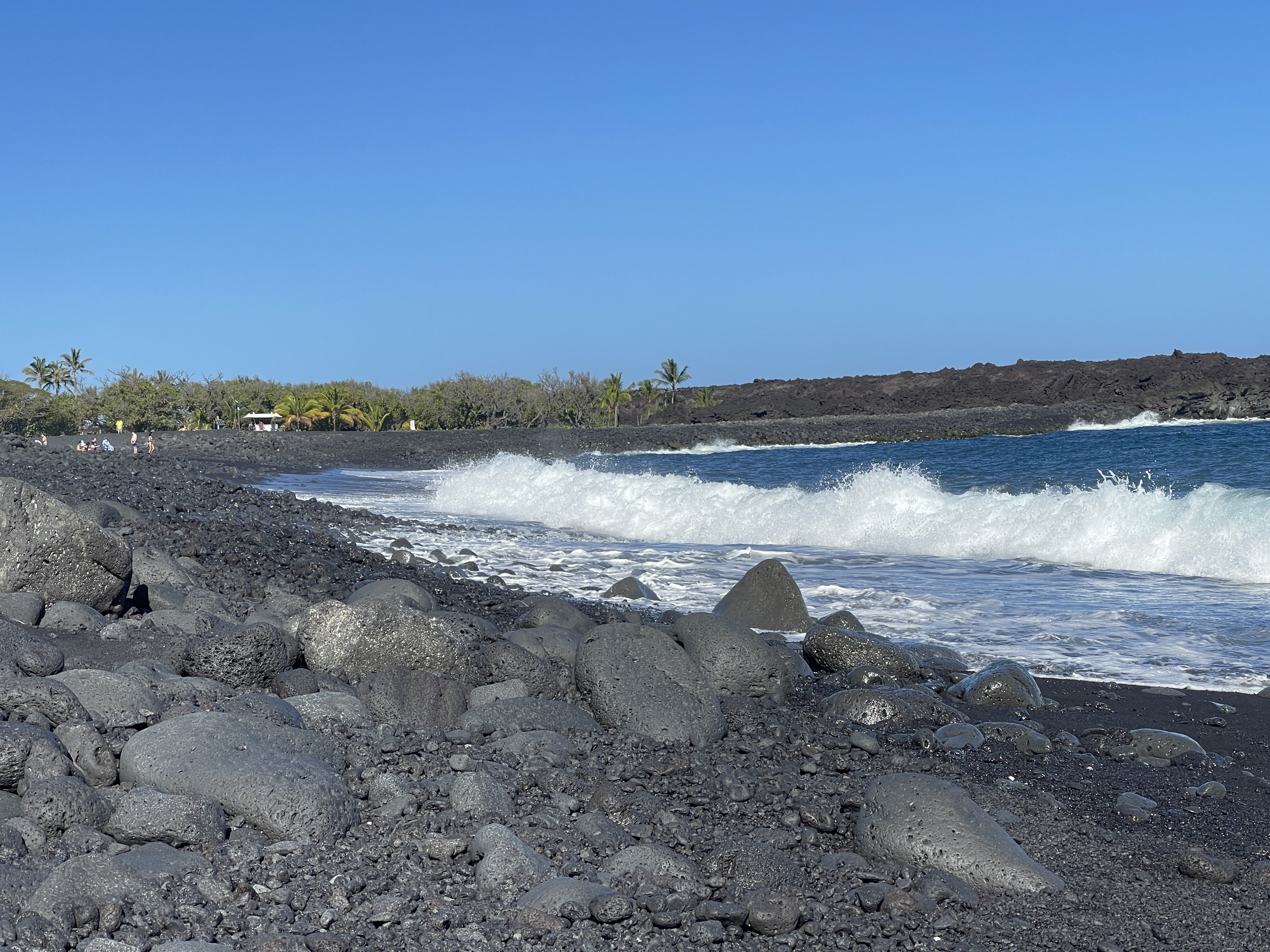
The initial part of the drive was lush and green, as the tropical forest found footholds in old lava flows and reclaimed its dominance.  In some spots, pillars of lava poked up through the plantings, a reminder of the part it played in this geography. Continuing on, the path of the 2018 lava was evident once again.  The road passes through one section, re-emerges then eventually ends at Isaac Hale Park.  There the lava created the island’s newest black sand beach, which I explored.  Smooth fine sand mixed with harsh larger chunks of lava made for tricky walking, but didn’t stop sunbathers from stretching out their towels.  The picnic areas of the park had walkways that wound through flowering plants but often ended abruptly at lava walls.  And the altered layout of the park hindered my search for the warm springs that supposedly were there.  It gave me an eerie sense of life as a path interrupted.

I found myself fascinated by the co-existence of life and volcanoes.  When they choose to erupt, there is no stopping the flow, which follows no rules.  It reshapes the land, changes travel patterns, saves some areas and devastates others.  I can’t wait to explore more of Hawaii’s Big Island over the next two weeks.  I’m sure I will learn many more lava lessons.

A Labor of Love

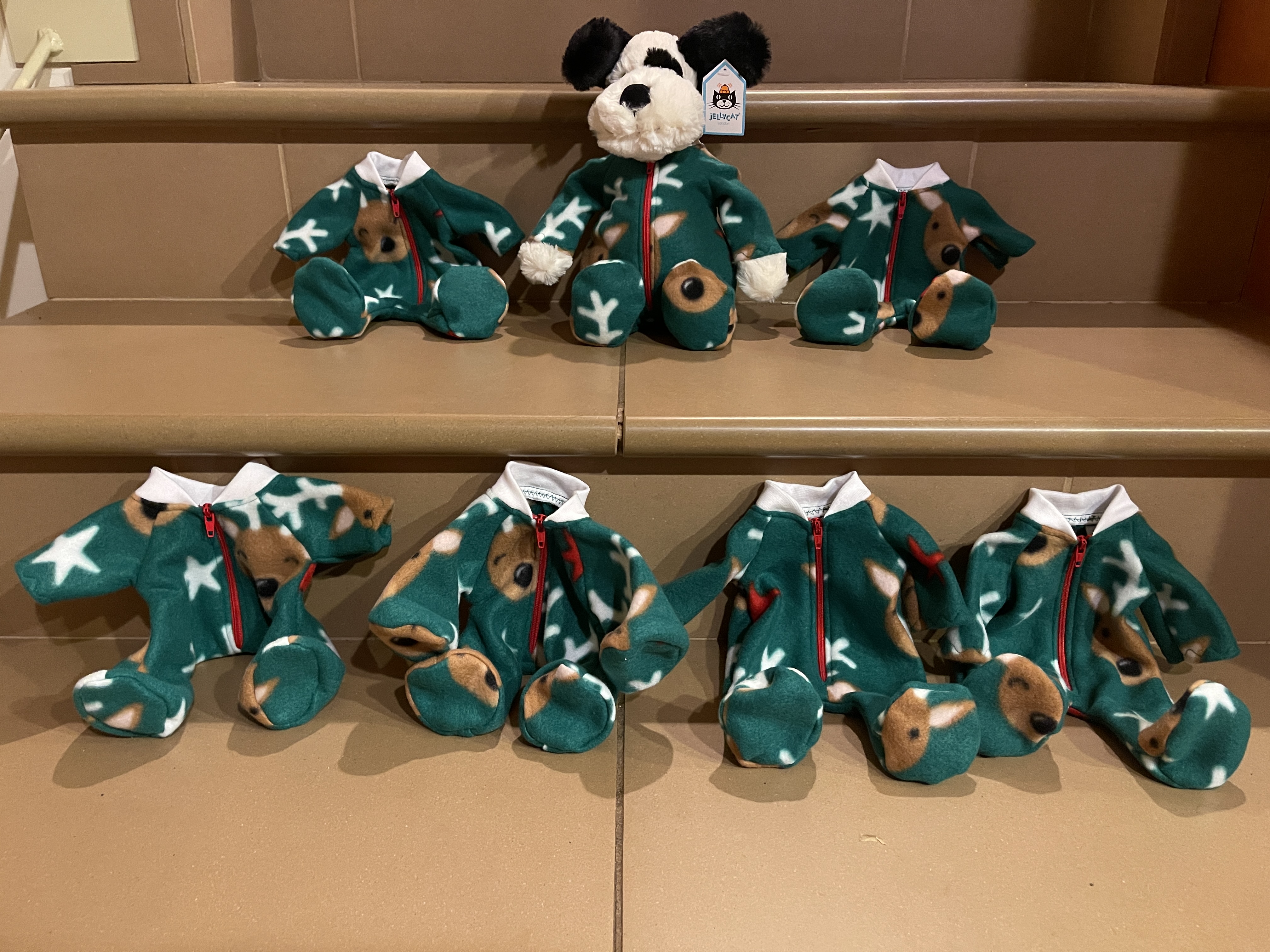
It starts in September. I begin trolling the fabric stores looking for just the right fleece. The holiday prints start appearing then, and I know I have to act fast when I find the right one. Something cute and Christmasy, with small enough prints to be recognizable on a baby yet still appeal to an almost-teenager. This year, the perfect fabric jumps out at me – I just have to have it.

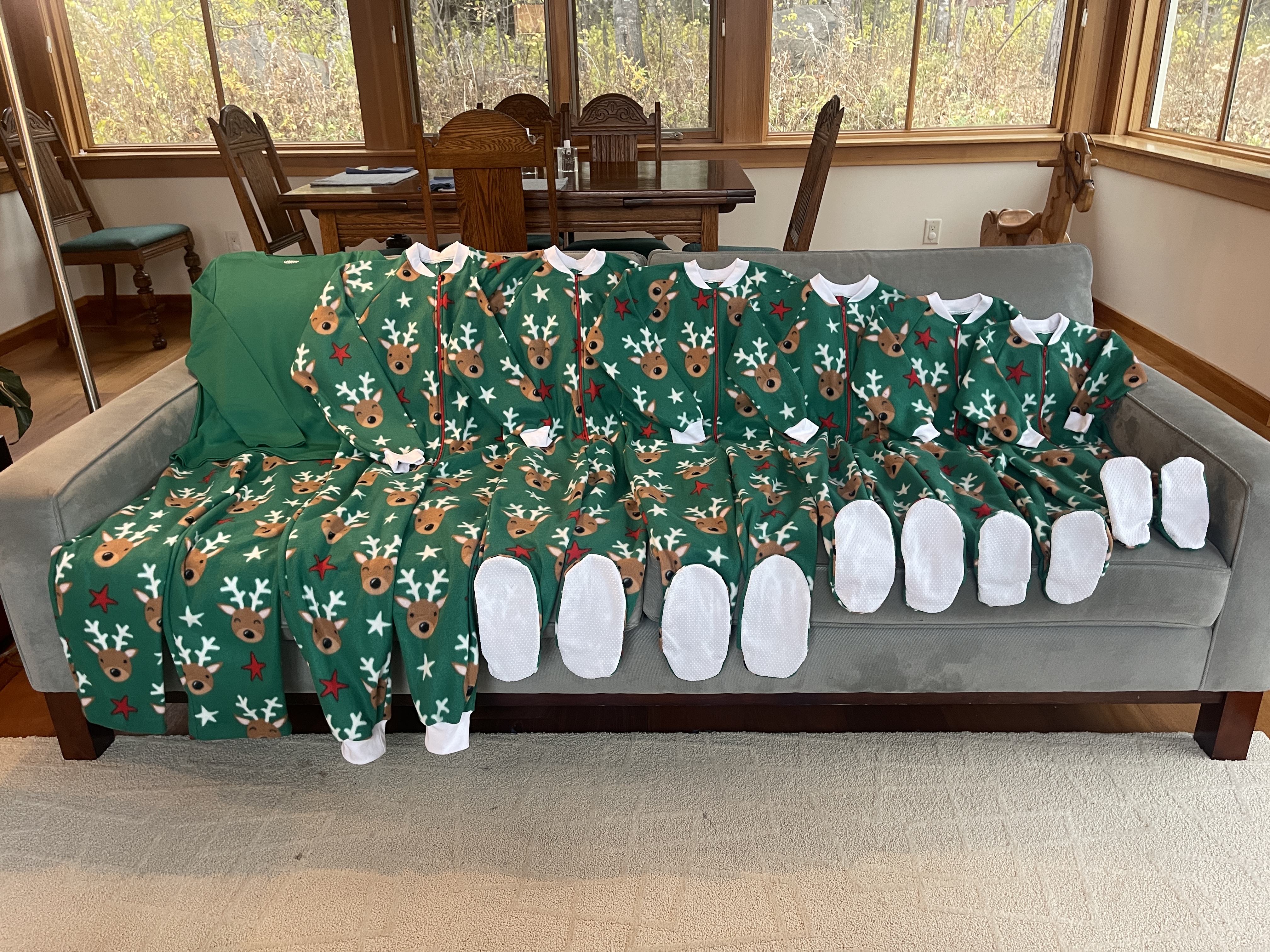
But first I have to do my homework. Grandkids grow each year, so I need to solicit the moms for current sizes. Then there are adjustments. Extra length in the legs for this one, slimmer through the body for most, feet or no feet. The almost-teen has aged out of the one-piece model, and wants fleece jammie pants. A new pattern is introduced.

Then the guessing begins. Seven Grammy Jammies adds up to 11.5 yards of fleece fabric. But combining all those pieces on the fabric means I can fit them on a smaller yardage – the question is how much less? My search turns up only small quantities in each store, so I take a leap of faith and go online to order a whole bolt of fabric, 10 yards.

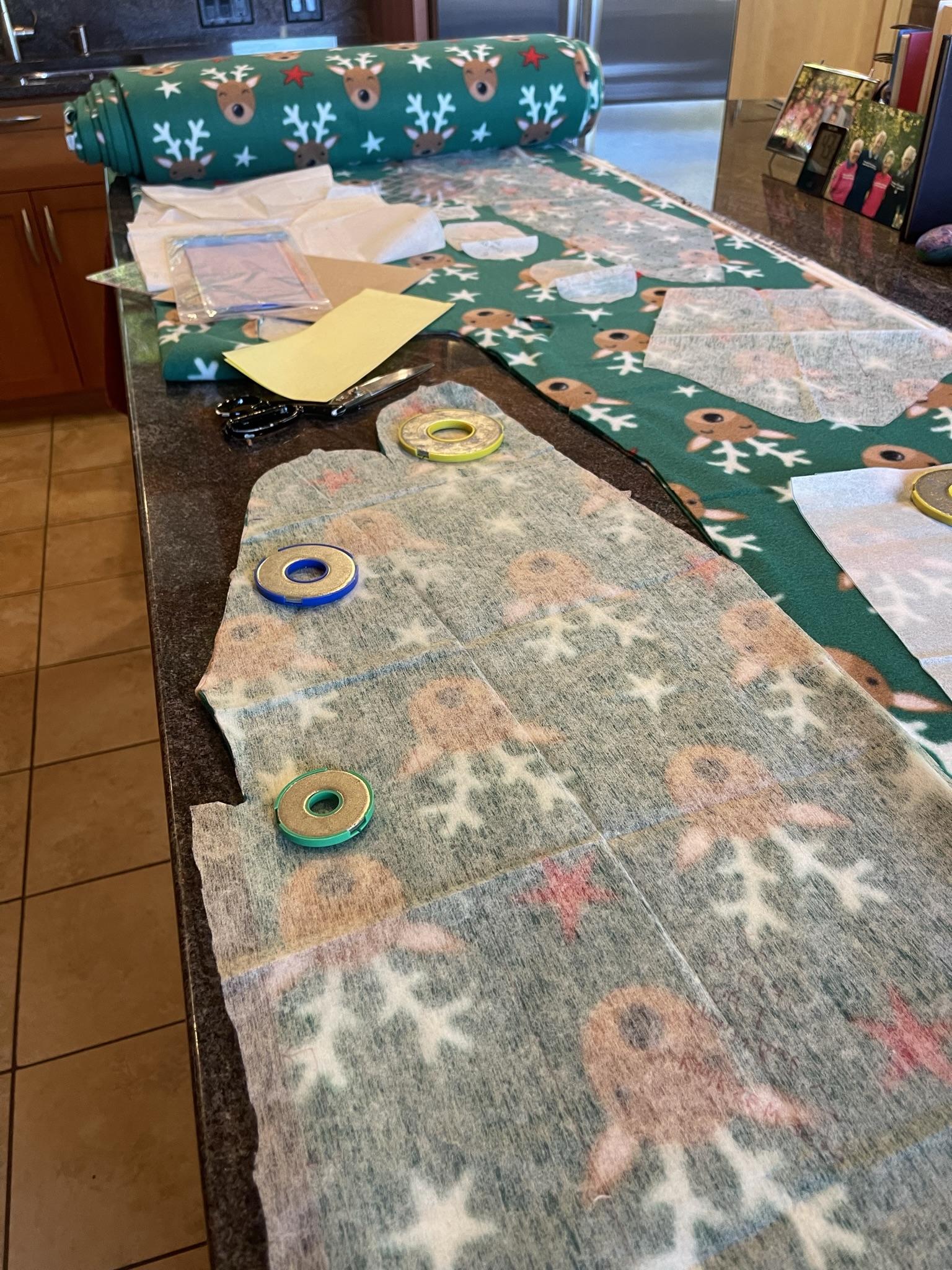
Soon my kitchen island turns into a conveyor line. I roll the fabric across its massive length over and over again, laying out all the pattern pieces, breathing a sigh when they all fit with room to spare. Taking a deep breath, I dive in with weights, scissors and ruler, cutting and collecting the pieces child by child, designated by post-it note names.

The best part is yet to come. With the necessary logistics behind me, I can finally thread my machine and commence sewing. I start with the largest ones first, as they take the most time and I can finish each set in less time. This year adding my new serger into the mix lets me zip through those long seams, assembling and binding in one pass.

One by one, the jammies come together and join their partners on the couch. They are usually completed within a week, and already I visualize them snuggling the little bodies of my grandchildren.

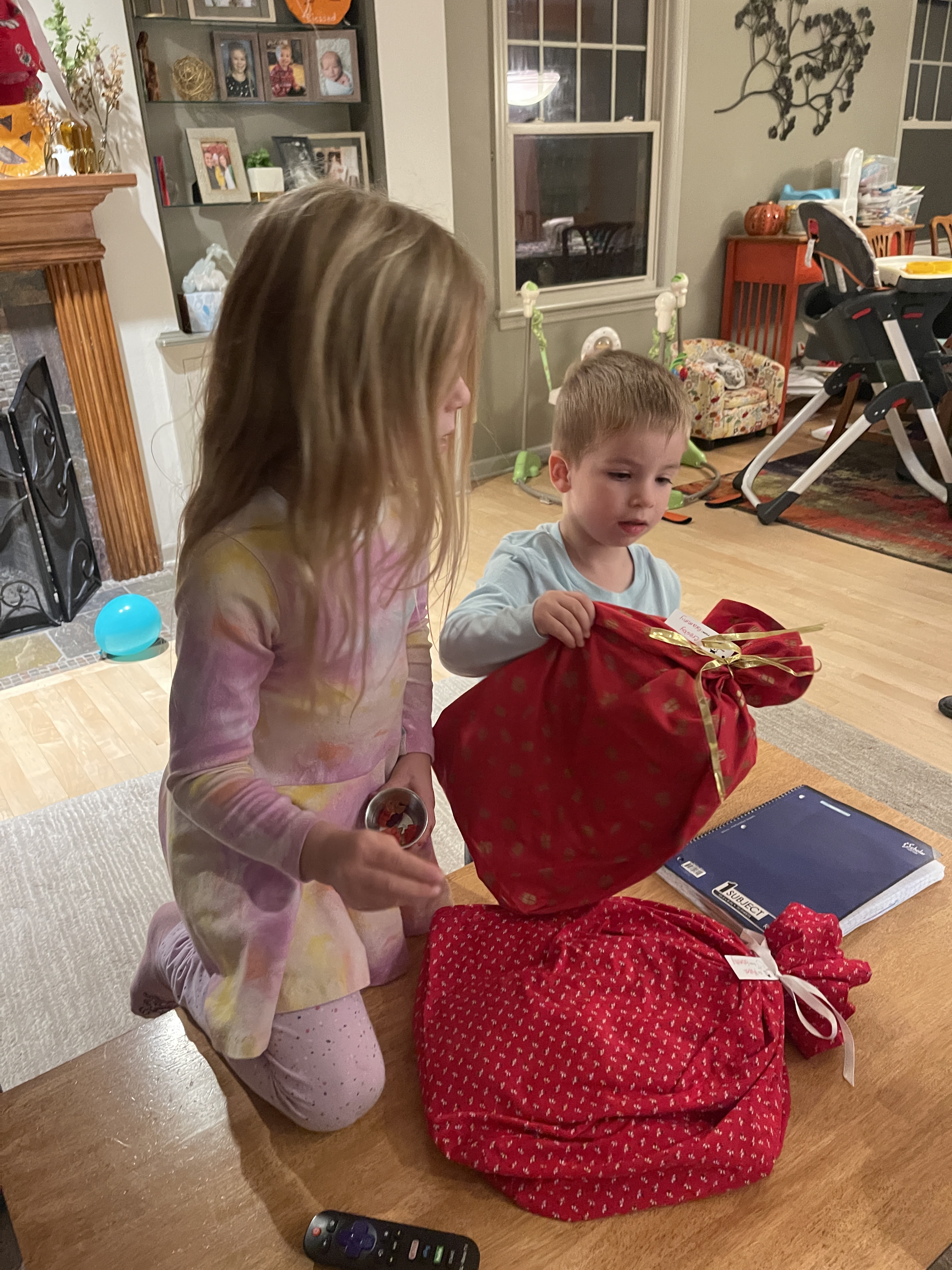
Grammy Jammies are always presented around Thanksgiving so they can be worn during the lead up to Christmas. And it has to be in person. By now, the contents of my fabric gift bags are no secret, and the kids dive in to reveal the newest model.


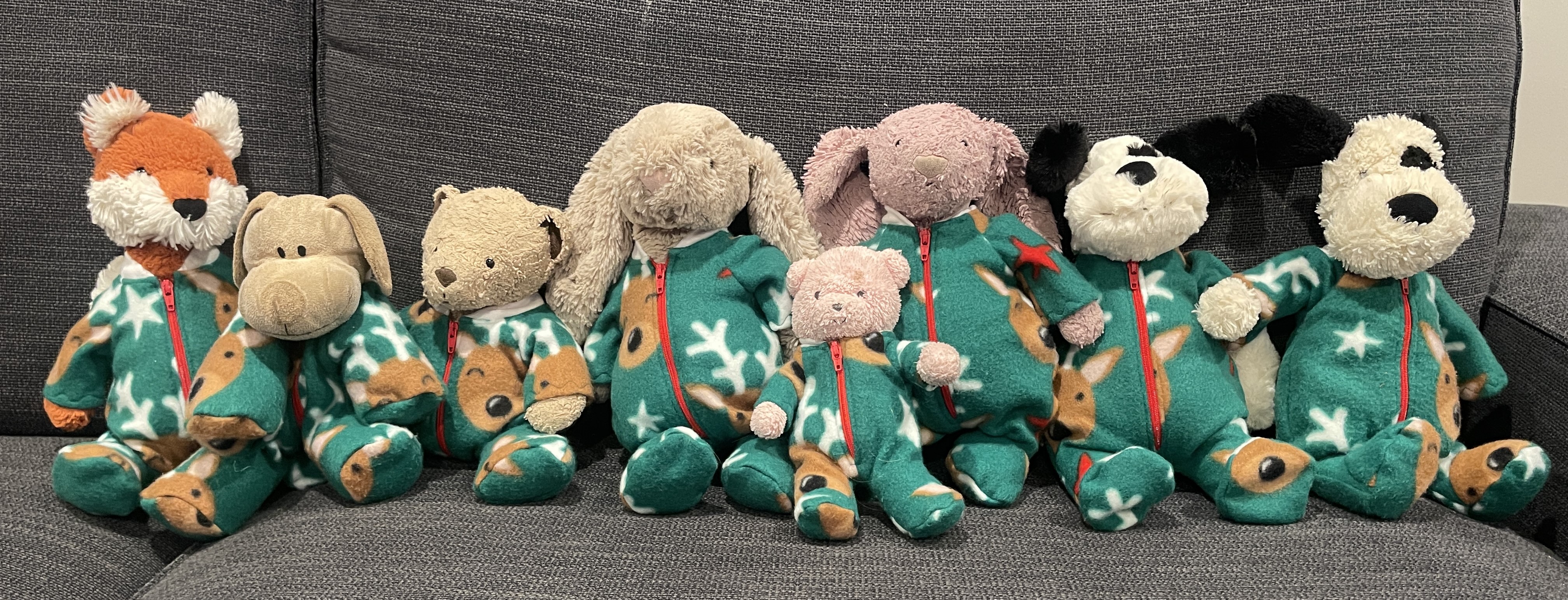
As the calendar turns to December, I begin the second round. Each grandchild has a special Friend who also wears jammies, which are gifted for Christmas. It all started long ago, and in some ways is my favorite part of this whole project. The first two Friends were uniquely shaped, and required quite a bit of ingenuity to develop a pattern. But after standardizing on cuddly JellyCats, I was able to replicate the same size across the remaining Friends.

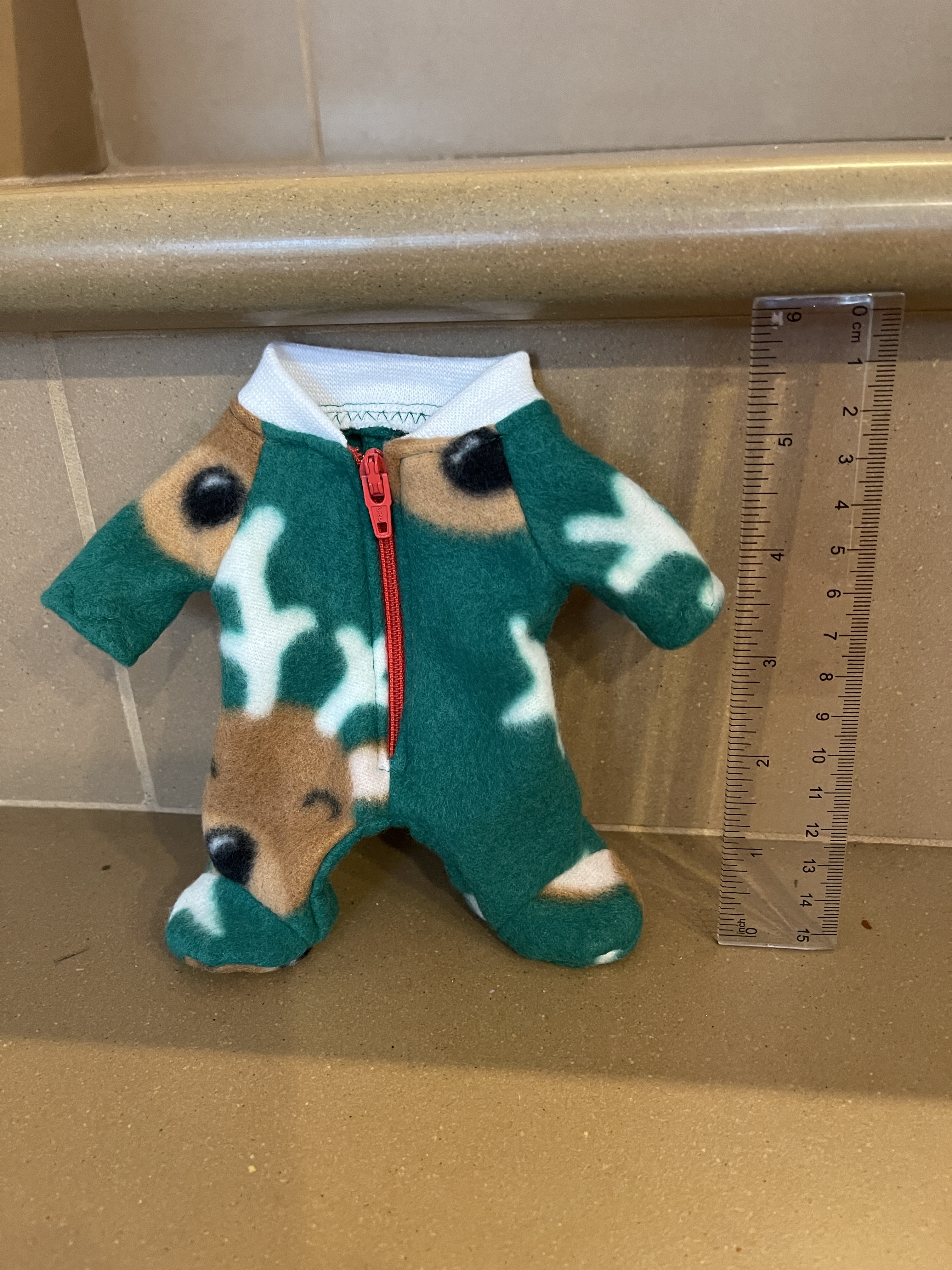
That is until Isabel had an urgent need to clothe “tiny bear” as well. Measuring under 6″ tall, it was an exercise in miniaturization, but I took on the challenge.

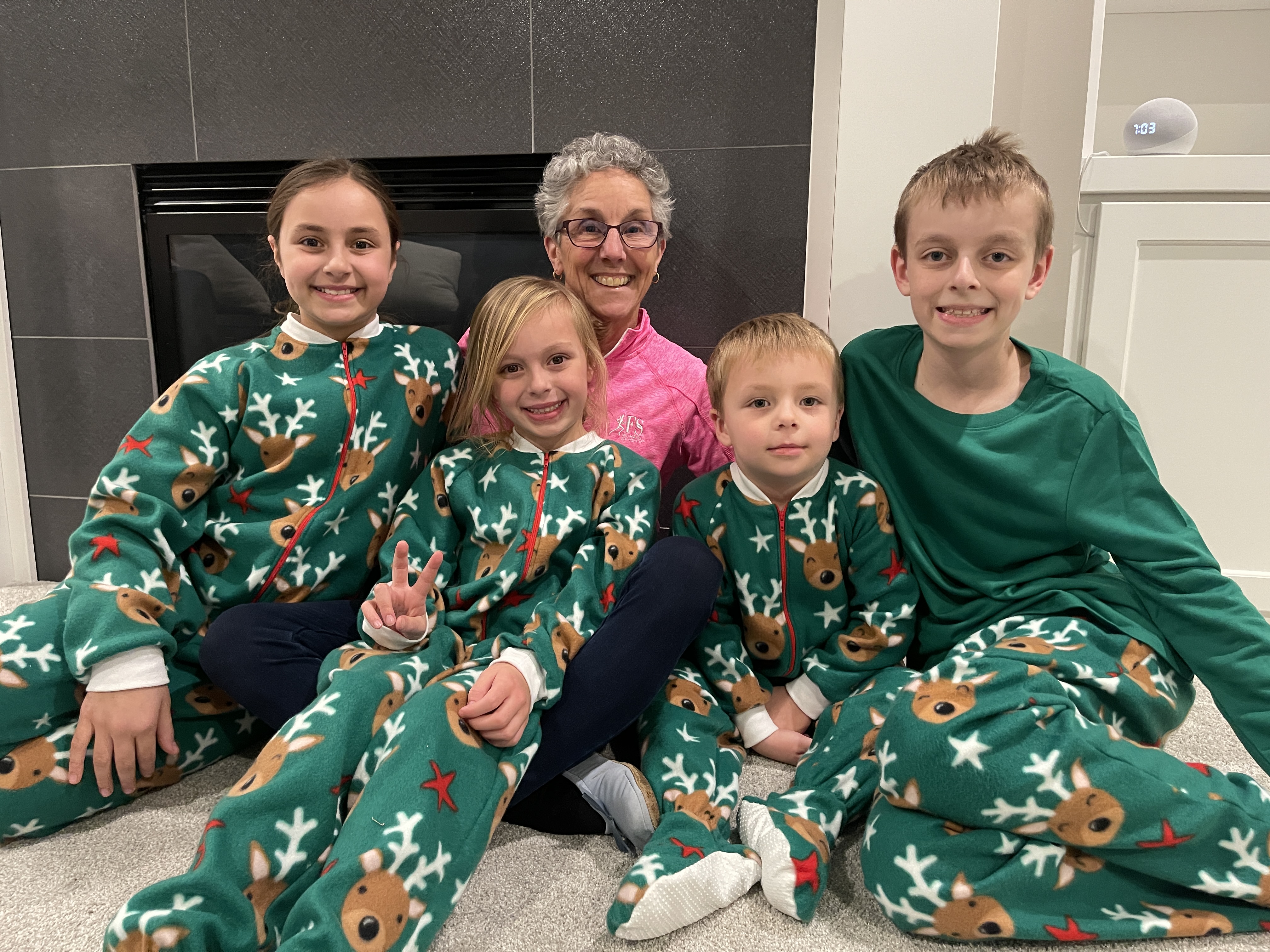
This year we were able to assemble the whole family for a special New Years weekend together in Milwaukee. A chaotic photo op ensued, capturing 15 Grammy Jammies in all. And lots of love.

Back in the Saddle

I knew right where to find them. There in the hall closet my panniers lay carefully folded on a shelf, surrounded by camping and biking gear. As I pulled them out, memories came flooding back with them, swarming my senses with the sights, sounds, and emotions of bicycle touring. It all felt so long ago. Three years. A lifetime.

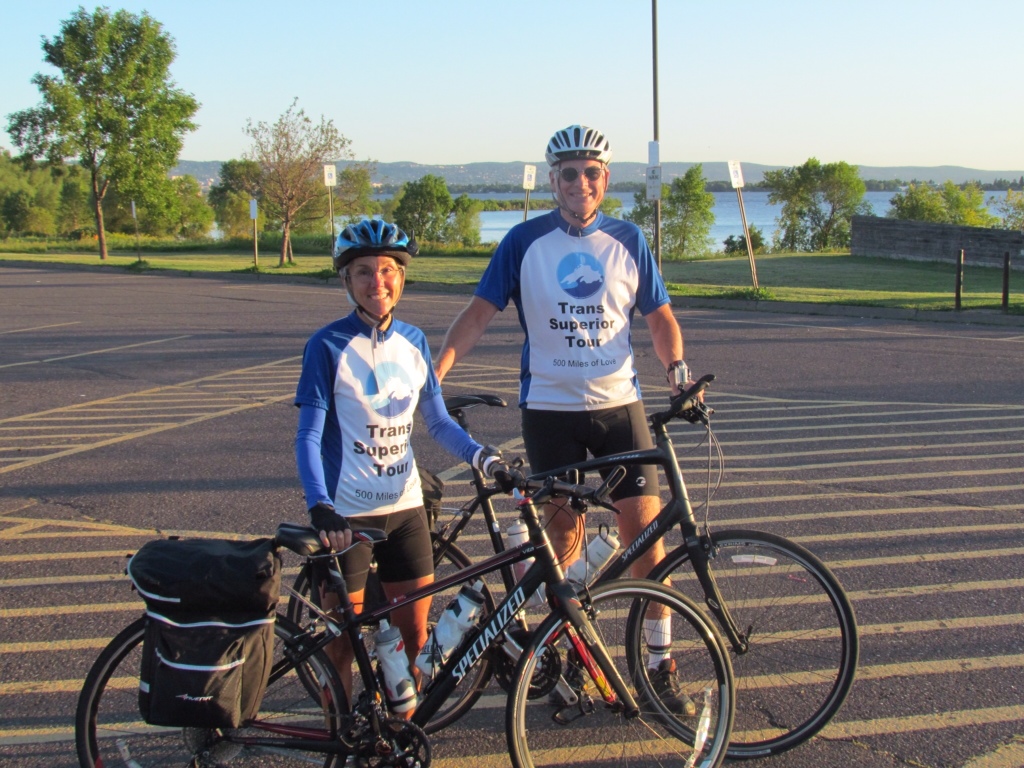
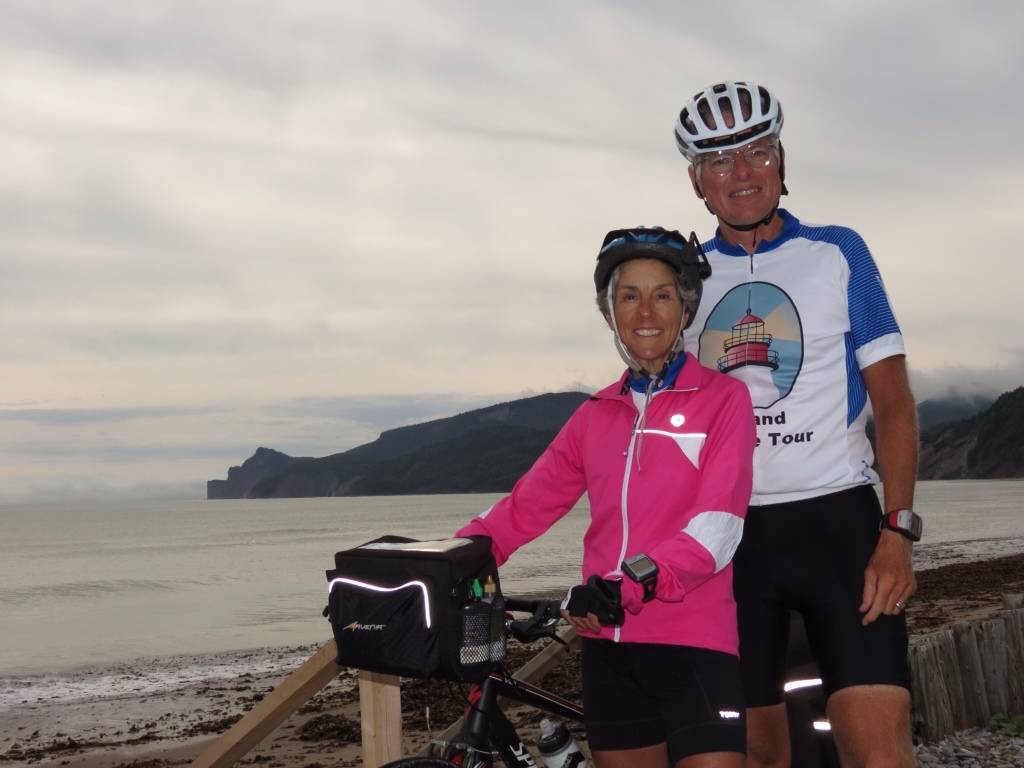
What started as a lark in the early days of our retirement, taking a week long trip around the western end of Lake Superior by bicycle, quickly turned into a passion. One that consumed our travel itineraries for the next eight years and over 10,000 miles. One week turned into two months, then became a month-long gig every year, sometimes twice a year. We pedaled coastlines, remote countryside, forests and prairies, followed rivers and snaked through mountain passes. We even ventured abroad, hauling our bikes over to Scotland and trying a self-guided tour in Norway. On a rare occasion we were joined by our son or a friend, but mostly it was just me and Rich. Over time, it defined us. It’s what we did, what we loved to do.

Trans-Superior Tour – our first adventure
Grand Gaspe Tour – our longest tour
Norway’s Lofoten Islands – our last tour

And then it wasn’t.

Enter Covid. Suddenly restaurants shut down, little motels struggled, using host homes was out of the question. While biking itself was a safe activity, the infrastructure for our travels collapsed, and we weren’t game for a 100% camping tour. We were grounded, limited to day rides and the isolation of the pandemic.

But that wasn’t the worst of it.

In October of 2020 Rich collapsed while out trail running near home. A genetically misshaped heart valve had deteriorated severely over time, leaving him with a leaky, enlarged and damaged heart. Two weeks later, he emerged from the hospital with a new valve, a zipper seam down the middle of his chest, and a pacemaker/defibrillator. His active lifestyle was the biggest factor in his ability to recover, but was also severely challenged by this new condition with the unfortunate name “heart failure.”

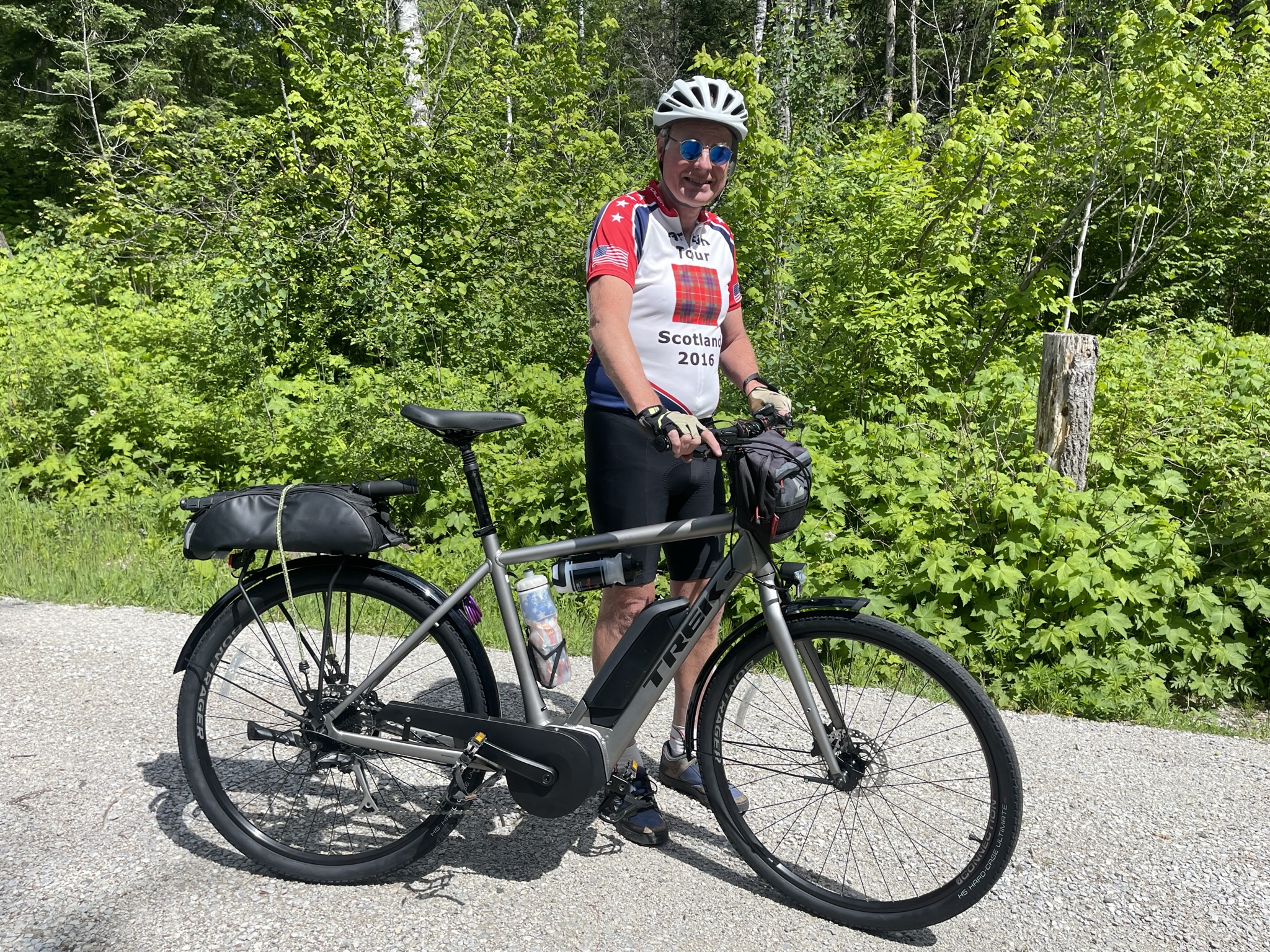
As Covid raged on, so did Rich. With patience and determination over two years, he fought his way back to cycling, trail running and cross-country skiing. All at a new pragmatic pace. Perhaps to quell my nagging, he bought an e-bike this summer and quickly learned that it wasn’t a cop-out, it was an enabler. It has reduce the anxiety and restored his joy in cycling.

But bike touring is still an unknown.

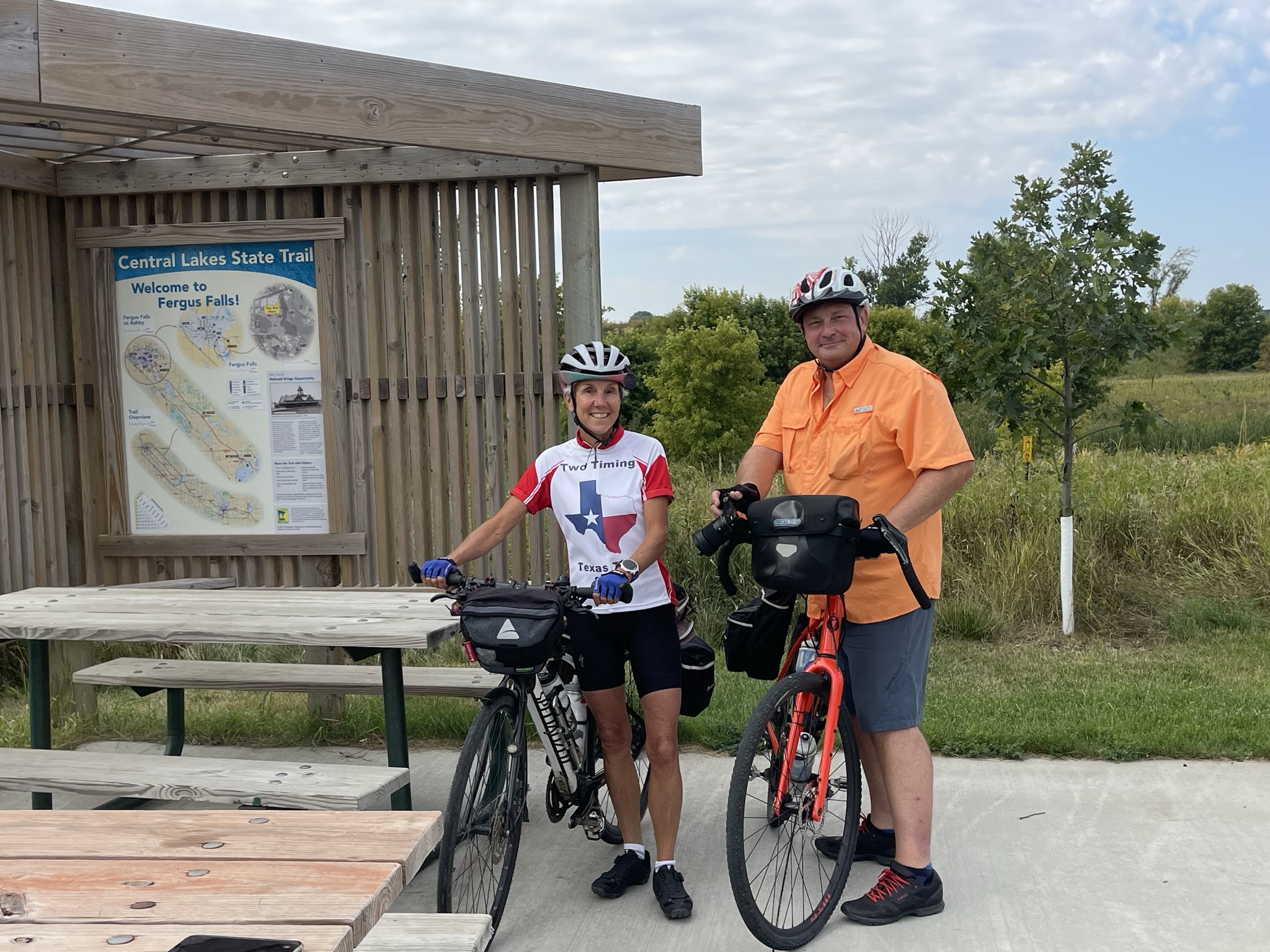
Enter Minnesota Trails Magazine. For years, each summer editor Jan Lasar and I have collaborated on a story about a ride on one of our state’s scenic byways or trails. He takes the photos and I write the story. Usually it’s a one-day affair, but this year we had targeted the contiguous combination of the Central Lakes, Lake Wobegon and Soo Line Trails, a combined mileage of 144 miles. We decided to break this into a 3-day ride, and I smelled a bike tour in the making.

Oh heavenly day!

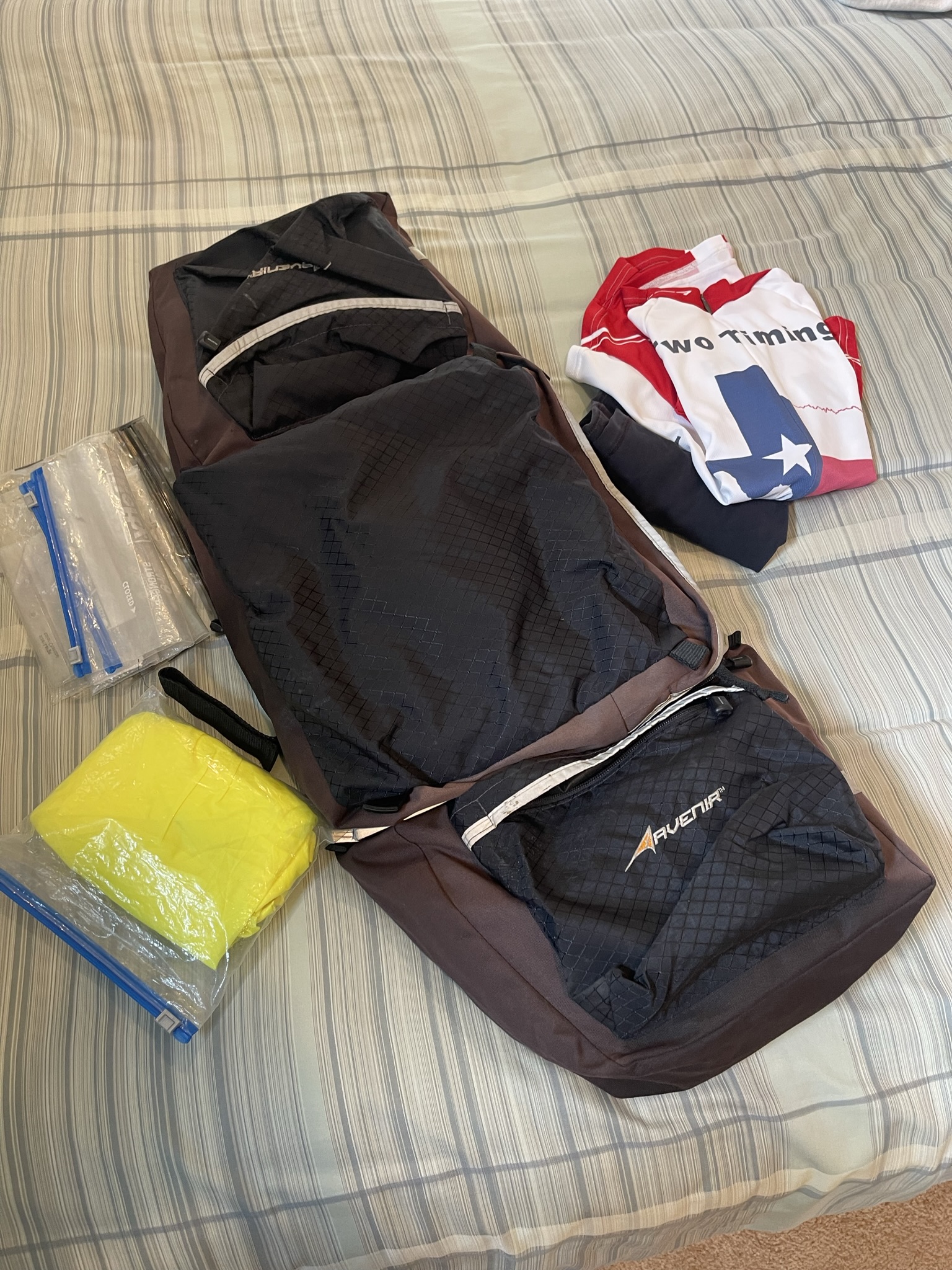
Three days or two months, packing for a bike tour requires the same amount of clothing and paraphernalia. The only difference is how much hand washing in a motel room sink is required. My handy dandy cycle touring spreadsheet guided me through the process of gathering my gear and stashing it neatly in place.

It wasn’t easy, striking out on a tour without my partner. It wasn’t the same as setting off with Rich with vast expanses ahead of us, tackling it together. While he is grappling with his limitations and celebrating his advances, I still long to challenge my own limits and push myself. We’re both learning to manage through this new normal, which sometimes means letting each other loose.

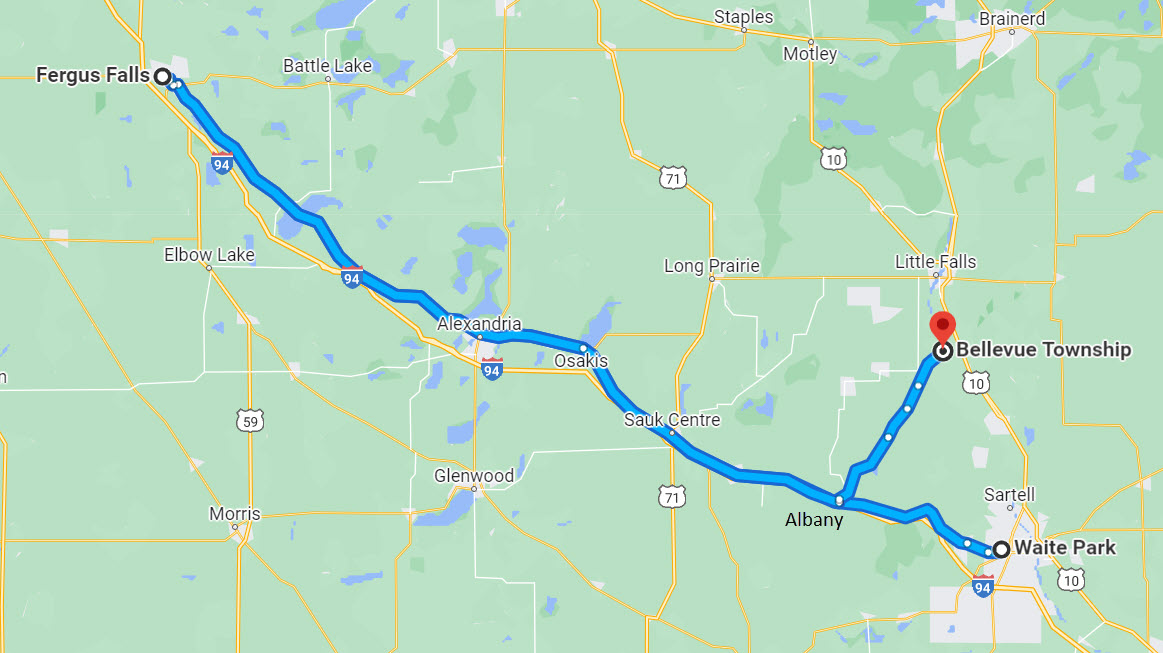
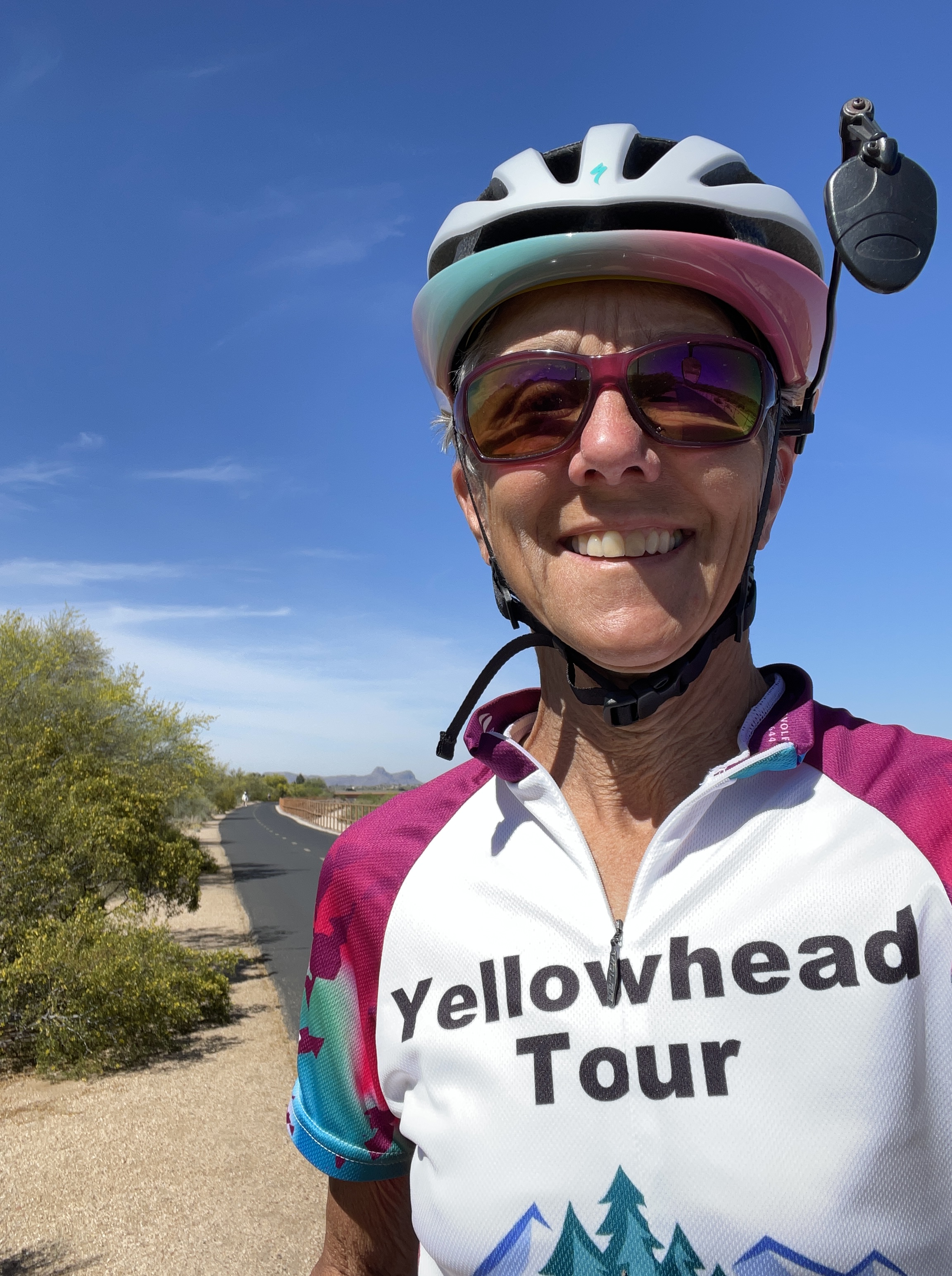
Our tour started in Fergus Falls and stretched to Waite Park outside St. Cloud, plus another leg from Albany to the Mississippi River dam near Highway 10. We broke the ride with motel stays in Alexandria and Albany, and had shuttle help from Jan’s friend.

Normally when Rich and I bike tour, we avoid bike trails. Too often they are monotonous and skirt the towns which we enjoy exploring. But this combination of trails was an exception to that rule. Following old railroad beds, we rode through towns where old train depots once dispatched passengers. Now instead, we were greeted by tall grain elevators and could stop to investigate the local sights.

Throughout the ride, Jan photographed while I snapped iPhone shots and took mental notes. Nothing stopped Jan from getting a creative vantage point, and re-do’s were common, sometimes raising the eyebrows of curious onlookers.

In the evenings, I felt that familiar fatigue that comes of spending all day on a bike. The satisfying sense of accomplishment, the justification for a hearty dinner, the welcome of a soft bed. And the anticipation of doing it all again the next day.

All too soon, we pulled up to our destination and dismounted our bikes for the last time. We had endured 93-degree heat, a flat tire, a chilling headwind, a 66-mile day and saddle-sores. We enjoyed good pavement, the lack of cars, the rolling farmland, nice parks and caffeinating at a cozy coffee shop. All part of the package when bike touring.

It was a great tour, although it wasn’t the same. I missed Rich and couldn’t help but wish for future tours with him once more. But only time will tell that story. For now, it felt good to be back in the saddle.


Look for the Summer 2023 issue of Minnesota Trails Magazine to read the full story and see Jan’s amazing photographs of this tour. The magazine is published quarterly online as well as free print copies available in Minnestoa parks and outdoor shops.

Grounded below the Light

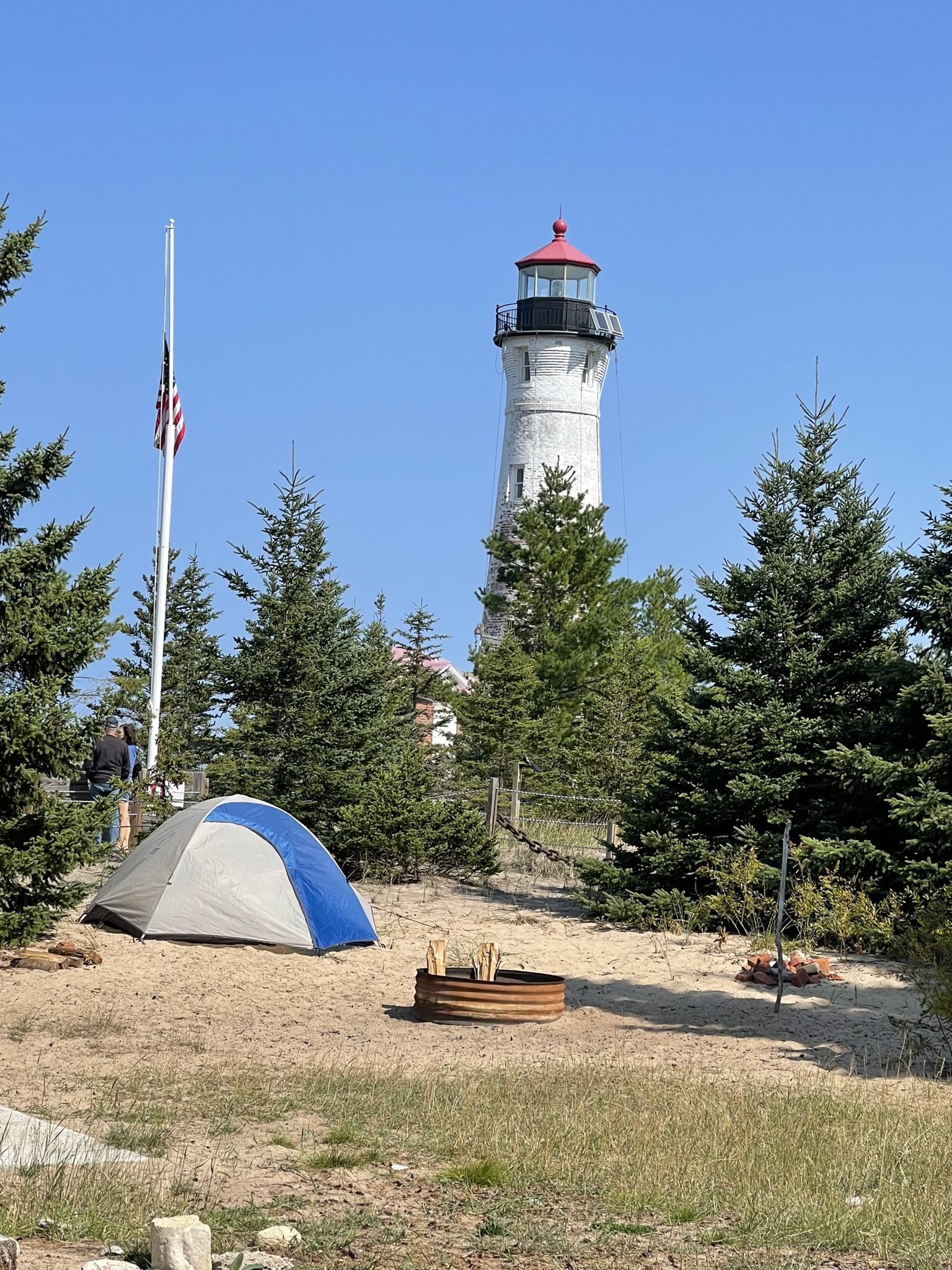
It never grows old. This was our eighth stint as keepers at Crisp Point Lighthouse, and the experience was as unique as the first.

The first indication that this year would be different were the cables and floating platforms halfway up the lighthouse. On closer inspection we could see the hundreds of bricks that had been replaced, the painstaking work taking place to restore this magnificent tower to its strength and beauty. Restoration professionals who specialize in historic structures were plying their skills, high up in the air.

Over the course of our stay we got to know Bob and Josh, who stayed in a trailer at the edge of the parking lot, sharing our retreat on the edge of Lake Superior. From them we learned about the care and upkeep necessary for a lighthouse built in 1904 and managed by a non-profit historical society. We, as members, are responsible for its good health, and watched as they hung from the tower to ensure it endured for future generations to visit.

While they worked on the tower, our duties continued as usual. We still tended the busy Visitor Center where we sold souvenirs, chatted with visitors and answered their questions. We kept the place clean and well stocked, and directed them to the beach to find agates, Yooperlites and pretty rocks, or just go for a long walk on the sandy beach.

We also had to deliver the bad news. “The tower is currently closed, due to the restoration work.” I’ve always been amazed that visiting this lighthouse is completely free (although the 18-mile rough dirt road to reach it might be considered the price of admission). And visitors are normally allowed to go up inside the tower and out onto the catwalk at the top unaccompanied. There they may linger as long as they like, enjoying the view, taking in the long beaches and huge expanse of Lake Superior. I worried that visitors might be angry, denied the pleasure after that long drive. But mostly we met with good humor. People were just happy to be there, to see the lighthouse, to spend time on the beach, to soak it all in.

It also meant that the lighthouse was off limits to us as keepers. No reading out on the catwalk in the early morning sunshine before visitors arrive. No fancy photos through the windows, across the lens. No feeling the wind in my face as it whipped around the curved structure. No need to sweep out the circular staircase to remove the collection of sand from all the feet either. But I know it will be all the sweeter next year when we can do it again.

The restoration didn’t prevent me from admiring the lighthouse from all angles, lifting my eyes to take in its full height. And at sunrise and sunset, it was as majestic as ever. Silhouetted against the red, orange and pink colors in the sky, the cables, platform and unpainted new bricks on its face faded.

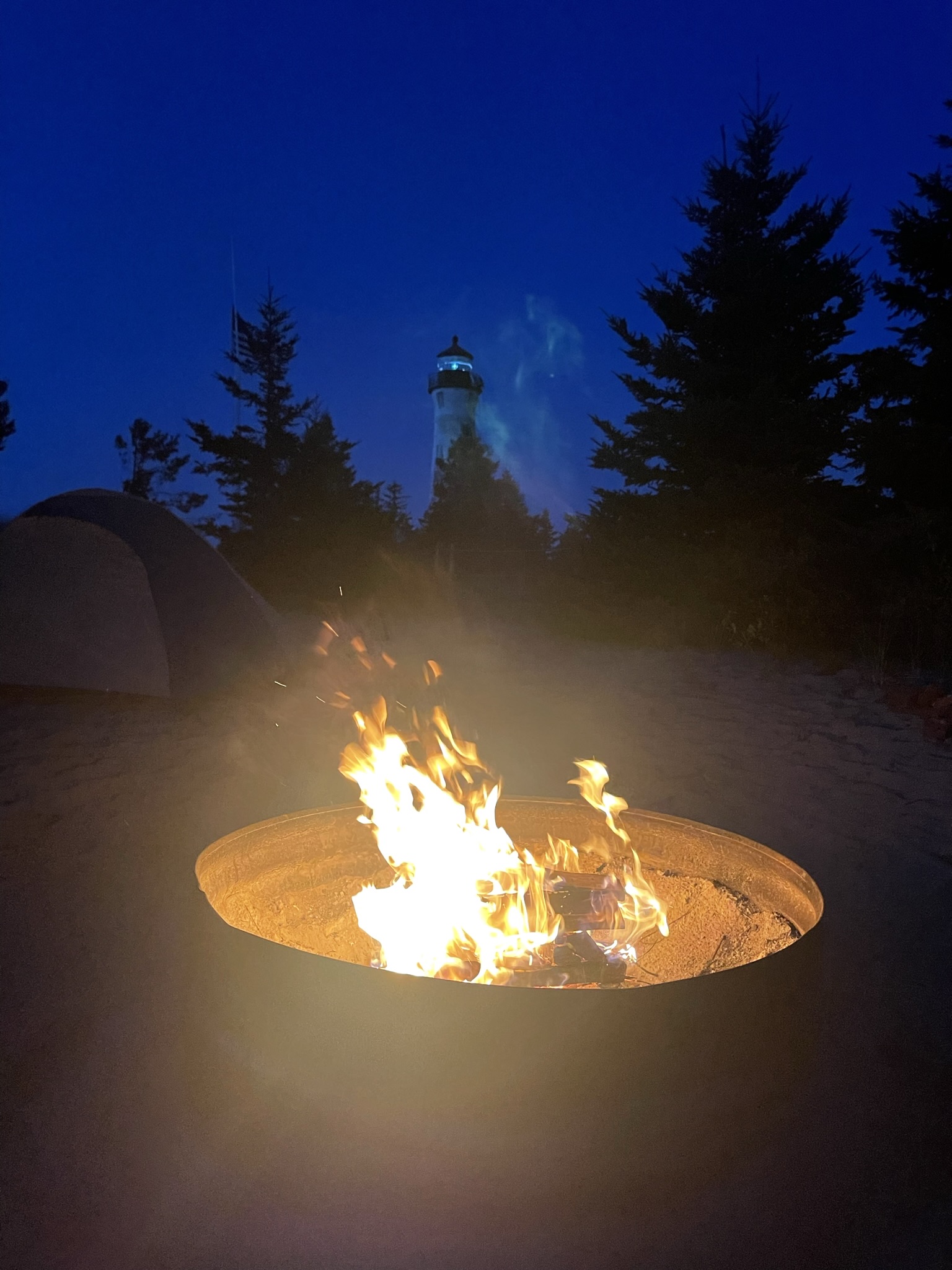
During our evening campfires, the beacon still pulsed above our heads while intense stars filled the sky.

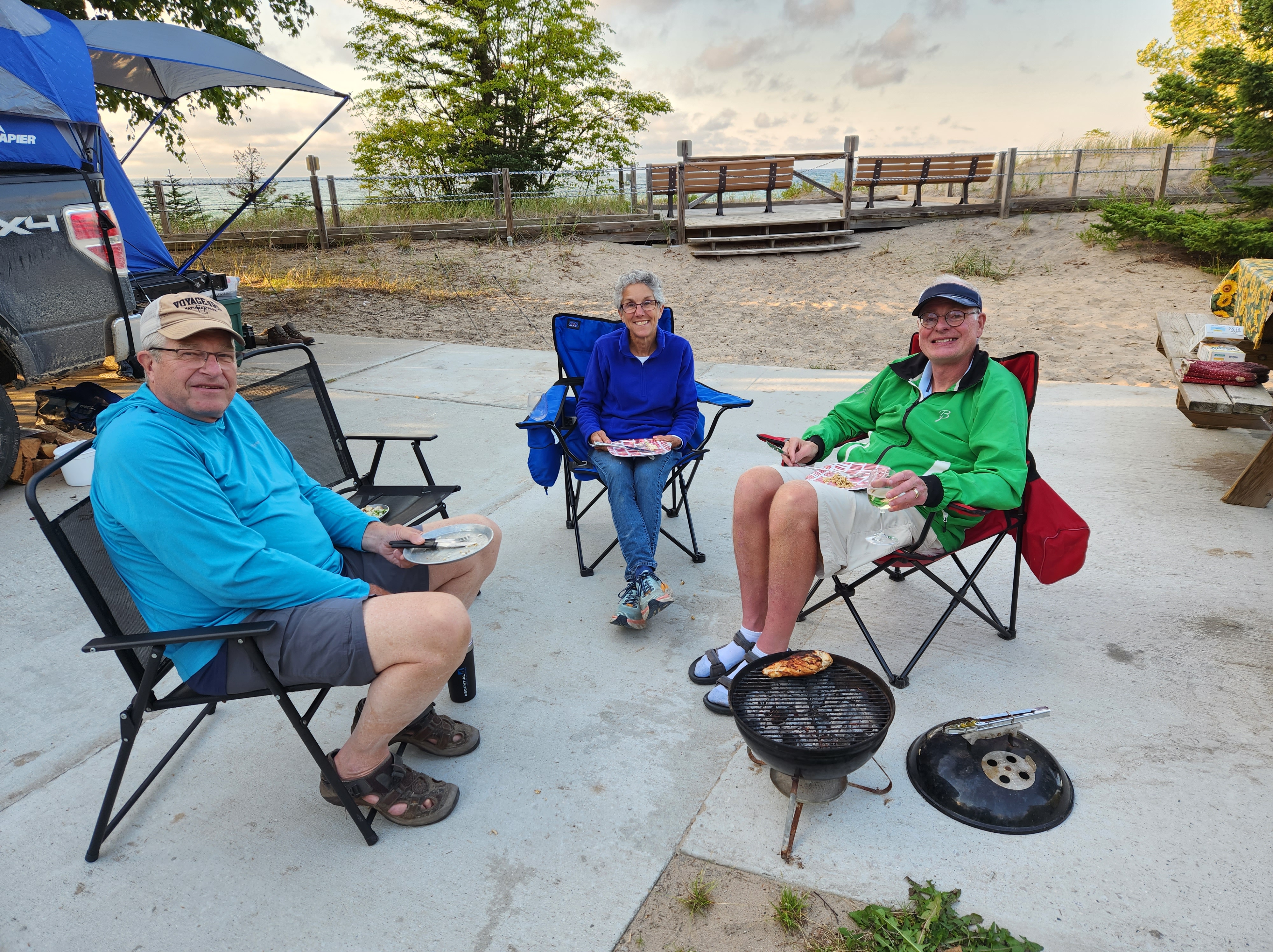
Some things don’t change from year to year. We still had our private campsite on the beach, slept on the sand in our pup-tent, listened to the waves crash, cooked out and scoured the shore for Yooperlites at night. Beth spoiled me with French press coffee each morning, and I took restorative beach walks after sunrise. Rich found birds to photograph and Jon delighted in blowing sand off the boardwalk.

Next year we will return to a gleaming whitewashed lighthouse, and dash up the stairs to admire the view from the catwalk. No longer grounded.

Promises Kept

Friendship doesn’t come easily. It takes work to continue the bonds, to nurture the relationships and overcome time and distance. Especially when 49 years and thousands of miles stretch between us. But we’ve done it, three times now.

The six of us entered Knox College in the fall of 1973, all living in the same antiquated dorm with even more ancient rules and traditions. We swapped roommates over our four years, and as our finale we all lived in the same “suite” with a few more senior girls. Bonding over our shared experiences.

Nine years ago, we instituted our first mini-reunion, which we now dub our Knox ReUn. We gathered for a weekend in the Twin Cities where three of us lived at the time, sharing the hosting duties. We followed that four years later, renting a condo in Chicago where two more members lived. It resembled dorm life, sharing bedrooms, communal cooking and assigned clean-up duties.

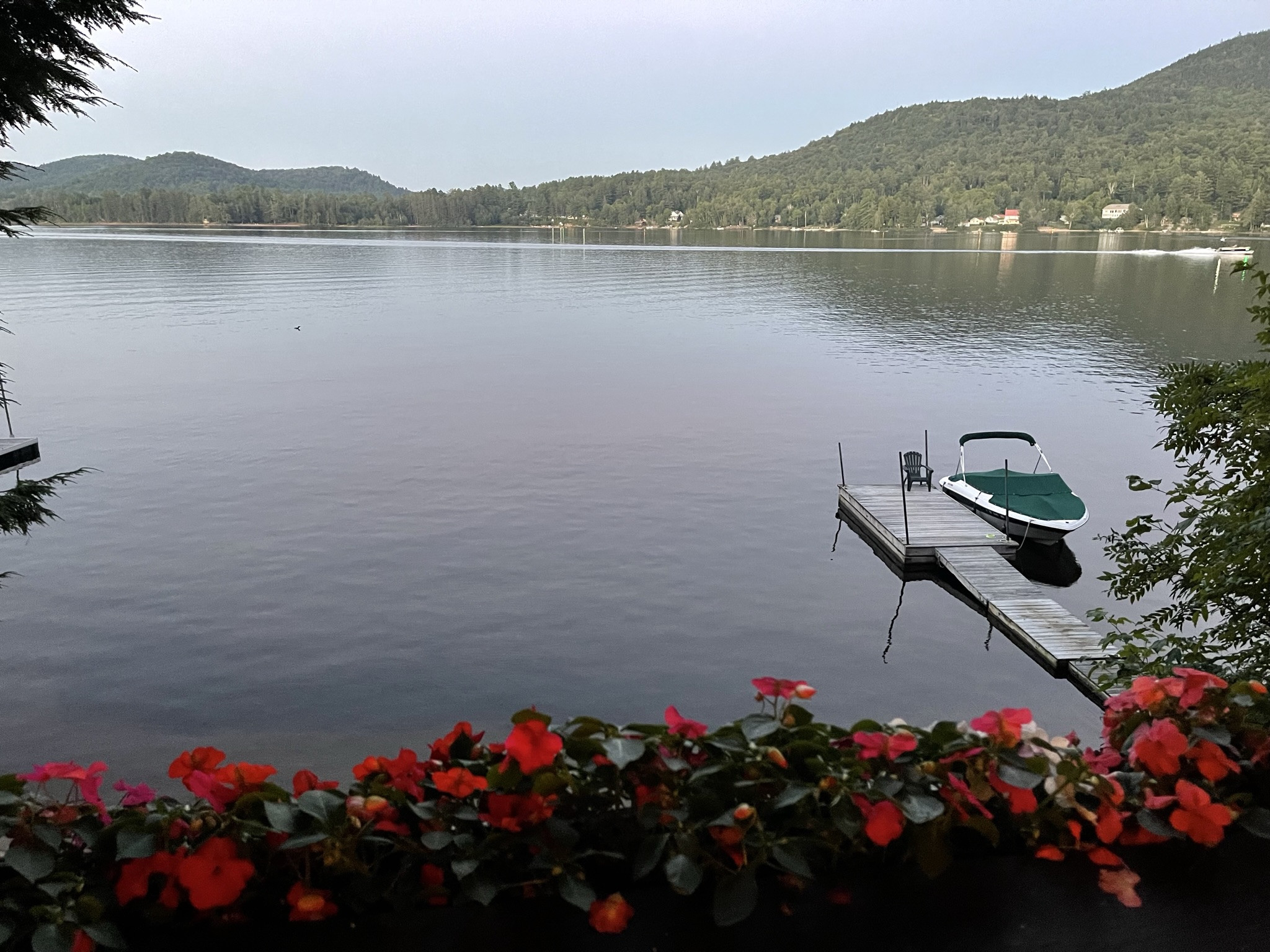
That left one locale – New York state, where Barb lives and better yet has a cabin in the Adirondack Mountains where she spent her summers since she was six years old. Promises were made, plans set in motion, airline tickets purchased and dozens of emails flew back and forth. Despite being delayed by Covid, five of us finally convened on Long Lake for the week.

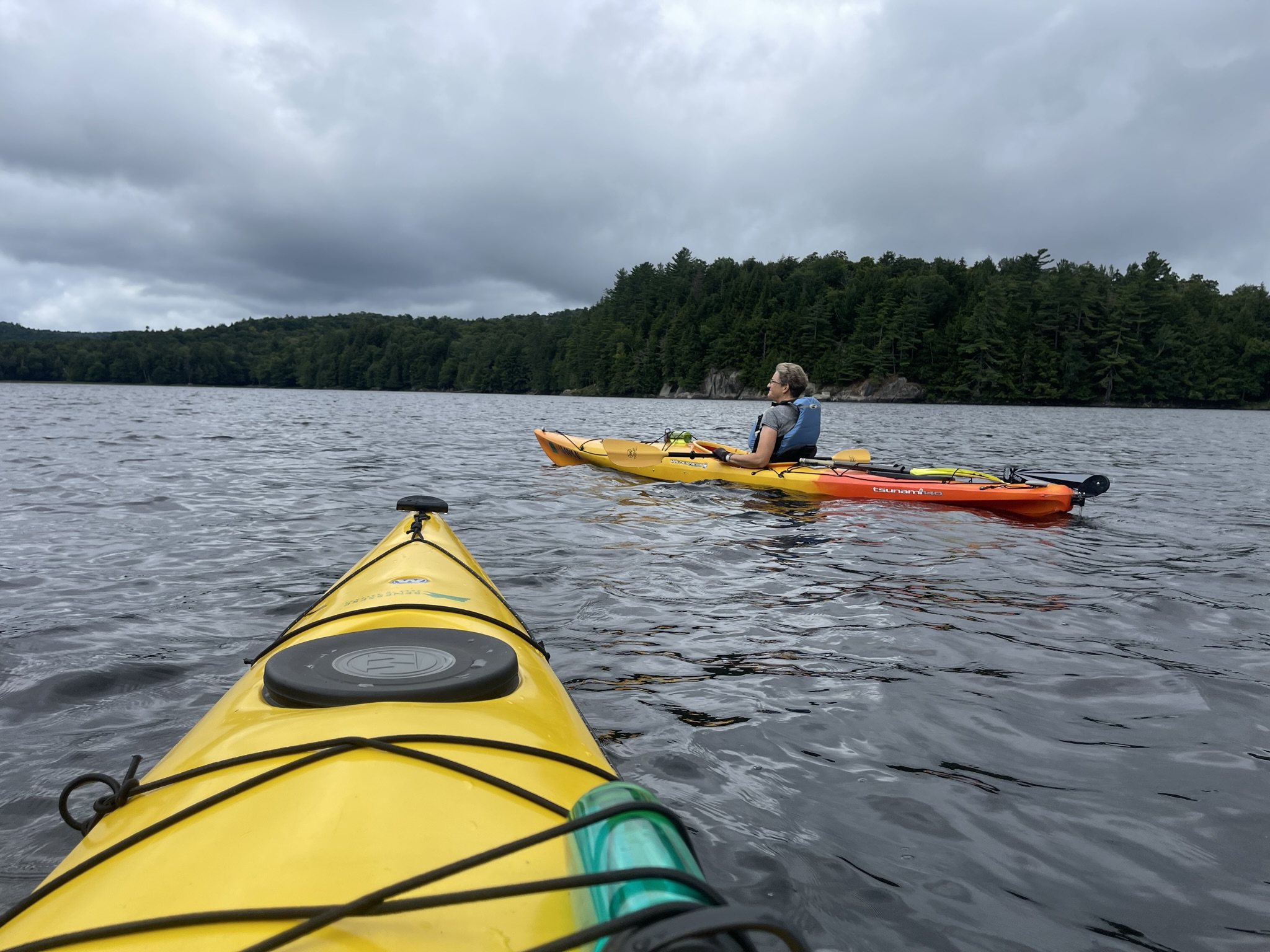
It felt different this time. Sequestered in a beautiful setting, surrounded by water and mountains and myriad options for outdoor adventure was liberating. We found ourselves mixing and matching in little groups for kayaking, swimming, hiking or just lounging in a hammock. There was an air of leisure, a lack of schedule and a shared feeling of relaxation. An ability to take life as it came – a far cry from our self-imposed rigid study regimes of yore.

For the first time, all of us are retired, save one. No one felt any pressure to make the most of every minute. It was enough to just be there. Together. Conversation flowed easily. We no longer had a need to talk work, to air the stress and pressure we felt or bemoan the challenges we navigated. Instead, we could savor this freedom and the ability to enjoy our retirement from the careers we earned with that college degree.

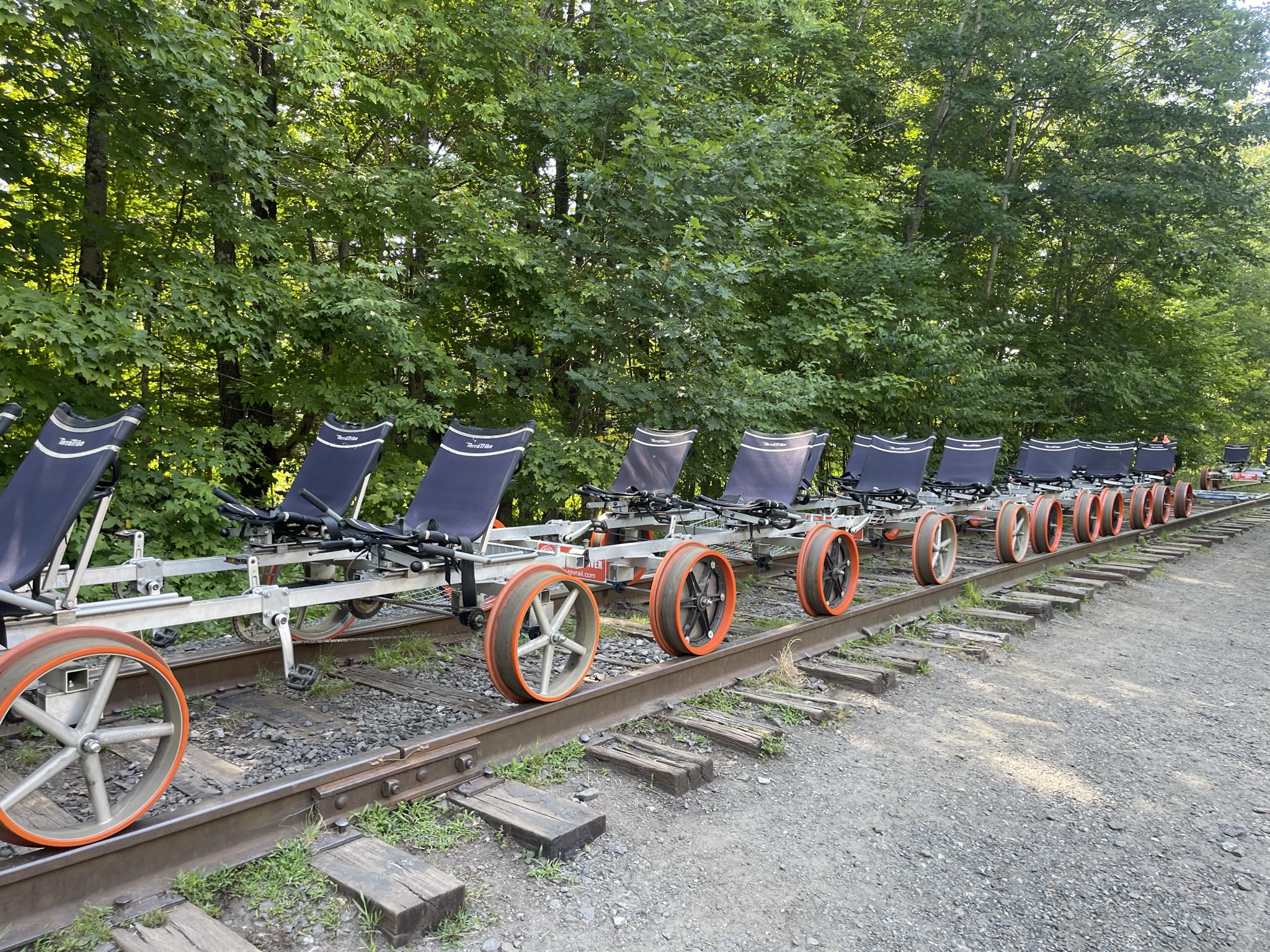
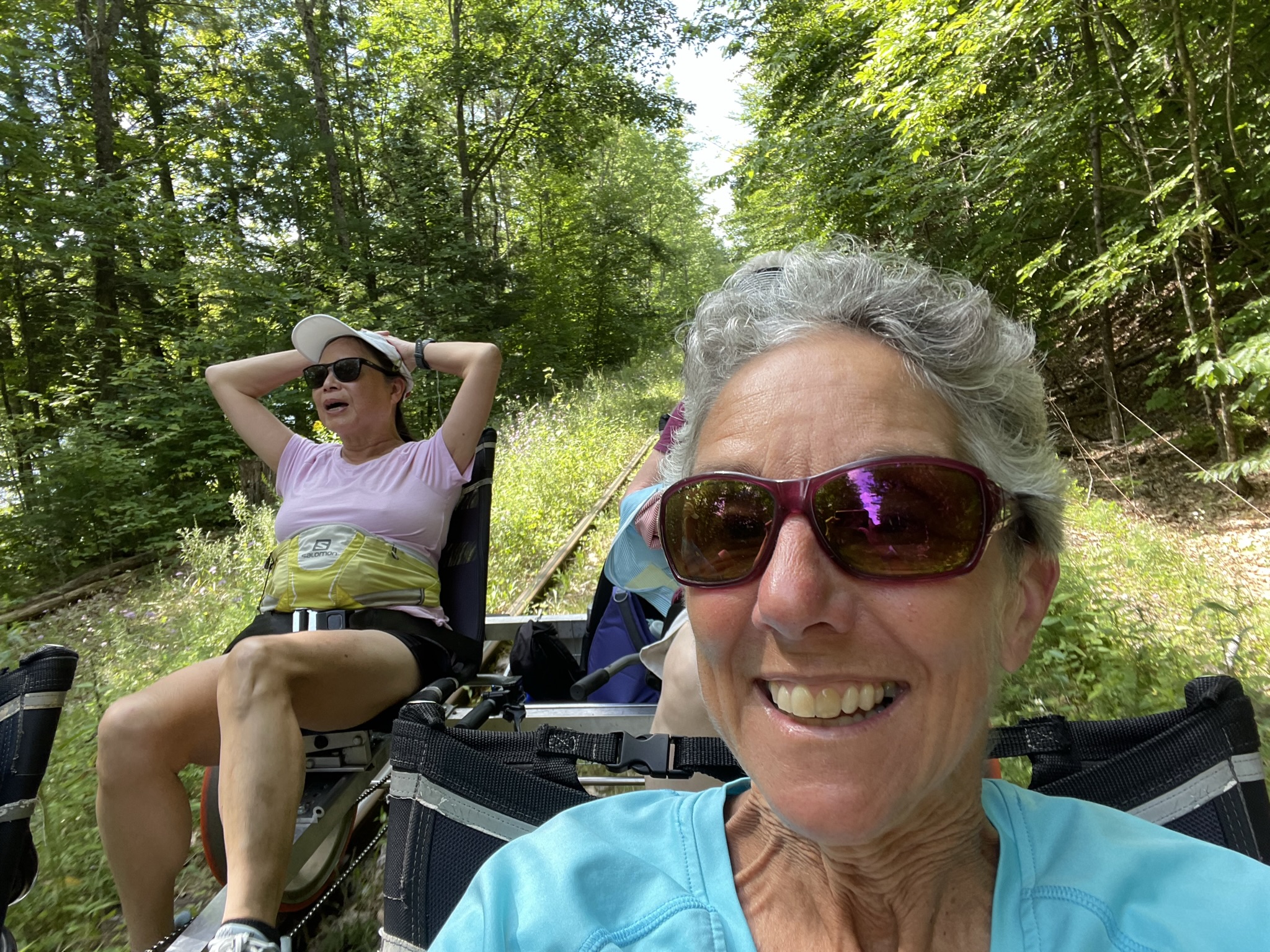
Silliness and fun was not only allowed but encouraged. Barb booked us on a Rail Biking adventure where we pedaled alongside the Hudson River. We floated in the water, buoyed by noodles. We slurped ice cream cones mid-afternoon. We roasted marshmallows and consumed s’mores by the campfire on the beach. We attempted stand-up paddle boarding, some with greater degrees of success than others! It was college antics all over again. Only better.

For me, the best part of the week was the true immersion. All that mattered was what was happening right around me. The rest of the world faded into the background, inconsequential for the moment. Responsibilities would wait, deadlines could be elastic, duties were avoided. Spending time with friends trumped all.

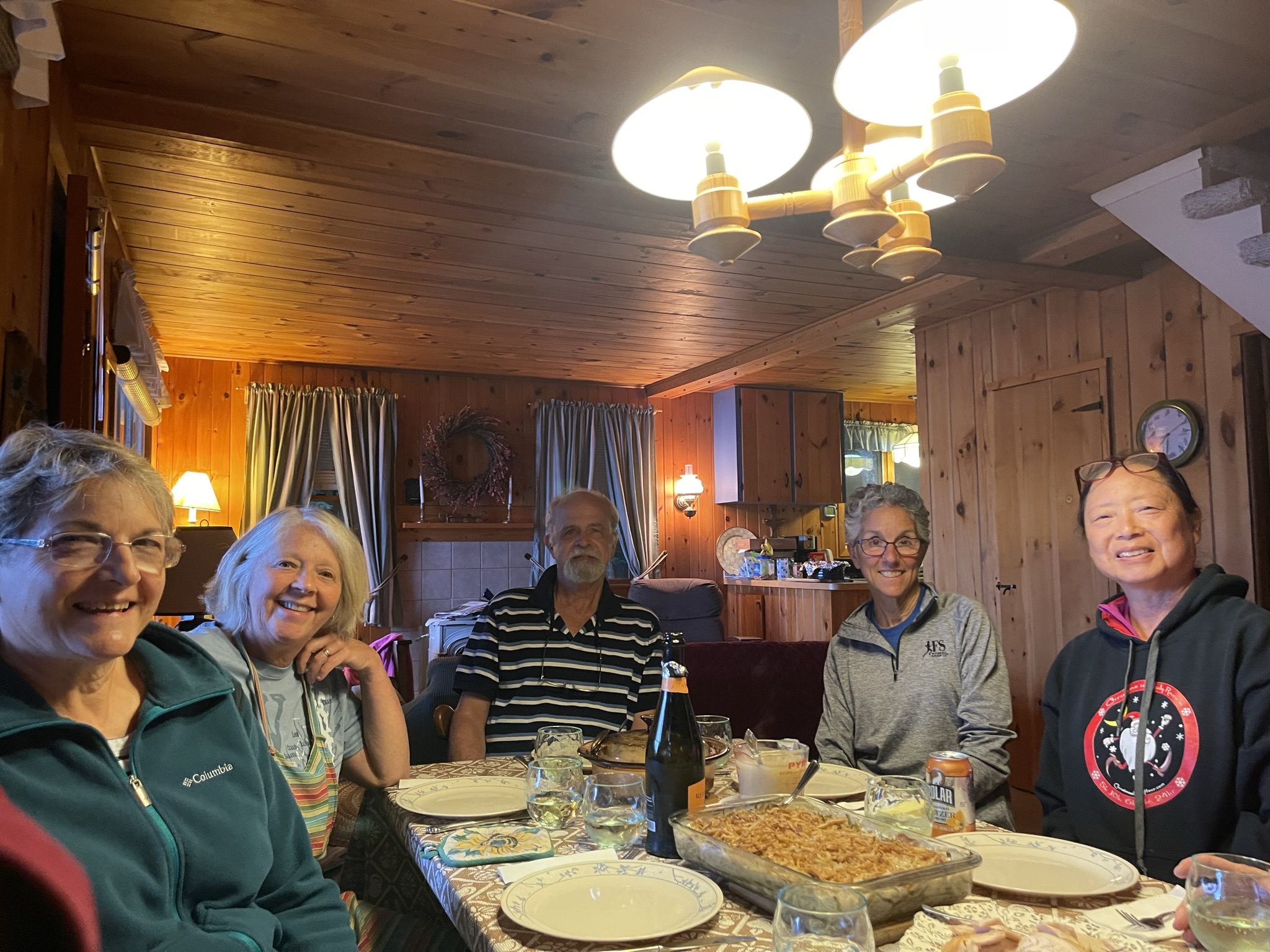
When I entered Knox and forged these friendships, I never foresaw the longevity of these ties. I never dreamed that 49 years later I would be sitting around a table sharing morning coffee, or piling into a speed boat together. It took a lot of dedication and persistence to make this happen. But we’re not done yet. We’ve already decided to reconvene in three years for a destination vacation. I can already see it happening. Because this group keeps its promises.

When the Words Won’t Come

It’s been a dry year for writing. After steadily plugging away on my book for over four years, I came to an abrupt halt. At first, I put it down to my usual summer slow-down, the season when I prioritize family, cabin, friends and the outdoors over sitting in front of a laptop. But I failed to get re-energized all through the fall and winter and felt lost, drifting without that goal and sense of productivity. I had to do something.

It was a writing friend who pointed me down a new path. I’ve always had an interest in sketching and was intrigued when I saw a distant cousin doing “journal sketching” years ago. The idea stuck with me, so when Gail recommended Jane LaFazio‘s online class Sketching and Watercolor: Journal Style I took the plunge.

The class included six lessons, one released every week for the students to work on independently. I ordered her list of supplies and waited eagerly to begin.

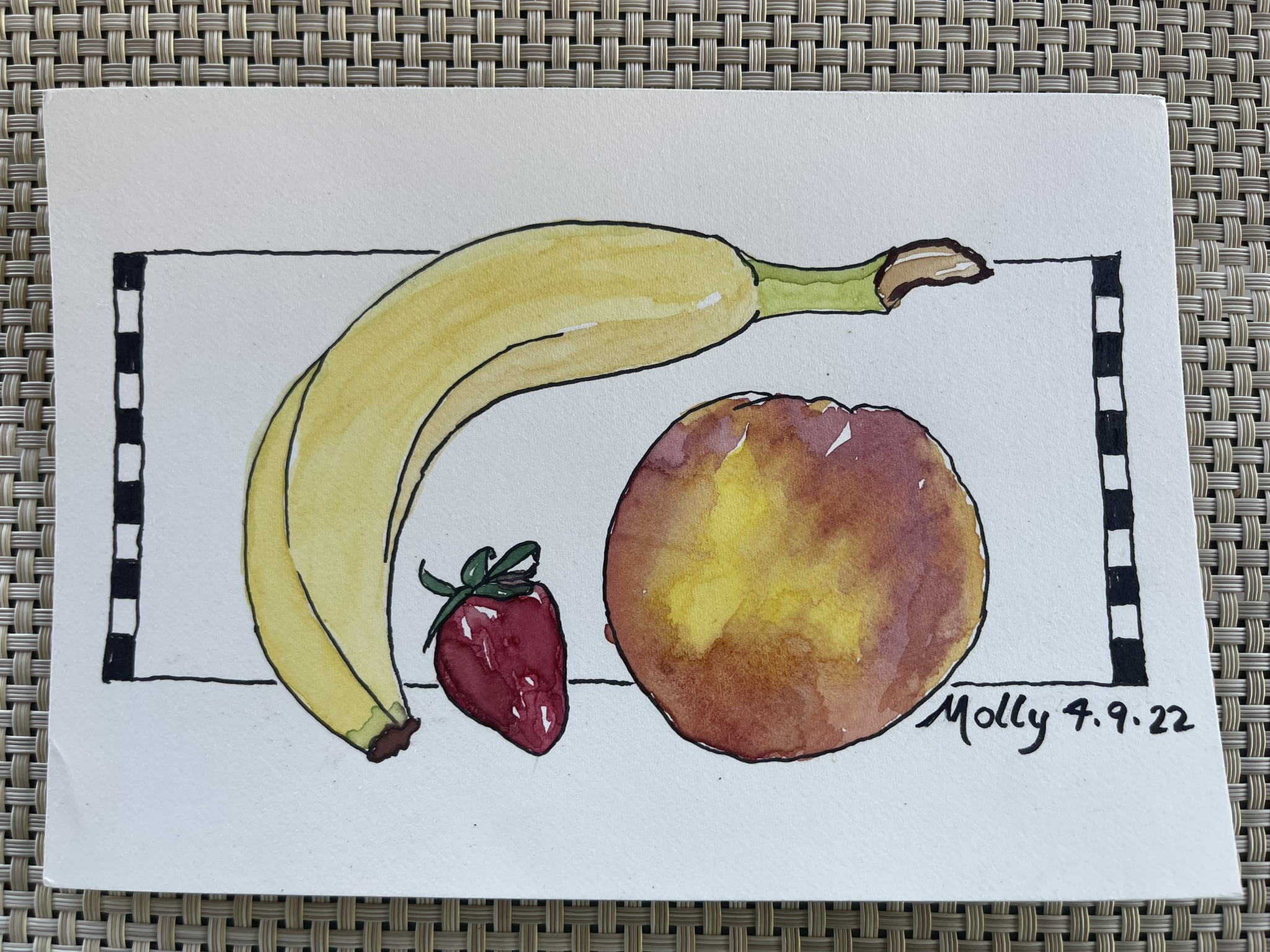
Week 1: Fruit. I watched her video, read all the instructions, and looked at her examples. Could I really do this? I pulled a sheet of thick watercolor paper off the 5×7″ pad she recommended and lined up my drawing pencil and kneadable eraser. Setting pencil to paper, I took a deep breath and began to follow the outline of the fruit in front of me. This was a rough draft, after all, and I could always hit delete and rewrite it.

Pulling out my permanent ink pen, I traced my pencil lines. There was no going back here, each stroke of the pen was a final statement – a sentence I could no longer change. But it went surprisingly well and I forged on.

The final step was all new territory to me. I opened up my children’s set of watercolors that Jane assured us were a good inexpensive starting point. Now I had to mix colors, blend shades and capture the nuances of light and color. I still have a lot to learn about writing scenes, and this felt the same way. I needed to make this come to life, now with water and paint. With Jane’s reassuring voice in my head, I applied my brush strokes as best I could.

For the journaling aspect, Jane encouraged us to frame our paintings, to add words and context to the composition, and to sign and date it. She was right, it added the polish my timid start needed, the final edit to complete the story.

Voila, I had my first painting!

Now it was time to share my work. The final step was to post my painting on our class discussion page with a note about the experience. Just like reading my stories aloud in writing workshops and hearing others read, this became a valuable learning experience. We all opened ourselves to exposure, gave feedback and encouraged one another on this journey. In addition, Jane commented on each and every painting, always providing encouragement infused with helpful tips and insights.

Buoyed by my first attempt, I bought more fruit and continued painting and posting throughout the week.

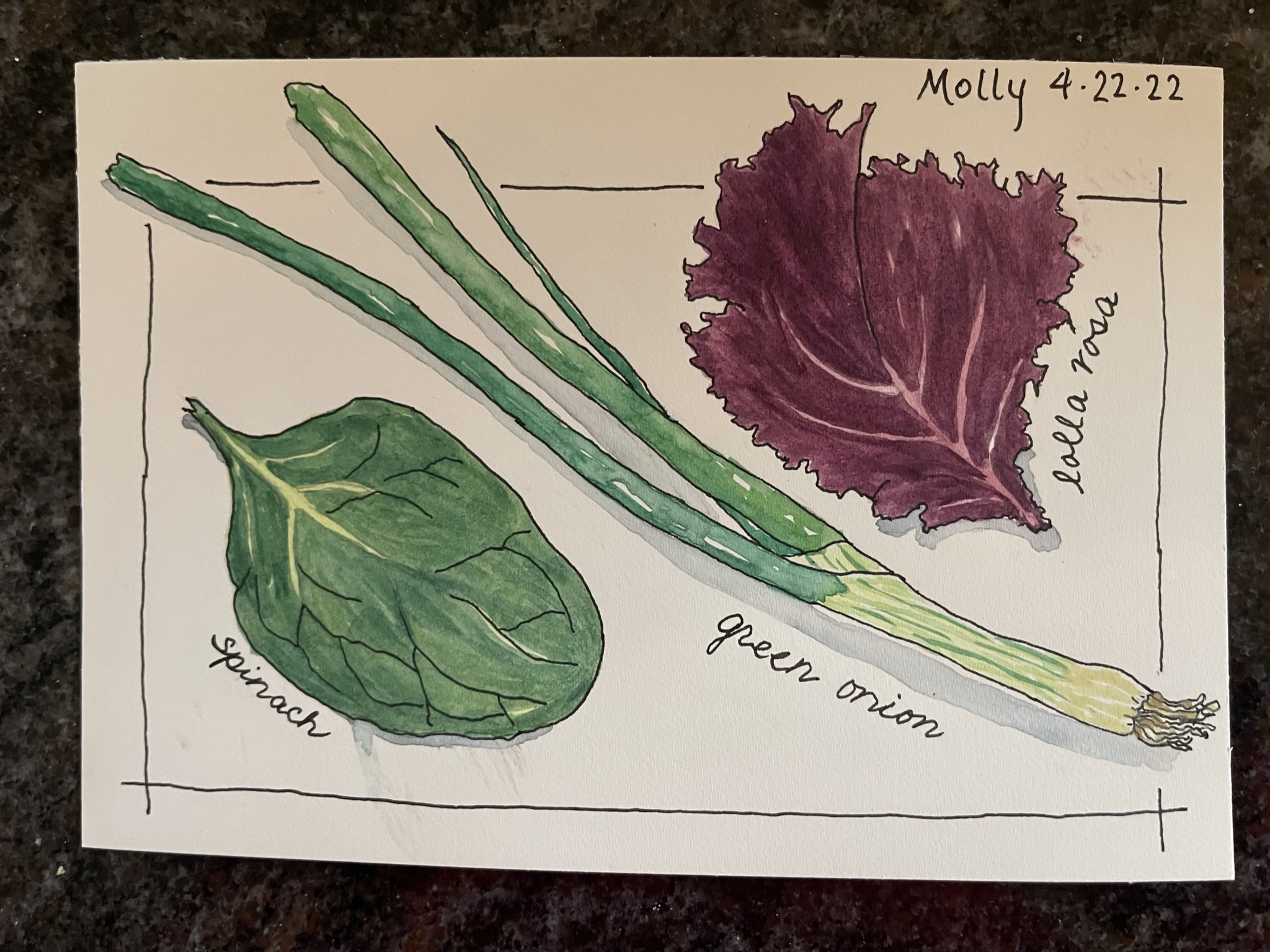
Week 2: Leaves. Who knew there were so many colors of green in the plants around us? Jane taught us to mix colors, to layer them on the paper and reveal the veins in the leaves. I revelled in the new techniques, but lacked material in our bleak Northland spring that had not yet sprung. Just as story and plot have evaded me as a writer, I had to get creative and find alternate ways to express myself. This time, foraging in the refrigerator and tub of spring greens I found inspiration.

I liked these small compositions. I was not overwhelmed by a large expanse of white paper, and a complex layout. They were a manageable size, something that could be accomplished in one or two sittings. Just as the magazine stories I have continued to write this year while my book lays fallow. Short projects that were contained and manageable.

Week 3: Straight to Ink. Now this was a scary concept, drawing with no safety net. Committing immediately with no recourse. Sort of like those writing prompts I’ve done in classes. Write about the color Red for five minutes. Don’t look back, just keep writing.

We warmed up with continuous line drawings. Keep your pen on the paper without lifting it, go over existing lines if you need to. I was skeptical, but it turned out to be fun. Then we drew with our non-dominant hand. The results were wobbly and sometimes a bit wonky, but I had to admit there was a bit of charm. It made me realize that left alone, my drawing is very controlled and precise. It takes work to let myself go and let the lines just flow.

We were granted permission to raise our pens in our subsequent drawings, but it was still hard to commit to ink right out of the gate. I found that it forced me to keep my eyes on the subject more, and trust my hand to follow its outline. The longer I kept at it, the bolder I became. I learned to embrace the irregularities and appreciate the end result. Perhaps I need to do more of that in my writing. Ignore the wiggles and blips and just let the words come. Sort it out with color later.

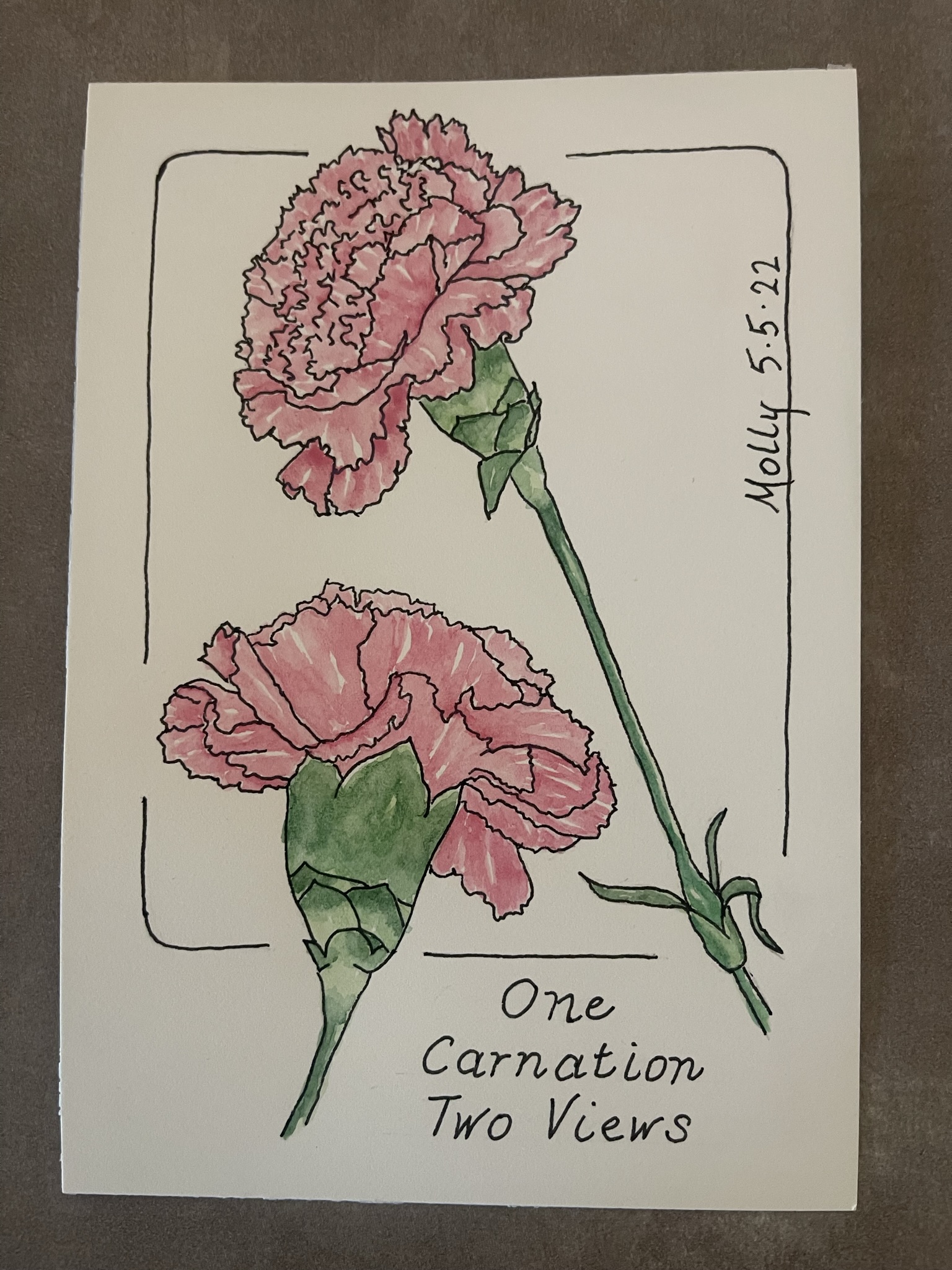
Week 4: Flowers. I was learning to like sketching and painting nature. It’s very forgiving in its irregularities and loose symmetry. This time it took purchasing a bouquet at the grocery store for my subjects, while I gazed wistfully at the garden flowers from fellow students in warmer climes.

My bouquet contained some brilliantly colored blooms, impossible to replicate with my student paints. I queried Jane. “How do I make hot pink?” Her reply, “You can’t. You need specific colors like Opera Pink to get it.” Clearly my toolkit was lacking, so I researched the more professional paints she had recommended for those willing to pay the price. I was now one of those. I hit Place Order.

Perhaps this was like hiring a writing coach. When I found myself unable to navigate the divide between writing short magazine stories and the manuscript for a book, I sought to increase my toolkit. She guided me through exercises to grow my skills, to learn new techniques and put me on a course to continue working on my own.

While I waited for my new paints to arrive, I did the best I could with the materials at hand, and finished up with some pastel flowers.

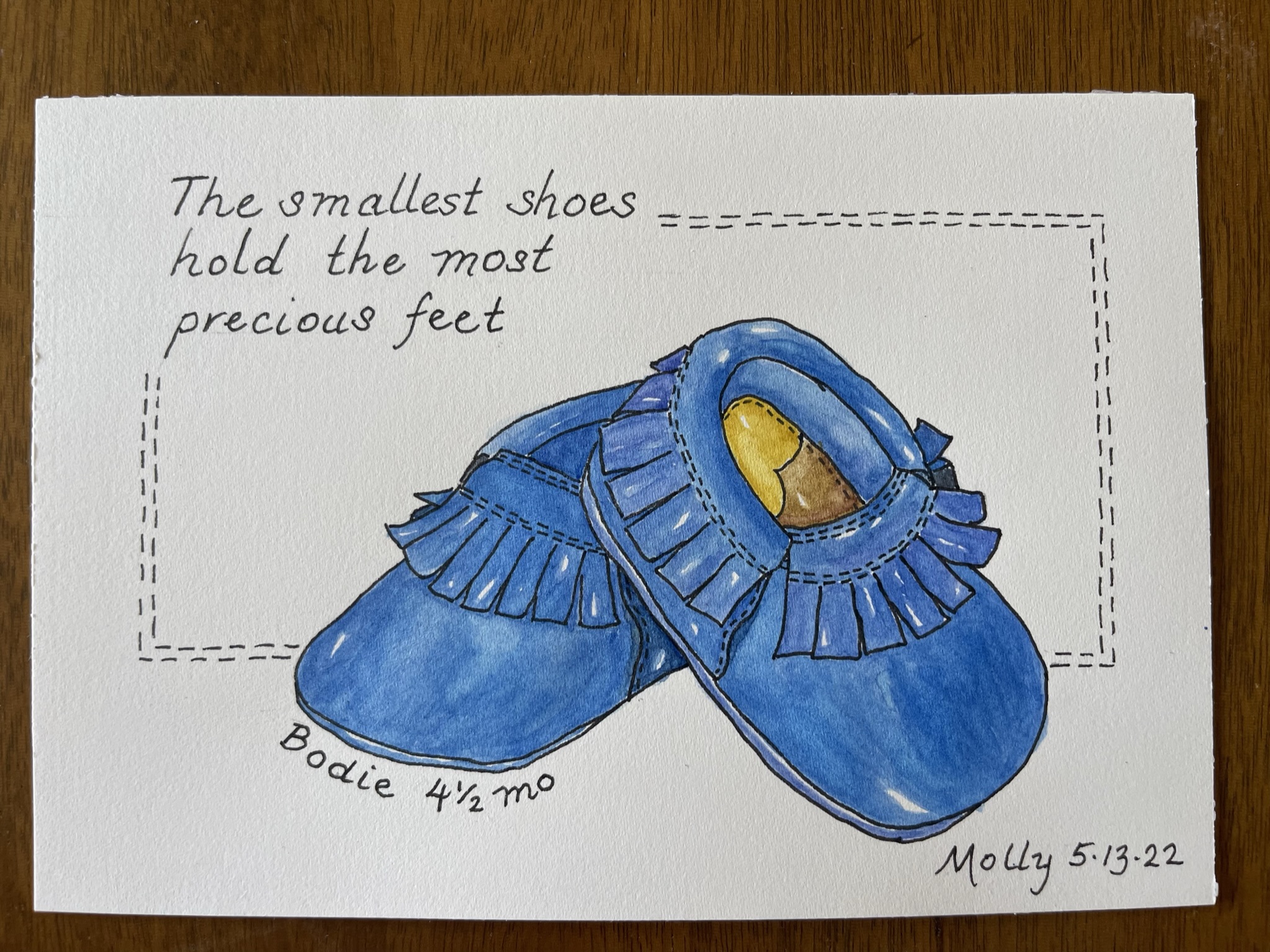
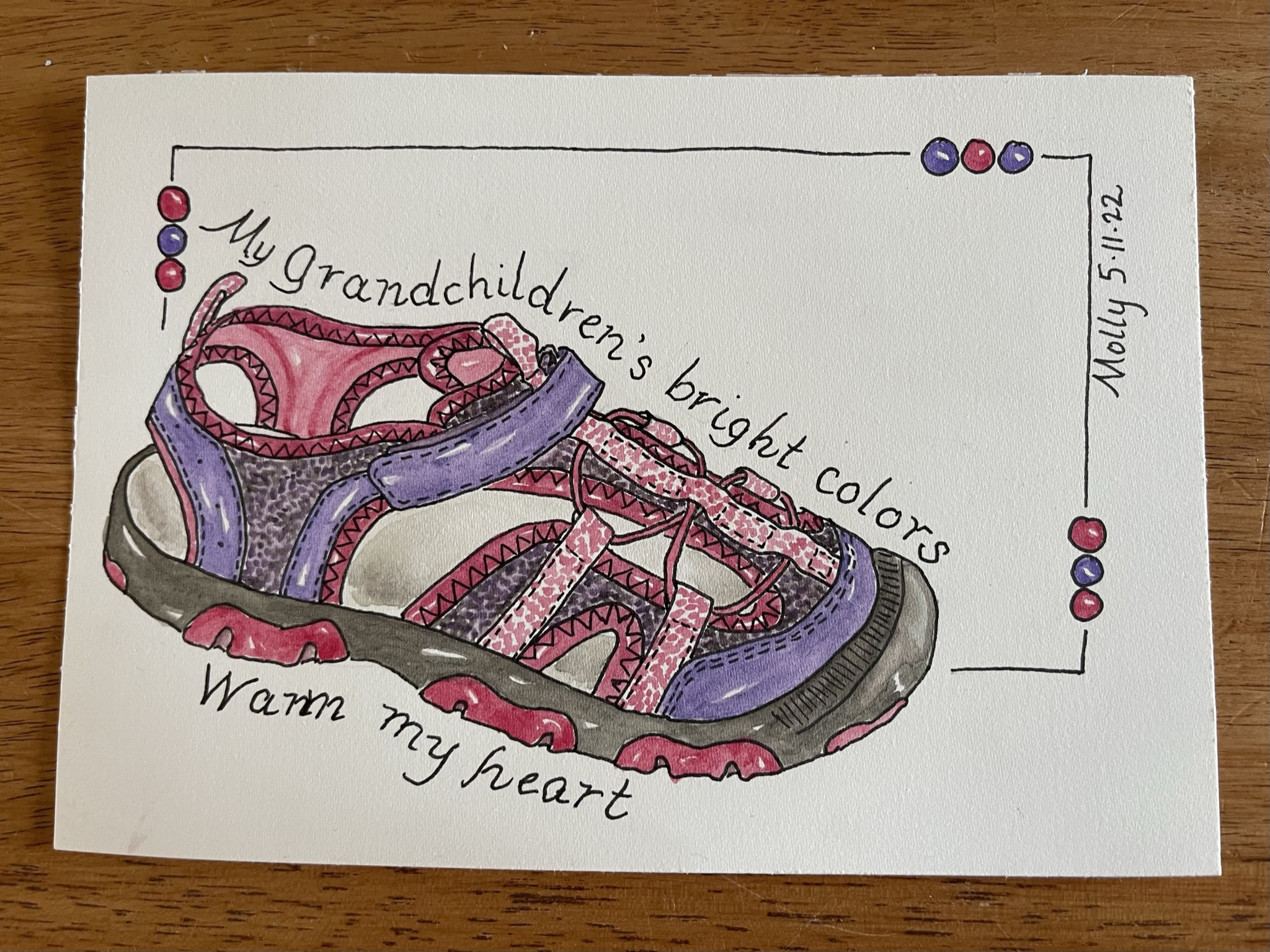
Week 5: Shoes. I just knew I was going to like this lesson. Shoes provided such a vast array of choices. This one in particular provided numerous comments and camaraderie when we posted our paintings. I found great fun and inspiration in the shoes my fellow students chose, and how they rendered them with ink and watercolor. Students ranged from novices like me to those with obvious artistic talent, and I learned from every one of them. I also admit to borrowing some of their ideas and techniques.

Clearly this was why my writing coach instructed me to read every book in my genre that I could get my hands on. I learned what worked and what didn’t. What made me want to keep reading, and what caused me to quit reading some books.

I dove into my own closet first, then succumbed to the cuteness factor of my grandchildren’s footwear. Sometimes it’s the subject matter itself that makes a creation shine, whether it’s in print or paint.

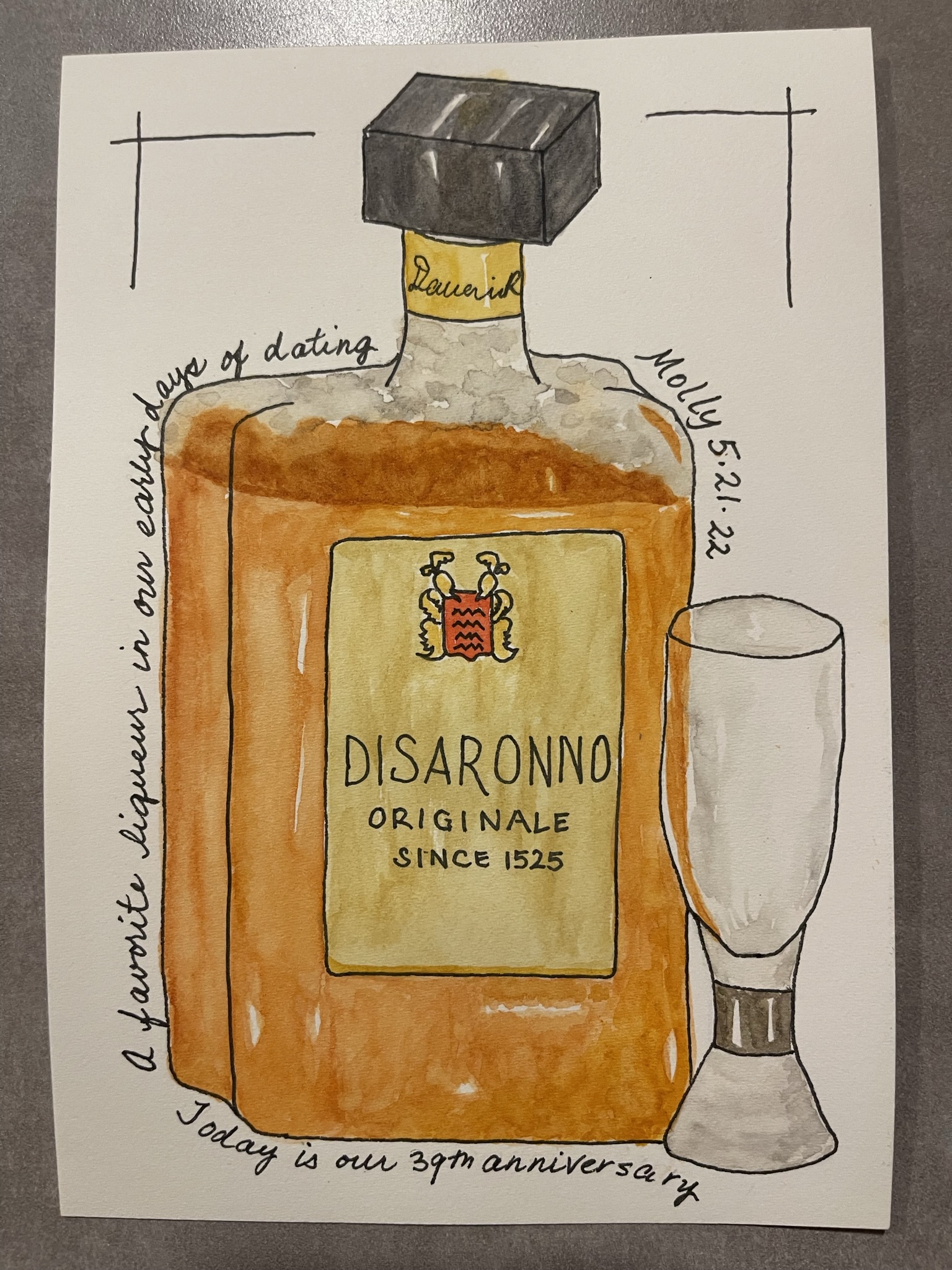
Week 6: Man Made Objects. This lesson incorporated techniques for drawing to scale, maintaining symmetry and the artistic license in choosing what details to leave in or exclude. Not wanting to copy Jane’s example of a wine bottle with a classy label, I stumbled on a bottle of Amaretto in the pantry. It contained plenty of challenges for getting the proportions right, and I worked through her methods to complete my drawing. But the thought of replicating the bumpy texture of the bottle and the shiny glass was daunting, so I set it aside. When I completed painting a kettle and tea cup, that first drawing taunted me, daring me to complete it. I accepted the challenge.

Sometimes stories don’t go well. Chapters just won’t work. I’ve found that if I leave them alone for a while, rather than using blunt force to push through them, the answer becomes more clear. Or my confidence surges. And the end result is greatly enhanced. So it was for my Amaretto. Along with the help of my new paints!

I have completed my class, but not my painting. I have a lot of practicing to do, especially mastering those finicky watercolors. I found that I look forward to these art projects, and they can absorb a whole morning or afternoon just as writing did in the past. I did have a niggling worry that I might supplant my writing time with sketching and painting. That I might transfer my allegiance from creating with words to ink and color.

I went into this new venture hoping to stimulate my creativity, to open that side of my brain hoping it would spur on my writing as well. If I had my way, I would marry the two. Use my ink and color to illustrate my words. But I’m not there yet.

The biggest hurdle with my book is that I cannot see the true thread, feel the message I am meant to be sending, the audience I seek to serve. Learning to draw and paint hasn’t solved that for me, but clearly it has taught me many transferrable lessons. So for now, I will continue my new art and wait for the words to come.
Arches, through Dad’s eyes

Dear Dad,

I felt you by my side these last few days as I was steeped in the geology of Utah, surrounded by stone edifices and in awe of rock formations. You spent your whole career immersed in the nature of minerals, focused on the engineering aspects of mining. I don’t think I ever absorbed much of that while growing up. Susie was always the rock hound, her pockets bulging with rocks every time we ventured outside. Every family picnic on The Rocks (now known as Brighton Beach) enticed her to return with abundant samples of the pebble beach.

But it all came to roost as I ventured into Arches National Park.

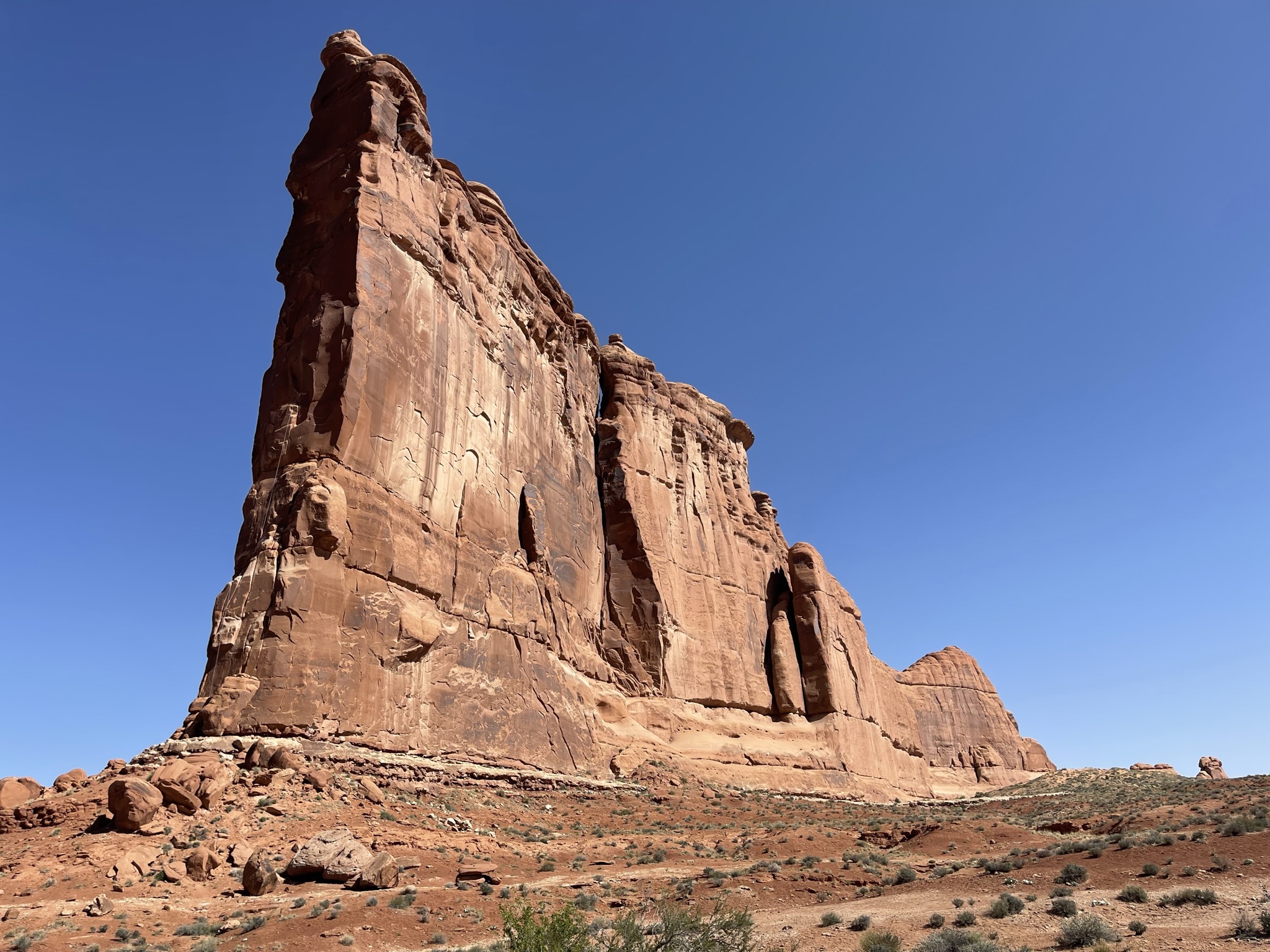
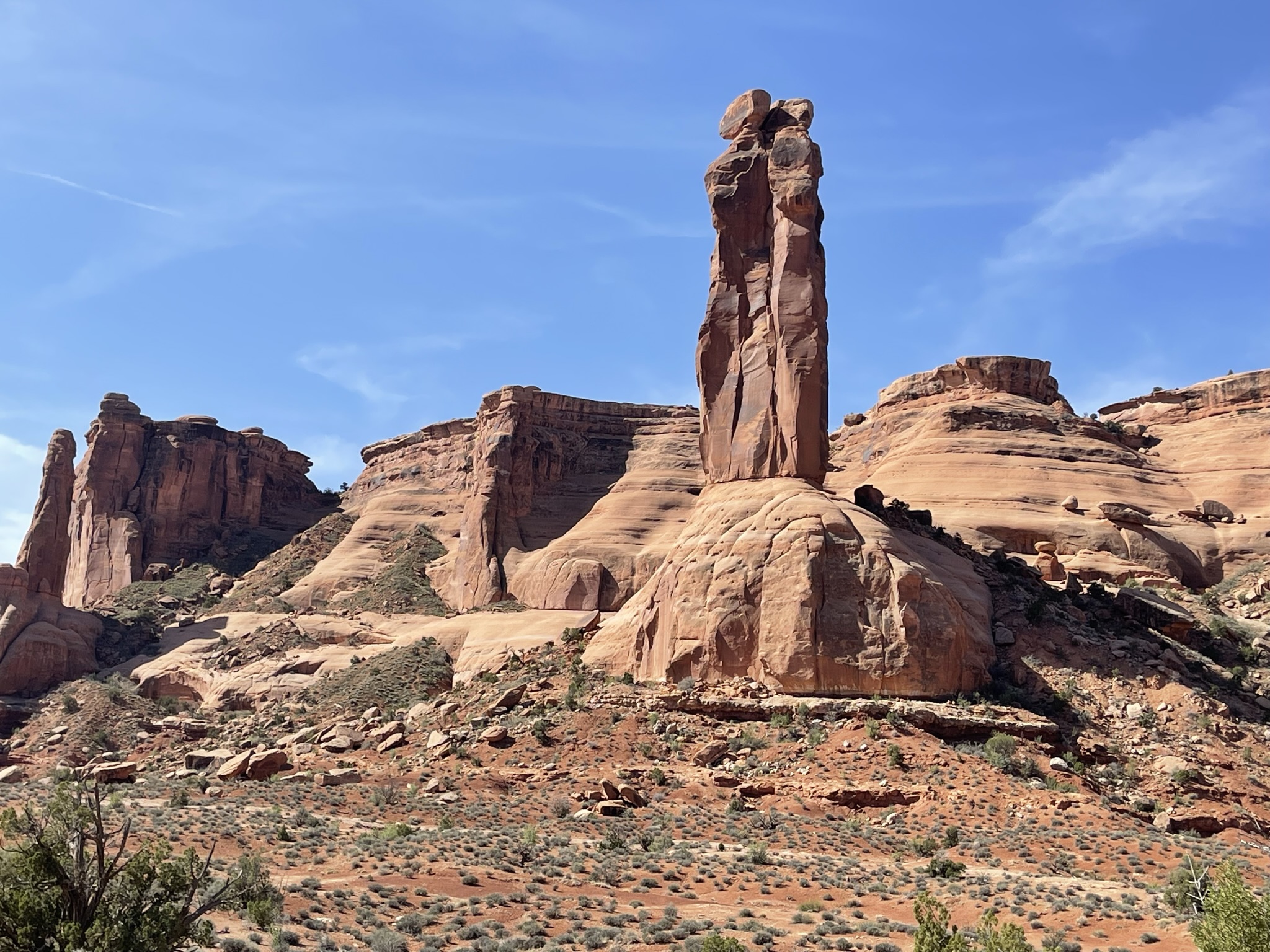
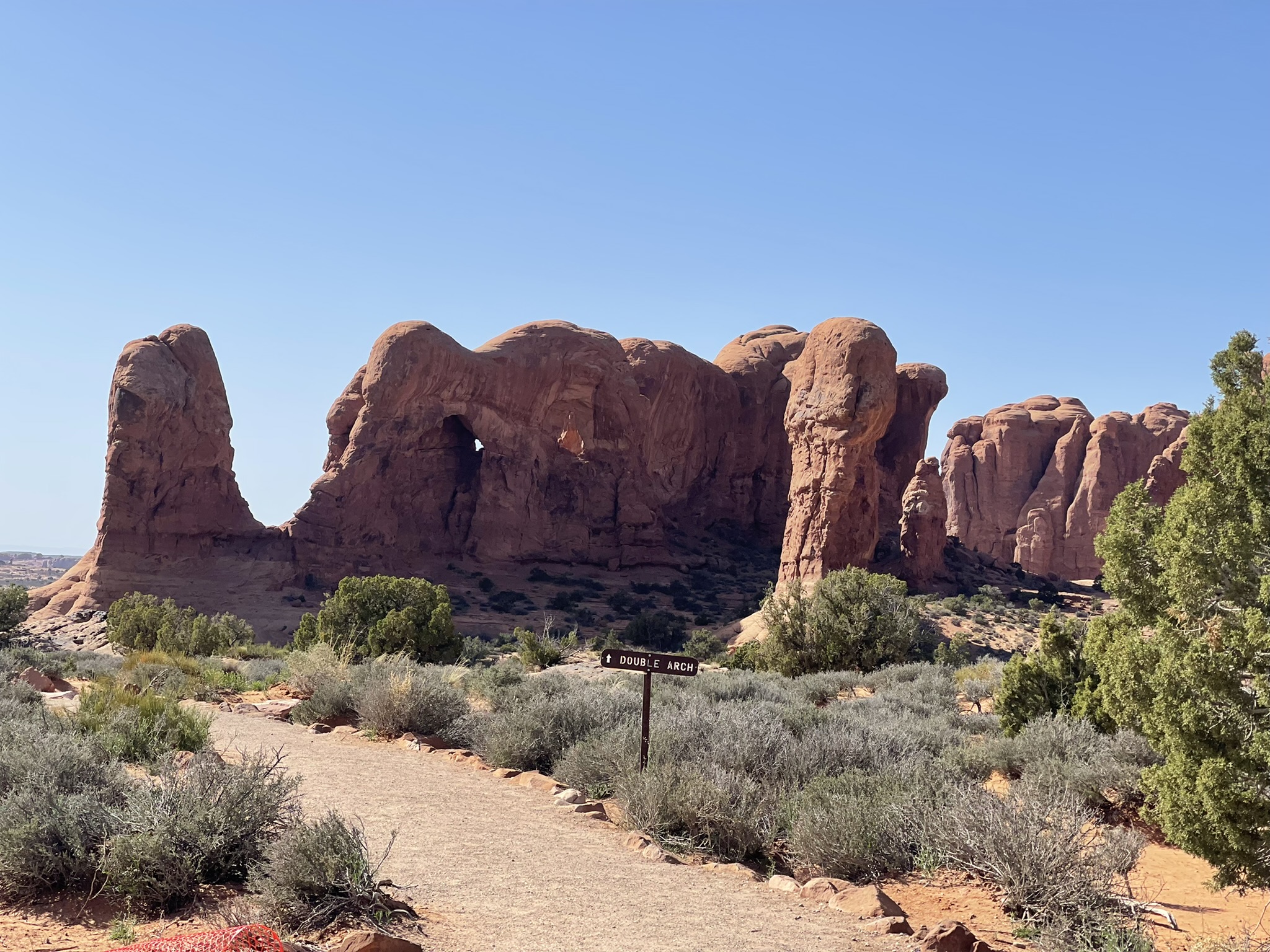
Like any tourist, I had come to see the natural stone arches that gave the park it’s name. Home to over 2,000 arches, it is one of the world’s greatest densities of natural arches. But the initial drive into the park soon revealed the larger scope of its majesty as I stared at massive red rock walls, towers that dwarfed the humans at their base, and rocks impossibly balanced atop delicate bases. With names like The Great Wall, Tower of Babel, and Courthouse Towers, I soon came to appreciate the fuller extent of nature’s creation.

Dad, I couldn’t help but be attracted to the layers of rock, easily evident in the faces of the formations, no doubt each telling a story of its era. I’m sure you could have explained it all to me, how the land evolved over time, and the unique composition of each layer. I had to be content with admiring nature’s sculpting skills.

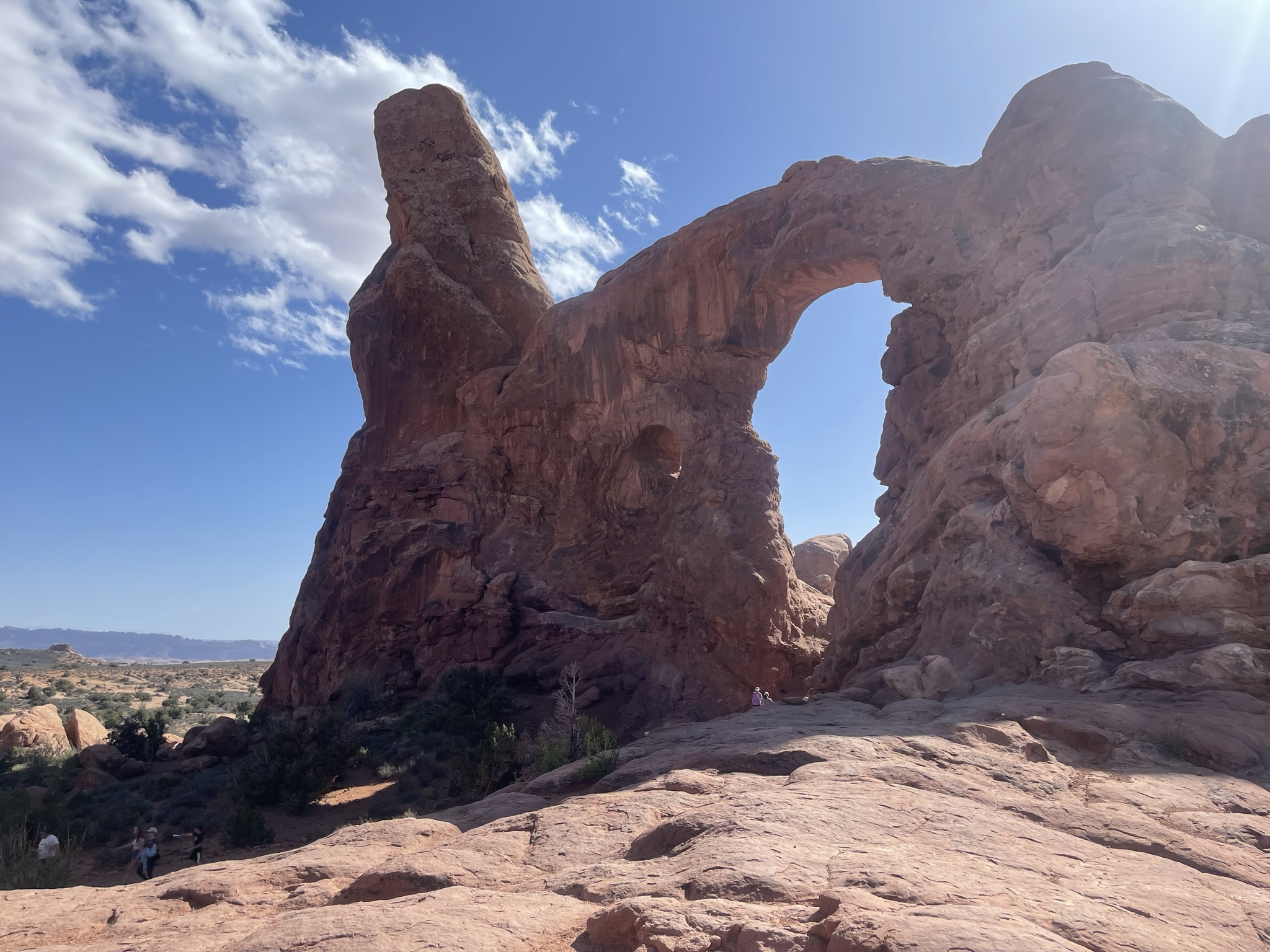
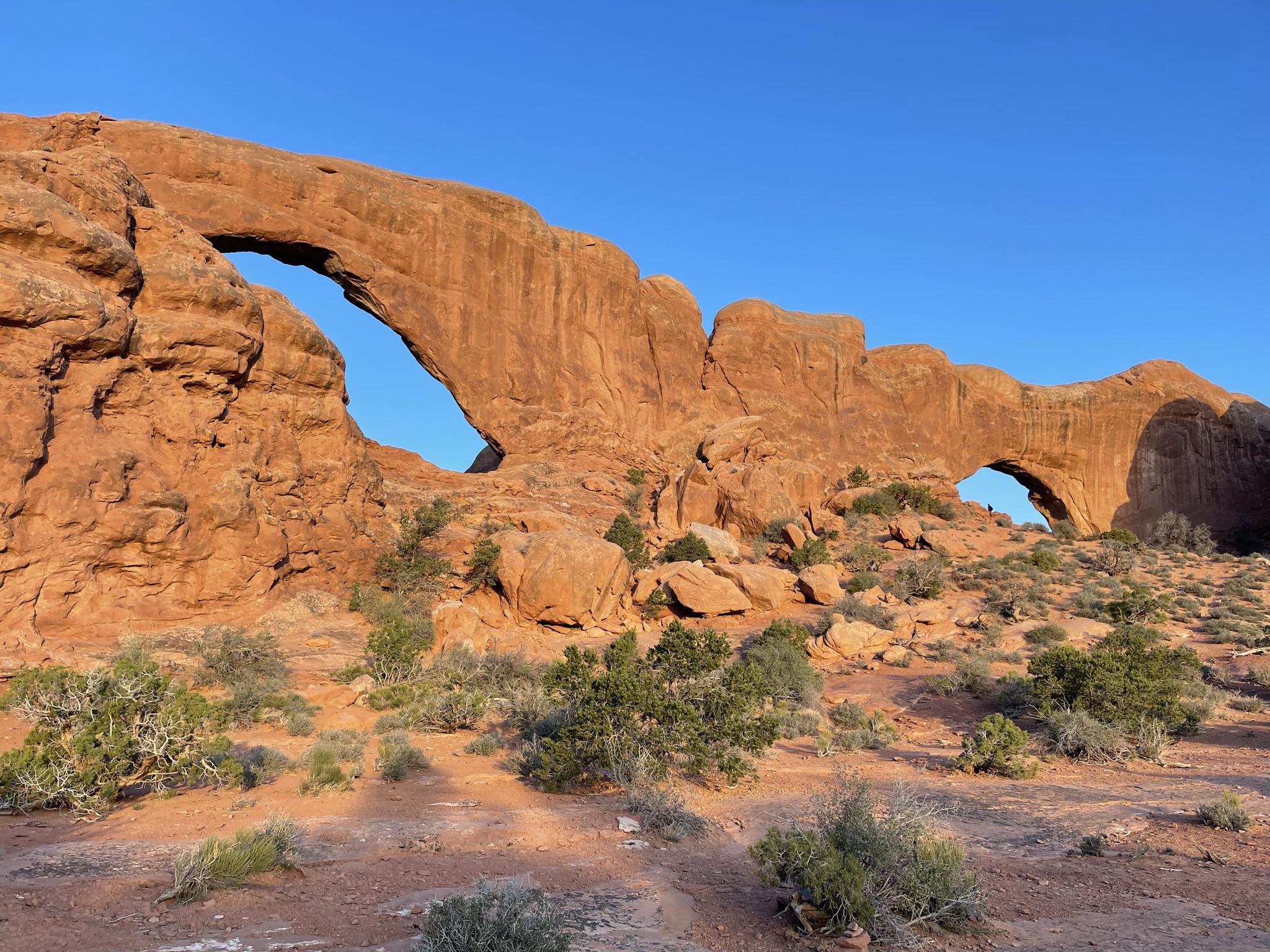
My destination for the first day was The Windows. It is the most accessible site of the famous arches, and had the bonus of several examples clustered in a small area. With a mid-afternoon entry ticket (they now have timed entry, to solve the problem of the park’s immense popularity) I wanted to make the best use of our limited time to explore. Nabbing a prime parking spot, I cajoled Rich up to the North Window where we followed the parade of sightseers up into its opening.

I continued on to explore the South Window and opposite those, Turret Arch.

I imagine you were silently whispering in my ear, Dad, as I continued to discover that the arches were just one attraction in this whole outdoor museum. The La Sal Mountains made a great backdrop for some of the other other-worldly rocks. And I could easily make out the Elephant Parade.

I had my heart set on being in the park at sunrise, to witness the beauty of the arches against the backdrop of the pre-dawn redness, and the glow of the nascent sunlight painting the stone monuments. That might not have sounded very appealing to you, Dad, as I had to get up at 4:45am to be in position well before sunrise. Rich seconded your sensibility, so the next morning I ventured out in the darkness on my own.

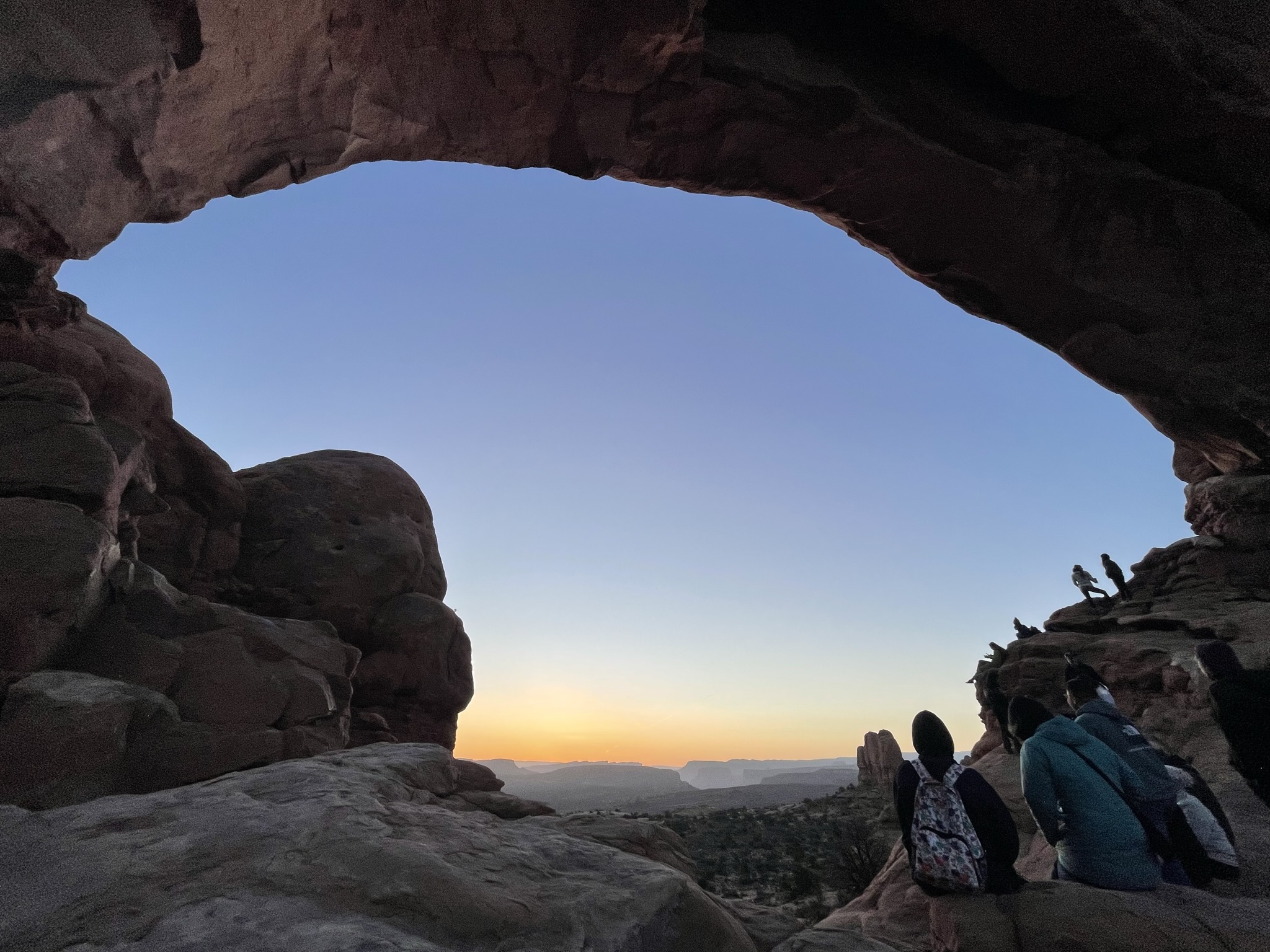
Returning to The Windows, I was one of the first to perch under the arch of the North Window where I could see the sky gradually increasing in color. The wind whipped through the opening, intensifying the 48-degree temperature, and I was thankful for my Minnesota layers. I was gradually joined by swarms of other sunrise-seekers, and I soon realized that while they just wanted to watch the sunrise, I wanted a dramatic photo. That spot wasn’t it. But in my retreat, I did capture the scene.

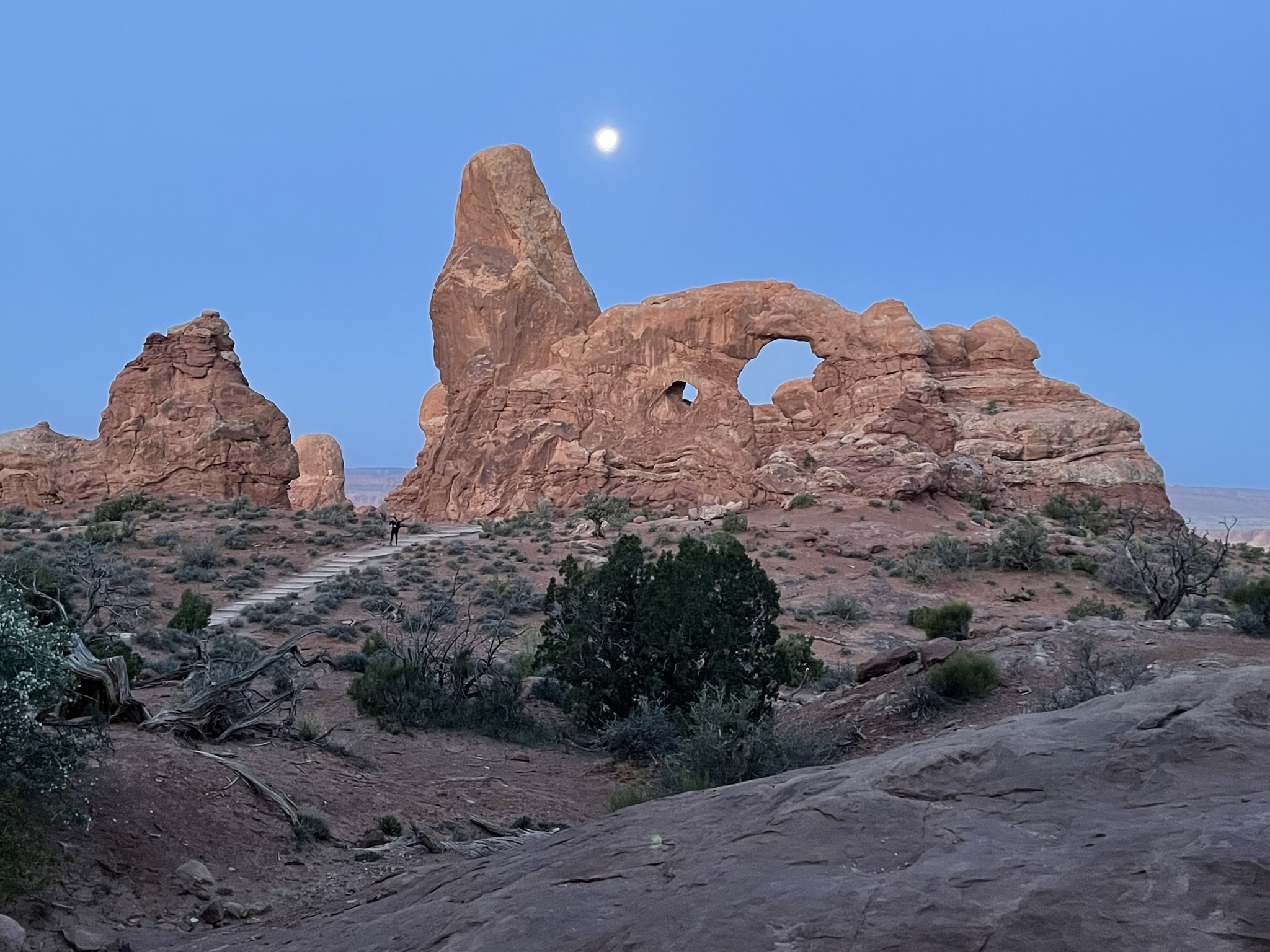
As I walked away, the moon was just setting behind Turret Arch. To me, that was just as good as a sunrise.

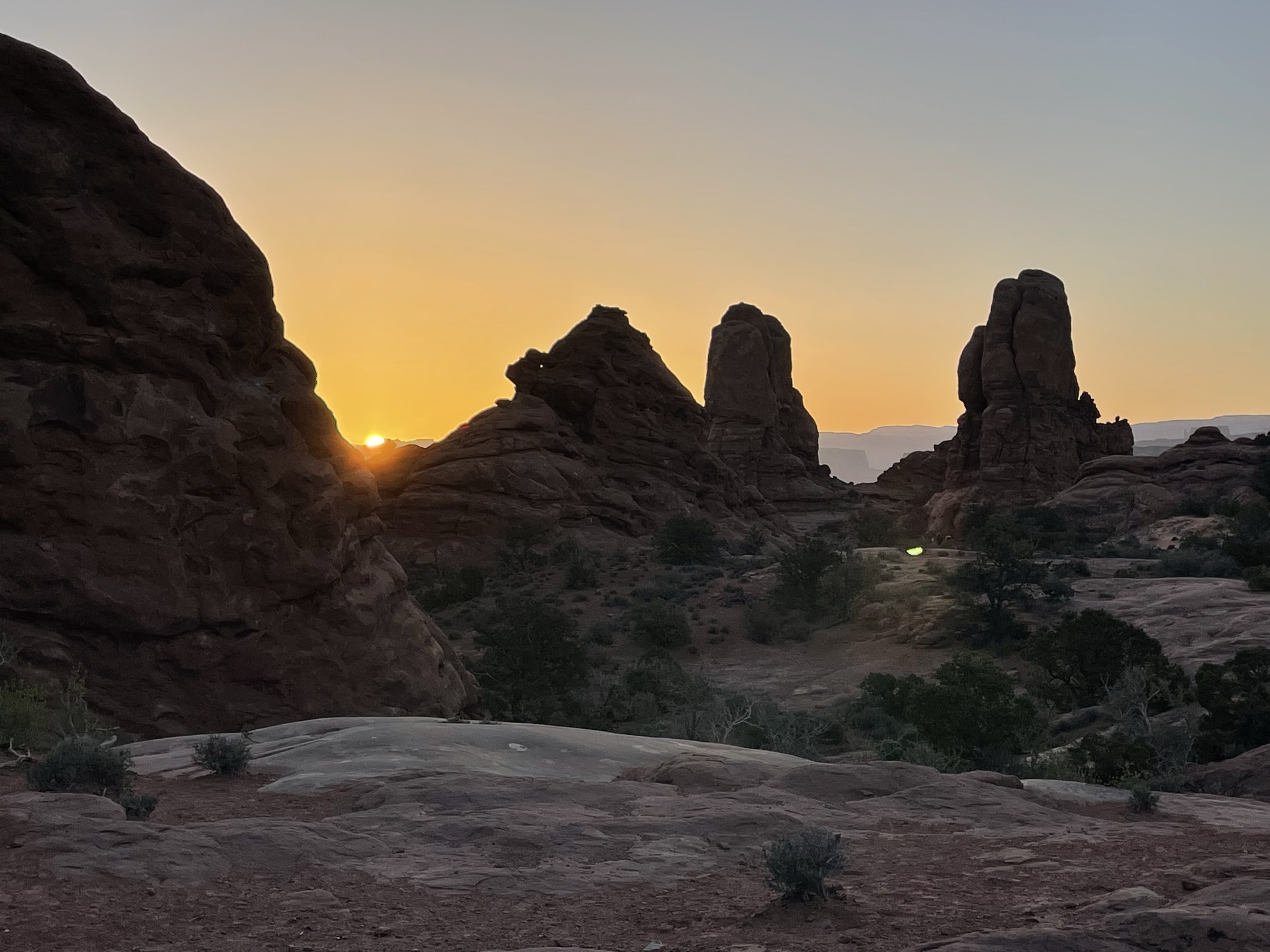
I found the sunrise to be more dramatic amid the towers and slabs nearby.

Taking the primitive trail around the back of the windows yielded the golden hour glow I was after, and further distanced me from the throngs above. It was well worth the early wake-up call, Dad, for these special moments with the rocks.

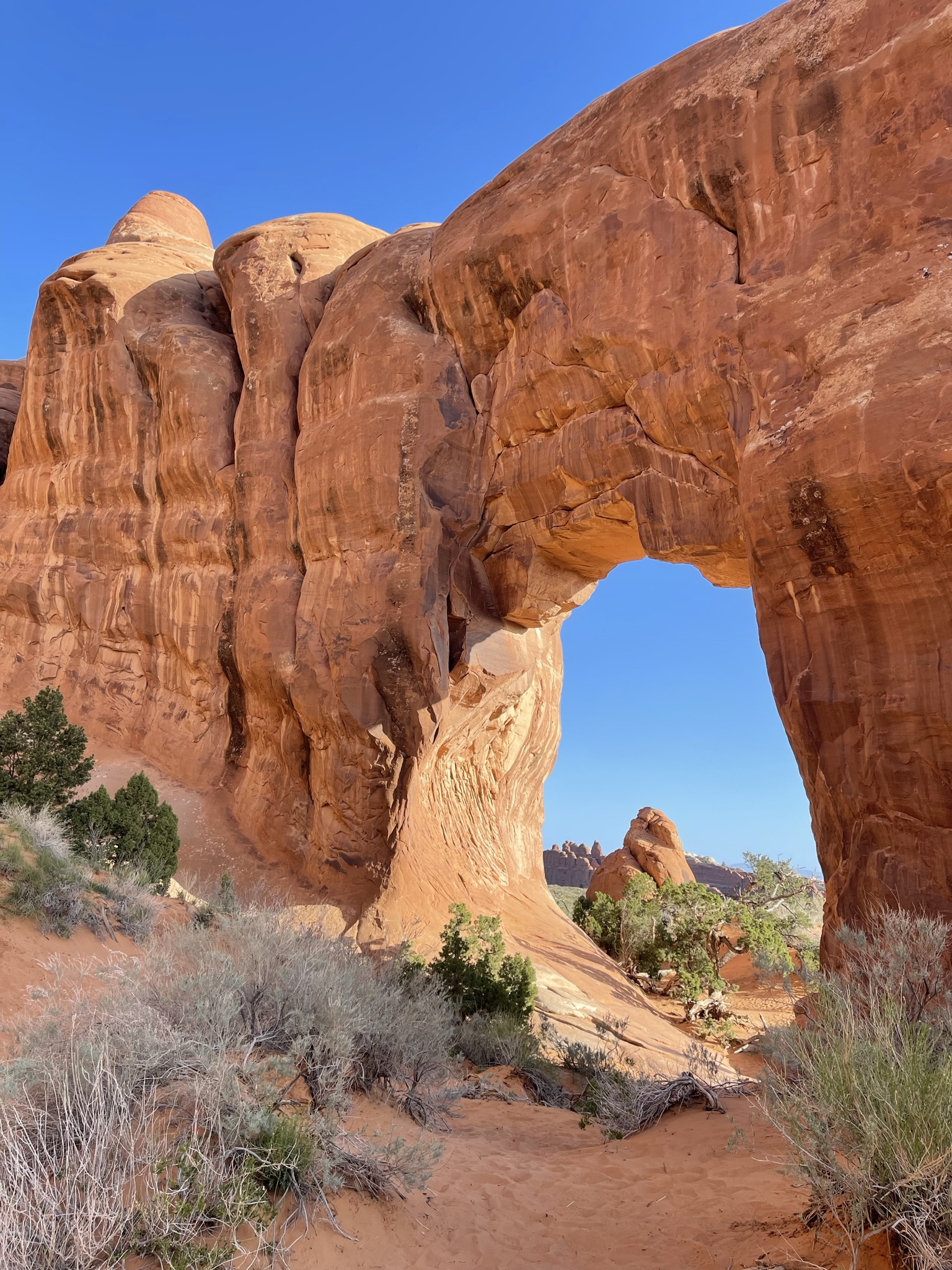
Leveraging my early start, I ventured further into the park to find more of the arches. On a short side-trail, I headed over to see Pine Tree Arch which proved to be one of my favorites for the view through the center.

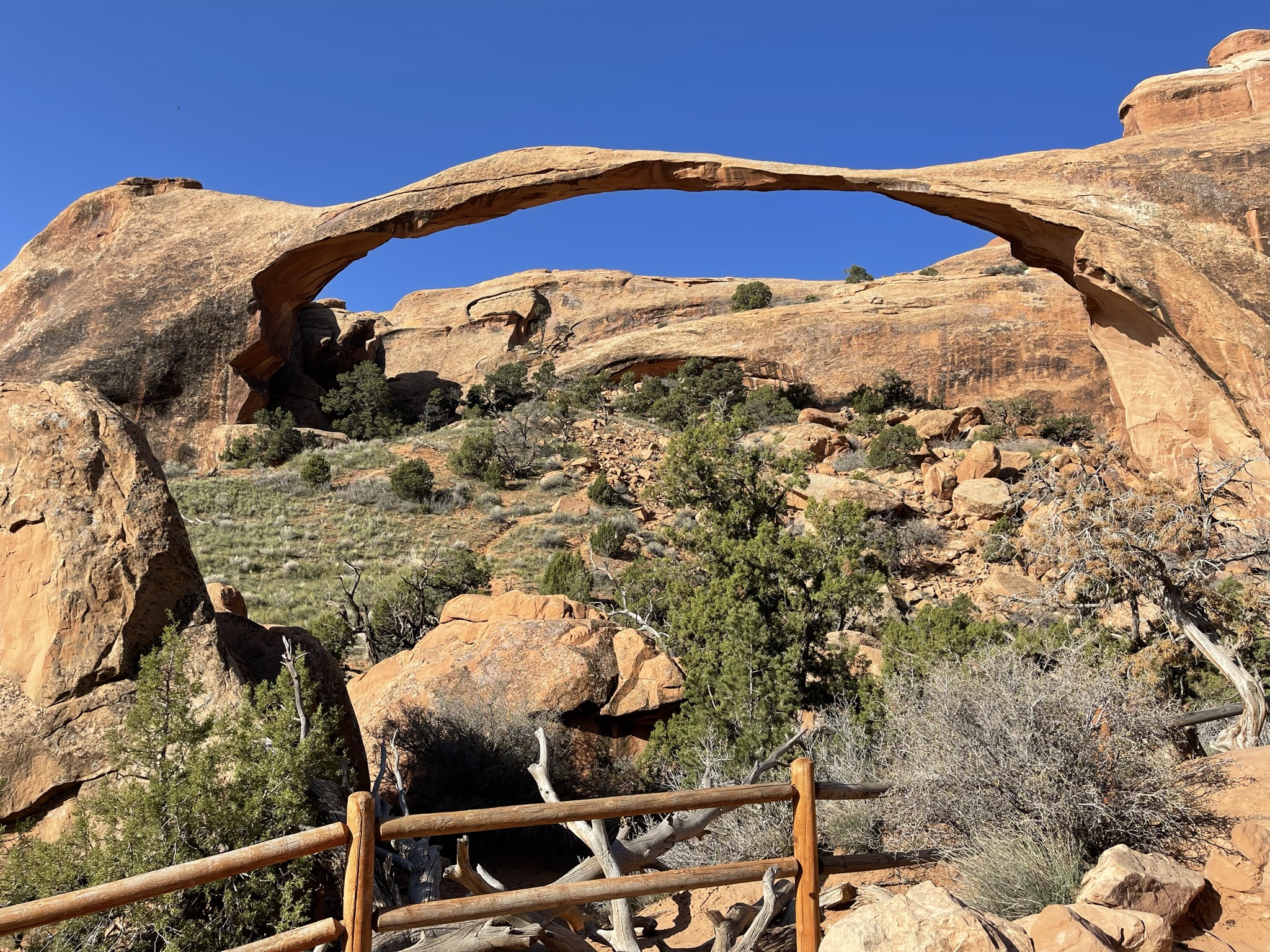
Beyond that, I reached Landscape Arch – the iconic view that graces the park’s brochure. You would have found the informational sign interesting, Dad, as it chronicled a section of the arch crumbling and falling in 1991, leaving it even thinner and more tenuous than before. A testament to the impermanence of all these rock structures – still changing with the forces of nature.

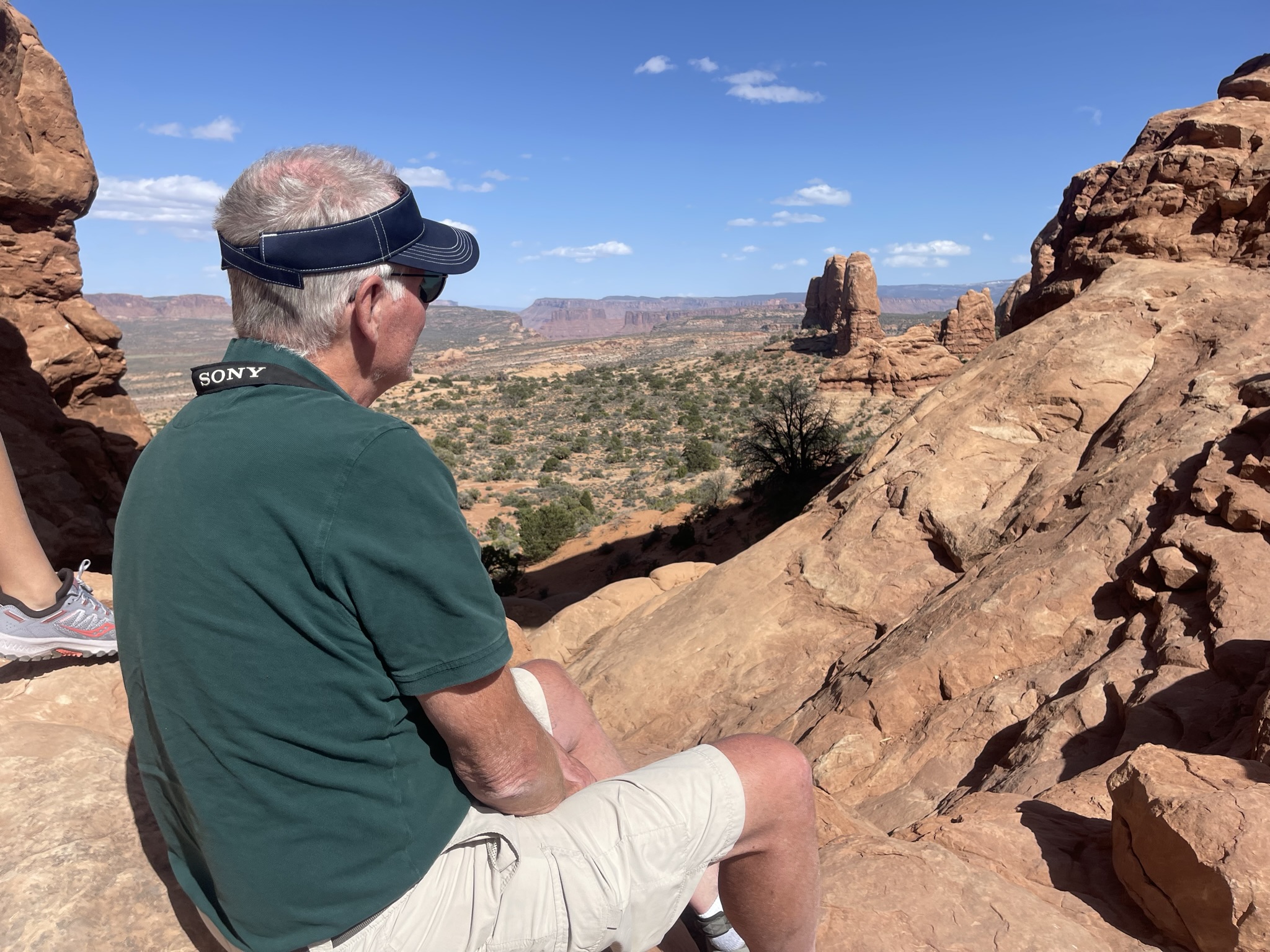
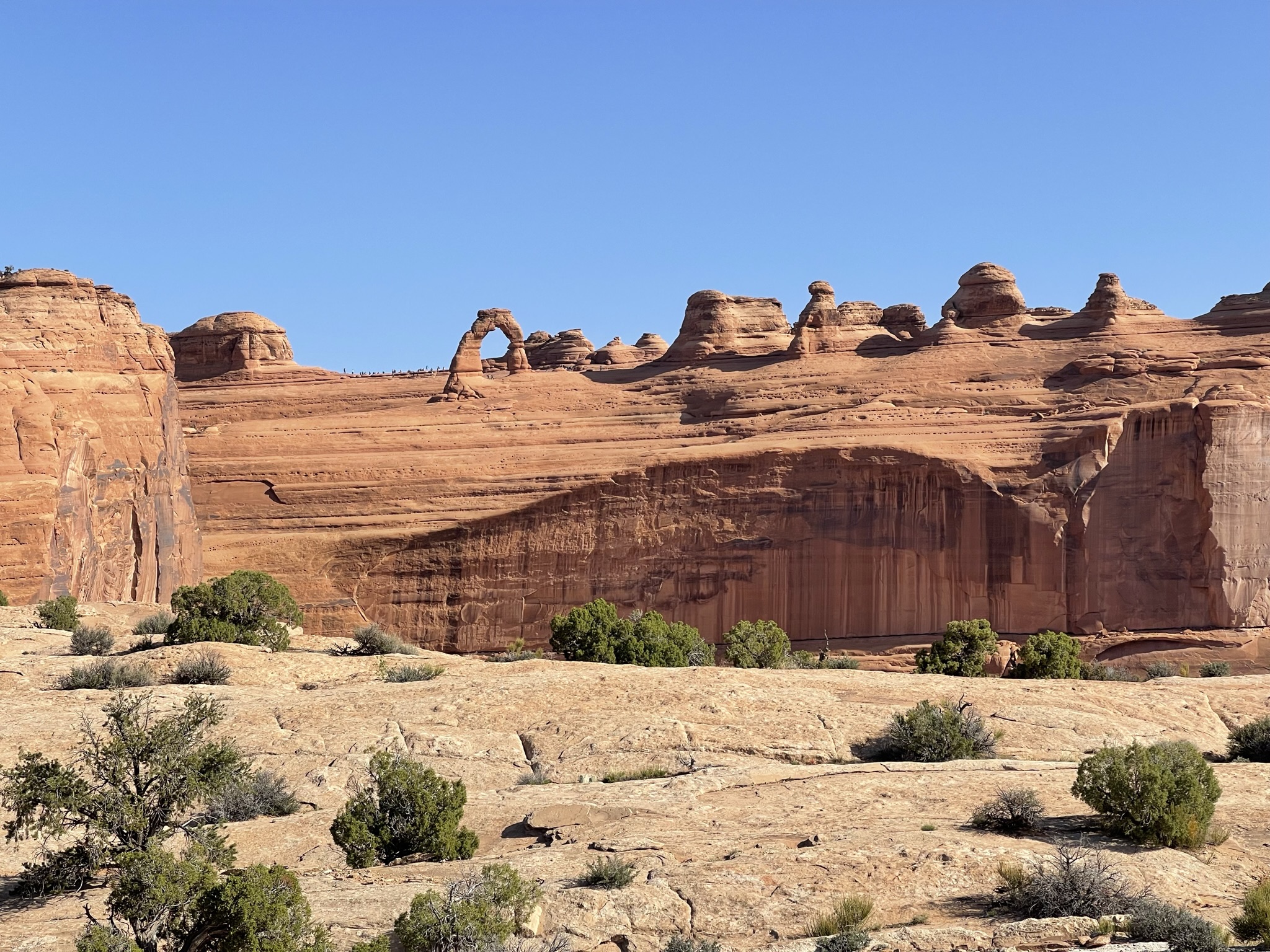
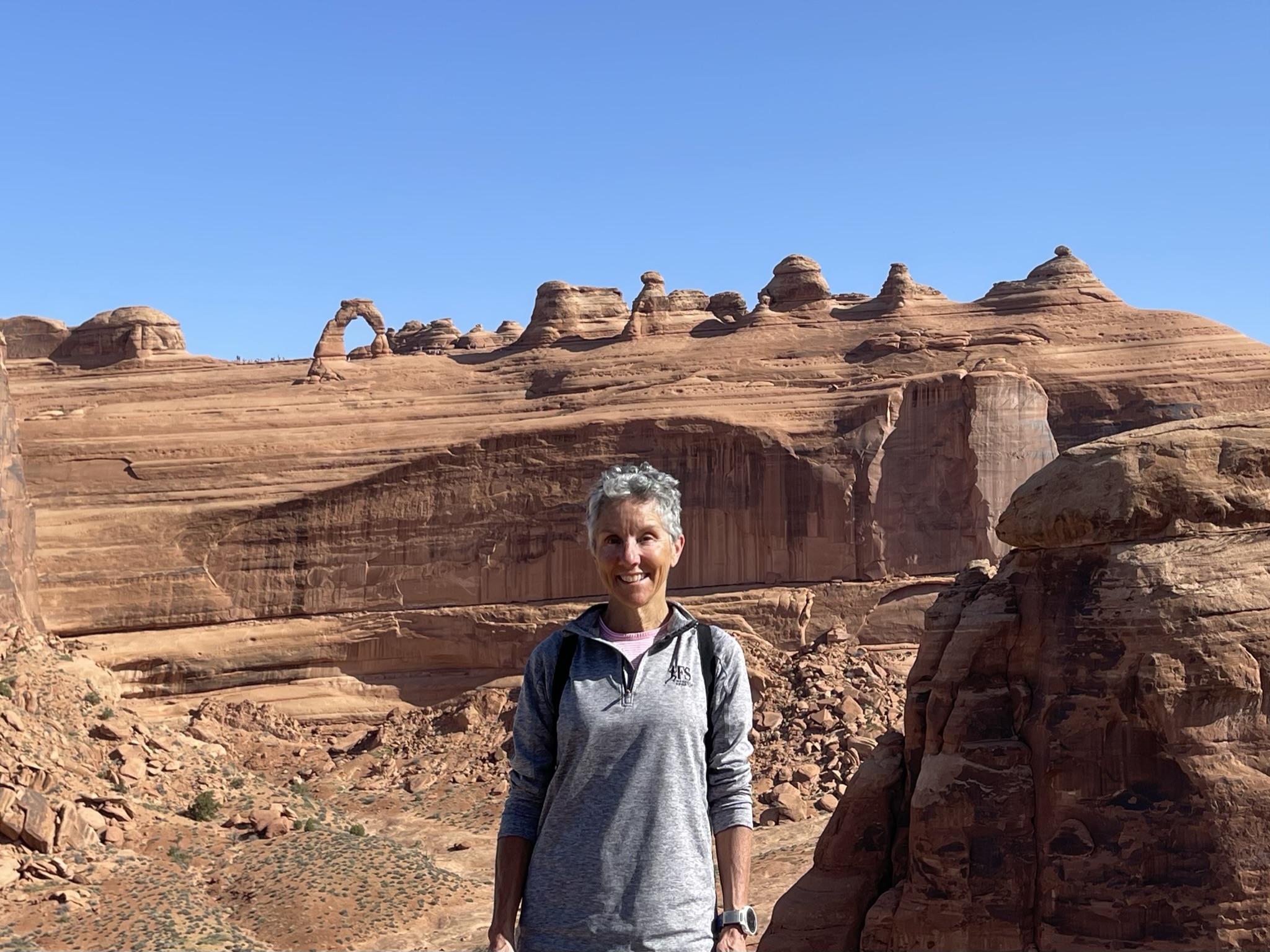
I couldn’t leave without seeing Delicate Arch. Since I was alone, I shied away from the hike right up to the arch which was described as “difficult with exposure to heights.” I think you would have seconded that, Dad. Instead I made my way to the upper viewpoint, and kept going out onto the rocky slabs to the rim of a canyon where Delicate Arch stood on the opposite side. By then the day had warmed nicely, and it seemed a fitting finale to my visit.

I don’t think you ever went to Arches, Dad. But I’m certain you would have loved it. I certainly did, especially seeing it through your eyes.

Love, Molly

It was Fate

The thought occurred to me in the middle of nowhere. It was one of those strange, inexplicable revelations that changed the course of our plans.

We had left Tucson that morning, heading for Moab. Deciding that the journey was too long for one day, Rich surveyed the thin options on our remote route and booked us a room at the Thunderbird Lodge in Chinle AZ. It is owned and operated by the Navajo Nation, and is situated on their land. It seemed more interesting than the standard motel fare in town.

Driving through the red rock formations of northern Arizona, it may have been the out-of-this-world environs that tickled my brain.

“Rich, do you remember someone told us about that ‘mini Grand Canyon?’ Do you think we will be near there?”

I got only a non-committal reply as he concentrated on the driving. But the idea had hijacked my brain.

I’m a list maker extraordinaire. I have an extensive packing list for traveling, carefully honed with each trip. En route, I document each day’s travels, where we stay, how far we drive, the restaurants we choose and our activities. Quickly mining the Notes app on my iPhone, I had my answer.

“Yes! It was the man who cleaned our room at Yavapai Lodge at the Grand Canyon.” That was back in 2017, five years ago.

“We chatted with him, and he told us about the Canyon de Chelly – how it rivaled the grandeur of the Grand Canyon but on a more intimate scale. It was in his home town of Chinle AZ.”

I was on fire now. “That’s it! That’s where we’re going!” In fact, the Thunderbird Lodge was at the entrance to the Canyon. The Rim Roads spun out from our very lodgings. We had time to spare the following day, and I just filled it.

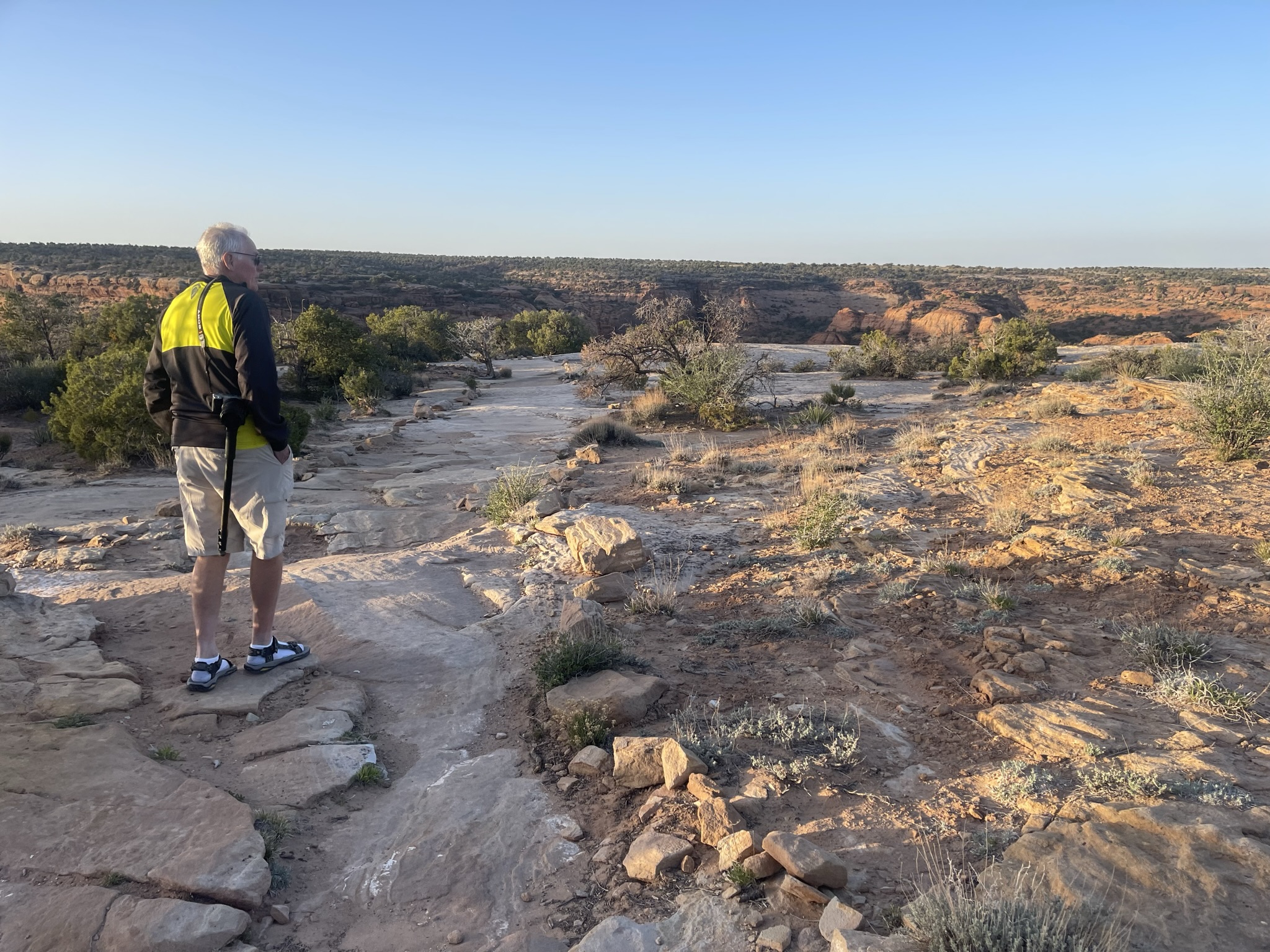
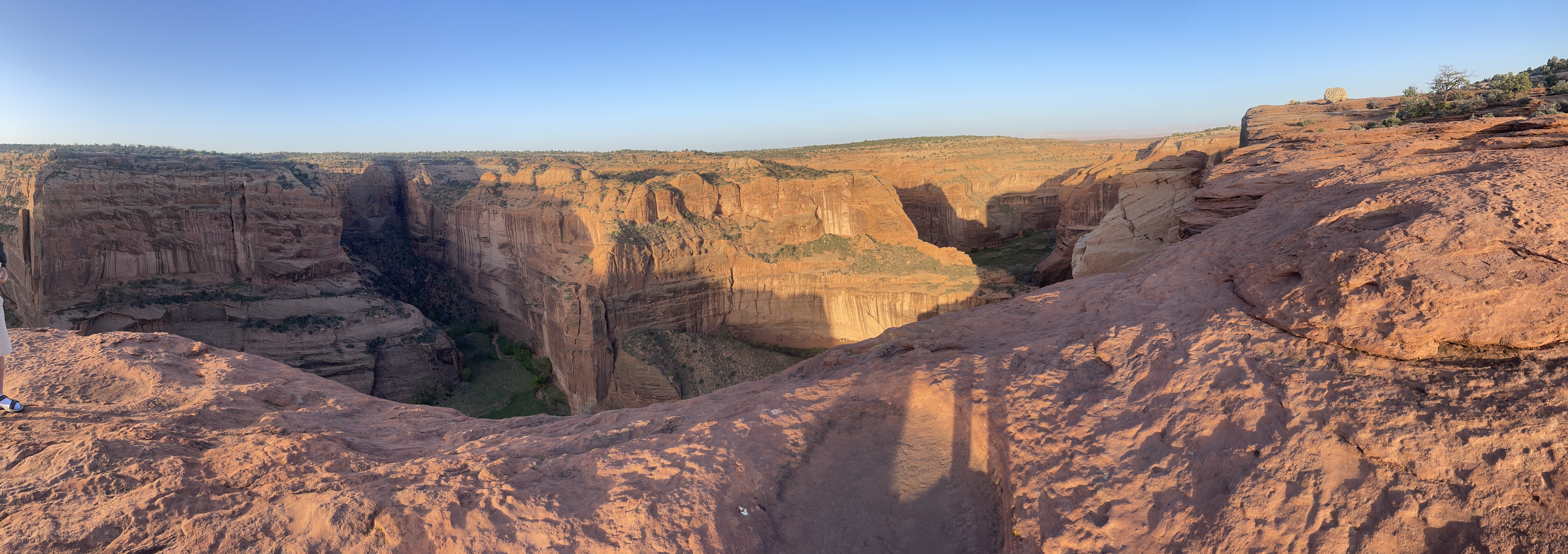
Up at first light, we threw on our clothes and headed out the door. The North Rim was said to be best in the mornings so we headed to the first overlook – Antelope House, just 8 miles away. We arrived to find a deserted parking lot and a rough sign pointing toward a scruffy area stating “Overlook 1/4 mile.” Setting out, we crossed the solid rock expanse dotted with scrub bushes. It felt like senseless wandering, until I noticed the sequence of rocks defining a path, showing us the way. I was further encouraged by a few man-made stone steps, and an arrow painted on a rock.

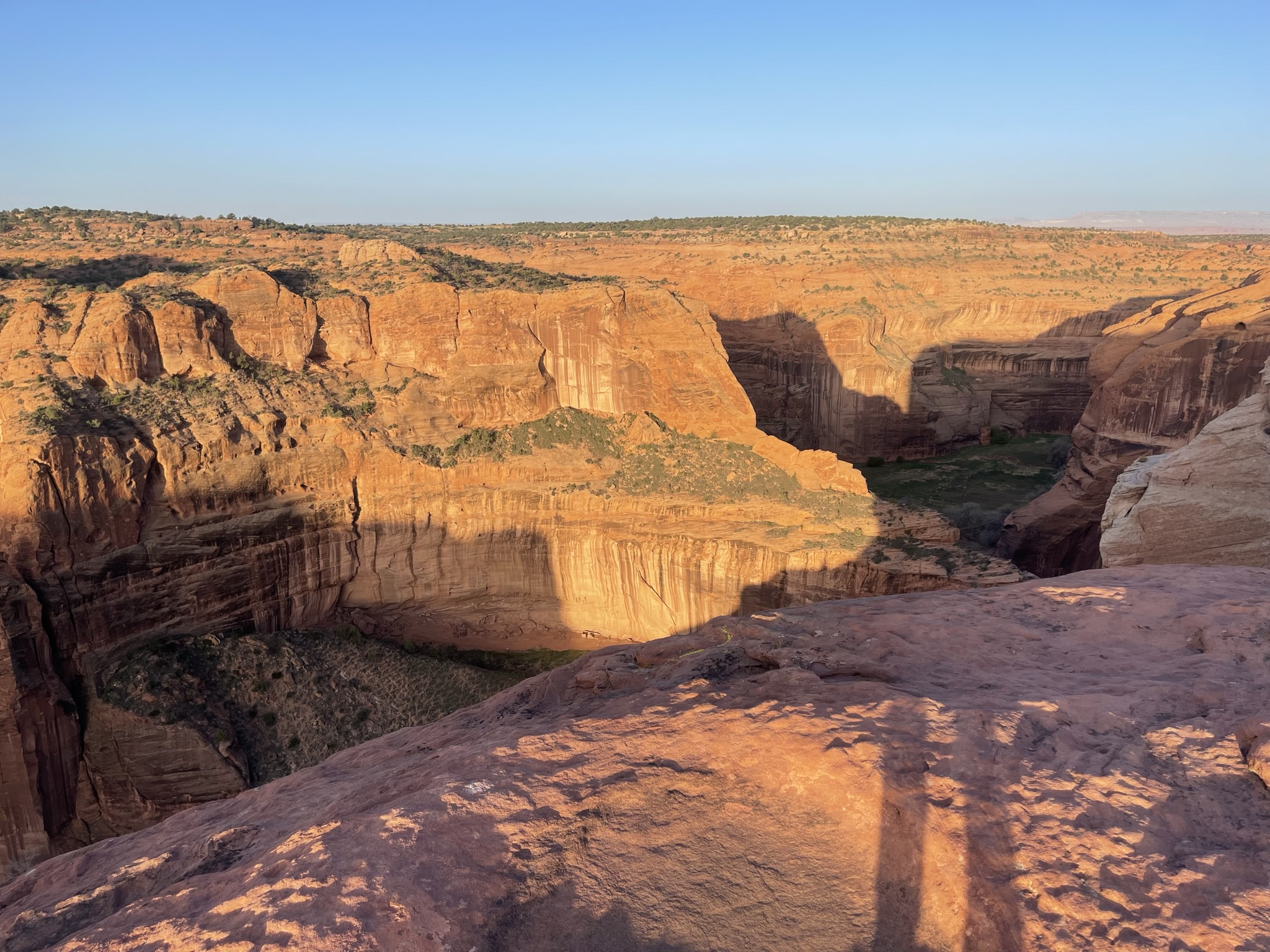
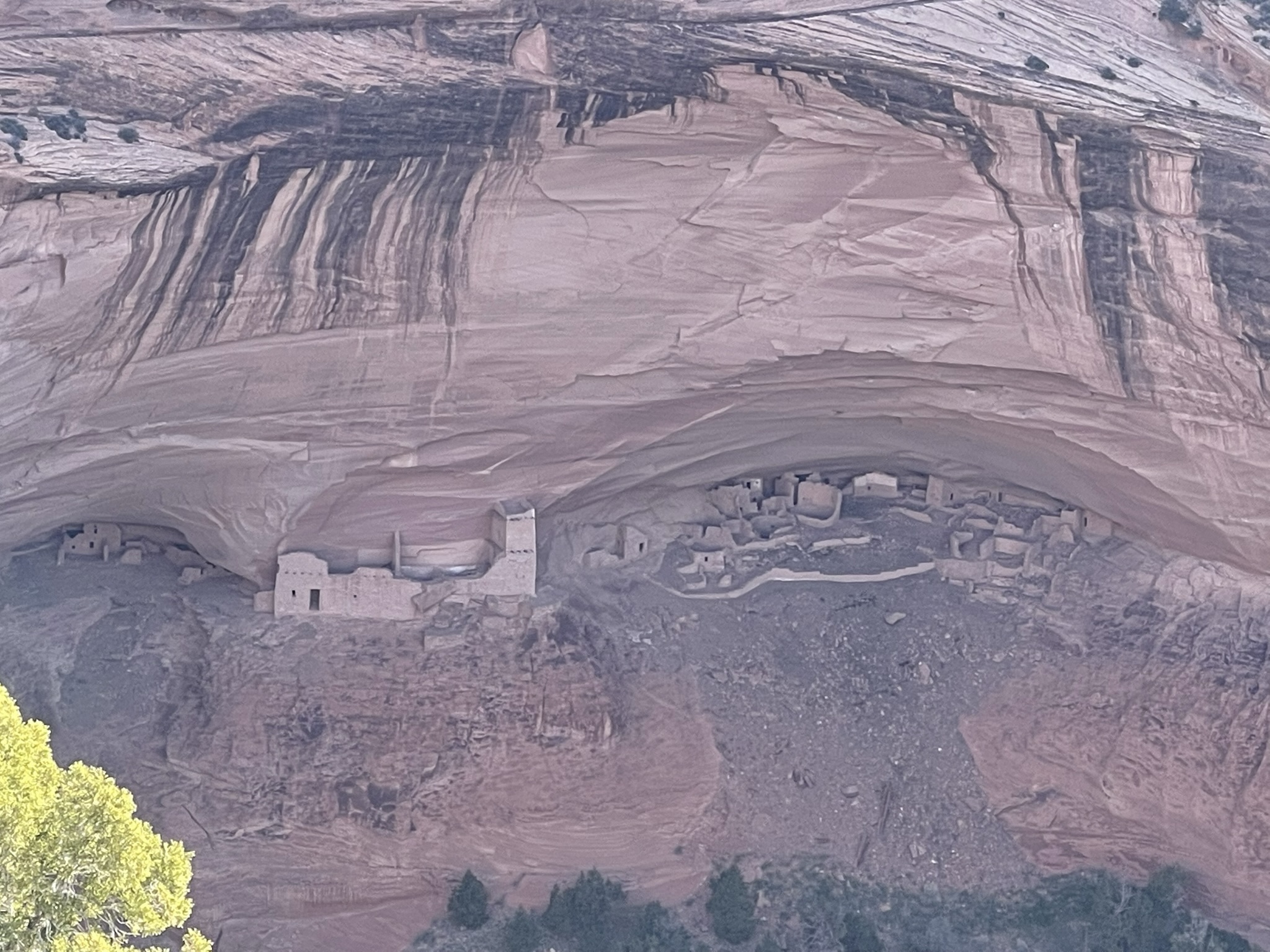
Then suddenly, we were there, perched on the edge. The world dropped away in front of me, the depths of the canyon yawning in the open expanse. The sun’s rays were just working their way down the walls of the canyon, illuminating the colors, glowing as only early morning sun can do. Sharp shadows in stark contrast.

True to that man’s words, it was majestic and grand. A beauty to behold, extensive and captivating in every direction. But that was not its magic.

It was the solitude. We competed with no one for the view. Silence reigned as we gazed out over the canyon. We had complete freedom to wander the terrain, to take in the depths from our choice of vantage point, to make the experience uniquely our own. To spend as long as we liked looking, thinking, pausing, appreciating.

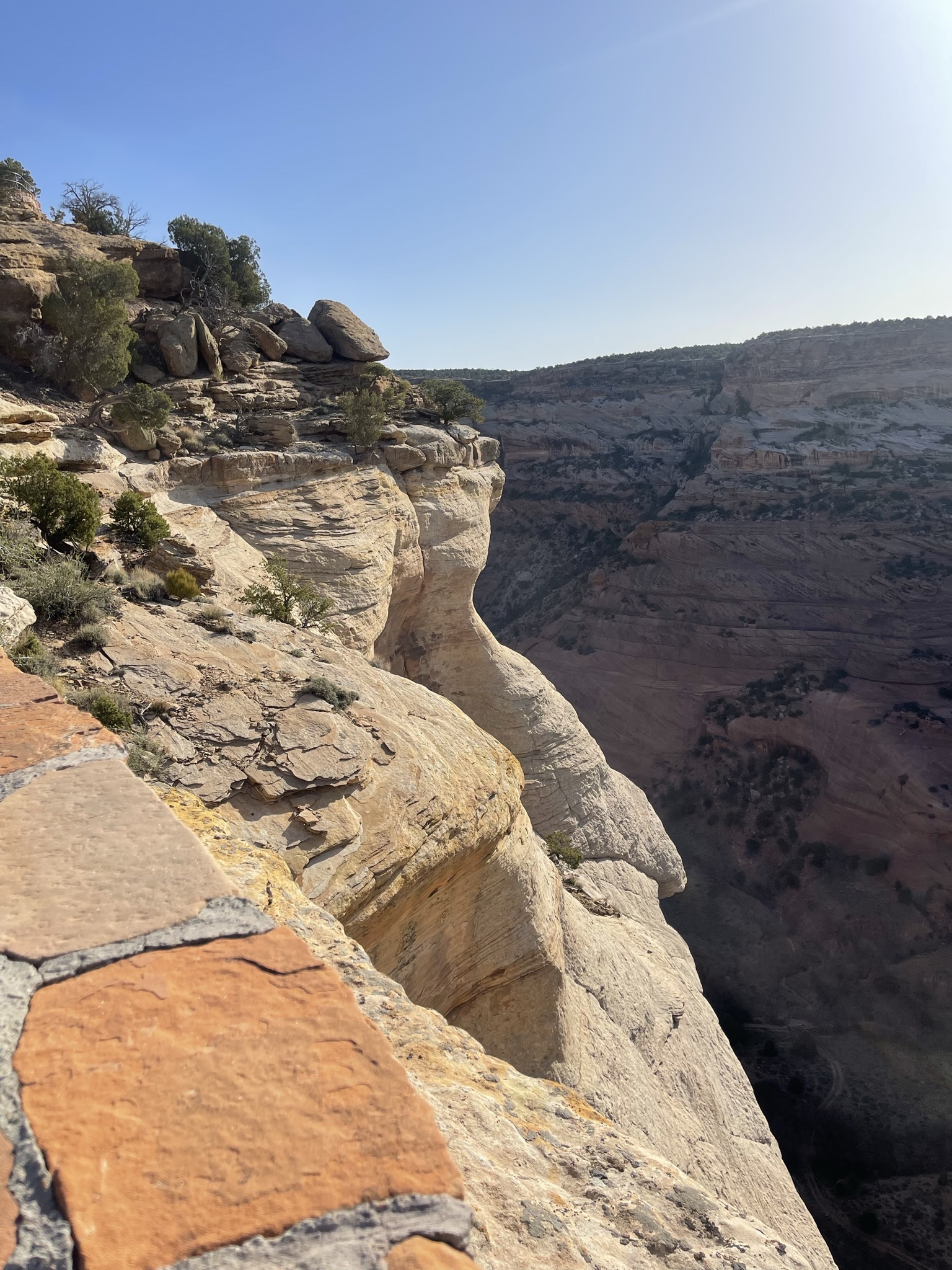
There was not a barrier in sight, save one promontory protected by short brick walls. No one to collect tickets, no lines waiting to enter.

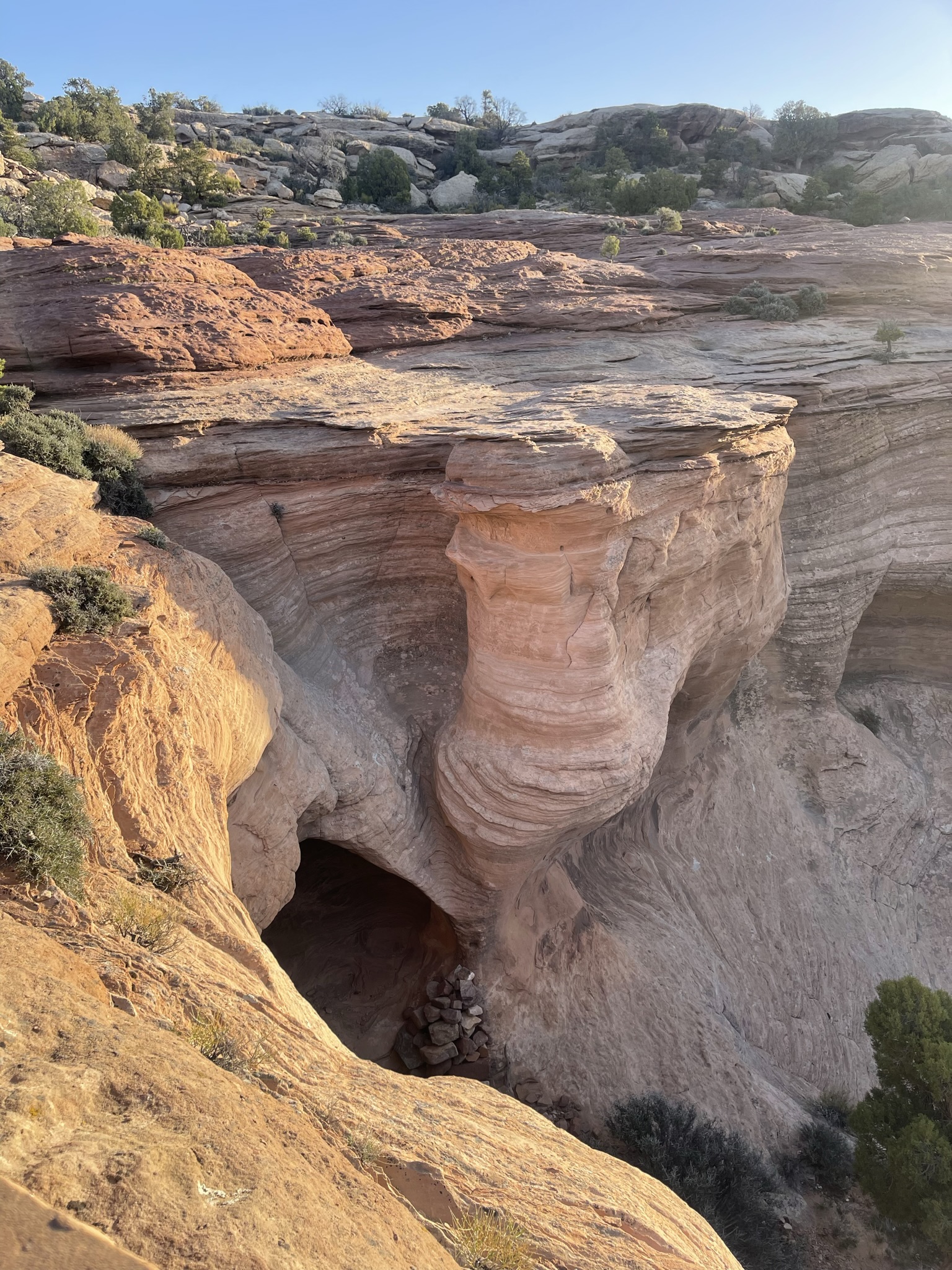
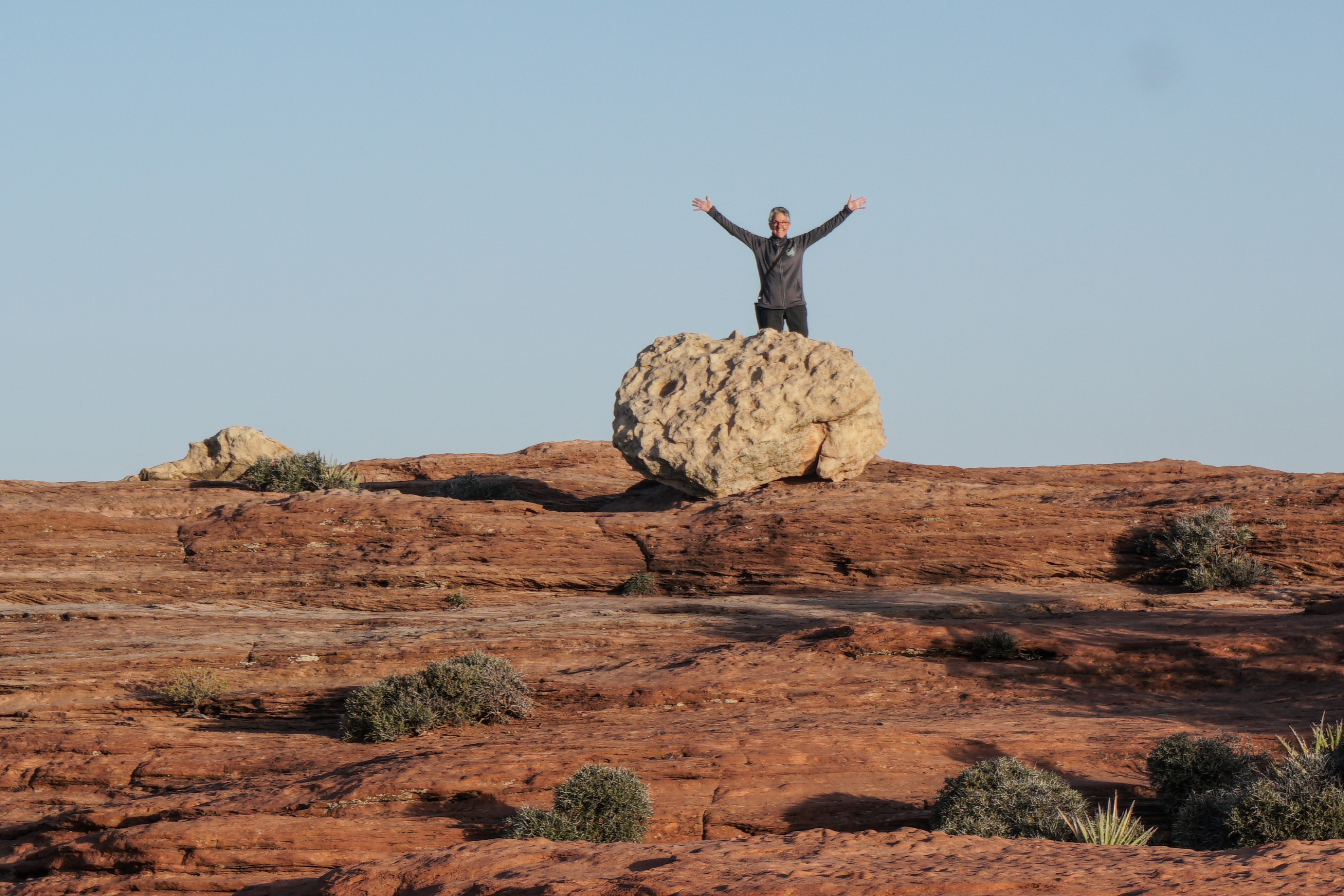
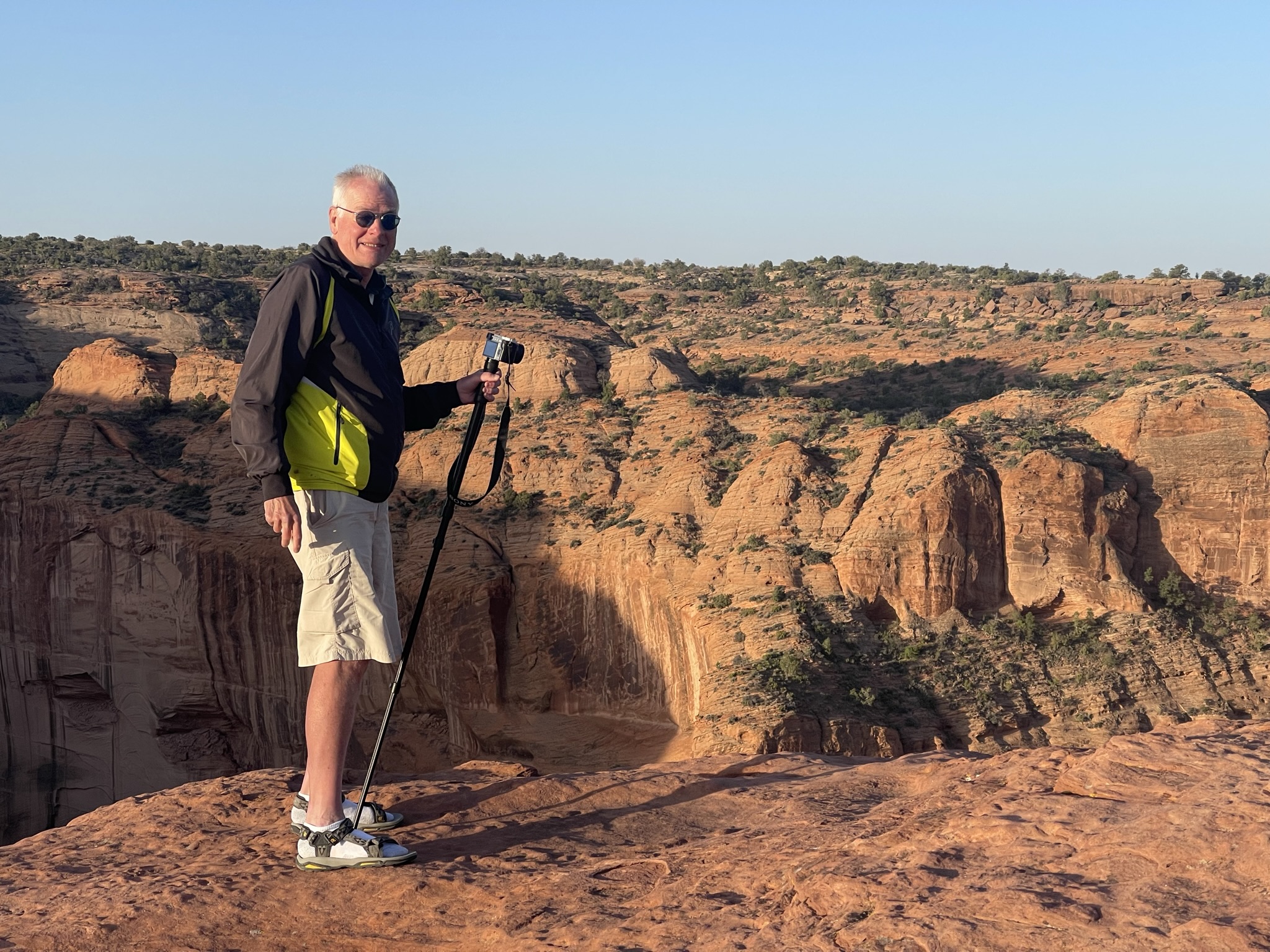
I felt entirely unrushed as I cruised over the thick slabs of rock. Playful but careful. I watched as the canyon came to life, changing colors before my eyes. Peering down over the edge, finding caves and imagining the rocks forming gates down below. Rich took his fill of photos, relishing the lack of interference from other onlookers.

We eventually moved on to two more overlooks further down the rim. The views continued to impress, especially when we spied the remnants of early cliff dwellers across the way, looking like doll houses in the distance. And still we were solo visitors.

What will remain with me from that morning was the memory of that first overlook, feeling that we owned the canyon, had our own private showing. The freedom to wander unencumbered by fences or warning signs. The sense of awe we were allowed to absorb. I

t’s an experience that can’t be bought. Or planned. Clearly it was fate that brought it to us.

The Lure of the Loop

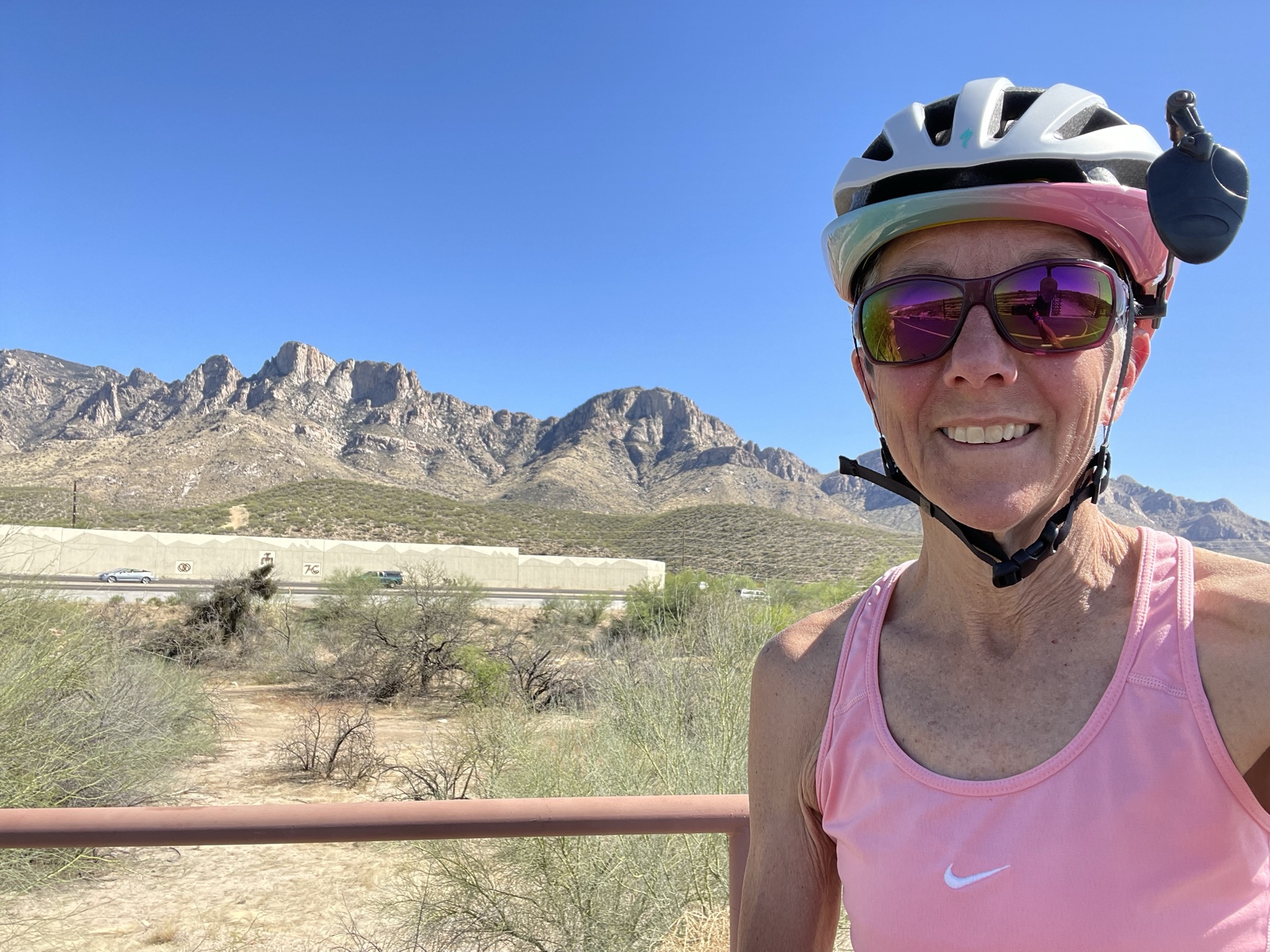
I am not a newcomer here. Despite a three year gap, I come laden with memories and expectations from two prior stays at the base of the Catalina Mountains on the outskirts of Tucson, Arizona. Escaping a winter that just won’t quit, the constant sunshine and warmth were the natural draw. But to me, that is only the backdrop for my cycling plans. I already know, I will head straight to The Loop.

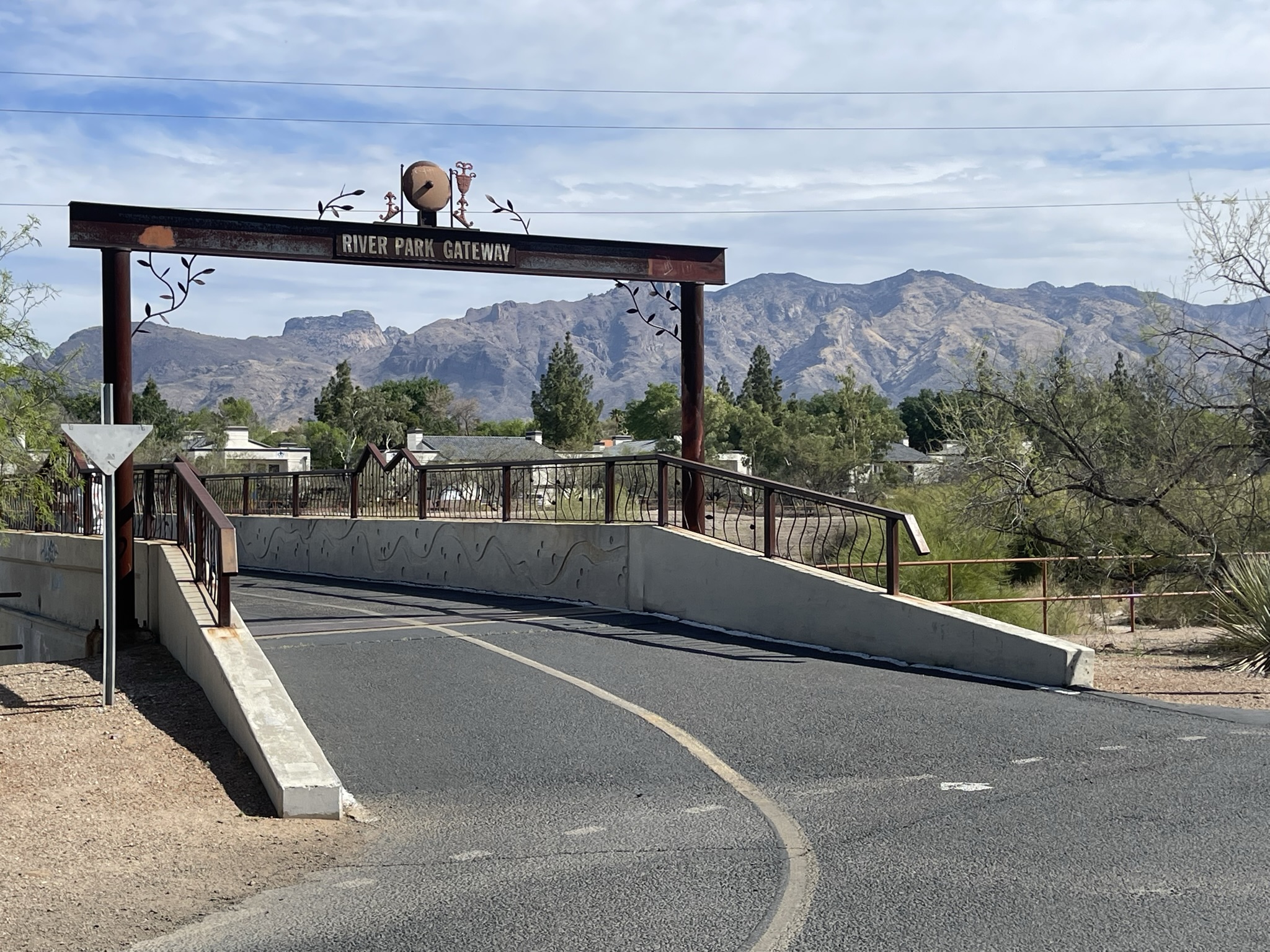
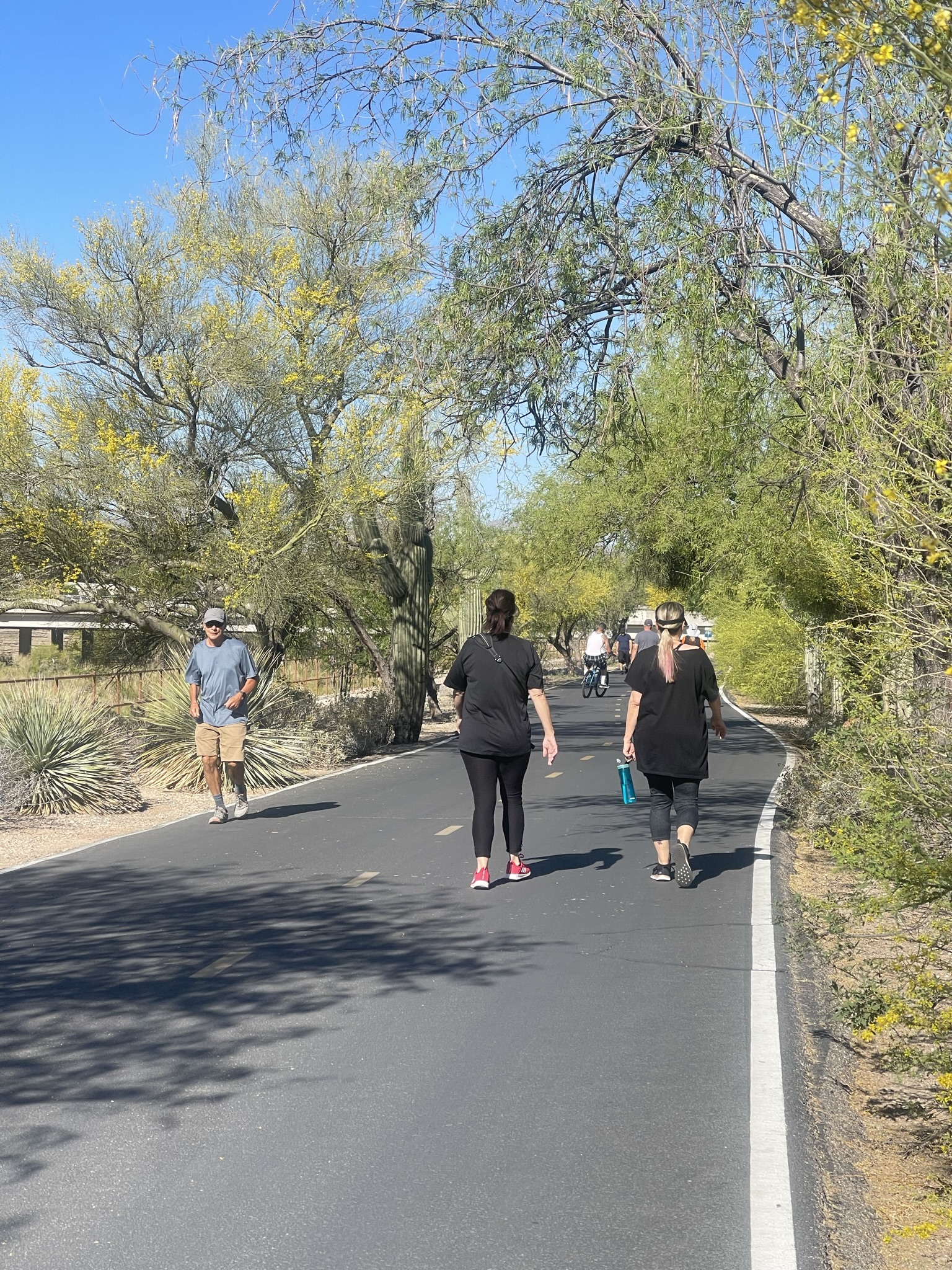
Tucson’s vast expanse of paved bike trails top the “washes” where flood waters are funneled during the rainy season. The Loop accounts for 131 miles of off-road trail, including a 55-mile long route that circles the city. I crossed that off my to-do list last time we were here, so instead I turn my focus to the three River Parks that radiate out from a central connecting point. Each has a distinct personality, which guides my selection each time I set out.

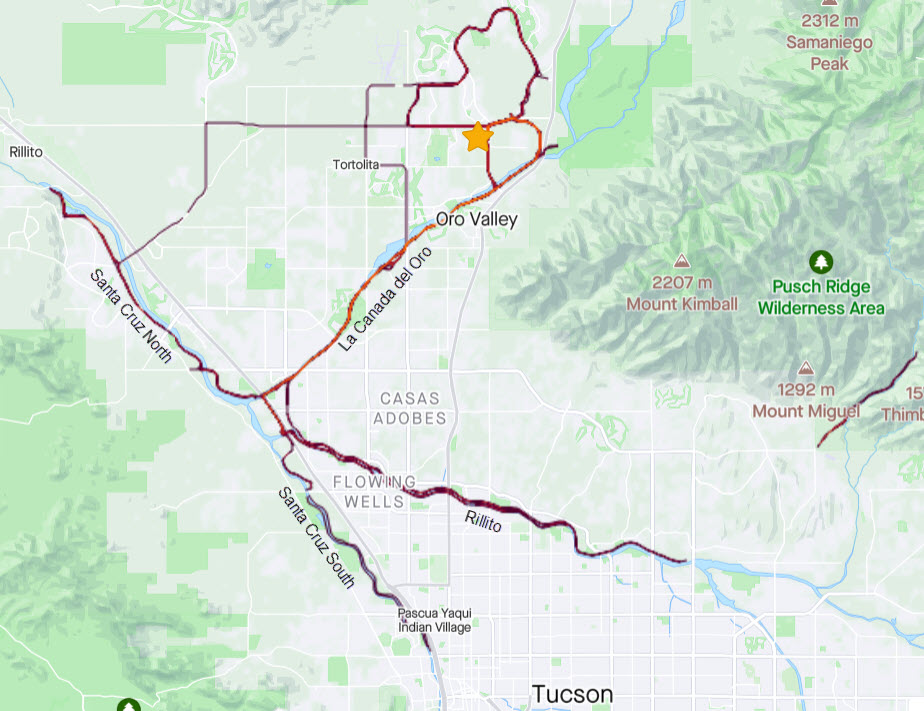
My biking routes over our 2-week stay

Our location in the Oro Valley is at the top of La Cañada del Oro River Park. Within a mile, I join the trail that I consider “my home trail.” I traverse this 12-mile trail down and back each time I seek out a route to cycle. Rich rolls his eyes, at my willingness to pedal 30-40 miles to explore each time I set out. But the terrain is flat, the pavement remarkably smooth, the cycling is easy and I’m just tickled to be out in the warm sunshine.

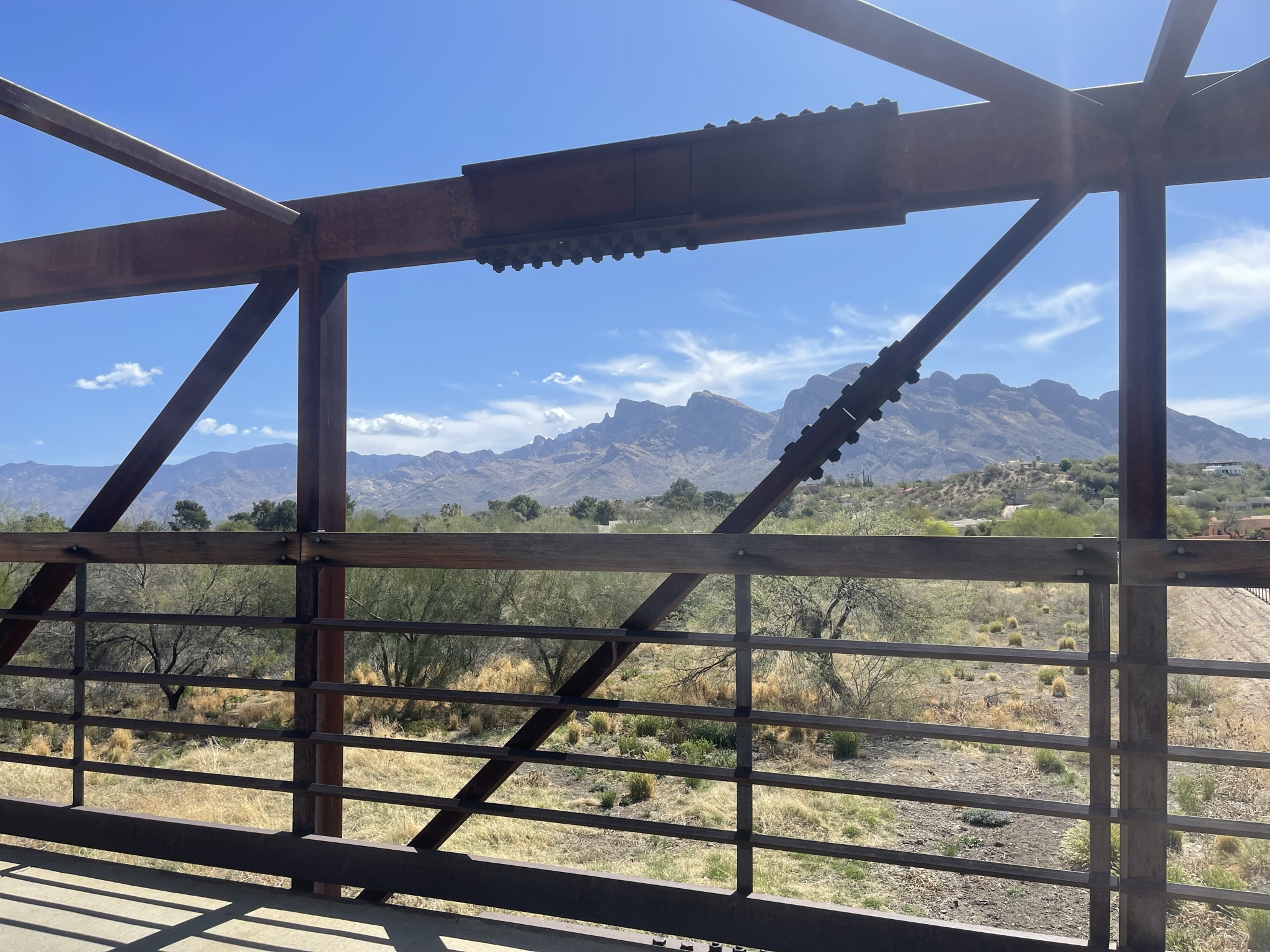
La Cañada del Oro heads southwest through suburban areas that exude prosperity. At the top, the rugged mountain peaks remain in close proximity, a tireless sight. Two golf courses flank the trail, spilling nice landscaping onto the sidelines and spawning narrow bridges to usher golf carts to the holes on the opposite side. An artsy park is a popular spot and a handy parking area for cyclists. And the path takes to the flats with a windy course flanked by desert shrubs, wildlife and birds. Before I know it, I’m alongside massive poles with netting to enclose Top Golf, with three decks of golf stations. That signals my approach to a decision point.

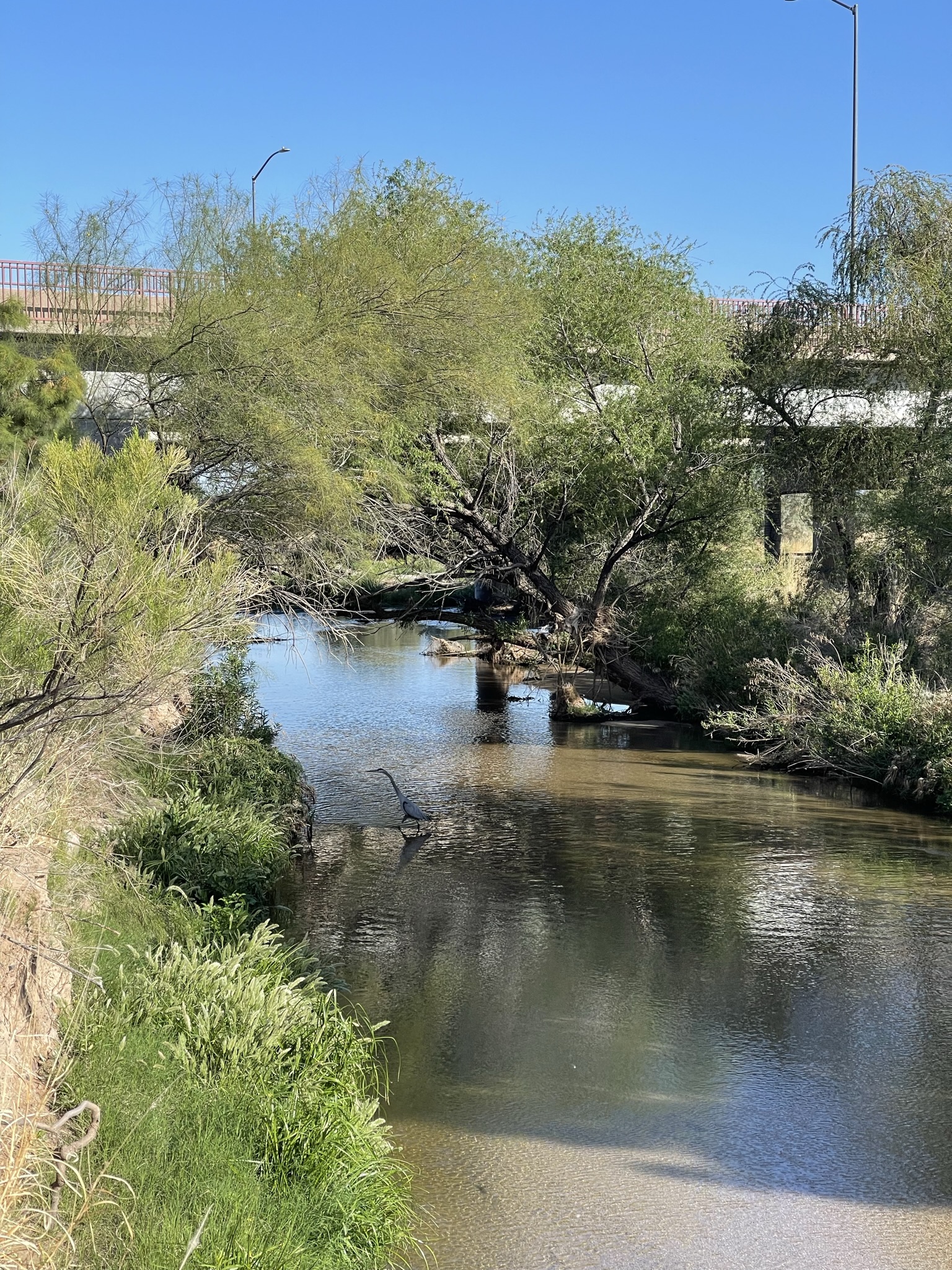
Turning to the right takes me to Santa Cruz River Park North. After enduring some industrial development, it leads to the flowing Santa Cruz River. Green lush trees and bushes line the banks of the river and the sound of flowing water is both a surprise and a treat. Cycling alongside this oasis I want it to continue forever, but the trail moves away and into local neighborhoods. I cycle behind houses for miles – most protected from view by stone walls – with desert scrub on the opposite side. More eye candy appears with the El Rio preserve and a seasonal lake. Another range of mountains looms close by. Like all my River Park routes, it’s an out-and-back proposition.

In the opposite direction, Santa Cruz River Park South is probably the most remote of the trails – at least for the portion I cycle. It starts with open pit digging of some kind, then takes off in a wilderness area where the trail quietly follows the wash down both sides. It passes Sweetwater Wetlands Park, popular for birding. But until it reaches the heart of the city, it remains quiet and unpopulated. I can cycle on autopilot through that section.

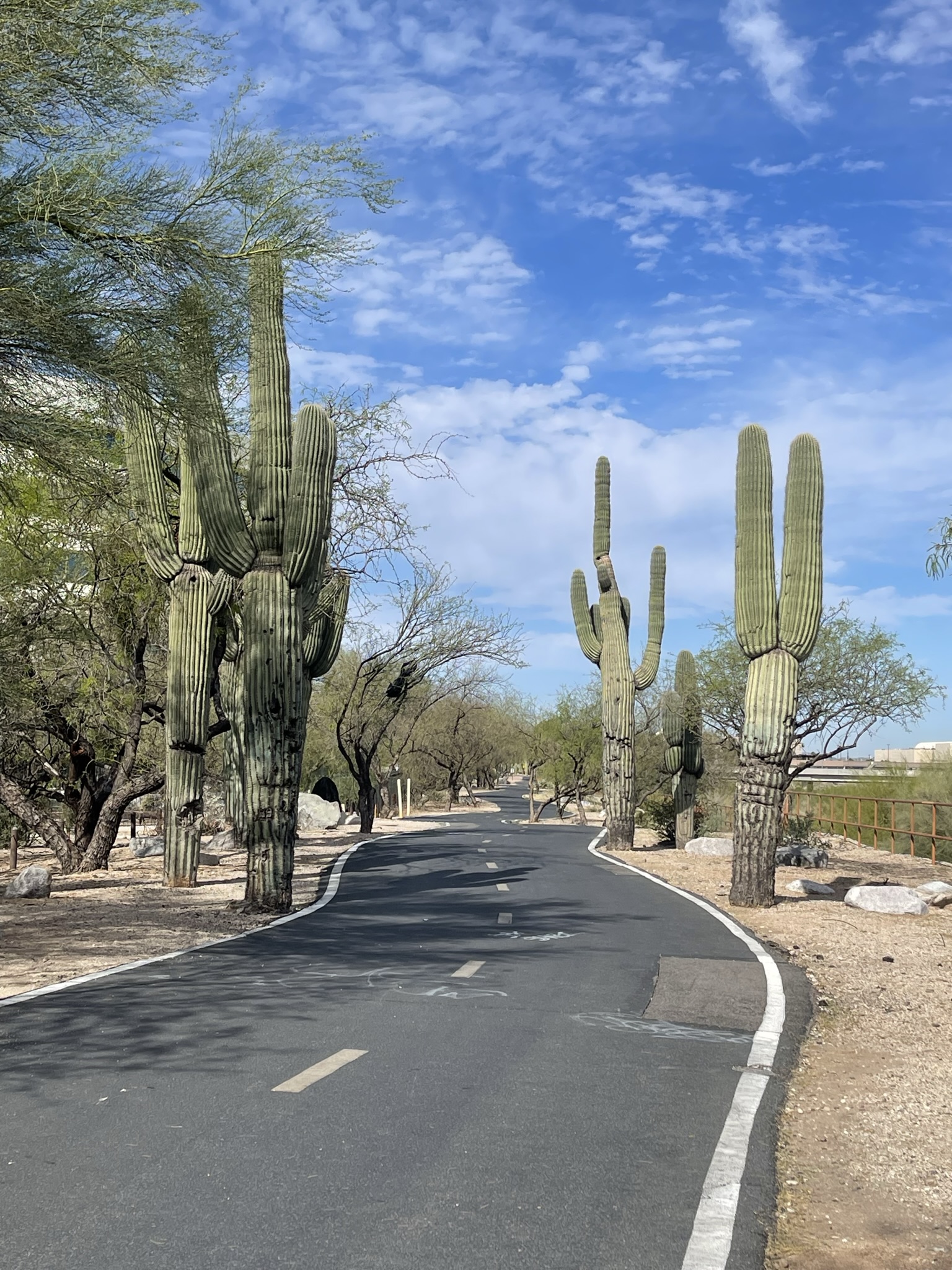
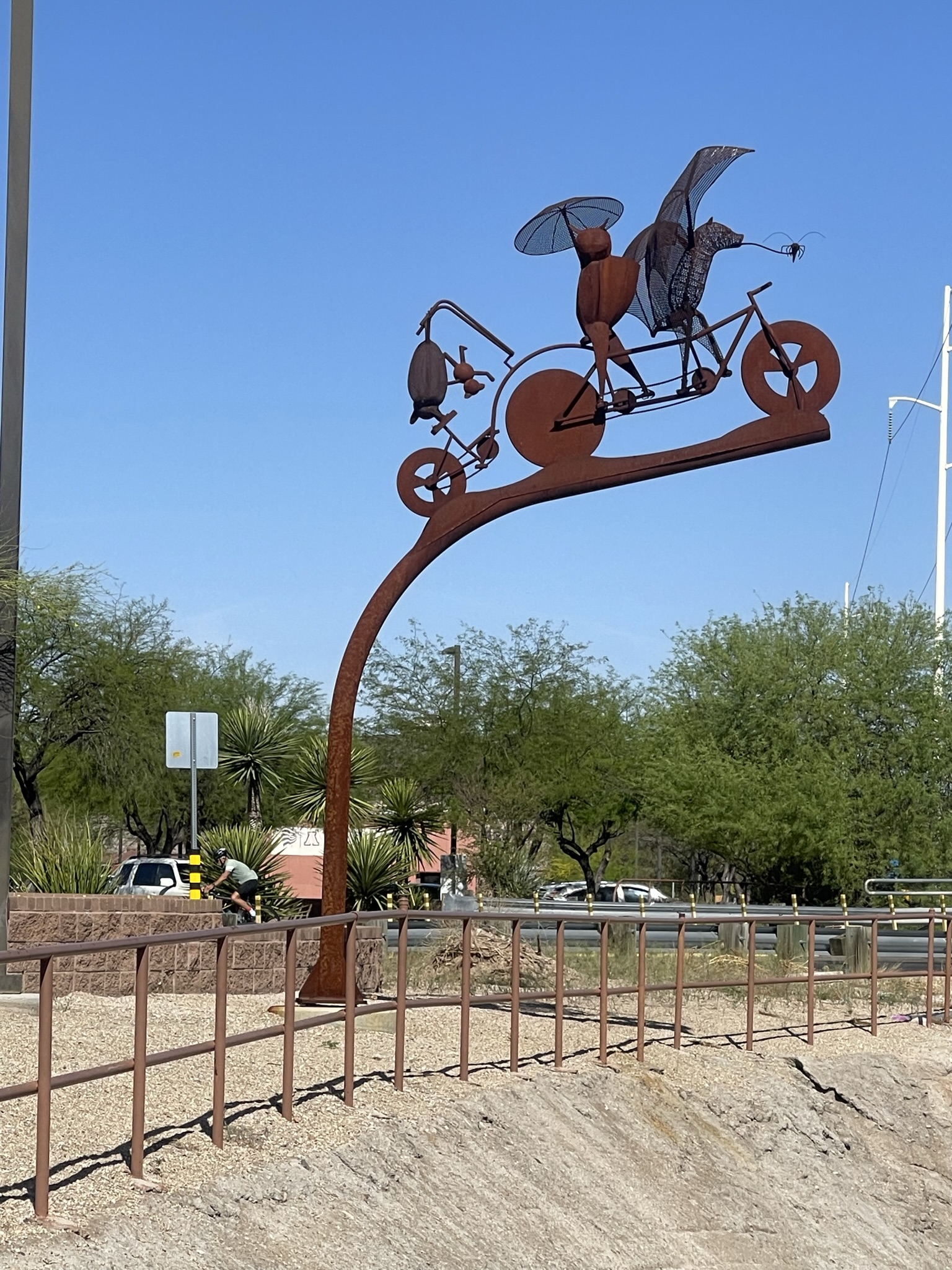
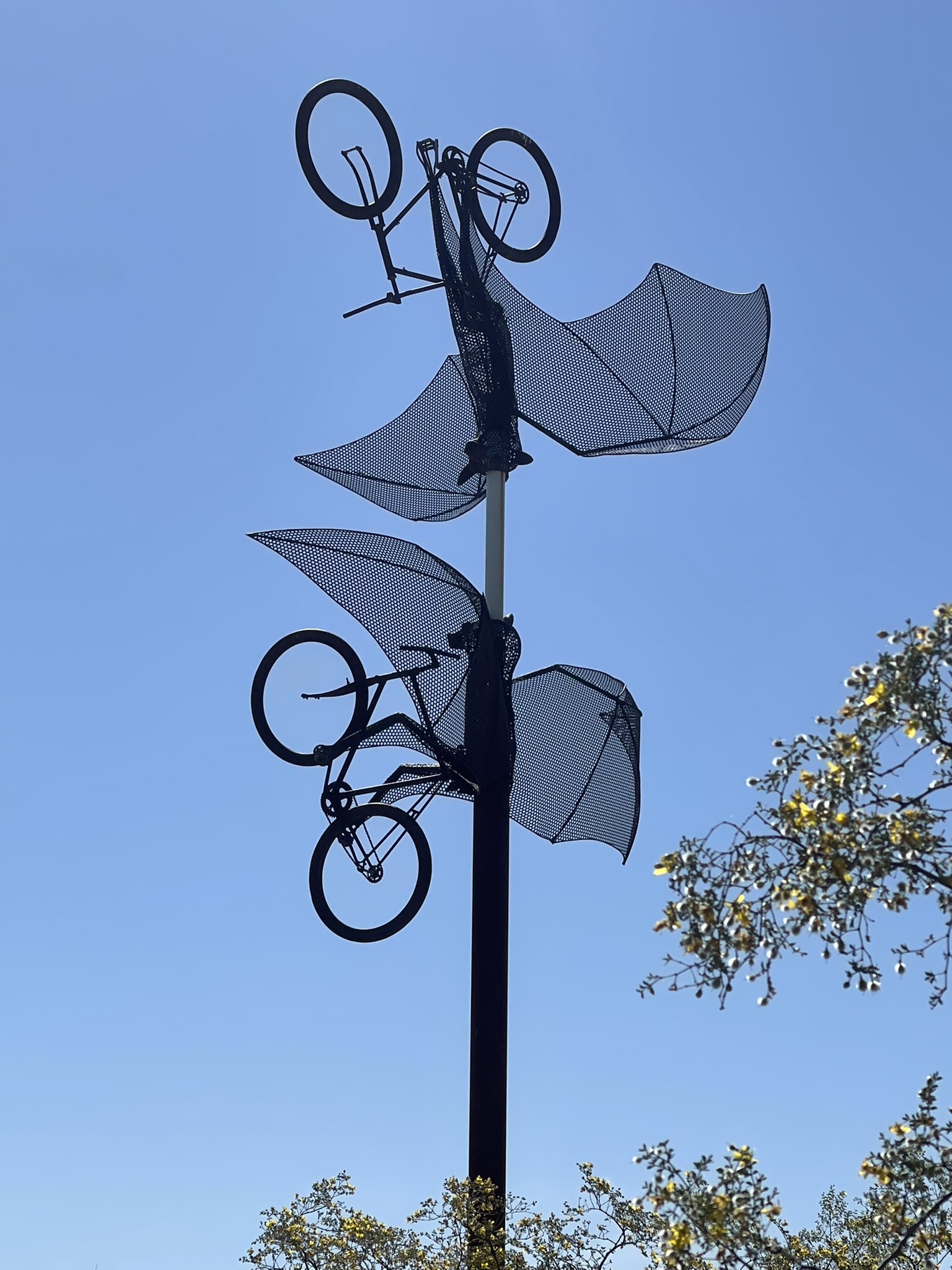
I’ve left my favorite for last, Rilitto River Park. This appears to be the most popular trail, with paths on both sides of the wash and there are plenty of walkers, runners and cyclists enjoying it at all times of the day. The south side is less populated, and has some fun artwork and landscaping along the way. The north side has numerous parks, playgrounds and ball fields that draw families. And the Ren Coffeehouse is a popular stopping spot for cyclists. Rilitto Park hosts a Farmers’ Market on Sundays, and I happened to be there on Bike to the Farmers Market Day. I couldn’t resist the opportunity to peruse the farm and ethnic foods on offer.

I took my last bike ride this morning, finishing with another pass on both sides of Rilitto. My new bicycle bell came in handy, dinging each time I passed a pedestrian or bike. It made me smile each time it rang, and garnered a wavy from those on the path. Tomorrow we leave to head back to the cold Northland. But I’m already looking forward to another visit, knowing I will be lured back to The Loop.

A Gap in our Streak

We all have Covid Stories. You know the litany – because of Covid I couldn’t do this, or travel there, or see so-and-so. Covid interrupted our lives, our routines and broke our winning streaks. But life went on.

In my case, the streak ended just shy of 30. Every year since 1993, my friend Susan and I have escaped our husbands, kids, work, stress and life to spend several days plying the ski trails by day, and sharing our woes, our dreams, our successes and failures in front of a fireplace by night. Until last year.

Those early years we felt so rebellious. The whole idea was born of a need for equal time, payback for the fishing weekend our husbands shared every fall. It was our turn to hand off the kids and venture off into the wilderness. Susan was pregnant with her second child, and I left three at home. It was ground-breaking, escaping before the days of cell phones, out of reach, out of touch on the shores of Lake Superior. And wonderful.

1993 at the Stone Hearth Inn B&B

How well I remember the middle years. We were both in management, working in IT balancing the technical aspects our of careers while getting mired in people management, motivation and leadership. Living in the Cities at the time, we had a long drive to our chosen ski lodgings up the North Shore, hours we used to shed our challenges, our anxieties, and especially our frustrations. Speeding through the darkness, we peeled away layers of pent-up emotions, leaving them on the floor of the car when we arrived. The same topics would resurface over our après-ski wine and cheese, but the tone softened with each passing evening. We were not alone.
2002 Celebrating 10 years at Old Shore Beach B&B

Our kids grew up, our careers shifted paths, and the busy-ness of our lives moderated, slightly. We grappled with thoughts of retirement, of life after work, of building new homes away from the Twin Cities. The life changes that awaited us were ample fodder for our time together, and we allowed ourselves to extend our outing to longer weekend trips. The guys’ fishing trip had long since met its demise, but we clung fiercely to our annual tradition. We continued to see one another through life. Listening and supporting.
2010 at Skara Brae B&B

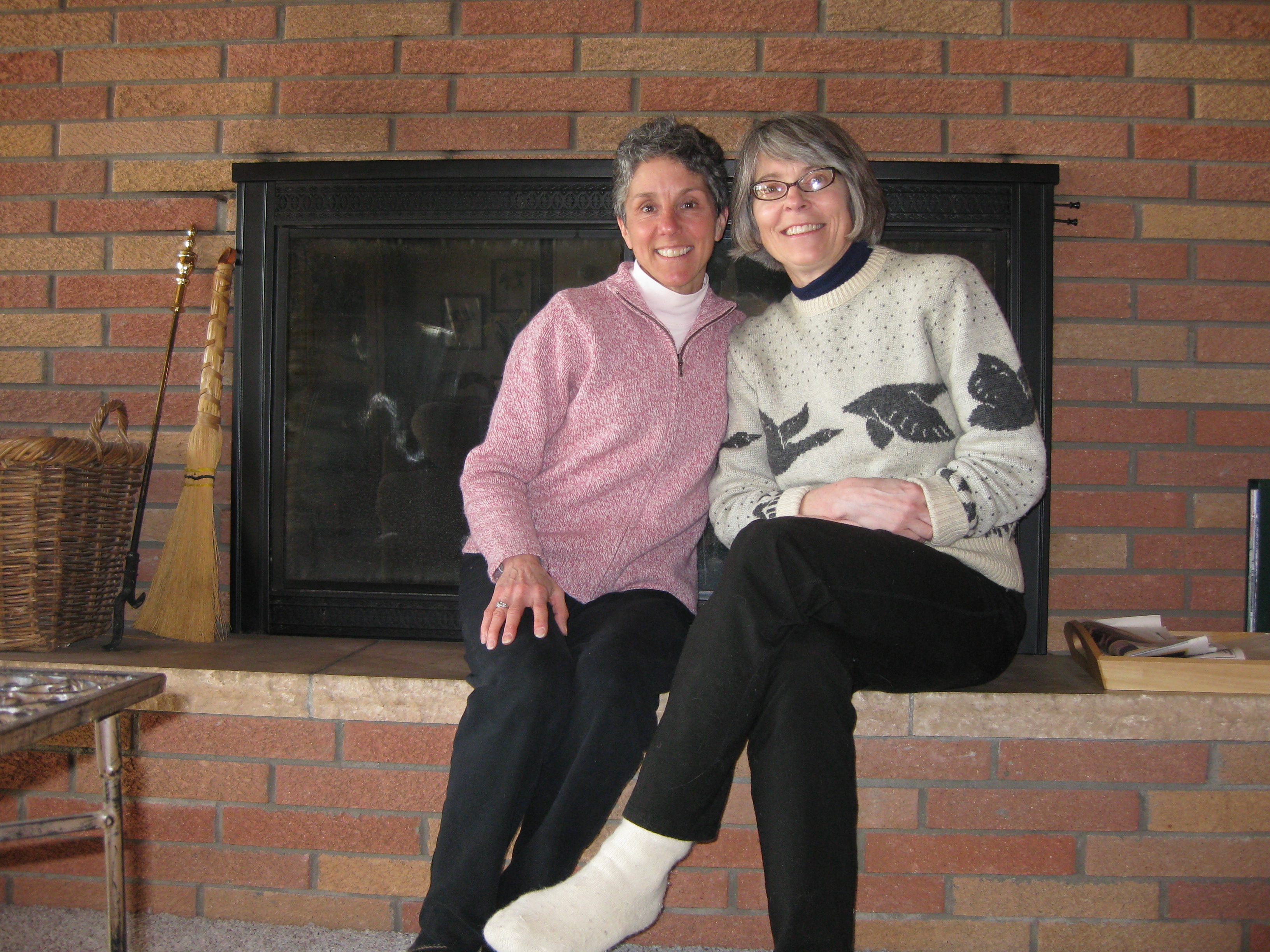
Retirement has brought increased freedom, allowing us to move to week-day trips. We’re more willing to splurge on our lodgings these days, to grant ourselves some extra comforts. But little else has changed, and despite now living far apart the bond of friendship rekindles the minute we pull away with a car full of skis, food and gear. A comfortable companionship.

2017 at Poplar Creek Guesthouse

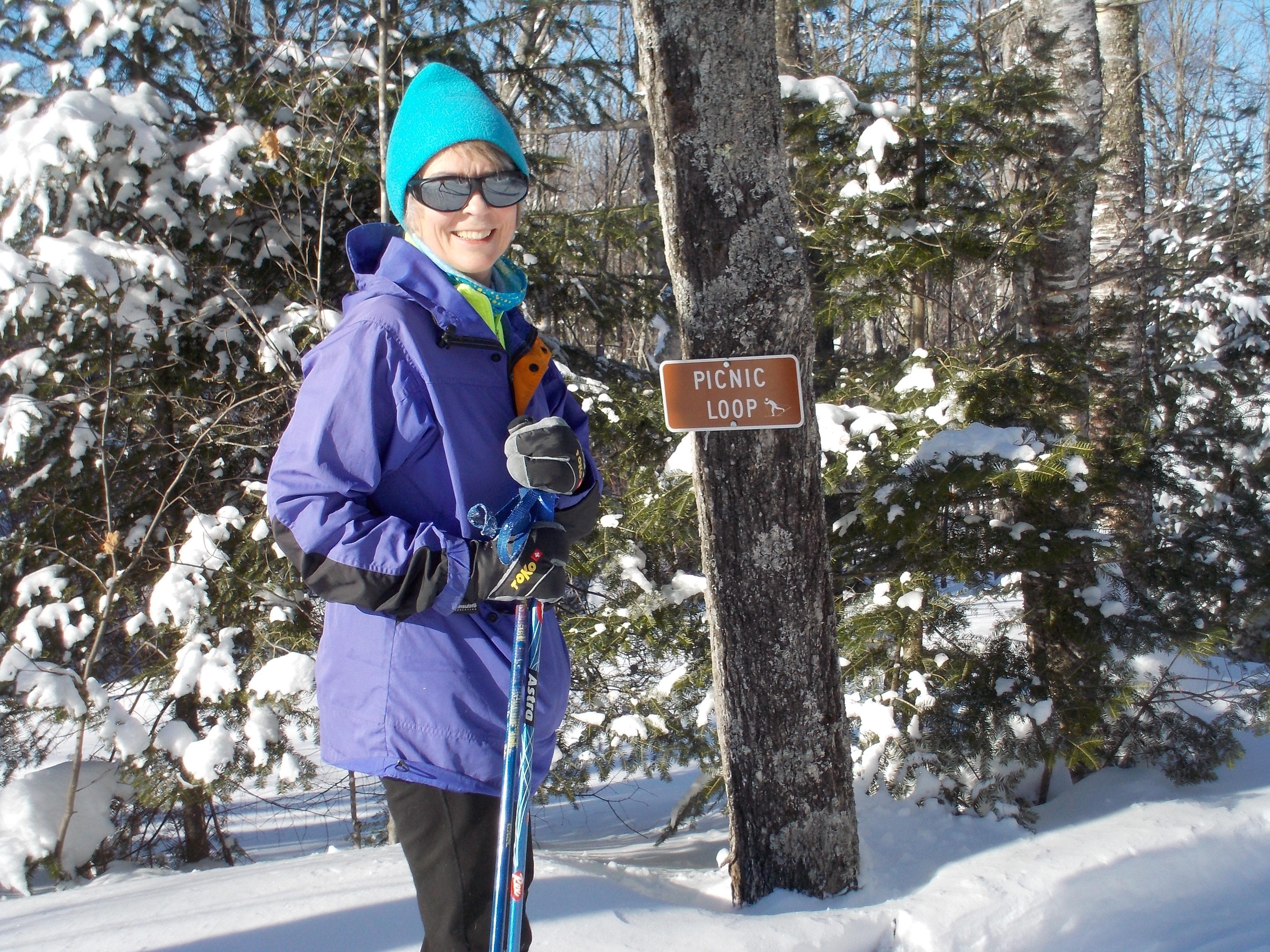
I’m not exactly sure how we chose cross-country skiing as the basis for these escapes, but it has remained a constant throughout our trips. Year after year we’d glide through the woods, losing ourselves in the silence of the sport. Our paces often didn’t always match up, but it didn’t matter. We’d drift apart, deep in thought, one of us waiting down the trail to regroup. For all the talking we did at night, we let our brains percolate on their own in the midst of the cold and snow. Most trips we racked up the kilometers all day long, returning to our digs pleasantly worn out, chilled and ready for the fire.

2009 Mukwonago Trails
2014 Sugarbush Trails

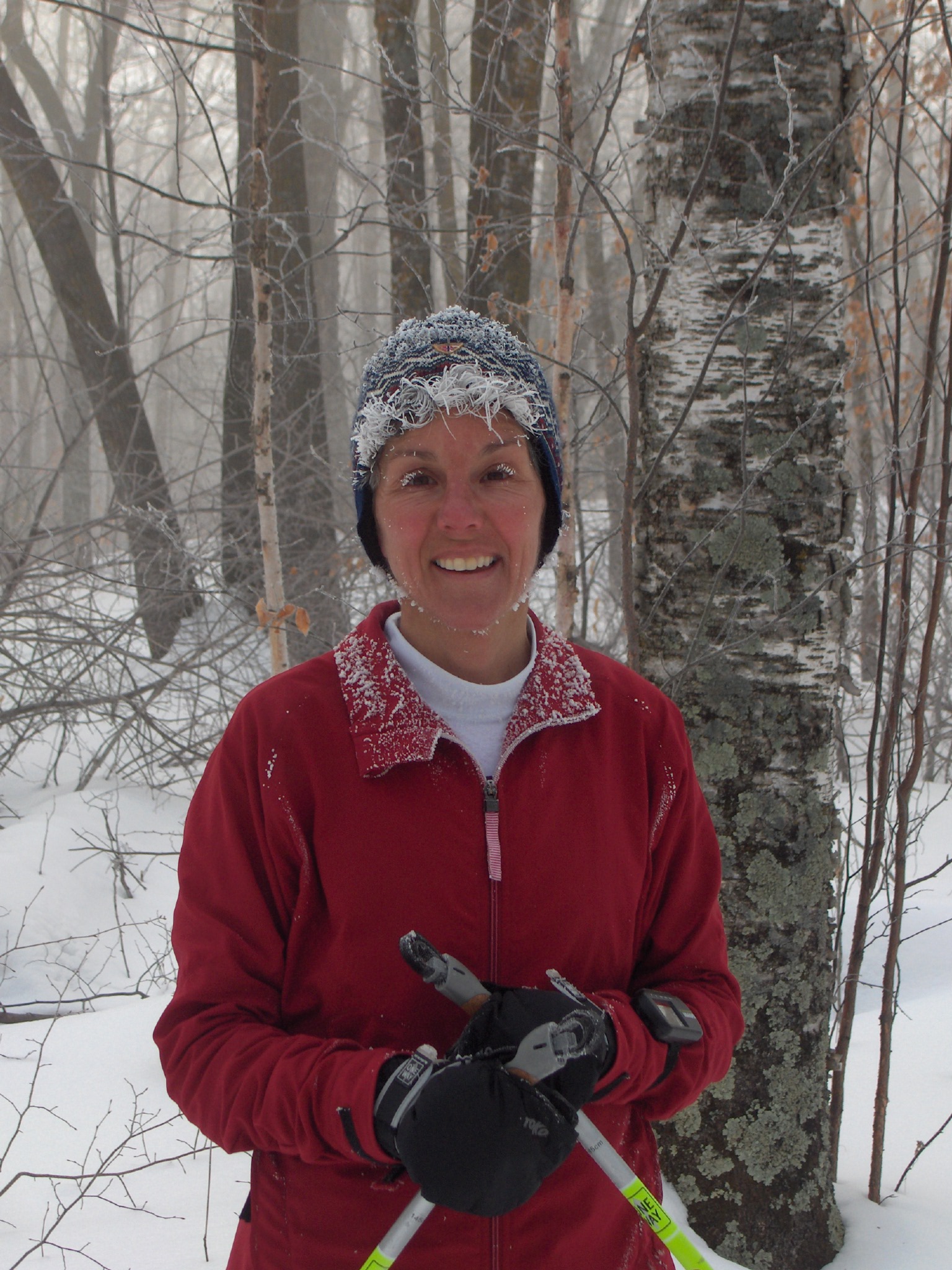
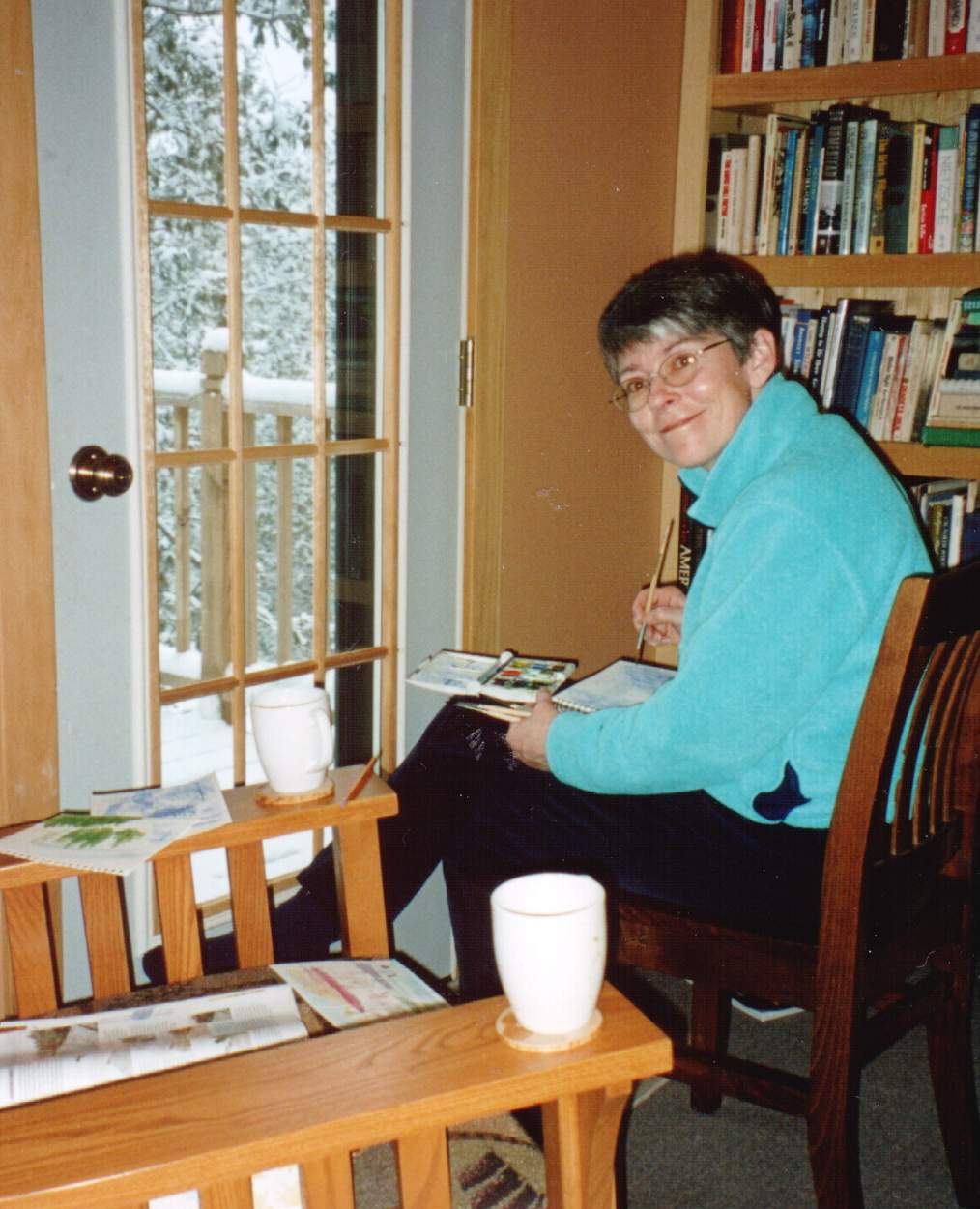
From the very start, my ritual was to get up for an early morning ski before breakfast. Eager to push myself, I’d head out the door in all conditions. Susan joined me in the initial years, and on one memorable occasion we skied up to a ridge on the North Shore where we had a grand view of Lake Superior. We then plummeted back down to our B&B just in time for the sumptuous breakfast that awaited. We walked through the door, faces bordering on frostbite, eye lashes crusted with ice crystals and fingers that hardly moved. It wasn’t long after that when Susan elected to spend those early morning hours painting instead. But I persevered. I balanced the frequent brutal conditions with skiing as the sun rose, being the first out on freshly groomed trails and breathing in the tranquility.

2008 A foggy morning at Maplelag Resort
2003 Susan painting at Poplar Creek Guesthouse

Perhaps it was the gap that urged us to look back and take stock of our accumulation of shared experiences. Just as our lives have changed throughout the last 30 years, so have our outlooks. We still eagerly pack up our skis, and look forward to time spent in the woods. Skiing remains the focus of this annual excursion but we don’t feel the same pressure to pack it in as we did during our working years.

“I think I’m getting wimpy,” I confessed to Susan on the drive up the shore. “I just don’t relish going out in those cold, sub-zero temperatures anymore.” She nodded. “And I’m not keen on skiing crusty snow, or steep downhills on a twisty trail.” My confidence is waning. I now prefer soft new snow with good grip and staying in control. Susan put it differently. “I call it being selective. We’ve earned the right to make different choices.”

2022 Ready to ski the Sugarbush Trails

We embraced this new attitude over a cozy breakfast in our trail-side cabin at Bearskin Lodge the next morning, as we monitored the thermometer, waiting for it to cross zero. The following day we chose to start our day snowshoeing through the deep snow in the woods. The recent snowstorm and grooming delivered ski conditions to my exact specifications, and the sun shone down in a deep blue sky as if to endorse the perfection as we glided down the tracks each day. Being able to walk out the door to over 70 kilometers of trails afforded me plenty of opportunity to continue skiing, even when Susan had reached her fill and retreated to the Lodge. Proving we have acquired the wisdom to pursue our own passions.

2022 Morning snowshoe at Bearskin Lodge
2022 Molly skiing around Flour Lake
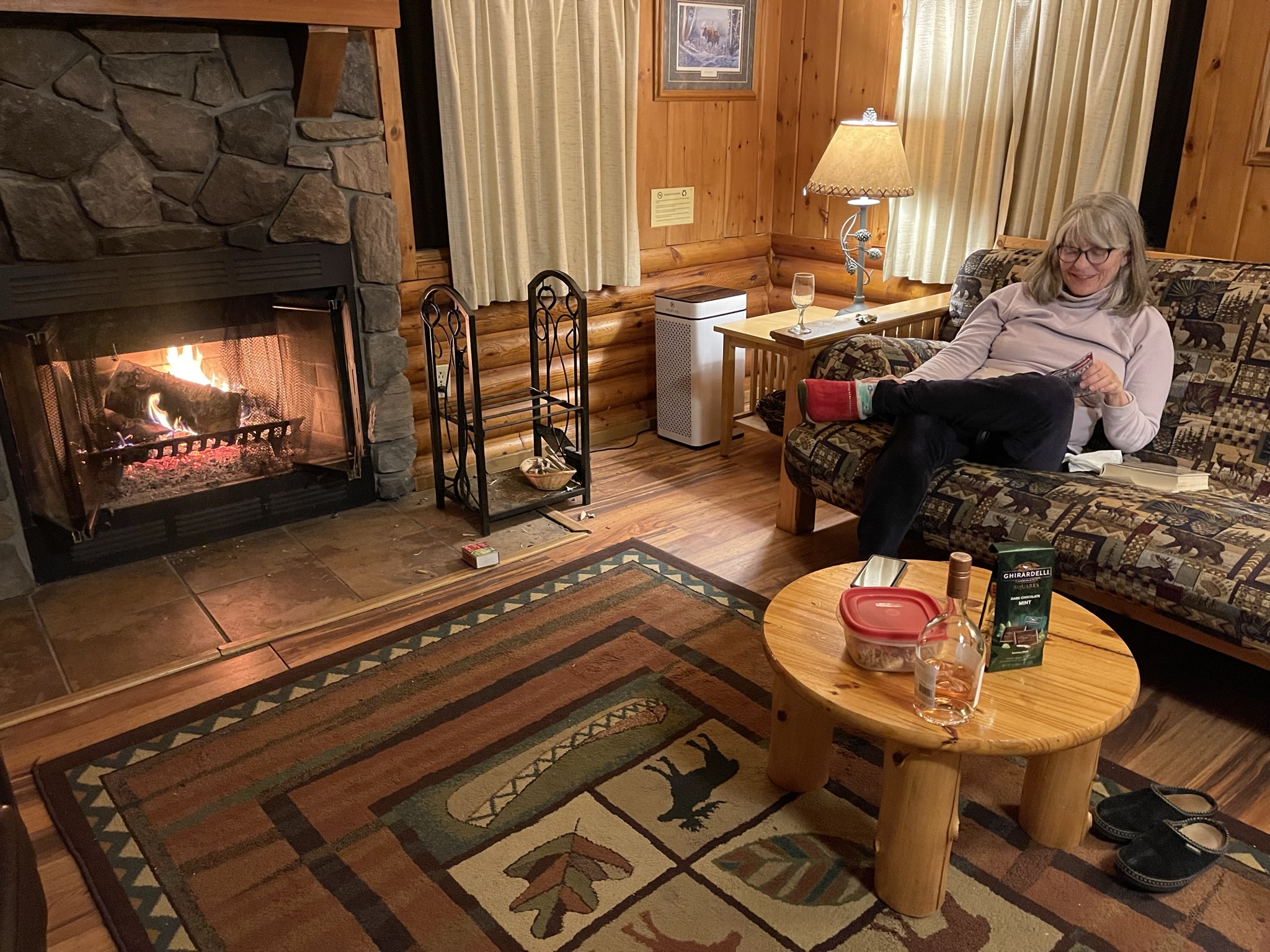
2022 The evening ritual by the fire

Next year will be our 30th trip, and there is no doubt we will go. We will still pack up our skis, dream of the solitude on the trails, communing with winter and pushing our bodies in the great outdoors. But we will also have the grace afforded by age, to give ourselves options. To make different choices, because we can. And it’s infinitely better than another gap in our streak.