Grand Canyon Sun Painting

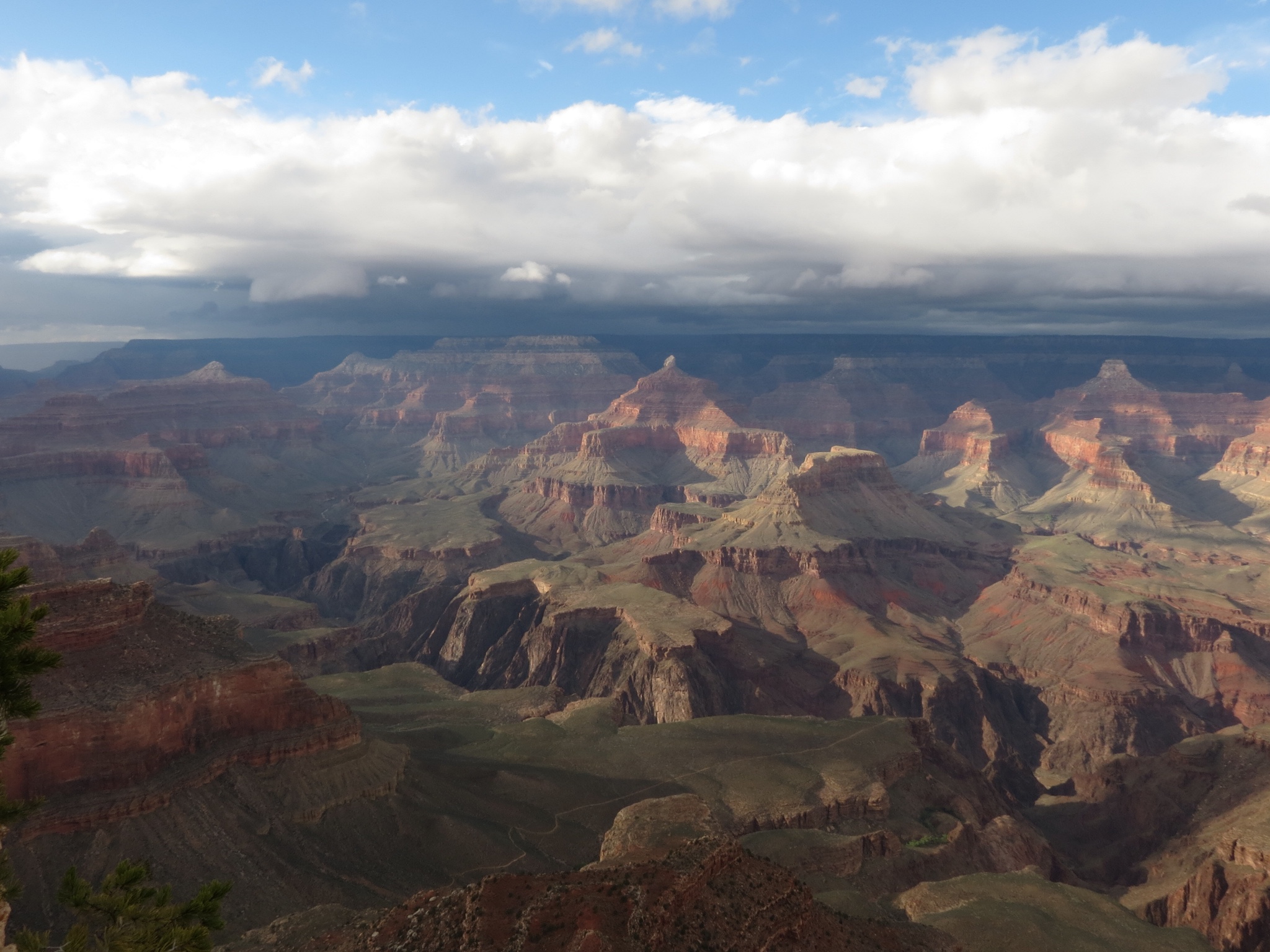
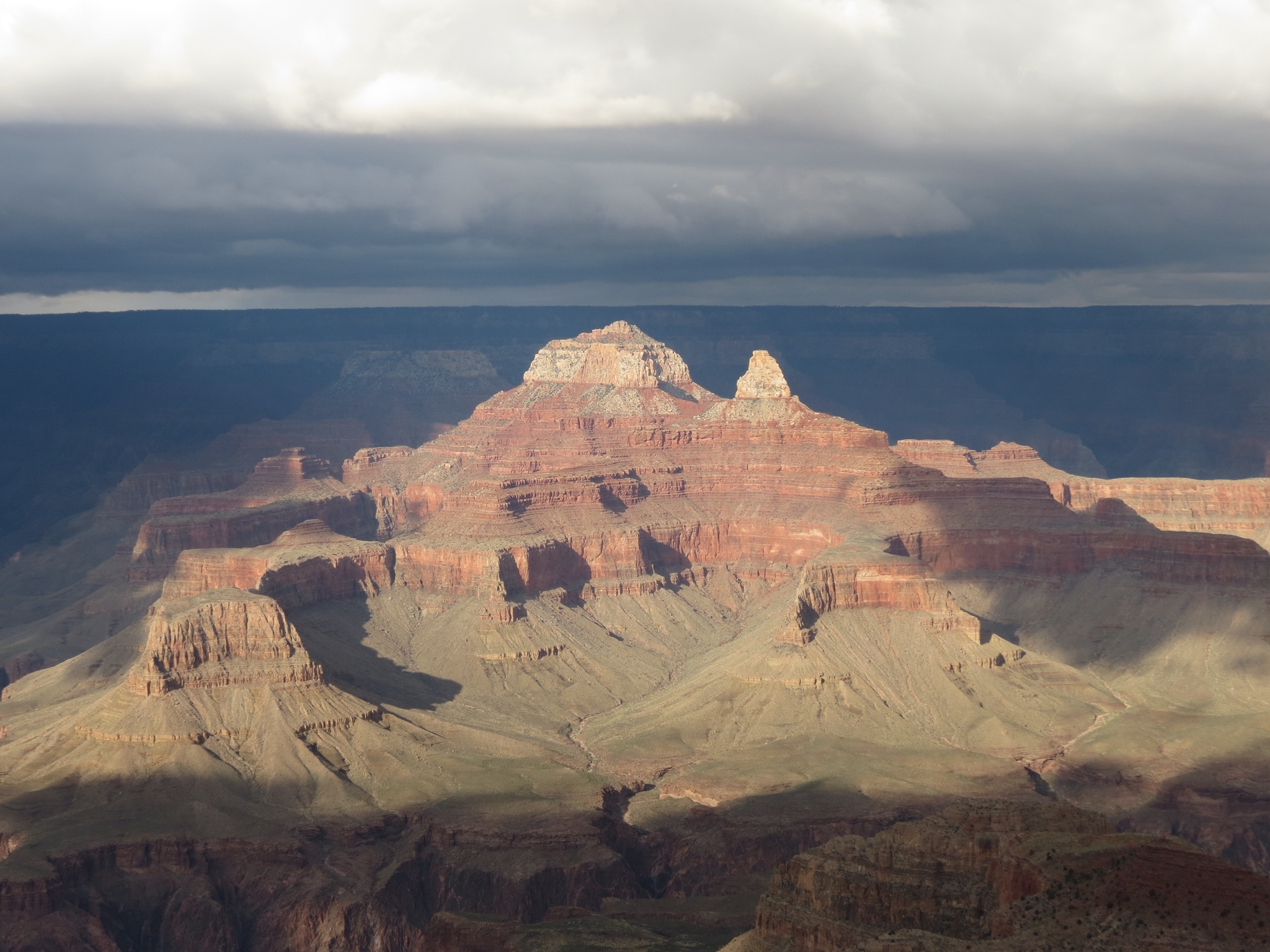
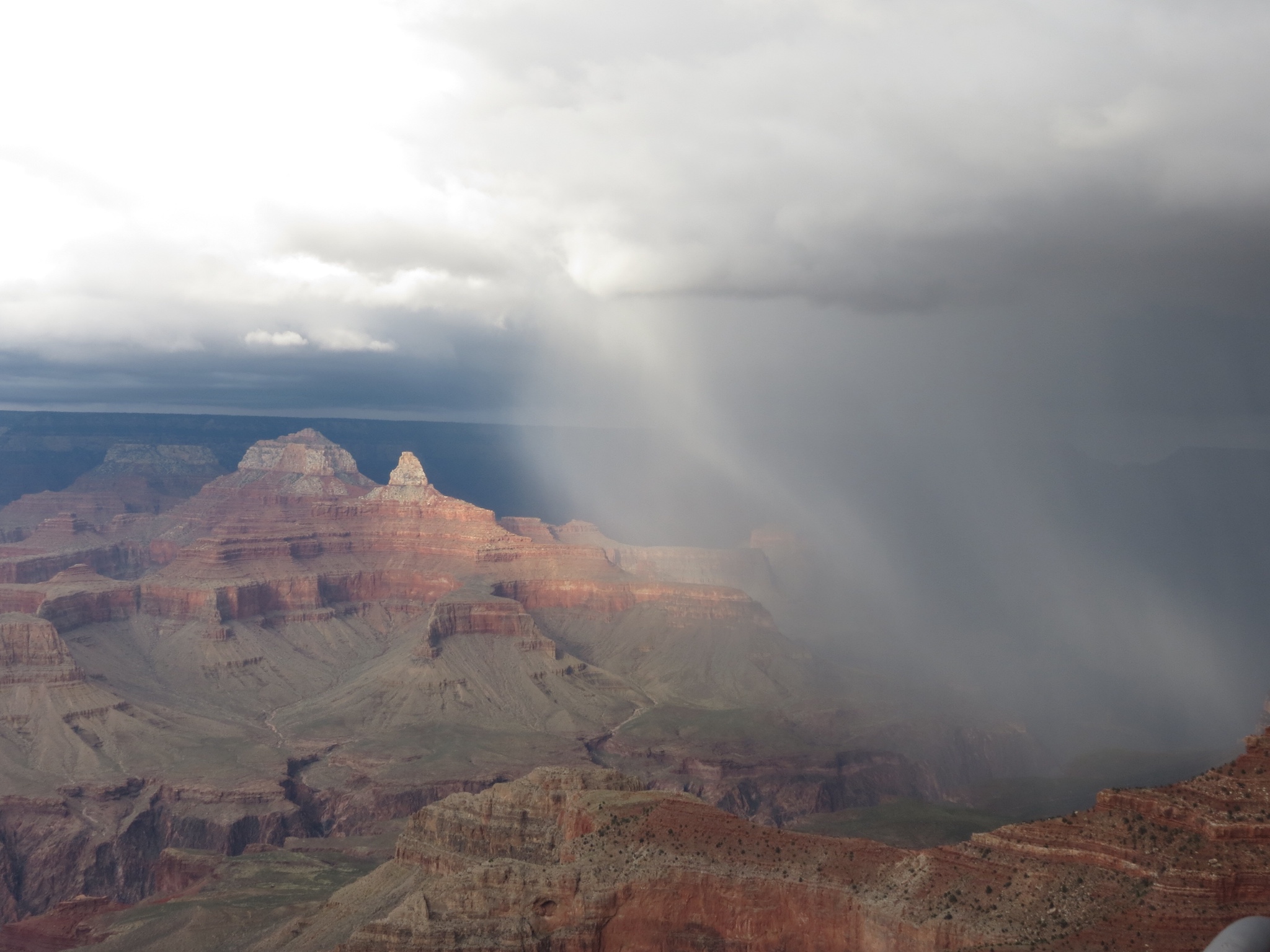
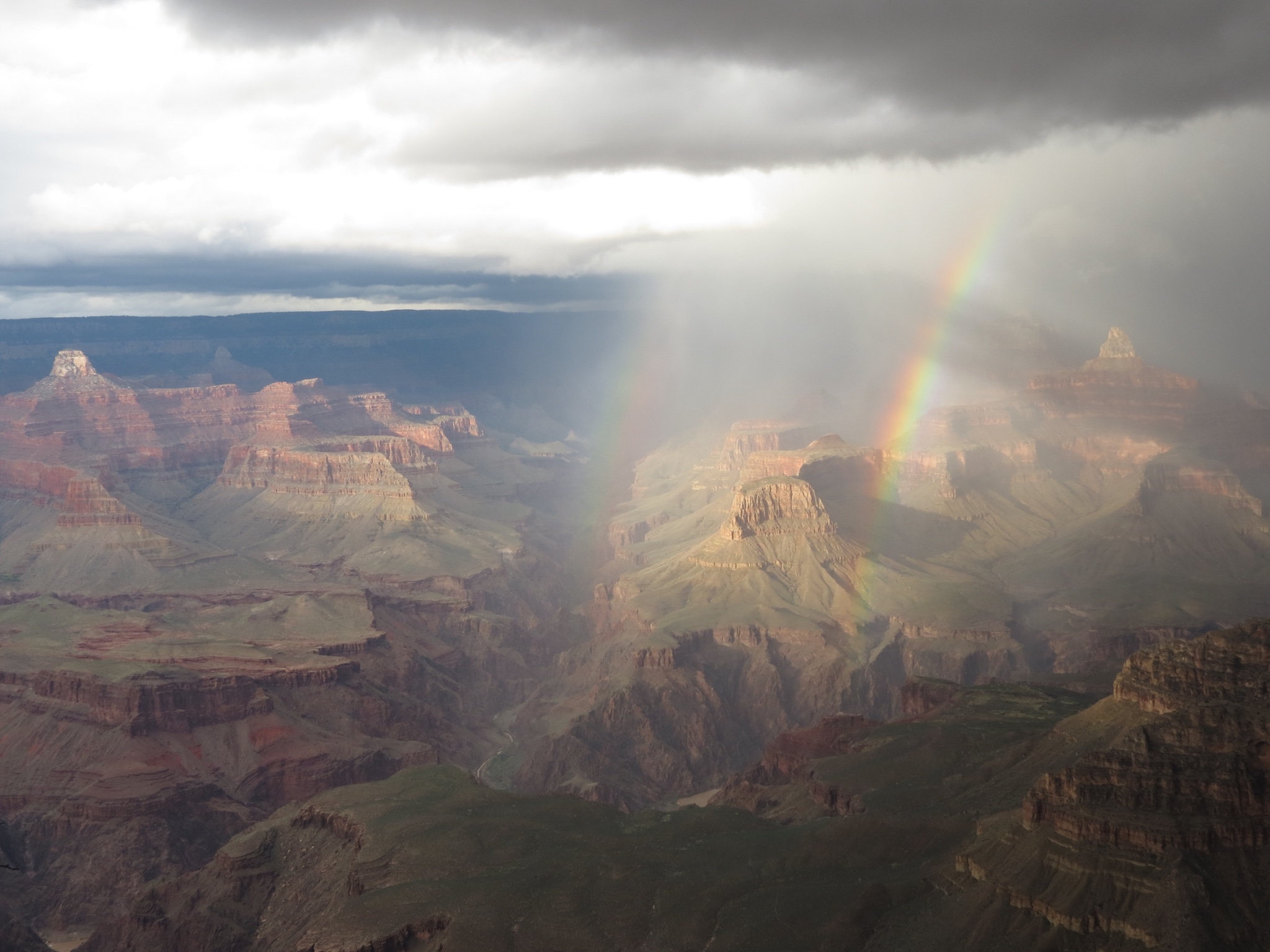
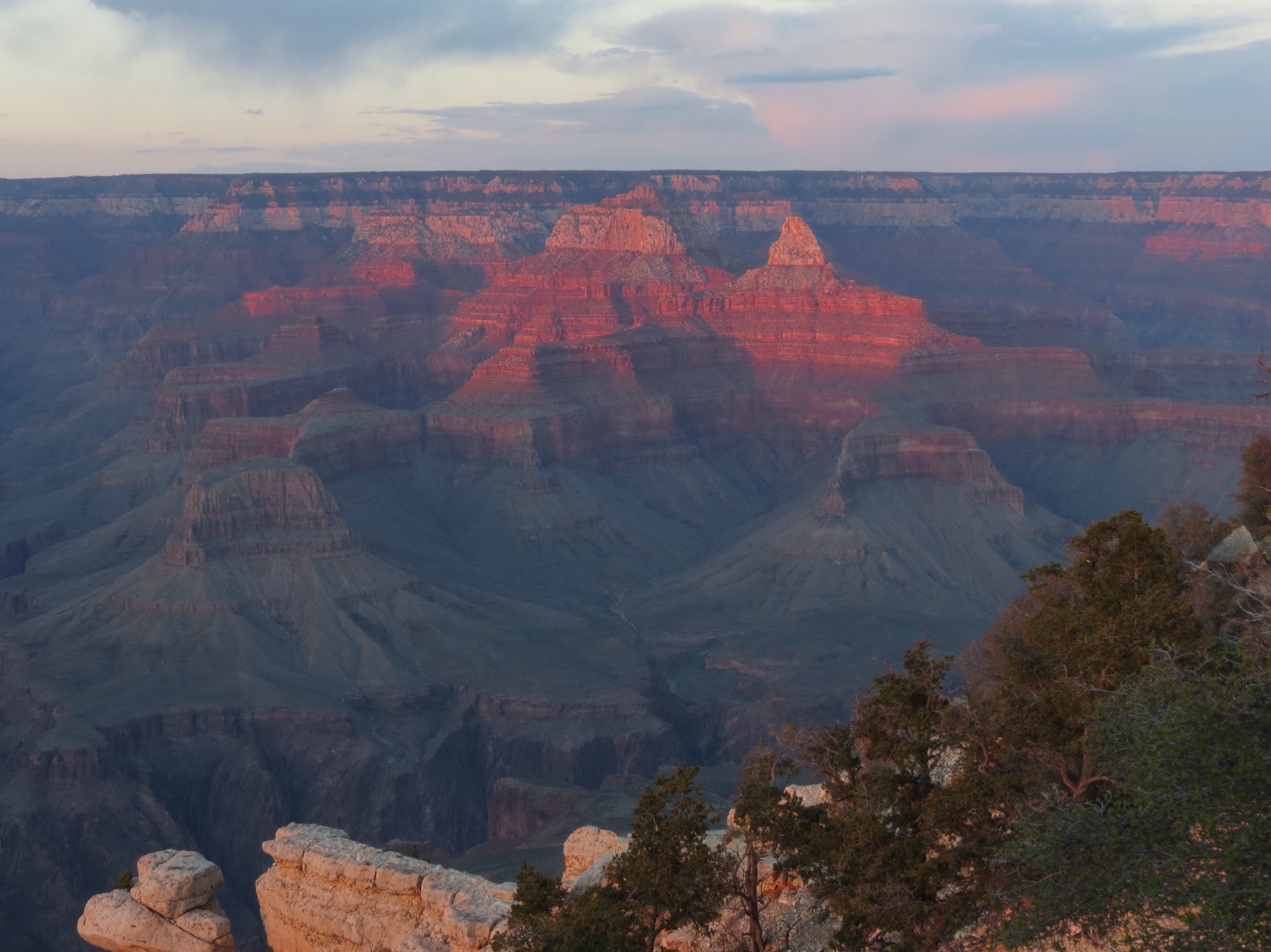
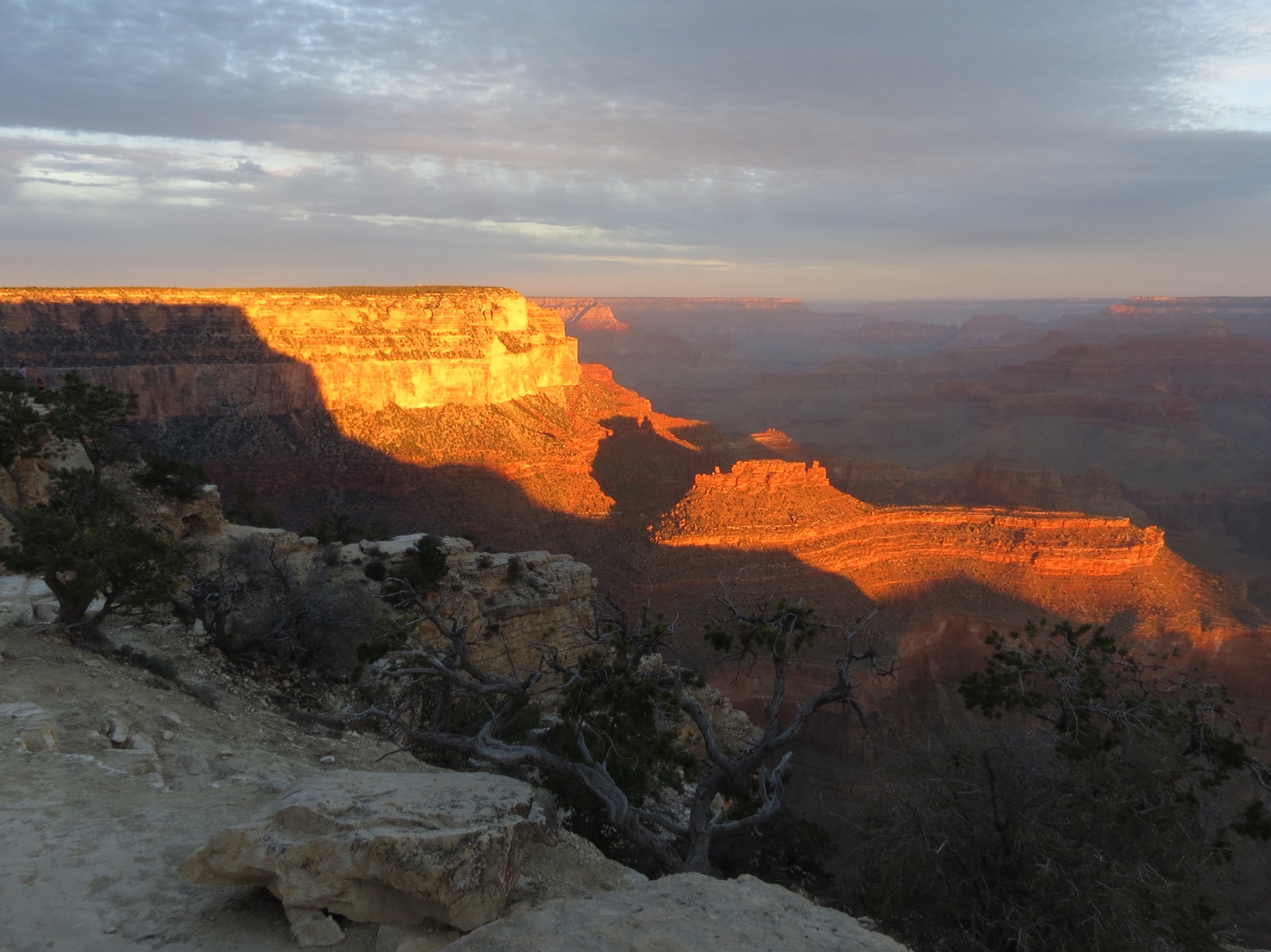
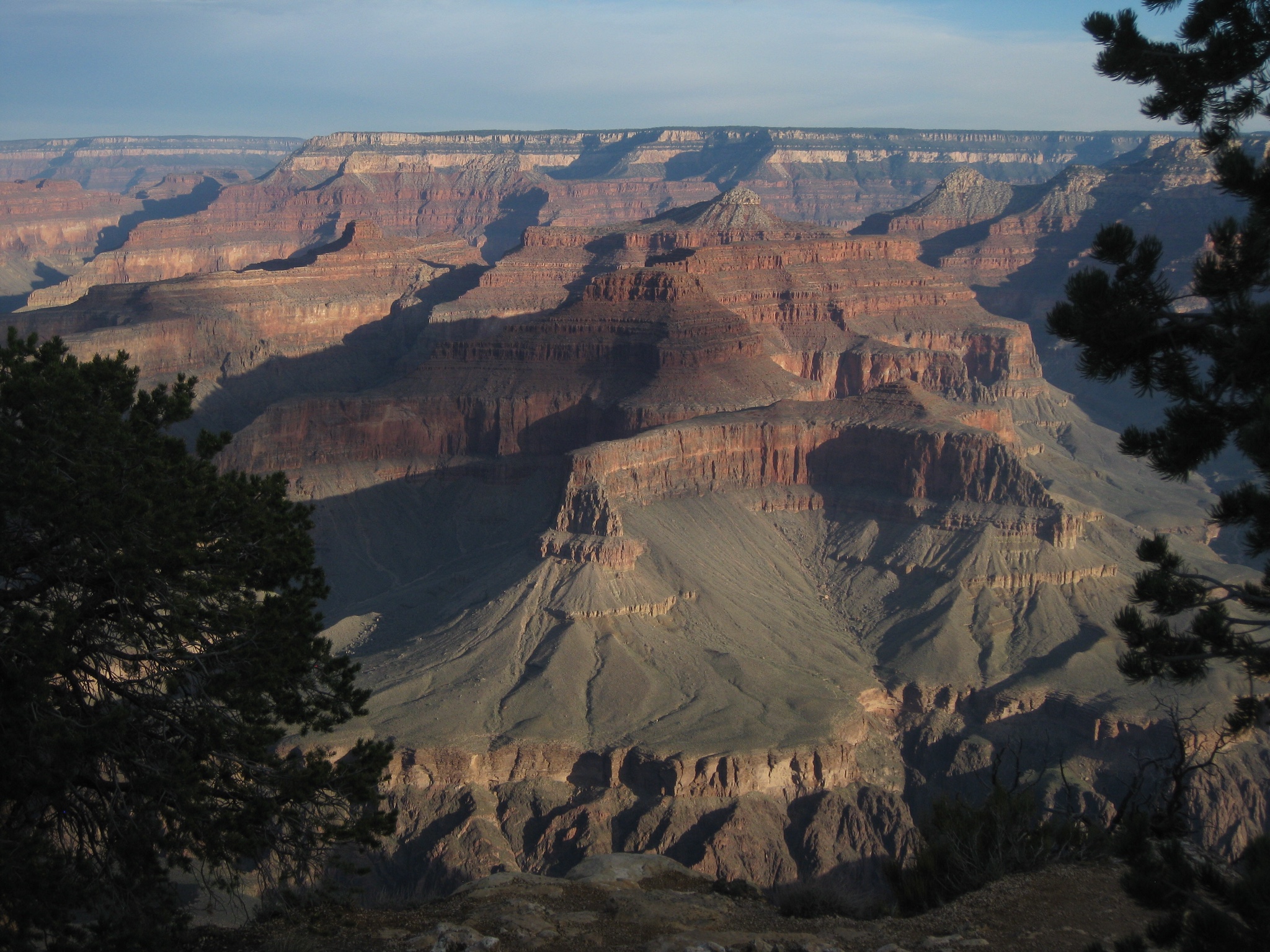
It's taken me 62 years to get to the Grand Canyon, and now I'm wondering why it took so long. Seeing it for the first time as we cycled along the South Rim, I was naturally awed by its vast expanse, the colors of the strata, its depth and the unearthly rock formations. Each turn gave us a different perspective, new views to behold. But it paled in comparison to what happened when the sun worked its magic on the canyon.

Near sunset, we toted our cameras and tripods to the overlook at Yavapai Point. It was already crowded with people, both photographers and those there just to bask in the view. Although most had already staked out their spots, we had no trouble finding a good vantage point as we planned to shoot in the opposite direction. While the sun performed its light tricks in the sky producing brilliant orange and red hues, to us the real display was on the canyon rocks. The further the sun sank the greater the glow on the peaks before us. That was the real show.

Grand Canyon sunset 1
Grand Canyon sunset 2

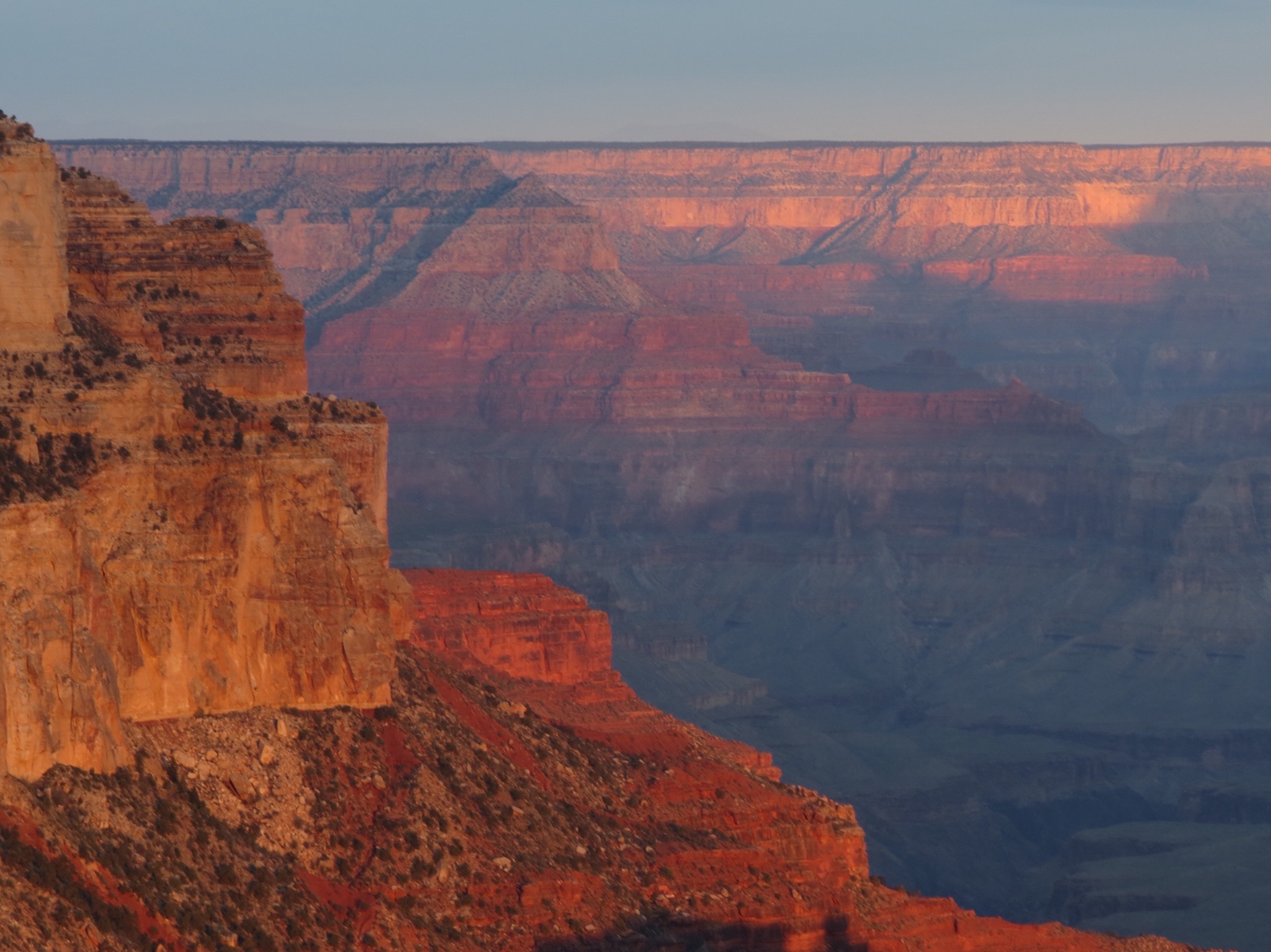
Morning brought a repeat performance. We returned to the same spot, first selecting an East facing view to watch the sun come up. It was more beautiful to watch than what I could capture with my camera. As soon as it crested the horizon, we skedaddled to another position to look West. As the sun advanced in the sky, increasing sections of the canyon were illuminated.
Grand Canyon sunrise 1
Grand Canyon sunrise 2

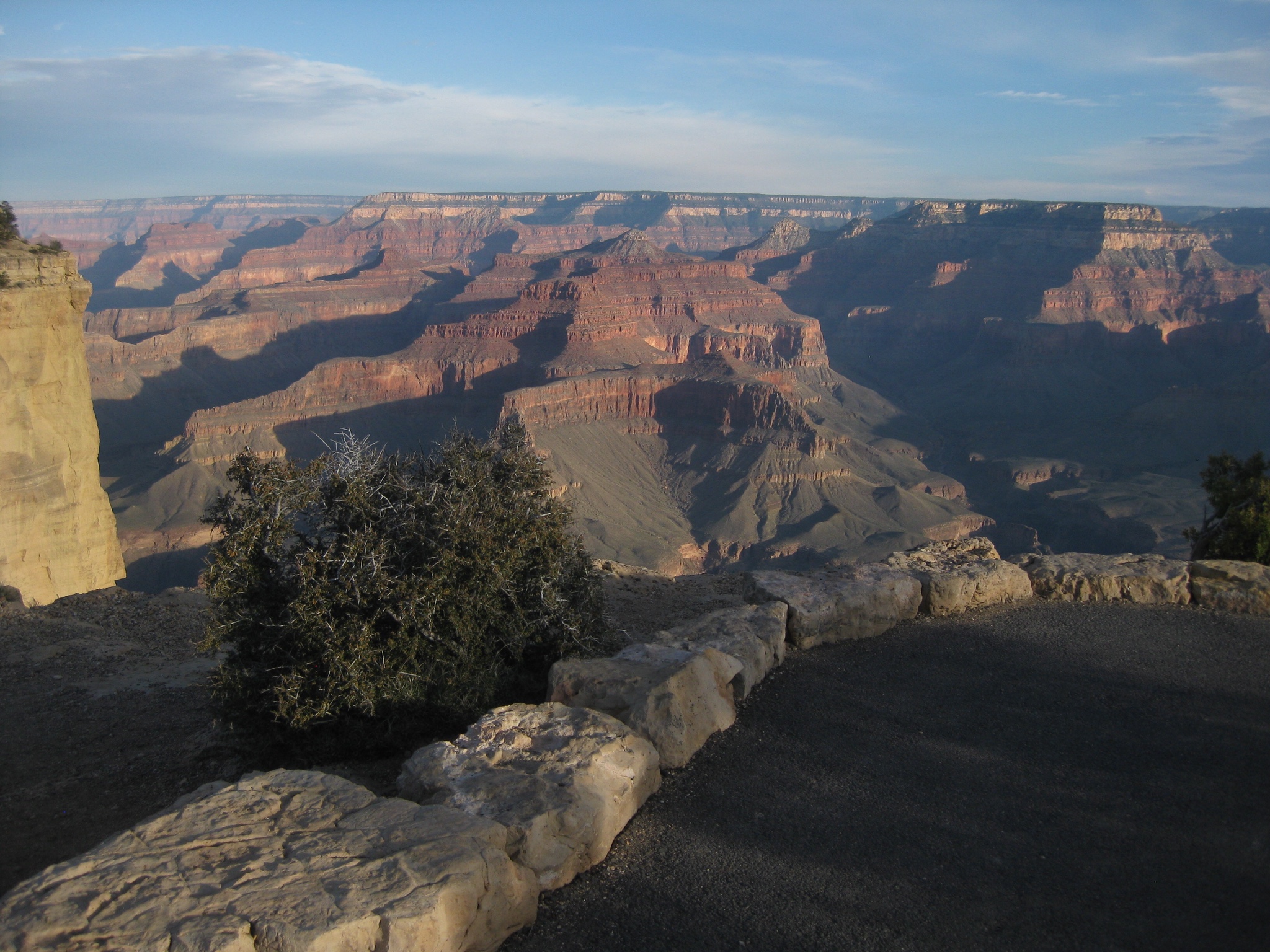
When the light began to wane, I set out on another tour of the canyon. What better place for my morning run than along the paved Rim Trail? Covering five miles out and then back again, I had beautiful views to spur me on. Both the 7,000 foot elevation and some steep sections of trail took their toll, but I had the perfect excuse to stop and catch my breath while snapping photos along the way. I can't think of many more picturesque runs I have done in my life.

Grand Canyon Rim Trail 1
Grand Canyon Rim Tail 2
Grand Canyon Rim Trail 3
Grand Canyon Rim Trail 4

We haven't even been here a full day yet, and already I think we have seen the best the Grand Canyon has to offer. The rest will be pure gravy.


Sandhill Crane Capital of the World

Kearney signIt’s a pretty audacious claim. But we were due to travel during the migration season and Kearney, Nebraska was not far from our route south. Rich the birder was naturally interested. And I was assured by others that even I would find it fascinating. How could we resist?
Over 80% of the world’s sandhill crane population funnels through Nebraska then fans out to the northern breeding grounds in Canada, Alaska and Siberia. They stop along the Platte River for several weeks to rest and build up their body fat before continuing their journey. At the Audubon Center in the Rowe Sanctuary, they report that the count for March exceeds 460,000 cranes to date.

The cranes spend the day feeding in farm fields throughout the flat countryside. It is at dawn and dusk that they fly between the fields and the river, filling the sky with clouds of birds grouping and regrouping in ever changing clusters and V-formations. It is a noisy process, as their cries fill the air in a roughly melodious symphony. Seeing the birds without hearing them is only half the experience.

Our first attempt to witness this aerial display is at dusk. I pile on my vest over more fleece, top it with a down jacket and add Gore cycling gloves, wool socks and hiking boots. Walking out to an old railroad bridge over the Platte River we find it already populated with other heavily clad birders sporting binoculars and cameras with lenses of unbelievable proportion. I stop between the metal side walls that shield me from the bitter wind while Rich goes out to claim a prime photography spot in the wide open span of the bridge.

The sun is low in the sky, lending a pink and red glow to the low hanging clouds. We wait for the birds to fly in front of the sunset and come in for a landing on the river. But they don’t. Clusters of cranes fly overhead, and there are undulating swarms in the distance. All heading to a more attractive spot downstream.  A lot of good-natured bantering goes on among those of us huddled on the bridge, taking the lack of luck in stride as the birds pass us by. Then one by one the birders peal off. Tomorrow will be another opportunity.

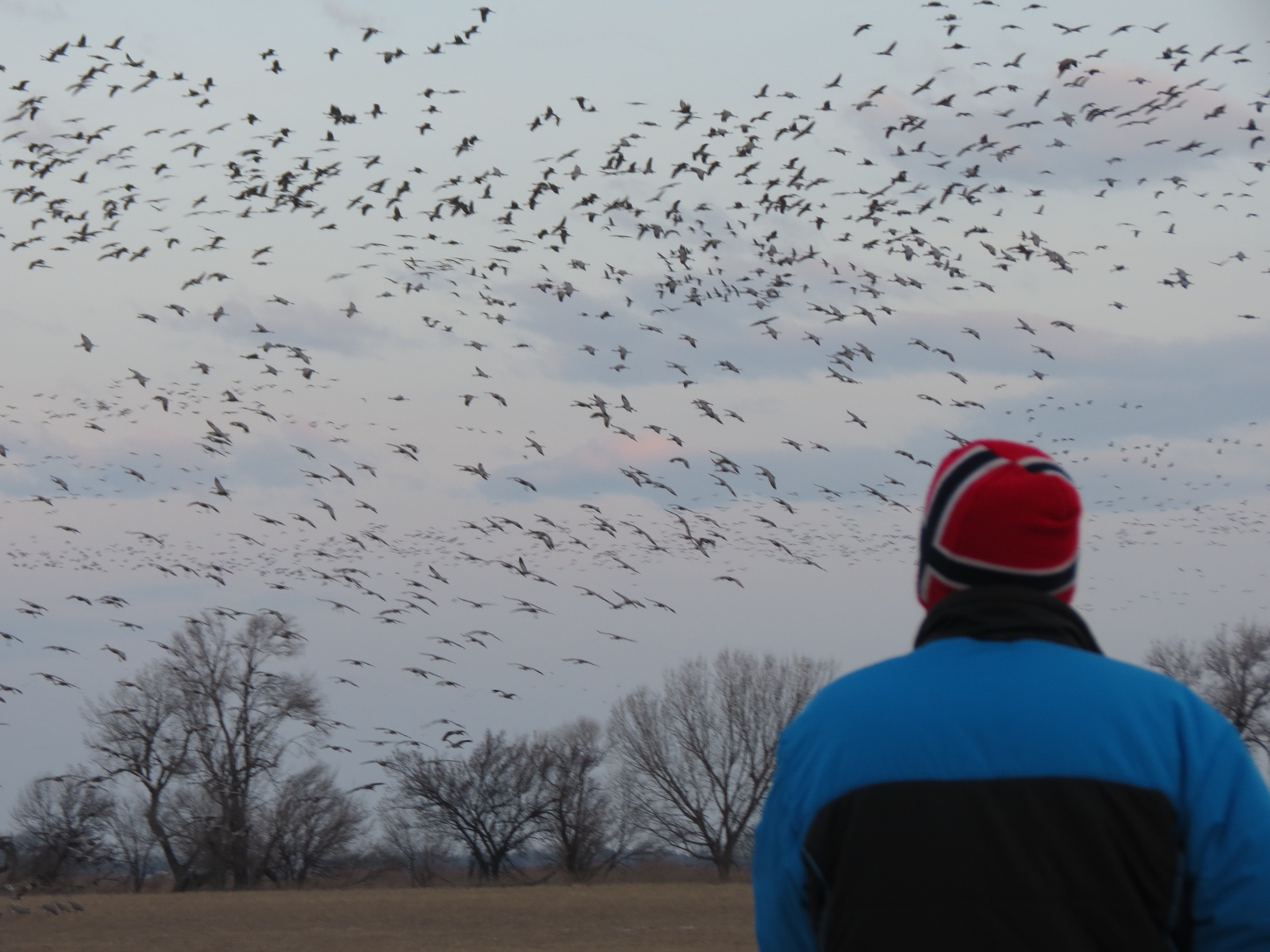
Believe it or not, I am the one who insists we try again at sunrise. Rich is disheartened by the dreary sky, but what is the point of being here without seeing the sandhill cranes I argue. By the time we work our way toward the river, we can see huge numbers of cranes already in flight. Situated on a dirt road adjacent to farm fields with brown remnants of crops, the birds come to us. They fly in from all directions, swooping and swirling. Sometimes they settle in the field momentarily then rise again in great volumes. Flocks of birds crisscross in the sky traveling in opposite directions, only to have one group do an about face and follow the others. The crowded acrobatics over our heads are all the more amazing for the lack of collisions that would seem inevitable; the cranes have their ballet down to perfection. And of course, it is all accompanied by honking overhead.

I leave the bird photography to Rich’s superior skills. His video best captures the experience.

Meanwhile my lens is trained on the photographer to lend the personal view.

Rich photographing sandhill cranes Rich watching sandhill crane migration

By the time the action dies down we can say we’ve seen the sandhill crane phenomenon. This time it truly lends credibility to the world capital claim.

Click here for additional videos on Rich’s blog.

The North Shore Gift

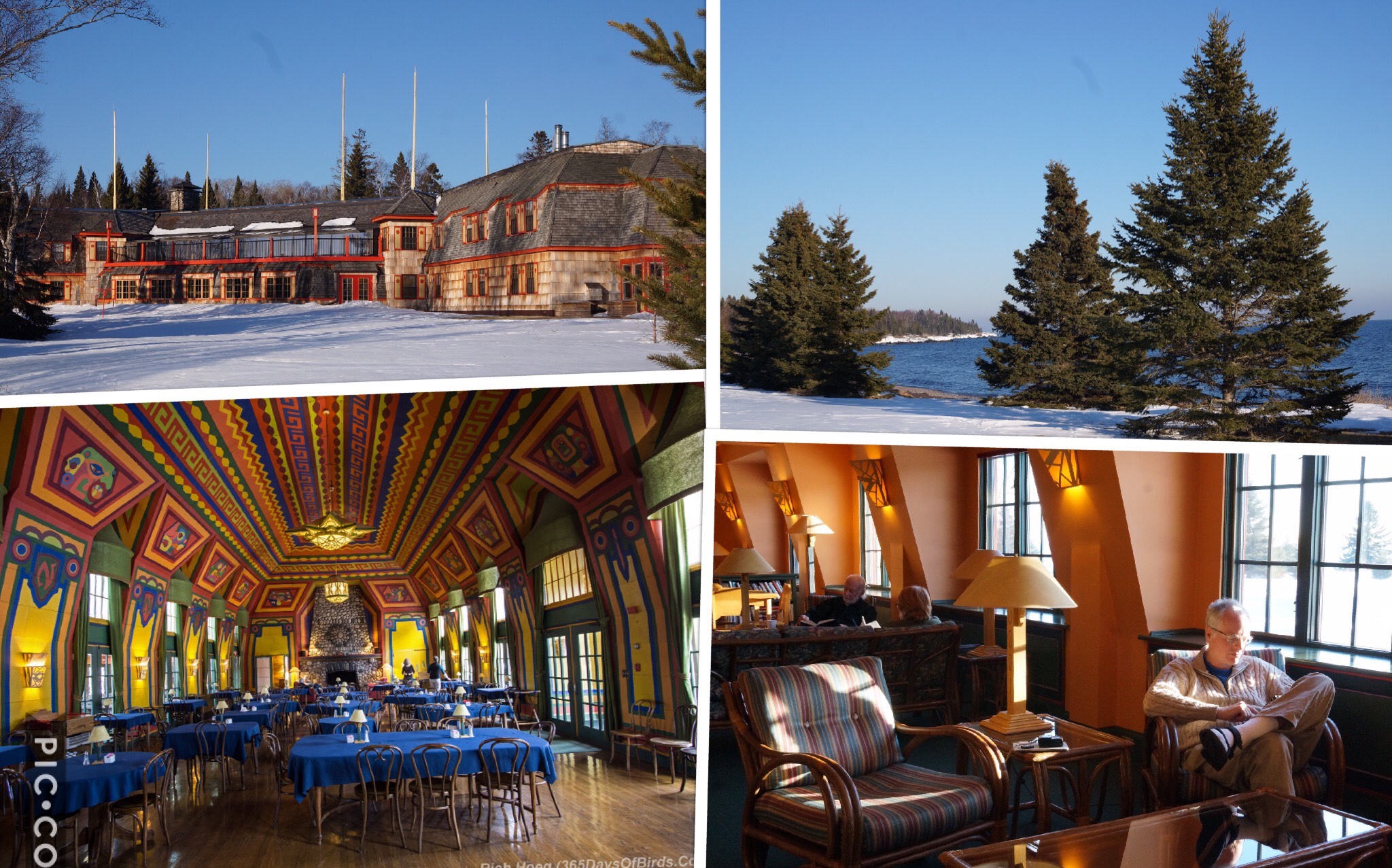
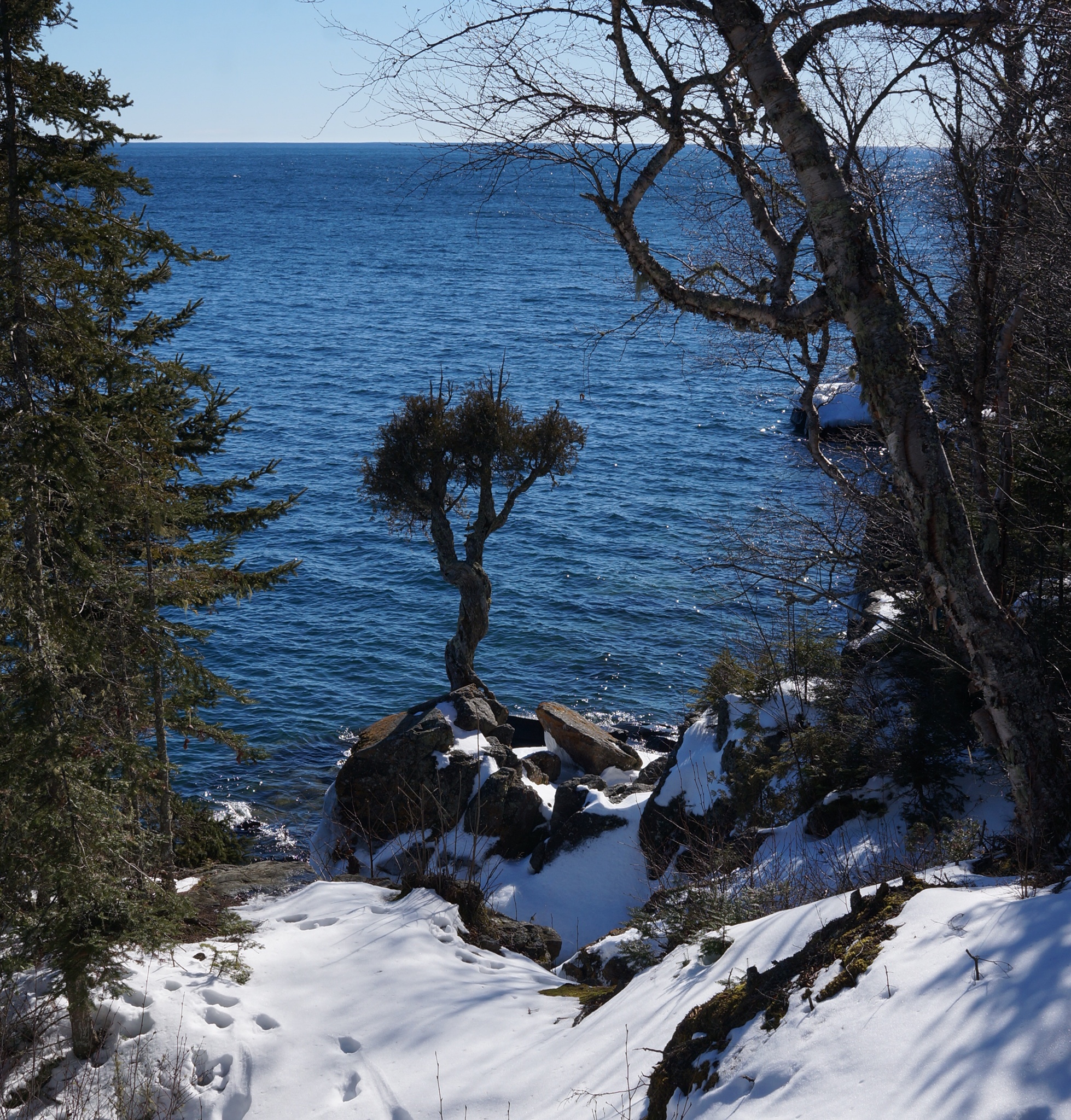
We made the reservation weeks ago. A mid-winter weekend at Naniboujou Lodge is a treat in itself, but Mother Nature threw us a curve ball that made it picture perfect. As cross-country ski enthusiasts and lovers of winter, we cringed when we saw the forecast for continuous days in the 40s. But as visitors to the North Shore, we reveled in constant blue skies and sunshine with real warmth.

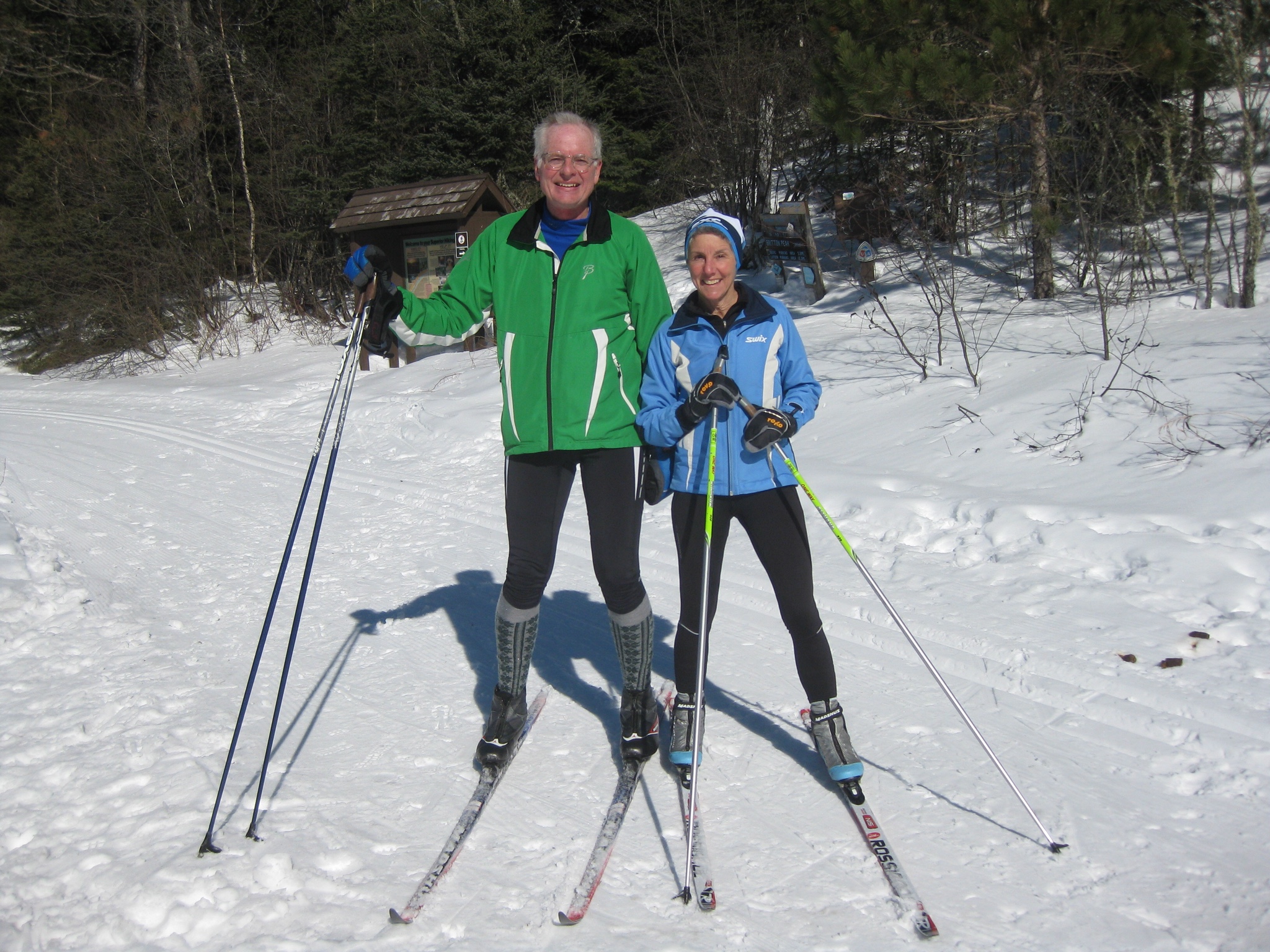
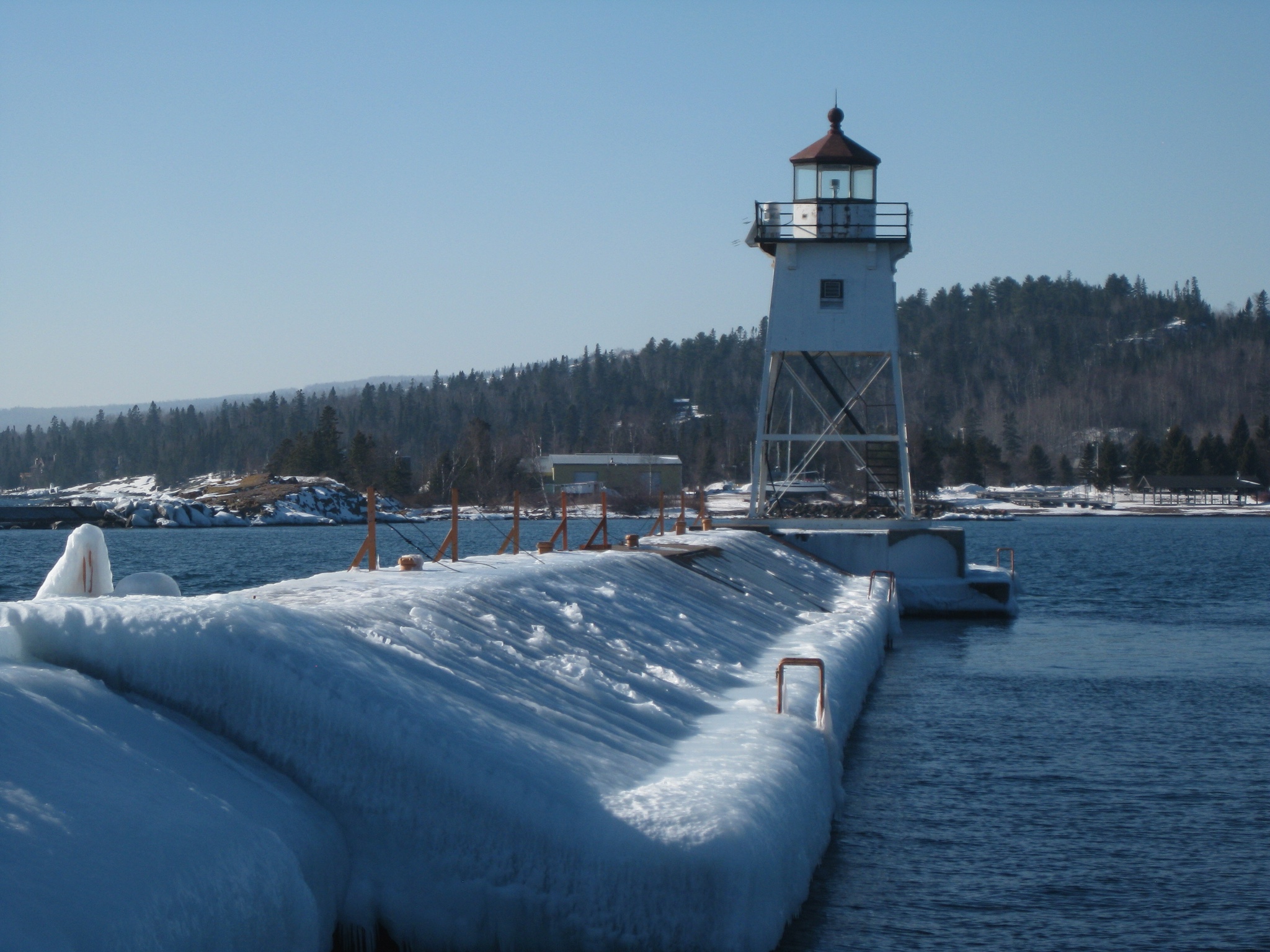
We put skiing at the top of our agenda, knowing the snow conditions were likely to suffer through the weekend. A morning ski at Oberg Mountain gave us beautiful soft snow before it got too soft and sticky.Rich and Molly XC skiThe harbor in Grand Marais sparkled in the sunshine, and the sun melted enough of the ice and snow for me to make it most of the way out to the lighthouse. It was so warm at the Java Moose that customers took their coffee drinks outside to bask in the Adirondack chairs. Could this really be mid-February?Grand Marais lighthouseNaniboujou Lodge was a lovely oasis. The rock beach was exposed and waves crashed onto the shore. Its deliberate lack of wifi and cell service was a fine excuse to read and relax in the quiet sunroom. And because they offer only package deals in the winter, we feasted morning and evening on fine meals in the colorful dining room. What’s not to like about that?

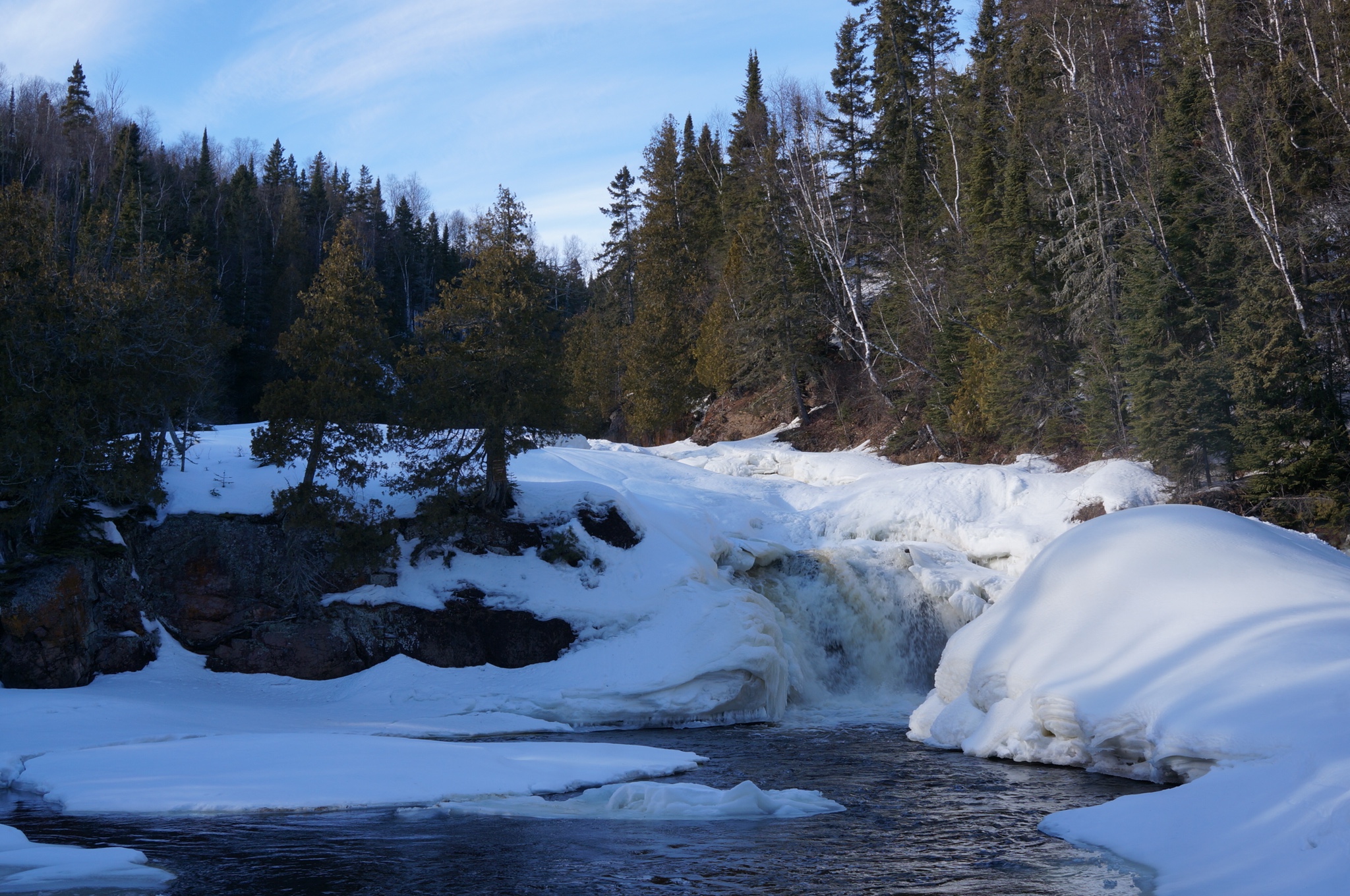
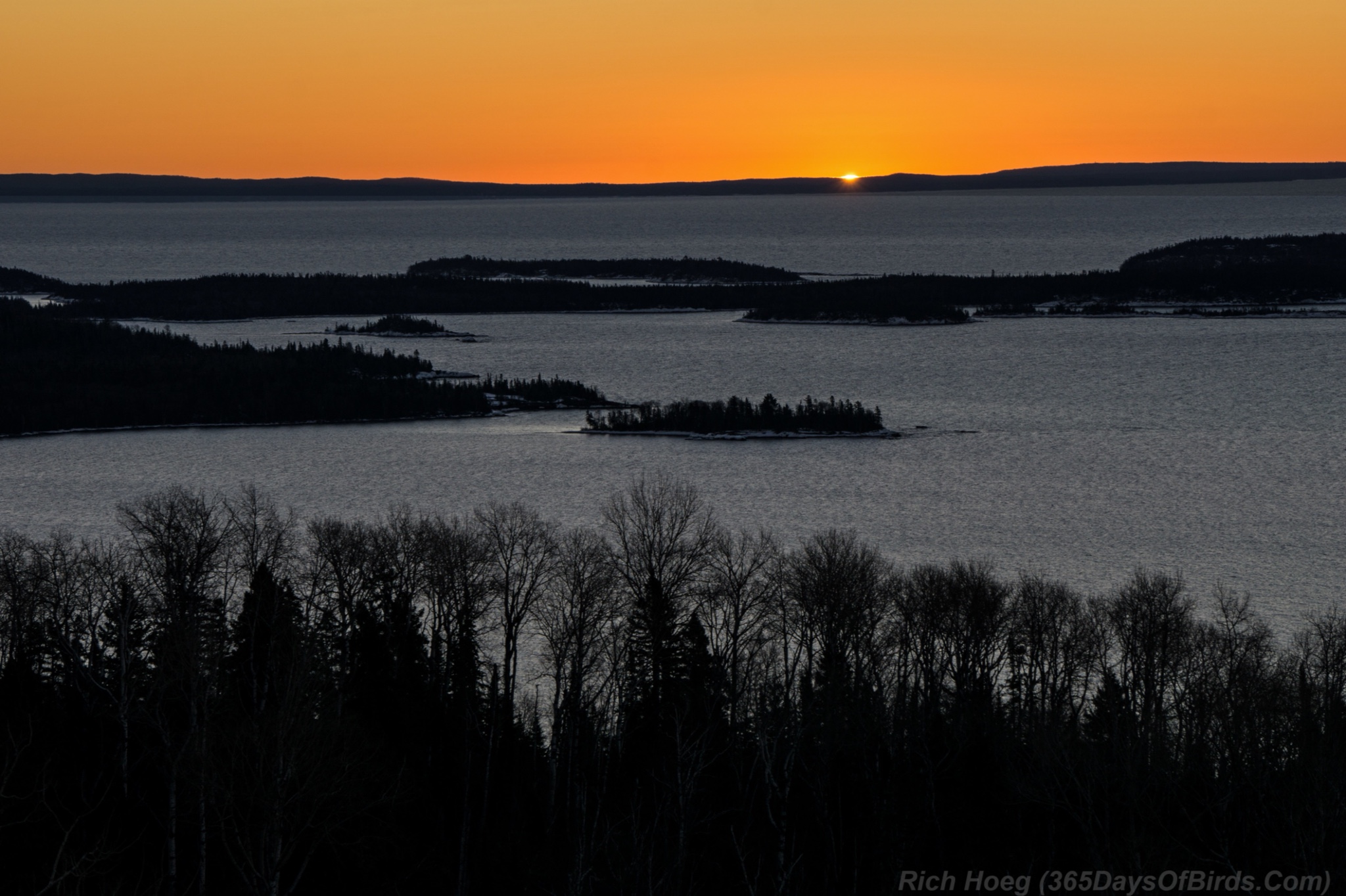
Naniboujou LodgeA trip to the Pigeon River, right on the Canadian Border, necessitated a walk up to High Falls. The warm weather had released sections of ice over the waterfall, giving us a view of the rushing water. It was easy to stop and look around amid the din of the falls in the mild temperatures.High FallsThe Witch Tree was nearby, and Rich knew how to find it. So we made a trek through soft, wet snow to its sacred location. There were signs informing us of its significance to the Ojibwe people, and asking us to remain silent and refrain from smoking. But there was a good platform from which to view the tree from a respectful distance. I’d seen many photos of the tree before, but never actually laid eyes on it in person.Witch TreeThe afternoon sunshine lured me outside once more. Judge Magney State Park was just across the road, and I followed the hiking trail up the Brule River. It was pretty easy going for the most part, with well packed snow. But inclines were slick and the 175 steps down to the middle falls required careful balancing on the narrow exposed wood on the edge of each step. The water shot forcefully out from under the ice at the falls and disappeared again, leaving a fine mist in the air. Devil’s Kettle proved to still be ice covered. If only I’d known, I would have spared myself the hairy climb and slipping down the treacherous slope that led to it. But it was so nice out, I was happy to prolong the hike.Middle FallsRich preferred seeking photo spots for the beautiful sunrises over the lake and starlit nights.  He obviously does it well.Sunrise over Susie Islands
This weekend was a gift from our son Carl and his bride Chelsea.  We loved their selection of Naniboujou Lodge, and the unending blue skies that accompanied our visit made it even more memorable.  Thank you!

Hiking with the Super Moon

When the sun shines, you just gotta get out there and enjoy it.  And when the temps are far warmer than they should be in November, there is no excuse for staying inside.  So although I have not been out hiking around Duluth for ages, I’ve logged four straight days of blissful rambles through our local woods.  I have to credit the weather for that.

My first foray was down Congdon Creek and back with my sister, Susie.  This was our backyard growing up.  We’d play in the woods and follow the creek on a regular basis.  I walked over the huge pipe every day going to Ordean Jr. High.  (You could never do that now!)  And yet, we were amazed by the beauty and extreme scenery that day as we meandered along the creek.  It was flowing faster than could be expected for late fall, and the high rock canyons and waterfalls left us in awe as we crossed and recrossed the river on the new bridges.

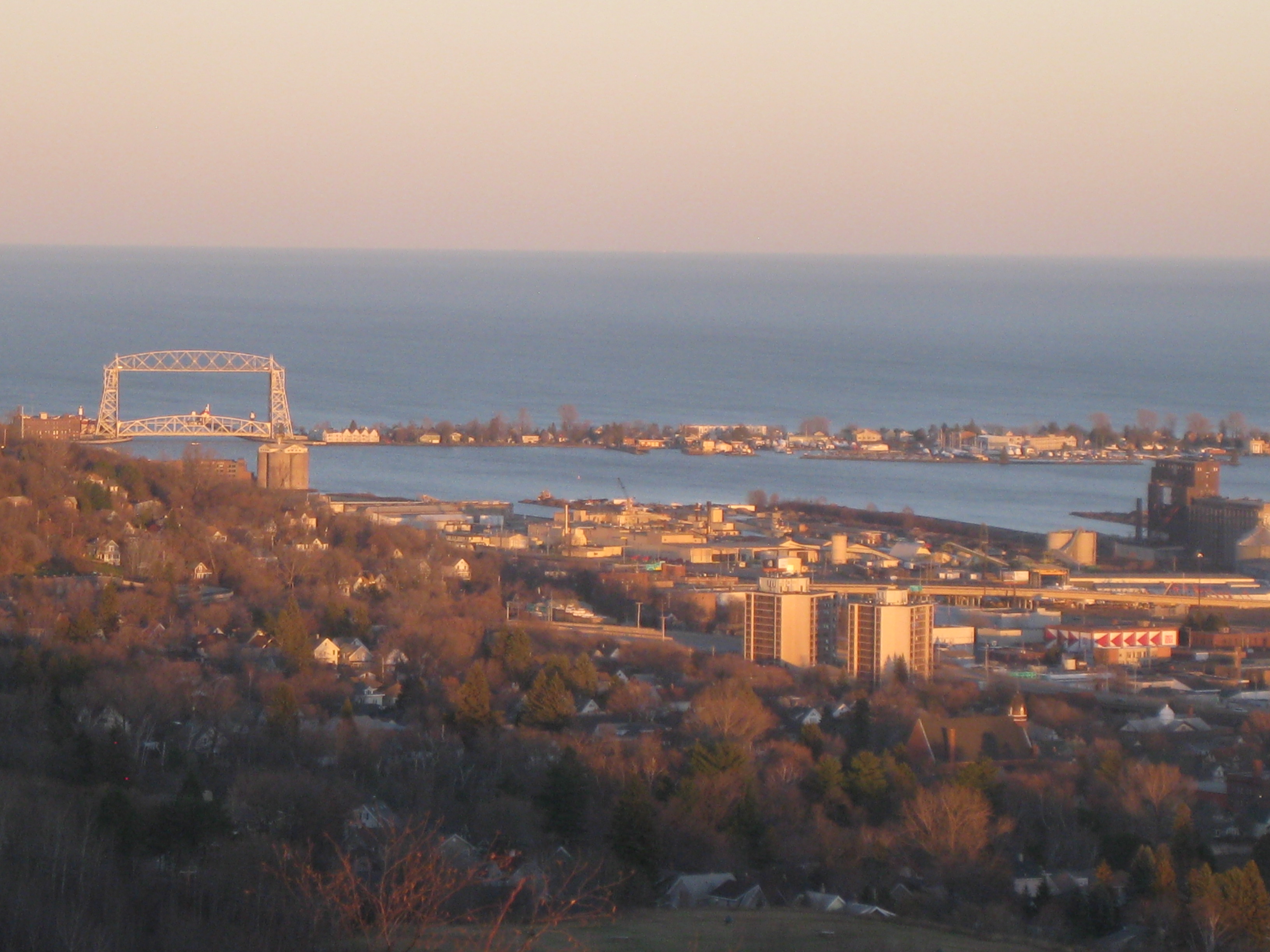
I followed that with the trails just below Hawk Ridge, with their outstanding views of Lakeside.  I still can’t quite work out which streets are which from that height, but it doesn’t matter. The lake stretched out in the distance, and the sun brilliantly illuminated the entire scene.  Even closer to home, I walked the Lester-Amity ski trails, delighting in seeing them now free of trees and ready for that first snowfall that signals the start of cross-country ski season.

Superior Hiking Trail mapThose were just warm-ups compared with yesterday’s hike on the Superior Hiking Trail with friend, Beth.  She took me on her favorite hike across West Duluth, which she calls the “greatest hits” for its wide array of natural scenery.  Starting from Highland and Skyline Parkway, we made our way on the Superior Hiking Trail across the ridges high above the St. Louis Bay to Lincoln Park.  For six miles, we walked through beautiful woods, kicked up leaves, scrambled over rocks and embraced the fall scene surrounding us.  Nature had retreated to its pre-winter state, brown and brittle with dry wispy remembrances of blooms past their glory days.  Beautiful in its own way.

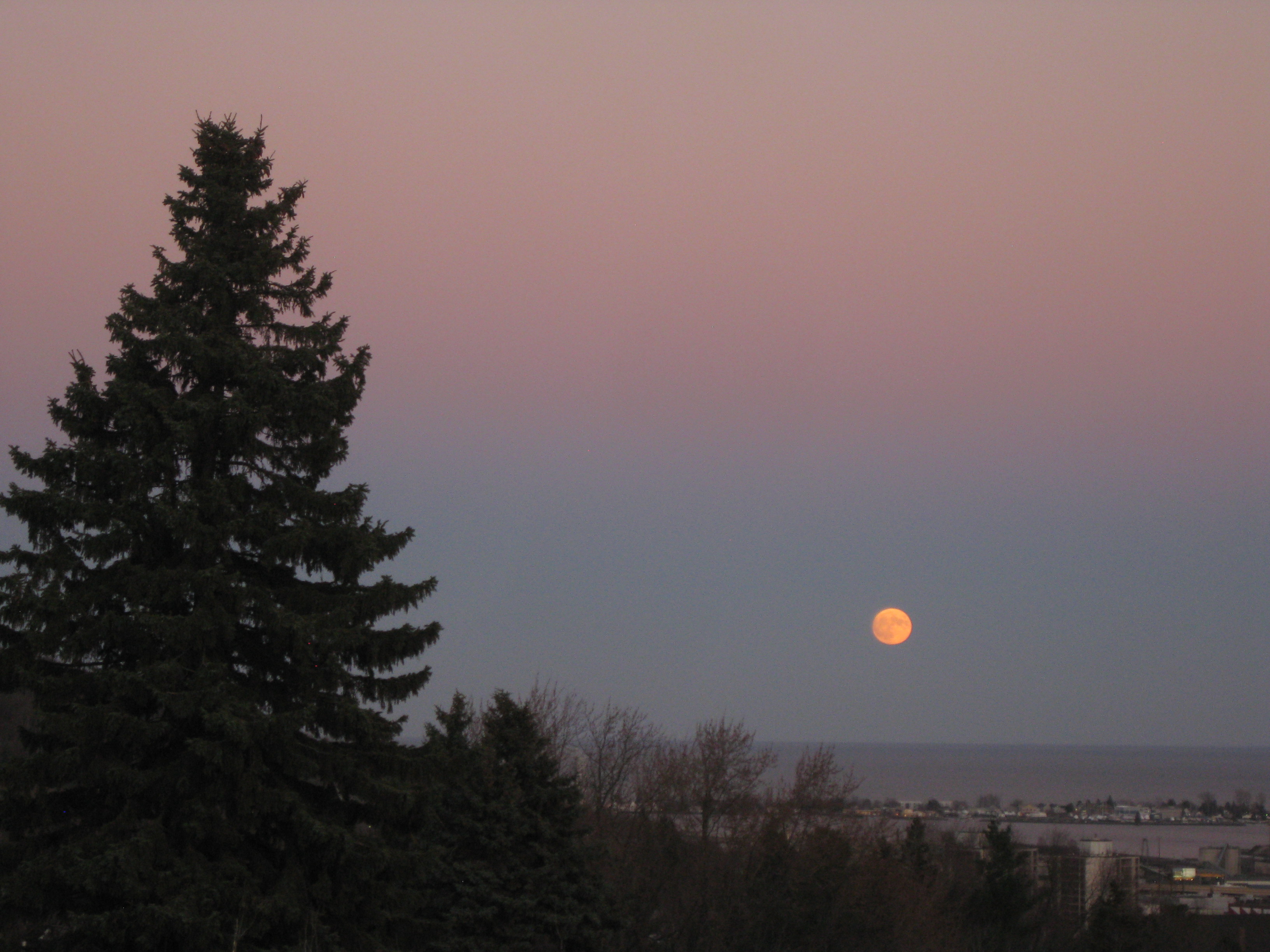
Once up on the ridge line, there was more.  Each opening of the trees brought stunning views of the city and shipping lanes below.  It wasn’t hard to marvel over the beauty of the city where we live, and our good fortune in choosing it.City View from SHT 1We started late enough in the afternoon that sunset crept up on us mid-hike.  The blue sky began to pale and the city glowed in the low angle of the sun.City View from SHT 2I was anxious to see the rise of the Super Moon, which is one of the reasons we chose this hike.  We began searching for its debut, peering out over the lake at every opportunity.  It was Beth who first spotted it, low and pink, still reflecting the colors of the sunset in the opposite direction.Super Moon 1That part of the hike was magical.  Every view of the moon was different.  Framed by new scenery.  Taking on more vivid colors.  Peering out at us from its perch in the sky.  I didn’t even care that my good camera and tripod were in the car.  I preferred to see it all live, and snap the occasional haphazard picture with my pocket camera.Super Moon 2All were great hikes.  Restorative and soul enhancing.  But that last bit was extra special.  It’s not every day that you can hike with the Super Moon.

The Many Moods of Crisp Point Lighthouse

Gallery

This gallery contains 20 photos.

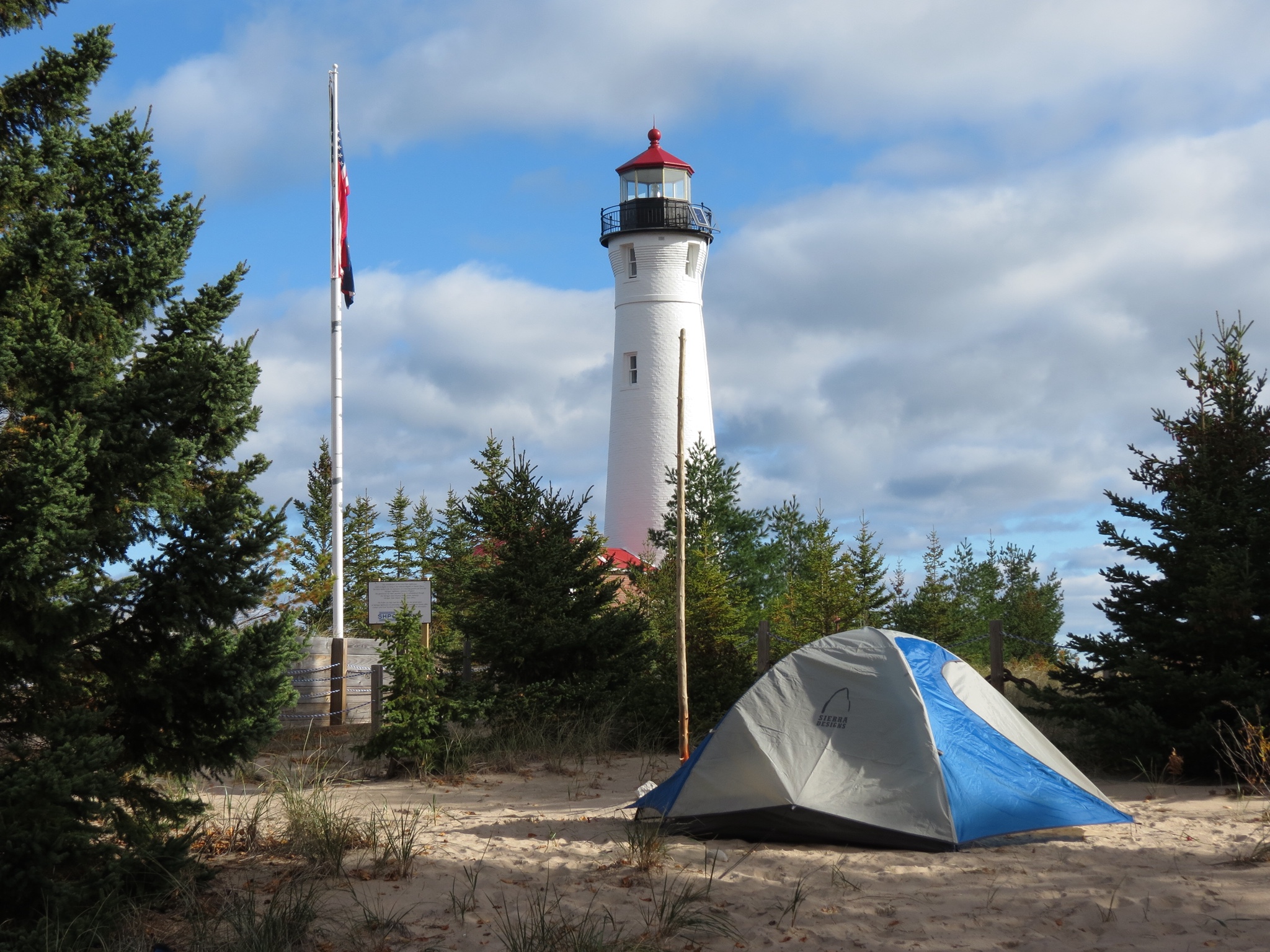
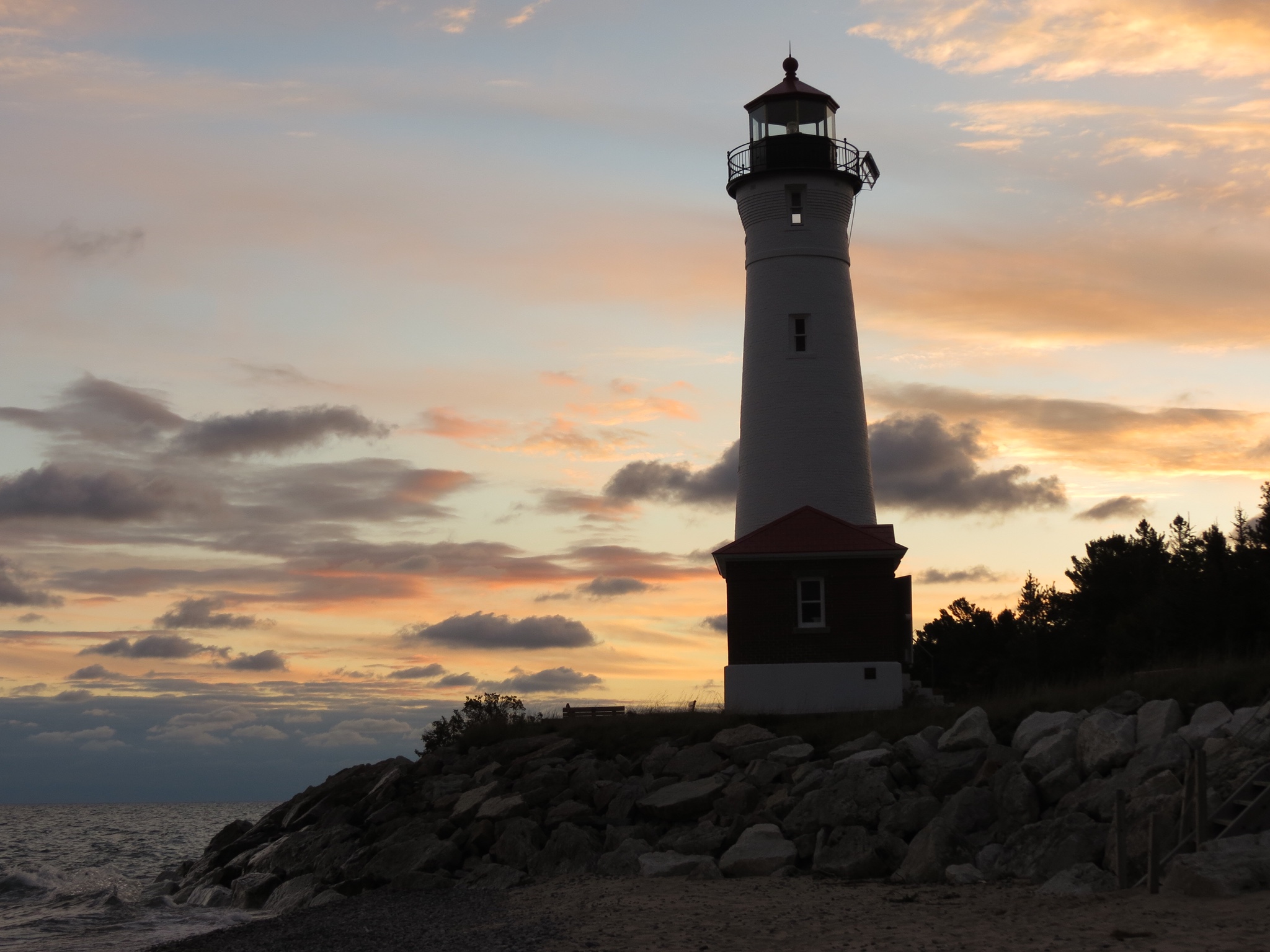
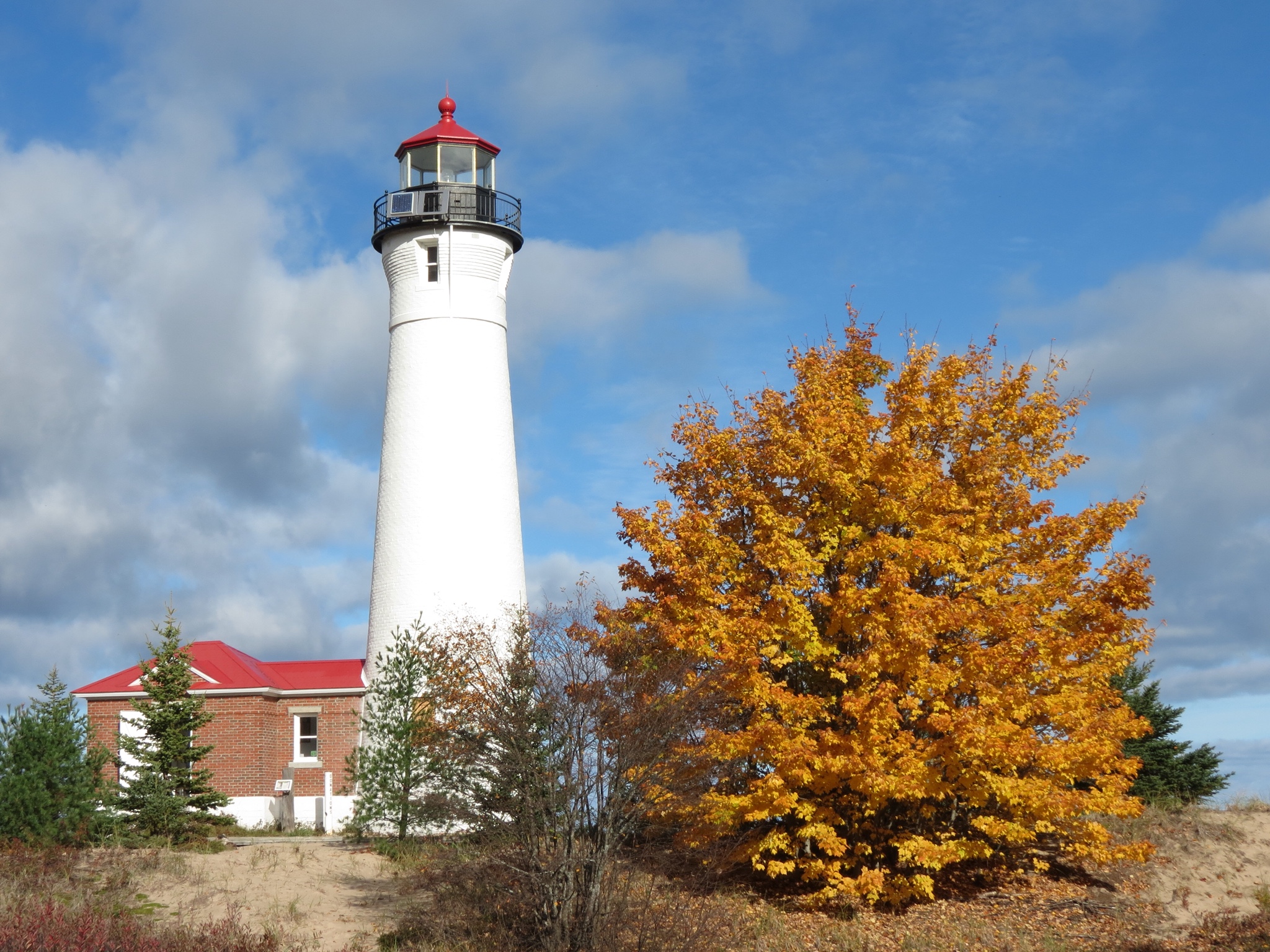
The lighthouse easily dominates our existence, well beyond our duties as light-keepers. We have the luxury of time to observe it under constantly changing conditions. Its personality varies as much from minute to minute as it does between days. Camping … Continue reading

Chilling out at Crisp Point

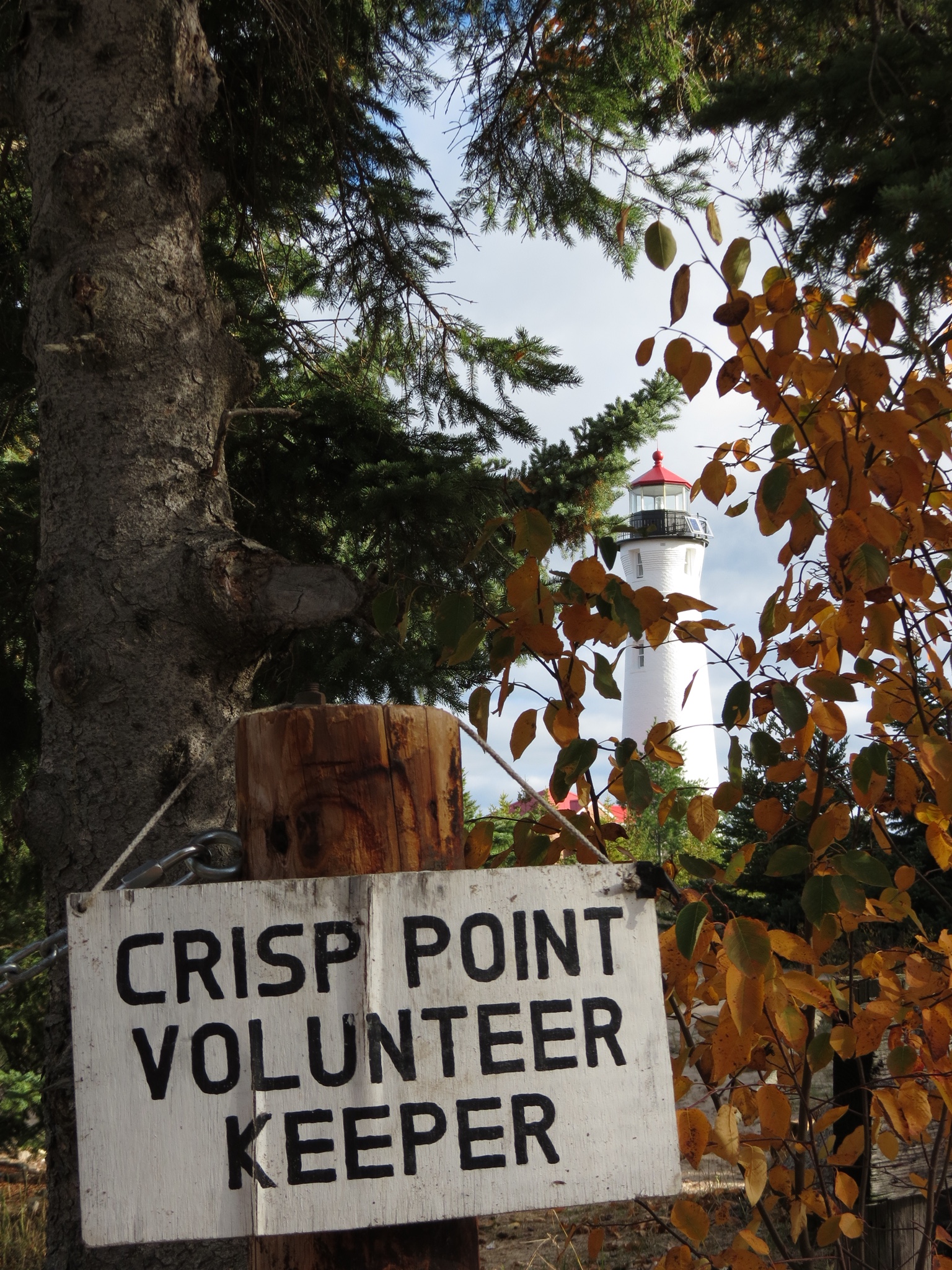
Keepers sign

Five layers of clothing. And a buff around my neck. Wool socks, a ski hat and winter gloves. All topped with a heavy down jacket. It’s my daily attire. Just enough to keep me warm.

I stand in the Crisp Point Lighthouse Visitor Center manning the gift shop. With temperatures in the 40s the cement walls are welcome shelter, but lacking any heat source the building does nothing to aid my cause. Gentle shivers involuntarily rack my frame as I strive to maintain body heat. I fear I’m losing the battle. But I am determined to muster on.

Visitors regard us with a mix of incredulity and awe. “That your tent out there?” they ask as they shiver in sympathy. They too are outfitted in winter gear. I answer with a grin and a touch of macho pride, “Yes, and it’s the warmest place around.” They are mighty grateful we are here, keeping the lighthouse open for them. And honestly, we are happy to do it.

Tent at Crisp Point

We quickly learn to manage. Nothing generates heat like exercise. So I escape for an energetic run each afternoon and relish shedding hat and gloves as I go. I return with enough residual heat to handle a cold sponge bath. Rich follows suit riding the sand on a fat tire bike.

Rich and fat tire bike

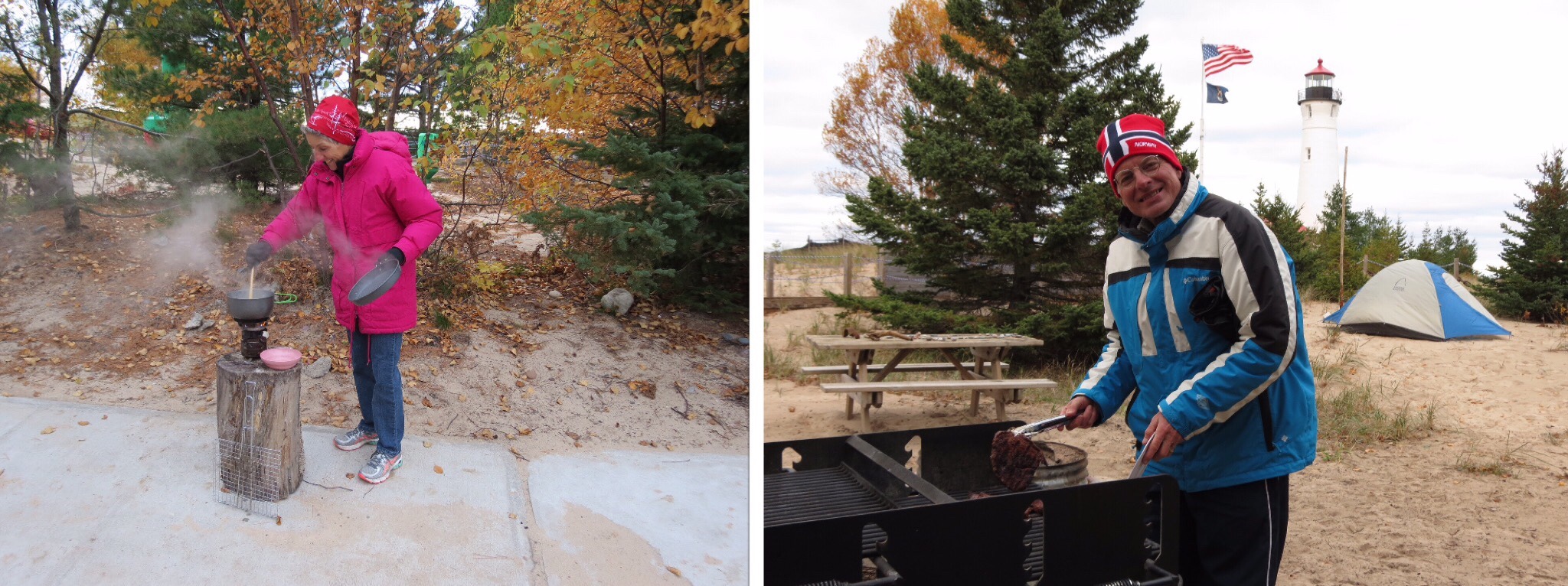
A hot meal goes a long way, warming our innards. Followed by a blazing campfire, evenings are quite comfortable. Crawling into my down sleeping bag at night I feel the warmth immediately radiating around my body. My little cocoon keeps me toasty all night long, nestled into the soft sand. I wasn’t kidding about the tent.

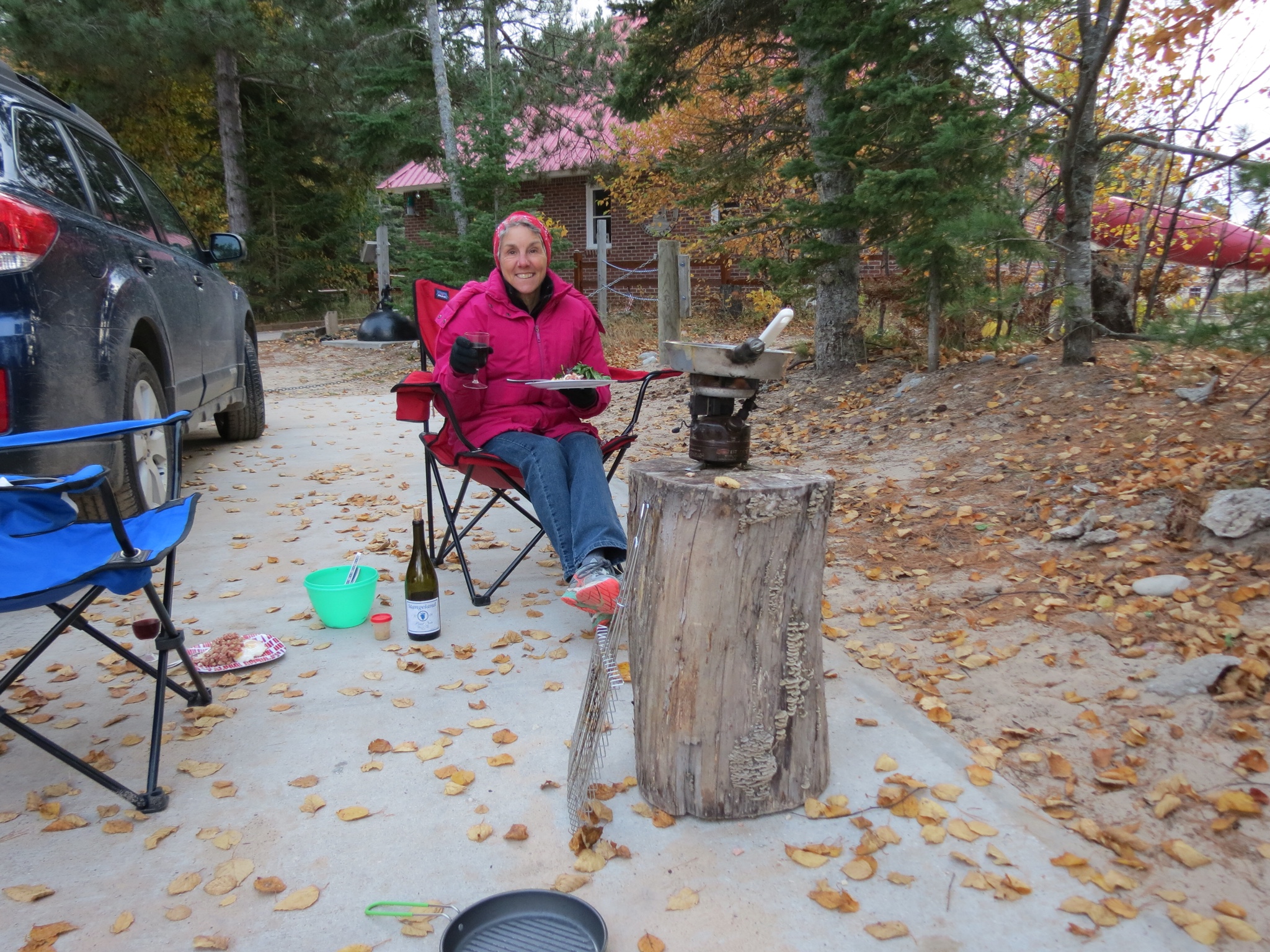
Cooking outside
Dinner outsid
CAMPFIRE

With fresh reserves of heat I’m primed for sunrise. I feel impervious to the wind and cool air as I search out the best vantage points for the morning light show, followed by a brisk walk down the beach. This is my favorite time of day here. Even in October.

Crisp Point sunrise

By the end of our five days we are coping well. More than that, really. Continue to love it here. I miss the warm days when I could sit on the beach and write, or nestle up on the lighthouse cat walk to read. But it’s still a privilege to claim this remote beauty as home for a spell. Good thing. We’ve signed up to return next October. To chill out.


Finding Crisp Fall Colors

Fall leaves have been a tease this year. Throughout September and the early part of October we cycled through upper and lower Michigan amid scattered fall colors. Leaves were just beginning to turn, surrounded by their green neighbors. Isolated pockets of color delighted us. But it was only a hint of what was yet to come.

That was actually a blessing for us. We deliberately planned to miss peak leaf season due to the tourists it attracts. We had no desire to cycle crowded roads or fight for motel rooms populated by leaf peepers. So we took pleasure in seeing the mild nascent display.

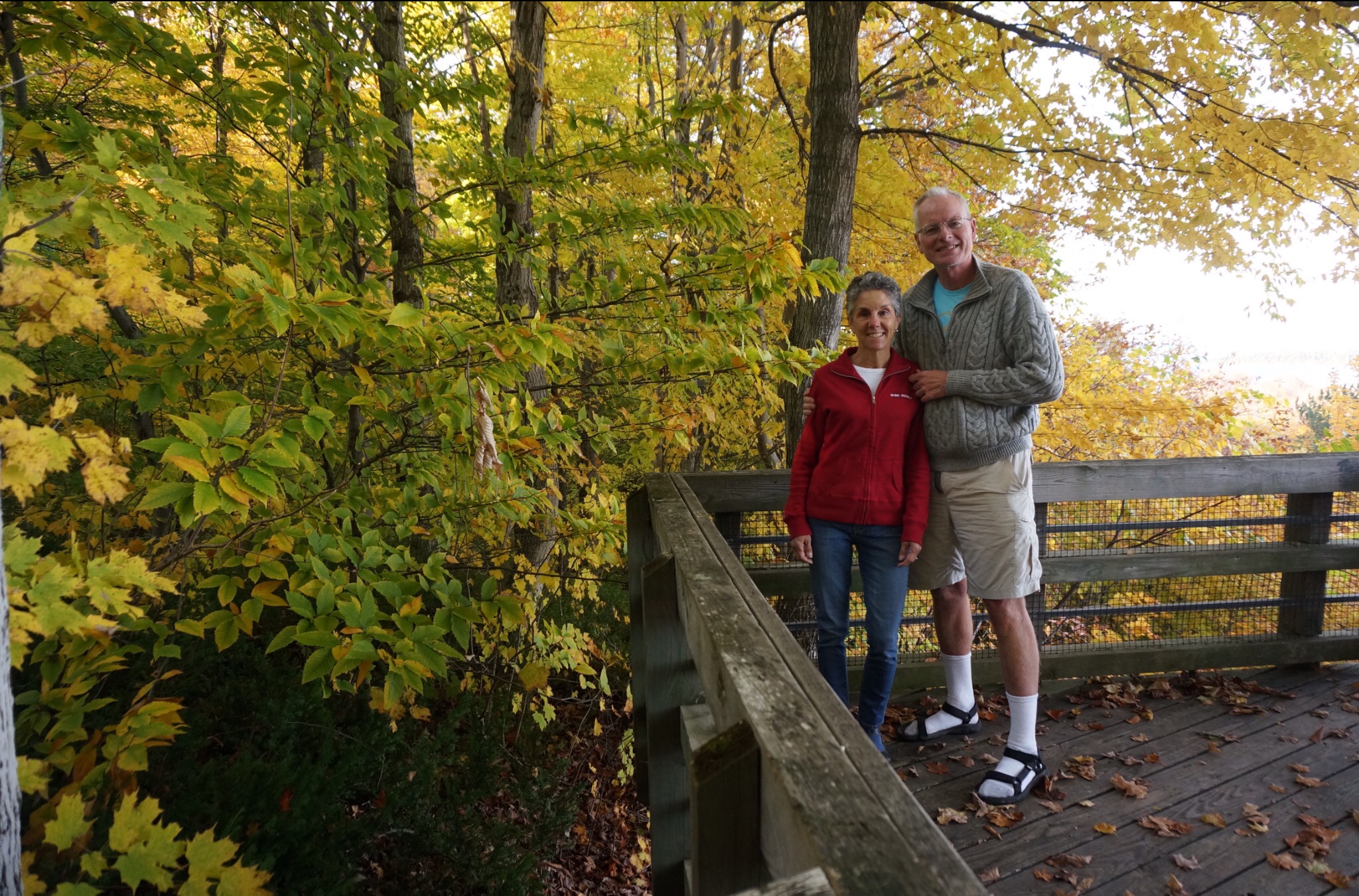
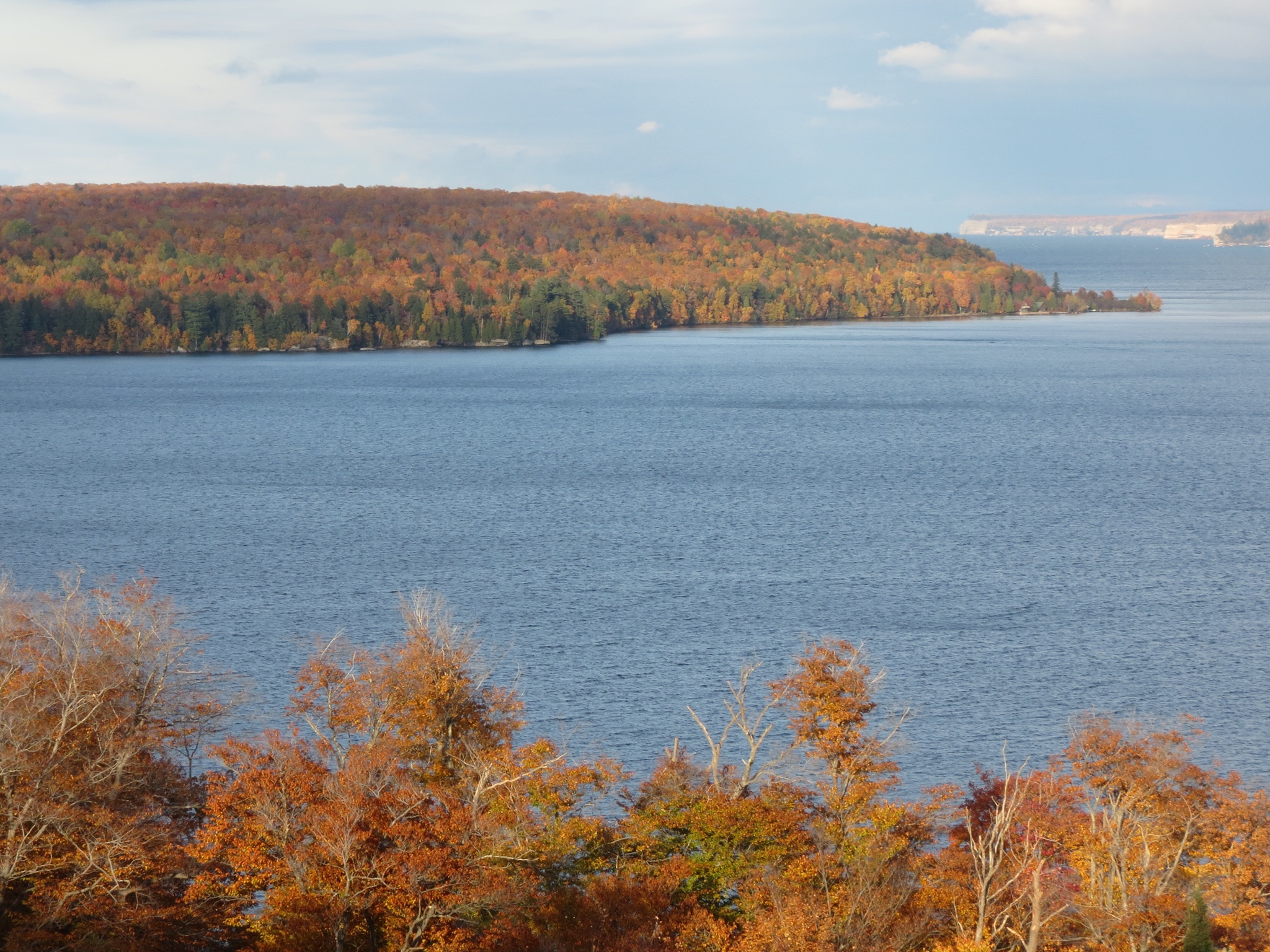
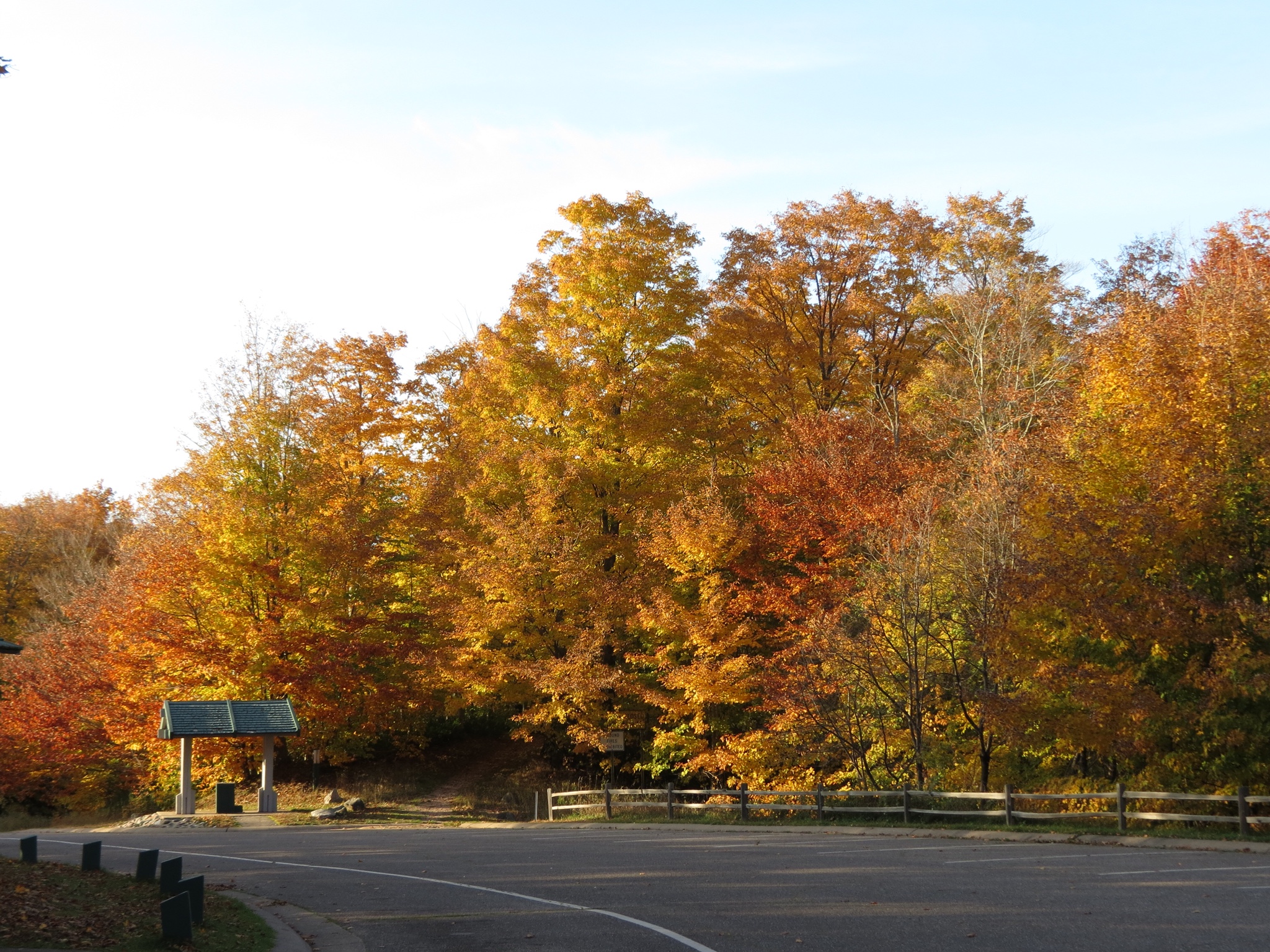
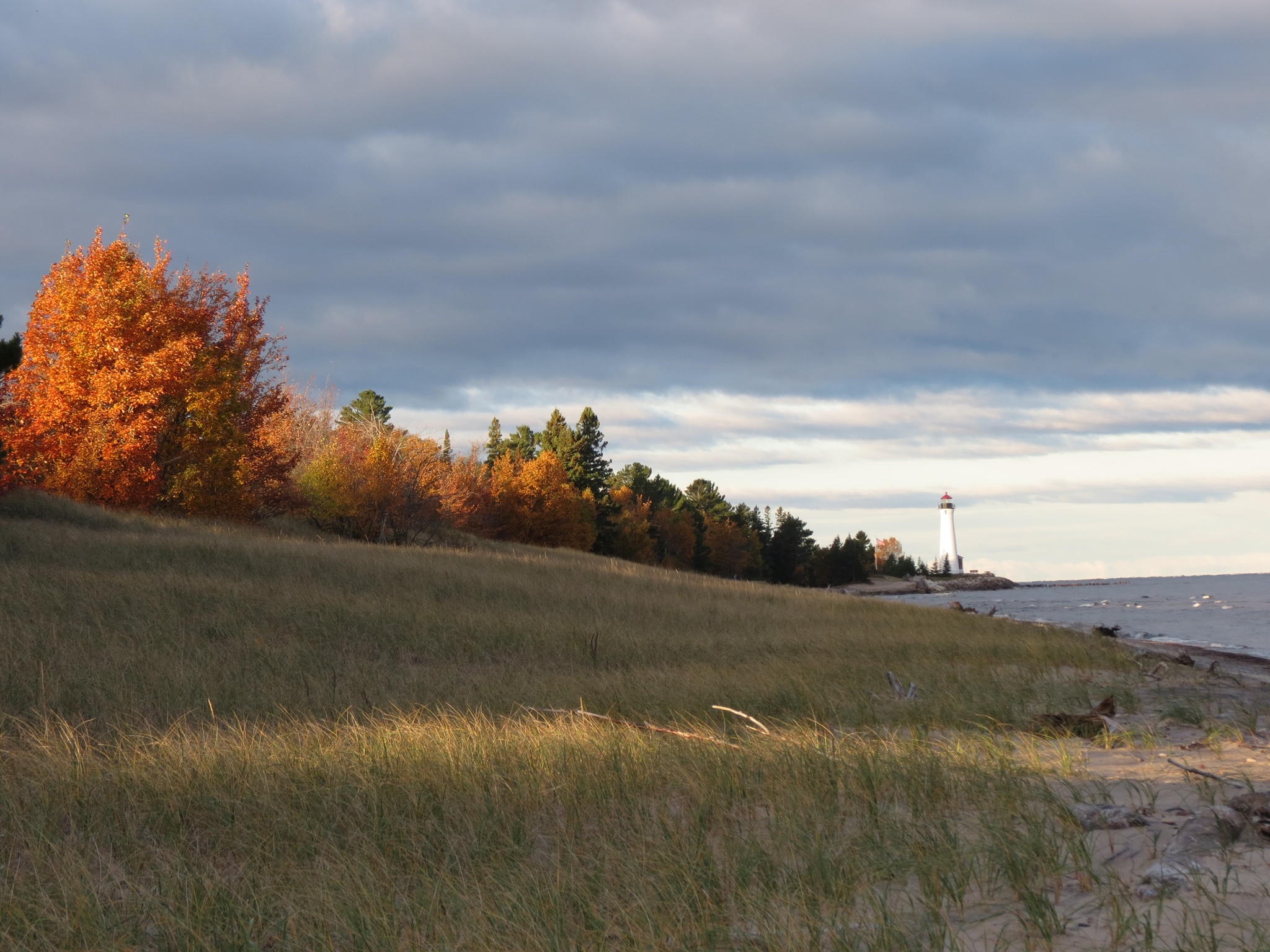
Returning home to the Northland, it was no surprise that the leaves were past peak. Color remained, but many trees were already bare. So we expected nothing more when we drove through the UP to Crisp Point Lighthouse. Nature had a gift for us this time, and we traveled a shoreline of brilliance. Trees at their finest blanketed the countryside and adorned the lakefront. Stopping at the overlook in Munising provided a fine view in the late afternoon sunlight.

Molly and Rich fall leaves
View at Munising 1
View at Munising 2
Leaves in Munising

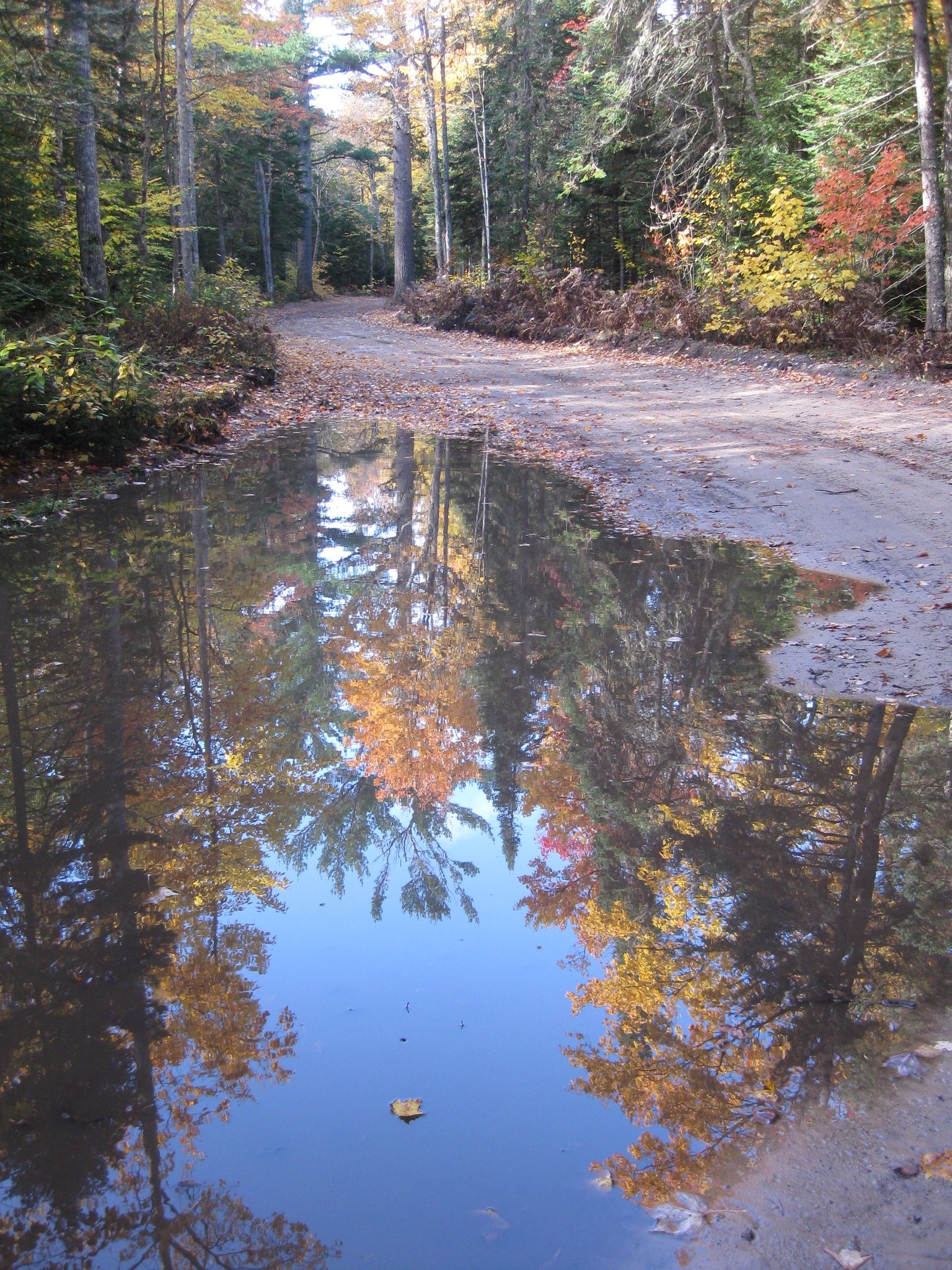
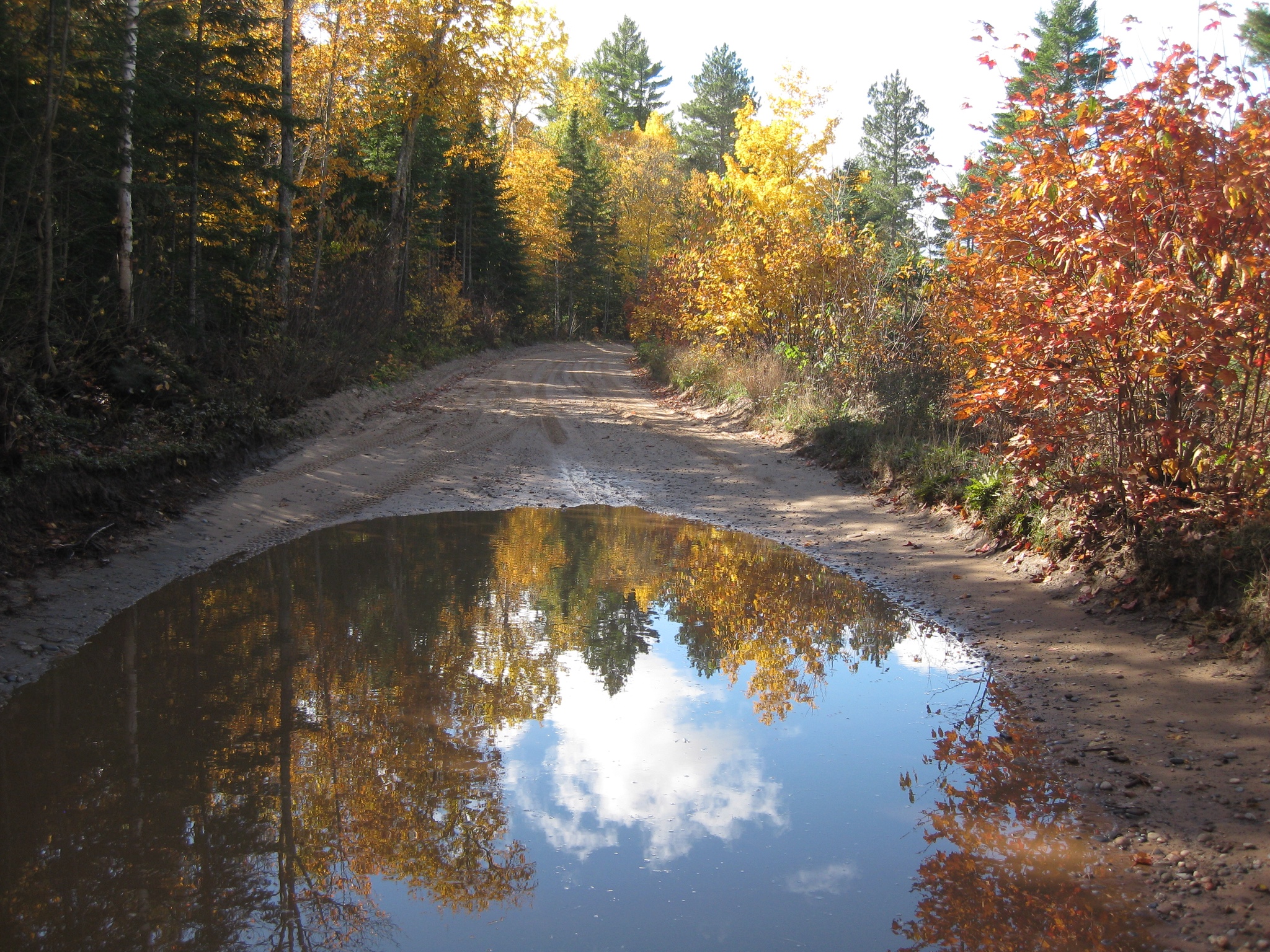
The road into Crisp Point Lighthouse is notorious for being rough. Its 18 miles of dirt road is susceptible to potholes, washouts and bumps. You have to really want to see the lighthouse to make the trip. This fall the area saw unending rainfall, resulting in flooding on the road. We encountered numerous puddles that stretched the full width of the road, daring us to cross. Navigating them tentatively at first, we gained confidence with each one and ultimately plowed right through.

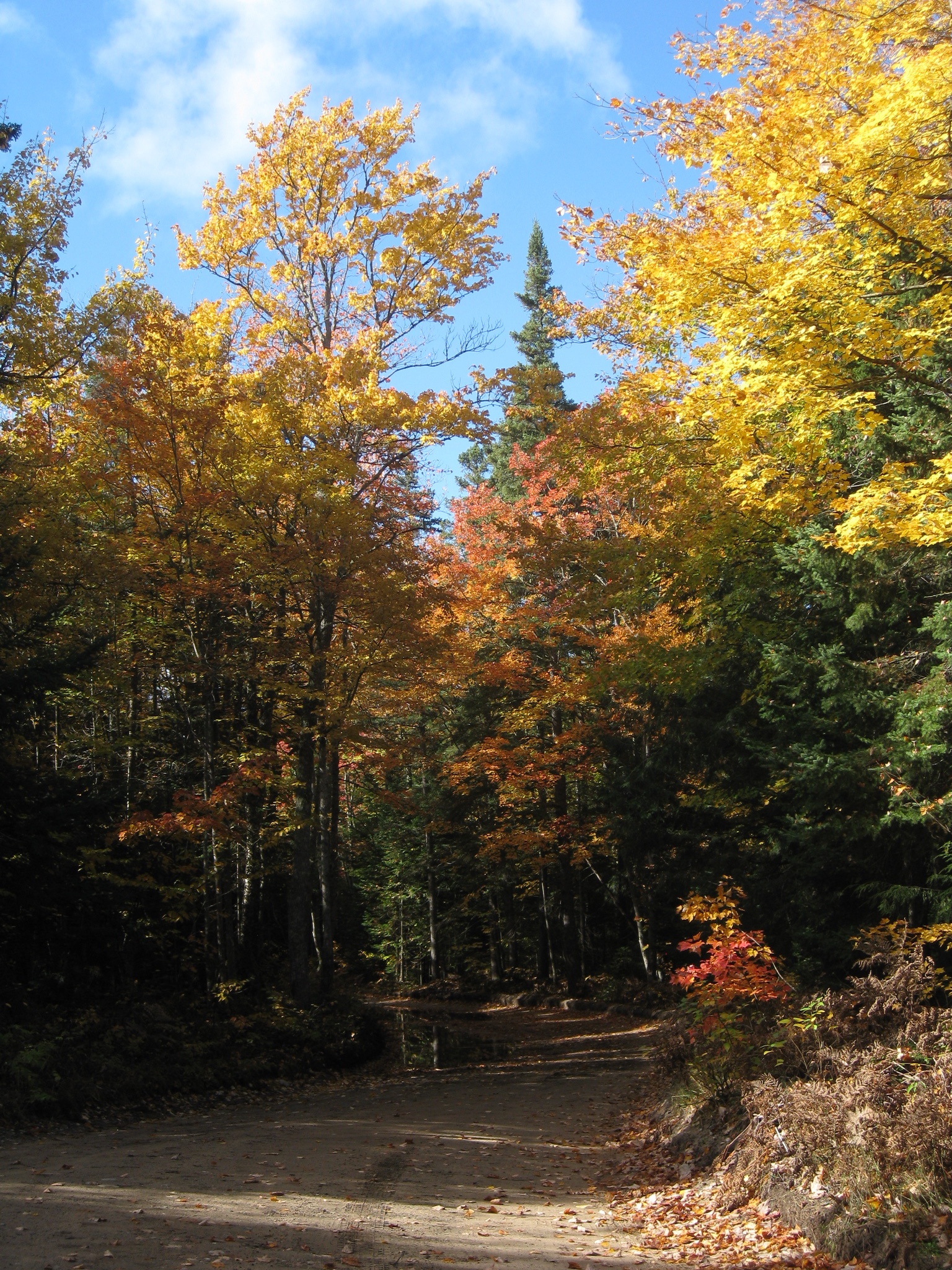
For everything that road delivered in adventure it compensated with beauty. By the time I went for a run in the afternoon, the pools had become reflecting ponds and the colors popped against a deep blue sky.

Fall leaves Crisp Point road
Leaf reflection Crisp Point 1
Lead reflection Crisp Point 2

Catching the colors against the lighthouse required patience and the right angle. But the chase was half the fun.

Crisp Point colors 1
Crisp Point colors 2

My autumn is now complete. I found fall colors after all. Where I least expected them.


A Brush with Civilization

Spending days on end on a bicycle has a way of holding the outside world at bay. For five weeks, on our Liberation Cycling Tour, our possessions consisted of the limited clothing and a couple of electronic devices in our panniers. Food choices were constrained by what was on the menu at local diners. We didn’t ride in a car, watch TV or listen to the radio. We remained blissfully out of range of the antics of the upcoming Presidential election.

Returning home has reopened a wealth of choice. A closet full of clothes present themselves each morning, requiring a decision on what to wear. I can smother my home made toast with natural peanut butter as I savor my favorite morning coffee. My car easily transports an array of fresh fruits and vegetables, and I have all the tools I need for preparing them to my liking. I still don’t watch TV and only dial in to MPR on my car radio.


My body is most grateful to rest in the same familiar bed each night. Sleep patterns begin to resettle into normal again. My feet relish the expansiveness of ordinary shoes. I get the haircut I have been craving. The eyebrows I have ignored are waxed into submission once again.

First on my priority list for re-entry is seeing family. Hugging those I love. Then connecting with friends. Coffees, dinners and conversations follow. I re-engage with writing and begin a new story assignment.

Apple orchard

Oh, it does feel good to return to civilization. But it is an ephemeral phase. A tease. A fleeting moment. We are off again.

This time it’s the car we pack. It is stuffed to the gills with camping gear, food and warm clothes. Feeling flush with space, we bring a larger tent, thicker sleep mats and our own pillows. Car camping brings unfettered luxury.

It’s time for our annual 5-day stint as lightkeepers at Crisp Point Lighthouse. For the third year in a row, we are returning to man the visitor center and welcome all who come to see this remote light and walk its pristine beach.

Molly at the top of Crisp Point Lighthouse

Our keeper’s campsite for one comes with no electricity, drinking water, cell service or internet access. If we felt removed from normal life while on our bikes, this is truly off the grid. We are able to enjoy the solar power in the visitor center by day, and the flash of the lighthouse by night. Beyond that, silence reigns. Our only connection with the world beyond our 18 mile rustic dirt road will be the visitors who make their way here.

It was nice while it lasted. That brief brush with civilization was enough of a taste to want more. For now that will have to wait, for a worthy purpose. It will be all the sweeter in a week, when I expect to indulge in a good healthy dose of home life. With all its comforts.


Three Generations of Awe

The scene: Our cabin. A modest 3-season cottage on North Star Lake, 25 miles north of Grand Rapids MN. In the heart of the Chippewa National Forest. At night.

The time: Labor Day Weekend. Affectionately known as Same Time Next Year for our annual tradition of spending summer’s final hurrah with family and friends. For 27 successive years.

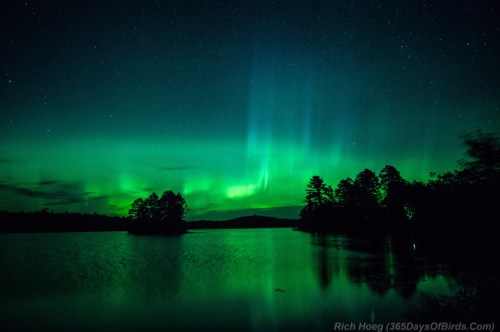
The circumstances: A display of Northern Lights.

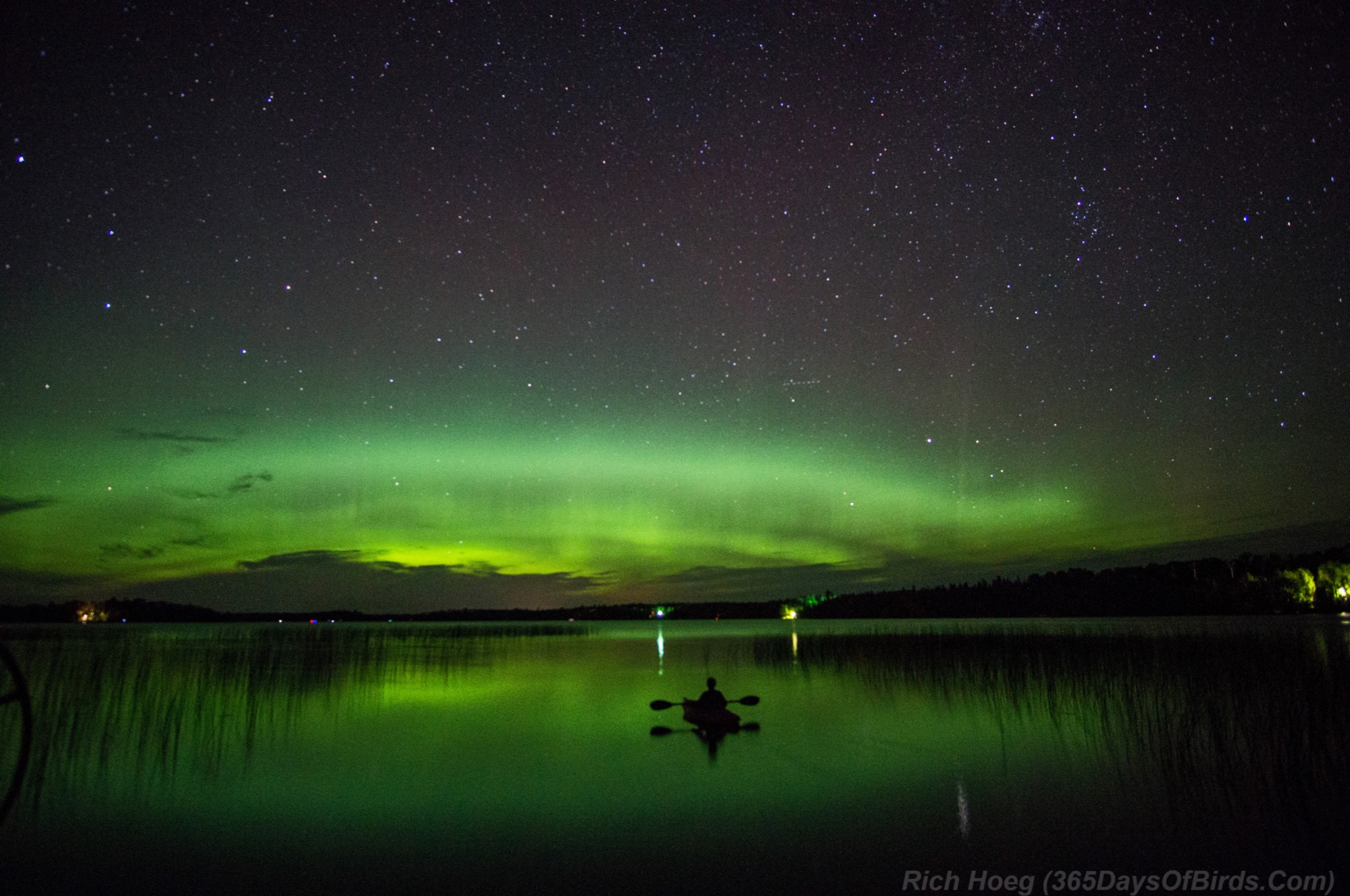
Northern Lights over Smith LakeThe set-up: Arriving a day ahead of time, well before the onslaught of kids, grandkids and long-term friends, Rich and I were at the cabin in time to see an amazing display of Northern Lights. Not only did we watch them from the dock even before the sunset was complete, but soon afterwards brilliant yellow-green arcs of light shot over the cabin, from east to west. It was clearly an exceptional display, and Rich was soon off in search of more scenic landscapes to photograph. While we have an excellent view from our dock, the foreground is not interesting enough for Rich’s photographic eye.

Day 2: Another good forecast for the Northern Lights. Pondering the lack of interest off our dock, Rich lures me to be his model. In exchange for a good back rub, I am to sit motionless in a kayak in the glow of the Northern Lights should they reappear. I admit, I am a cheap hire.

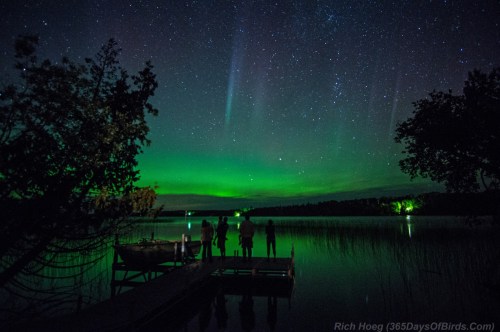
 3 Generations view the Northern LightsOur kids and grandkids are all expected to arrive some time that evening. Just as the final car pulls into the driveway, the Aurora also makes its appearance. No time for hellos, hugs or hauling stuff into the cabin. All are urgently summoned to the dock. There we all assemble and murmur our appreciation and marvel at once. It is the first time for many. Our son-in-law has his first view at the same time as his three kids. The evening is mild, the bugs are gone for the season, and it is a magical moment.

Kayaker in the Northern LightsEver the photographer, Rich captures the multi-generational assembly. Then calls in his favors. I am launched in the kayak and given strict instructions to paddle here and hold still. Shift over there and stop. Don’t breathe. It takes numerous shots to get a single good one, but we all agree it’s stunning.

I look forward to the back rub. But even more I treasure that moment on the dock. From 14 months to 61 years of age, we all shared the same awe.

(Photos courtesy of Rich Hoeg, 365DaysOfBirds.com)

Discovering the Lost 40

A bike ride is always better when there is a good destination. So I was thrilled when Rich proposed that we bicycle to the Lost 40. It’s not far from our cabin, but in the 26 years that we’ve owned it we have never been there. This visit was long overdue.

Lost 40 signIn 1882 intrepid surveyors camp in the November chill and swirling snow to survey the Minnesota Northwoods. Somehow, an error in their calculations places Coddington Lake about 1/2 mile further northwest than it actually lies. As a result, the timber in that area appears to be under water and is never logged. Today, those lost acres (actually 144 acres) of old growth timber are a local treasure.

The National Forest designates this as a Point of Interest. It is a very low-key attraction on a dirt road with only a sign and a parking loop marking its entrance. But the 2-mile trail through the forest is well worth a visit.

Rich on Lost 40 TrailThe trail is easily followed, with a wide flat surface. There are just enough informational signs to be interesting without interrupting the flow of a leisurely walk. I learn to distinguish the bark of a white pine vs a red pine. I try in vain to find the fern-like seedlings of cedar trees. I can see the effects of the rust disease brought in by imported pine species. I hug an enormous red pine. And admire a massive white pine. These trees are up to 350 years old and between 22 and 48 inches in diameter.

Big pinesThere is no admission fee. No visitor center. The only amenity is an upscale porta potty. The trees are the attraction. They sell themselves. We are lucky they are still there. No longer lost, they remain for us to see and appreciate.  I sure enjoyed discovering them.

Tall virgin pine