I didn’t really know what I was getting into. I’d never ridden a gravel bike before, nor biked long distance on a gravel trail. But how hard could it be? The answer – a whole lot more work than riding smooth road surfaces!
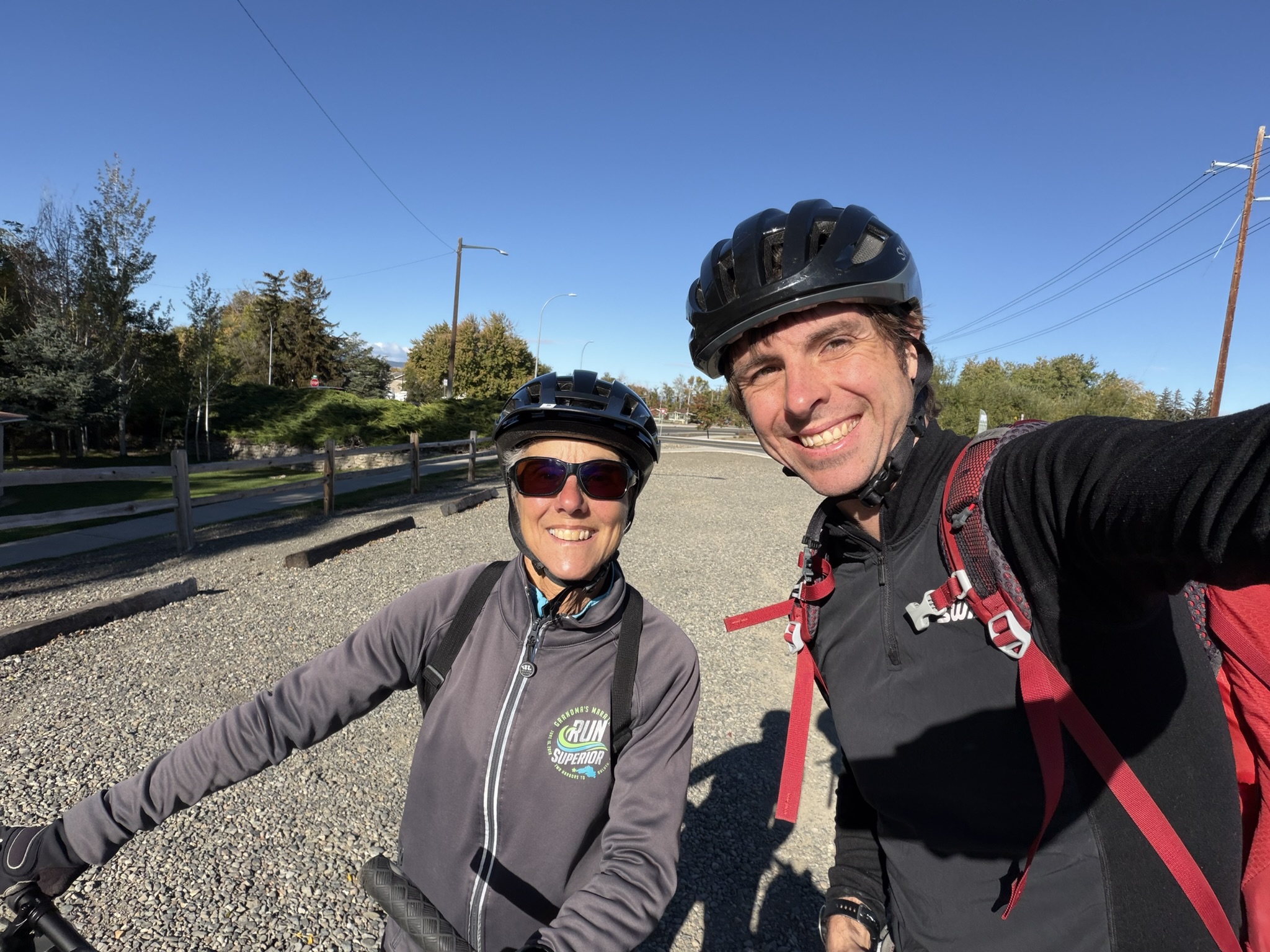
After conquering the San Juan Islands by bicycle over the last three years, my son Erik proposed we ride the Palouse to Cascades State Park Trail (PtoC) from Ellensburg WA back to his house in North Bend. It would take us up and over Snoqualmie Pass, but being a rails to trails path, the grade is 1-3%, very doable. I was all in!
The best decision I made was to rent a proper gavel bike. Erik found a shop that had bikes with straight handlebars, another critical element to being comfortable riding the bike. Erik made do with his heavier mountain bike. A nod to his youth!
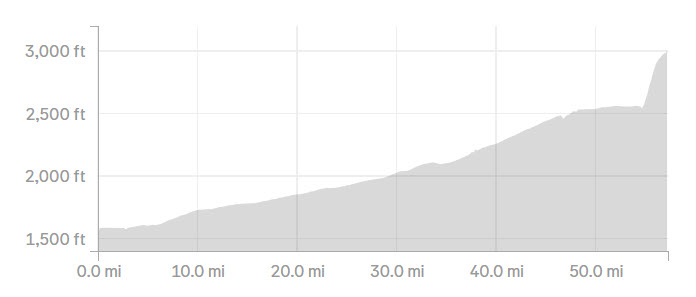
The plan was to ride the 85 miles in two days, staying overnight at Snoqualmie Pass. That meant that day one would be 57 miles all uphill, day two 28 miles all down. After being dropped off in Ellensburg, we set out on a cool but bright sunny day. Confident and eager.
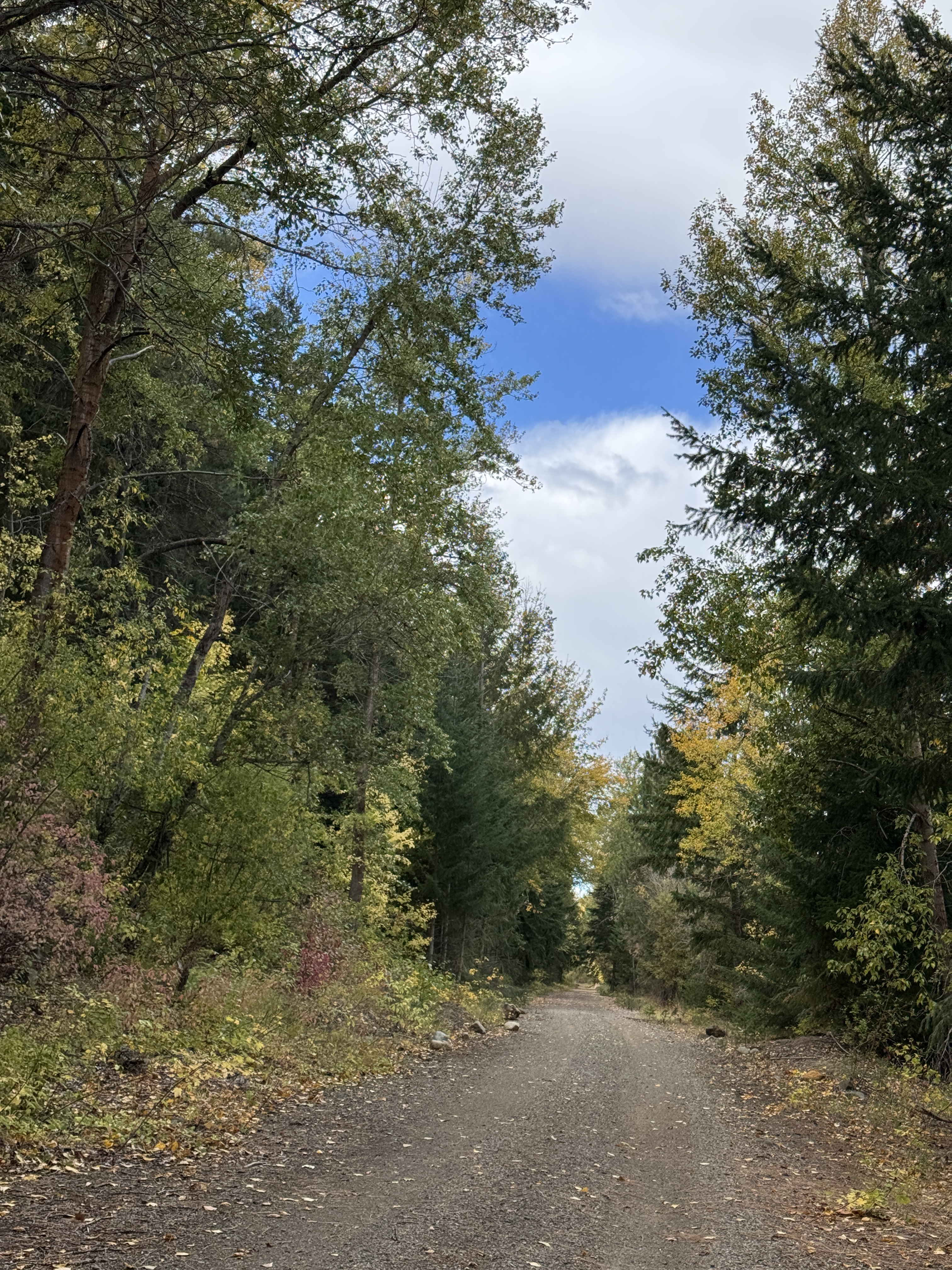
That far out from the pass, we were in farmland, surrounded by open fields that did nothing to stop the headwind we hadn’t noticed. It made sense when we saw the wind farms on the hillsides. Still bubbling with excitement, I forged ahead only to find the gravel a bit of a “challenge.” I bounced around and slid in the loose patches and found my shoulders and arms tightening as I did my best to navigate the terrain. My teeth were on edge as I wondered if this was such a wise choice after all. But I mustered on. As did Erik, who had the added burden of all our extra layers, snacks and overnight clothes in a large pack on his back.
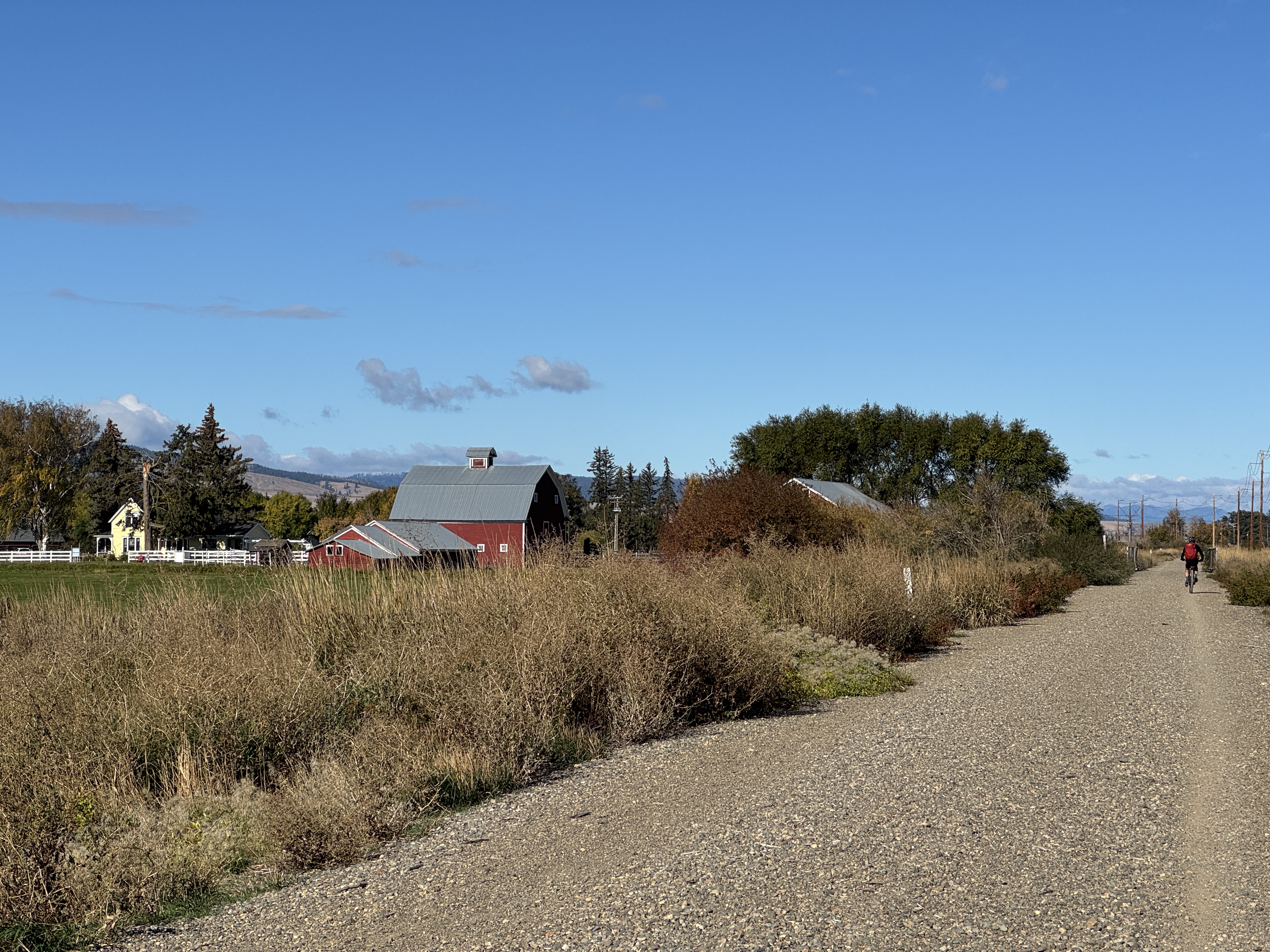
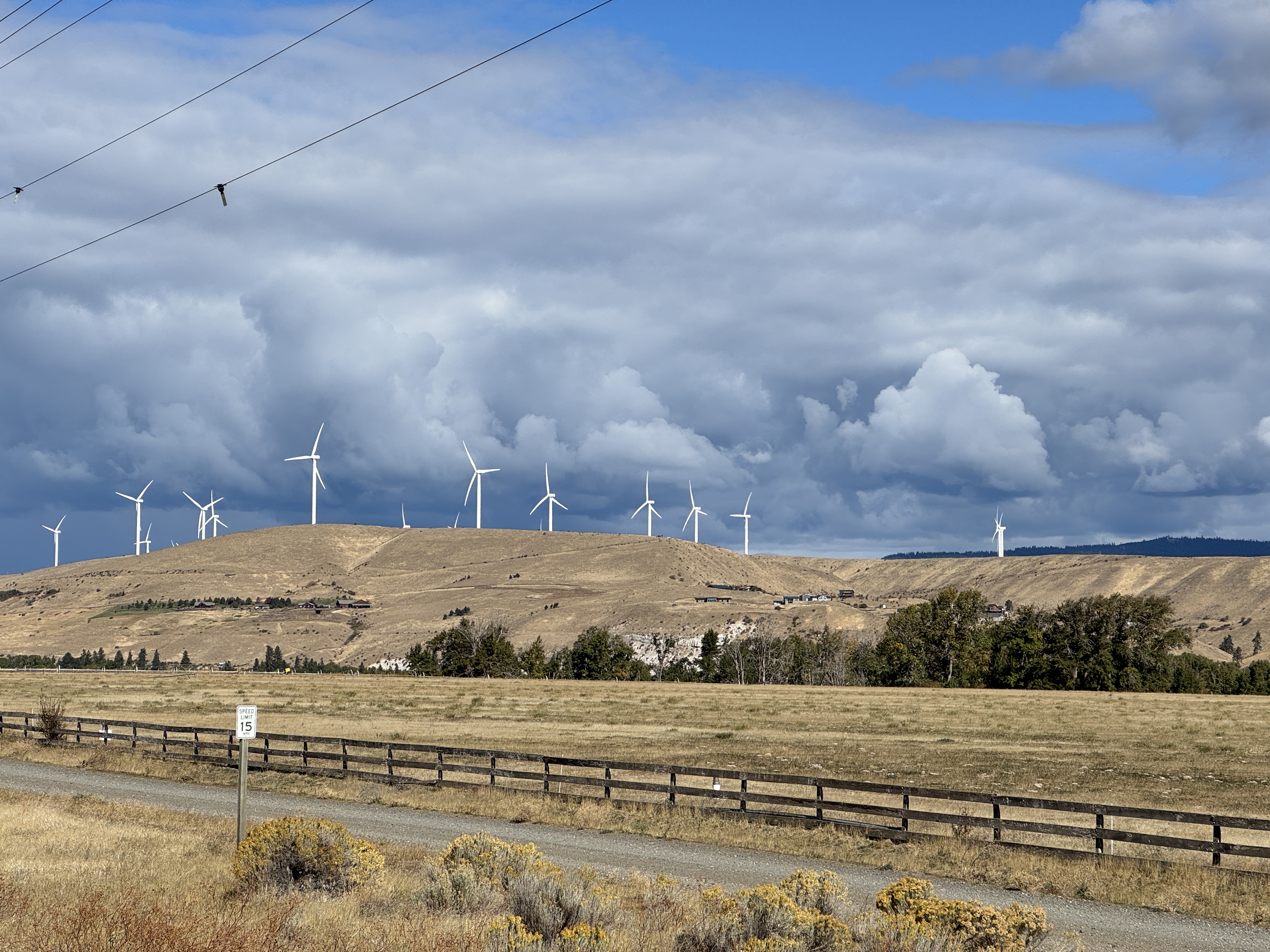
When the foothills began to rise around us, they provided some protection from the wind and miraculously the gravel surface improved at the same time. Between that and getting a better feel for gravel biking, things were looking up! The scenery was a great distraction and became more picturesque the farther we went.
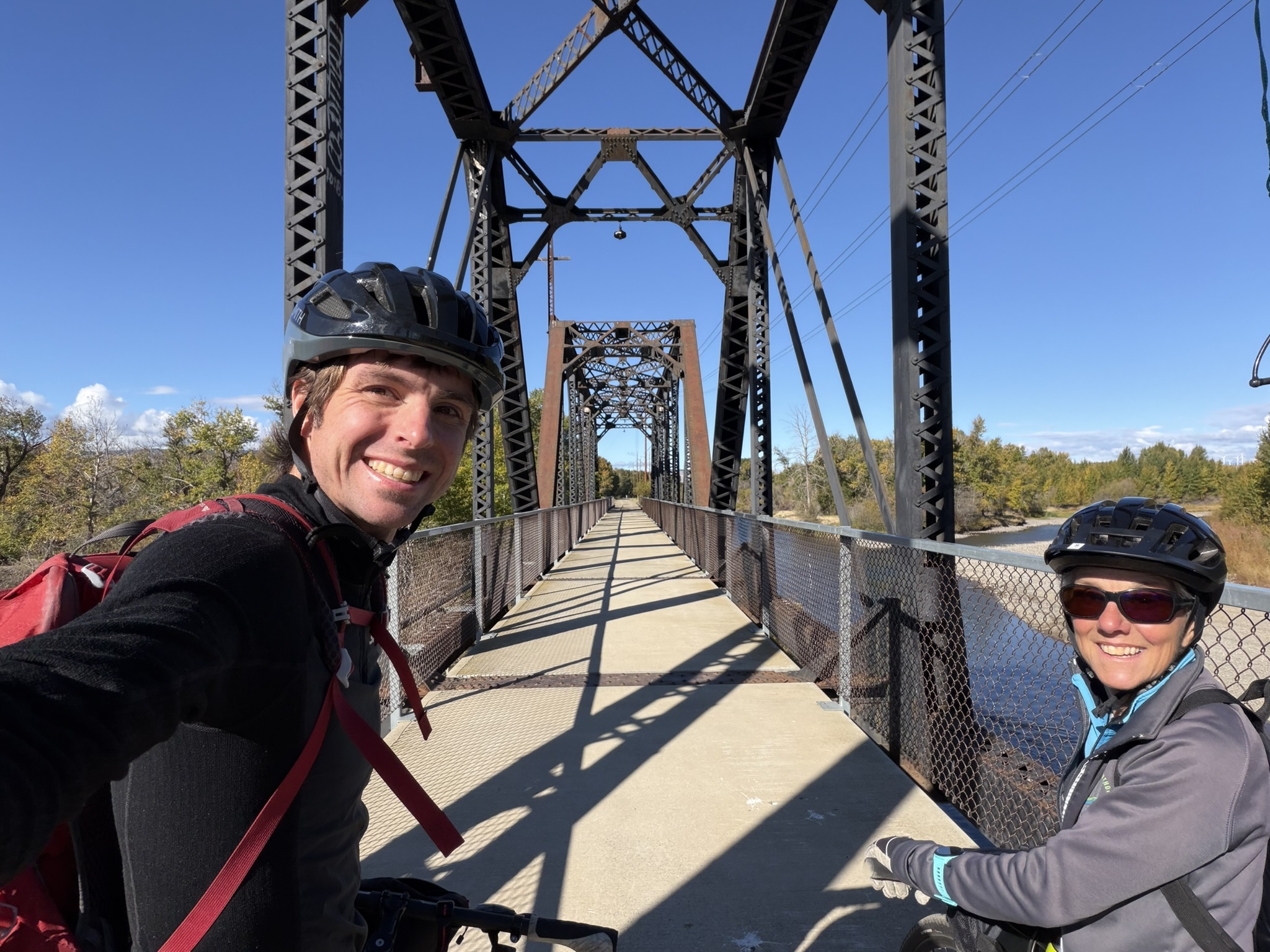
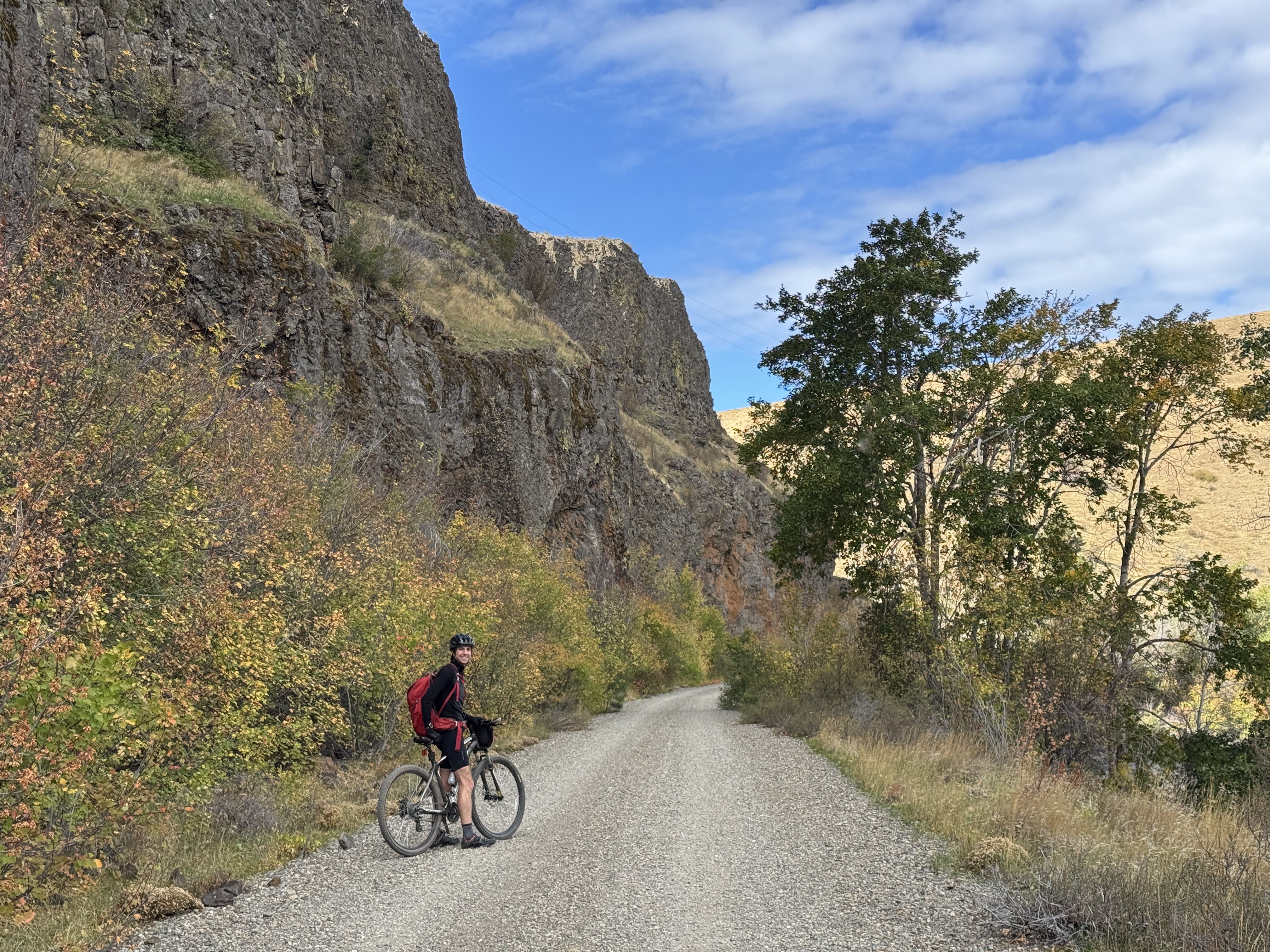
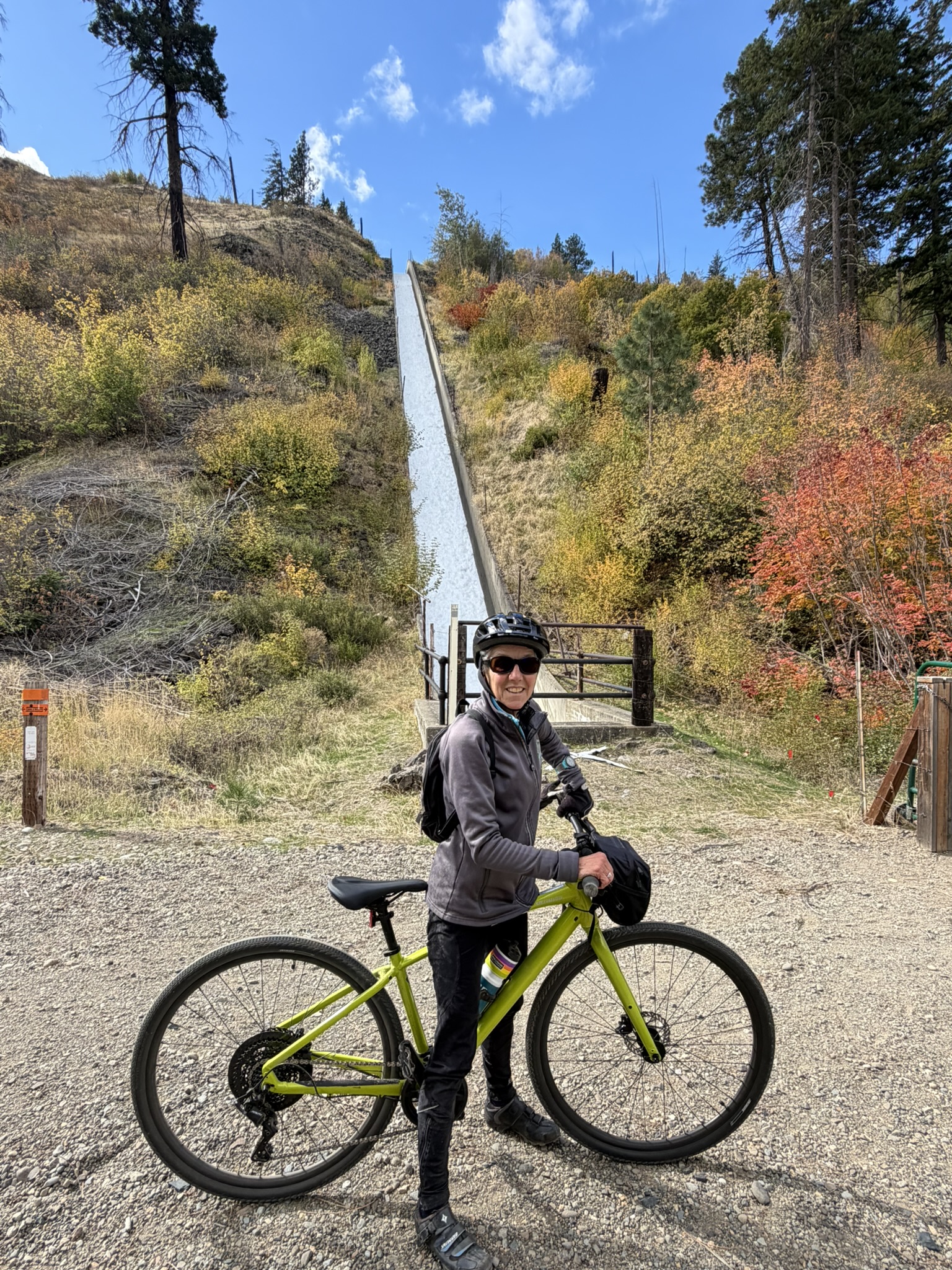
We hit a patch of really good biking surface, more packed dirt than gravel. We took advantage of that to make tracks and get as many miles under our belts as we could! Pressing on and on I began to lag and feel a bit spent – Erik too. That’s the only time it felt monotonous and like the trip was going to last forever. The end seemed impossibly far away as we were not even half-way to the pass yet.
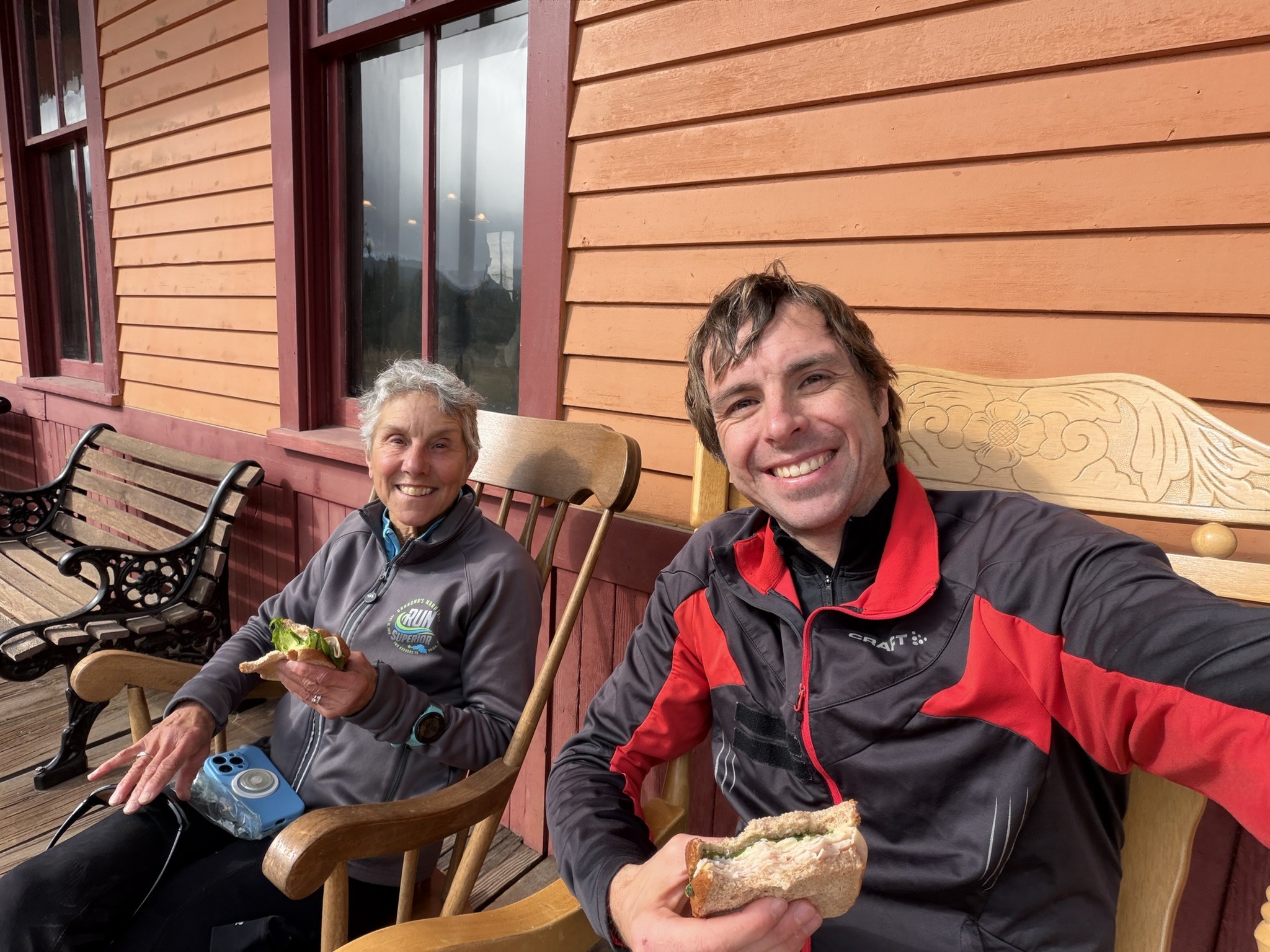
Reaching Cle Elum we concurred that it was time to stop for lunch. Settling into two cozy rocking chairs on the deck of a coffee shop we gratefully consumed the sandwiches and fruit we’d brought, supplemented by a trail bar from the shop. The well-timed stop and sustenance replenished our energy and spirits as we returned to the trail.
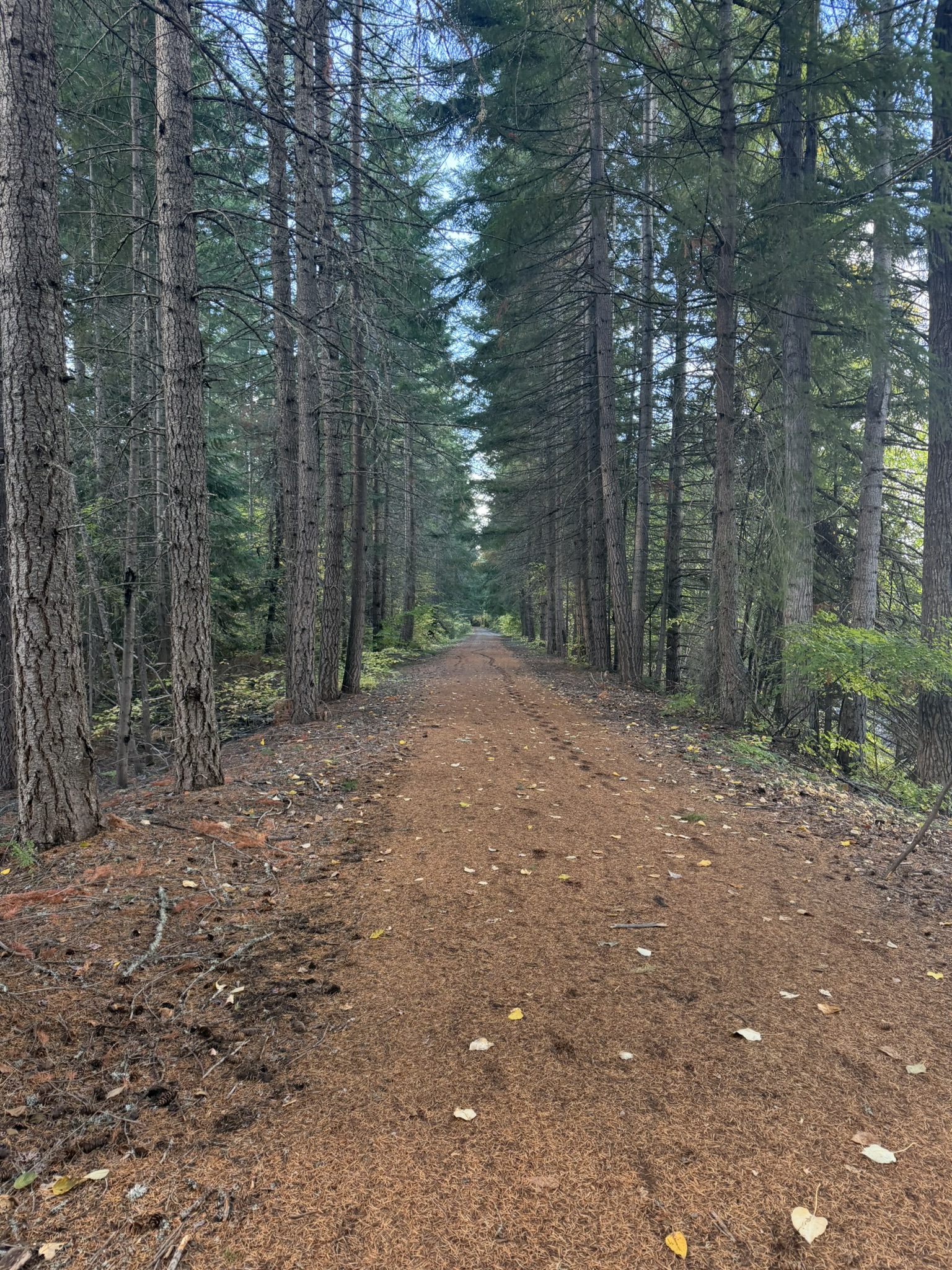
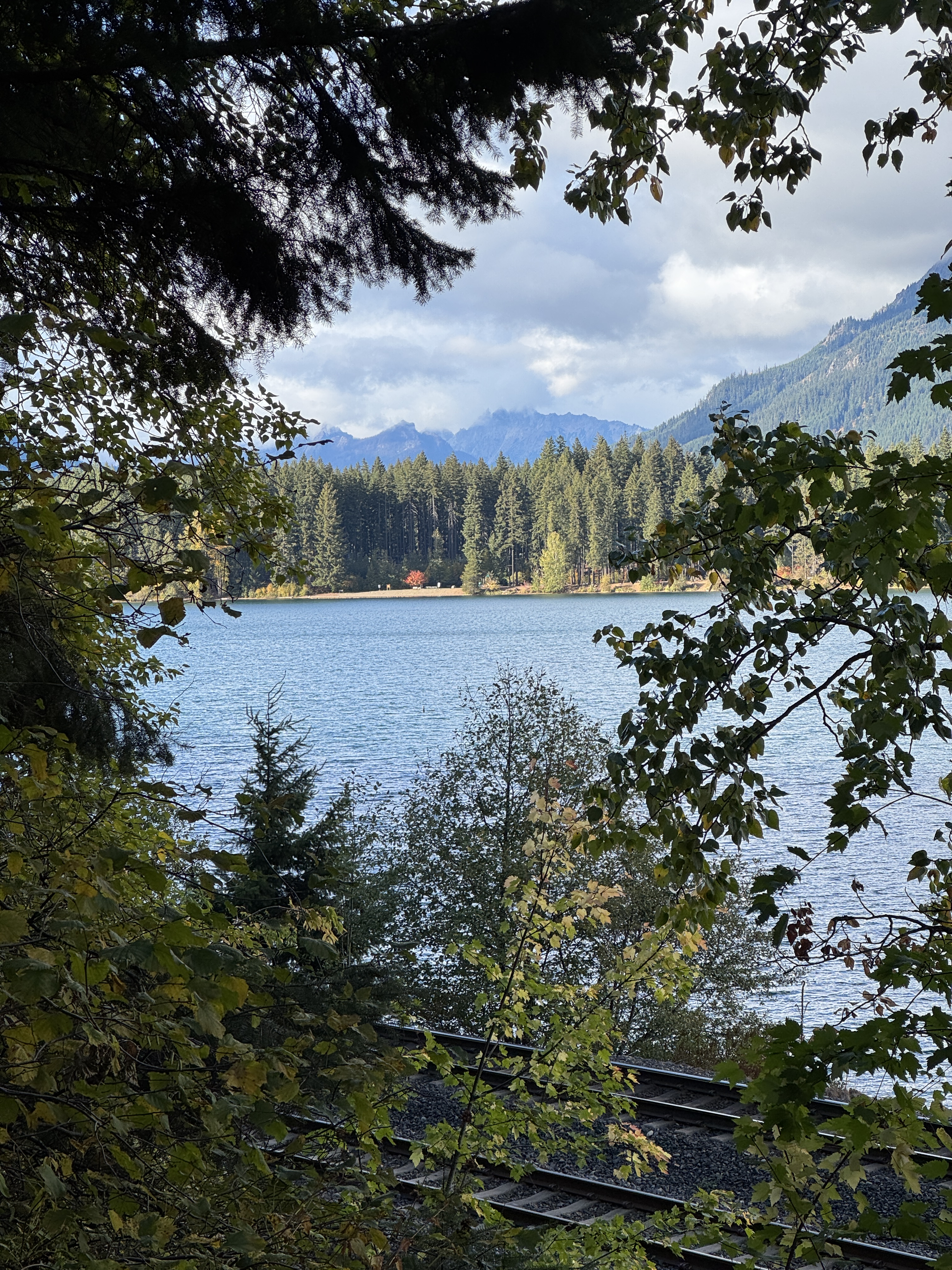
The scenery only improved from there. We passed under tall deciduous trees, rolling over colorful leaves on the trail. In the Easton area there were tall pine trees lining the trail, which was then covered in orange pine needles. Rolling through Lake Easton State Park, the lake was to our right, glistening in the sunlight.
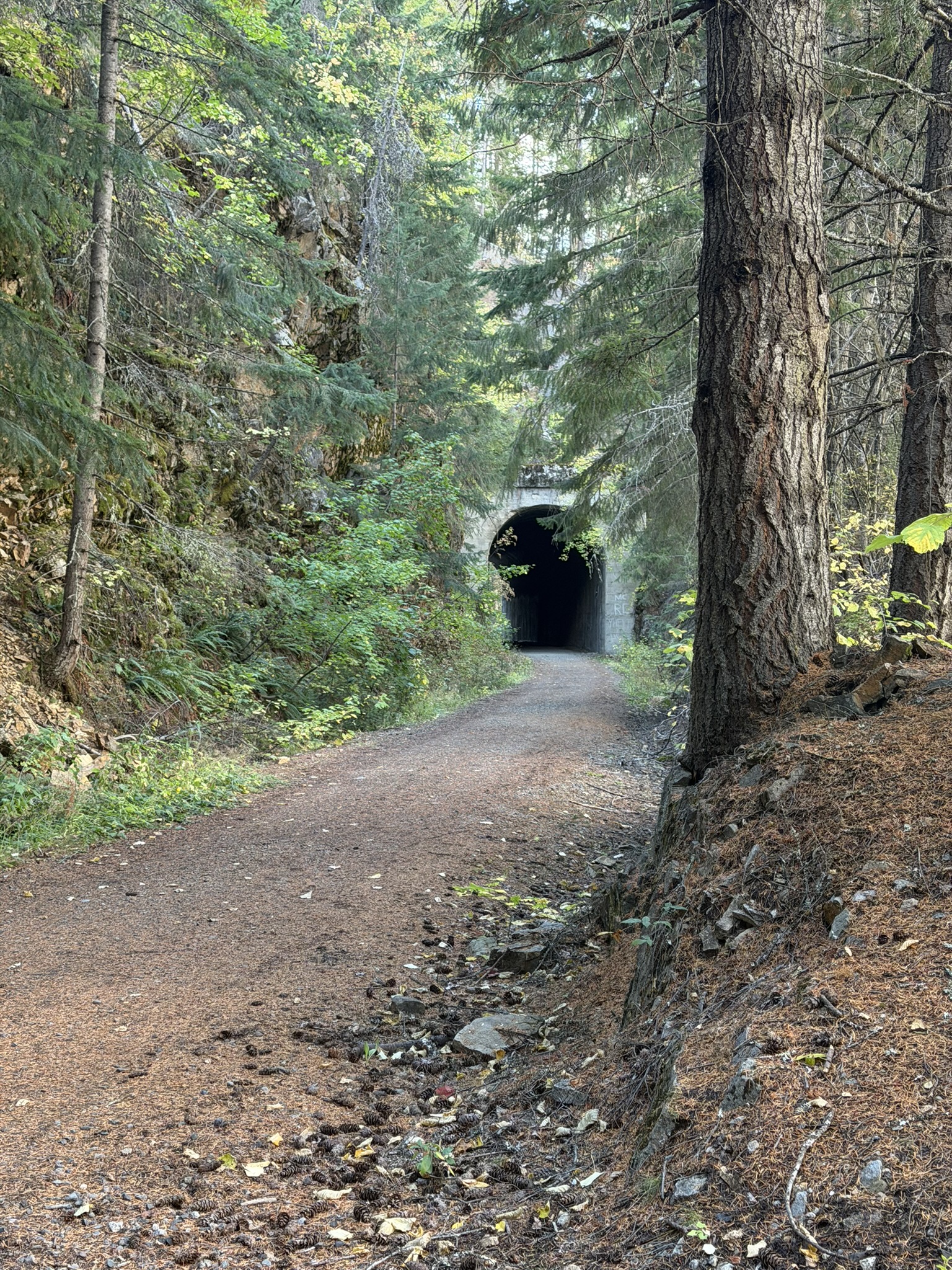
We passed through four short railroad tunnels that day. They were fairly short, and none were lit. We attempted the first without our headlamps. Seeing the light from the other end we didn’t think we’d need them, but that hid the deep darkness in the middle. I panicked, tensed up and slid in the gravel, my first slow fall of the trip. No harm done, but it did teach us to use our headlamps in the remaining tunnels!
By late afternoon it became clear that it was going to be a long day. We would be lucky to finish by 7pm. Just about then it began to mist, and we donned our rain jackets and better gloves or mitts for the dropping temps. It soon became serious business to reach the finish, and between the diminishing light and our focus on the destination we took no more pictures! After passing Cabin Creek, where Erik trains on his cross-country skis, I recognized Keechelus Lake. The trail there is groomed for skiing in the winter, and I’d skied that stretch a few years back. The best part was that we were nearing our destination at the end of the lake.
Our final two miles were the off-trail. On the elevation graph of our route, it appeared to be almost straight up as we rode up the frontage road to the ski motel. But cycling on real pavement turned out to be a breeze! We powered up that road in the pitch dark, thankful for the wide shoulders and Erik’s powerful headlamp. Despite temps in the 30s that numbed our hands and feet, I was a hot sweaty mess by the time the Summit Inn sign loomed out of the darkness. We cheered and eagerly dismounted at 7:20pm! Quick hot showers and dinner at the restaurant across the street were welcome comforts before we both crashed for the night.
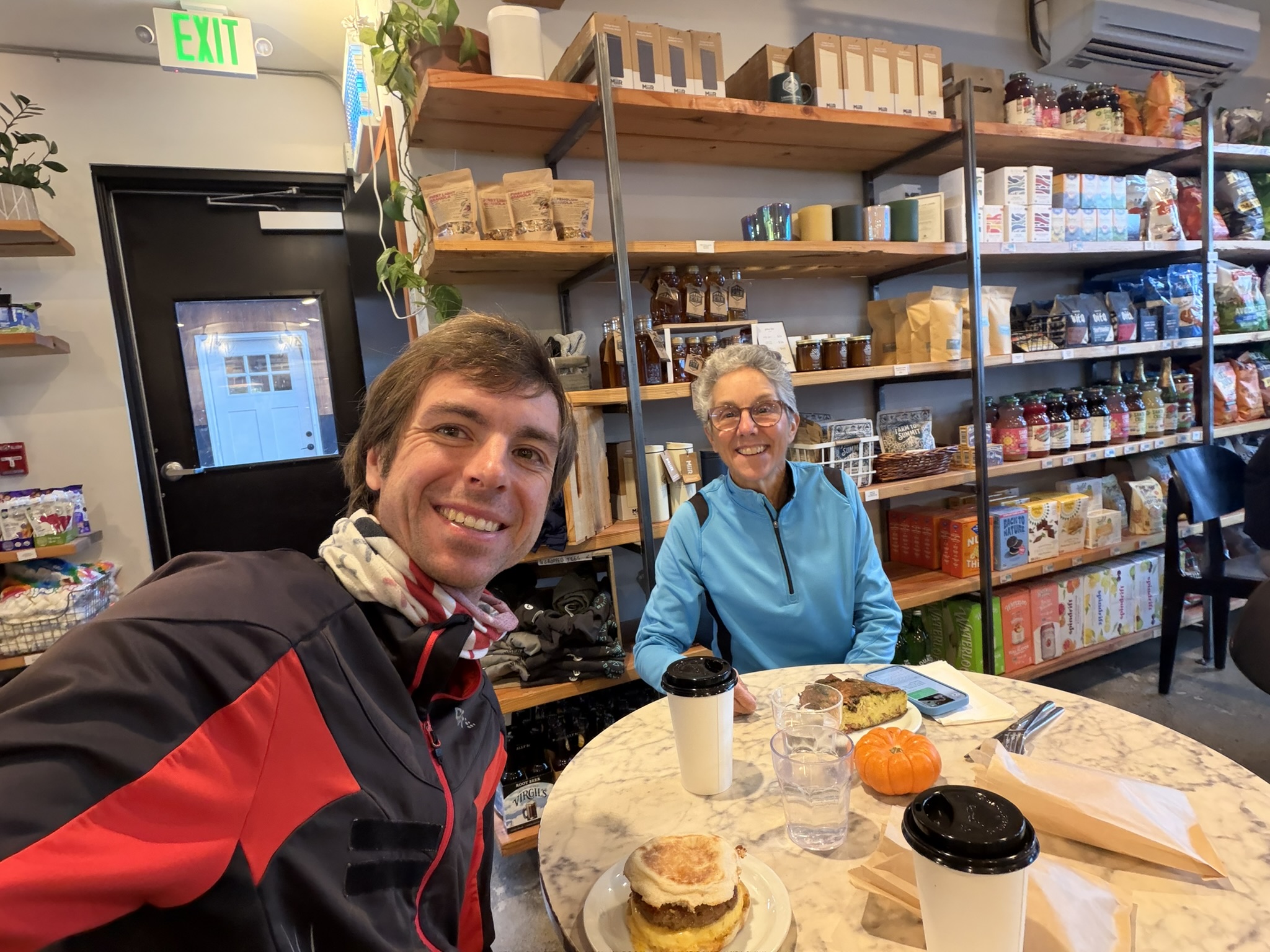
Day two dawned foggy and 33 degrees at the pass. We lingered over a delicious marketplace breakfast to let it clear, then froze as we whizzed down the road back to the trail.
Once back on the PtoC, we came to the famed 2-mile long unlit tunnel. It was eerie to cycle through the darkness for that distance, but we were very surprised to be able to see the “light at the end of the tunnel” from almost the beginning!
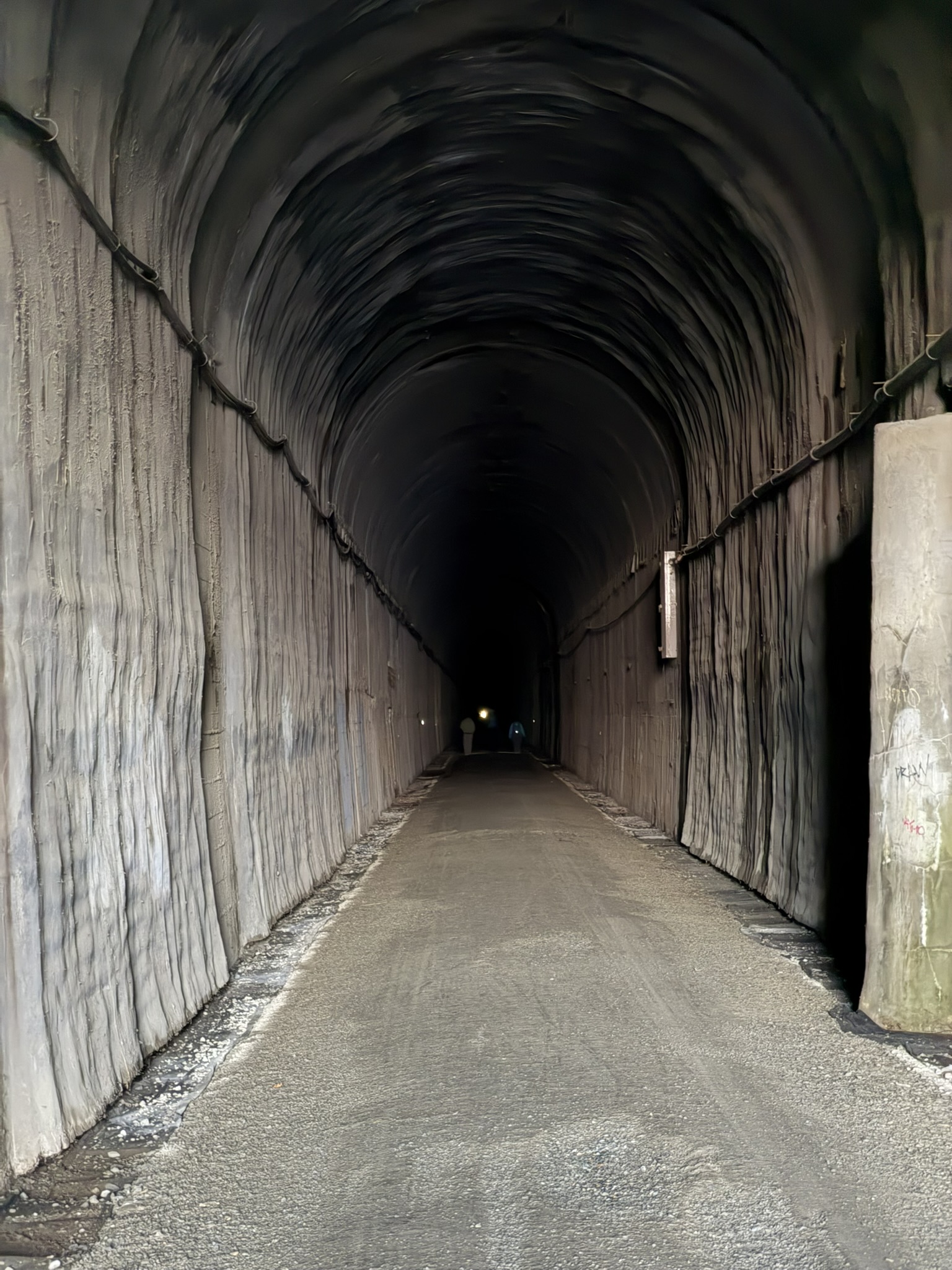
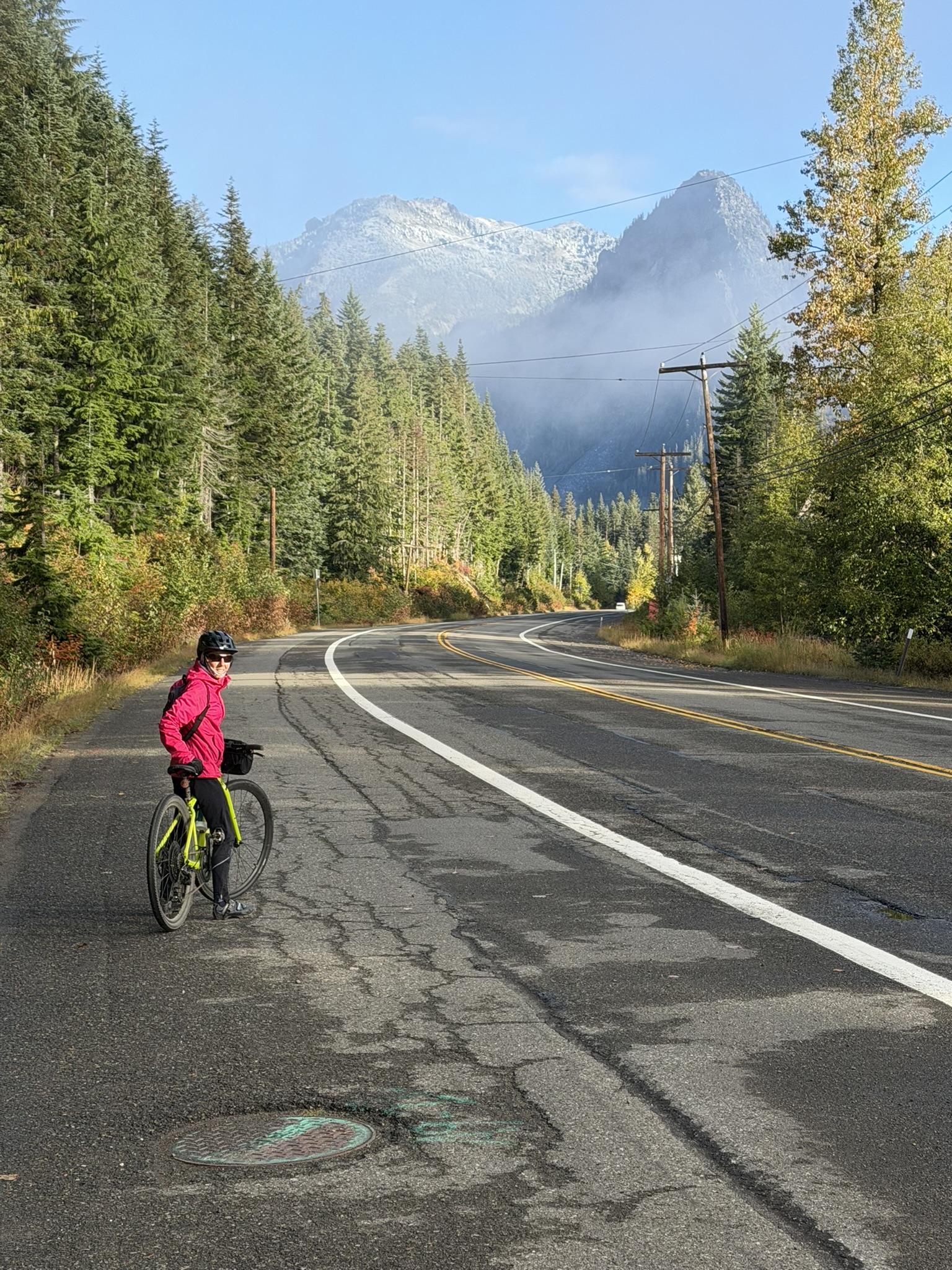
Out the other side, we quickly learned that it was a much more popular section of trail. While we’d seen only a handful of other cyclists and hikers the day before, we found numerous people on the trail including some rock climbers immediately adjacent to the trail. The scenery held more mountain views, and perhaps due to its traffic the trail surface seemed smoother. Going downhill meant we weren’t generating as much heat, so we remained bundled up for the duration. But it had its advantages too, our bodies appreciating the reprieve after the long miles the day before! And knowing we had a shorter distance, we were able to relax and enjoy our surroundings.
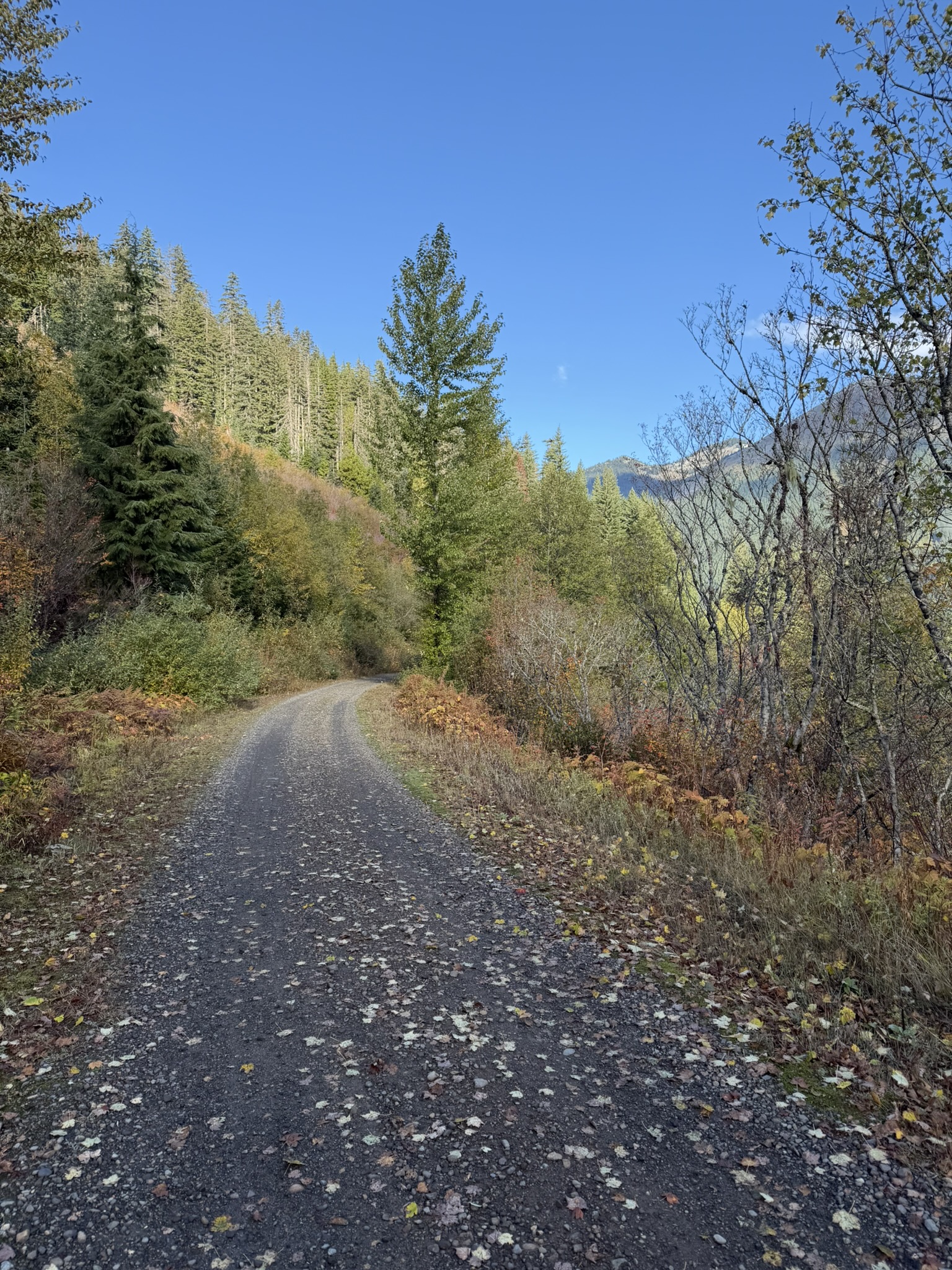
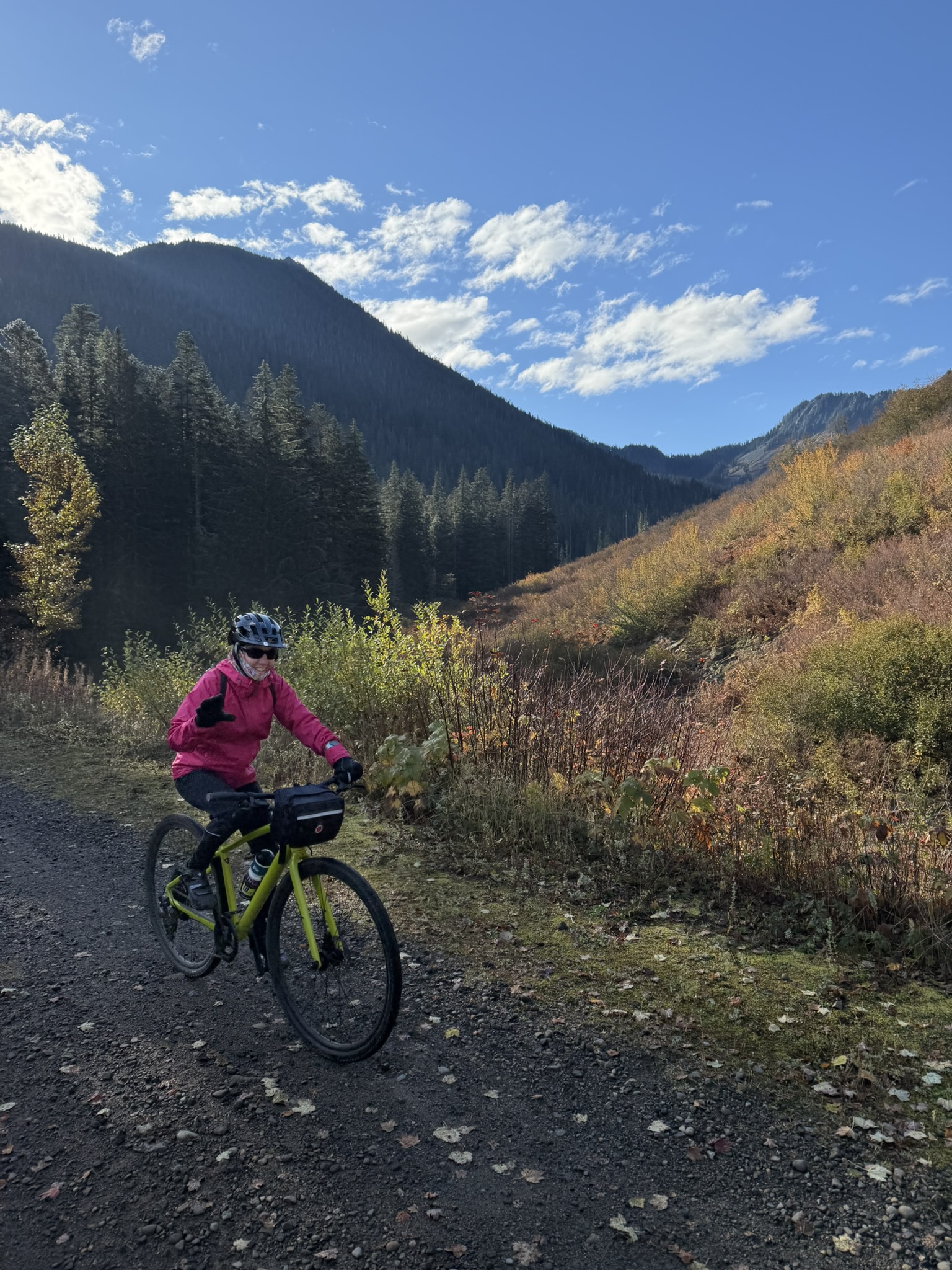
We came to a detour where the land had completely collapsed, caving in the trail. It was hard to see how they were ever going to be able to fix it, and some enterprising biking clubs had chipped in funds and labor to build a narrow side detour through the woods in order to reopen that section of trail.
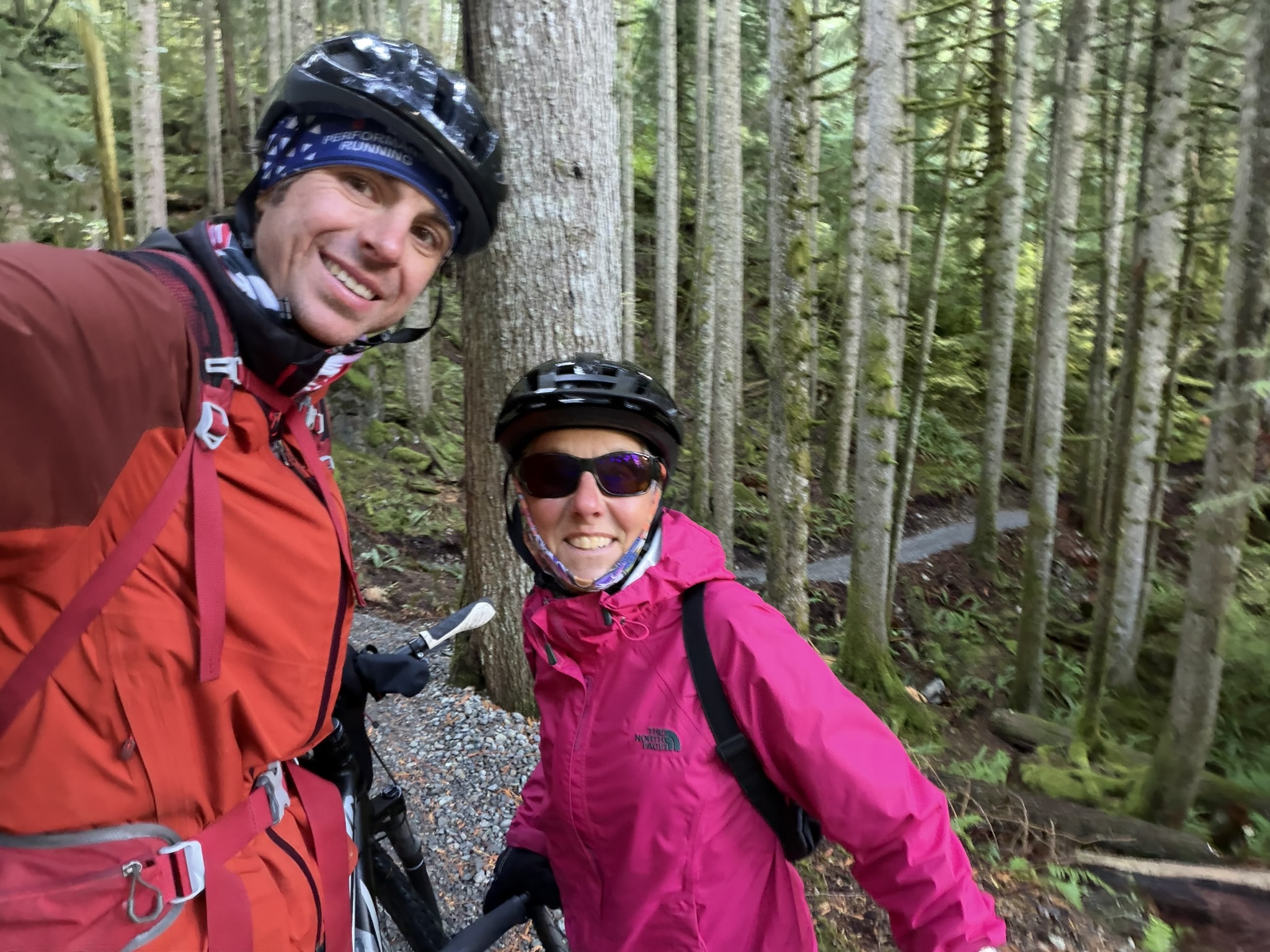
Reaching Rattlesnake Lake we felt like we were on home ground. It was just over six miles from Erik’s house, and we’d both done training runs up to the lake or beyond and back again. Those final familiar miles whizzed by and we were soon back in Erik’s driveway – our trip complete!
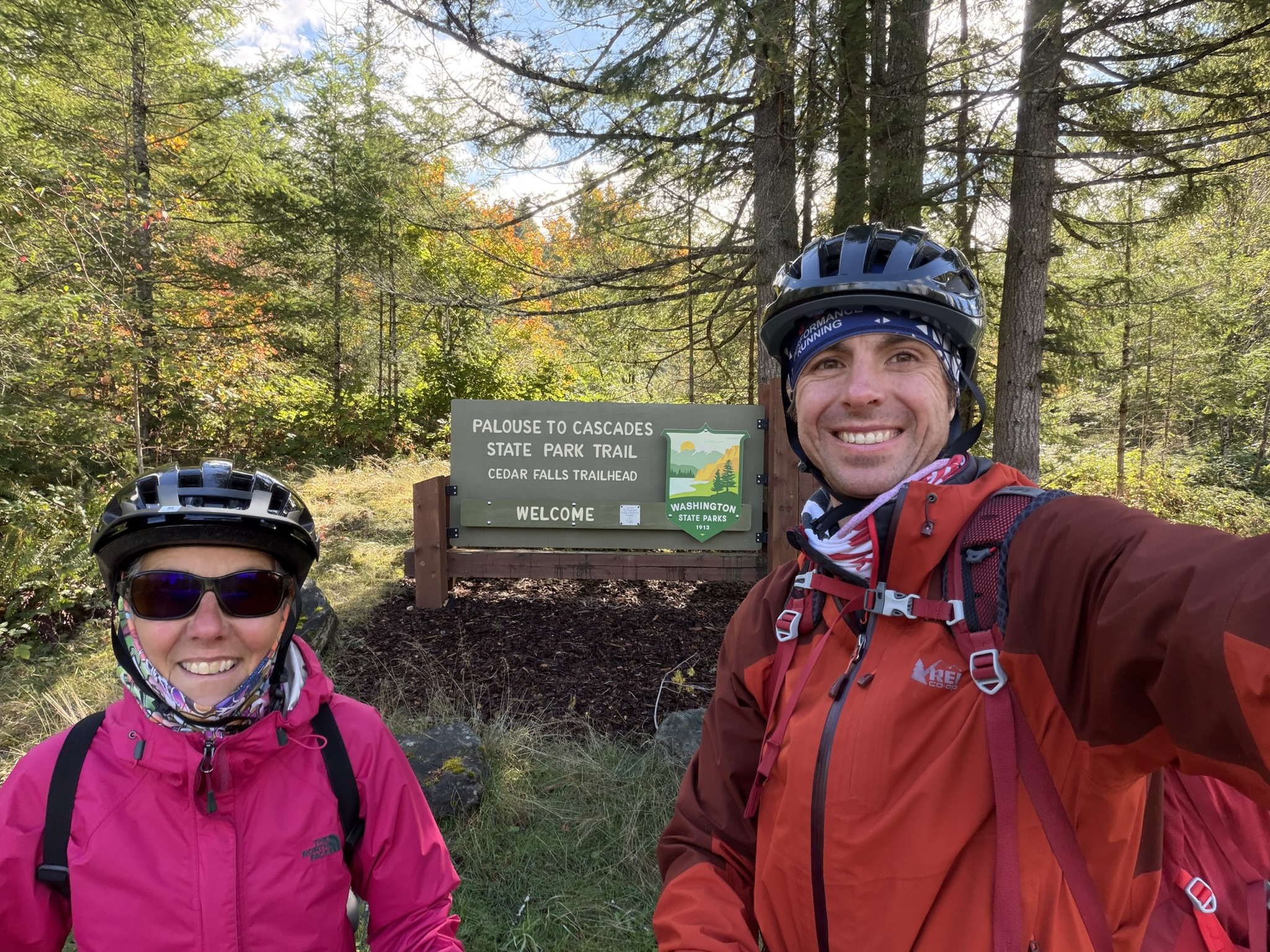
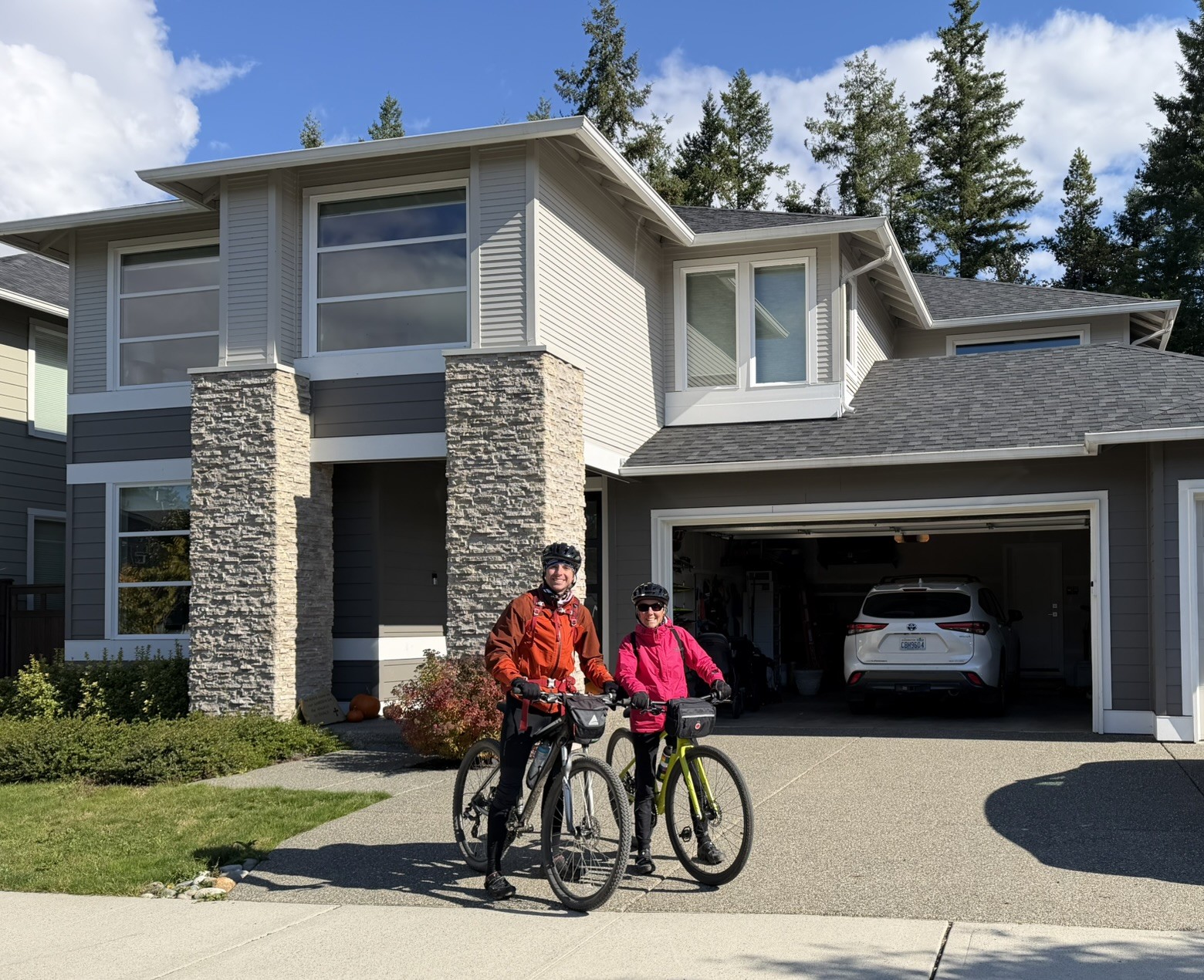
With another successful mother/son bike trip on the books, we’ve already begun scheming a destination for next year’s ride. The times we have spent together on our bikes have been so precious and memorable for me, I’m forever grateful to be able to still be out there doing it, and for Erik’s willingness to make it happen. I’m one lucky mom!