Why a Writing Coach?

Last time I checked in on my writing journey, I had just emailed my book manuscript to my writing coach, Mary Carroll Moore.  I waited in anxious anticipation while she took a month to read it, think about it, reread it and send me her initial report.  In addition to feedback on my manuscript, she provided an in-depth description of the process she used to evaluate my work, and laid out a plan for working together.  While it was overwhelming, I was certain I had chosen the right coach.

Now, seven months later, I have come out the other side of that experience.  After dedicating myself to the writing process for the duration of my coaching, followed by some time to reflect, I thought it was high time to report back on what it was like.

I will readily admit that the coaching process was not at all what I expected.  I naively assumed it meant working through my manuscript.  Tweaking my writing.  Developing its flow.  Working the chapters into it into a cohesive structure.  We worked on all that, but not via my words.  Instead, it involved carefully devised assignments that led me to take a step back to look at the content as a whole, then tear it down into small modules, scenes.  Work on those, then reshape them into the chapters.  Pay attention to the reader’s perspective, not the writer’s.  Finally, rebuild it back into an overall structure.  All of this took place within a list of my chapters, not the manuscript itself.  For me, that systematic approach perfectly suited my analytic nature.

Logistically, this occurred through eight sessions conducted entirely by email. For each check-in I sent in my assigned work.  I also kept a running tab of questions and observations as I worked and included that as well. Mary emailed back a wealth of comments and answers, followed by background materials and instructions for the next assignment.  Several emails usually flowed, as I reviewed the feedback and asked clarifying questions.  Then I was off on my own until the next check-in.  In her original set of instructions and guidelines, she strongly encouraged holding off on emails in between.  Chances were, I would solve any problems on my own and learn from the process, she said.  And she was right.

I started out thinking 2 weeks per assignment would be plenty.  But the further in I got, the more time I wanted.  I was eager to accomplish as much as possible, and to make the most of Mary’s tutelage.  Each assignment was comprised of a number of different tasks.  She readily admitted to assigning more than could be accomplished in the time allotted, allowing me to choose which pieces I wanted to tackle.  I couldn’t helpful myself from trying complete it all.  In the end, the process stretched out over 5 1/2 months, thanks to Mary’s willingness to be flexible and extend the time between check-ins as much as possible within her schedule.

Early on, Mary had me doing a lot of freewriting.  As this book is a memoir, she gave me writing prompts which provided me with an inventory of thoughts, ideas, influences, experiences, and life shaping moments that might ultimately find a home in my manuscript.  She also asked me to read as many books as I could find written by touring cyclists, since that’s the nature of my book.  I quickly found the value in that, sizing up what made them boring, compelling, repetitive, well crafted.  And especially, what made me really care about the cyclists.

Not until assignment 5 did I begin sending in chapter rewrites for editing.  By then, I finally felt ready to build on all my new knowledge and try out the techniques I was learning.  They came back with a warning that she made “extensive suggestions.”  I welcomed the honest feedback and heavy hand – those have become treasured examples.  I continue to look back on them as I rewrite other chapters, taking her edits to heart and trying my best not to repeat the same mistakes.

Throughout, Mary was supportive and encouraging.  And I was right about the benefit of personalized attention, and working with someone who knew my work intimately.  Each assignment was based on my progress to date.  If one approach didn’t work for me, she’d try another tact.  And she always stressed that her insights and suggestions were just that – the final decisions always rested with me.

I started with a pile of content – I admitted to Mary that’s all it was.  By the end, I mostly have that same pile of content.  But now I have a roadmap.  I drastically narrowed my scope.  I identified critical elements that need to be woven into my existing chapters.  I have a detailed revision list.  I know where I need to add chapters.  And I understand how to structure those chapters to be a compelling read.  Have I mastered all that yet?  Hardly.  But I feel like I know where I’m going with this.

I want to note that none of this was dictated by Mary.  It came about through the artful learning and discovery process she led me through.  True to her role she was my coach and mentor.  She taught me skills and I practiced under her guidance.  Now it’s up to me to play my own game.

The Big Bend Experience

Sometimes the feature attraction is not the star in the theater of travel experiences. In our recent visit to Big Bend National Park I’d have to say it was the entire cast of desert offerings that made the visit memorable.

It started with our accommodations. Choosing to stay just outside the park where there were more amenities, we had reservations in the Terlingua Nights Cabins. Situated in the desert dust, the little sleeping rooms were just that. We had electricity, a mini fridge and barely enough room to walk around the double bed in our pristine minimalist room. We shared the bathhouse and an outdoor living area with a fire pit with our cabin neighbors.

Terlingua Nights Cabins

Our Cabin at Terlinqua Nights

It was 93 degrees when we arrived, with a brisk wind sweeping through the grounds. By evening, it was comfortable to sit out on our porch to read. It felt like the desert.

The revitalized ghost town of Terlingua lay a few miles down the road. Driving over to search for dinner options, we surveyed some of the competing lodgings – tents, tepees, a pastel “Easter” motel and shacks dotted the dry countryside. Hardly your typical National Park tourist environs. We stumbled on a humble eating establishment and settled into the last two seats out on the shaded patio. The slow service suited the warm air and we lingered over our Tex-Mex meals while chatting with nearby diners.

The long bench on the porch of the Trading Company was reputed to be the place to watch the sunset play out on the distant mountains. I insisted we do just that.

Sunset from the Trading Company porch

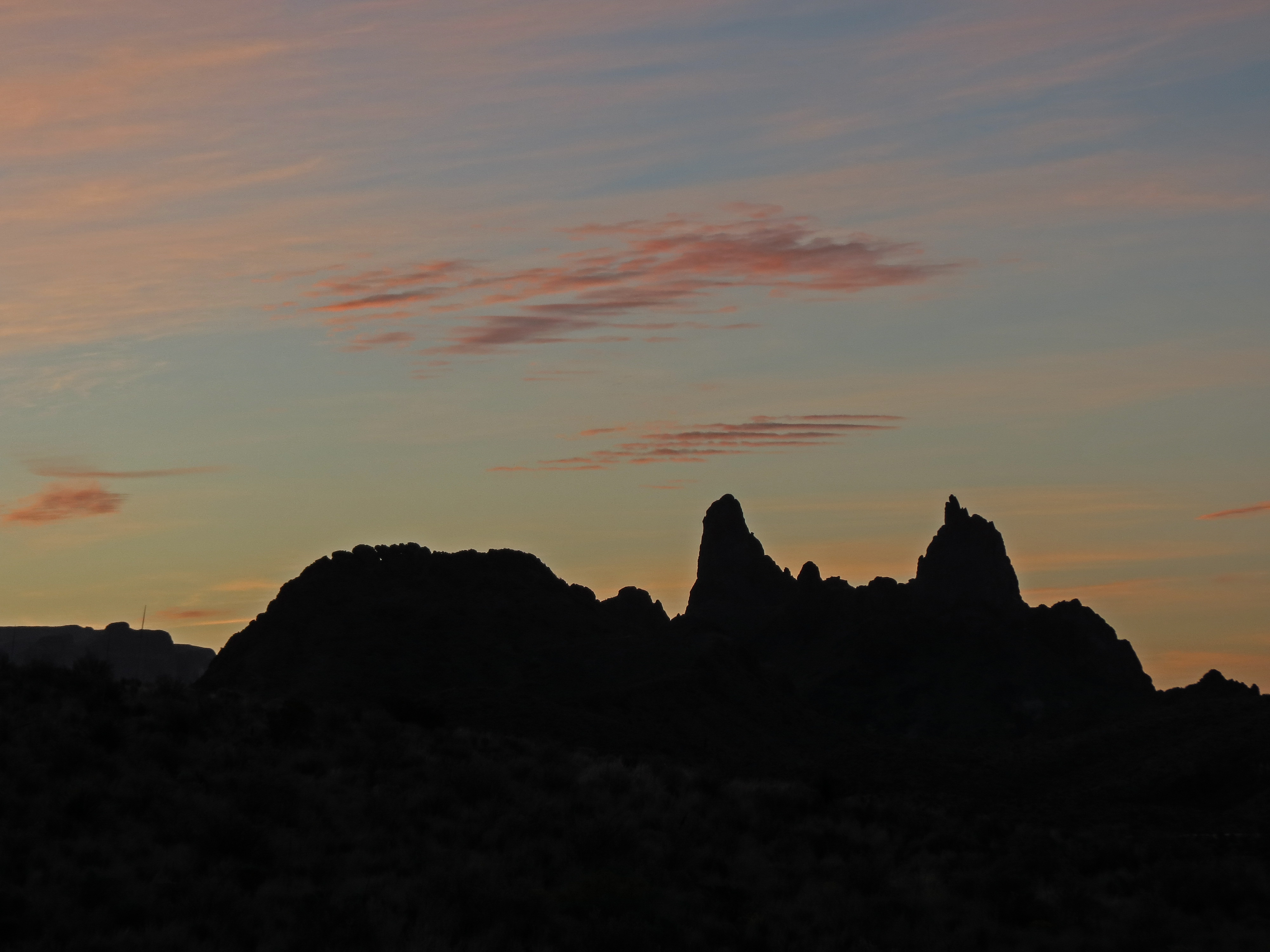
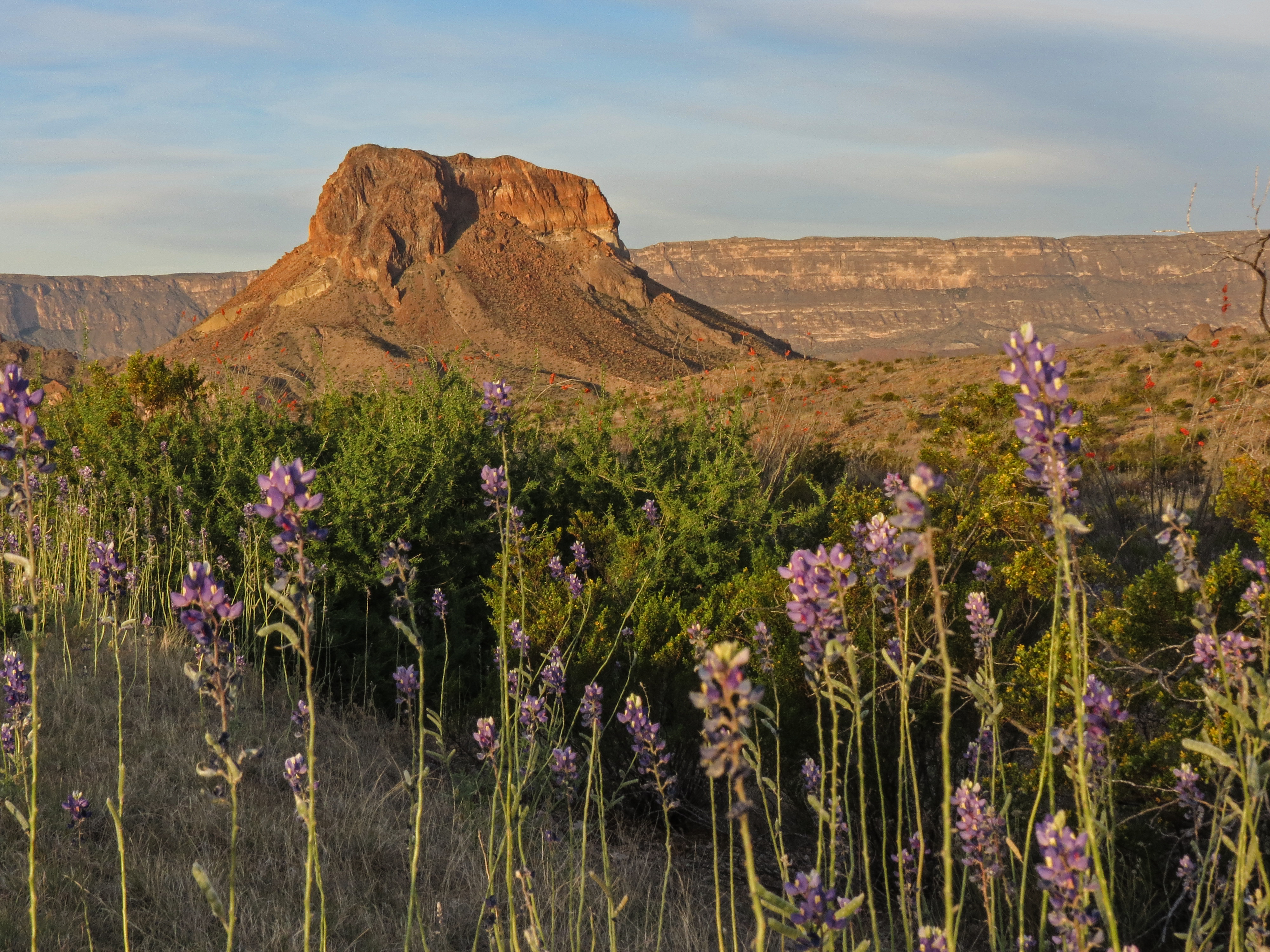
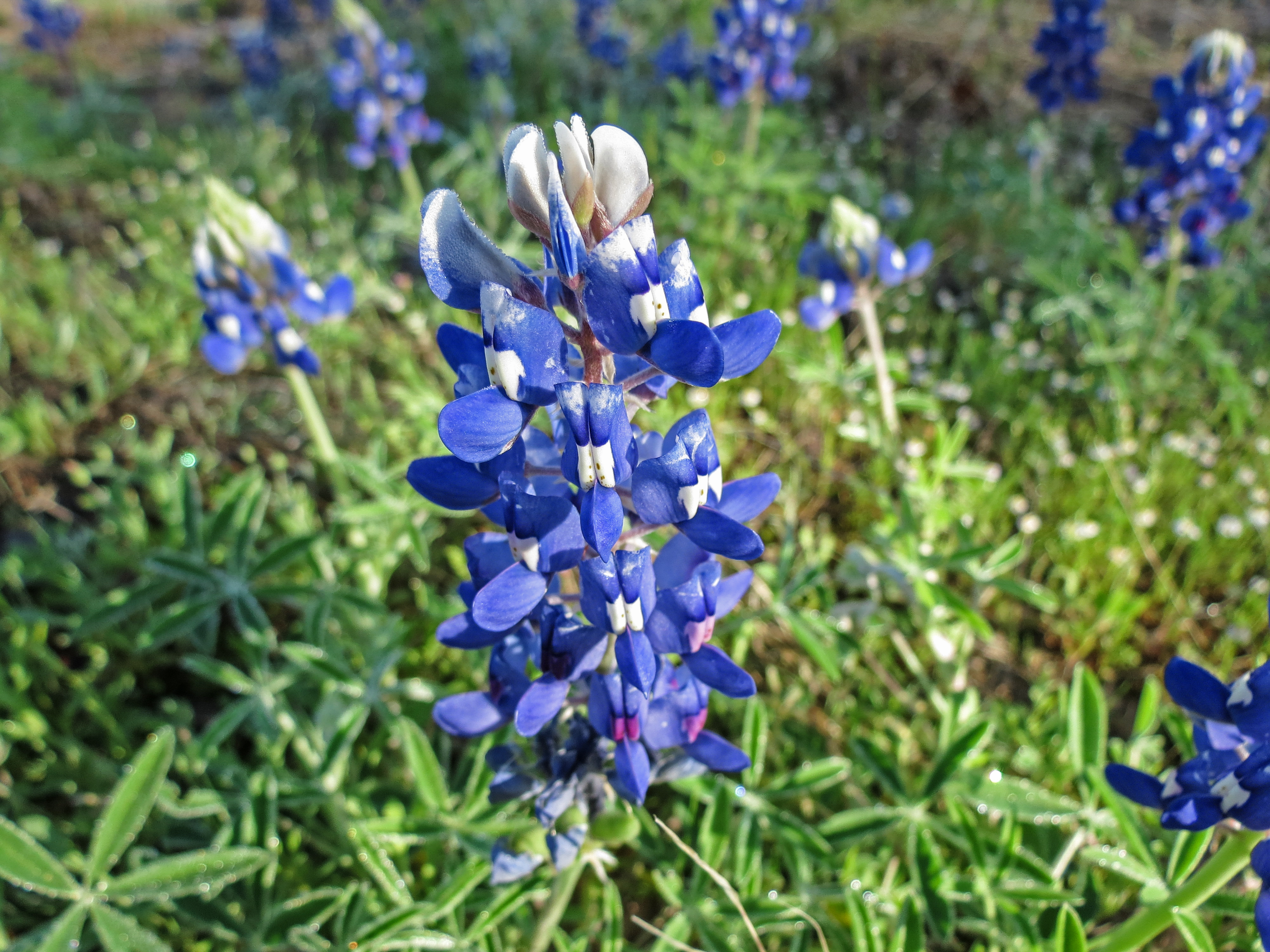
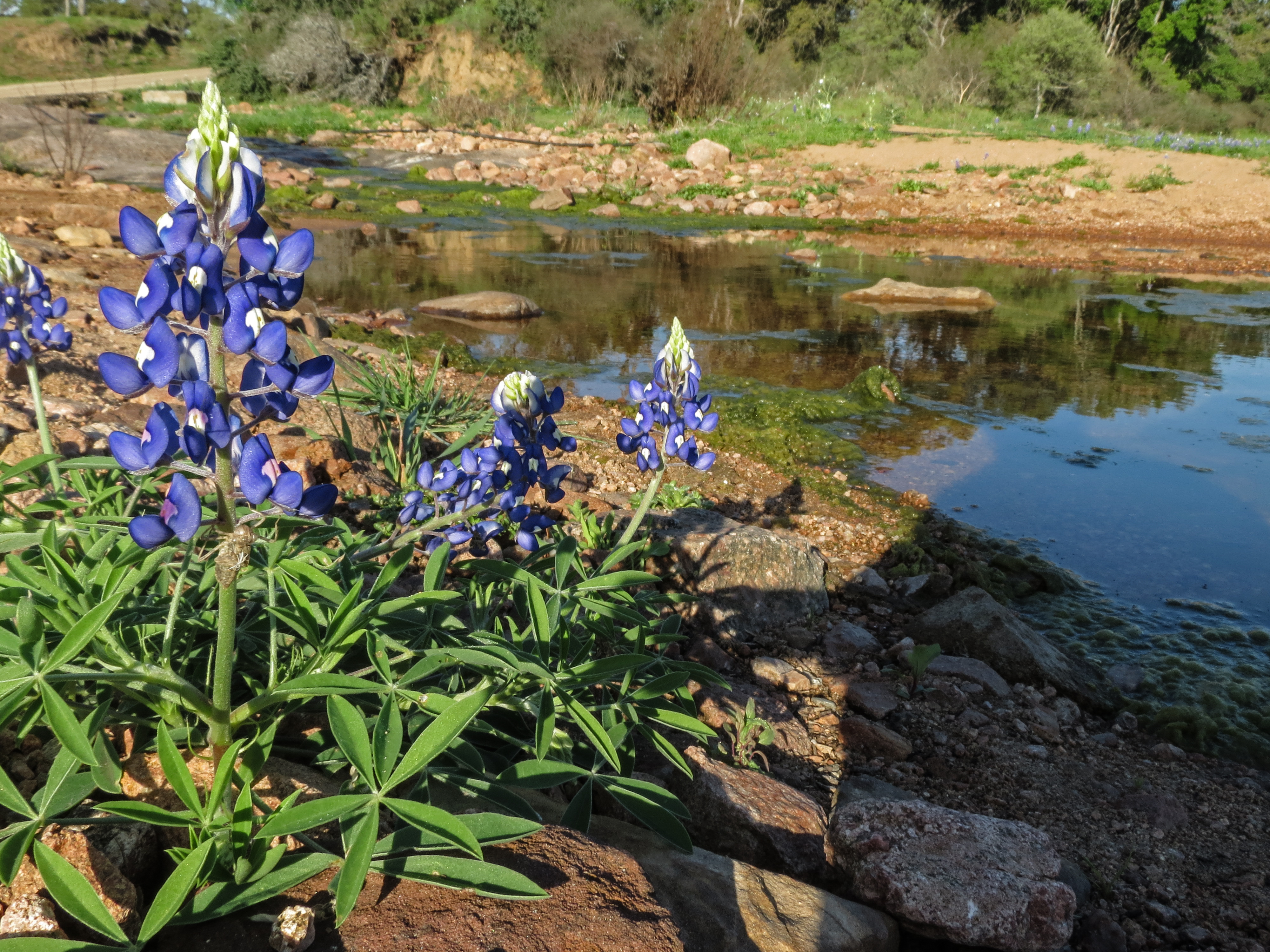
We left our little cabin well before dawn in order to watch the sunrise in the park. We didn’t count on a rough dirt road to reach our chosen scenic location, and decided to detour on the paved but still-slow road. The Mule Ears rock formation materialized in time to stop for the sun’s arrival. Finally having light to see our environs, we took in the bluebonnets blooming on the roadside – uniquely tall and stringy, compared to their short, dense Hill Country cousins.

Sunrise behind the Mule Ears Big Bend Bluebonnets

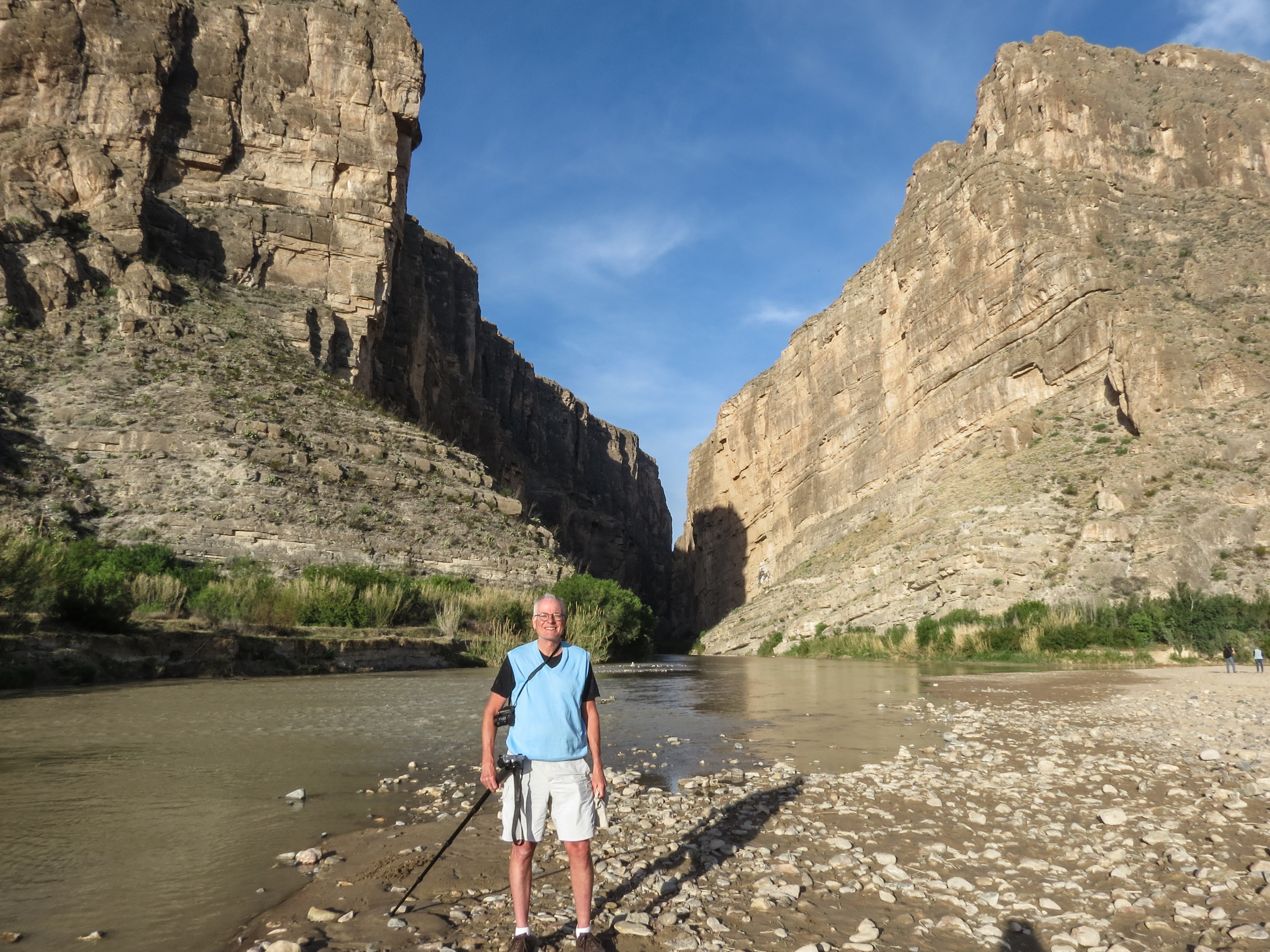
Our destination was Santa Elena Canyon. A short walk took us to the Rio Grande and a view of the entrance to the canyon. But the best part was the hike into the canyon. Crossing a narrow flow of water from a side stream, we followed a well-worn path with switchbacks up the edge of the canyon wall. The trail stretched back into the narrow canyon where we could appreciate the river’s handiwork in carving this deep crevice. Nearing the end of the trail, faint musical notes floated through the air. The pipe flute blended naturally with the environment, lending a mystical air to the experience.Rich at Santa Elena CanyonMolly in Santa Elena Canyon

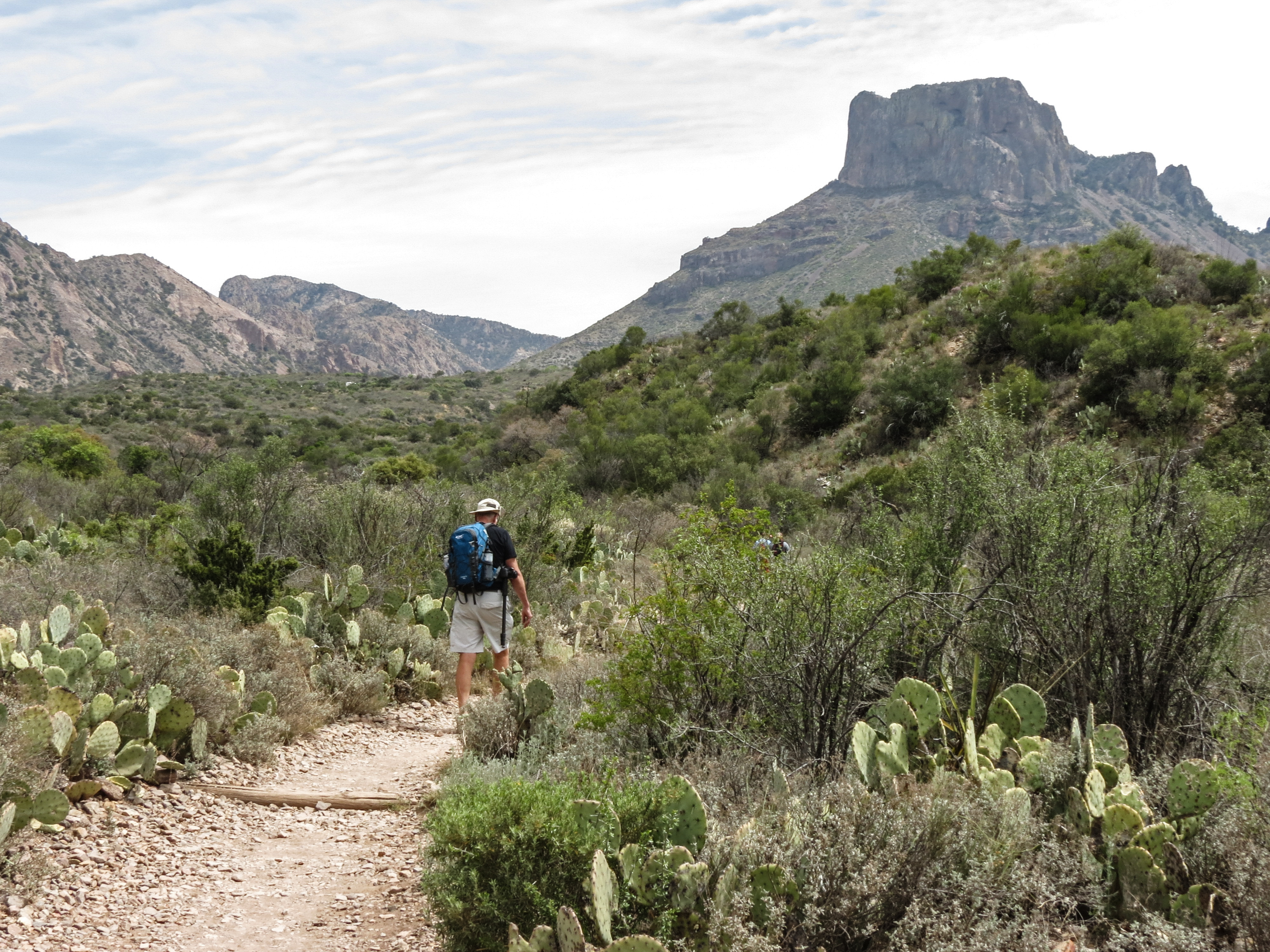
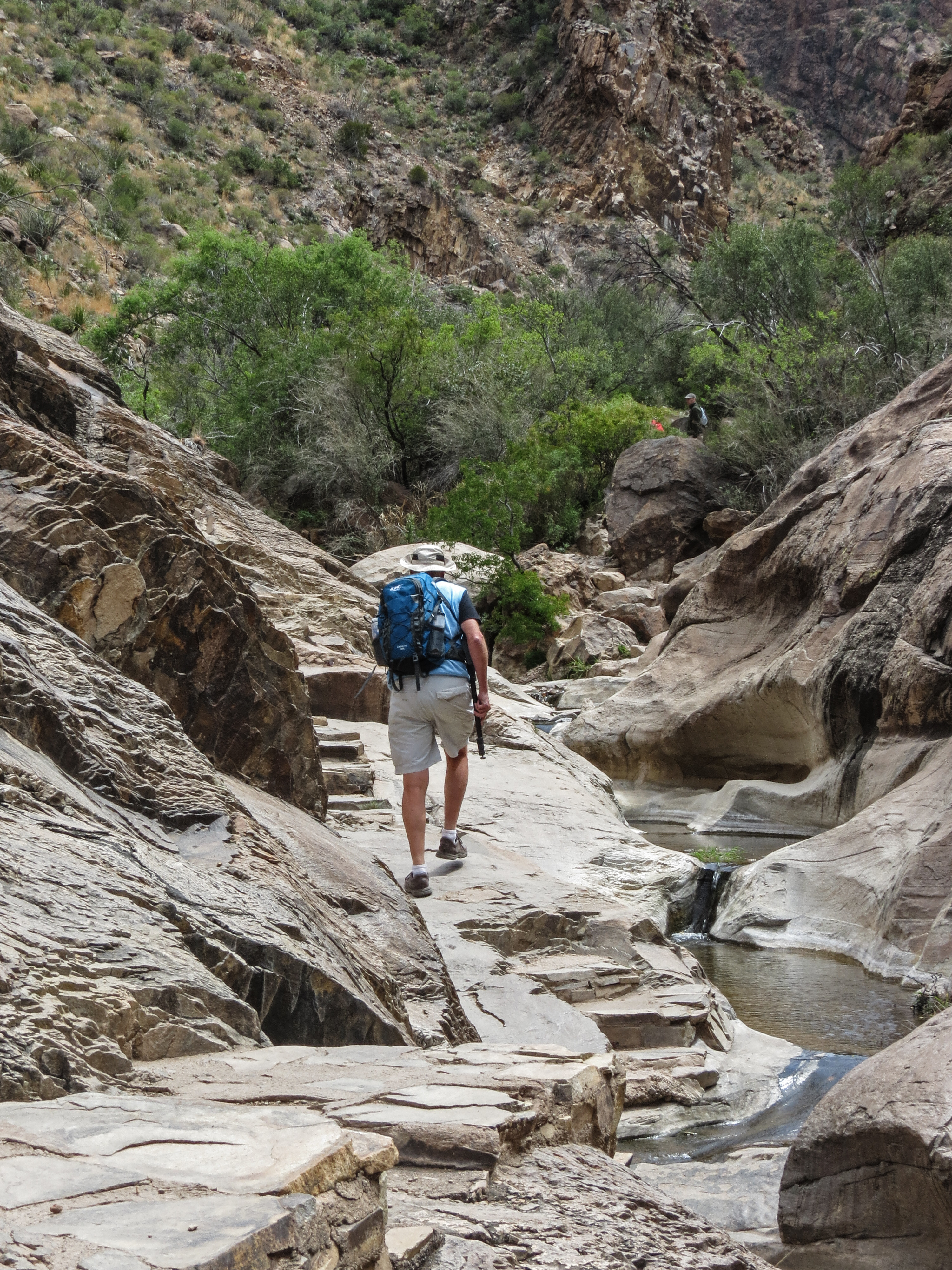
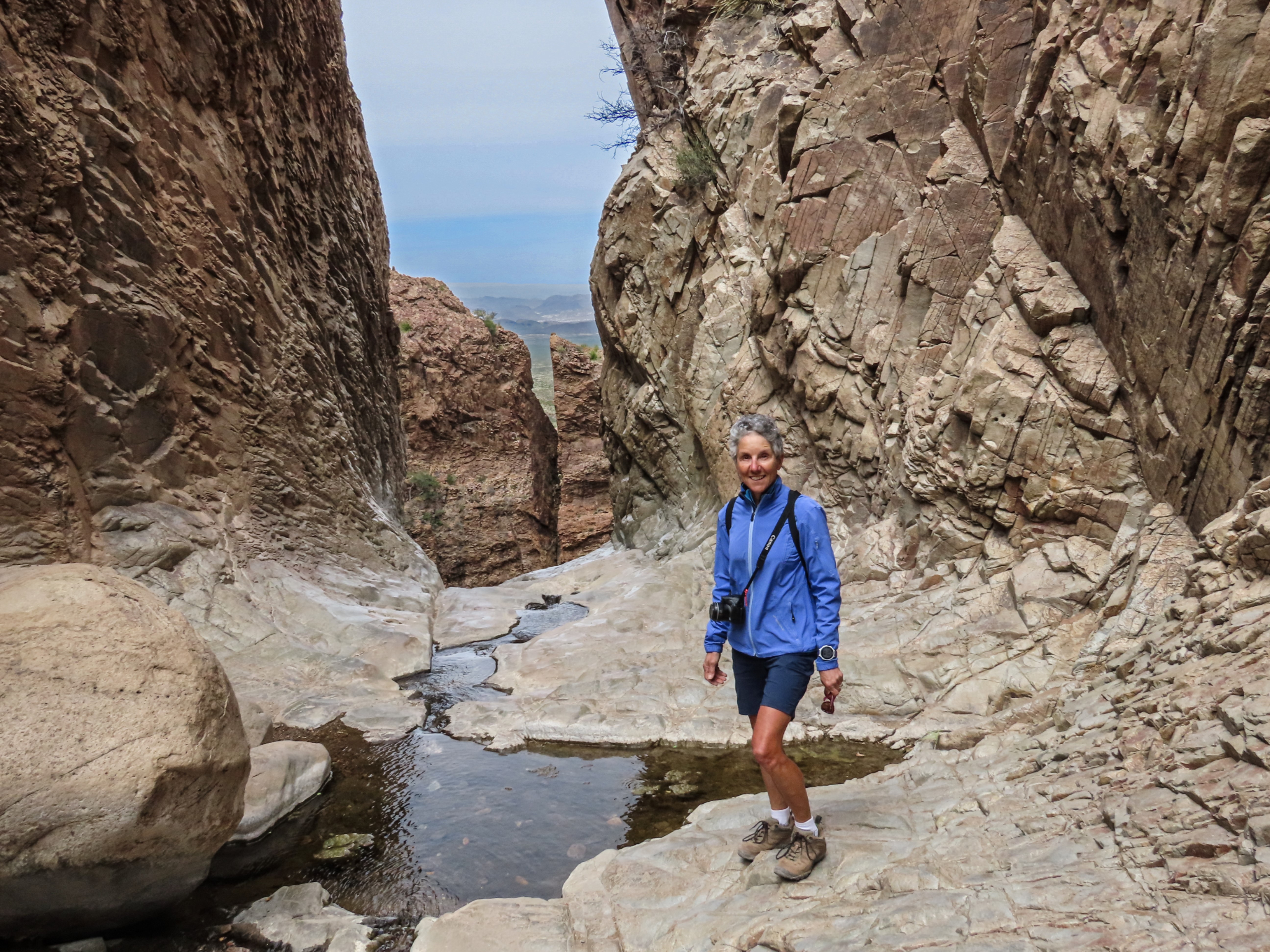
Our second hike of the day was in the Chisos Mountain area in the center of the park. A three-mile walk through scrubby desert environs took us gradually down into the valley. We were at the beginning of the desert bloom, with plentiful wildflowers of all colors and cactus flowers just popping out. The easy path ended with clambering over boulders and hopping across slightly flowing mountain streams. But the end view was worth it – The Window provided an opening with a straight drop below and a narrow crevice beyond. A fierce wind whipped through that window, and I kept well away from the opening.

The Window Hike 1The Window Hike 2Molly at The Window

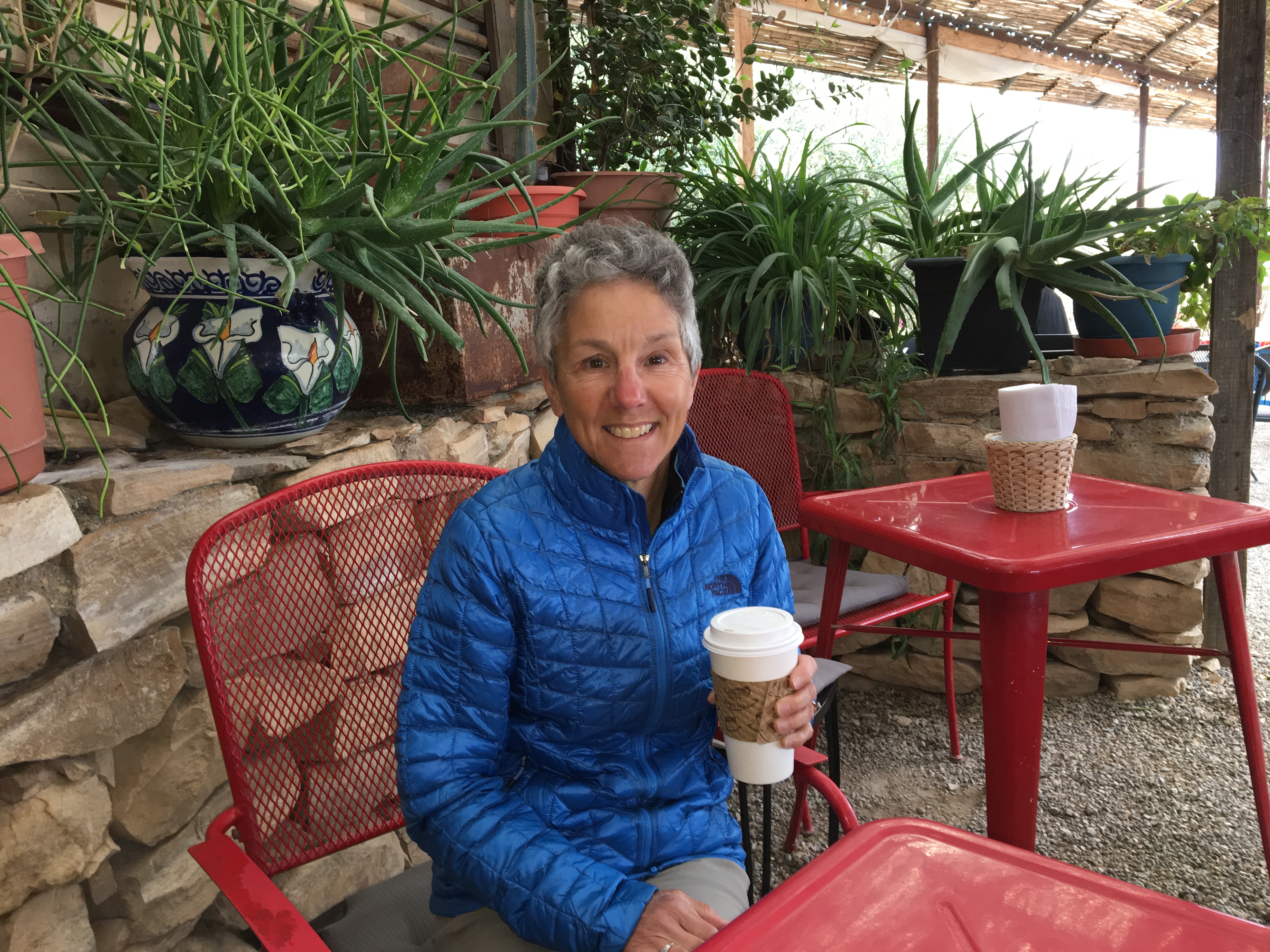
We experienced the extremes of the desert climate when the next day dawned cloudy, super windy and 46 degrees. In no hurry to rush out into the chill we headed back into Terlingua to Espresso Y Poco Mas. Geared for the desert heat, the eclectic café offered only outdoor seating. Settling ourselves at a well sheltered table, we were surprisingly comfortable and delighted with the breakfast tortillas. But we were thankful for our Minnesota clothes stashed in the car!

Molly at Espresso Y Poco Mas

With low expectations we returned to the park under the cold cloud cover. But on our first hike, while scouring the environs for elusive birds (Rich) and wildflowers (Molly) the sun emerged. As the sky cleared, the temperature zoomed to a comfortable warmth.

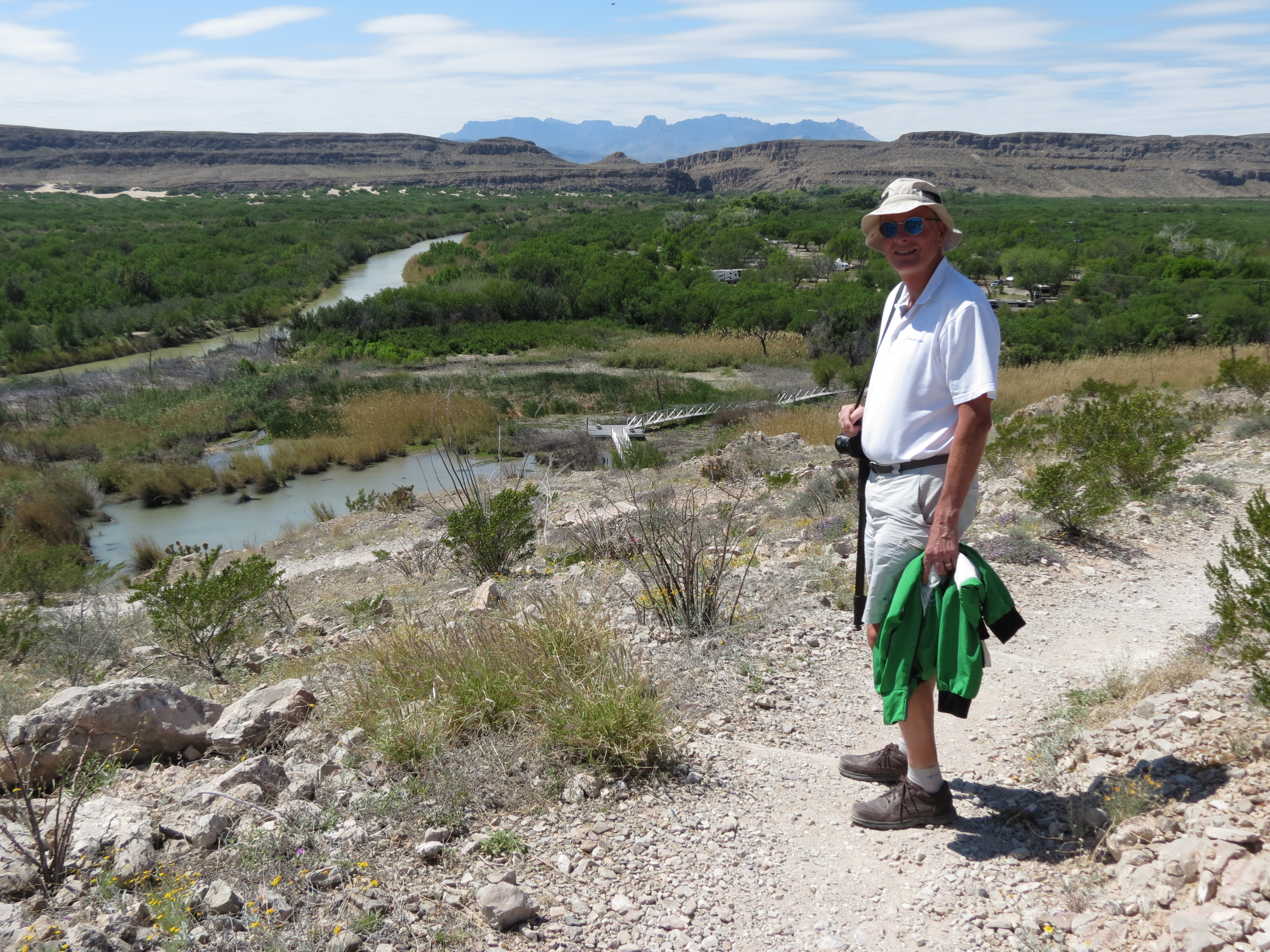
Driving to Rio Grande Village at the far end of the park provided a constant panorama of its nature. We were surrounded by rolling desert land covered in bushy vegetation, surrounded by soaring rocky peaks and mesas. It was majestic in its own way, in sharp contrast to the dense forest and white capped mountains that define National Park in my northern mind. The wilderness experience is all relative. By the time we arrived, I regretted forgetting my swim suit to soak in the hot springs. It just didn’t enter my mind that morning. Instead, we walked the local nature trail where we watched nutria at play in the pond, and climbed to a view of the Rio Grande.

Rich on Rio Grande Nature Trail

We capped our visit with dinner at the popular Starlight Theater restaurant.  We lucked out that night, getting in without the normal 1.5 hour wait to take in the western décor among patrons clad in cowboy hats and listen to the local guitar playing singer.

I’ve decided on one word to describe the overall experience – Quirky.  How often do you frequent a former ghost town? Consider a tiny sleeping cabin to be among the best of the lodgings? Hike in winter jacket, mittens and hat, and remove them all within an hour? Explore a narrow canyon and wide-open desert land? Big Bend with its Terlingua neighbor was all that and more.

Wrangling the Cattle Grates

The motions were familiar. Clad in spandex and strapping on my helmet, I clipped in and pedaled down the driveway. Heading out of town to explore the countryside. That’s where the familiarity ended.

We had planted ourselves in the heart of the Texas Hill Country, where spring was a real season. The sun radiated warmth and wildflowers bloomed in abundance, unlike the cold snow melt weather back home. Here the countryside held the promise of carefree cycling.
I had already done my homework. A visit to Bicycle Works, the local bike shop, yielded the friendly advice I expected. The woman behind the counter stopped working on the bicycle she had up on a stand to fill me in on the local routes. Tracing the colored lines on the maps that they produce, she narrated each option. It didn’t take me long to note that the routes varied in length from 30 to 100 miles. This is serious cycling territory.

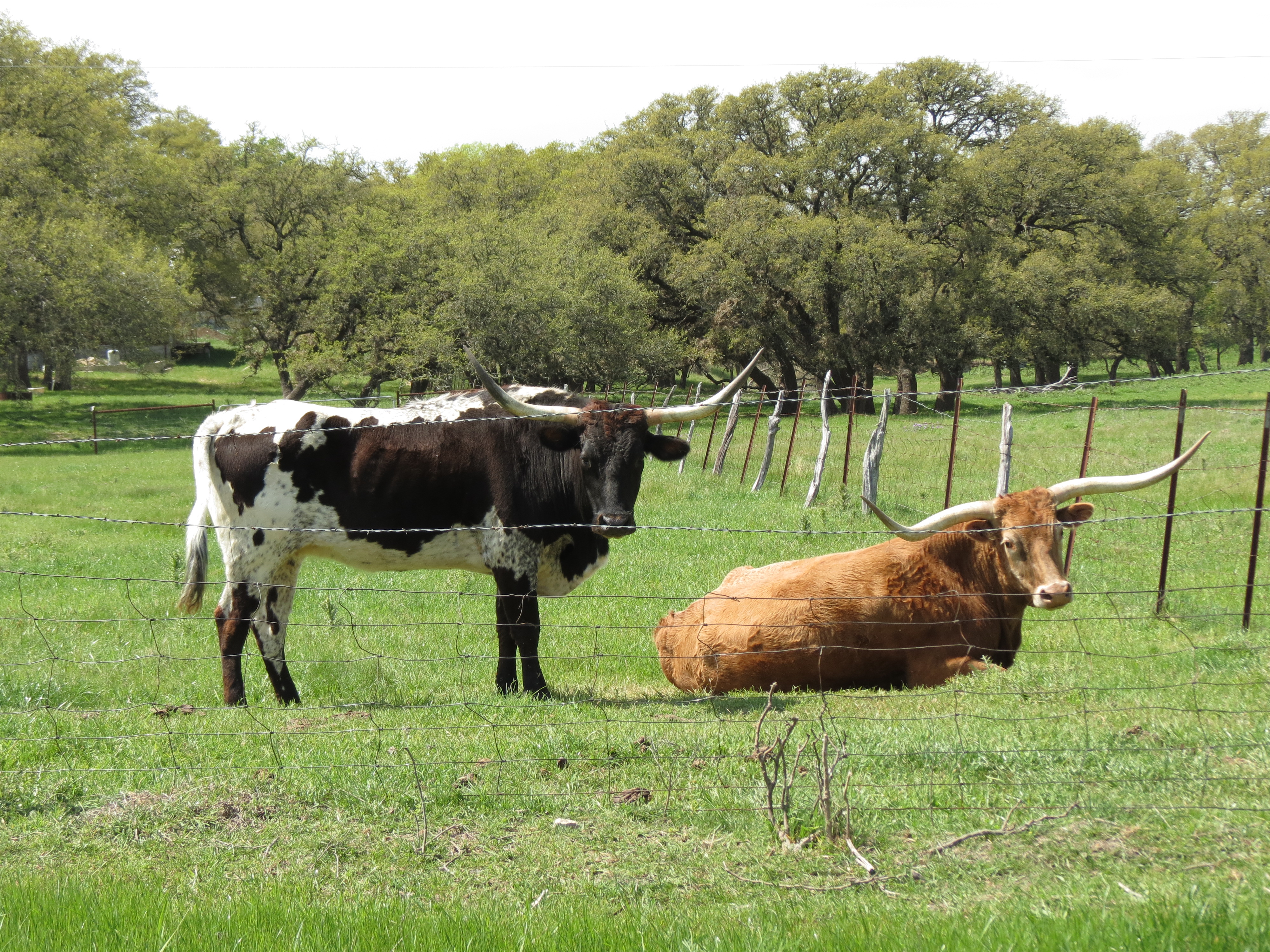
The town environs of Fredericksburg rapidly dissolved into wide open spaces. I followed mile after mile of quiet farm roads, flanked by ranches large and small. Sprawling affluent homes shared borders with tin roofed shacks. Chickens roamed the yards, fluffy lambs with jet black faces stared at me and goats remained intent on grazing. Big cows dominated the scene, including the iconic longhorn cattle.
Texas longhorn

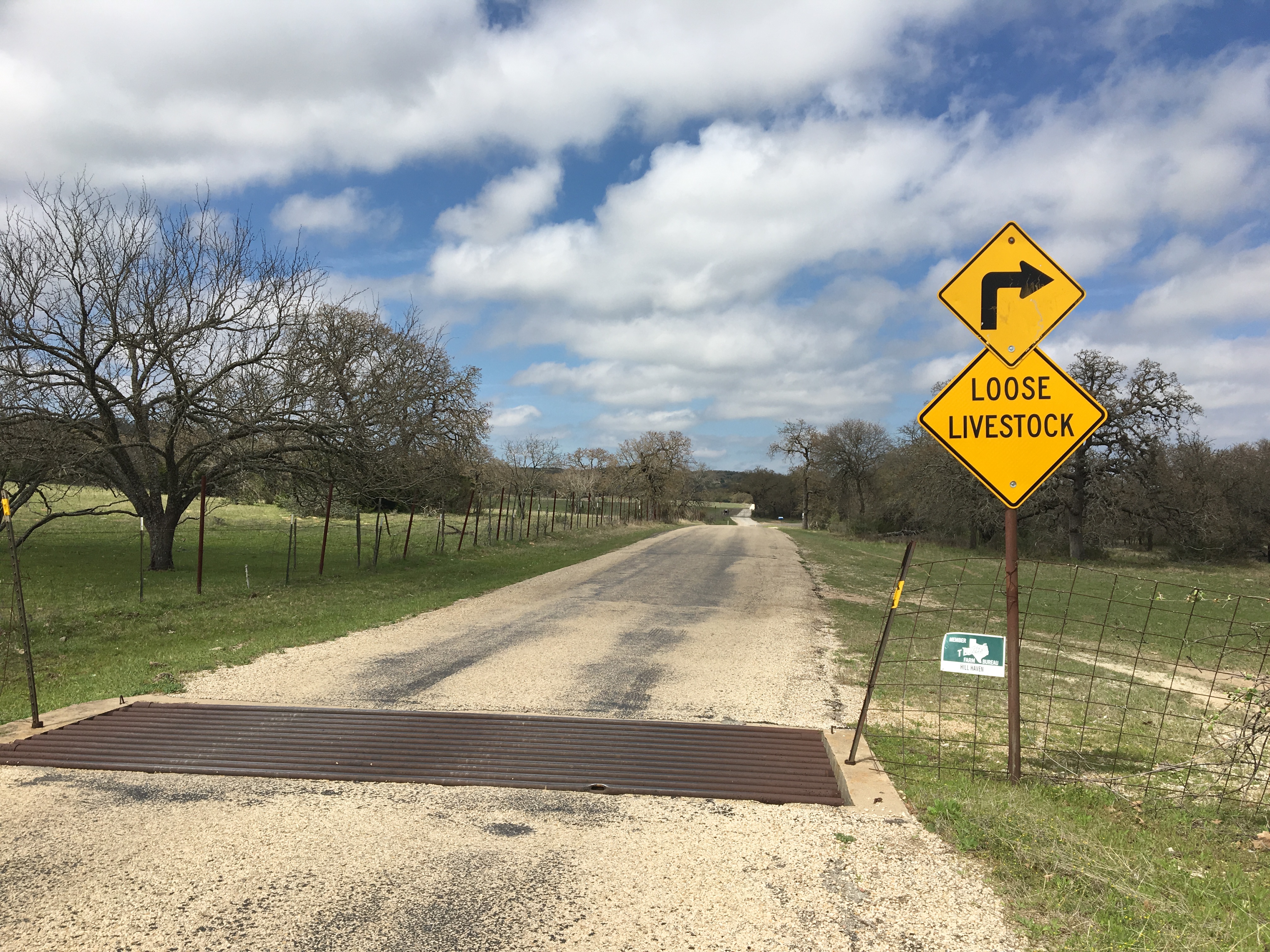
Each time I turned down a new lane, that little nagging thought wiggled into my brain.  I sure hope it’s not a dirt road…  But I needn’t have worried – every road in the county is paved!  But they do come with a hazard.  While the roads were in remarkably good condition, they were frequently sliced by tubular metal grates that rumbled and shook my entire being as I passed over them. Timid at first, I crossed the cattle grates slowly, hesitantly. But with practice came confidence, if not full speed. They also came with a warning: “Loose Livestock” Sure enough, I passed directly between Bessie #73 and her cousin #99 grazing on opposite edges of the road.

Cattle grate

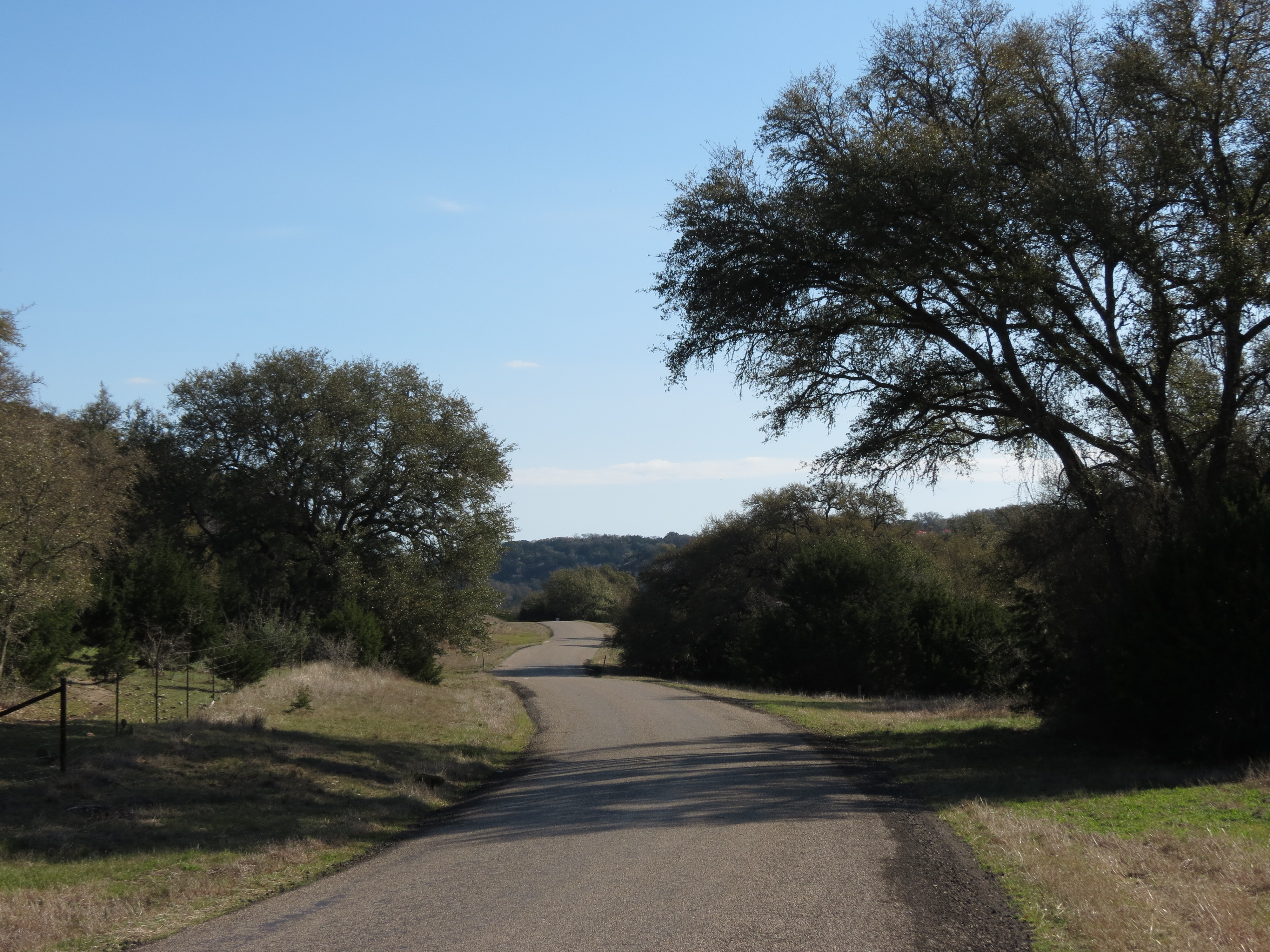
It wouldn’t be the hill country without a heavy dose of climbing. Roads ranged from long straight stretches to twisty windy curves, and all kept me pumping up and gliding down the hills. Frequent stream beds introduced spillways for flood season. For now they were all dry, but each involved a steep dip followed by a climb. It’s not a coincidence that I saved these routes for solo rides.

Crabapple Road bike ride

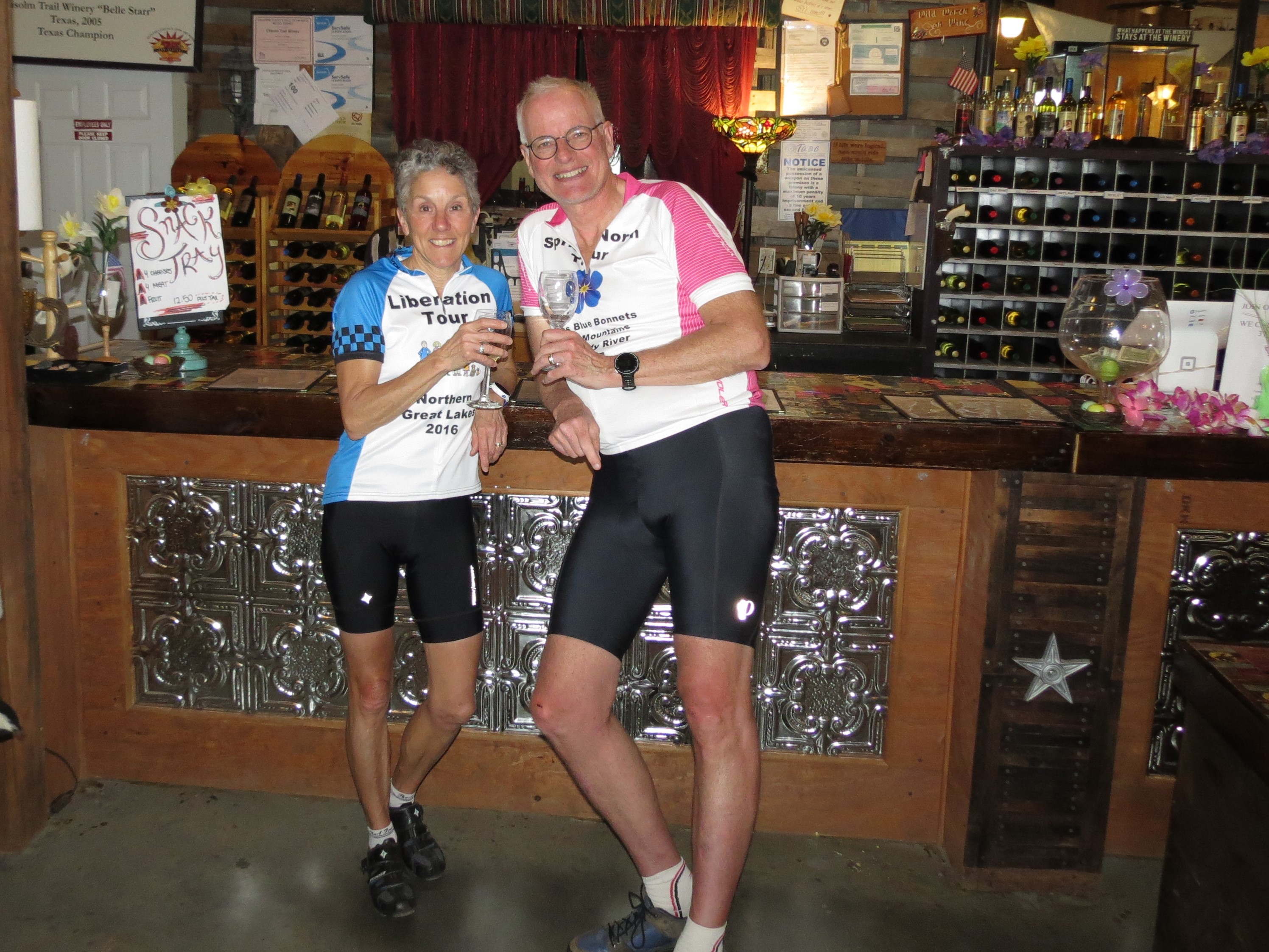
In contrast, Rich had a knack for mapping out routes with a purpose. Our first took us out to a local winery, where we were careful to limit our sampling to ensure a safe return ride.

Cycling to a winery

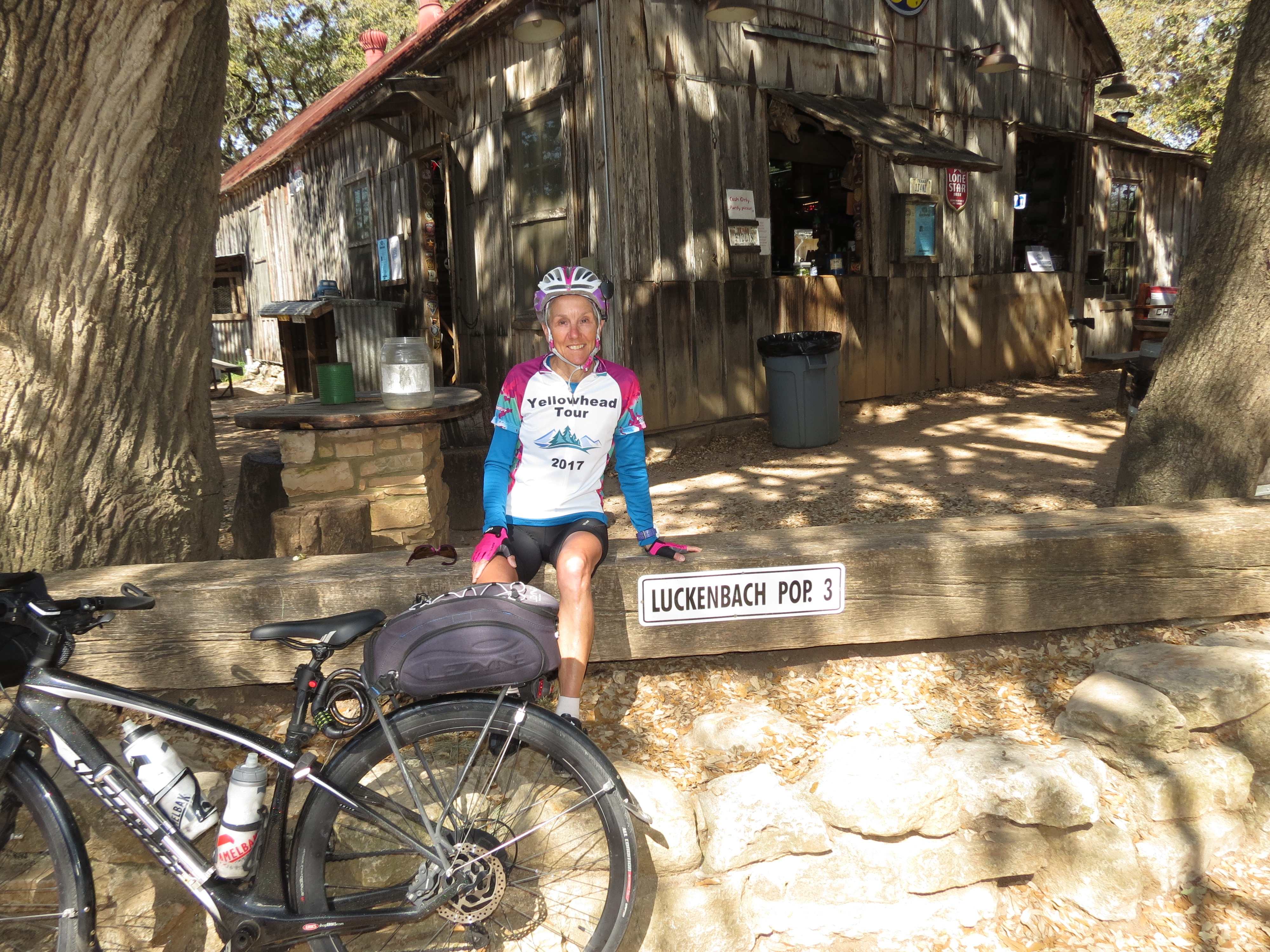
Luckenbach was our next destination, visiting on a quiet morning to take in the musical venue.

Luckenbach TX

Ranging further afield, he devised a bike ride east of town. It took us through the tiny enclave of Albert, where the Dance Hall appeared to be very active, flanked by a BBQ Pit, an Icehouse and an historic school. It made us wish we could return on a lively evening to see it all in swing. On the final stretch, we cycled Ranch Road #1 right through the LBJ State Park and across the river from the LBJ Ranch.

In nearly two weeks, my bicycle and I covered a lot of ground.  By then ranch country became a lot more familiar.  Even the cattle grates.

Bluebonnet Bounty

When you’ve seen the best, how can it possibly get any better?  That’s what we thought when we heard that this year the Texas Bluebonnets were a bumper crop – the best in 10 years.  We found it hard to believe that they could beat the ubiquitous blue carpet we saw back in 2015.

If the roadsides were any indication, our skepticism was well founded. We didn’t see the same dense pack of spiky blue blooms lining the roadways.  Patches here and there, yes, and occasional islands of color.  But still not up to par.

So we set out to cycle the Willow City Loop.  This 13-mile winding country road is the epitome for bluebonnet viewing.  Cars inch along as passengers ogle the flowers.  Everyone ignores the “No Stopping” sign, pulling off when they can to take pictures.  Grownups hunker down into the flowers, posting for the camera.  Propriety is tossed aside in the presence of the state flower of Texas.

With the benefit of a car this time, we parked at one end of the loop and doubled our pleasure with an out-and-back ride.  Starting shortly after sunrise in the crisp cool air, the low angle of the sun’s rays cast a golden glow.  We were alone on the road at that hour, well ahead of the traffic yet to come.

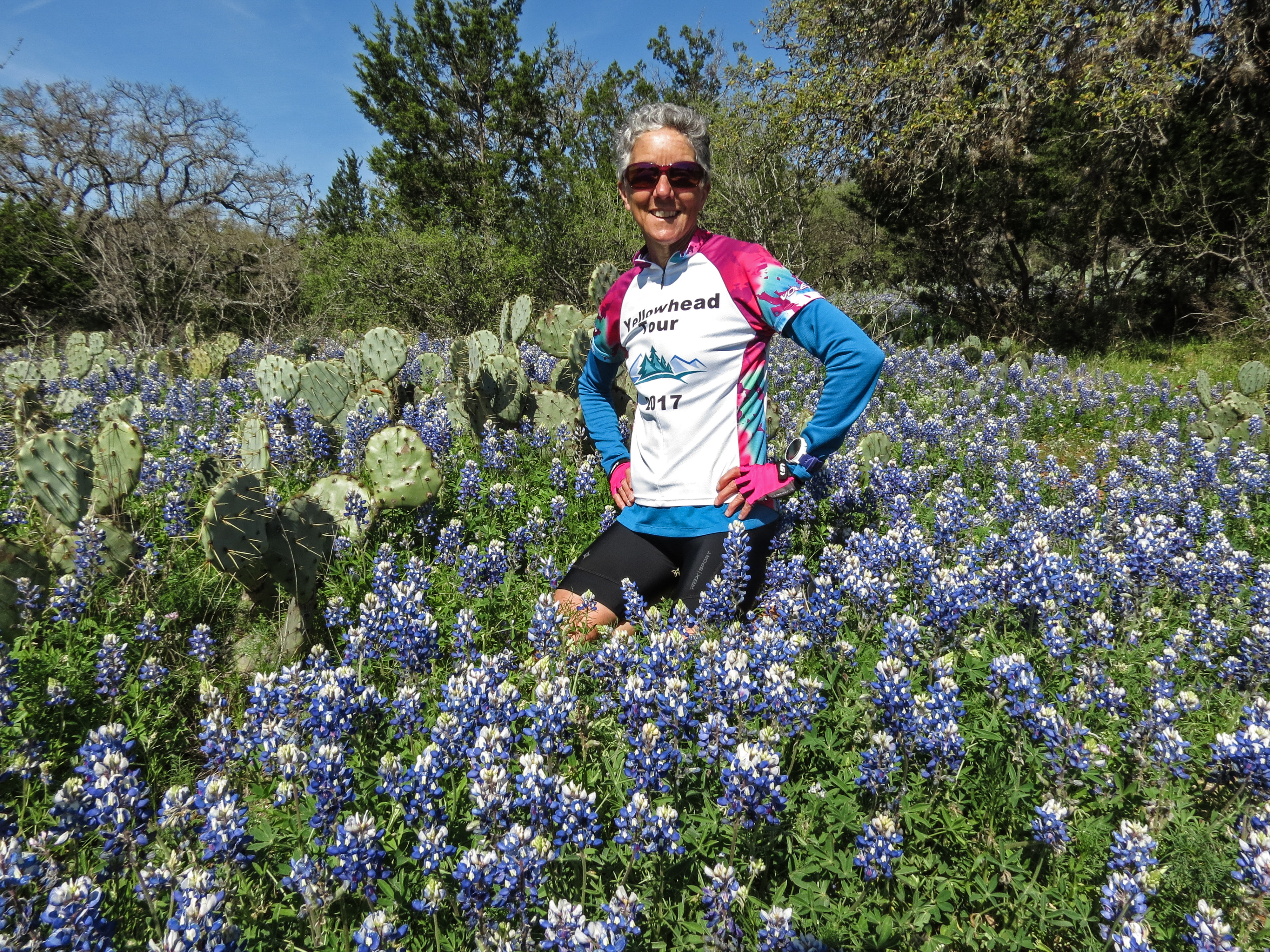
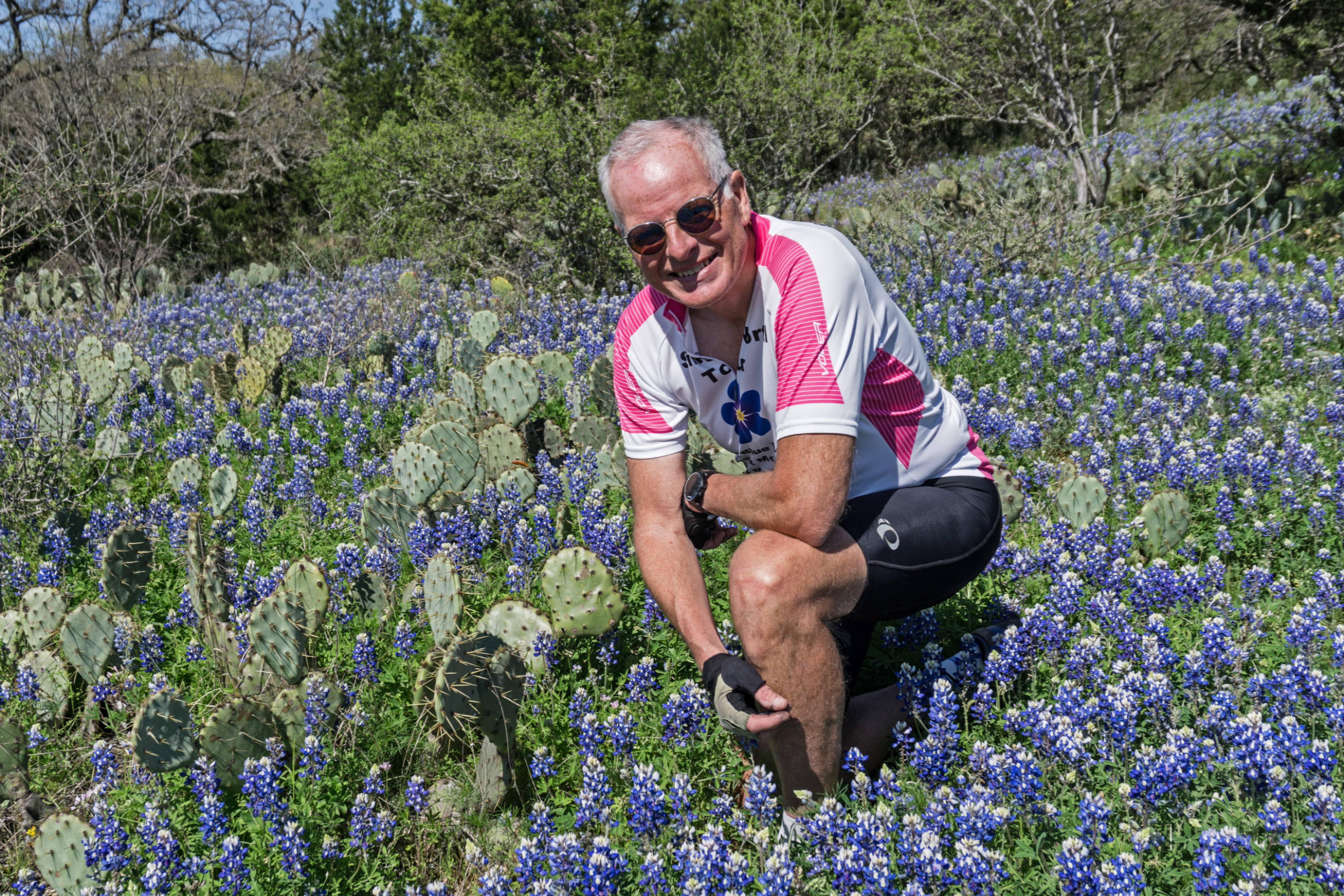
Relishing the silence, we also reveled in the pace and flexibility of our bikes.  We lingered and took it all in as we passed in slow motion.  Stopping was as easy as parking our bikes, allowing plenty of angles for photographer Rich, and even a few cheesy poses of our own.

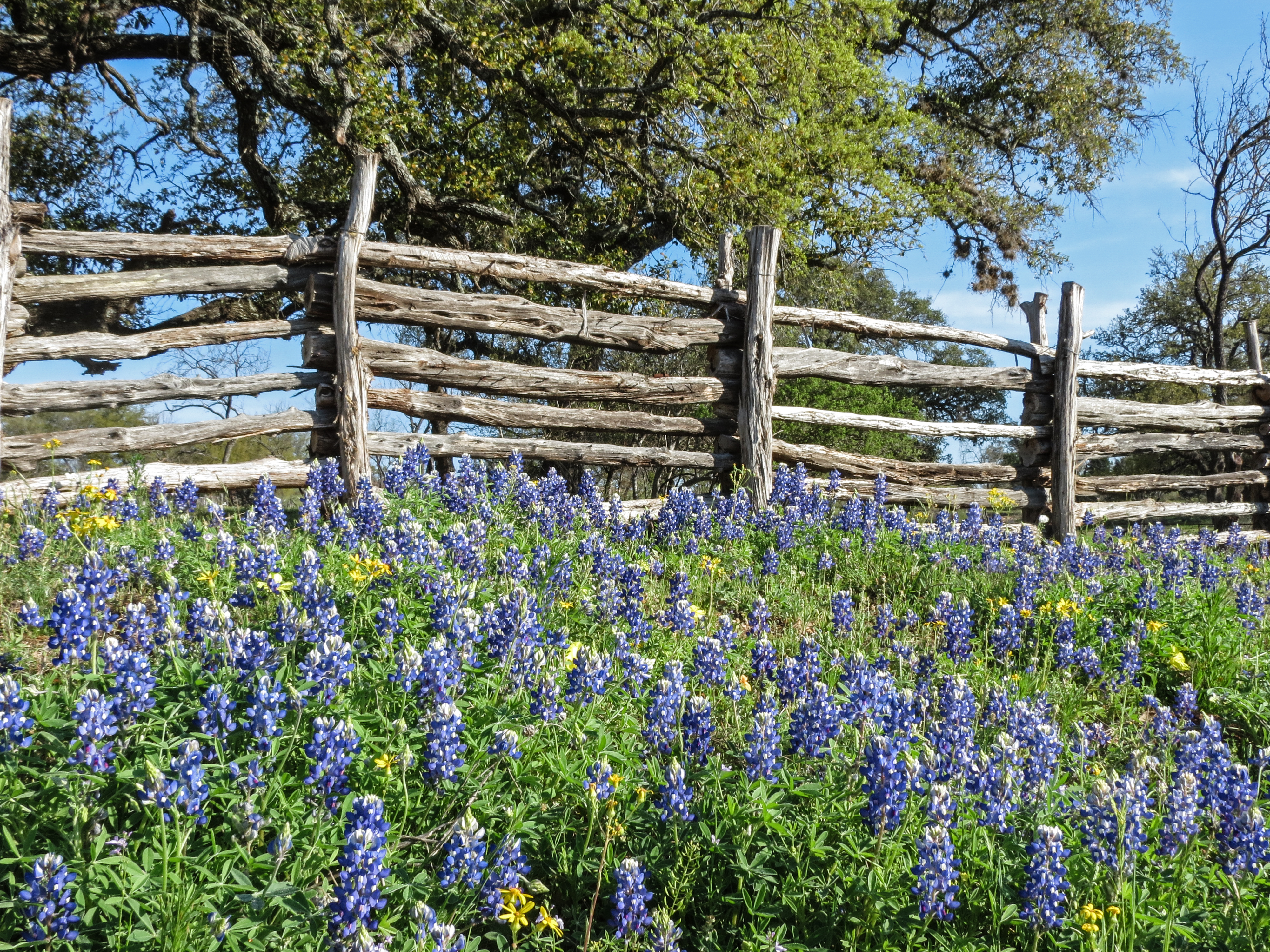
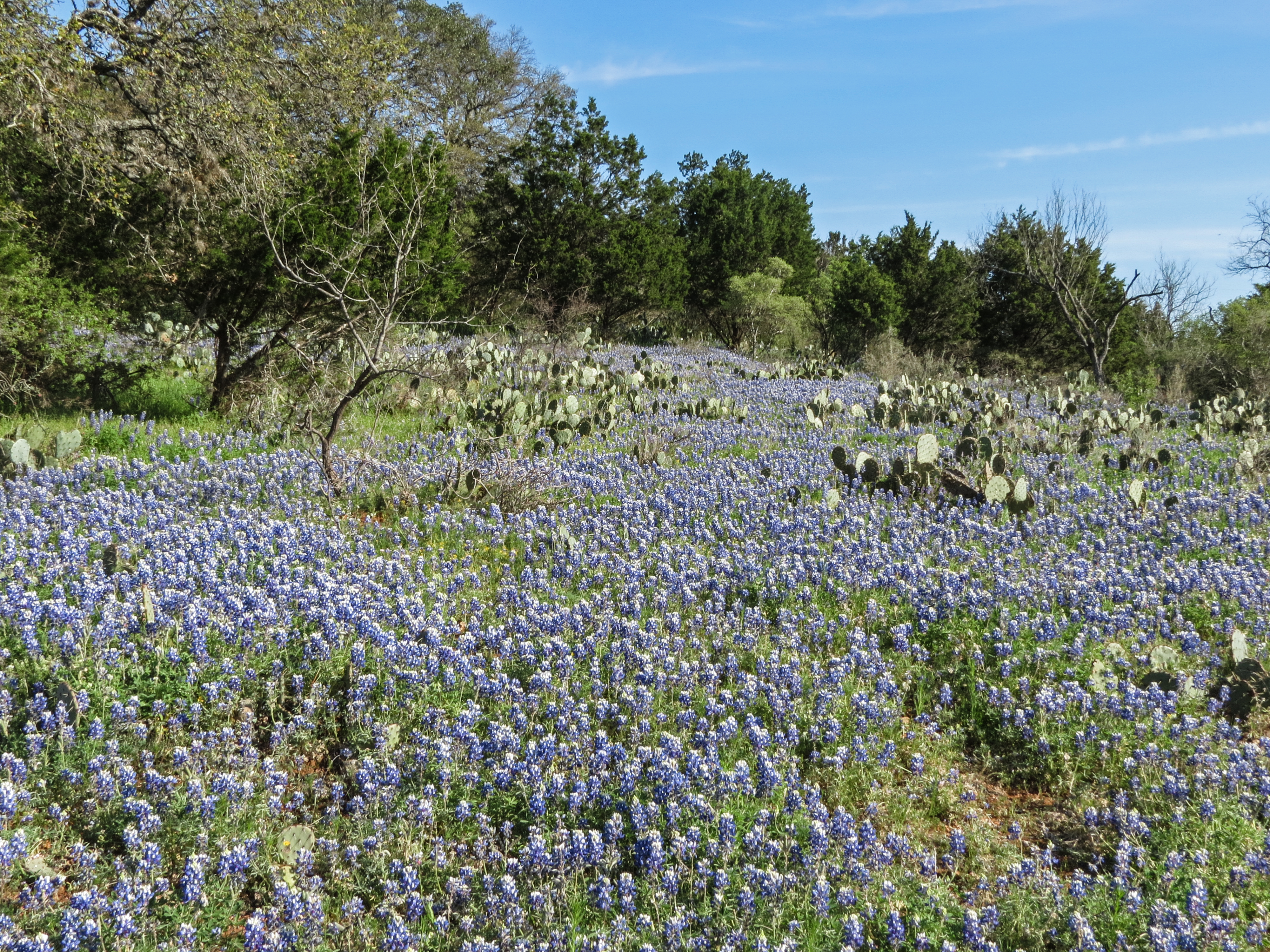
As the miles went on, so did the bluebonnets.  Deep into the fields.  Crowding the roadsides.  Encircling the prickly pear cacti.  Swarming under fences.  Whole hillsides of them.  The scene began to match the one we held in such esteem.  Yes, we ultimately agreed, this could be just as good.  Maybe even better.  Photos tell it best.

Texas bluebonnets 1 Texas bluebonnets Willow City Loop 1 Texas bluebonnets Willow City Loop 2 Texas bluebonnets Willow City Loop 3 Molly w Texas bluebonnets Willow City Loop Rich w Texas bluebonnets Willow City LoopMolly and Rich w Texas bluebonnets Willow City Loop

After 26-miles, it really didn’t matter.  We knew we’d seen a bounty of bluebonnets.  That was good enough for us.

An Enchanted Hike

Bike touring is great, but it does leave many “nearby” attractions undiscovered.  I can’t count the number of times I have looked longingly at a sign for a promising sight while Rich chides, “Molly, that little detour is 12 miles round trip!”  We cycle on by.

After two bike tours through Fredericksburg TX, this year we chose to arrive by car with our bicycles on the back.  Settling into a tiny cottage just off the historic Main Street, we suddenly have access to all those missed opportunities.  Nothing qualifies as too far to detour.

Today’s destination was my pick.  I got my first glimpse of Enchanted Rock while on a long bike ride.  Navigating the winding, hilly backroads, I turned a corner and there it was – the big pink granite dome.  That was enough to put it on my bucket list for our stay.

View of Enchanted Rock

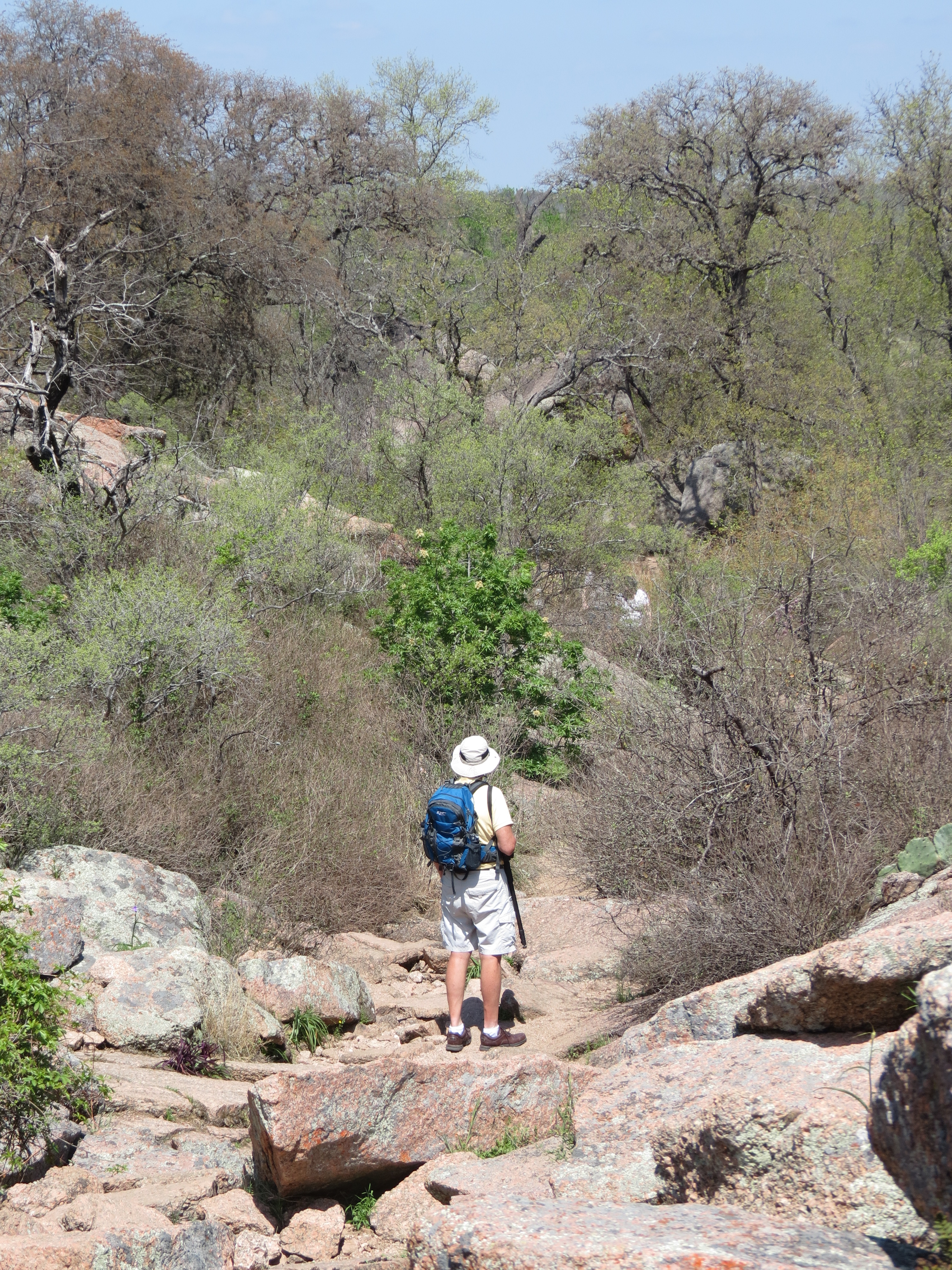
Waiting out the misty morning, we timed our arrival perfectly – just as the sun came out.  We also deliberately missed last week’s spring break crowds.  No bikes for us today, the Enchanted Rock State Natural Area is for hiking.  Loading up with sunscreen, plenty of water and cameras we started off with the iconic Summit Trail.

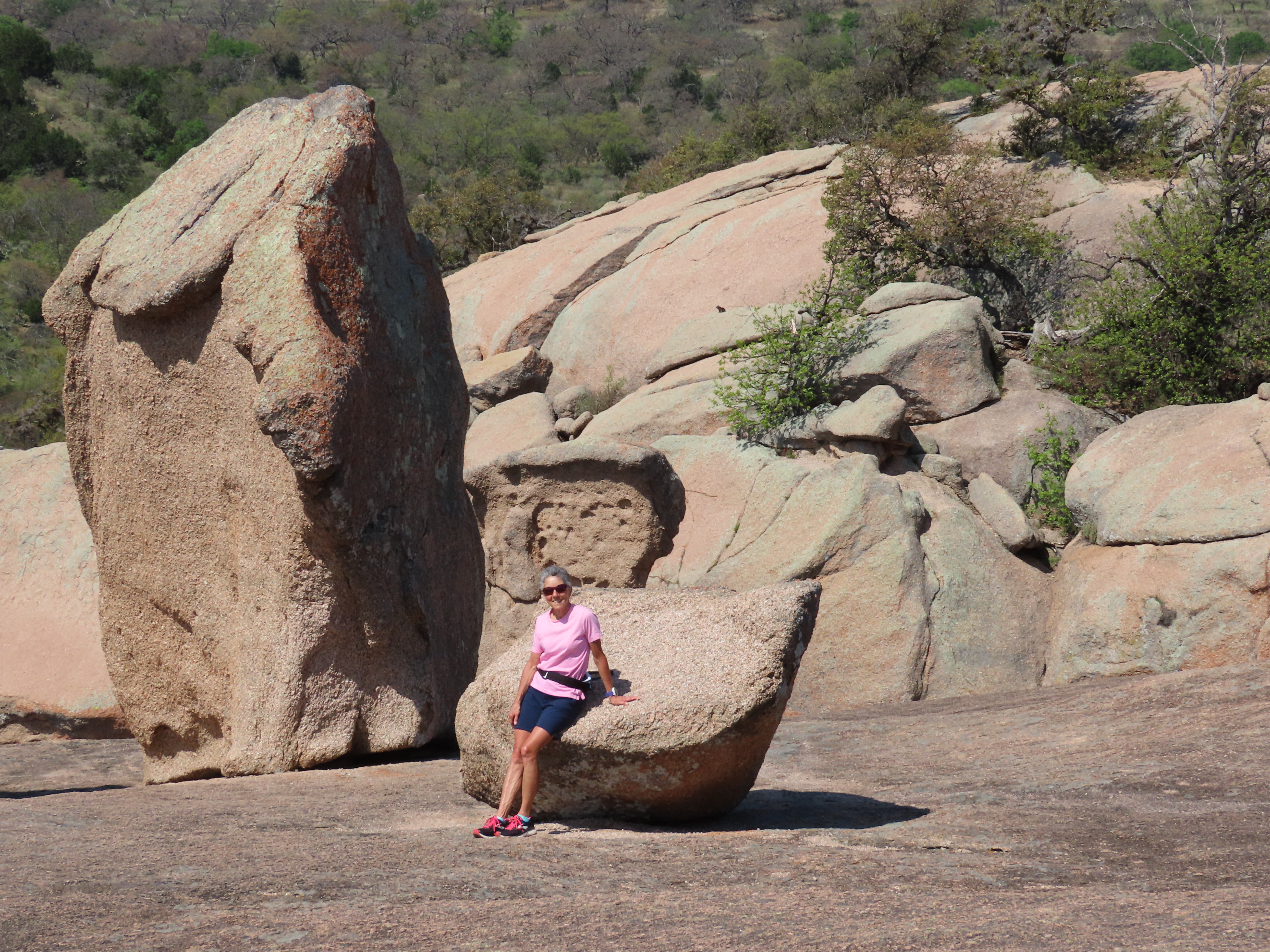
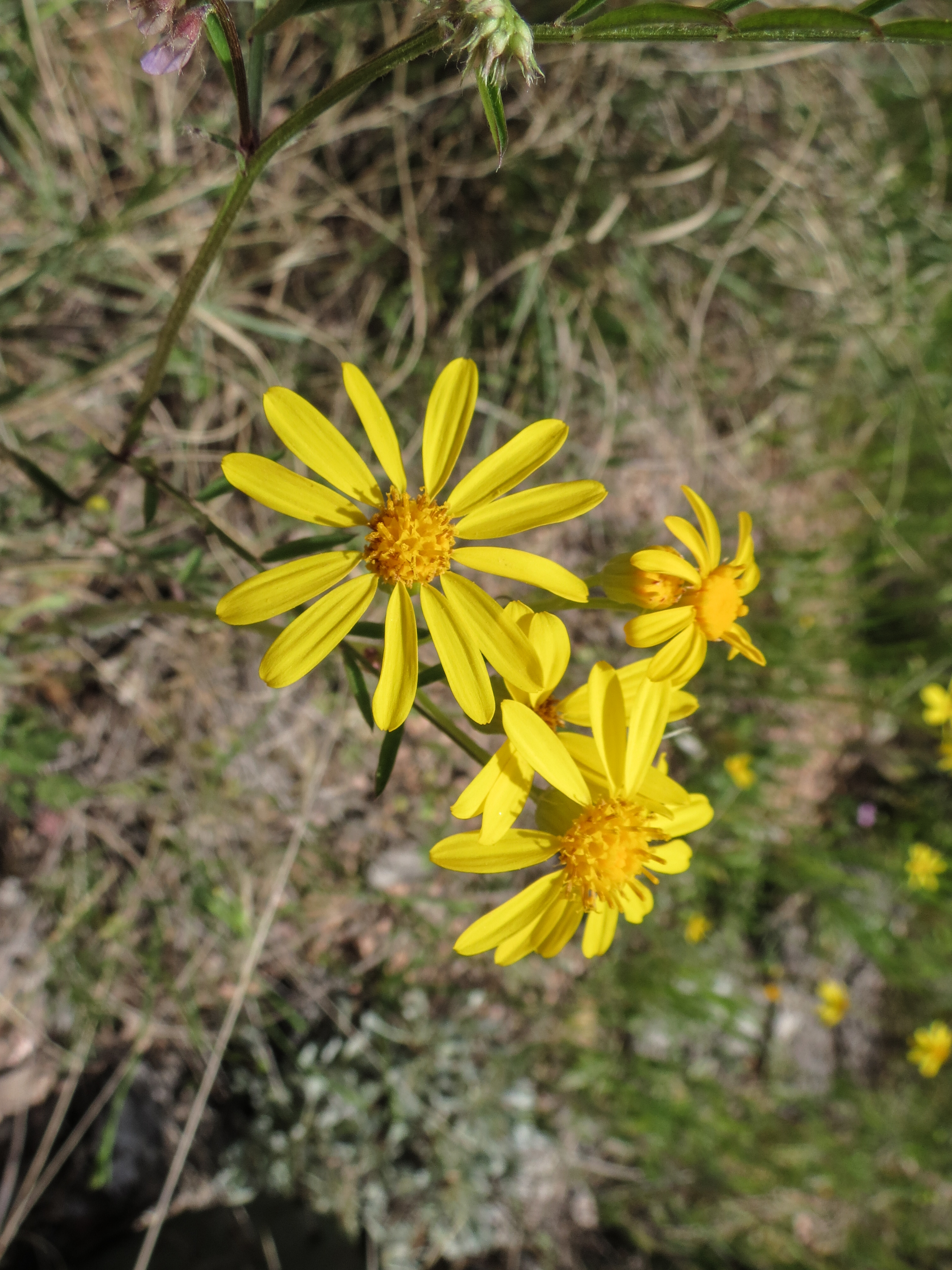
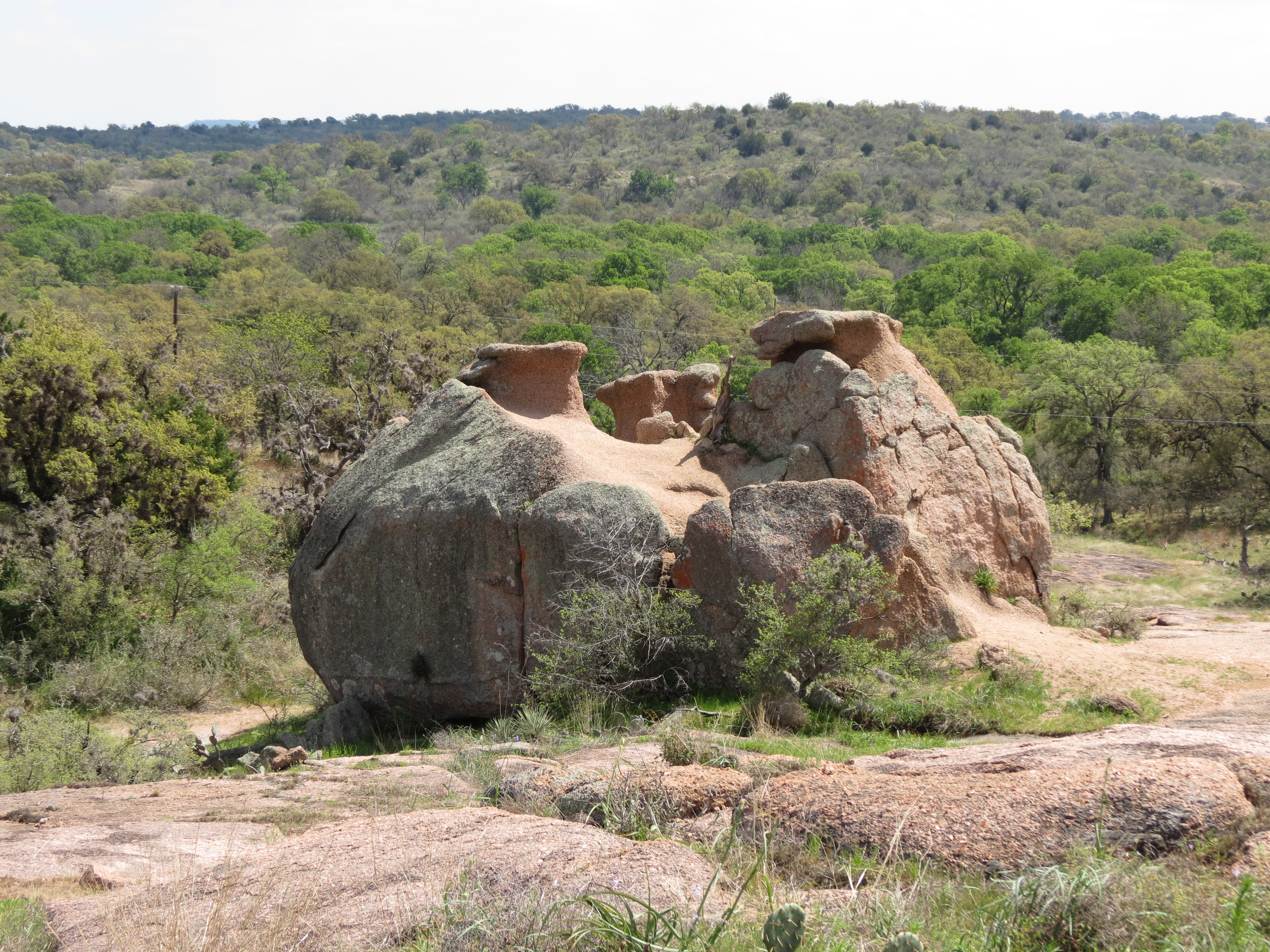
Calling it a trail is a misnomer.  It’s a rock.  And you walk up it.  The big pink expanse beckoned and we meandered up the steep slope to the top.  Chatting with other trekkers made the journey far easier than we imagined it to be.  Wandering over the top of the dome, we admired the views, ogled strange rock formations and found wildflowers in the crevices.  The notion of hurry did not apply.

Molly atop Enchanted Rock

View of Moss Lake from Enchanted Rock

Rich on Enchanted RockMolly and rock formations on Enchanted RockWildflowers growing in crevasse in Enchanted Rock

Hiking back down an alternate swath of rock, we connected with the Echo Canyon Trail.  I quickly understood the Challenging classification, as I picked my way between boulders.  I was more at ease once it morphed into an easy walking trail.

Rich on Echo Canyon TrailMolly on Echo Canyon Trail

Skirting Moss Lake, we finished on the Loop Trail.  The highway width crushed rock path was impossible to miss, and the unshaded sun baked our northern bodies.  But it delivered on the wildflower scale and provided some fun rock monuments.

Wildflowers at Enchanted Rock 1 Wildflowers at Enchanted Rock 2 Enchanted Rock formations

Tomorrow we’re back on the bicycles for our favorite loop through the Texas bluebonnets.  But today I was glad Rich humored me for an enchanted day of hiking.

At Your Service

The boys thought they were asking a big favor.  But in fact it was a privilege.

I’m not sure where they got this adventure gene.  But our sons both inherited it.  Five years ago Carl and Erik climbed my great-grandfather’s mountain, Mount Brewer – 150 years after William Henry Brewer’s first ascent.  Together they have backpacked in the Porcupine Mountains and the trail above Pictured Rocks.  Last year they winter camped in the Boundary Waters Canoe Area Wilderness.  This year they upped the ante, planning a 40-mile trek following the border route in the BWCAW.  And they asked us to be their shuttle service.

Rich drove the boys up to Ely and beyond, to Moose Lake where he deposited them with all their gear.  After harnessing up their pulks, they set off across the frozen lake, Erik on backcountry skis and Carl on a new set of Altai Hok skis – a cross between a ski and a snowshoe.  Snowshoes were stowed within easy reach for portages and deep snow conditions.  The deep blue sky contrasted sharply with the pristine snow and pine woods border under the bright sunshine for a picturesque start.

Carl and Erik begin trek

They allowed themselves three days to make it to the end of the Gunflint Trail.  It would have been three days of waiting nervously to find out if they made it had it not been for Rich’s sleepless nights leading up to the trip.  To assuage his concerns, he diligently researched satellite tracking units, and ultimately insisted they carry one.  Or no deal on the shuttles.

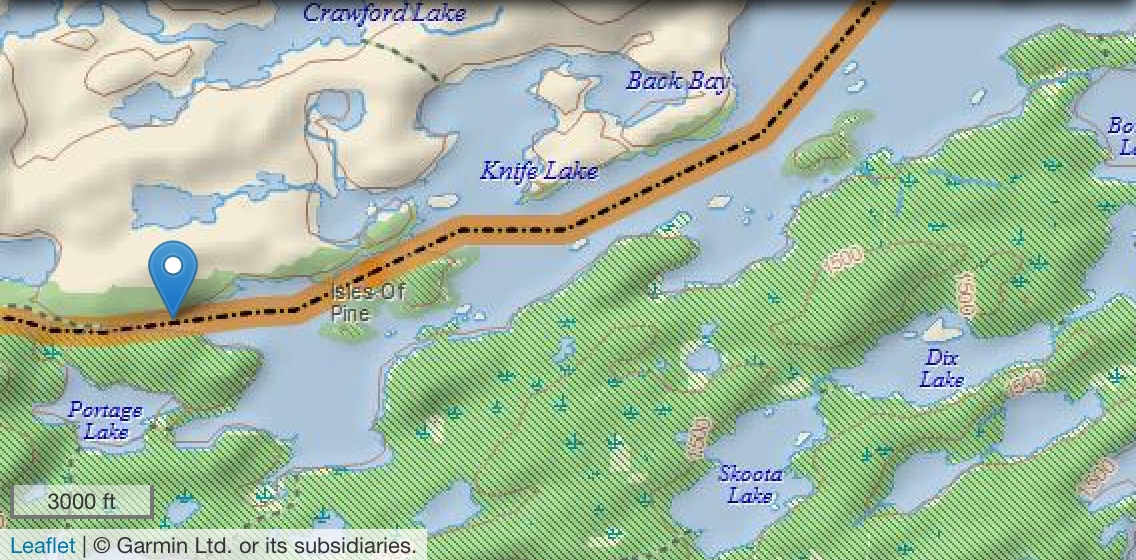
Thanks to the generosity of a friend who lent them a Garmin inReach, they had the means of providing us with updates and more importantly, sending out a call for help if needed.  At the end of day 1, we received the following message at dusk, “Camp made on Knife [lake].  Great day.”  What followed was a link with their GPS coordinates.  With one click we could see exactly where they were.  Whew, peace of mind.

GPS location on the trek

While we drove up to a modern warm cabin on the Gunflint Trail overlooking Poplar Lake, the boys made their way along the border from lake to lake, slogging through snow drifts, skiing on hard windblown crust and plowing through waist deep snow on portages.  They trekked from sunup to sundown, made camp, ate and slept when darkness fell.  Although they saw plenty of open water, they were fortunate not to find slush between the layers of snow and ice.  Snowmobiles and dog sleds were allowed on some of the lakes, but alas, none created a packed path for them in the direction they were going.  They took turns breaking trail.

Carl trekking

Erik trekking

Of course, we knew none of this at the time.  We pondered the snow conditions, praised the good weather, hoped they were staying warm enough at night.  The daily updates were a godsend.

We were in position for pickup on the third day.  Mid-day we got word: “At Sag [Saganaga Lake] at American Point may finish late”  I settled in with a good book across from the cozy fire.  At 4pm we got the text we’d been awaiting.  “ETA 1 hourish on snowmobile trail.”  When we arrived at the designated boat launch, I couldn’t just stand there and wait.  Hiking out the narrow inlet, I searched the distant shore, footstep after footstep.  The two tiny figures that materialized on the horizon lifted my heart.

They arrived very sunburned and weather-beaten, but with the biggest smiles I’ve ever seen.  They had done it!  It was a lot harder and slower going than they had anticipated, due to the lack of packed snow, but they made it and were justifiably thrilled.  Carl summed it up, “This trip gets a big check on my To Do list.  I don’t need to do that again!”

Carl and Erik finish their trek

The accomplishment deserved celebrating with dinner at the iconic Trail Center Lodge.  Word leaked out about their adventure, and soon everyone around us wanted to know all the details.  The staff presented them with medals and even offered to be their food sponsor for the next adventure, with their locally made Camp Chow !  Nothing could top seeing the pure pleasure on the faces of my sons.

Celebration at Trail Center

I’m not likely to trek with a sled across frozen lakes through the Boundary Waters, go winter camping or even climb my great-grandfather’s mountain.  But I’m so glad to be a part of my sons’ lives watching them do it.  It fills my heart to know that they choose to pursue these dreams together.  Carl and Erik, I’ll be there, at your service, any time you plan another adventure.

Letting Go

Life is a balance.  A delicate one at that.  After decades of aiming high, how does one gracefully readjust one’s sights?

Just last June I was flying high.  I had qualified for the Boston Marathon, along with my son Erik, his wife Katie and her cousin Brendan.  Conditions at Grandma’s Marathon were nearly perfect, propelling each of us down the shore of Lake Superior to cross the finish line with good margins to secure us a spot in that most prestigious of marathons.  Swept away by the tide of our victory, our quartet vowed to run Boston.

Boston Bound foursome

Plans were made.  We found housing and received our confirmation emails for the race.  All looked good for a spring run.  Until it didn’t.  Pain, injury, arthritis and bad running habits all linked arms to throw a wrench into my training.  Weeks of rest and cross-training turned into months with no improvement.  Winter stepped in and obliterated the Lakewalk with snow while temperatures plummeted deep into the negative range.  I knew from experience that training for Boston in the midst of winter was a challenge, but this was ridiculous.

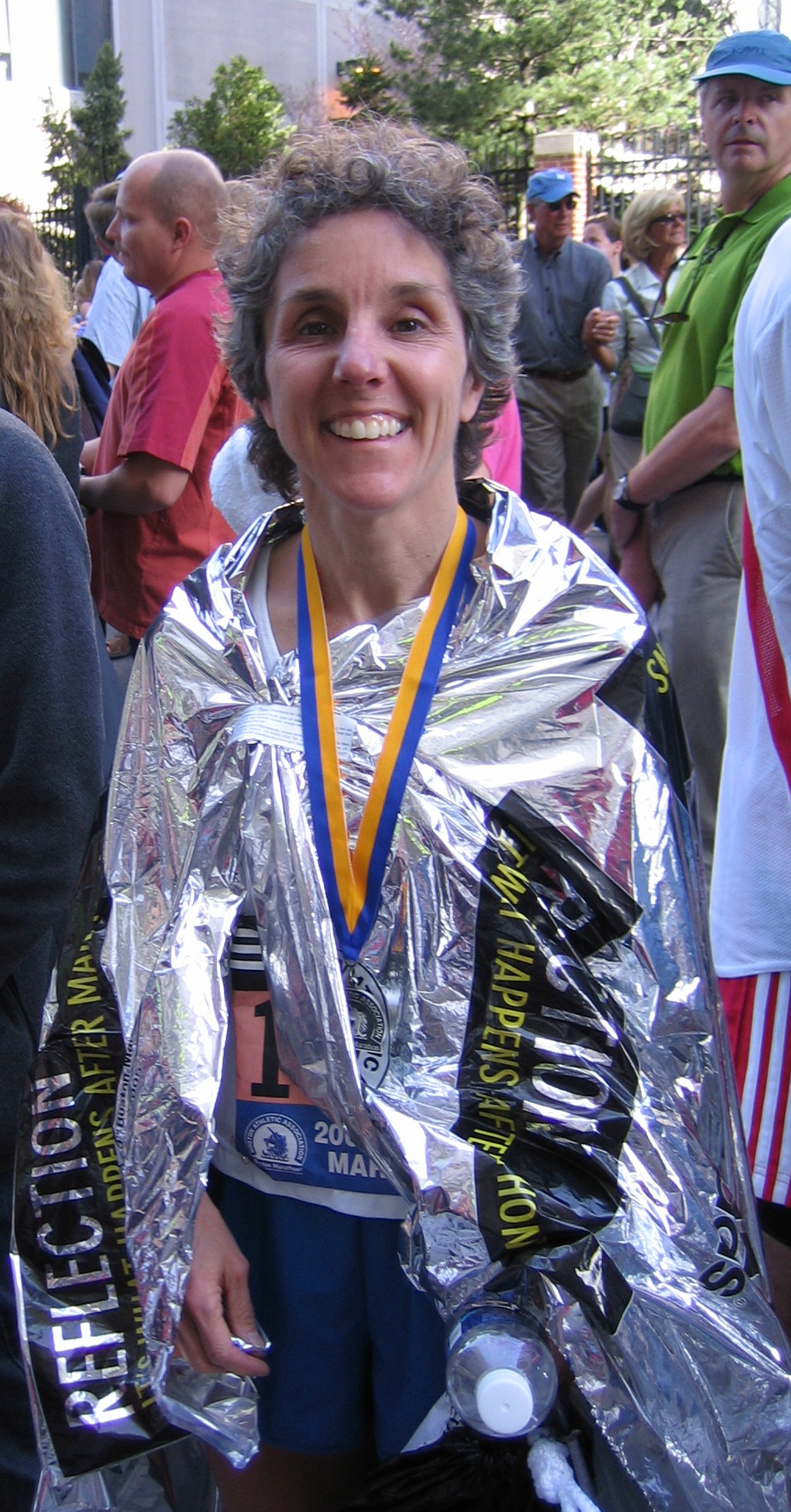
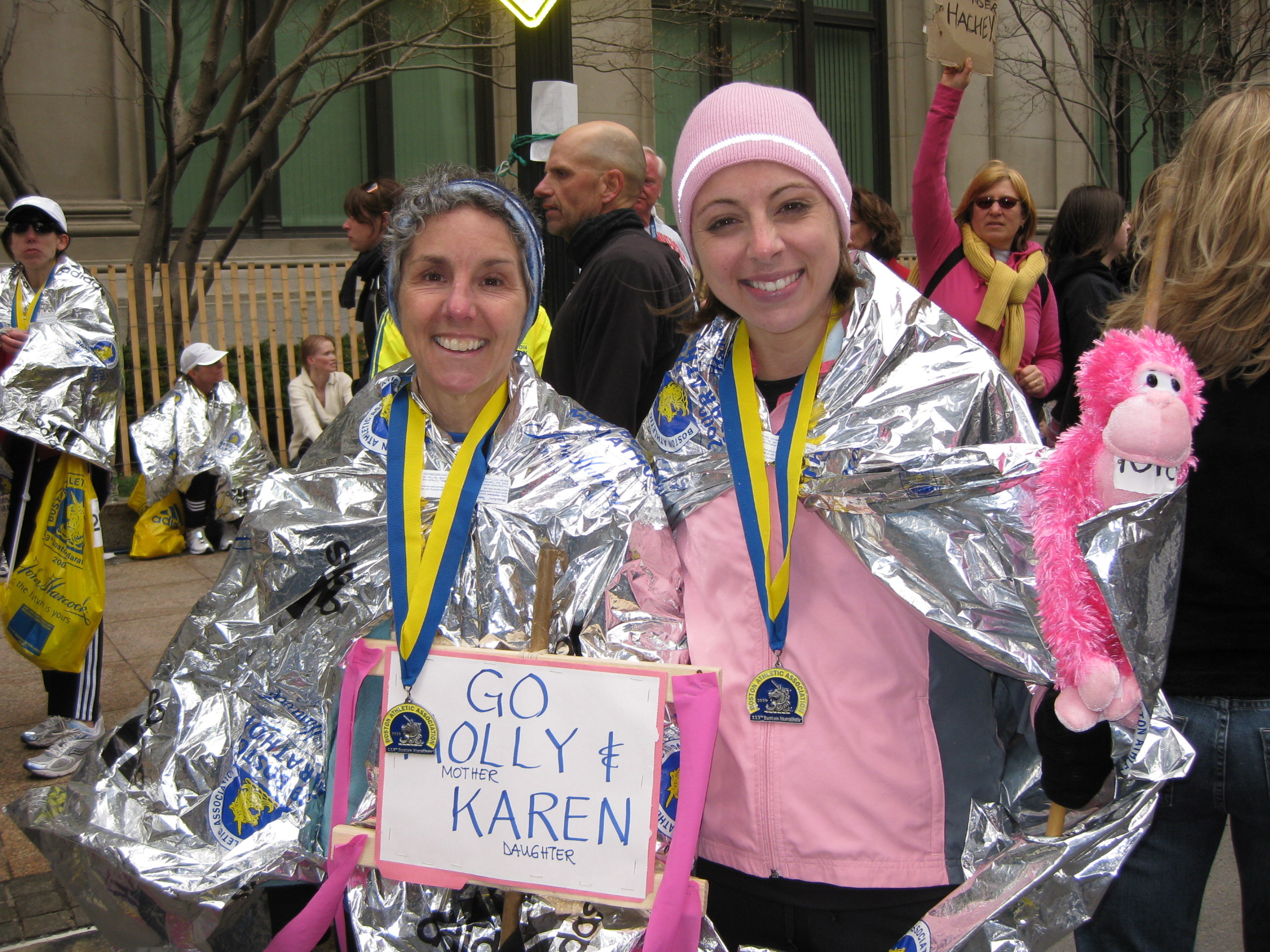
The ambiguity hung over my head for months.  One week I’d feel hopeful and set my sights on “just finishing” in Boston.  The next I was pragmatic and knew that the time to adequately prepare was waning.  On one hand I’d done it all before.  Twice in fact.  First on my own, to celebrate turning 50.  The second time I crossed the finish line hand-in-hand with my daughter, Karen.  On the other hand, this was a chance to run it with my son and his wife and share in their joy.  To prove I could still do it.

Boston finish 2005

Boston finish 2009


In my journey, I sought plenty of advice.  Confiding in my daughter, I poured out my dilemma, that I was considering dropping out of the race.  “Oh Mom!” she sighed.  “That means admitting you’re getting old!”  It wasn’t what I expected at all.  But her uncensored sentiment revealed something else.  She perfectly mirrored my own mother’s unwavering belief in me.  I smiled to realize that the generations had flipped, and the void left by my mother eight years ago had just been filled.

Oddly enough, just as I felt I was turning the corner through physical therapy I also knew the answer.  This wasn’t about proving anything.  It wasn’t about getting old.  It was about the long run.  Literally.  It was about healing, gaining strength and building myself back up in order to continue to do the thing I love.  Running.  For years to come, not just one day.

It’s not easy conceding to reality.  Come Boston Marathon day I know my heart will twist as I follow Erik and Katie out there on the race course from a distance through text alerts.  I’ll wish I was there, doing it.  But if it means running with my grandchildren and staying active into my real old age, then I made the right decision.  It’s not giving up.  It’s letting go.  There’s a difference.

Sisu Initiation

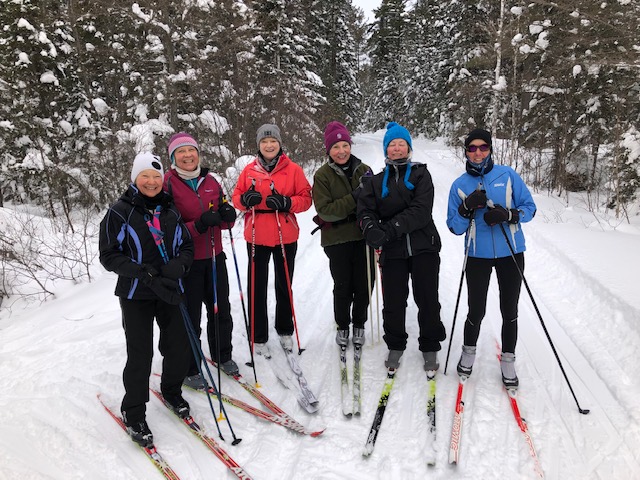
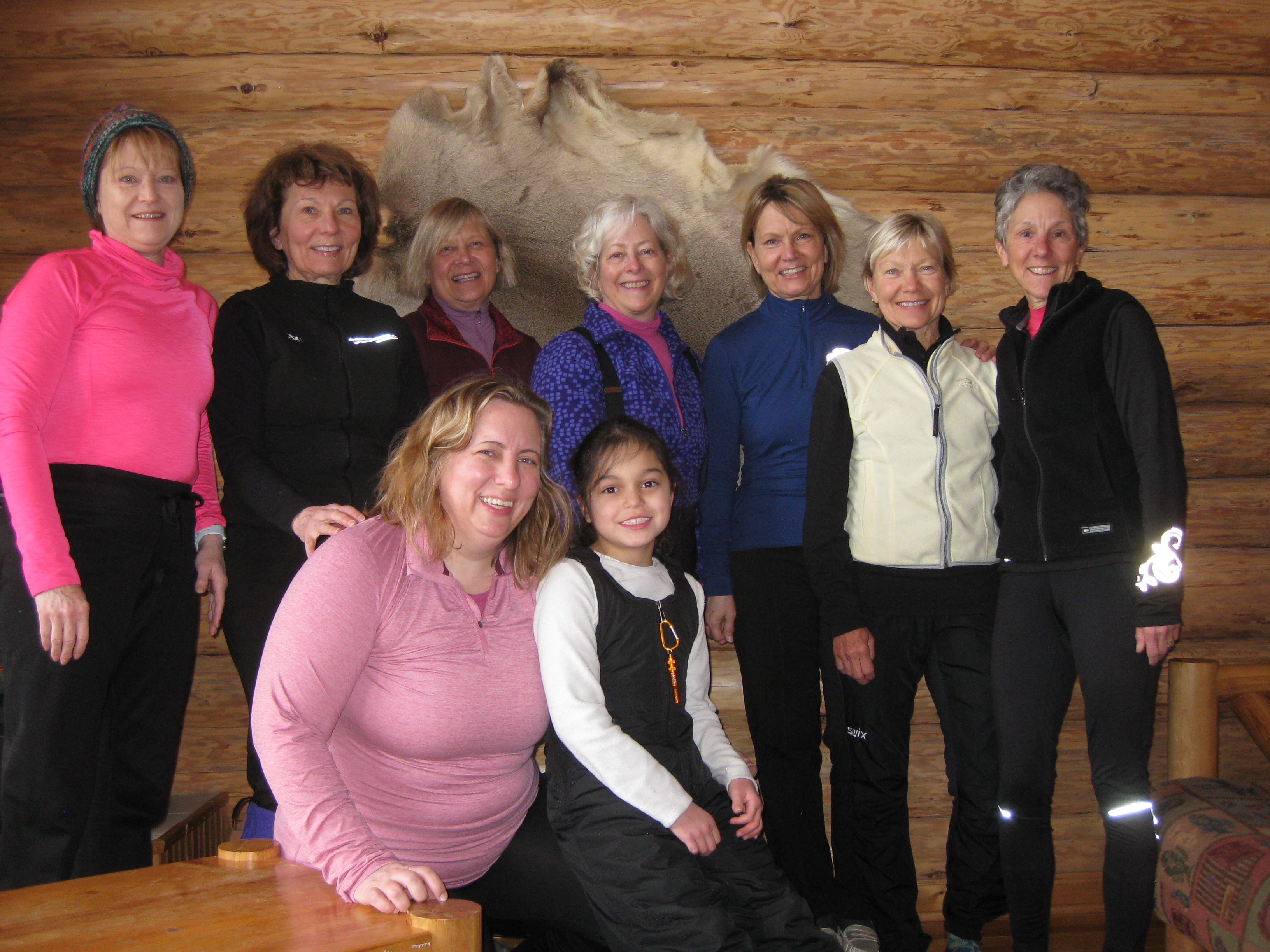
What do nine women, including three sisters, three generations and a handful of close friends have in common?  Sisu!

Arriving at the National Forest Lodge near Isabella, I lugged my gear into the spacious log house that would be our home for three days.  As the newcomer to a group that has convened here annually for years, I wondered how I would fit in.  I needn’t have worried.  Gathering in the kitchen, one member had already laid out hand-made snowflake earrings (no two alike, of course) and lanyards emblazoned with “sisu,” its definition under our names: “Sisu begins where the perseverance and grit end.”  I knew it right then.  These were my soul-mates.  This was going to be a good weekend.

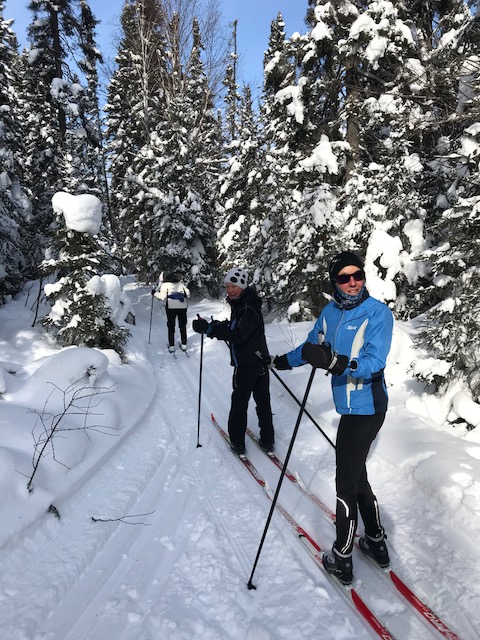
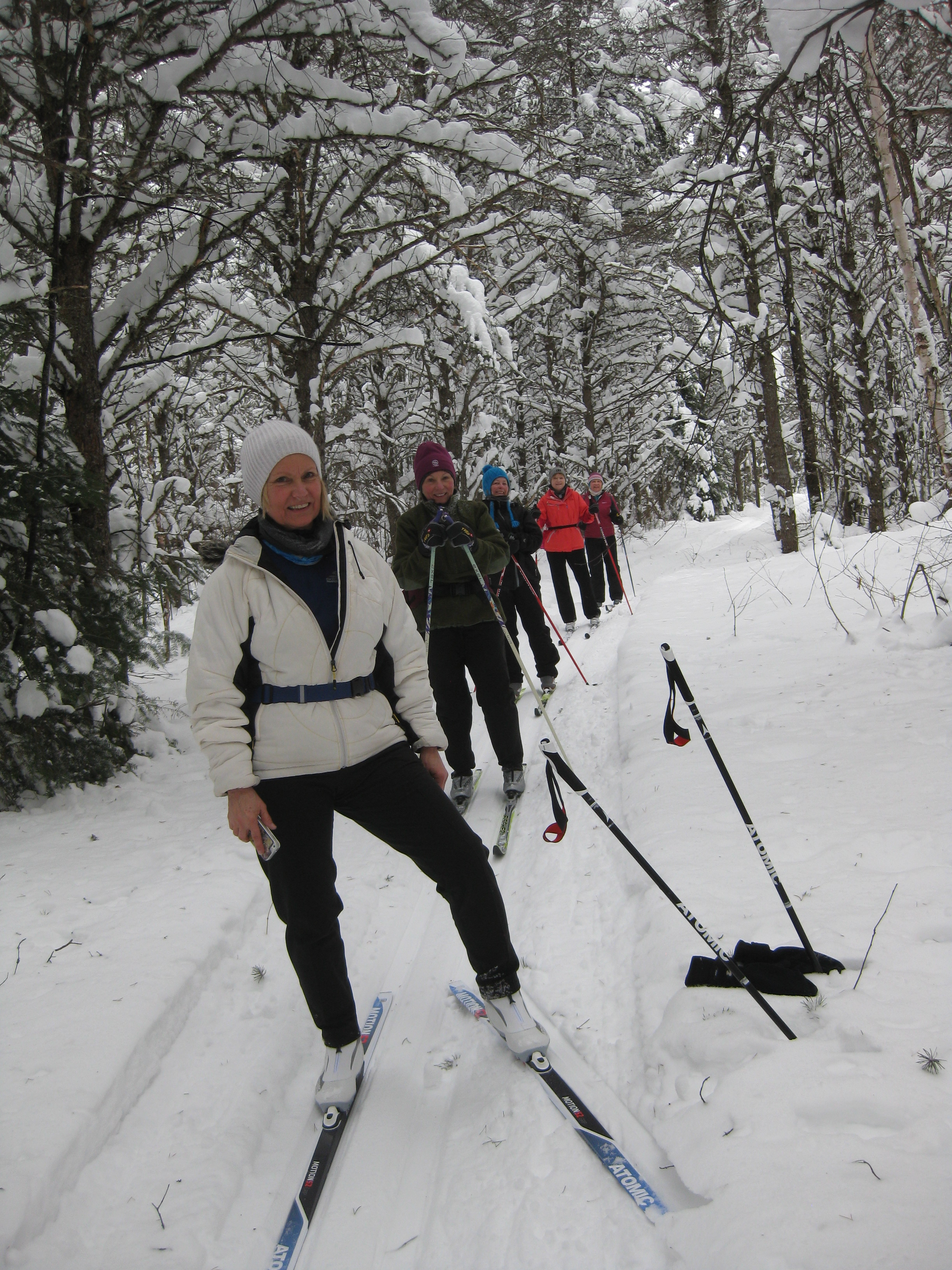
We made rapid work of choosing beds and dumping our bags.  The Flathorn-Gegoka cross-country ski trails awaited right outside the door.  As soon as we could strap on our skis, we set out to make the most of the remaining daylight.  Brilliant blue skies and warm sunshine offset the blustery wind, and soon we were sheltered by the deep forest.  With two-feet of newly fallen snow freshly groomed into narrow single classic tracks, we brushed shoulders with tall pines.  Branches laden with mounds of snowy fluff, sun peeping through, all sounds but the swish of our skis were muffled by the soft whiteness.Ready to ski at NFL

Morning brought sub-zero temperatures, but not a single Sisu sister hesitated.  Fueled by a healthy and hearty breakfast in the lodge, we donned all our layers and ventured forth on skis and snowshoes.  The pattern would repeat itself over the next two days.  Eat and ski.  Groups formed and reformed, venturing out until fingers and toes needed rejuvenating or the next meal beckoned.

Behind every Sisu sister, there is a lighter side.  Or a crazier one.  Some intrepid souls could not resist the lure of the sauna and polar plunge.  I readily admit to passing on this experience, but they didn’t hold it against me.
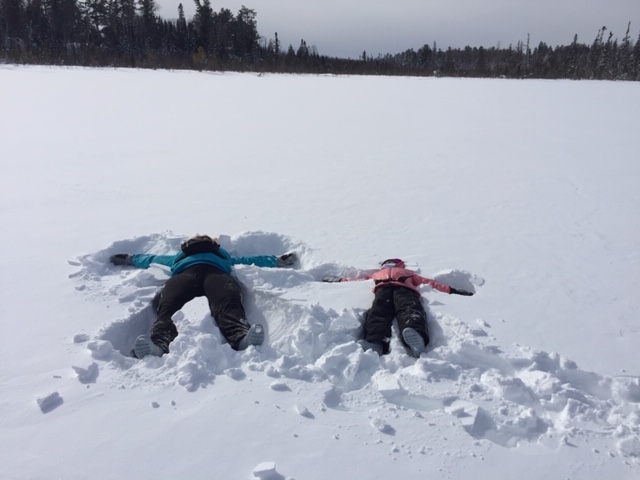
Snow Angels at NFL

Polar Plunge

There were no midnight sorties on the trail by headlamp.  Instead, fierce competitive streaks emerged.  Huddled around the dining table, we furiously shaped and reshaped crosswords playing Bananagrams, and drew artful clues for Pictionary.  This was serious business, perhaps enhanced by a sip or two of wine.

If sharing a passion for word games, skiing as many kilometers as daylight allows, nestling by the fire with a bit of wine, waking to the smell of brewing coffee and sneaking oatmeal cookies are any indication, I think I passed the Sisu initiation.  Thank you, sisters!

SISU Sisters 2019

On Location

Donning every possible layer of outdoor clothing I own, I pull on my mukluks, fling a camera around my neck and grab my notebook.  It’s time for the start of the Arrowhead 135!

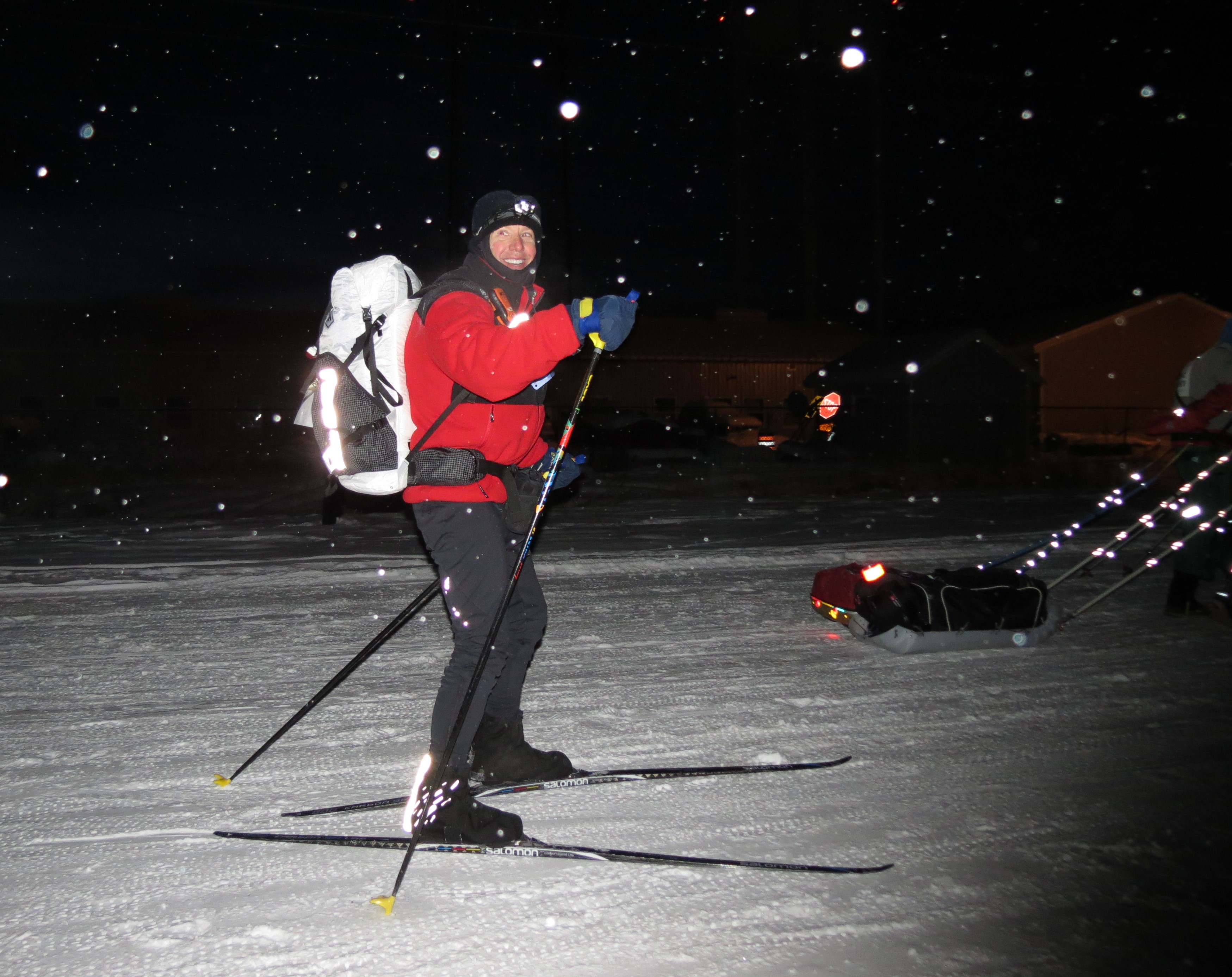
At the 7am start, it’s -9 degrees with a touch of snow falling in International Falls MN.  Bikers, runners and skiers line up and head down the Arrowhead Trail as fireworks light up the inky sky.  The race takes its heritage seriously, ranked as one of 50 toughest races in the world.  The finish line is 135 miles away.Skier in Arrowhead 135

These intrepid athletes will endure up to three days on the trail, with temperatures predicted in the -22 degree range by morning.  My role is far easier.  And warmer.  I am here to cover the race for the Lake Country Journal, a beautiful glossy magazine that covers all things related to our northern lakes area.

Teaming up with Rich, we have created a new niche for ourselves – find fun events that interest us, sell the idea to a magazine, attend and experience them, then produce a story.  I write, he takes the photographs.

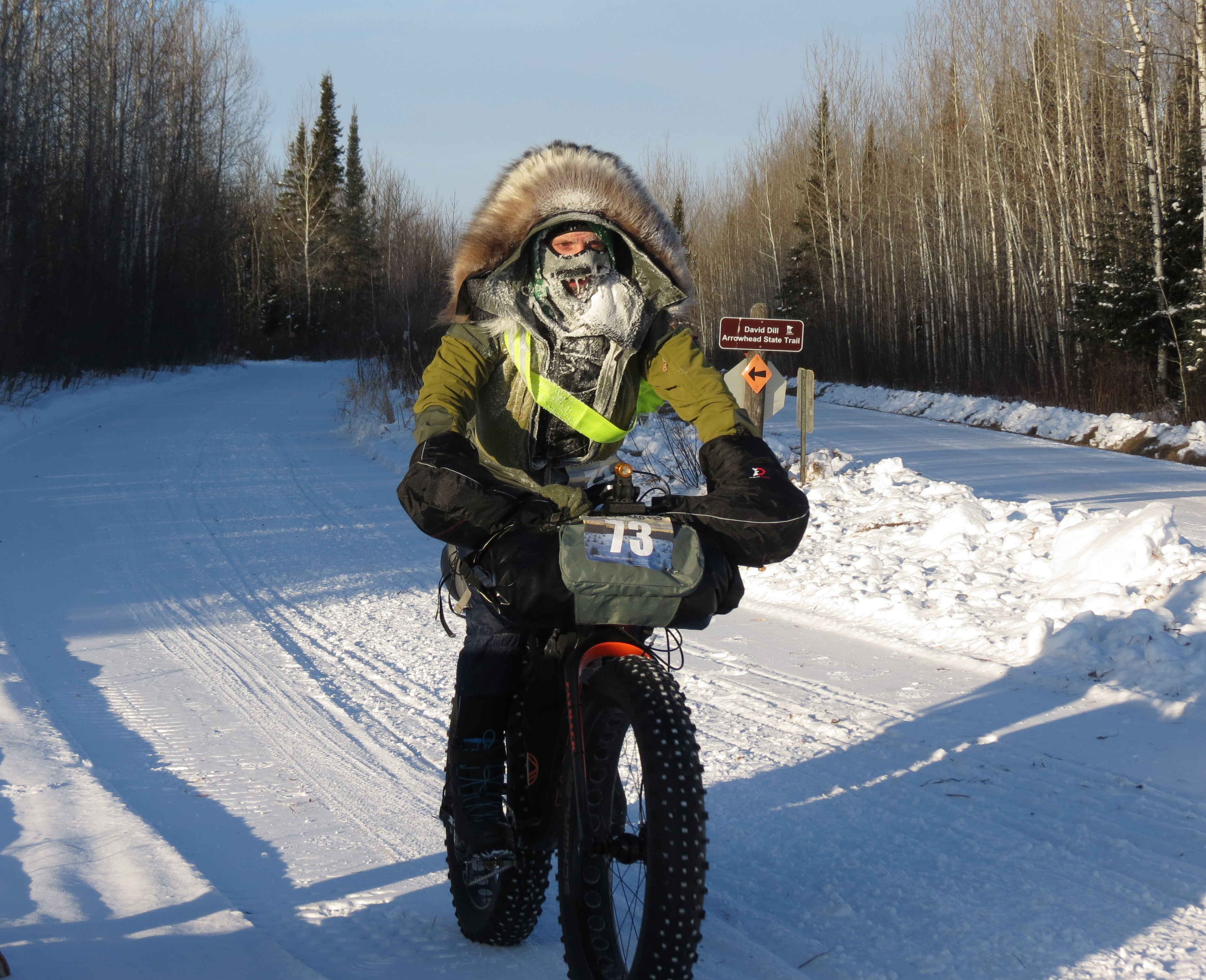
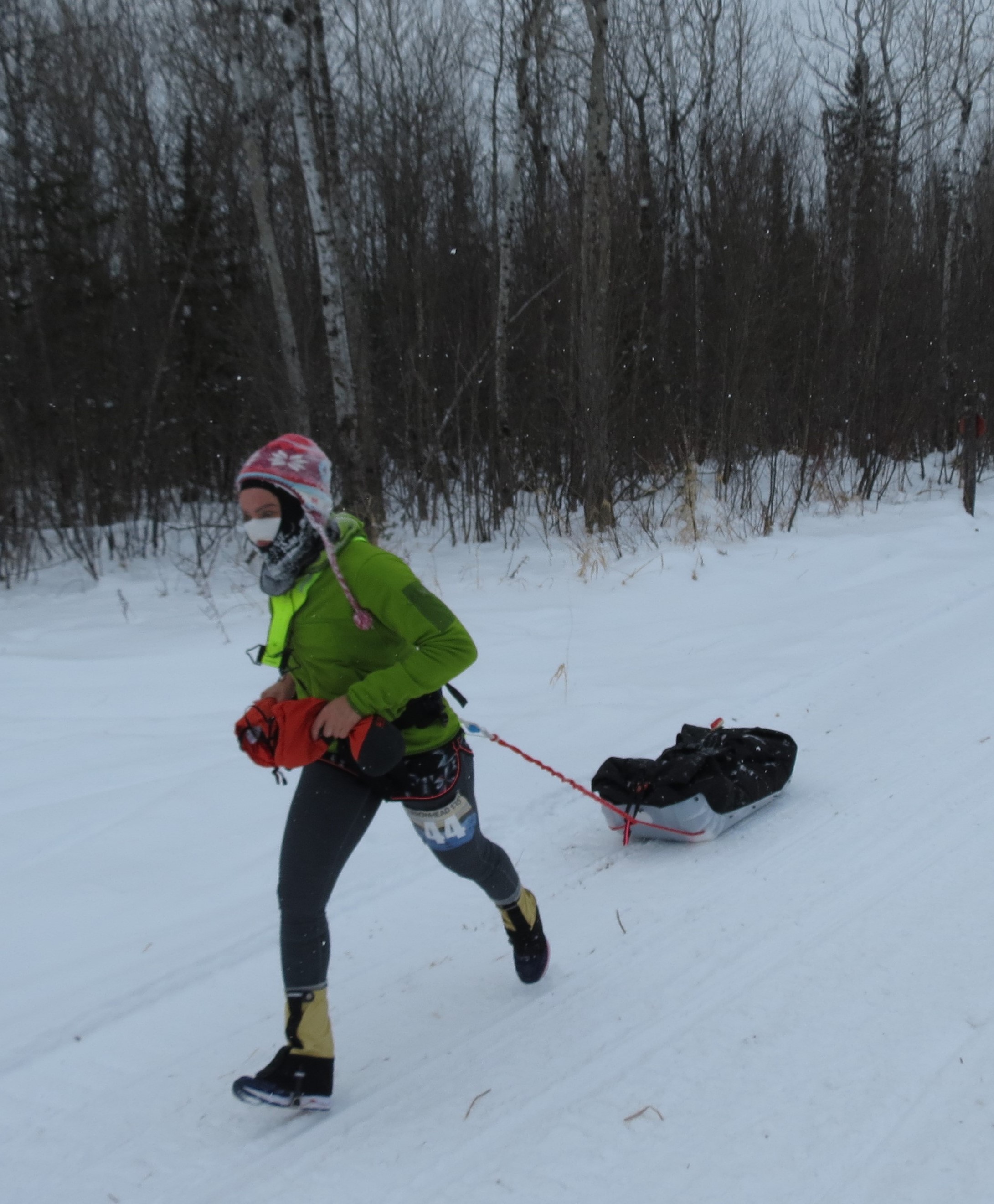
Today we leapfrog the trail, catching the racers at intervals along the way.  Rich looks for unique photo opps, I make mental notes of what I see – the steadfast determination in the racers’ eyes, the thick boots, the ice encrusted beards and fanciful antler hat.  We have time to warm up in the car.  The racers have only their energy to heat their bodies.

Biker in Arrowhead 135I would never be here if it weren’t for my writing.  Seeing folks pursue the impossible.  Following the Holiday Train.  Leaning the ins and outs of sled dog racing.  Attending a home grown radio show.  Then bring them to life for others.  New horizons, unique adventures, a break in my strict daily routine.  It’s a privilege to be able to write about topics of my own choosing.Runner in Arrowhead 135It wasn’t always this way.  Getting here has a been a seven year journey of my own.  I got my humble start in writing with Lake Superior Magazine, which accepted my first cold submission.  Editor Konnie went on to gently mentor me year after year, offering me more stories as my skills improved.  Just seeing my work come out in print was a big thrill.  And it remains one of my favorite magazines to write for.

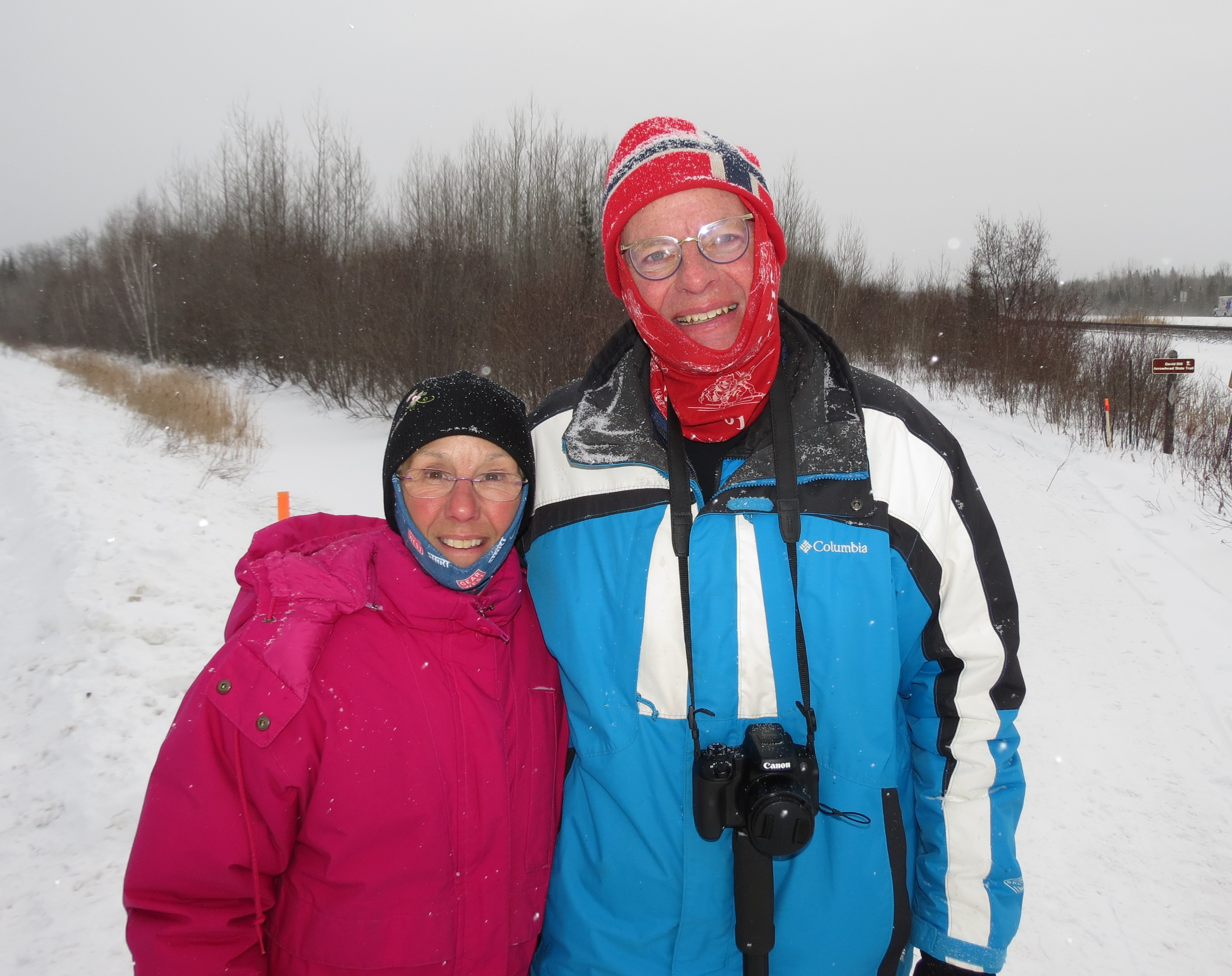
As today’s racers doggedly push on toward the finish line I remain vigilant as we chase them down the trail, composing lines in my head, shaping the story to share with my readers.  It’s already been a memorable adventure, and we haven’t yet seen them press on through the dark of night.  But when they do, I’ll be there.  With my talented photographer husband at my side.  On Location.Molly and Rich at Arrowhead 135

The Rest of the Story

This time it was Sarah who granted me permission to use an image.  Following our amazing cyber connection forged by my photo of Crisp Point Lighthouse, her parish magazine is ready for distribution.

Crosstalk parish magazine with Crisp Point LighthouseThis weekend, Crosstalk – and Crisp Point Lighthouse – will be making its way into three Church of England parishes near Durham, England.  In addition to the usual church news, promotions for upcoming events, schedule of services and useful contact information, it carries a wealth of stories, trivia and well researched facts centered on the theme of “Light.”  This is more than your weekly church bulletin – it makes for great reading and even includes a recipe!  No wonder this publication has won awards.  As a writer for regional magazines, I am impressed and even more pleased to be a part of this issue.

Sarah and I continue to discover mutual connections – bell ringing, her brother-in-law who may in fact have been my Economics professor, cyclists in Scotland and bad memories of old fashioned “stockings.”

A return to Durham to meet Sarah just moved up my travel wish list.  I hope that will be part of the rest of this story.