A Perfect Match

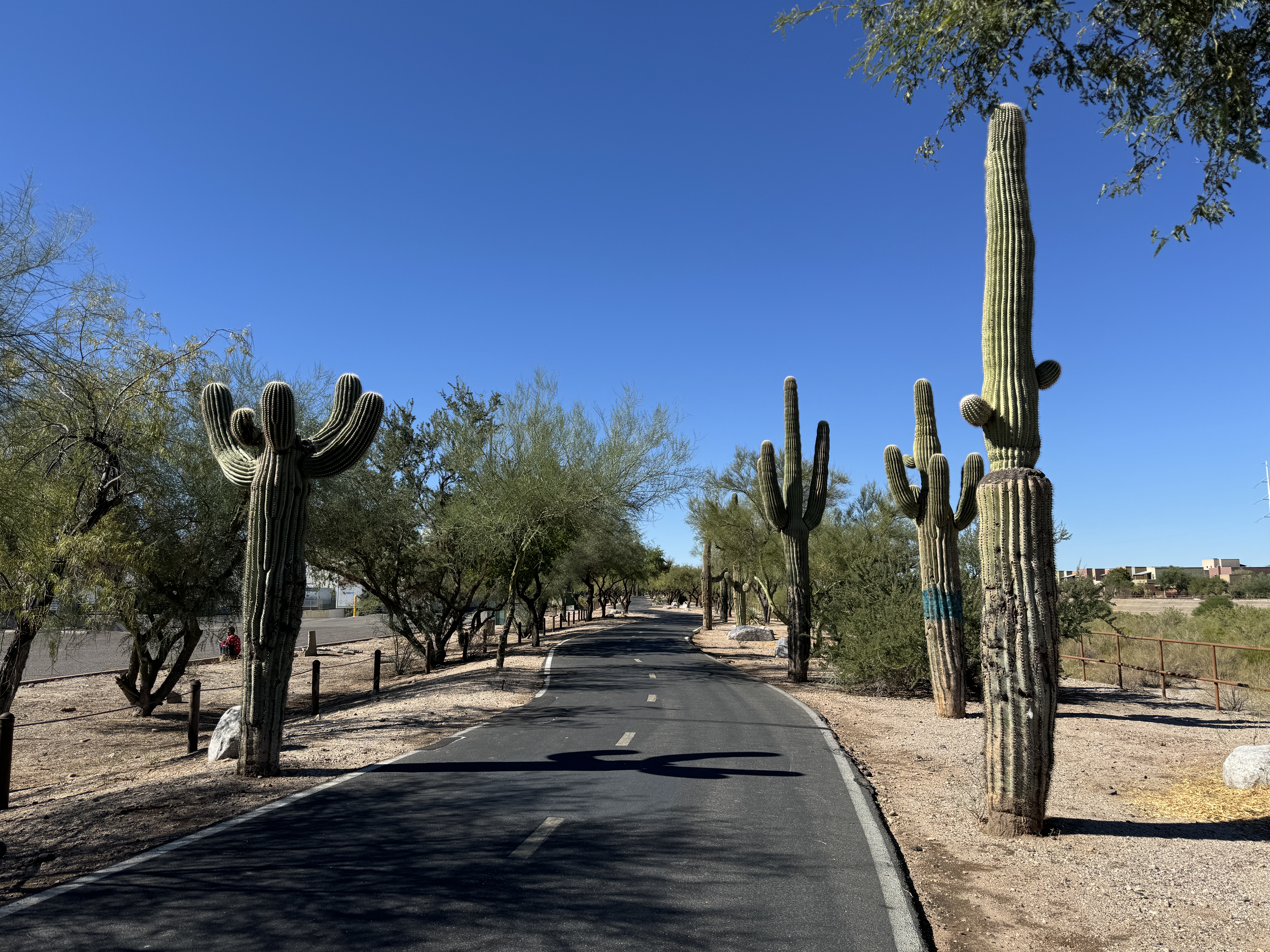
Cruising down one leg of the Loop Trail bike paths, mountains rising in the distance, sunshine pouring down, I couldn’t help but think “Now this is vacation!”

It had been over a year since Rich and I took a trip together.  Between my cancer journey and his surgery and complications, we have been tied to the medical community since the beginning of January.  As our appointments finally began thinning out and we both felt good again, we decided we needed to take the plunge.  It was time to get away, to prove we could be comfortable without our medical teams within reach, and enjoy doing something normal again.

Independently, we both began researching AirBnBs in Tucson, specifically Oro Valley.  When we discovered the coincidence, it was an easy decision to finalize our destination.  We’ve been there four times before and knew that it met all our basic needs – sunshine and warmth, a familiar environment, beautiful mountain views, and plentiful parks.  More than that, it caters to our individual needs.  For Rich, there are ample opportunities for birding, with varying habitats in state parks, canyons, and local spots he has already discovered.  For me, there are the bike trails.  Tucson’s Loop Trail provides 131 miles of paved trails atop the walls of the washes (commonly known as “rivers” even though they are mostly dry) that carry floodwaters during heavy rains.  In addition, we already knew of a good bike rental service.

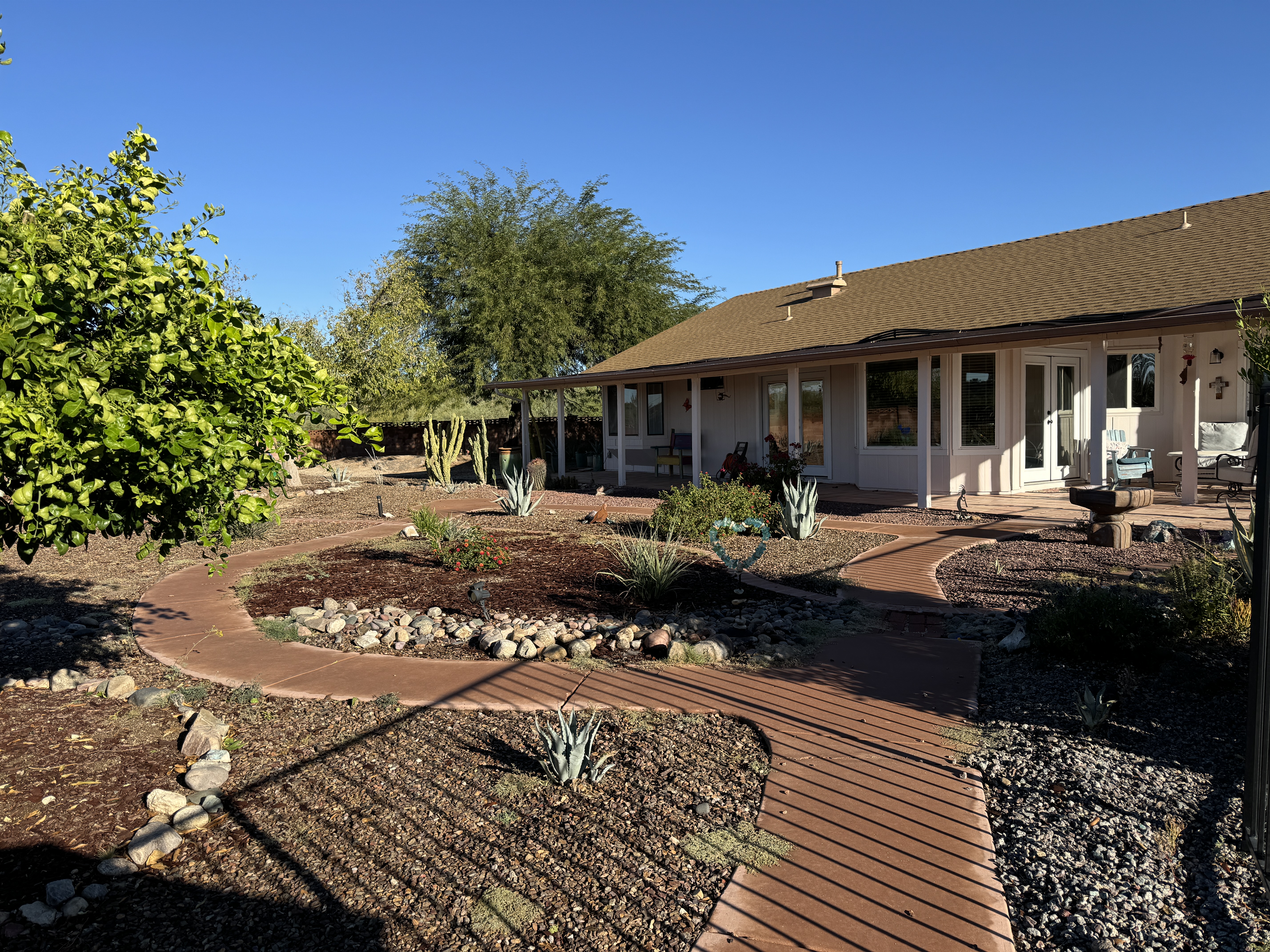
Rich booked an AirBnB less than a mile from the Loop that was a haven in the city. In addition to its full kitchen and amenities, the backyard was nicely landscaped and even included a private pool.  I was immediately drawn to the covered patio where we could eat outside or sit in the shade.  Better yet, it backed up to a lesser wash where we could meander through desert environs right outside our back door.
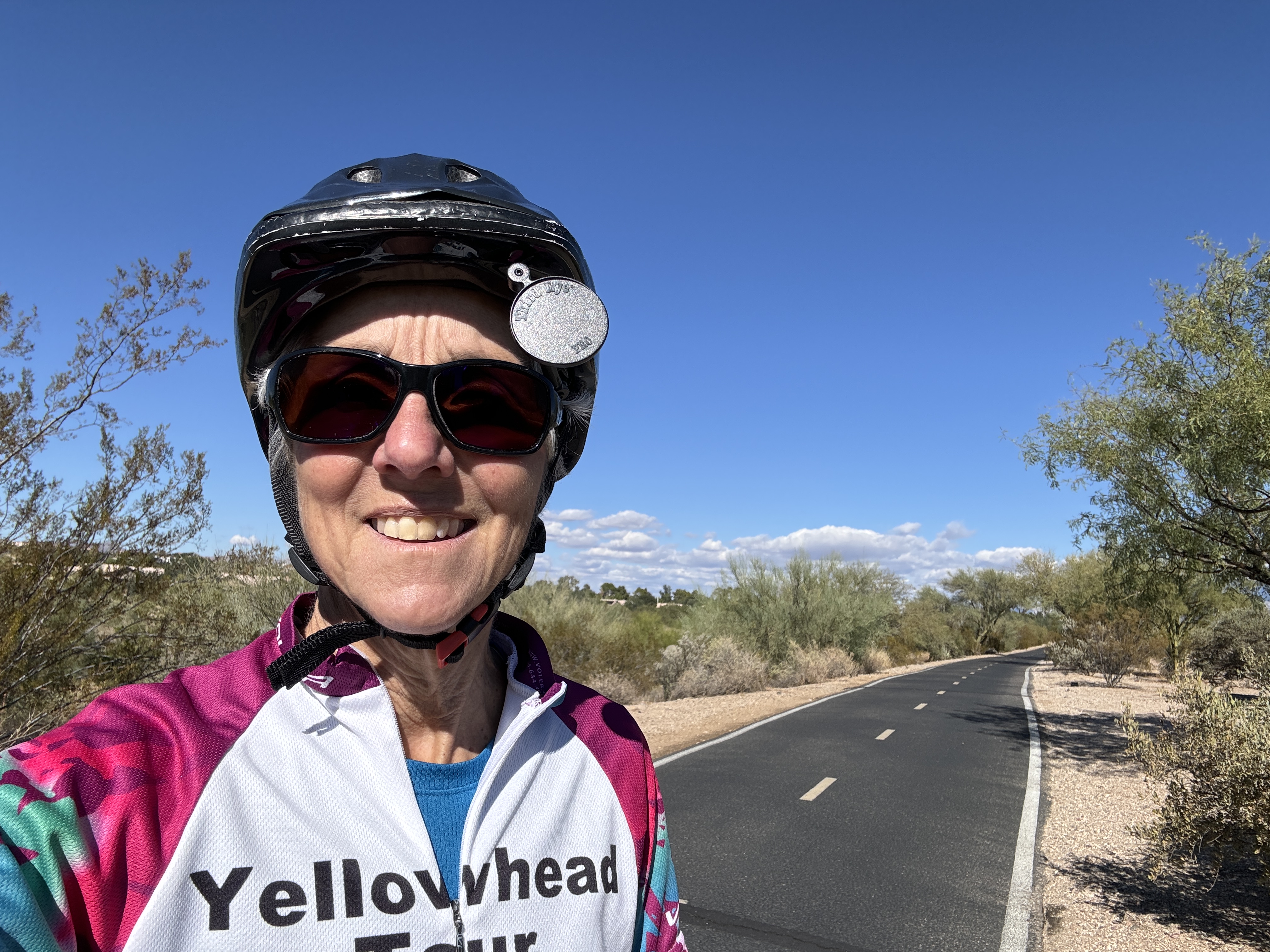
That first morning I felt the freedom that comes with leaving home.  I had no commitments, no schedule to keep, no accomplishments to complete.  I could follow my heart’s desire, and I was doing it.  Cycling in shorts and the thinnest of top layers, I felt the sun on my skin, the mild breeze in my face and the strength in my legs as I pushed the pedals.  The mountains rose up in all directions, ringing the circumference of my cycling domain.  And the ease of traveling down miles of protected bike paths lured me on.  This was far removed from my usual biking workouts.  This was pleasure cycling.

We were located just off La Cañada del Oro leg of the Loop. I traced that link down and back each day to reach the further extents of the Loop, embracing its growing familiarity. That day I had chosen my favorite leg of the Loop, following the Rillito River Park on both sides of the wash.  I passed familiar sights with each passing mile, and noted trail improvements, additions and closings for construction.  By its nature, most of the Loop is flat cycling and I felt no compunction to press the pace.  It was enough to be outside in the warm weather.
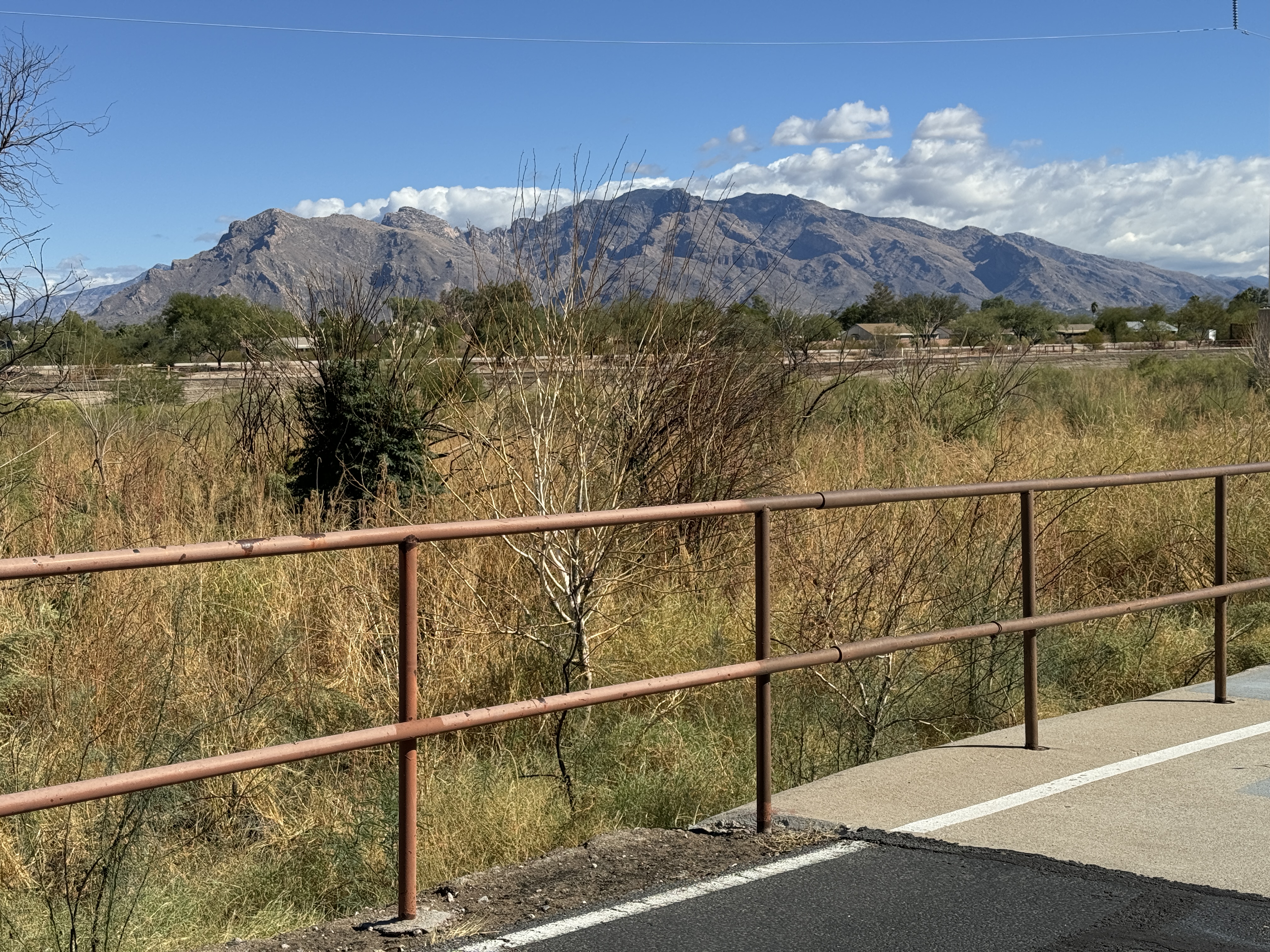
Each day I re-discovered a different leg of the Loop. The eastern section of the Santa Cruz River Park covers a good stretch of rural environs then re-enters the heart of the city. The trail continues for miles, eventually ringing the city (which I cycled one year), but I chose to turn around at the extensive park in south Tucson.

The western side of the Santa Cruz River Park delivers surprising water views, with flowing water in a portion of the wash and El Rio Preserve, a seasonal lake fed by floodwaters.
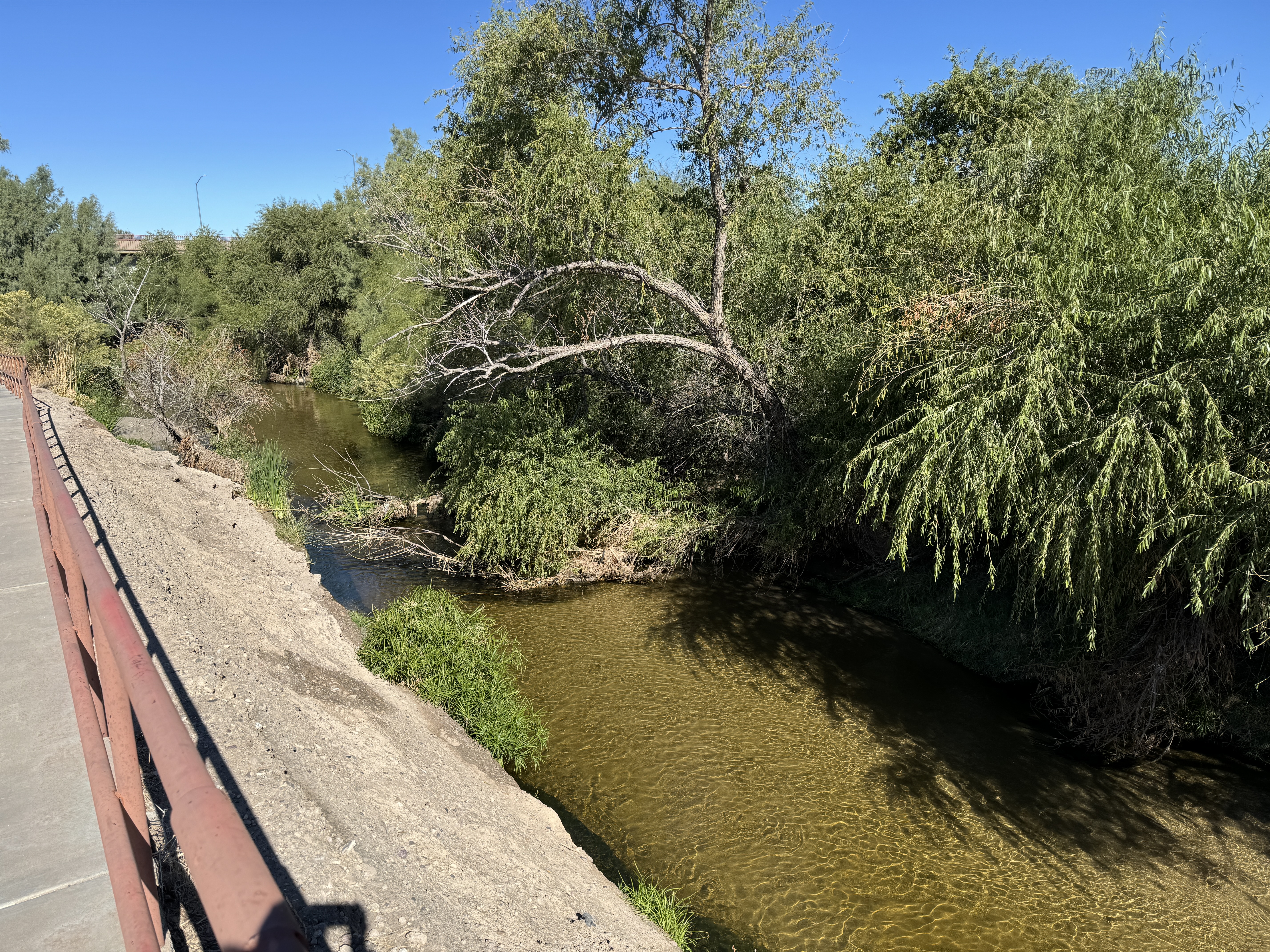
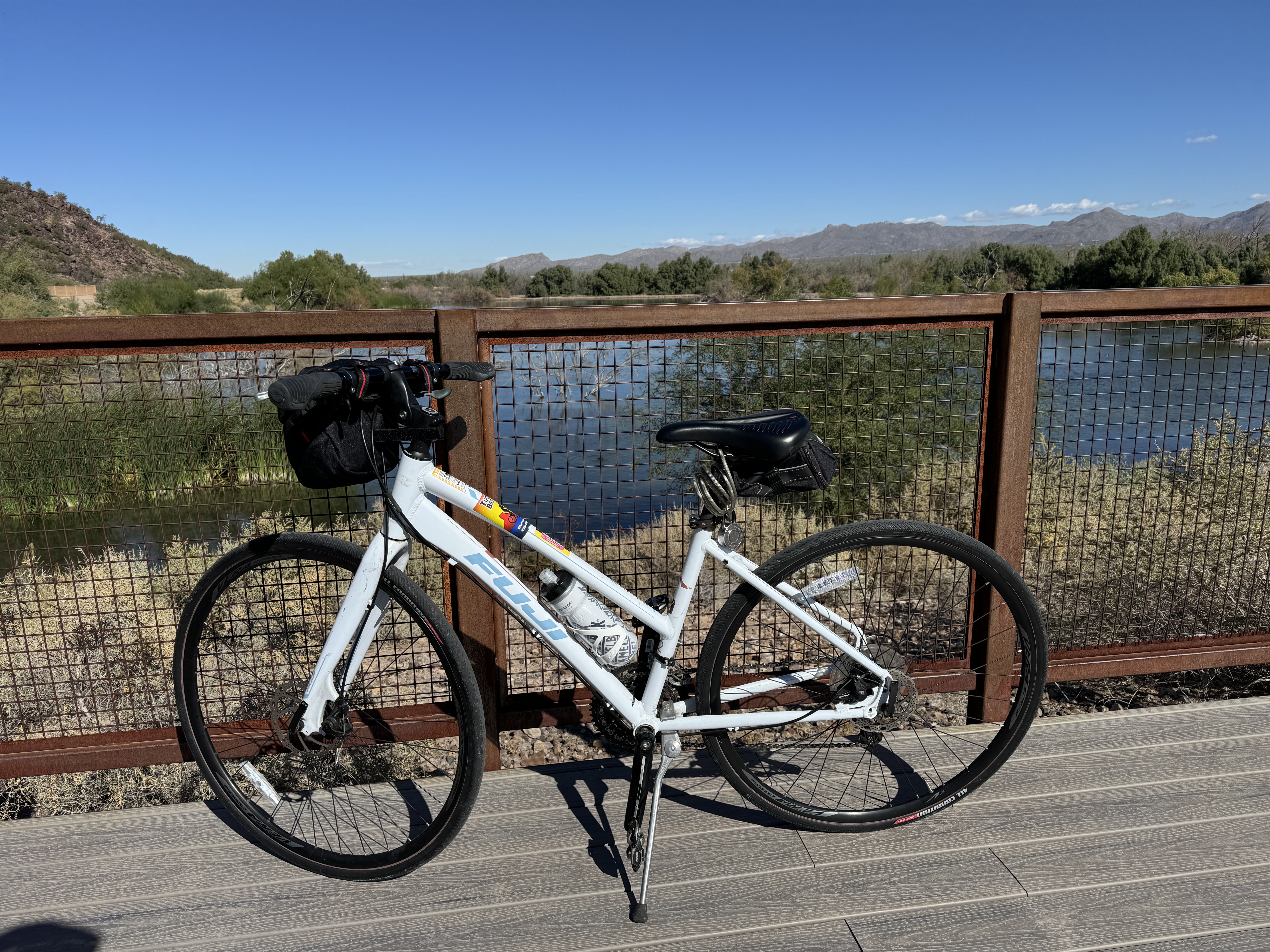
Cycling was the core of my five days there, and filled my soul. But it was about much more than the cycling. I was able to make peace with not accomplishing much, and just going with the flow, letting each day unfold.

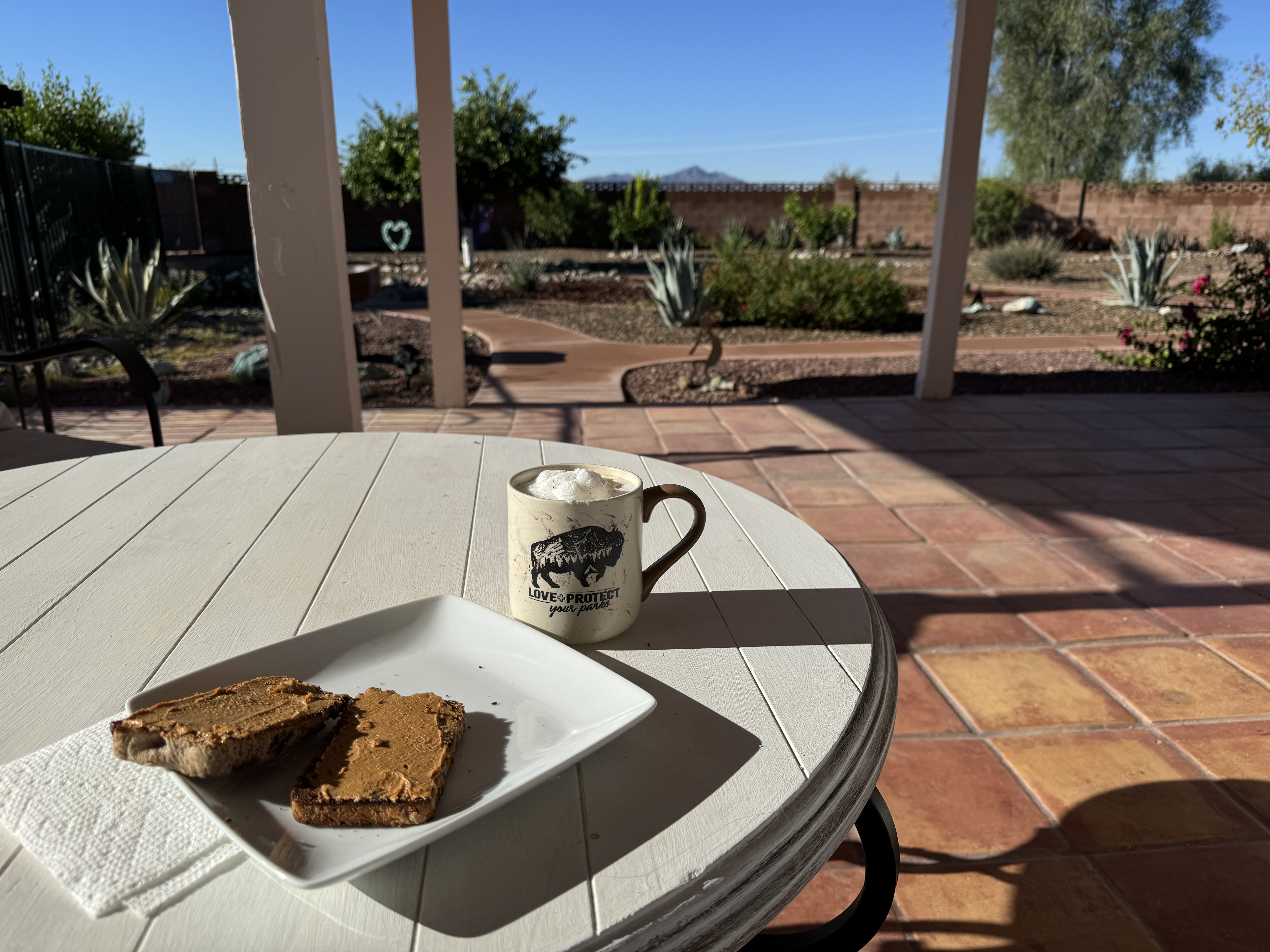
Because the night-time lows were in the 30s and 40s, mornings were chilly. So rather than dashing out at first light as I would do at home, I found it easy to linger. A few mornings I rambled in the wash, as the sun quickly warmed the air. Other days I puttered and journaled. Either way, once it was warm enough I’d sit outside to enjoy my coffee and breakfast.
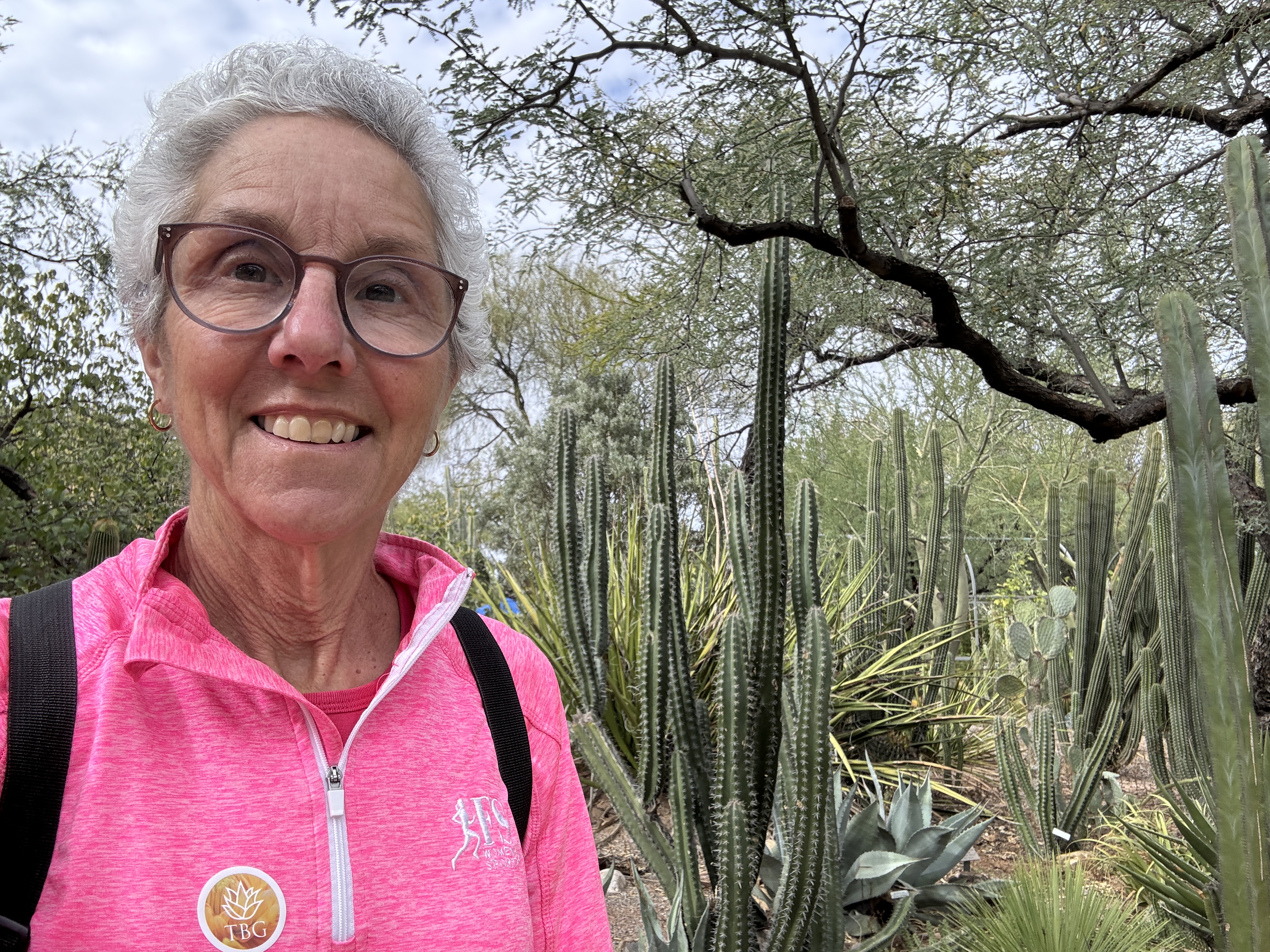
I had not yet visited the Tucson Botanical Gardens, so I spent an afternoon there. Naturally there were plenty of desert plants, but I found the special displays even more enjoyable. In the hot and humid butterfly building the butterflies flew free among the orchids and greenery. It was hard to see them at first, but the longer I stayed the more I spotted. The floral watercolor paintings and quilt displays were equally captivating. You just never know what you will find in a garden!
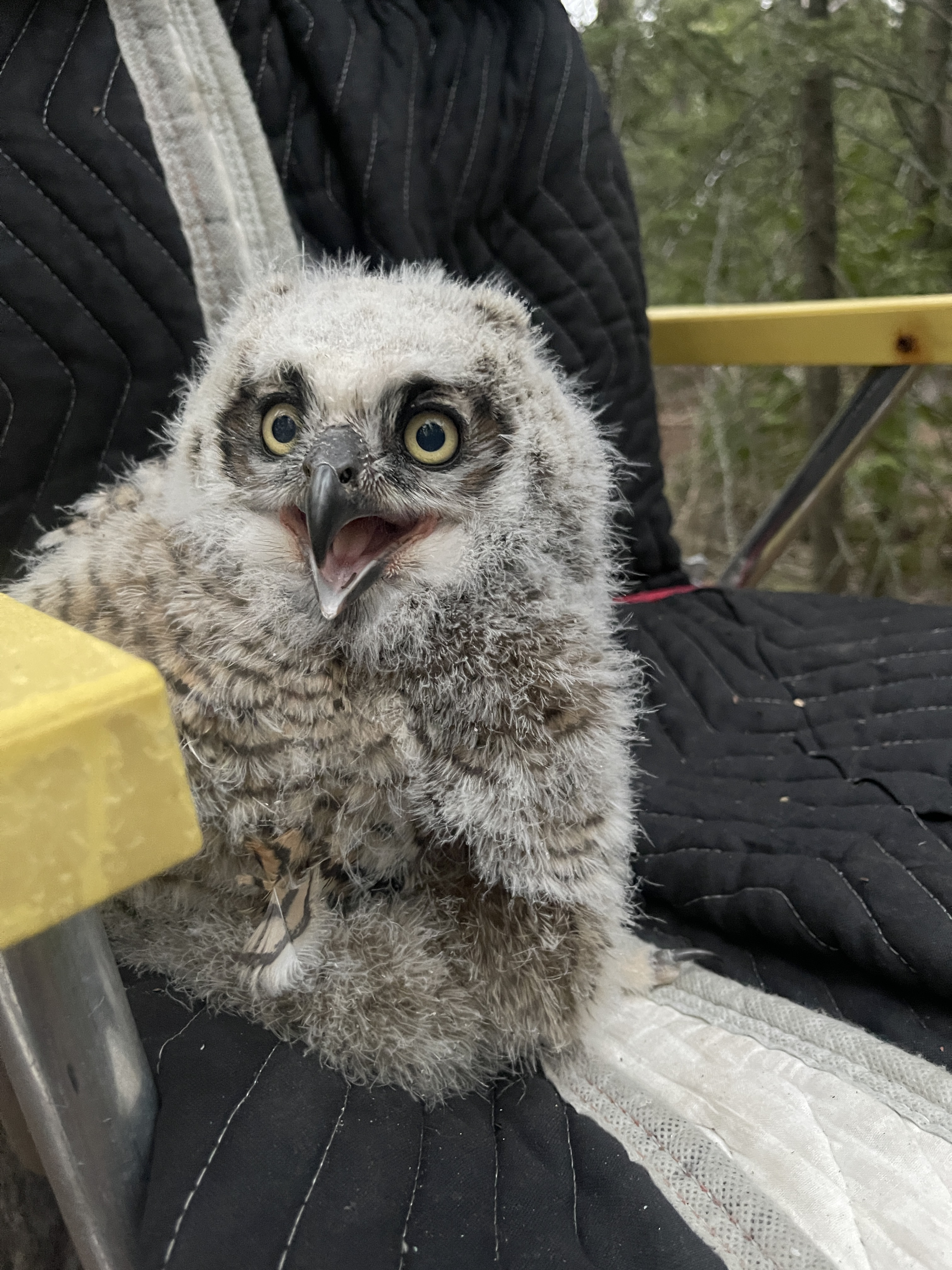
Rich and I went to Catalina State Park where Rich spent rare up close and personal time with a Great Horned Owl, and I hiked the Alamo Canyon Loop Trail. What started out as a flat sandy trail morphed into boulder scrambling when it reached the canyon. With great caution (my balance is not so great these days) I approached a viewing spot at the canyon’s edge then continued around the end of the gorge and back down the other side. The silence of the afternoon hike proved to be very restorative.

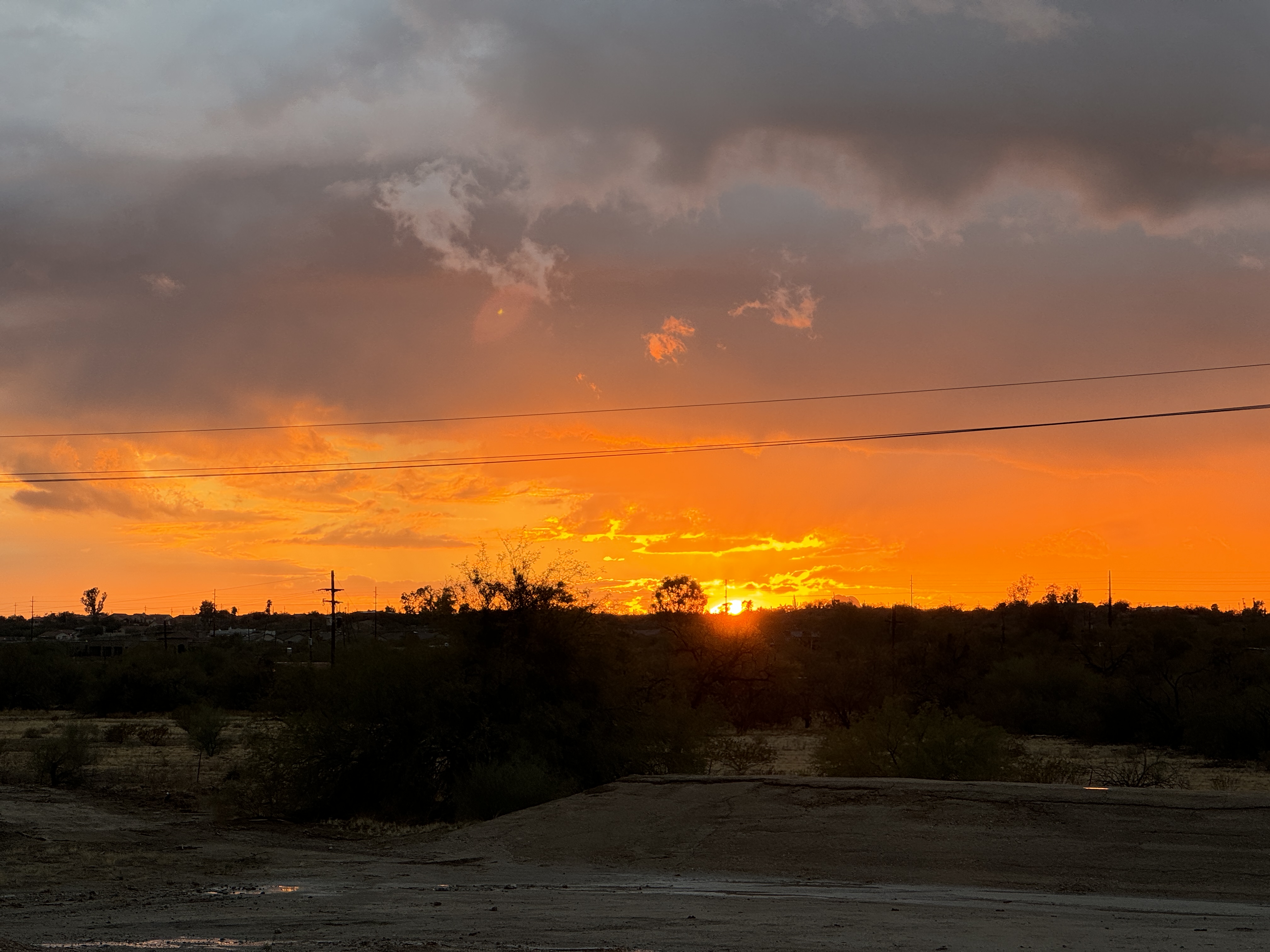
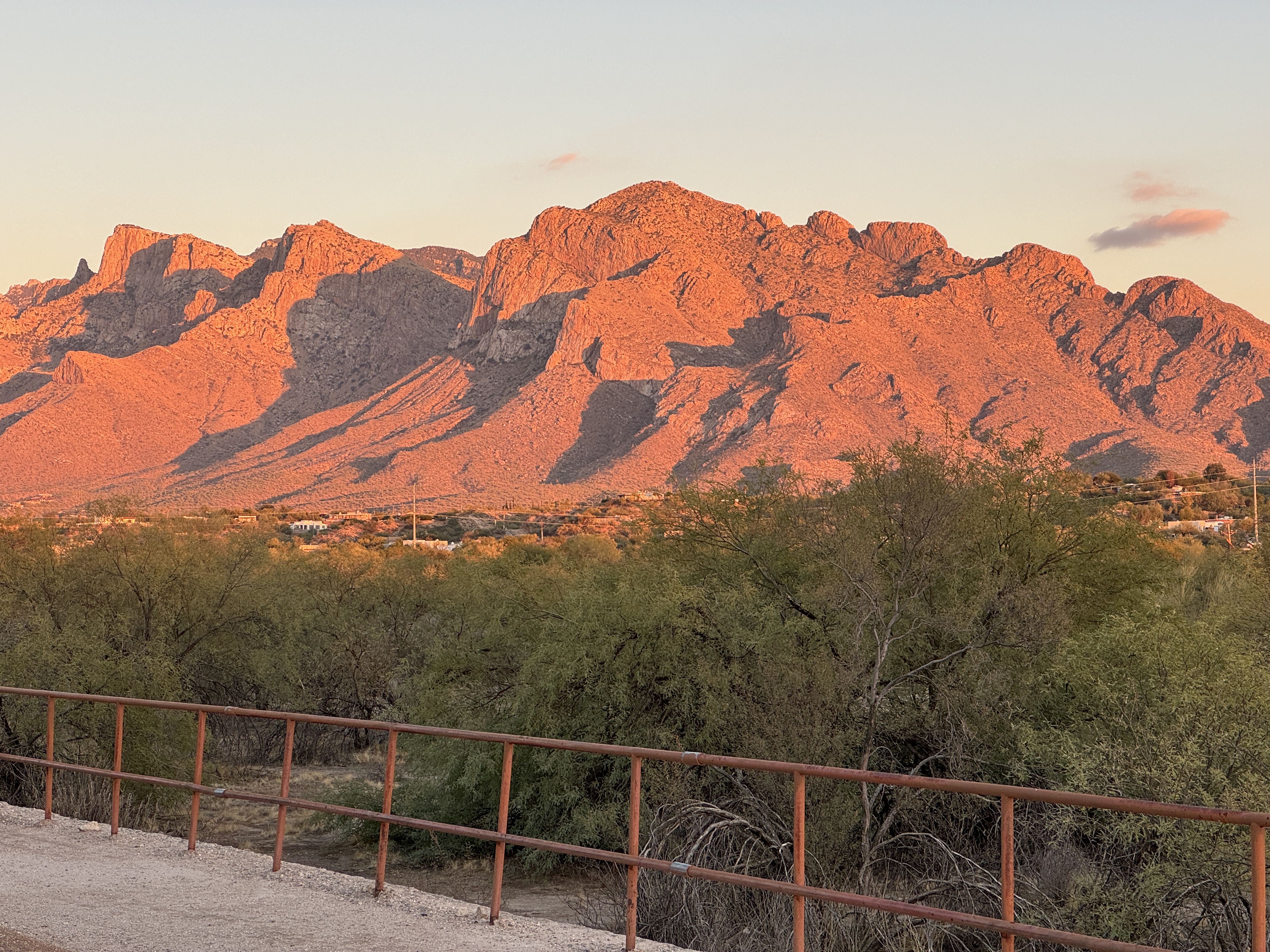
Sunsets were a highlight of each day. Although we could see the sun go down in the distance, it was the light show on the opposite side as the sun painted the mountains red and caught the occasional clouds – all viewable from our back yard.
At the end of the day spent each doing our own thing, Rich and I sought out a few of our favorite restaurants in the area, not necessarily fancy but places were we enjoyed spending time over a good meal. It was there that we could relax together, and reflect on the day.

We had chosen well, I felt. As hoped, both the location and the lodgings allowed us to pursue our own passions. It allowed us time and space to unwind in our own ways, to nurture our needs. The sunshine and warmth lifted our spirits, and mountain views inspired us.

Yes, Oro Valley was the perfect match for us. And it was a blessing to be well enough to enjoy it all. I’m certain we will return again.
It Wasn’t Meant To Be

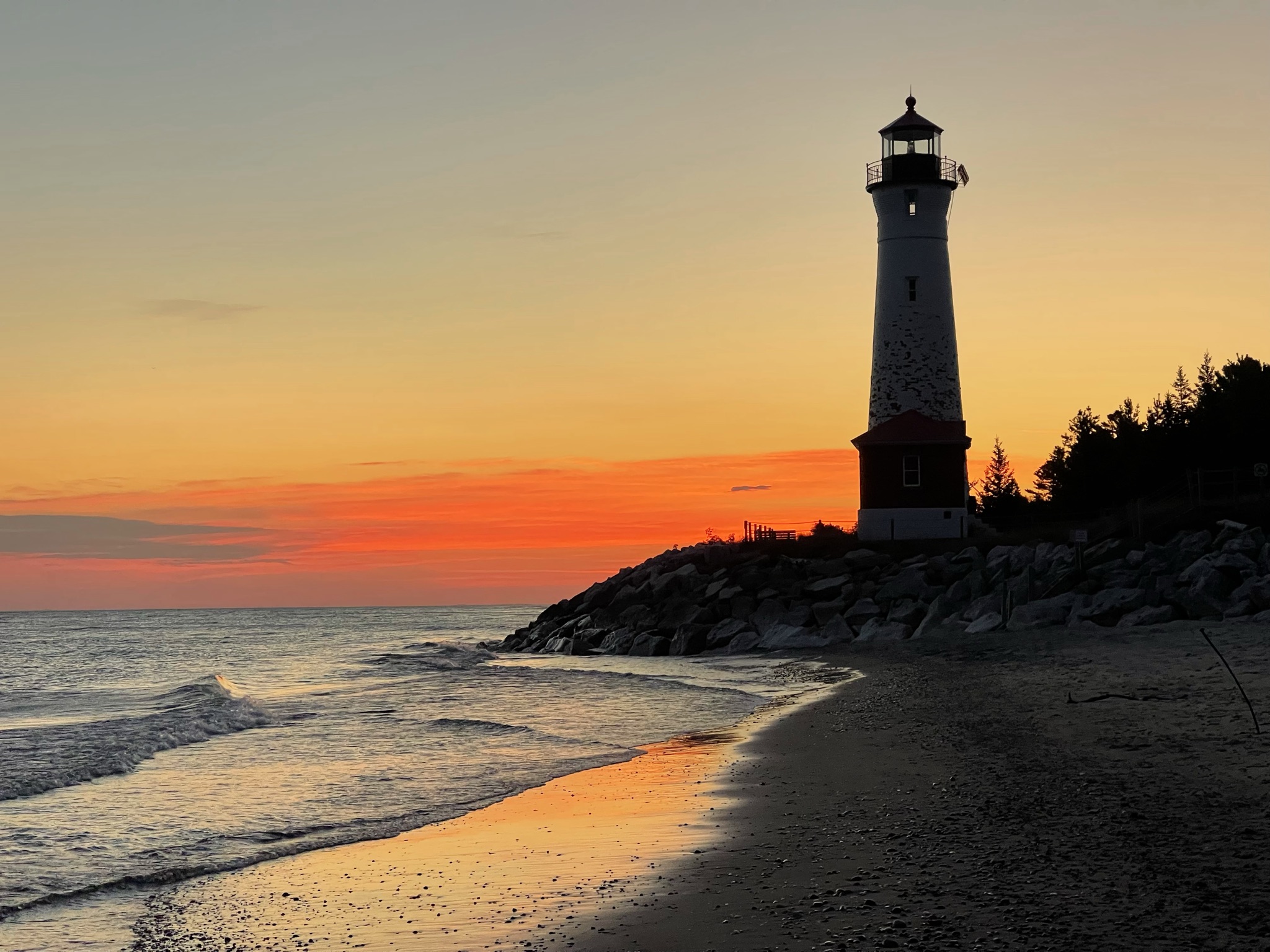
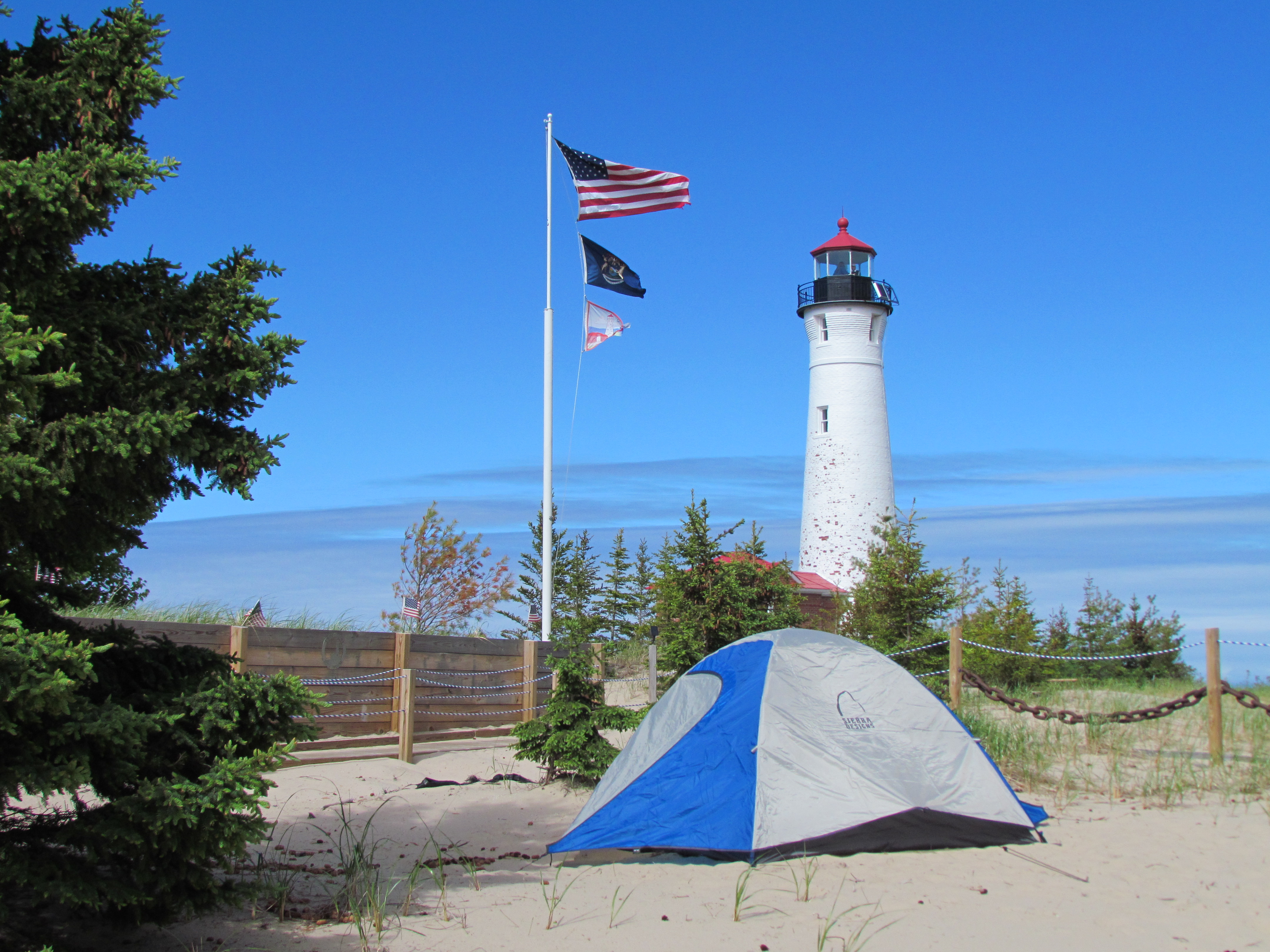
We look forward to our stint as keepers at Crisp Point Lighthouse every year. It’s a very special place on its remote beach at the far eastern end of Lake Superior, where we camp at the base of the tower for up to five days and work in the Visitor Center. The best part is having the grounds and the flashing light all to ourselves at night, and witnessing the dramatic sunrises and sunsets that paint the sky behind the tower.

This year, with my cancer treatments, we had to cancel our winter travel plans to Florida and Costa Rica. Rich’s surgery and its aftermath further grounded us this summer. So it was with great anticipation that in late September we set out for Crisp Point. But we never got there. Mid-way through driving across the Upper Peninsula, Rich suffered a TIA, or mini-stroke, that exhibited itself with slurred speech, a weak left arm and impaired vision. Talk about scary! Fortunately, we had just switched drivers, so I was at the wheel. We turned around and sped back to the nearest Emergency Room in Ironwood, and then on to Essentia in Duluth where they admitted him to the hospital. We were very grateful to be back in the hands of his own medical team.

Fortunately, Rich’s incident was a transient occurrence – in fact lasting no more than 40 minutes – and left no damage. But the window for getting to the lighthouse had closed. To say we were disappointed is an understatement. It had been a goal all year long. Throughout each health challenge we strove to recover with Crisp Point as our payoff.

Enter the cabin. Back home again, I suggested we go to the cabin for a few days. Our calendar was empty due to the planned lighthouse gig, and on successive days we miraculously had no medical appointments. Rich felt hesitant, having just gotten out of the hospital, but agreed. Packing was easy. I reloaded our lighthouse food back into the cooler, slimmed down the clothes I had packed before, and collected a few items needed at the cabin. Off we went.

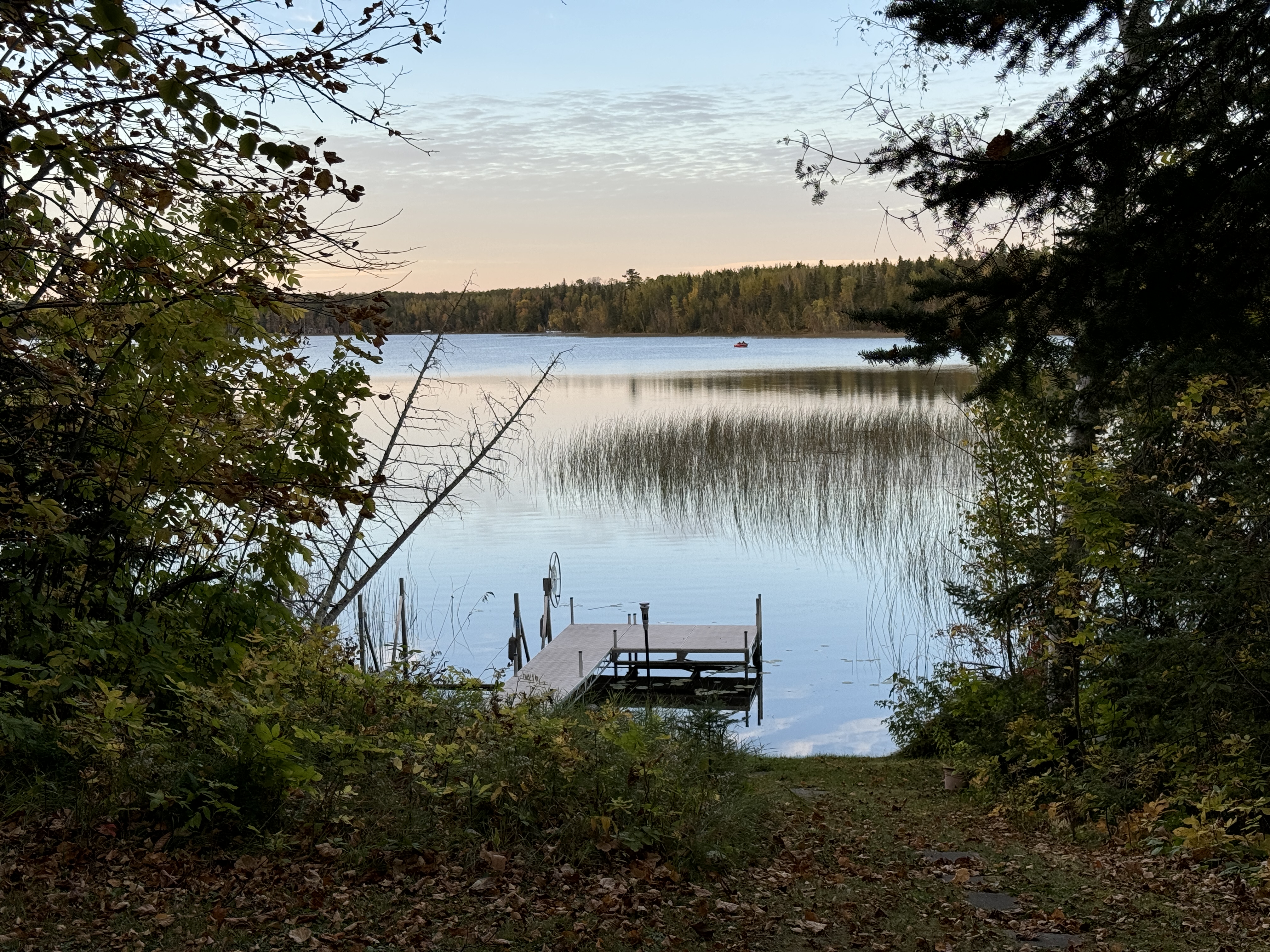
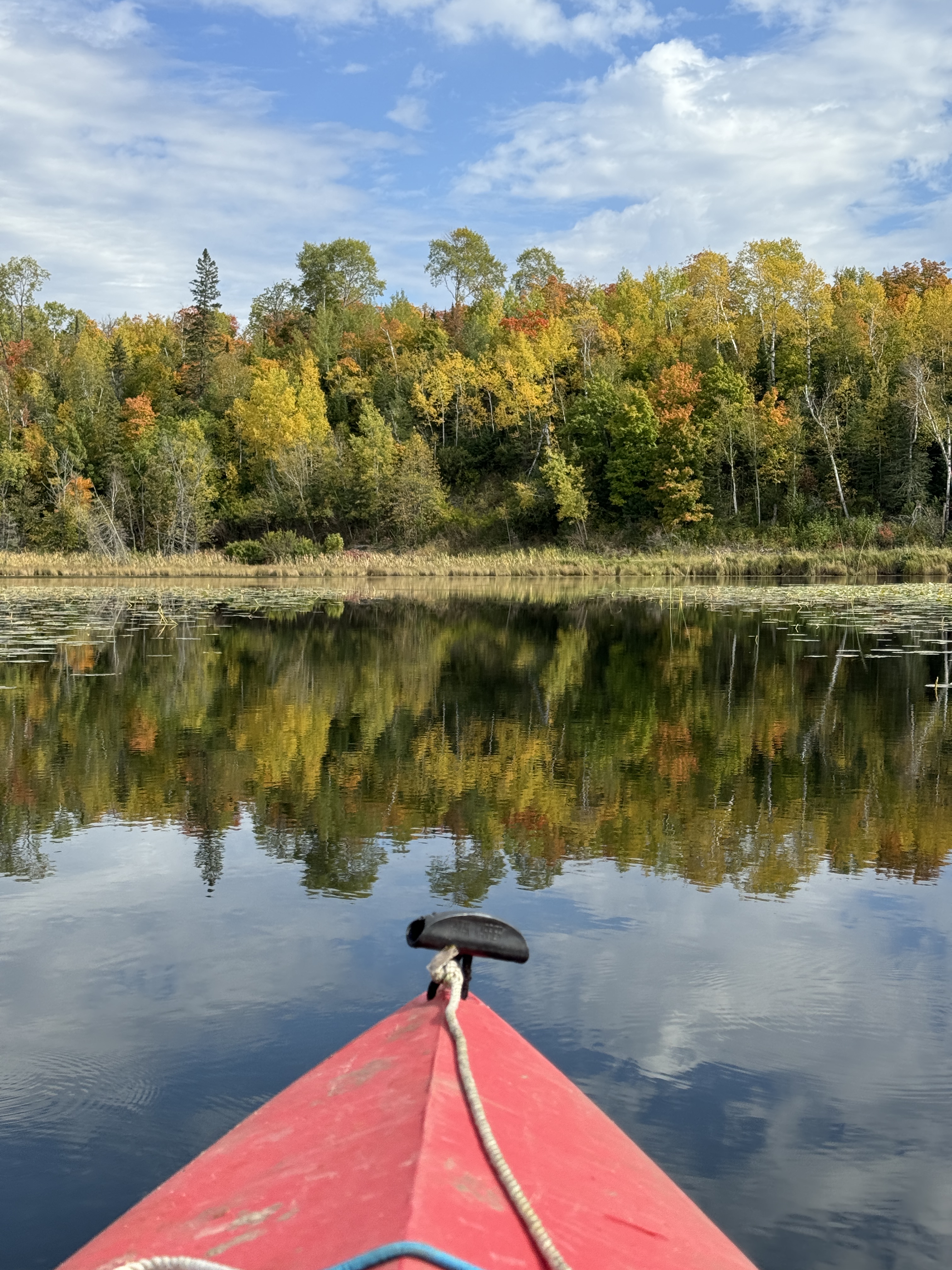
It was a beautiful sunny day, with nascent fall colors lining the road and deep blue water in the lakes we passed. As soon as we arrived, I hauled a lawn chair over to a sunny spot and opened a new book – a real book this time, not my Kindle. I spent the remainder of the afternoon reading, and continued all evening. I can’t remember the last time I relaxed like that! Rich was similarly occupied, stretched out in the cabin.

Throughout the next two days, we indulged our interests. Rich went out birding early one morning and hiked in Suomi Hills. I got in two bike rides and a long walk. We slept well in the deep silence of the woods, and enjoyed dinners overlooking the lake. When the wind finally calmed down at noon on our last day, I launched the kayak and savored the peace and silence as my paddles sliced through the water.

We both relished the warmth provided by a new mini-split we had installed in the cabin this spring. It seemed too modern for our modest 3-season cabin that we have heated with a wood stove for 34 years. But we decided that a few modern conveniences would make it easier to use the cabin as we age (as hard as that is to admit!). What a treat it was to have easy heat, and Rich especially appreciated not having to add logs to the fire in the middle of the night!

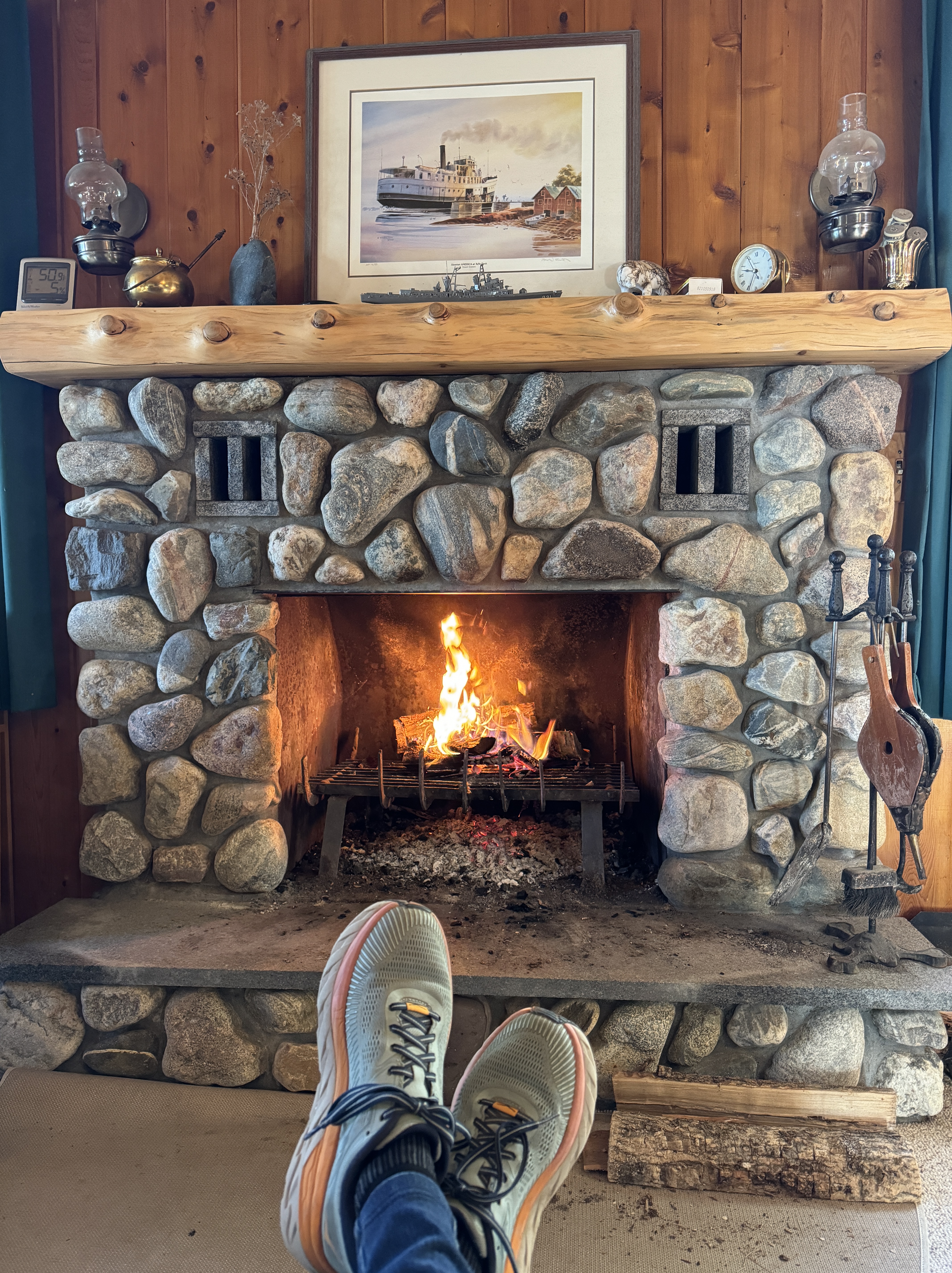
Despite the heat, I craved a fire in the fireplace. Rich was less enthused, so I decided it was time to develop my own fire-building skills. The first couple of tries it was a bit of a struggle to get the flames to catch, but by the third time I had a system down pat. I enjoyed my breakfast in front of a roaring fire each morning, and read by the crackling flames each evening. We were both happy!

It wasn’t the Crisp Point Lighthouse experience we craved, but it was a good get-away. We left doctors and hospitals behind, broke out of our normal routines, spent more time together, and just let life flow. That’s the beauty of owning a cabin. We can go whenever we please, at the drop of a hat, no matter the season. It’s our own little slice of heaven.

Crisp Point wasn’t meant to be for us this year. But you can be sure I’ll be poised to send in our request at the stroke of midnight when sign-up begins for next year. 

Tackling Lopez Island

It’s finally time to break the silence. I’m sad to say this poor blog has been neglected while I took a time-out to focus my writing on CaringBridge to chronicle my cancer journey. It filled a need, to be able to focus on coming to grips with cancer, healing from surgery, and working my way through chemotherapy. But even more so to process my feelings, share my experiences, and connect with a caring community that supported me all along the way. I invite any of you to read my story and posts here.

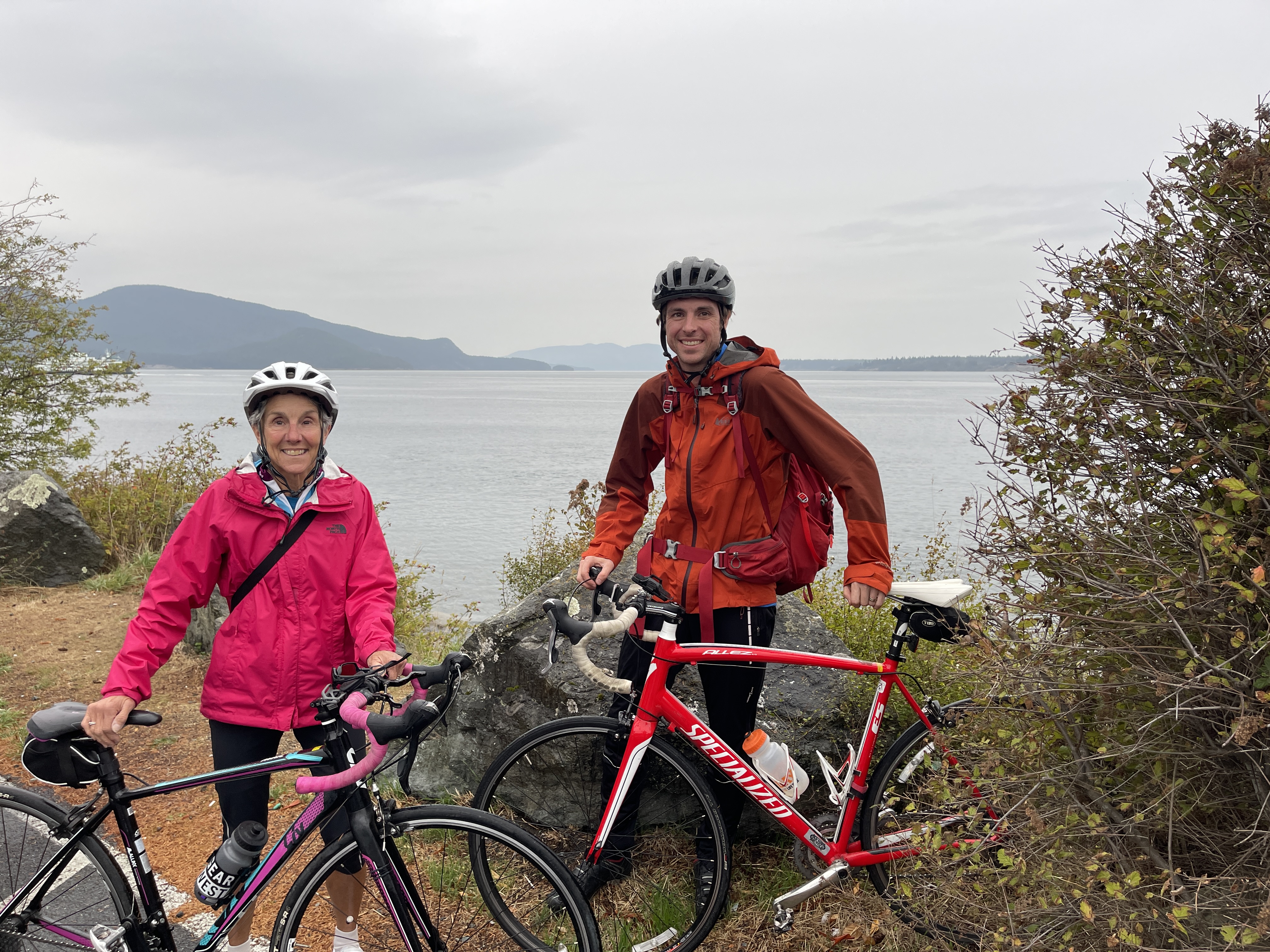
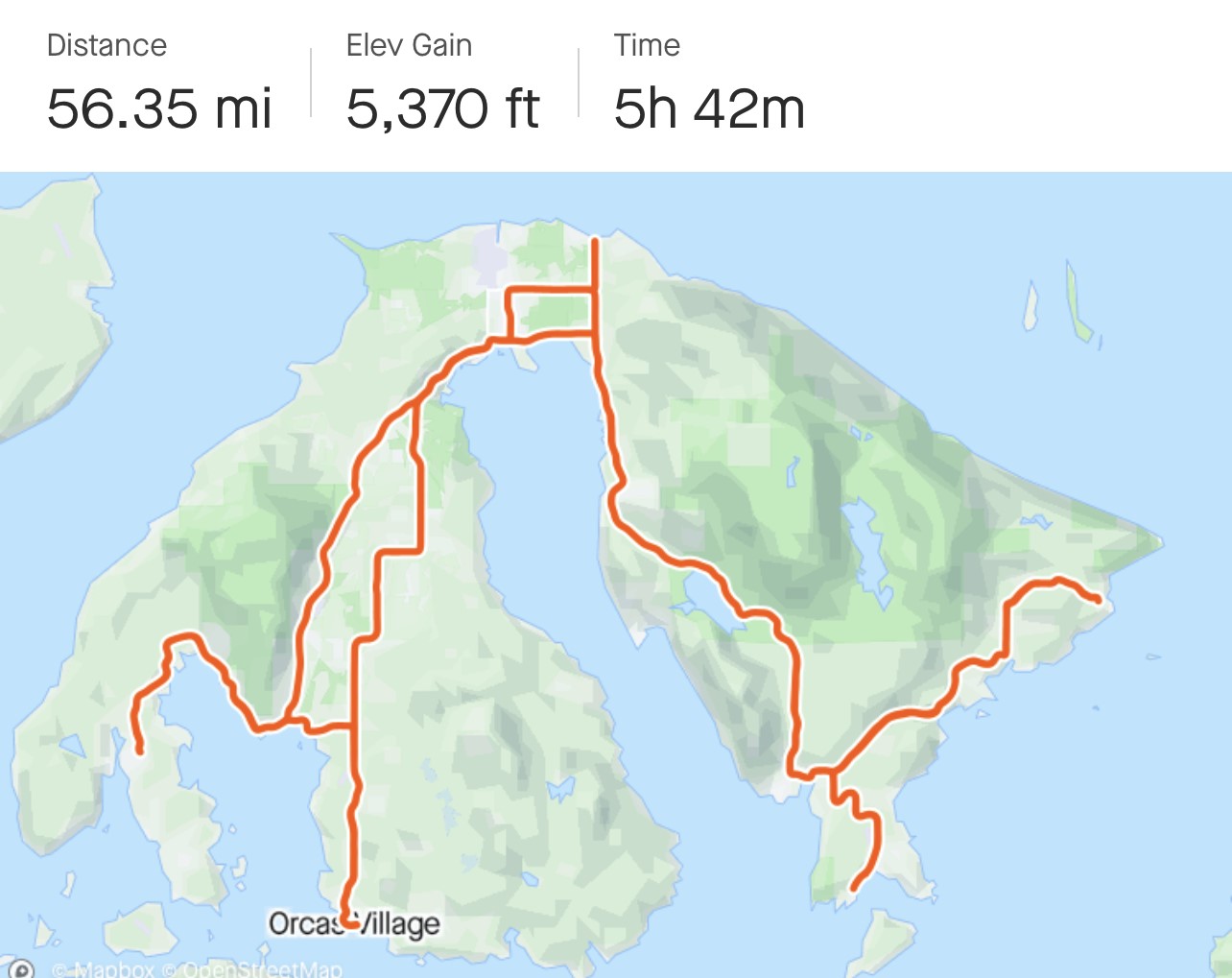
Throughout this time I’ve continued to be as active as possible, first doing a lot of walking then adding cycling, gradually working back up to regular 25-mile rides up the shore. So when I was planning my trip out to Seattle to visit my son Erik and his wife Katie, I couldn’t help but think about last year when Erik and I cycled all of Orcas Island in the San Juan Islands. At the time, we pondered riding on Lopez Island next time, a prospect that loomed large as I packed. Could I manage it now? It had the advantage of being smaller and less hilly than Orcas, and I craved the opportunity to return to some adventure in my life.

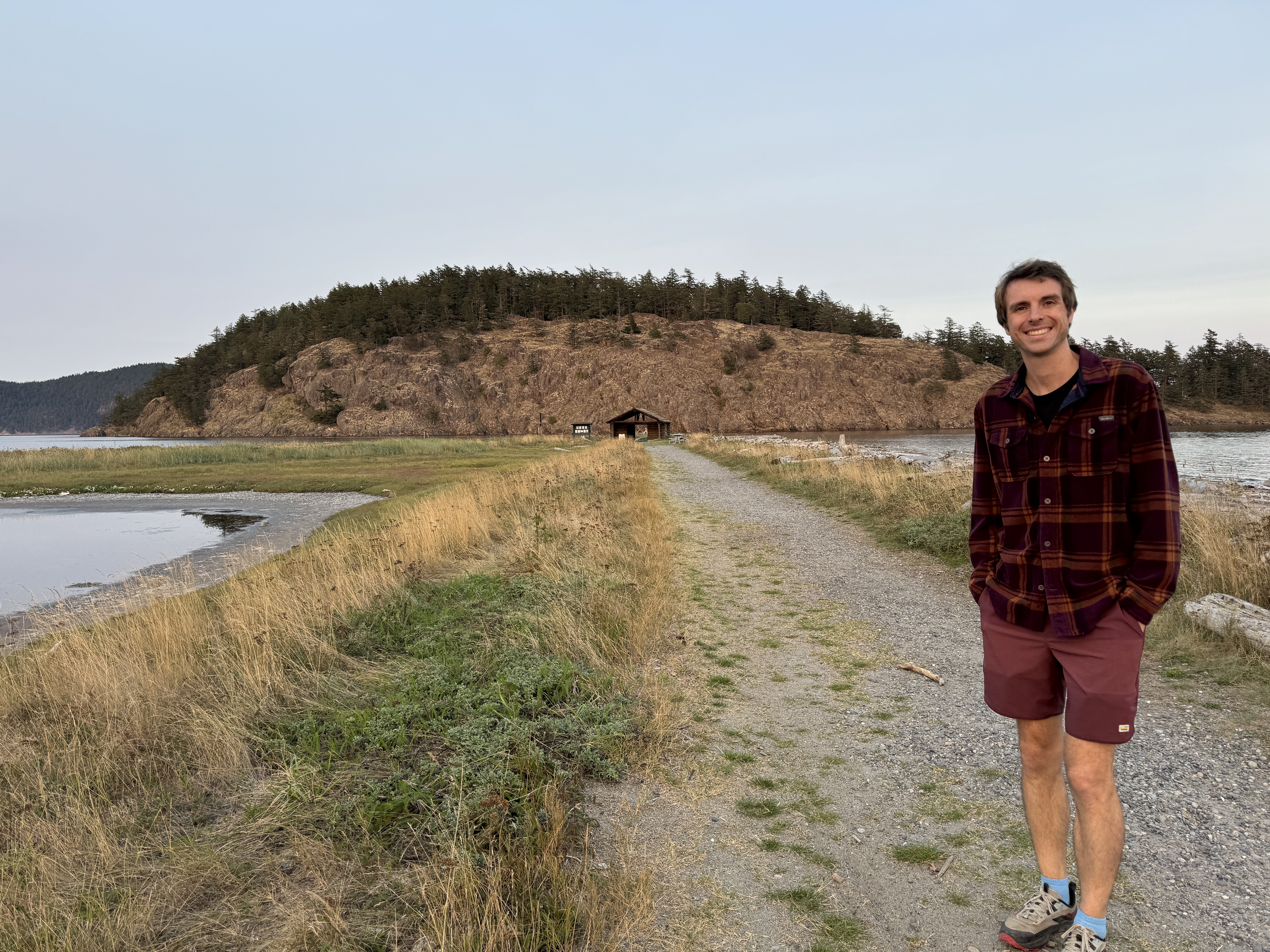
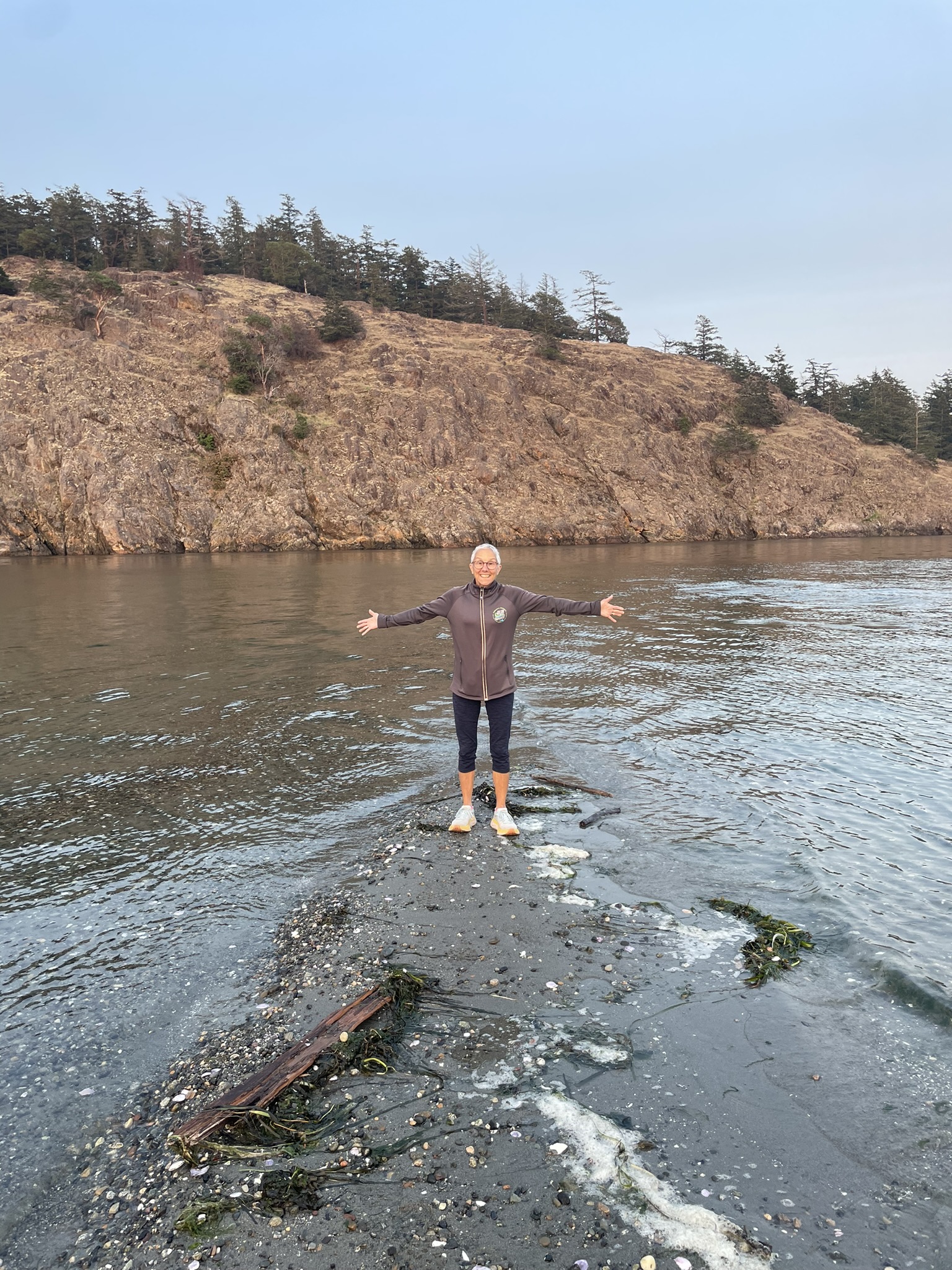
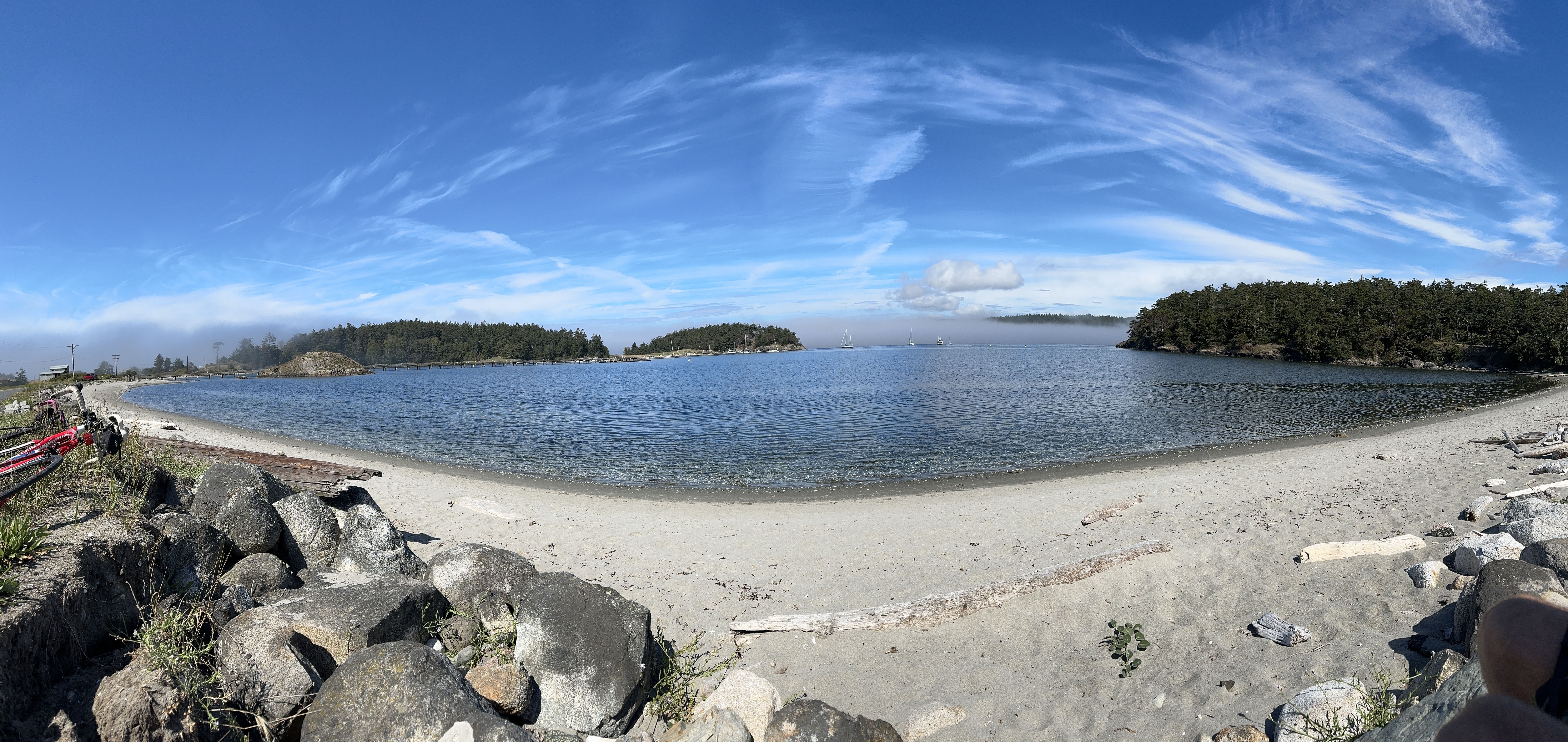
Not only was Erik game, but he proposed an add-on. “Why don’t we go over the day before and camp overnight?” We arrived on the ferry in the late afternoon and made our way to Spencer Spit State Park. We had reserved a walk-in site on the beach, and oh what a gem! The local currents had created a sandy triangular spit of land that stretched across the gap almost to Frost Island. There was a log structure out near the end, and a pool of water in the interior. We quickly dropped our gear and set out to explore. We learned that the shape of the spit changes with the currents, but will never reach the far island due to the strong current in the channel.

We admired the sun setting over the trees behind us, then returned to our campsite to set up and make dinner before it got dark. The meal was extra tasty, as it always is in the simplicity off the outdoors with a tent. We bedded down with the lights of yachts bobbing on buoys just beyond our shore and the sound of waves lightly lapping.

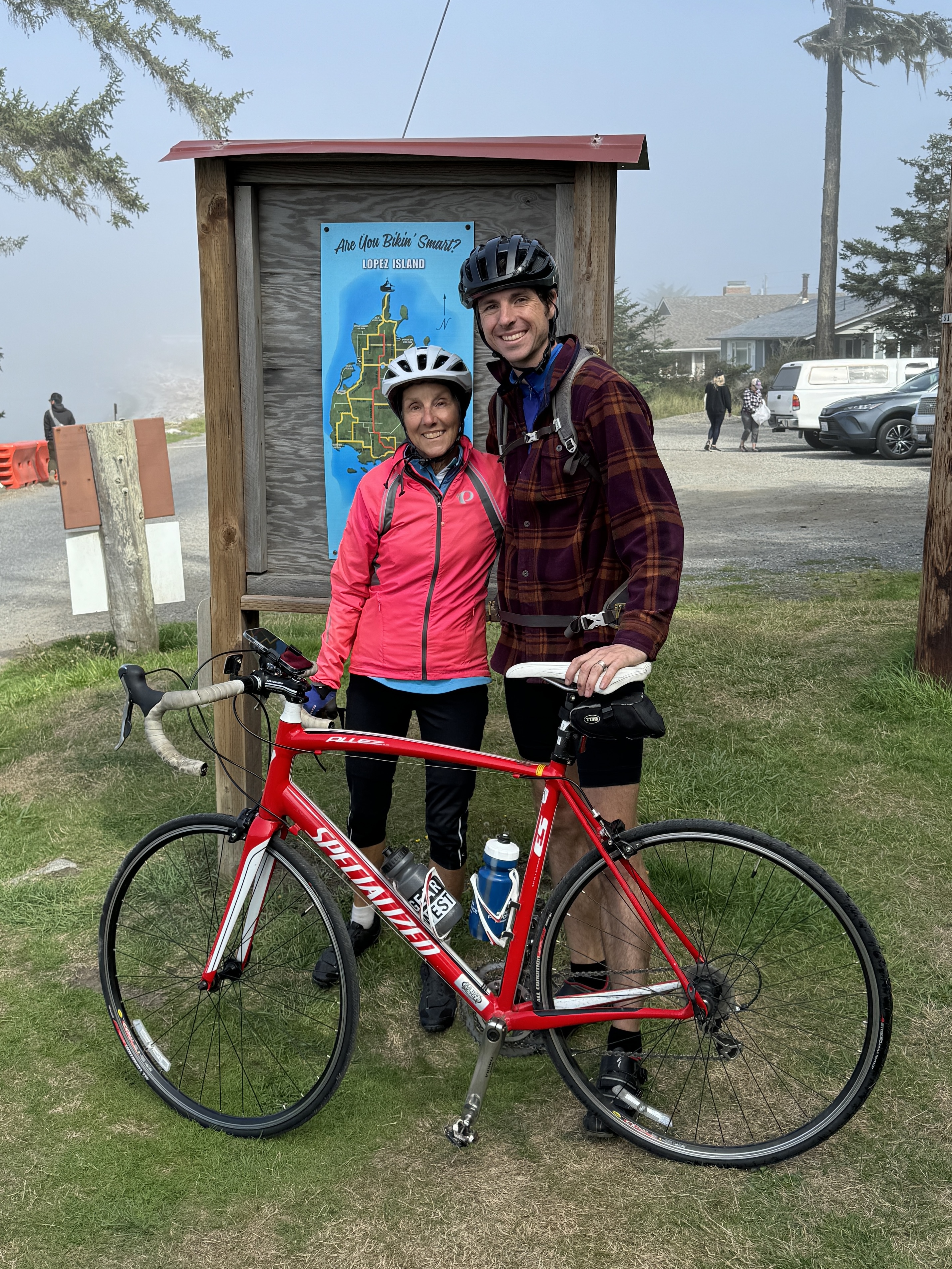
Morning brought fog. After a hot breakfast and camp coffee, we packed up and stashed our gear in the car. As last year, our goal was to cover as much of the island as possible, and reach the shore on every side. We had found good cycling maps online that showed us the amount of traffic on each road and whether it had shoulders or not. We aimed to ride the quieter roads, that reached the extremities of the island.

Setting out, the fog was so dense that it obliterated all scenery. Looking out at the water was like seeing a white wall! From the park we crossed over to the east side of the island then headed south through Lopez Village and into more rural landscape. There were numerous farms (surprising to us – who farms on an island?), unique house architectures, and a flavor of laid back island life. Just 7 miles along, my back tire went flat. Erik changed the tube like a pro, and we were on our way again in short order.

We made our way to the southern peninsula of the island, out to Agate Beach where we reached the end of the road for the first time. We’d hoped to get out to Iceberg Point, but it was off limits to bicycles, so we made do with a picnic lunch overlooking Mackaye Harbor. Close up we could see boats anchored, but the fog obscured what we soon learned was a huge rocky outcropping beyond. Fortunately, starting then, the fog began to lift. We could still see it lurking in low-lying areas, but it soon became sunny and warm – a beautiful afternoon!

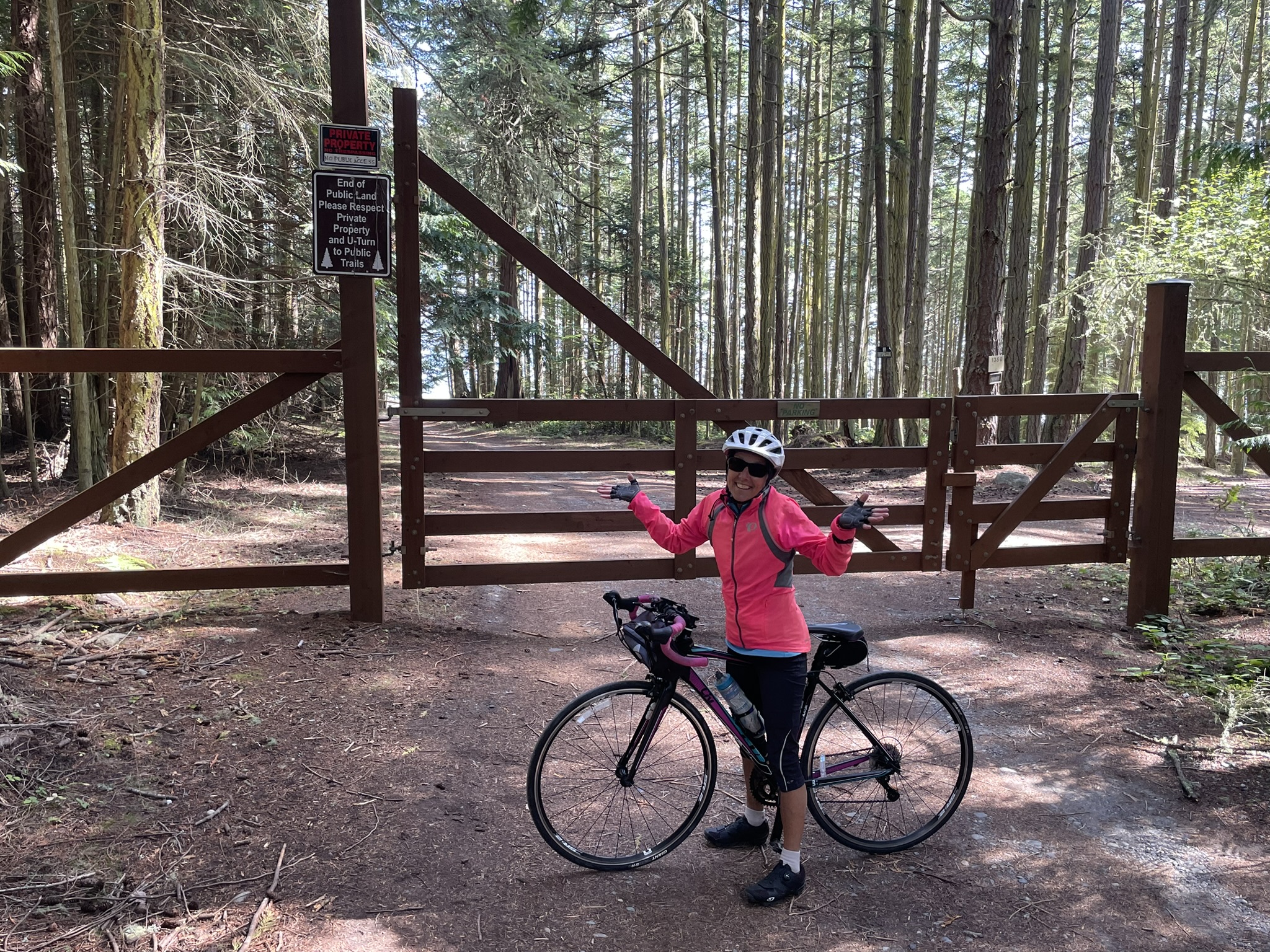
We tootled around that lower bulb of the island for much of the afternoon, exploring each small road until we could go no further. More than once we hit private land short of the shore. I hesitated at the top of a very steep hill, knowing that if I went down I’d have to come back up again. But the adventurers in us enticed us forward, only to find a dirt road not far beyond! We navigated that as well to reach a glass-walled modern mansion in the distance beyond the No Trespassing signs. And for the record, I did walk my bike back up that hill! It was well worth it though, for the quiet, woodsy small roads we traveled.

We had made plans to take the 4:15 ferry back that afternoon, and after checking the time we decided we needed to beat it back to the car. So we took the main road up the center of the island, which turned out to be fine despite its high traffic designation. We got back to the car with time to change out of our cycling clothes and mount the bikes on the car rack and head to the ferry. But we were mystified to find ourselves first in line for the ferry. It just didn’t feel right. Inquiring at the office, we learned that the 4:15 was strictly a walk-on ferry! Only then did it dawn on us that we’d picked that ferry in the early stages of planning when we didn’t expect to bring the car over. Oops!

We had plenty of time to kill before the 6:20 ferry, so we headed into Lopez Village where we loaded up on charcuterie items and headed out to Otis Perkins Day Park where we planted ourselves on a big log on the beach. There we were content to sit, soak up the sun, enjoy our little feast and take in the views of San Juan Island across the water – the very sights we’d missed in the morning fog.

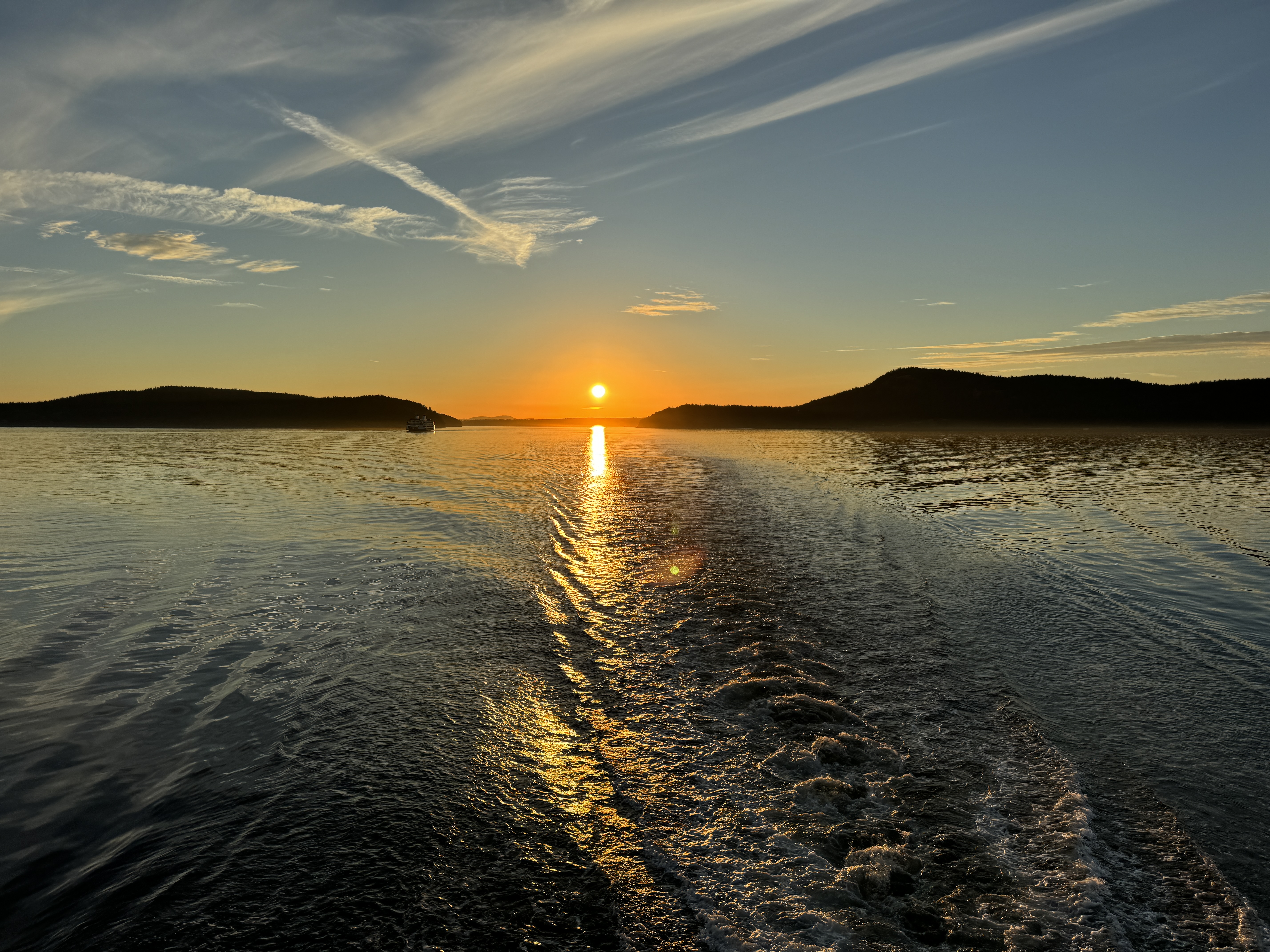
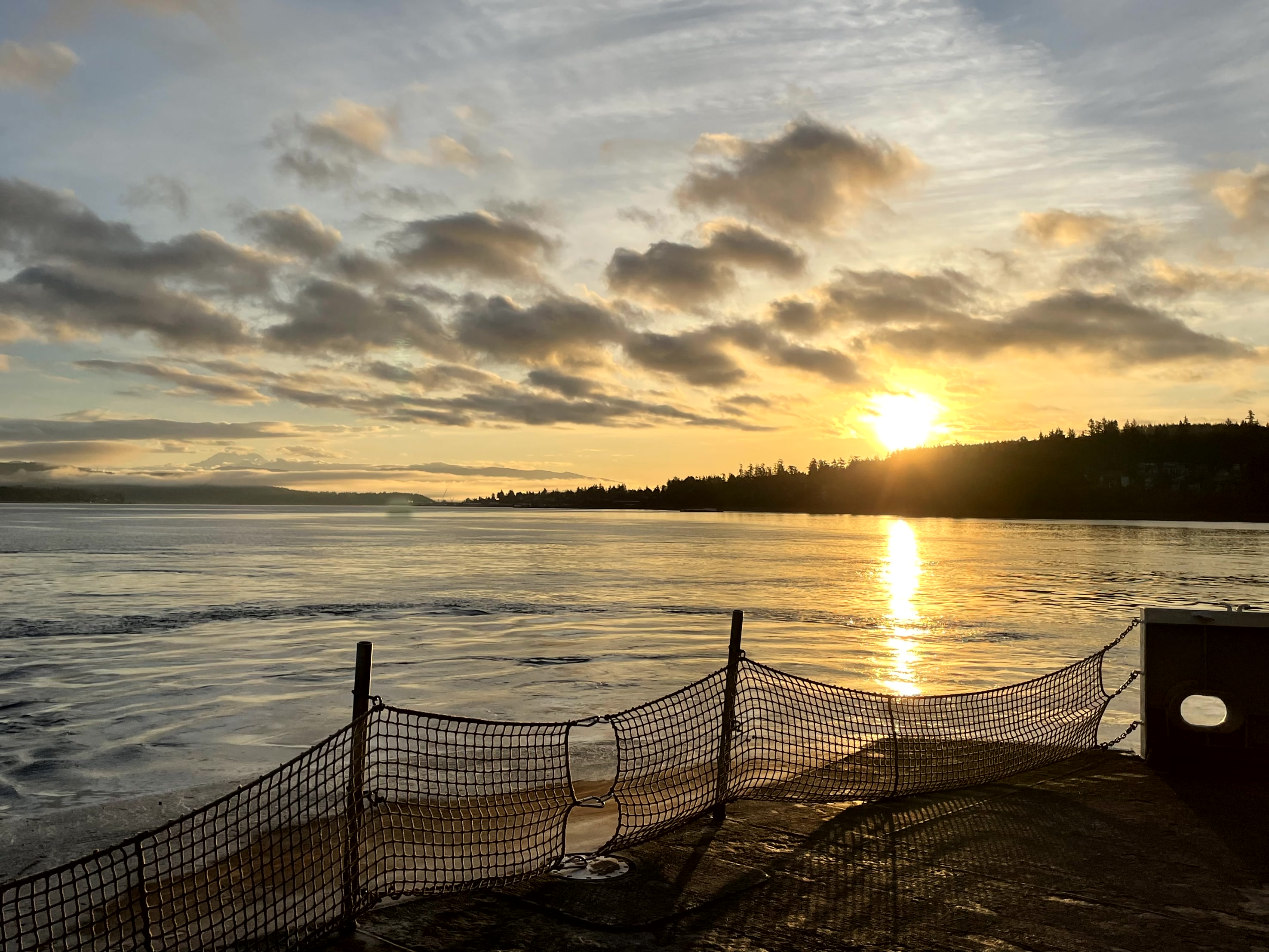
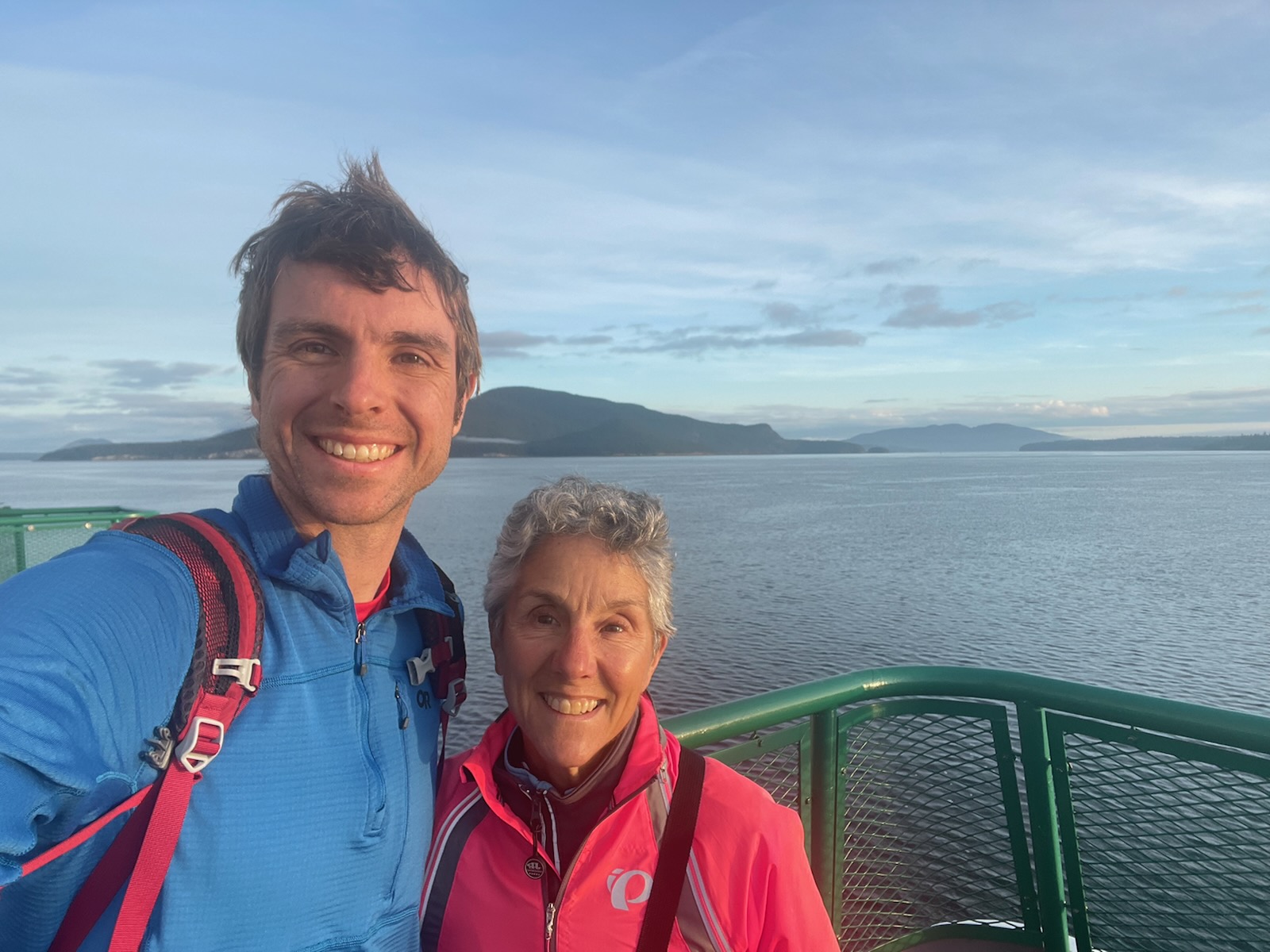
We easily made the next ferry and enjoyed the setting sun as we motored back toward home. Feeling the sun’s still-warm rays, it was easy to bask in the warm glow of another successful island cycling trip. We covered 36 miles, hit all the coasts and saw the island in both fog and sunshine. What’s more, I did it – my body held up, I felt great pedaling through the miles, and relished the whole adventure. Leaving cancer behind. And the mother/son moments were priceless.

Of course, now we’ve set our sights on San Juan Island…

Troll Hunt

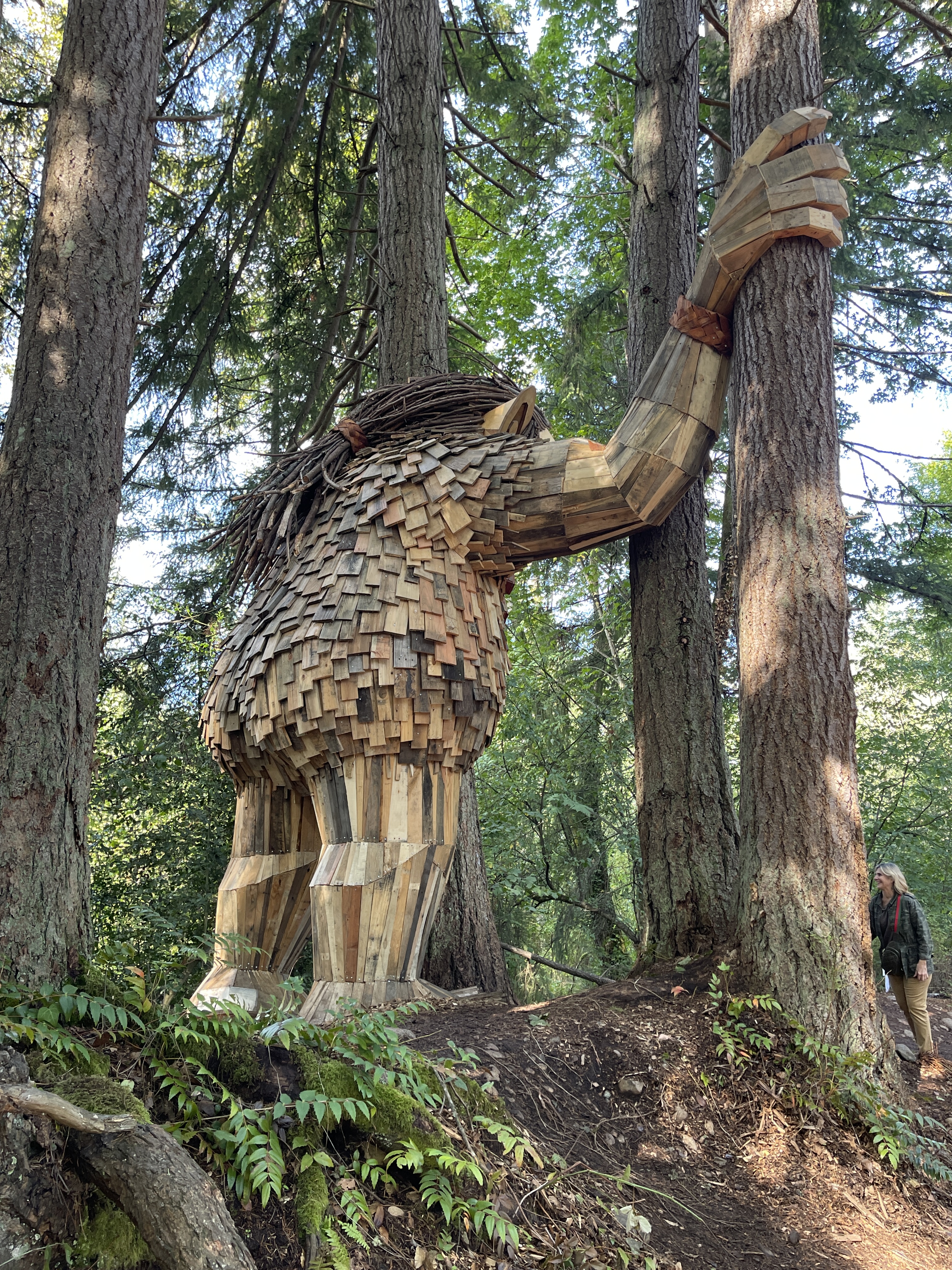
What’s better than getting out in nature and enjoying the woods? Finding a giant troll nestled among the trees with his massive wooden hands wrapped around two thick trunks. Jakob Two Trees, in fact!

Jakob happens to reside in the heart of Issaquah, where our son Erik lives. We decided to make an afternoon activity out of finding Jakob and one more of the five trolls who are recent inhabitants of the Seattle area. He wasn’t hard to find. Following a wheelchair-friendly path into the woods near the community center, the string of curious walkers were a clue. Families meandered into the woods, children skipped, trees towered overhead and the city environs fell away. When a line backed up in front of us, we knew we were close. The beautiful fall weekend afternoon drew onlookers of all ages, and it was no hardship to wait and watch as we inched our way forward.

Like everyone else, we had to have our photo taken with our new friend Jakob.

Jakob and his buddies are the handiwork of Thomas Dambo, a Danish artist and storyteller.  Since creating his first troll for a Danish cultural festival in 2014, Dambo has received requests for troll installations all over the world, now numbering over 120. Those in Seattle and one in Portland were just completed in September, sponsored by Scan Design Foundation, which aims to promote Danish-American relations.

But why trolls? Dambo cares deeply about nature and uses his trolls to draw people into the woods. He hopes to spark their curiosity about the outdoors and think about protecting it. Trolls also provide the perfect vehicle for his love of whimsy and paying tribute to the troll folklore that was a significant part of his youth. To that end, he publishes a Troll Map that provides only a rough guide to the location of his trolls – preserving the fun of hunting them down in the woods.

Photo opp achieved, Erik, Rich and I wandered around Jakob to take in the detail of this massive troll. As I walked his eyes seemed to follow, peering at me from the side. We were impressed with his grasp of the trees, and the tangles of hair assembled into a giant ponytail hanging down his back. He sports a colorful collection of birdhouses for a necklace, and I wondered if any birds had taken up residence.

Danbo creates the faces in his studio in Copenhagen, and sometimes the more detailed pieces like hands and feet. The remainder of the 15-20 foot trolls are assembled on-site by his crew of 10 plus a slew of local volunteers. Everything is made from recycled materials, scrap lumber or locally available items from nature, such as driftwood, fir branches, moss and shells. We could certainly see that in Jakob’s hair.

Totally impressed with Jakob, we eagerly drove to West Seattle for our next troll sighting. We knew only that it was in Lincoln Park, and began to walk its many trails without any further guidance. Naturally drawn to the beach, we followed the long path that paralleled the water and before long spotted a crowd holding smartphones in the air. We had discovered Bruun Idun.

Standing with her back to the woods, she looks out over the Sound while playing her flute, an elaborate instrument with its origins in a piece of driftwood, shells and other ocean detritus. She plays a song to the orcas.

I was getting a sense for the unique nature of each troll, each with a different story behind it.

The trolls will stay in place for 3 years, possibly extended to 15 or beyond. The two we visited were merely weeks old, and I wondered how they might weather over the years. Apparently that is of little concern to Dambo. He knows they will not last forever. He’s more interested in the smiles they evoke in the meantime. But they won’t be left for nature to reclaim. It is up to each host site to determine when to dismantle their troll and recycle the materials.

With just that little taste, I’m eager to seek out the remaining three trolls in Seattle. I know I’ll be back to visit Erik and Katie, so it’s entirely possible I may get to see them. Back home in Duluth, the nearest trolls are in the Upper Peninsula of Michigan and the environs of Chicago. But rumor has it that Dambo is looking at Rhode Island and Minnesota for upcoming US trolls. I can just see one living just across the street in the Lester woods! My troll hunt continues.

Orcas Island by Bicycle

“It’s not that hilly, Mom.” I should have known better. In all the years of bike touring I did with Rich, we learned to never trust a motorist to give us directions. “Just down the road” may be hours of cycling for us. They don’t feel a headwind, and hills just mean pressing the accelerator a bit harder.

Erik and I had both been to Orcas Island in the San Juan Islands before, but only by car. When I arrived in Seattle to visit him and Katie, he was keen for an adventure. “Let’s bike Orcas Island!” My memory included hills, but I willingly quashed the image.

That just left the weather. In typical Seattle fashion, there was plenty of rain in the forecast. Comparing different weather apps only proved it was a complete unknown, so we caved to our inner explorers and set our plan in motion. Rising at 4:30am to reach the ferry in time for a 7:30 crossing, we sped through the dark in eager anticipation. The sun was just clearing the trees as we boarded the ferry in Anacortes, which we took to be a good omen for the day ahead.

As if to reinforce my premonitions, the road rose steeply from the ferry landing. I had borrowed Katie’s bike, shoes, pedals and helmet for this outing. Normally not a big deal, but this was a road bike – drop handlebars and all, which I’d never ridden in my life. Struggling to clip into the unfamiliar pedals, find the gear shifters and figure out which was which, I floundered immediately and ground to a halt. Relieved that I didn’t fall, I walked the bike a short distance to the first flatish spot to begin again. I took off from there, and never looked back.
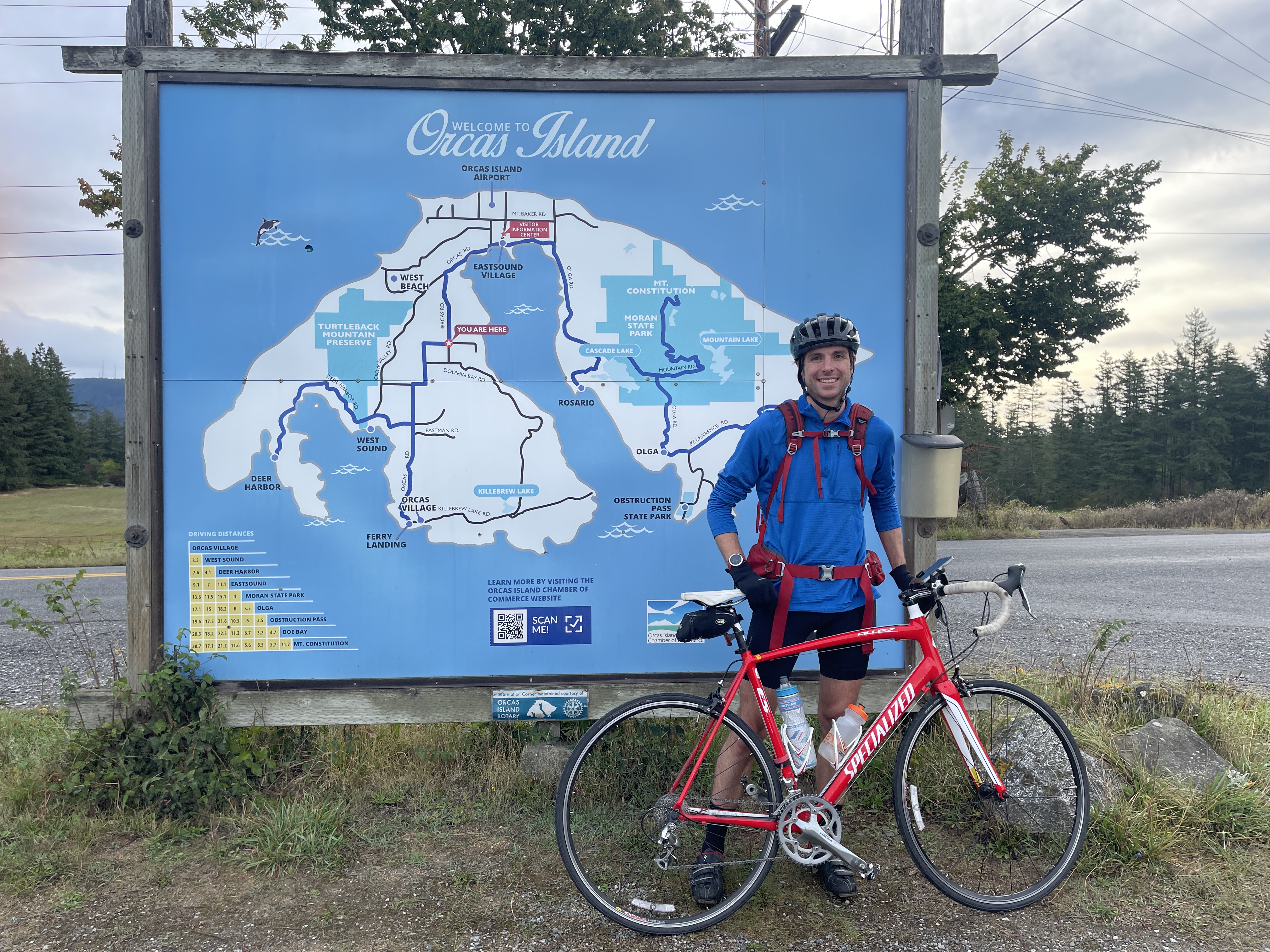
Our plan was to bike the island – all of it. We’d cover all the paved roads we could before the 5:15 return ferry. Our first priority was to bike out to the far end of the sound and down to the tip on the far side of the inverted U-shaped island. Full of ambition and energy we tackled the hilly terrain.

Away from town, the countryside was quiet and rural, varying from farms and pastureland to forested byways. Pausing briefly in Eastsound Village to take in the view, we pushed on to the opposite side, eager to get more miles under our belts.

At Obstruction Pass near the tip we took time to venture out the long pier, soaking up the calm surroundings and serene view. Little was stirring – some children in a kayak, a fisherman docking his boat. It felt far removed from the season of high tourism, reclaimed by the locals.

Retracing the road north, we ventured off to follow smaller roads to the east. With each turn we left behind more cars and population, eventually reaching a quiet harbor at Kangaroo Point. Breakfast was a distant memory so we dropped our bikes on the grass and perched on a huge tree stump to pull out our sandwiches. Time easily slipped away as we refueled and relished the sunshine and undisturbed view.

Determined to explore it all, on our way back to Eastsound we made a short detour to the top of the island to peer out toward the water on that side. Then a long-anticipated stop at Brown Bear Baking for lattes and a blueberry tart to energize us for our final leg.

With clouds gathering overhead, we forged on toward Deer Harbor on the west arm. Just as the raindrops began to fall, a large parking lot materialized and we quickly stopped to don our rain jackets. Undeterred, we pushed on, determined to complete our tour. The road followed the shoreline, both flattening out slightly and giving us wet views of West Sound and a marina populated with sailboats. When we reached the Deer Harbor Inn just short of town, we did a time check. “I’m not sure there’s a later ferry,” Erik admitted. Calling it good enough, we turned around and pushed our pedals back toward the ferry landing. Sailing down that final steep hill, we could see the ferry chugging up to the dock.

I can now say with confidence that Orcas Island is indeed VERY hilly. Each downhill came with the guarantee of an uphill to follow, and visa versa. But I wouldn’t have changed a thing. It was worth every ounce of effort to spend the day with Erik, to share the unrelenting ups and downs, to brave the not-so-bad rainfall, to sit side by side munching on sandwiches.

Now we’re eyeing the other islands…

Fuzzball Lives!

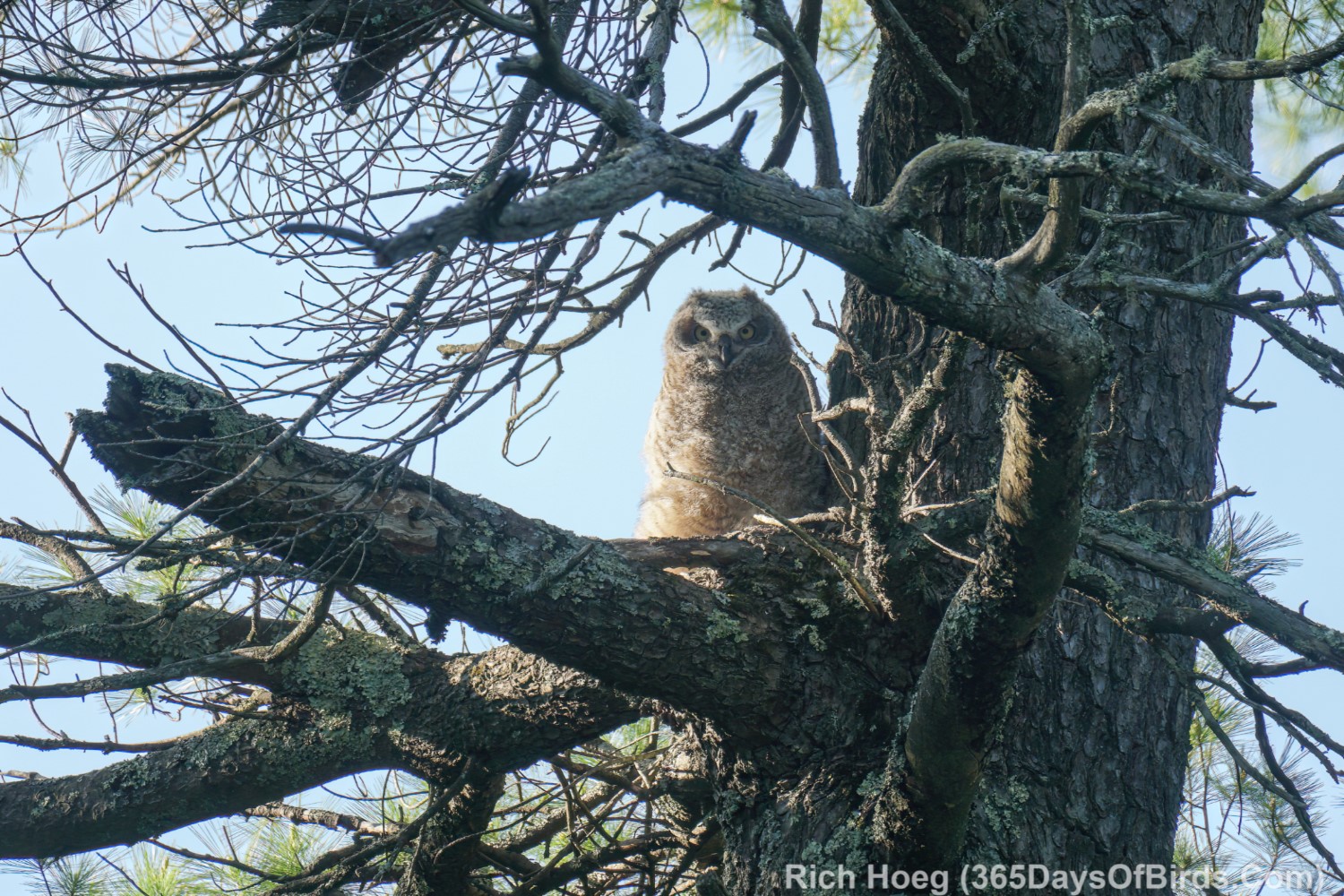
After mourning the demise of the baby owl, Rich was greatly surprised to spy Fuzzball high up in a tree! Having just left the nest with Mama Owl and the sibling, he knew it had to be Fuzzball. But how could that be?

Two weeks ago, we were so certain that this circle of fuzz and feathers was all that was left of Fuzzball after a fox got to him. But now it appears this picture tells a different story.

Rich figures that instead this must have been a meal delivered to Fuzzball, who then hopped down into the ravine for Amity Creek. He survived on his own – with help from Mom and Dad, no doubt – and recently made his way up into this tree where Rich spotted him. Clever Fuzzball!

Imagine the euphoria that blanketed the household when Rich returned with the news! Fuzzball reigns again, and Rich’s forays into the woods to check on the owl family have at least doubled since that day. Although he figures that Fuzzball used his talons to scale that first tree, he has since confirmed that both Fuzzball and his sibling “Junior” have fledged. He now finds them across the creek high up in trees they could reach only by flying.

These photos are from Rich’s reconnaissance.

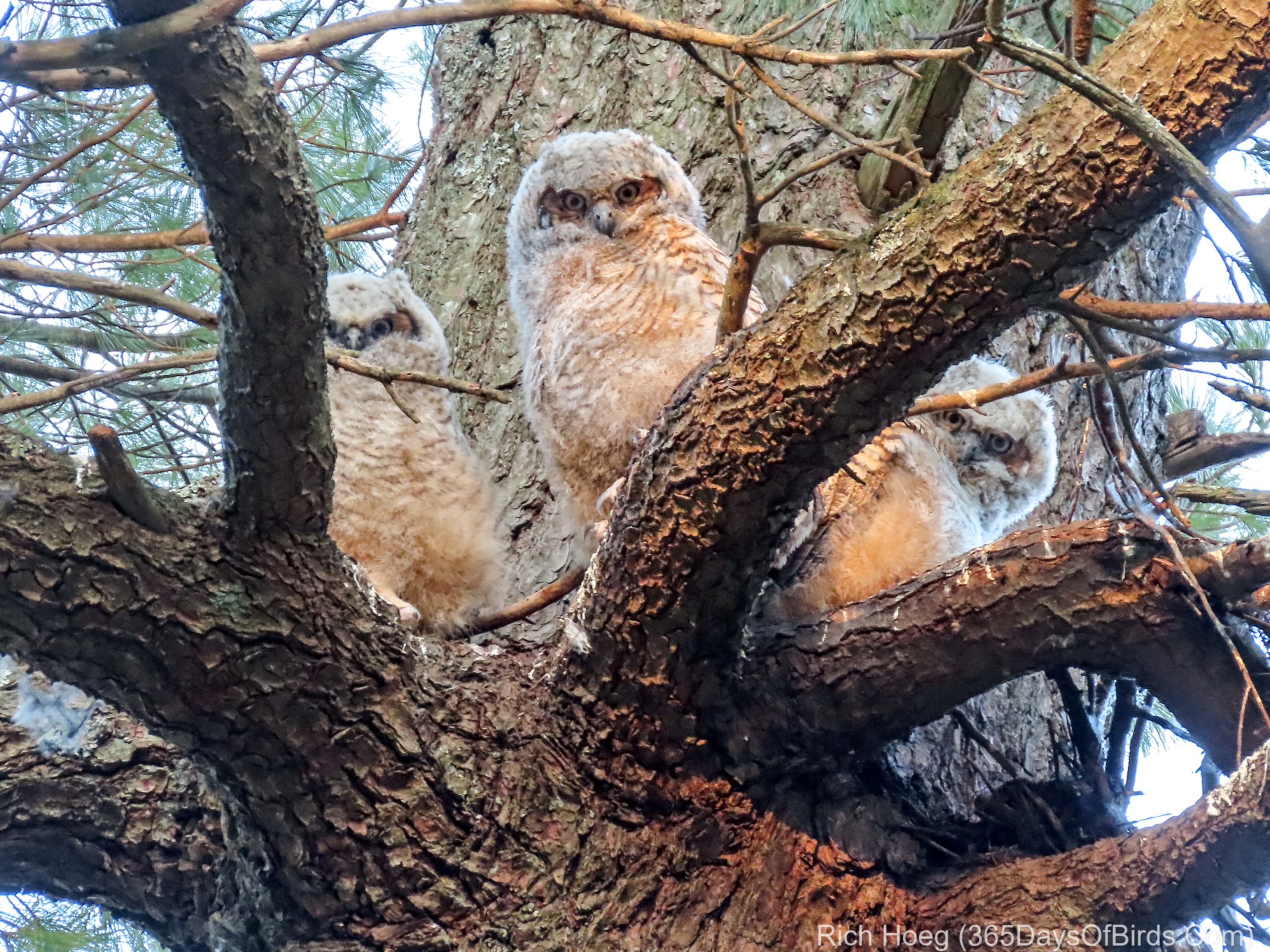
Mama owl and Junior in the nesting tree
Fuzzball in a white pine tree across the creek

It would appear that “the rescue” was a success after all. The dramatic turn of events put us on a roller coaster for a few weeks then a nosedive. But we’re thrilled with this happy ending. All because Fuzzball lives!

Fuzz and Feathers

That’s all that is left. Poor Fuzzball, he so wanted to be free. But it cost him his life.

Last evening there was a knock on the door. “Your owlet is on the ground, right near the trail.” Apparently Fuzzball just didn’t care for his chair nest anymore. He wanted out. Rich hurried over and sure enough Fuzzball was out exploring. He figured the safest thing to do was to find a protected area for Fuzzball to spend the night, and deposited him in a deep thicket.

At 5:15 this morning, Fuzzball was out and about once again. Rich found him near the trail, relieved to know he made it through the night but concerned for his safety. Returning just half an hour later, all he found was a ring of fuzz and feathers. Nature had taken its cruel course. Rich surmises that a fox found Fuzzball and after a brief struggle carted him off to his den to feed his own hungry family.

It was 11 days ago that Fuzzball first entered our lives. In that short time, he brought a lot of joy to the many people who followed his story – in Rich’s blog and mine, out in the woods, watching from the road, and hearing it from friends. Rich did all he could for the little fella, but just could not curb his natural tendencies. Fuzzball couldn’t fly yet, but he could scurry around on the ground. He wasn’t good at holding on to branches yet, but he could scratch and bite whenever Rich re-rescued him. He was a fighter, and we hoped he would make it. But it was clear Rich could no longer protect the impetuous owlet who longed to roam. Rich did all he could, and we agree that helping Fuzzball survive in his home habitat was the right thing to do. Rich would do it all over again, despite the hole in his heart right now.

It’s worth reading Rich’s final blog post about Fuzzball, as he included many photos and videos he was unwilling to share before in order to protect Fuzzball from too much human exposure.

This is one of my favorite photos from the whole journey. It was nice knowing you, Fuzzball. We will all remember you fondly.

Fostering Fuzzball

It’s not easy being a foster parent. Especially to an owlet.

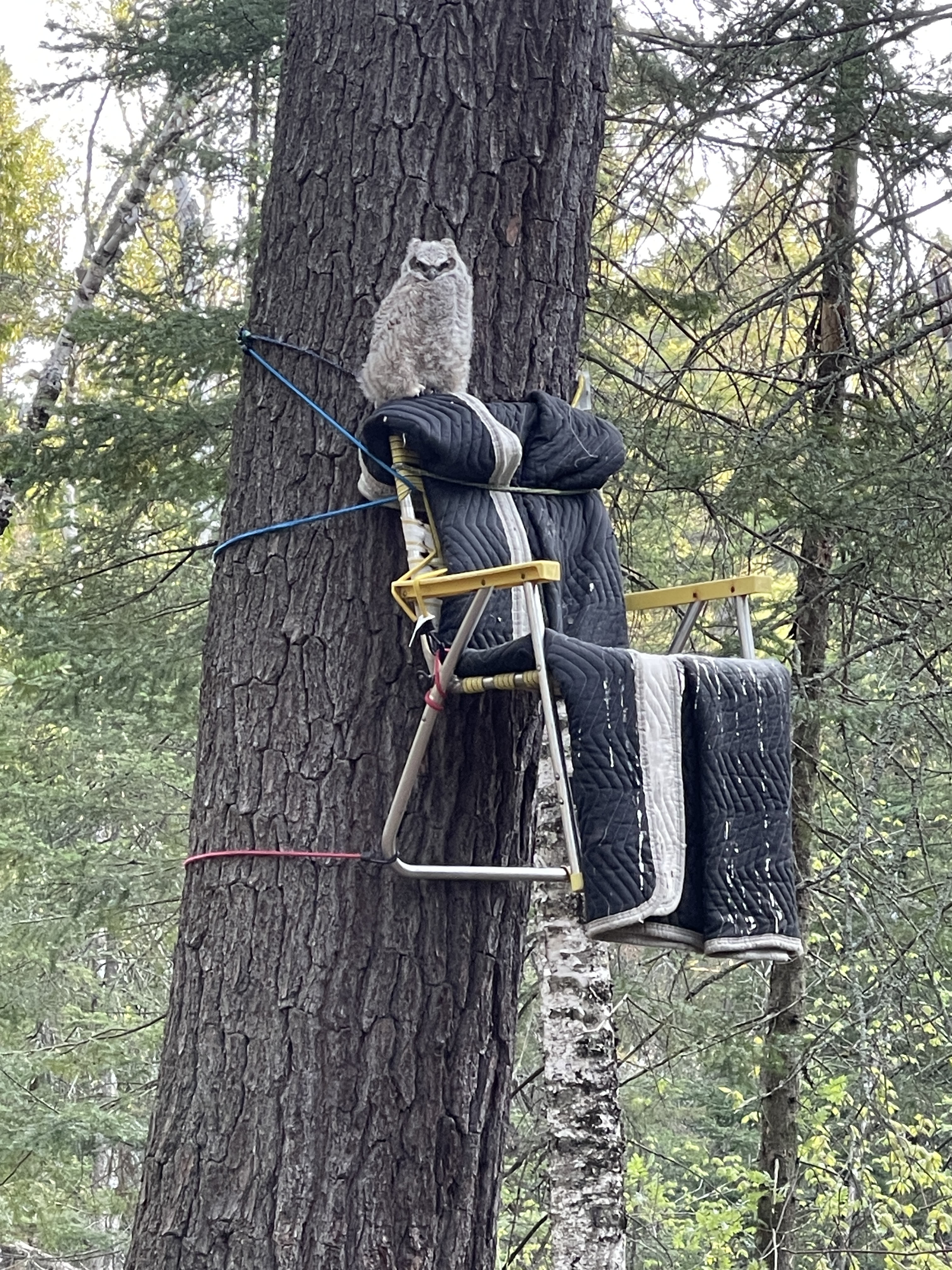
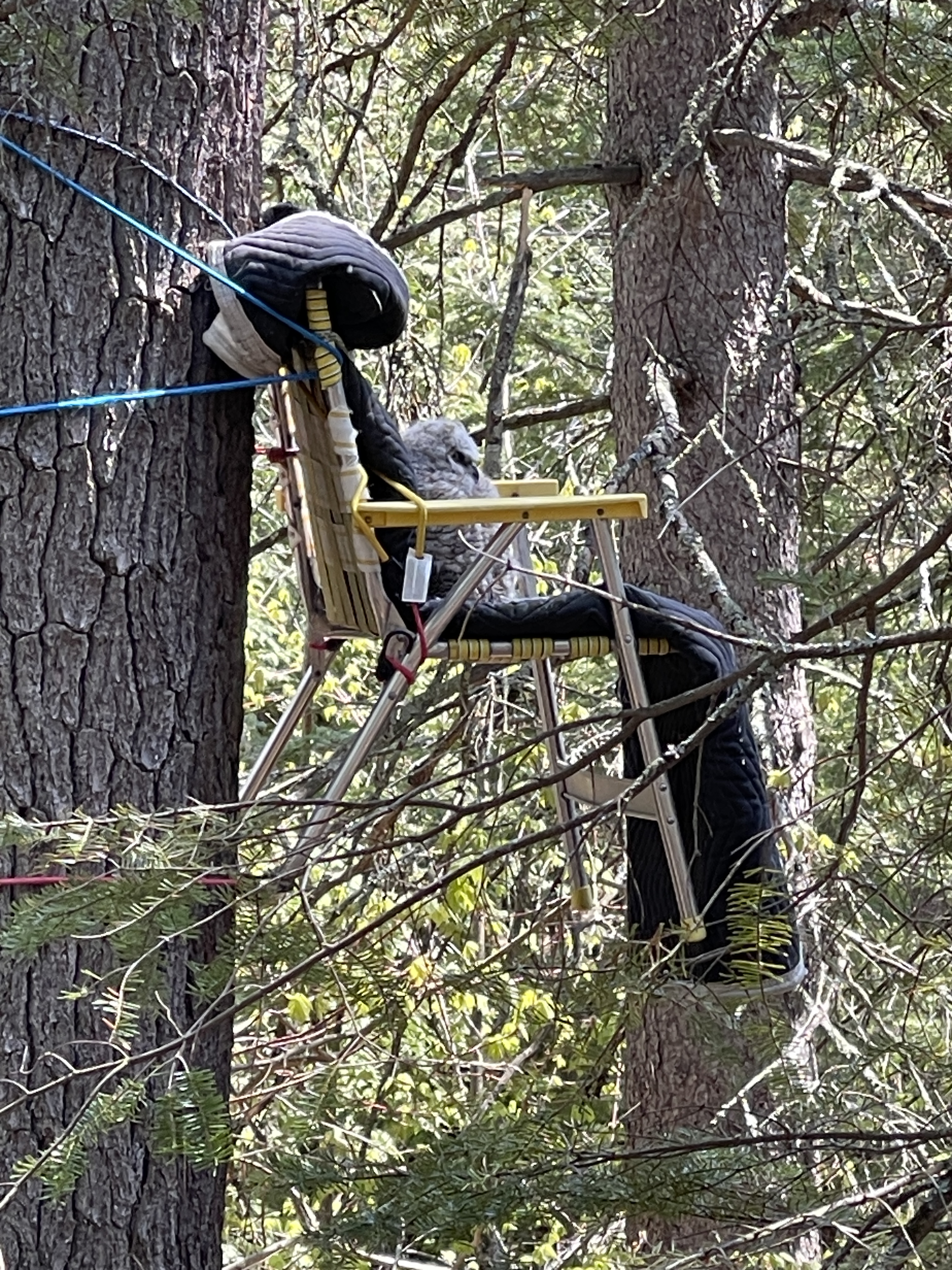
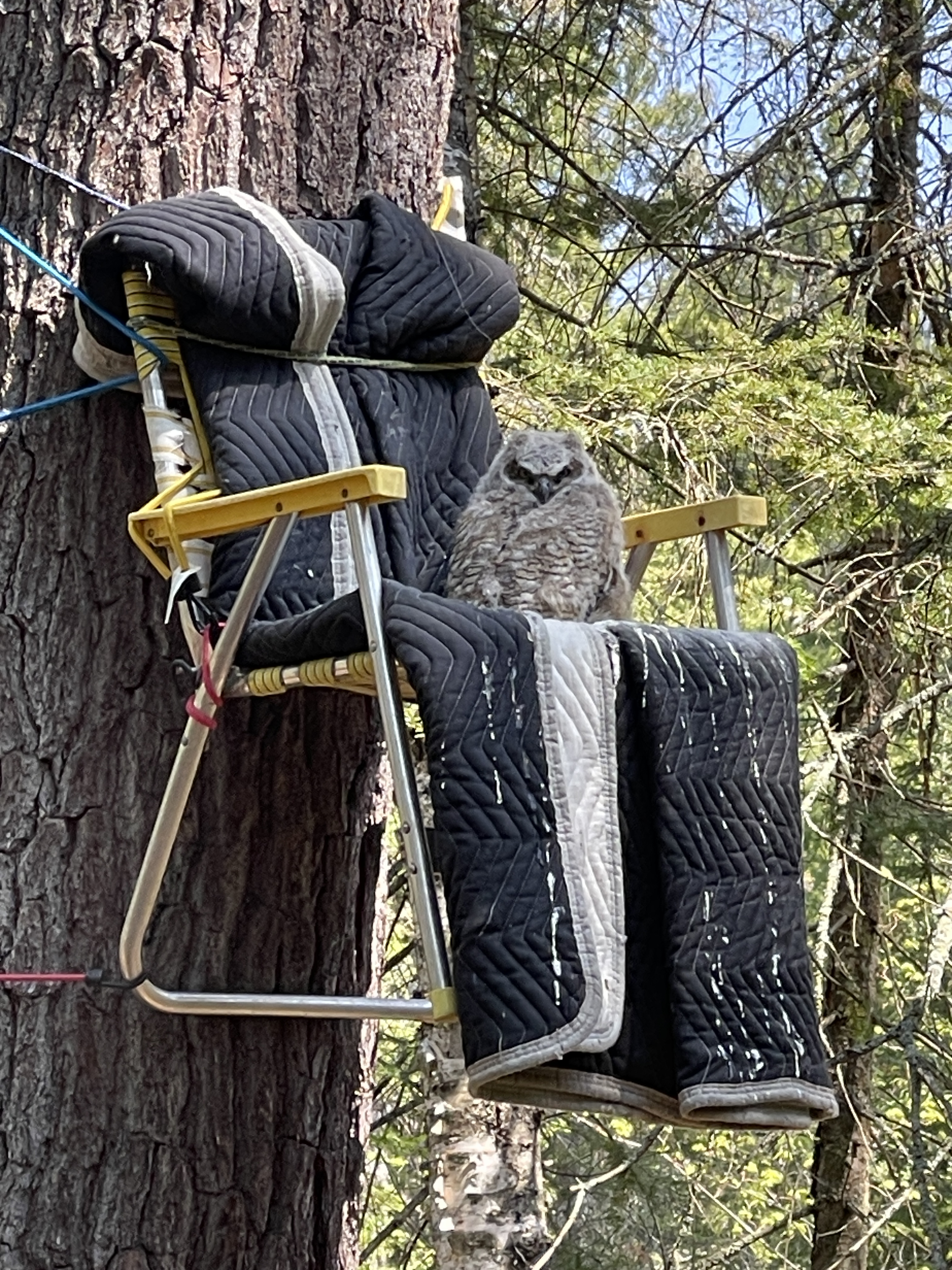
Fuzzball seems to have adapted to his new nest quite well. Rich calls it Lawn Chair Nest 2.0, and amazingly it has remained stable on its perch high in the tree. Fuzzball appears content to sleep on the seat by day and host Mom at night when she brings him treats to eat. Not much has changed since Fuzzball’s Rescue, but that is good news. The more time that passes, the closer Fuzzball comes to getting his flight feathers. We harbor hopes that one day he will be strong enough to fly up to his real nest. Until then, we wait and watch. Becoming complacent in our foster parenting.

This morning that changed when Rich returned from his visit with news. “When I got to Fuzzball’s nest, he wasn’t there!”

What?

“The seat was empty. But I looked up, and there he was, standing on the back of the chair!”

It would appear that Fuzzball was ready to try branching. Lacking tree limbs to walk on, he found the next closest thing. This I had to see. Sure enough, there he was, back against the tree, stretched up to his full height. Suddenly he looked really BIG! Even though the sun was already climbing in the sky, he was wide awake and turned to watch me as I approached.

Fuzzball seemed quite proud of his accomplishment, and I have to admit I was impressed. Something like parental pride blossomed as I left him and headed out for my run.

When I returned, a third ladder had joined the collection down by our garage. There was only one explanation – Fuzzball. Rich wasn’t home, and curiosity ate away at my psyche. I had to check on him.

Approaching the nest, Fuzzball looked at me from the seat of chair nest. I silently congratulated him on safely making it back down to his resting spot. I moved around to get a better look. All looked well.

But that was not the whole story.

“I found Fuzzball on the ground again this morning,” Rich reported. Apparently he wasn’t so savvy about getting down from his perch after all. But it didn’t end there.

Rich filled me in. Fuzzball fell on his own the first time, but he plunged two more times – with help. Rich had decided Fuzzball needed an opportunity to try real branching. So he carried him up to a branch and carefully set him down on the limb.

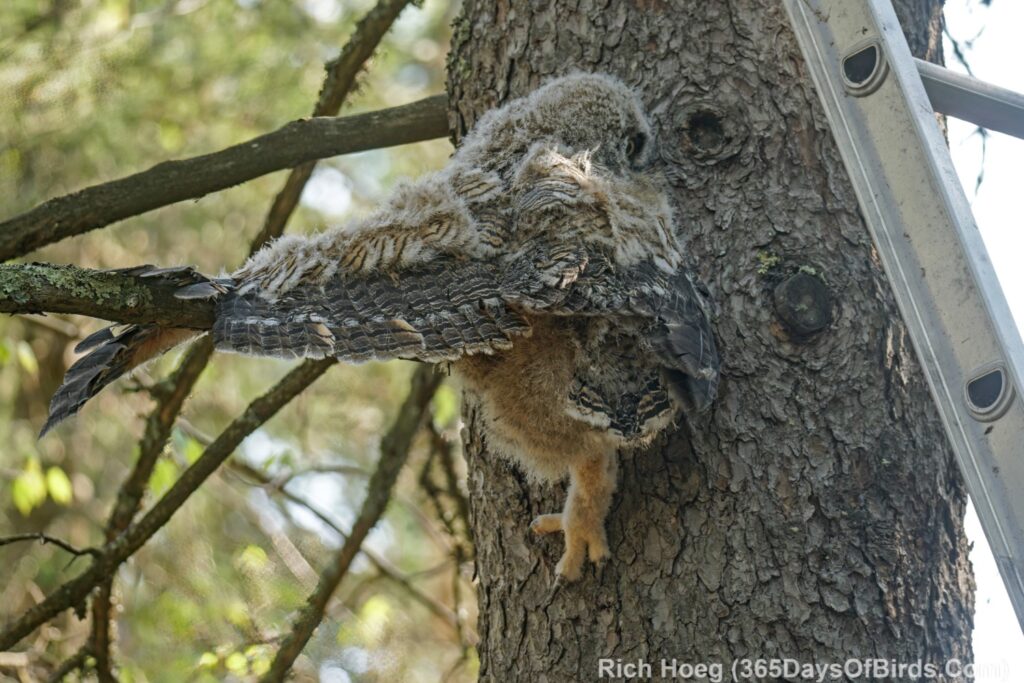
Fuzzball was unable to hang on with his toenails, had bad balance, or just lacked Mom’s training in how to navigate in trees. He tilted, scrambled, spread his wings then plummeted to the ground. Rich tried again. Fuzzball suffered a similar fate.

Rich just happened to capture one of the falls on video. (Note, this is a private video that Rich will delete in a few days, to prevent it from going viral and exposing the owlet.) Click here to view the action. Apart from Fuzzball’s unfortunate tumbles, what I found most interesting and reassuring was seeing the growing feathers on Fuzzball’s wings.

Three strikes and out. Rich conceded the failed experiment and returned Fuzzball to chair nest, where I found him, unaware of his recent drama.

Fuzzball must have been relieved to be back on a stable platform. It was bad enough causing his own fall. Now he has to worry about saviors who can be a threat!

We foster parents don’t always get things right. But our hearts are in the right place. Hang in there, Fuzzball!

Rescuing Fuzzball

He’s known as The Owl Guy.

The name originated when my husband, Rich, was in the hospital for open heart surgery. He was relegated to a hospital bed for nearly two weeks, and in that time numerous staff members came and went, attending to his needs. Rich was always polite, thanked them profusely and inevitably talked about owls. In particular “his owls.” Soon hospital folks would enter his room and say, “Oh, you’re the Owl Guy!”

For five years, Rich has been watching the same Great Horned Owl couple. Starting in February he stalks the snowy woods near our house in the dark, listening for their hoots, tracking them down until he finds their nest, which often moves from year to year. Once spotted, he haunts the site, watching and photographing the miracle of life. From eggs in the nest under Mama Owl to fully grown and forced out of the territory in the fall, he chronicles the lives of the owlets. From fuzzballs to independent owls. They have become “his owls.”

Rich’s owls first gained fame during the pandemic. Isolated by Covid, Rich spent more hours in the woods than ever, and the owls chose to nest in a spot with a perfect vantage point for photography. There were three owlets that year and Rich blogged about them almost daily, posting pictures of their development and progress. His readership boomed. Others, similarly isolated, followed the owlets – a cute and endearing diversion provided by nature during that period of seclusion. Over time, Rich created a children’s book with his best photographs of the beloved owlets and their journey to adulthood.

This year, there are two owlets. Due to the long, harsh winter Mama laid her eggs much later than usual, and the first fluffball did not appear until well into May, followed by a sibling a week later. Rich was elated, once again back on owlet watch. And then the unthinkable happened.

Fuzzball fell out of the nest.

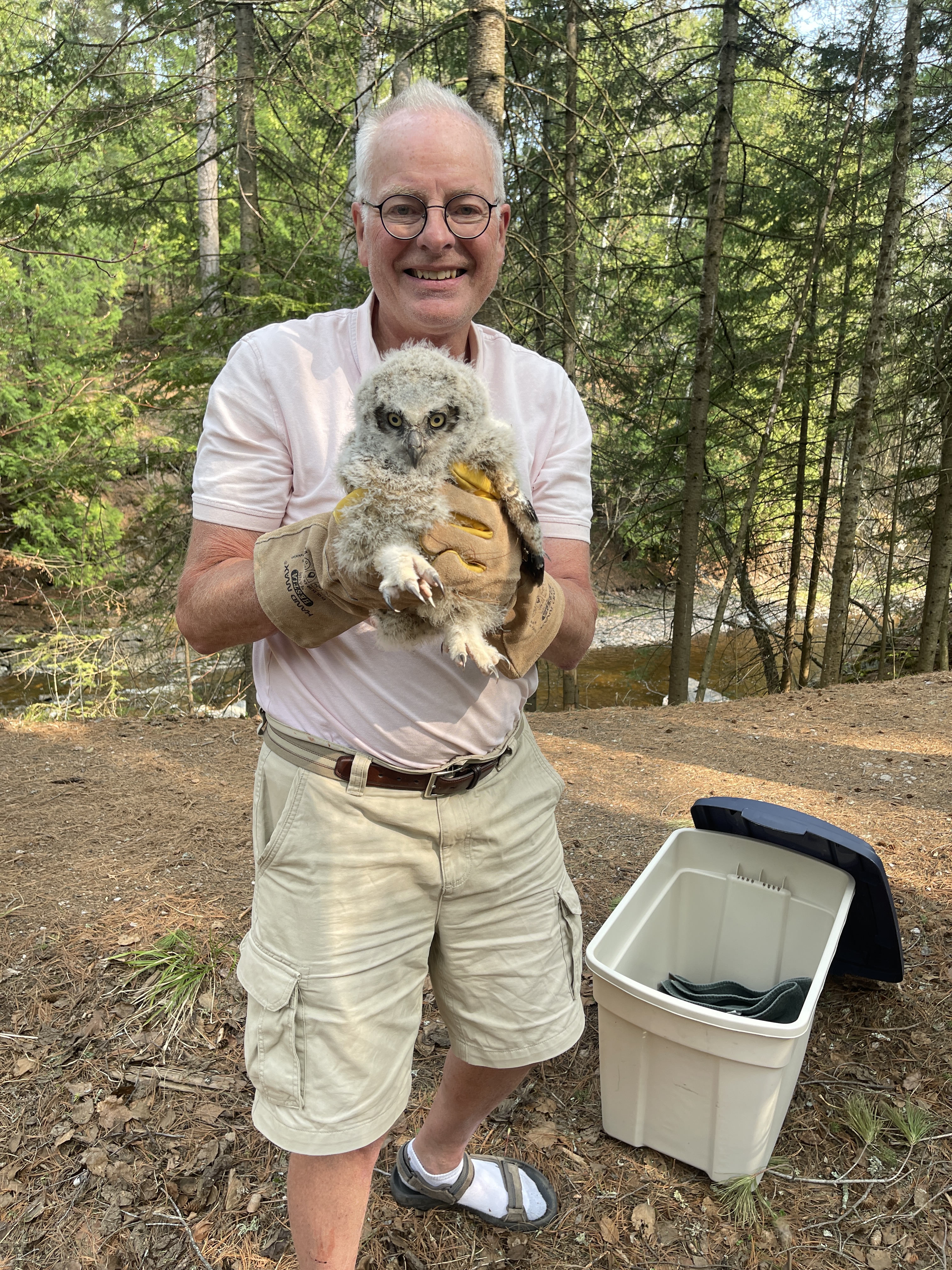
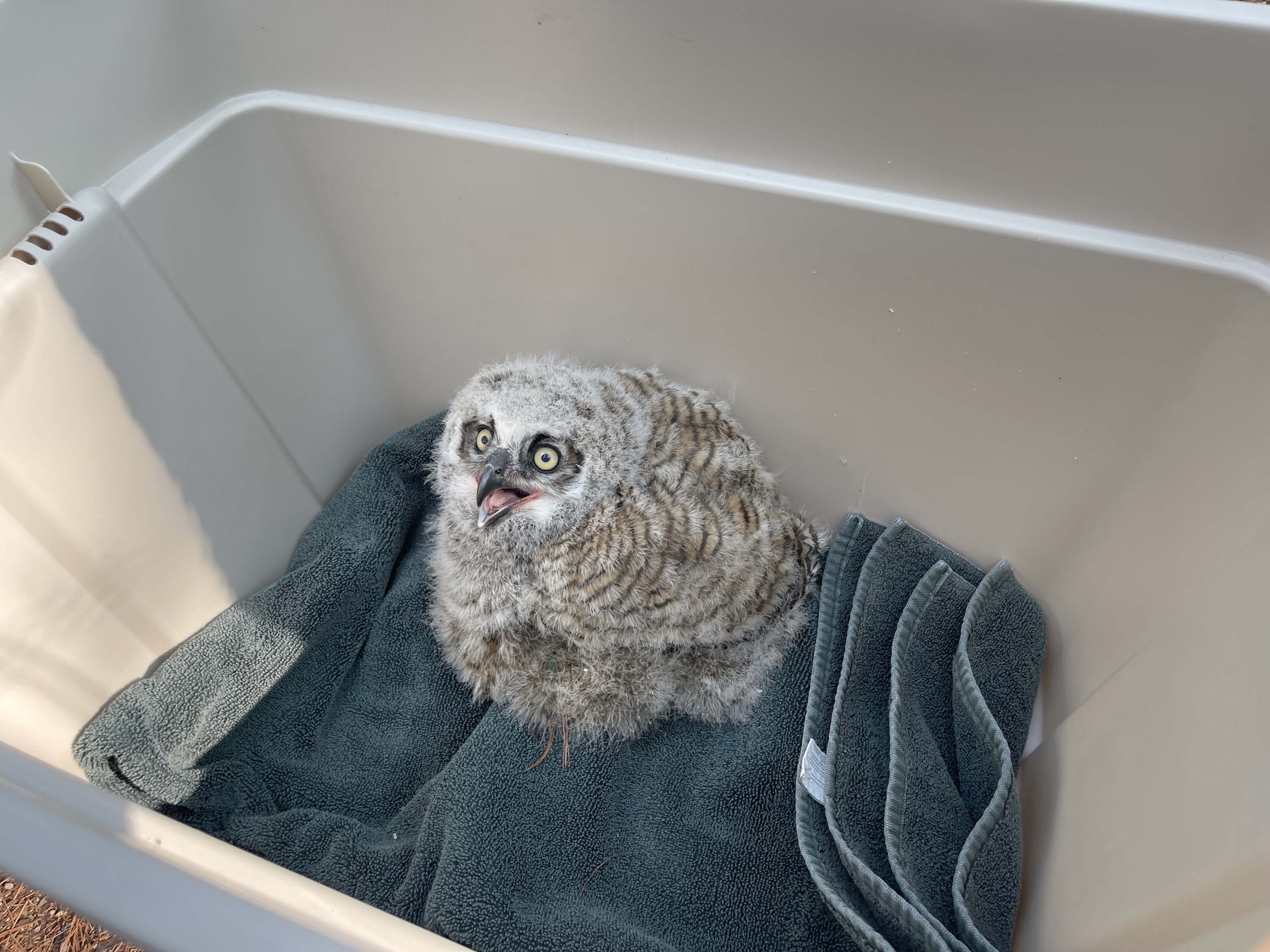
Rich happened to be near the nest with two trusted photography buddies late one afternoon last week when one of them spotted Fuzzball huddled in a depression, 80 feet below the nest. Estimating the baby bird to be about four weeks old, Rich noted that it did not yet have any flight feathers. It had not even started “branching” yet (walking out on branches near the nest). With the nest at an unreachable height, the poor owlet had no means of survival. Rich donned his falcon gloves (he’s rescued owls before) and laid the frightened but seemingly unharmed bird in a towel-lined tub.

Rich contacted Wildwoods, the local animal rehabilitation center, but they were already closed for the day. As we had dinner with Fuzzball resting nearby, Rich’s brain was churning. Surely the bird would be better off near Mom and Dad than doomed to life in captivity? Was there a way he could create a new nest for Fuzzball, where he could be watched, protected and fed by his parents? Abandoning the unwashed dishes, Rich sprang into action.

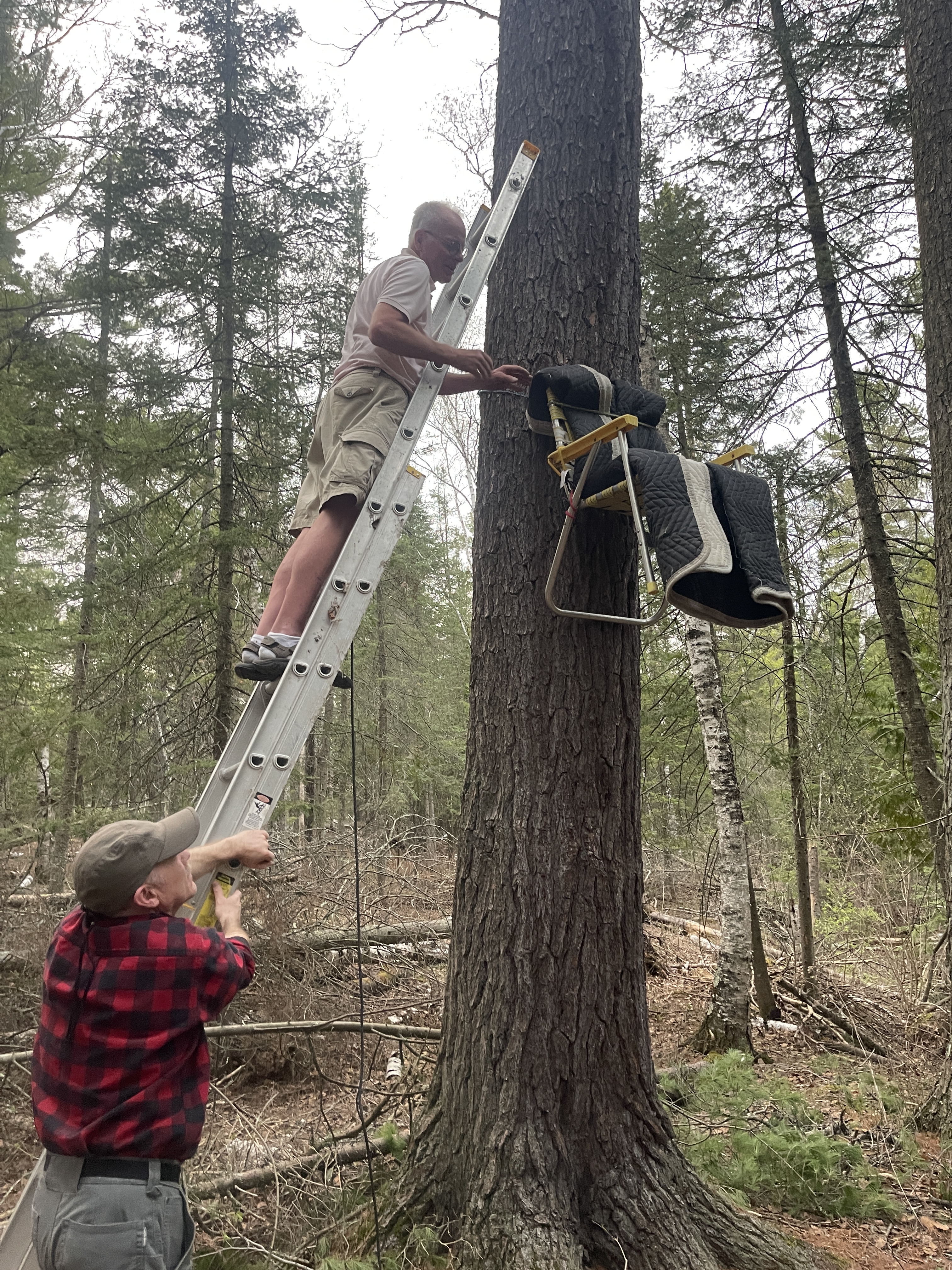
I had no idea that a lawn chair could simulate a nest. But apparently Rich did. Covering it with a packing blanket for cushioning and to prevent the bird’s talons from catching in the mesh, he finished it off with bungee cords to hold it all in place. Next he hauled our longest ladder into the woods, and with the help of a family hiking past, he hauled the “nest” as high as he could and secured it with bungees stretching around the tree.

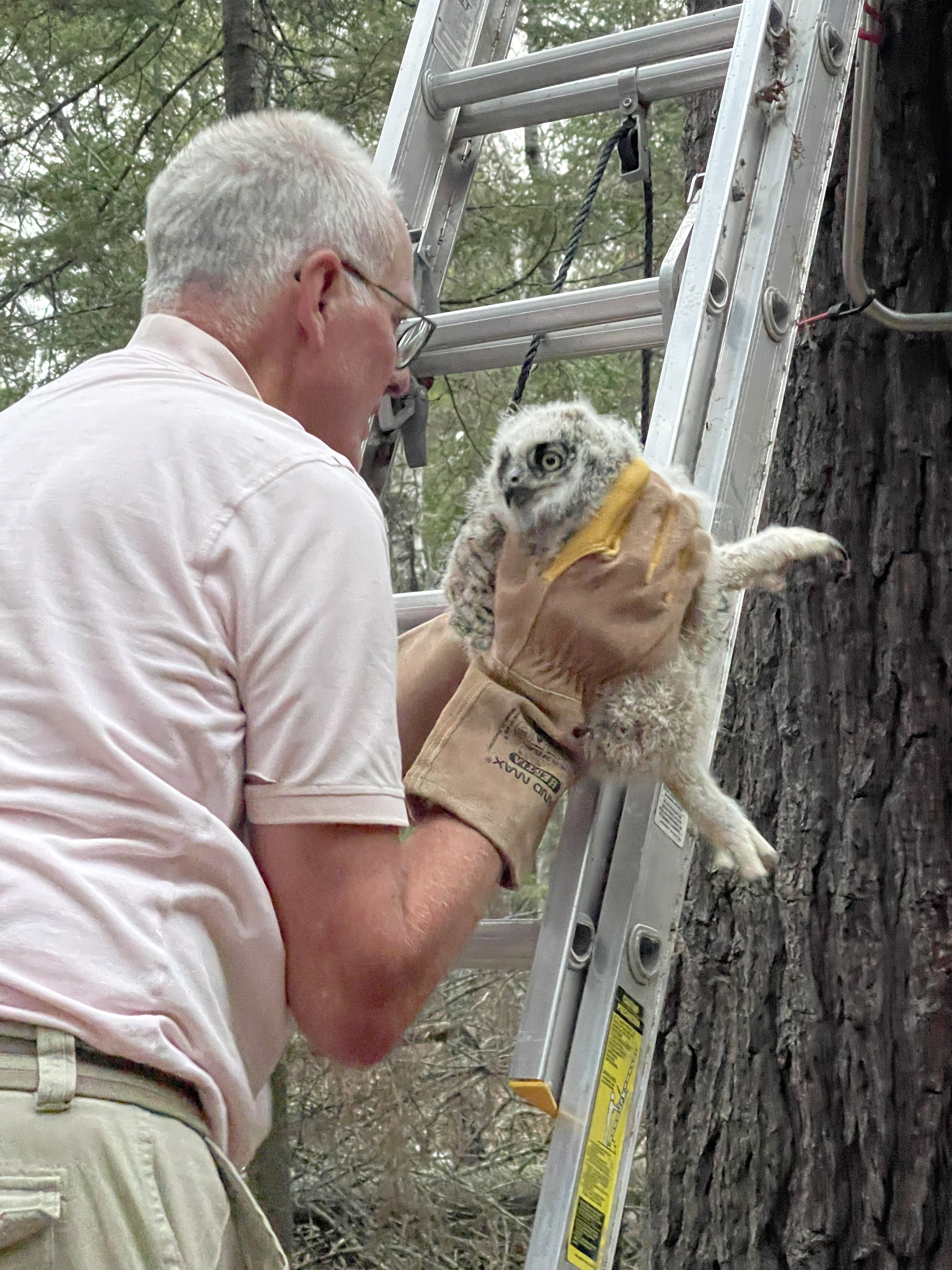
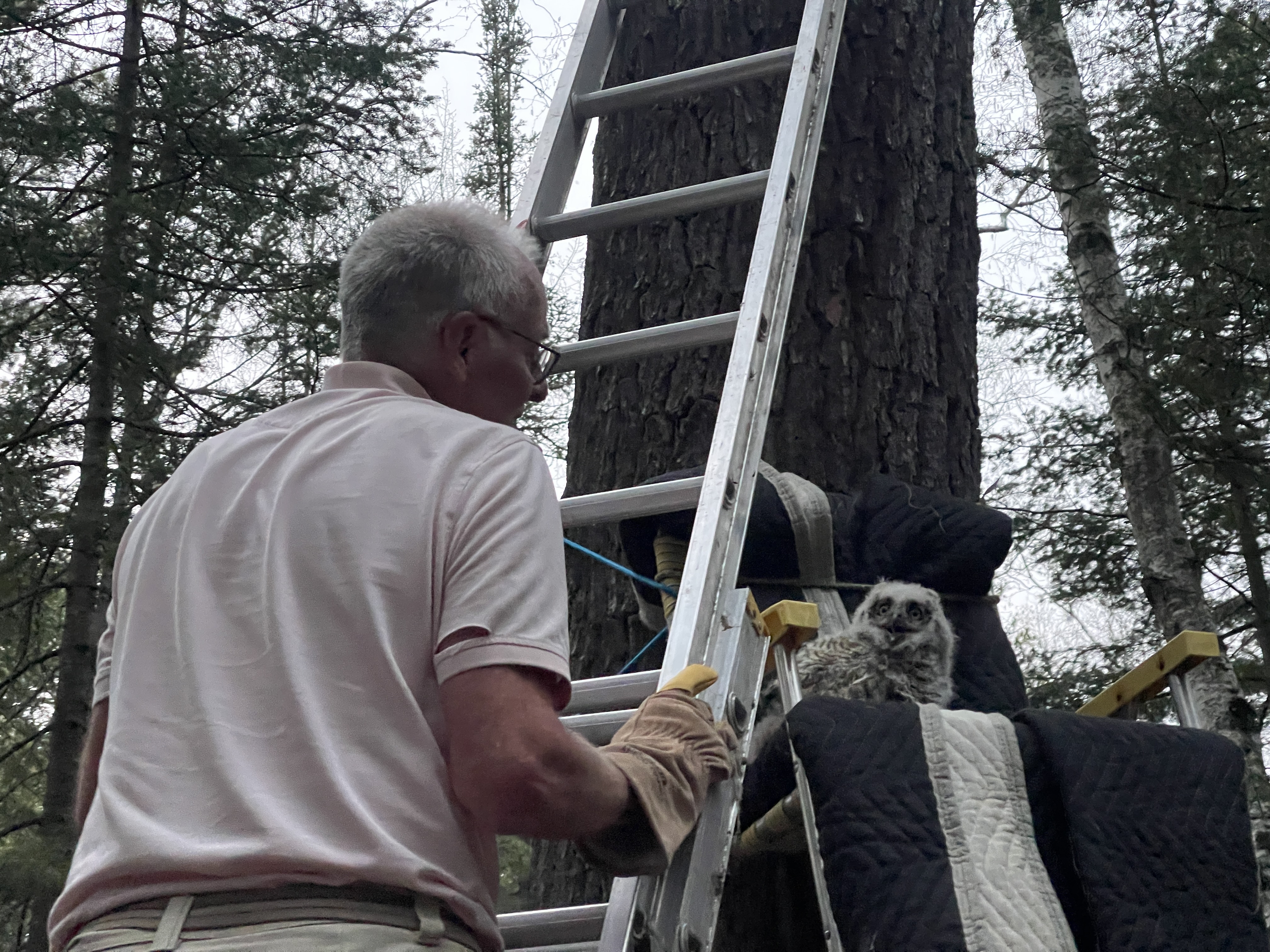
Getting the bird up into the nest was a tricky climb, but at last Fuzzball was installed in his new home.

We both heaved a sigh of relief with Fuzzball off the ground and in sight of his real nest. The question was whether Mom and Dad would find him and take care of him? Sleep was elusive that night.

Morning brought good news. Fuzzball was alert and active – he had survived the night! Rich talked to Wildwoods and convinced them that the owlet was better off in his new nest, and promptly secured the site with Caution tape and a warning sign to leave the little guy alone, and NOT post on social media. Humans were as much a threat to Fuzzball as his natural predators.

While pleased with the decision to leave Fuzzball in the woods, I also knew it would enhance our home life. Not only are they Rich’s owls, they are Rich’s owlets. My only role may have been iPhone photographer, but I couldn’t help but feel invested in these birds. Rich’s wellbeing and mine was secured as long as this experiment went well.

A few days later, Rich installed his trail-cam opposite Fuzzball. He was richly rewarded when he caught a nighttime feeding on video! Fuzzball sat upright, seemingly looking up in the direction of home. Soon Mom flew onto the chair seat alongside Fuzzball and immediately began tearing up bits of food which he rapidly devoured. It was working!

Rich still lives day by day, checking on Fuzzball morning, noon and evening, and spying on him with the webcam at night. I get detailed reports. Fuzzball’s rescue is our newest entertainment.

Costa Rican Adventures

“There’s just so much to see!” Jon had been researching for weeks, and compiled a bountiful list of hikes and options for day excursions during our stay in Costa Rica. Little did I know we had invited a tour guide as well as friends on our trip. I was only too happy to indulge his wanderlust and inability to sit still. Something about that resonated with me! While Rich indulged his birding options, Jon, Beth and I explored the countryside.

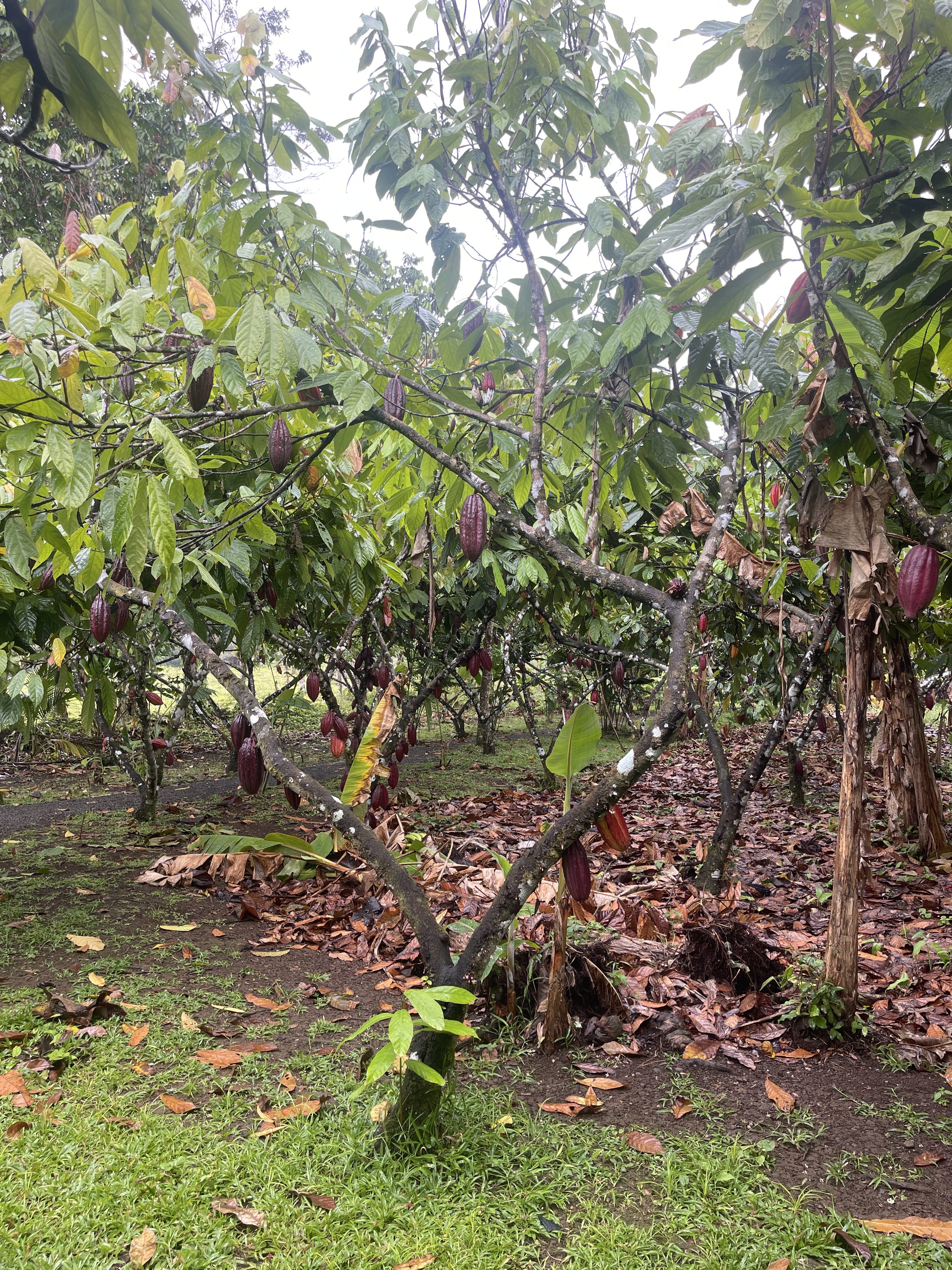
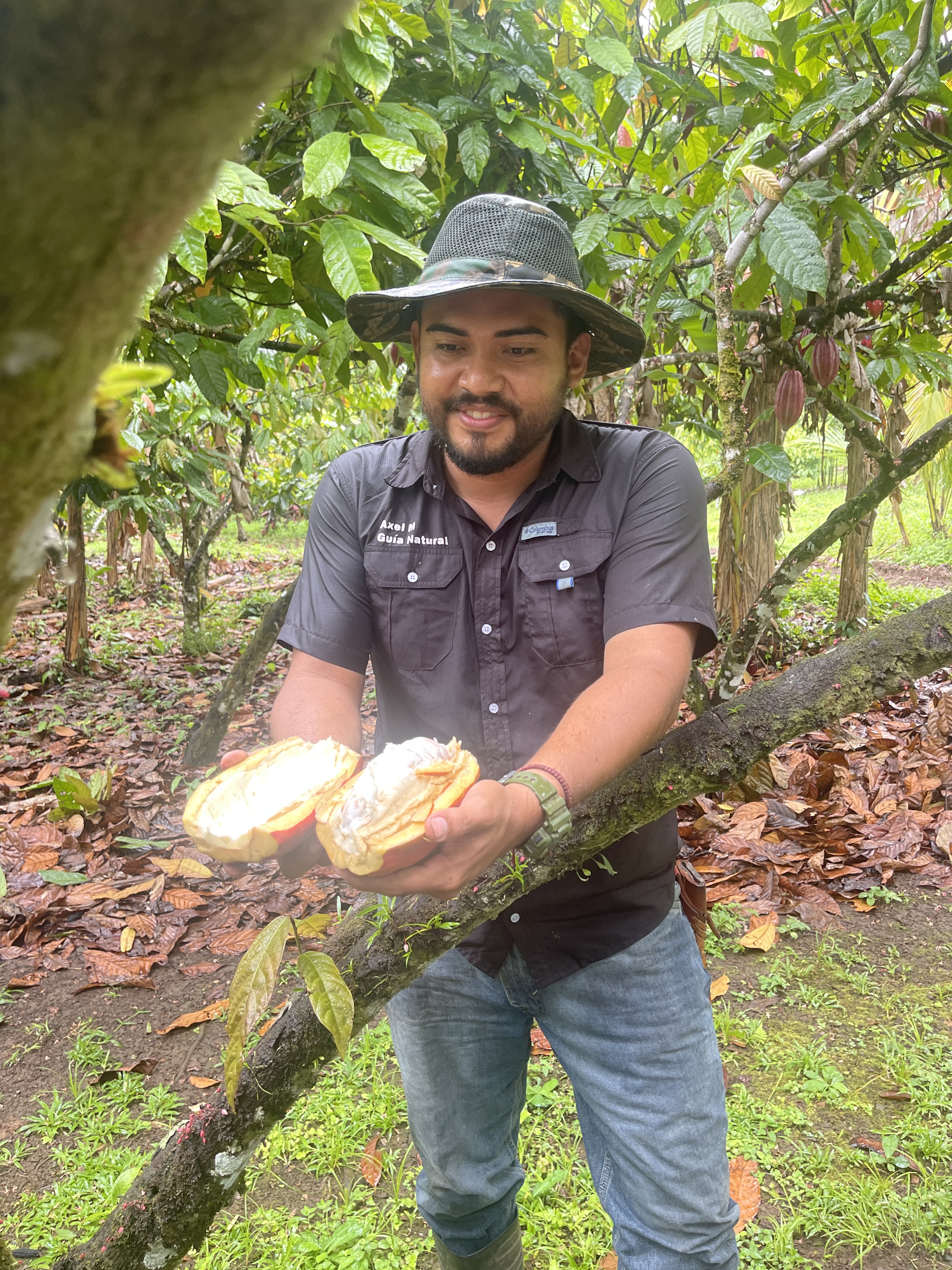
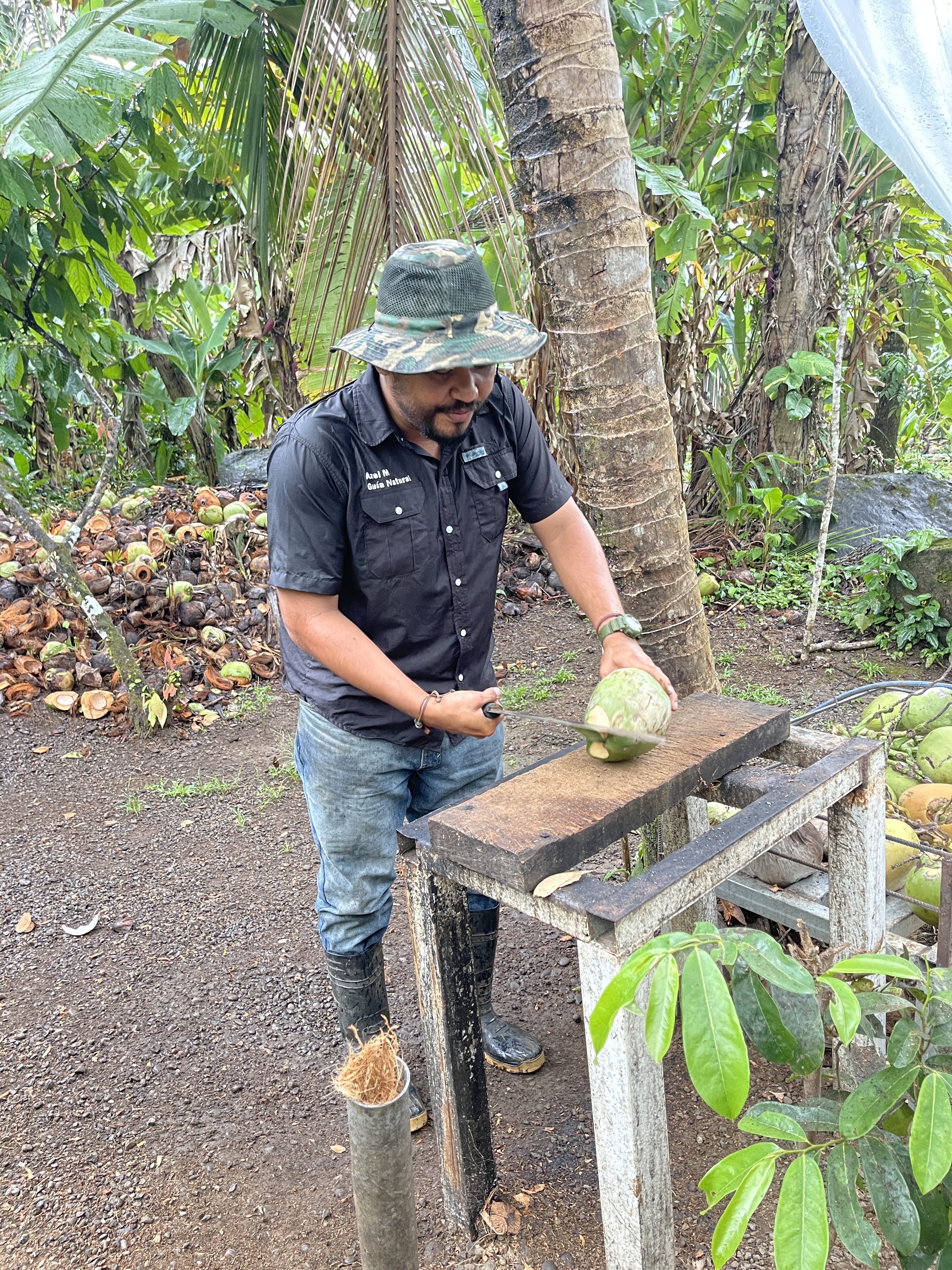
Jon had his heart set on visiting a chocolate farm, so we detoured en route to La Carolina Lodge to find the Tree Chocolate Tour. We were met by Axel and joined by one family for a very personalized tour of the farm. He introduced us to far more than the cacao trees, the grafting process and nature of hand harvesting required at just the right time. Axel cut up a ripe coconut for us so we could drink the milk and sample the fresh flesh inside. We tasted peppercorns right off the vine (hot!) and learned about the tropical plants throughout the grounds.

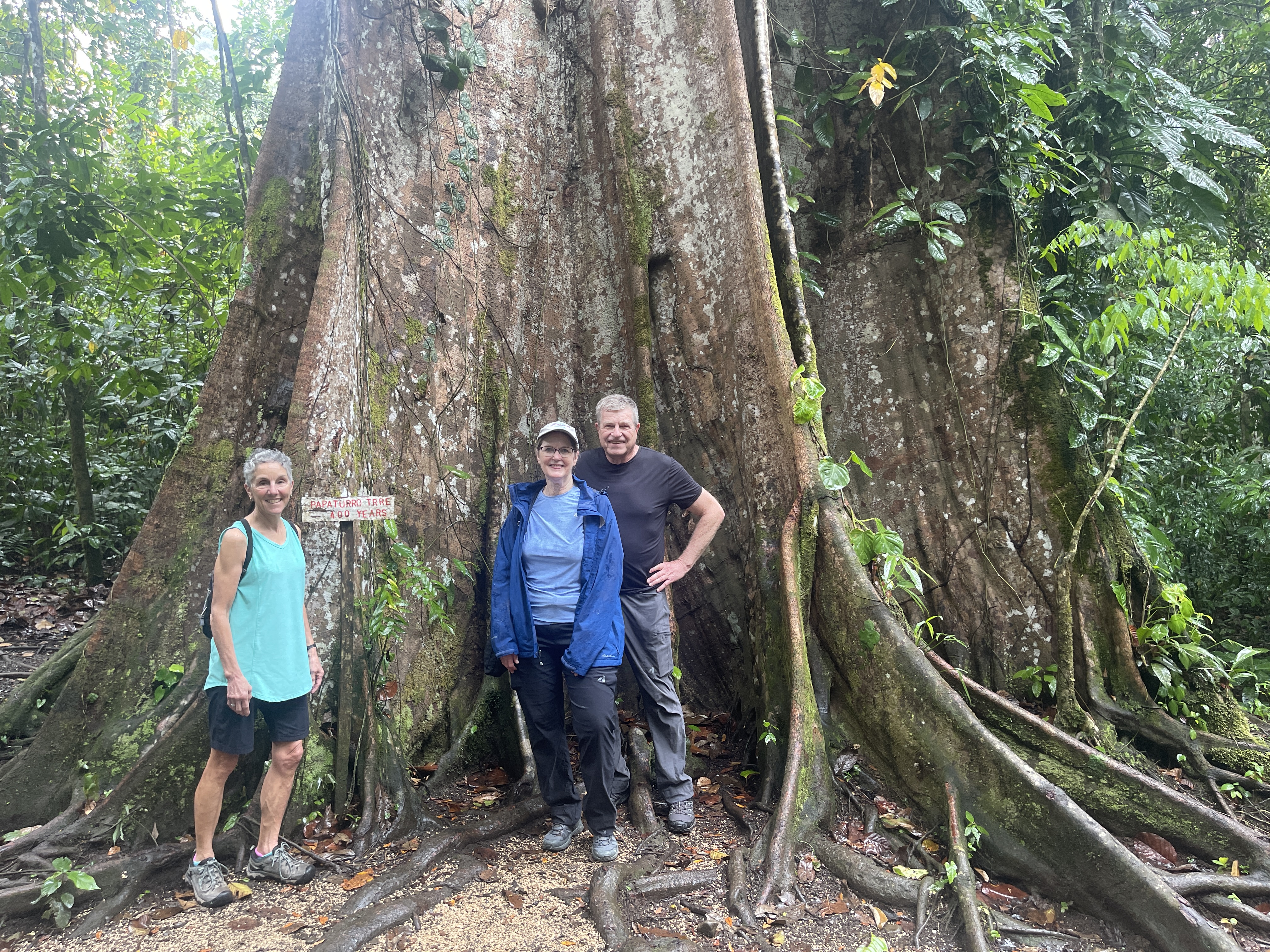
Down by the river we were dwarfed by trees hundreds of years old, their trunks the size of small cottages. Rain poured down on us and eventually penetrated the thick canopy, but we assured Axel we didn’t care. We were in the rainforest, after all. Getting wet when it’s 88-degrees and humid isn’t so bad.

Returning to the farm center, Axel’s enthusiasm and pride in the operation swelled as he led us through the steps to process the cacao into paste, powder and liquor, each piece of vintage machinery operated by hand. We left with ample purchases of hand-crafted dark chocolate and a greater appreciation for its origins.

Rio Celeste Waterfall was next on Jon’s itinerary. The touristy trailhead and rapidly filling parking lot at Tenorio Volcano National Park immediately alerted us to the popularity of this hike. It wasn’t going to be a secluded trek, but on the plus side the trail was easy to traverse and impossible to make a wrong turn. The density of the tropical trees and plants provided welcome shade and kept us constantly intrigued with the enormous leaves and colorful flowers.

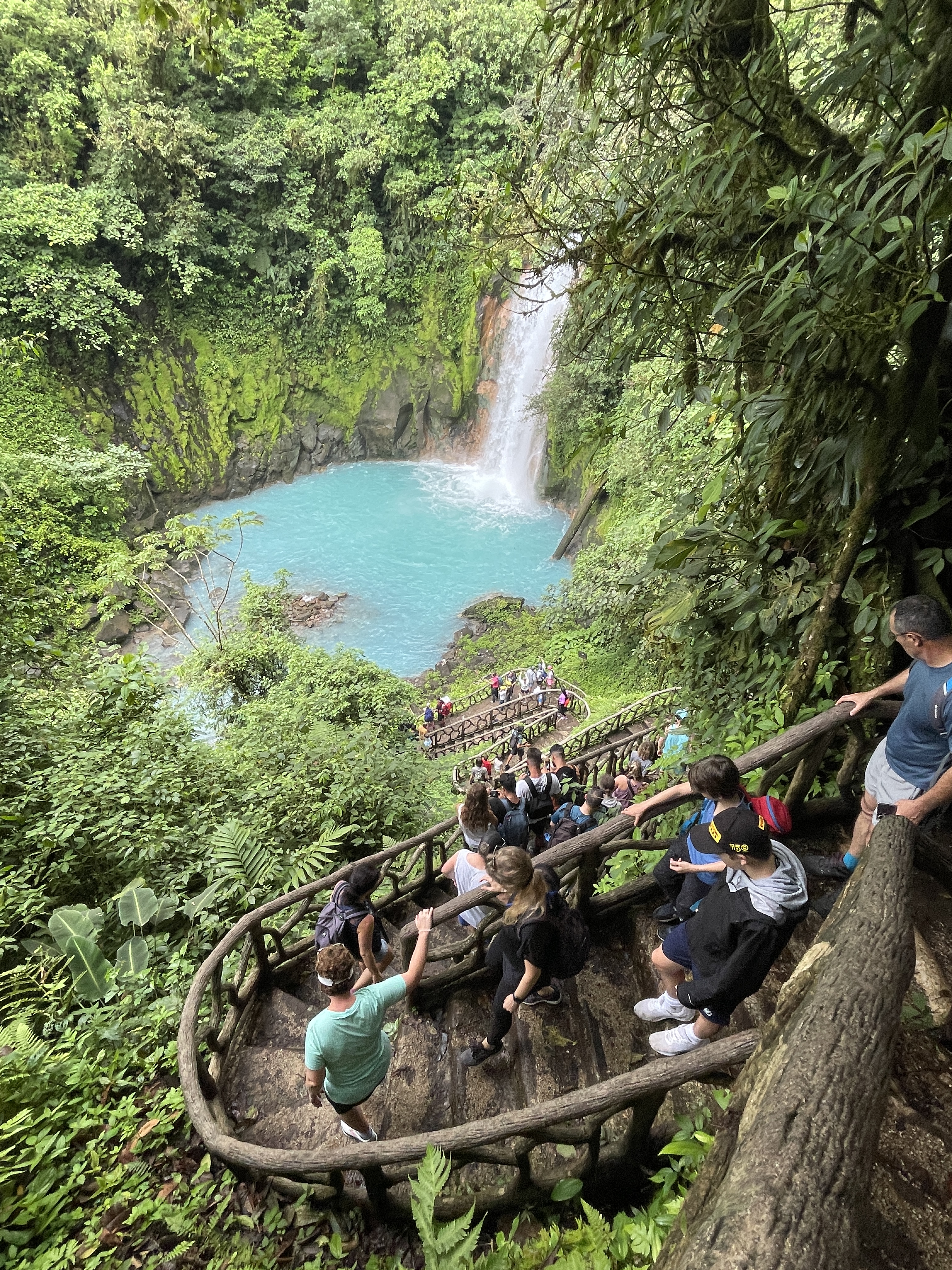
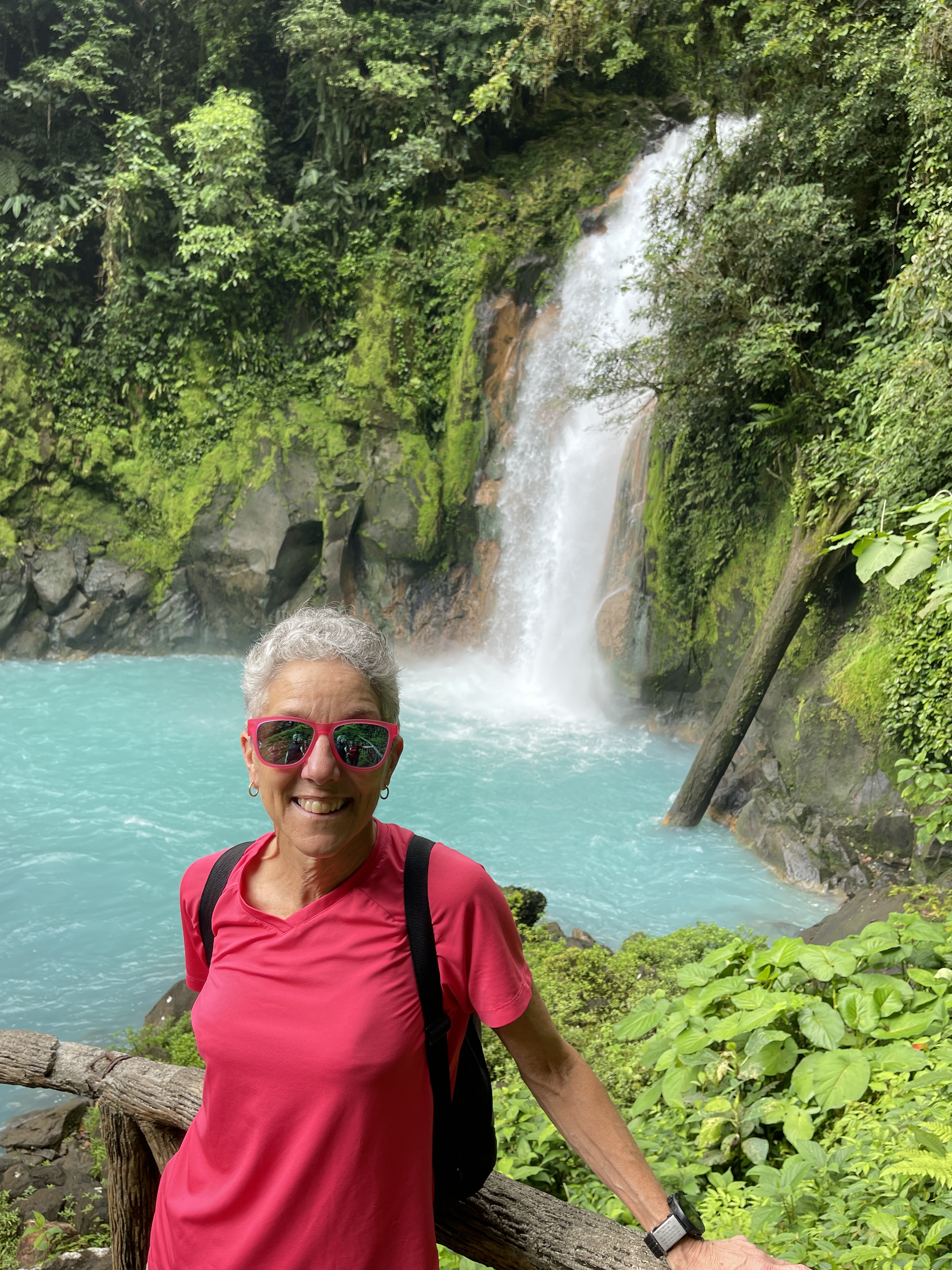
Reaching the viewpoint for the falls requires a side-trail that zigzags down about 300 steps with a fake but sturdy Adirondack-style railing. We snaked our way down behind dozens of other sightseers, gradually drawing near the bottom platform where we too could take pictures with the tall stream plummeting into turquoise waters. The color was just as advertised, and the experience worth sharing with the masses of humanity.

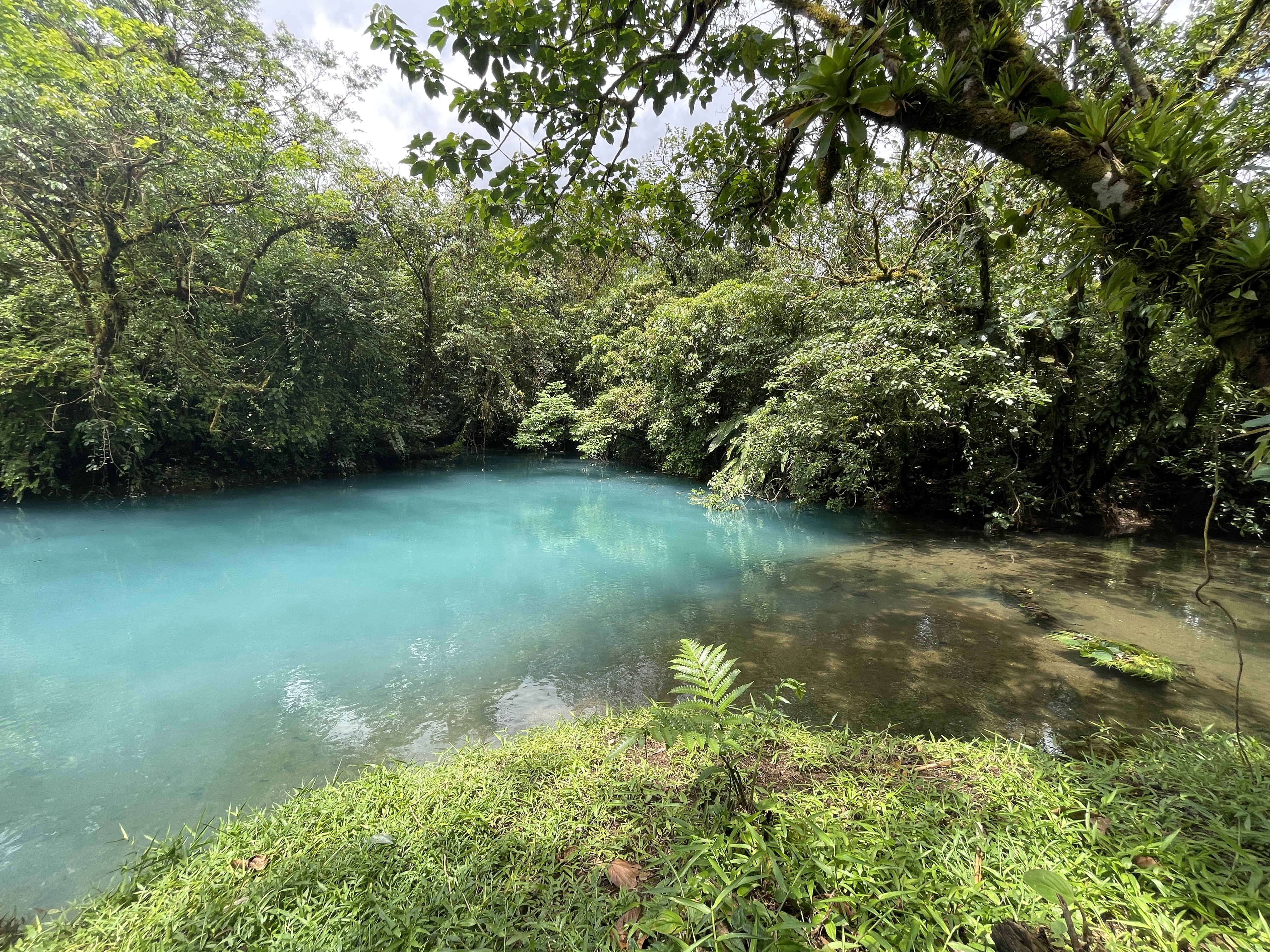
Beyond the falls the trail involved more elevation and attention to rocks and roots underfoot, but it was well worth continuing on to see the burbling hot springs, blue lagoon, and the source of the river’s unique color. At the point where two rivers converge, the sources contribute just the right conditions for particles of a whitish mineral known as aluminosilicate in the water to be large enough to reflect the blue color in sunlight – an optical illusion, not a chemical one.

My Garmin recorded 4.2 miles for the round trip with 575 ft of elevation, which we drew out to a leisurely 3-hour hike.

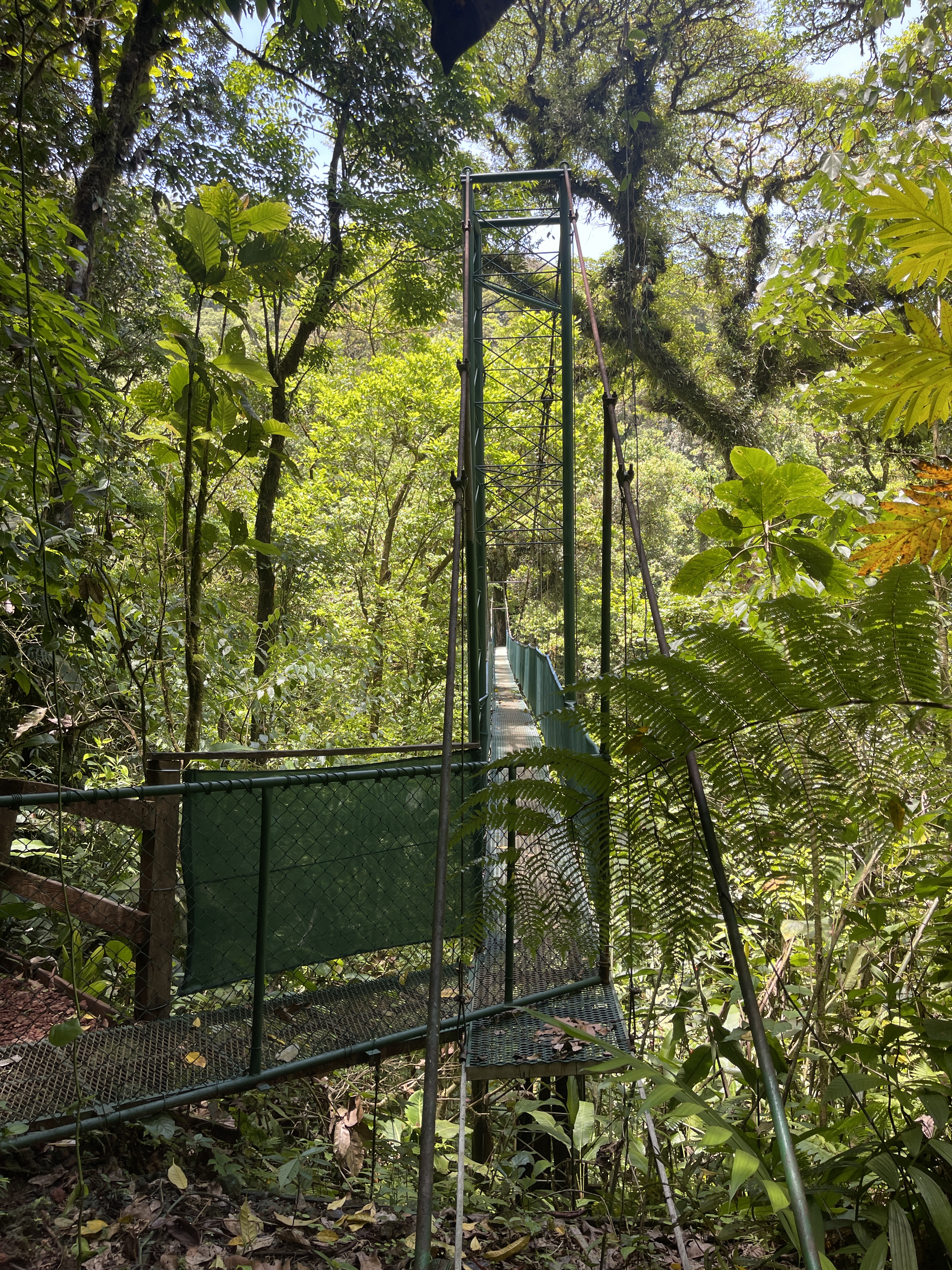
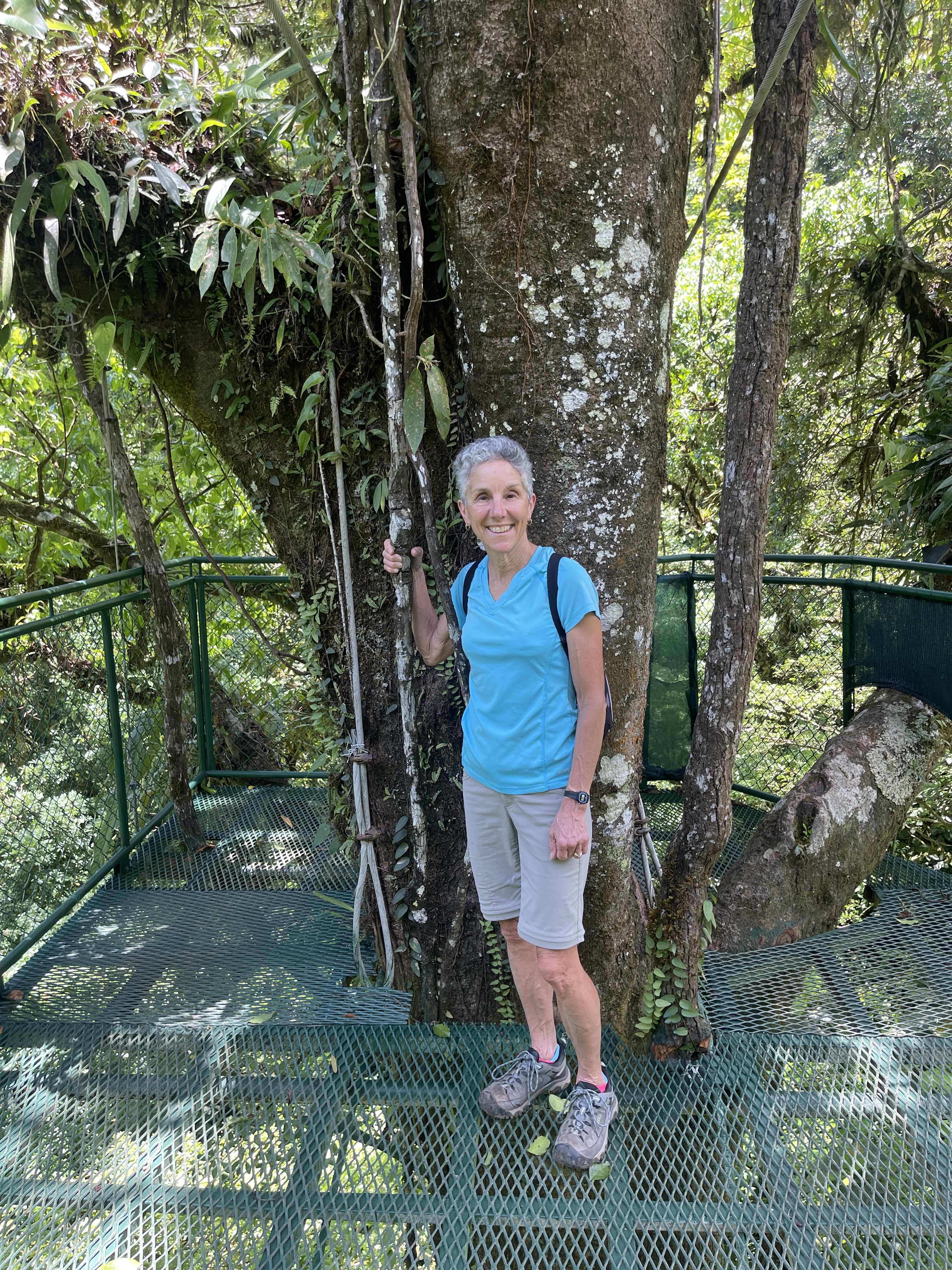
At Heliconias Rainforest Lodge a 2-mile walk took us across three treetop suspension footbridges. Rich had preceded us there, in search of certain birds reported in the area, and he assured me the bridges would not challenge my queasiness with heights. He was right – the solid engineering behind them was apparent, and the high side rails with dense mesh fencing gave me plenty of confidence to cross with ease. My personal favorite was the bridge with a tree in the center.

We lingered to watch salamanders, a brilliant blue butterfly with a deceptive “eye” on the outside of its wing, and unusual flowers that trapped rainwater. We even looked for Rich’s elusive bird, without success.

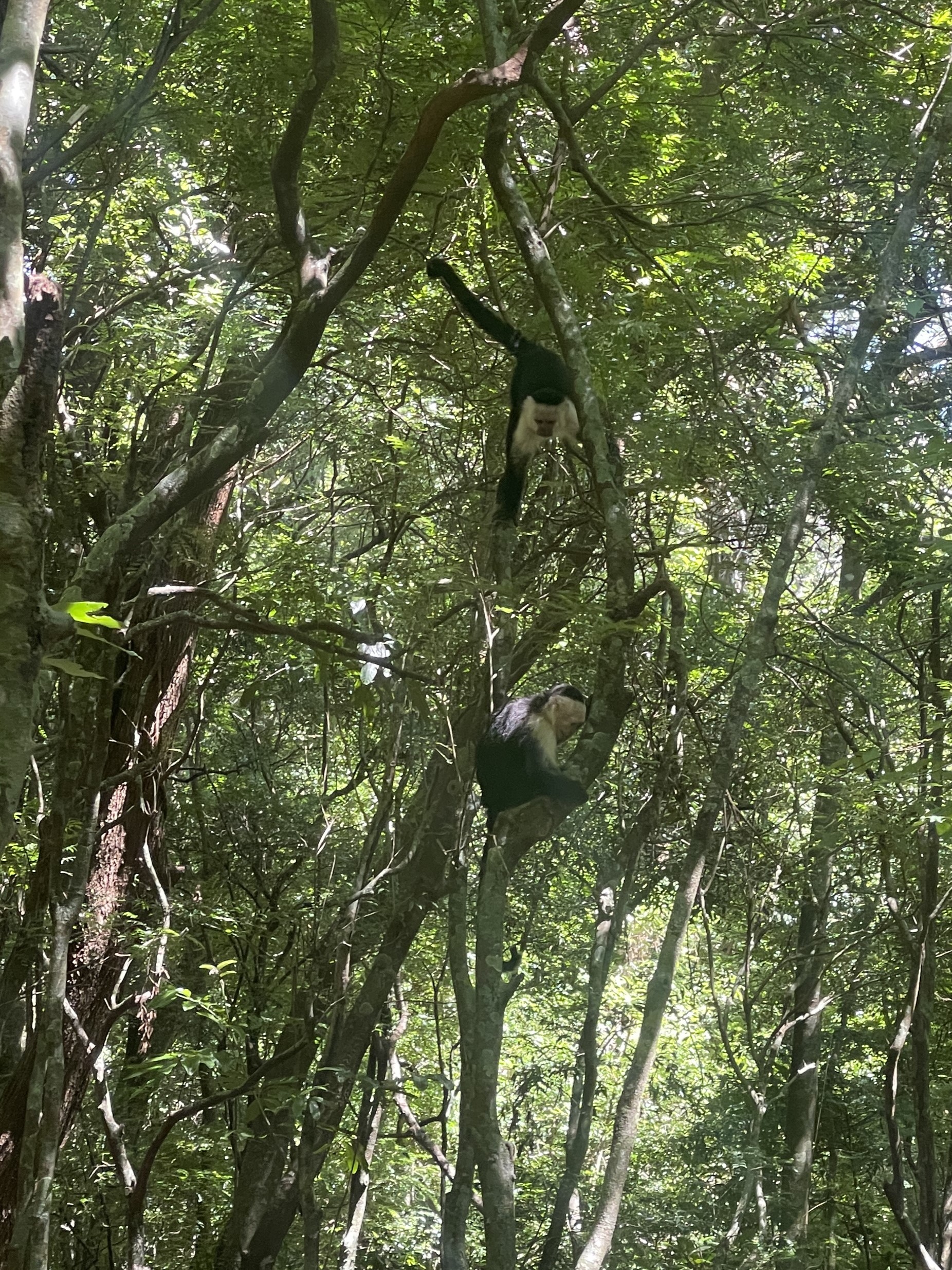
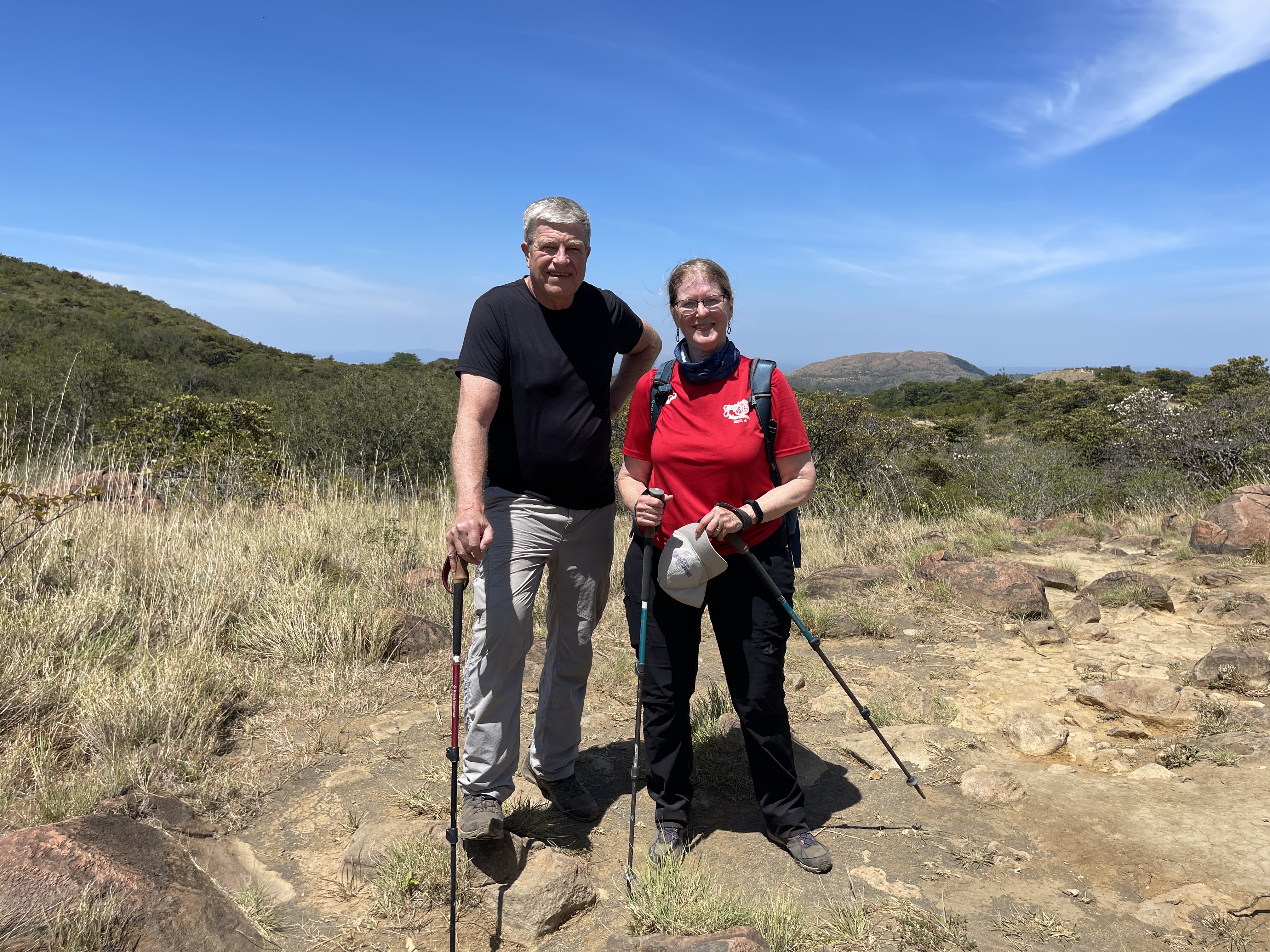
For our finale, we hiked in search of yet another waterfall. This was in Rincón de la Vieja National Park, and was our most challenging venture. The round-trip hike to La Cangreja Waterfall registered about 7.5 miles with 1,300 ft in elevation. We started out under good shade, and were delighted to watch a group of energetic white-faced monkeys cavorting in the treetops above us. Well aware of our presence, they seemed to be performing for us – chasing one another, pushing trees to make them sway, even eating bananas directly overhead.

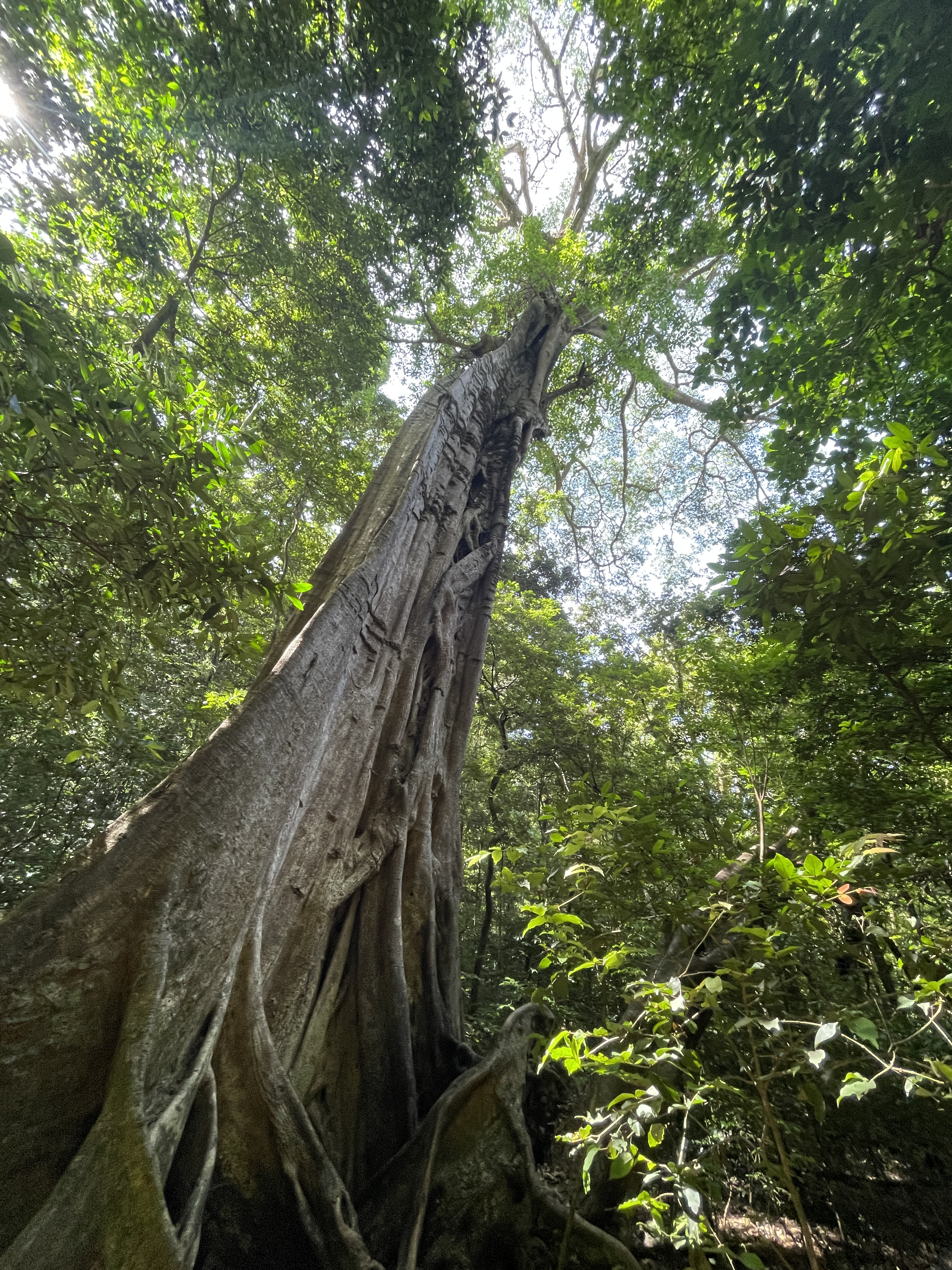
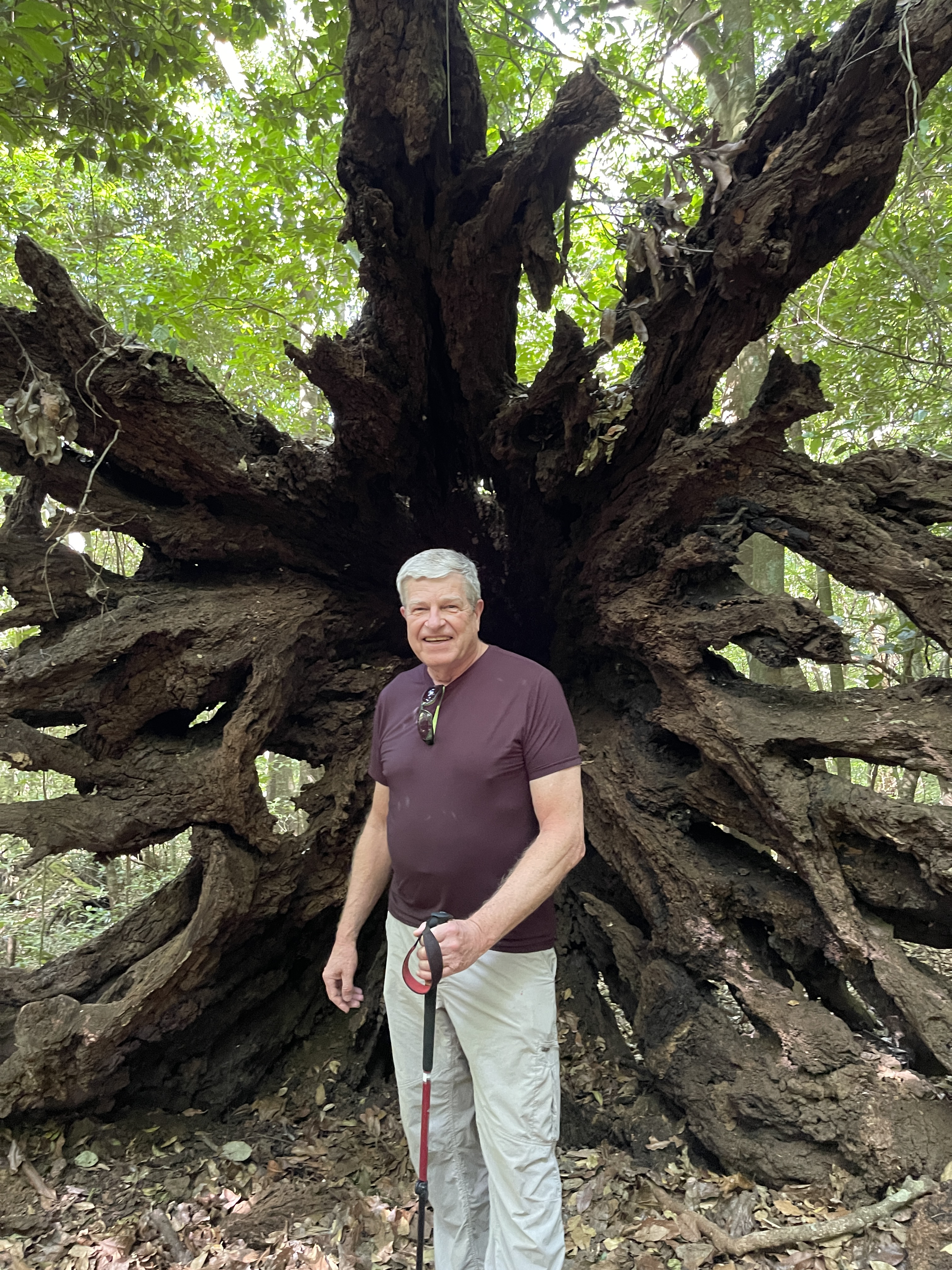
Super tall trees with viny roots and enormous root structures delighted us.

The closer we got to the waterfall, the more difficult the terrain. Looking for footholds among boulders as we progressed downhill was more challenging than clambering up them on ascents. The final rocky patch, however, delivered us to the pool at the foot of the waterfall – paydirt!

This one claimed to have aqua-blue water, but we glimpsed that only at the very foot of the falls. However, the bonus was having the site nearly to ourselves for a good period of time, and we were free to roam around the pool and sit on rocks to take in the scene.

When other hikers caught up to us, we decided it was time to move on. By then the sun had climbed high in the sky and the temperature soared. We had crossed open highlands on the way there, and on the return trip while traversing the shade-less dry land we baked in the relentless sunshine. Seeking out all shade-breaks to cool down and drink water, we made it back to the monkeys who restored our good spirits with their antics, in a nice shady spot.
We didn’t come close to exhausting Jon’s list, but relished the adventures we did have in Costa Rica. We will just have to go back for the rest of them.