Nordic Hospitality

“My guidelines for running my business came from my two grandmothers.” These words were spoken by Lisbeth, our hostess and owner of Marmelkroken, the small guesthouse where we were staying. I had to know more.

“My mother’s mother always greeted us when we arrived, and waved us off when we left.” Her warmth and hospitality left a lasting impression. Sure enough, although we arrived well ahead of the usual check-in time, she pulled into the drive to welcome us.

“My father’s mother never wasted food.” Our dinner and breakfast were served plated, straight from the kitchen piping hot. Homemade, fresh and cooked to perfection. No breakfast buffet here, but we had milk she collected in a bucket that morning and berries right off the vine. Plentiful, no excess.

We’ve stayed in some pretty swanky digs on this trip, but this quickly became my favorite. We were able to get into our room early, which opened right onto the back deck overlooking the long lawn bordered with wildflowers and a path out to the ocean front. We didn’t waste time finding a comfortable sheltered spot to enjoy the quiet afternoon.
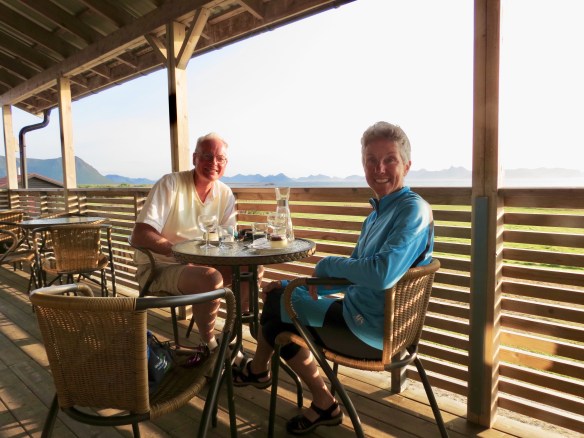
It was warm enough to dine outside, so we eagerly took a table in the fresh air. Like most lodgings on this tour, we had a 3-course dinner included. Sometimes we were left to wonder what would appear on our plates. Not that night. Lisbeth herself came out from the kitchen to recite her menu. Root vegetable soup with cream for our starter along with traditional flatbread. Fresh redfish obtained that day from the local fish dock, homemade pickled onions, puréed green peas and baby potatoes for our main. We had two choices for dessert, but we both went for the traditional boiled pudding with rhubarb sauce. The service was unhurried, and we relaxed with her recommendation for an Austrian white wine (no, not Chardonnay).
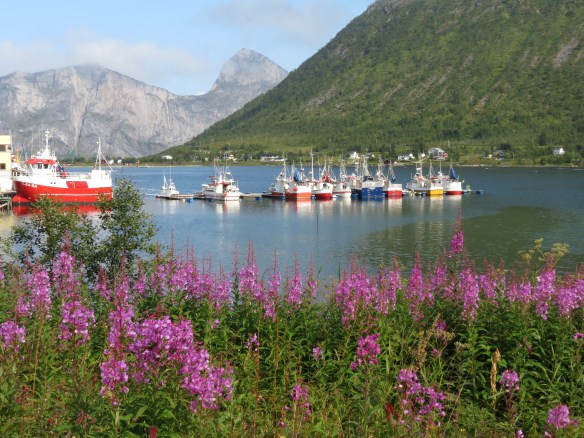
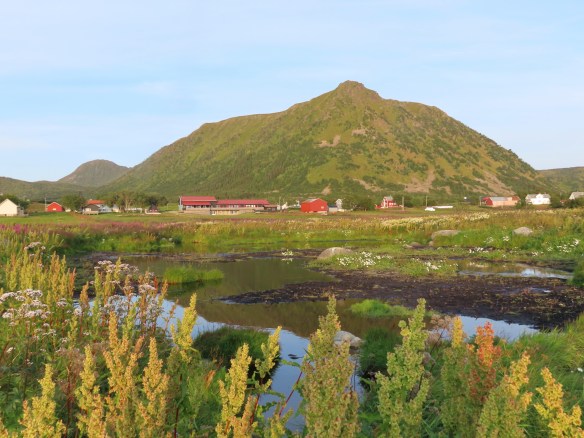
The long lingering sunlight drew us down to the water’s edge after dinner. A wooden long boat lay next to the shore, and birds alighted on the pond in the midst of the wildflowers. The verdant green mountain dwarfed our red lodgings.
Facing directly west, the sun set over the ocean that night – about 10:40pm. Snoozing over my book I periodically peered out our window to check its progress. Just over a week ago it would never have dipped below the horizon. I watched the sky turn red after it disappeared, knowing it would rise again in just five hours.

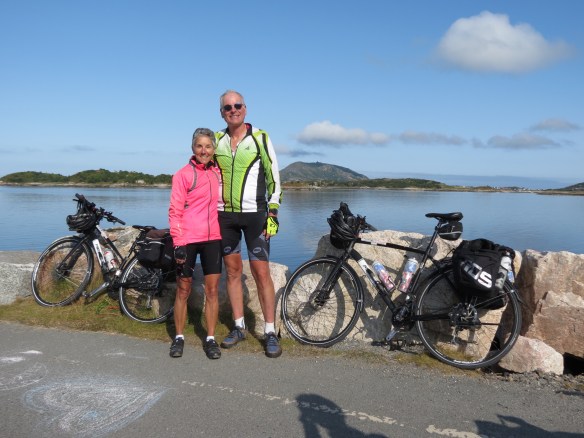
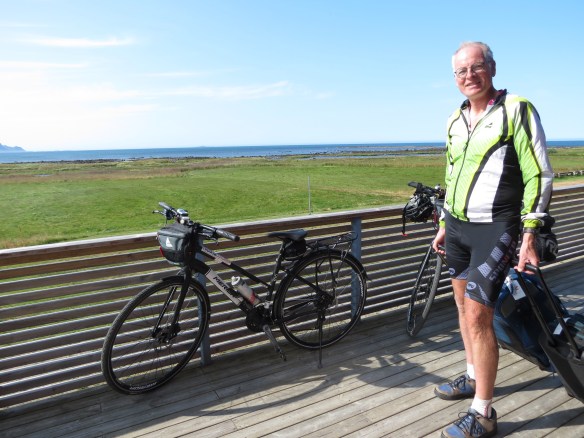
We pedaled off in the morning with a heartfelt farewell from Lisbeth. And I carried away two good life lessons from Bo Norway. Home of unparalleled Nordic hospitality.

Tunnel Etiquette

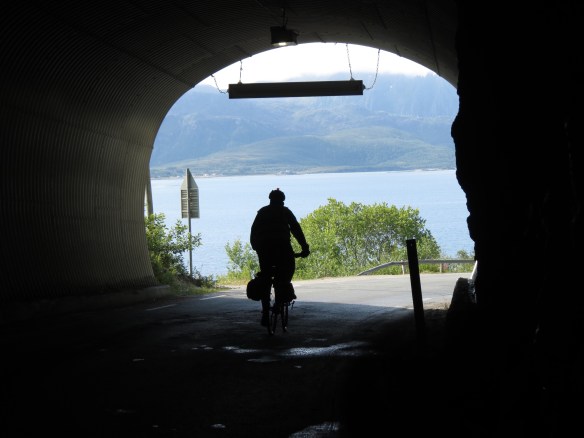
We interrupt this bike trip to bring you… another tunnel. We’ve cycled through far more long tunnels in three days than we have in all our years of bike touring. Yesterday alone we cycled more than 5 kilometers underground. But it’s a welcome disruption, given the alternative! And we’ve mastered the art of navigating these dark caverns.

First – turn on blinky lights. I have them on my bike, front and rear. And atop my helmet.

Second – Replace sunglasses with regular clear glasses.

Third – Put on headlamp. Oops, I forgot to put it in my panniers…

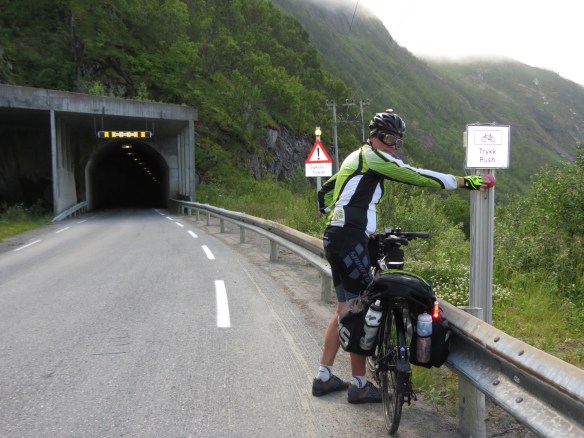
Fourth – Hit the button to illuminate the sign. “Cyclists in Tunnel”

Fifth – Start pedaling and hope for low traffic. Watch out for the pillars that often mark the edge of the road.

Not all tunnels are created equal. Some are wide, well lit and have good pavement. Others not so much. One tunnel started out fairly bright but degraded to near darkness in the middle. This one was a lot darker than it appears, due to Rich’s flash. But you get the idea.

Our longest tunnel was 2.2k long. One was a constant incline for 1.2k. Anther was downhill all the way. But seeing the light at the end of the tunnel is always a relief!

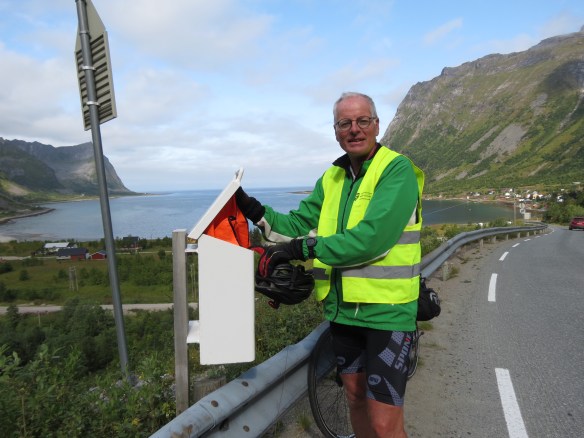
When there is no sign to warn motorists of our presence, they provide reflector vests for cyclists. There is a receptacle that looks like a post box at each end of the tunnel, to pick up and return the vests. The size XL swamps my body but I wear it anyway. I have a vested interest in staying alive.

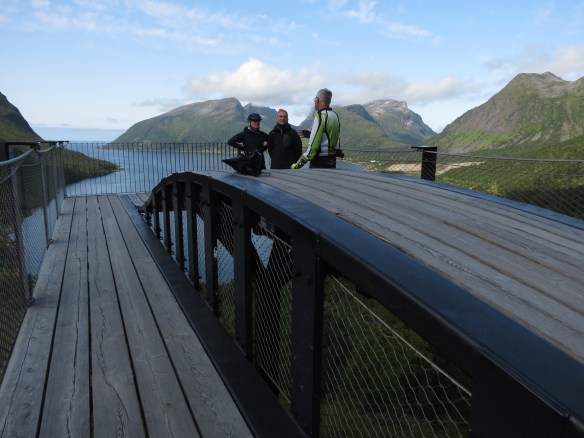
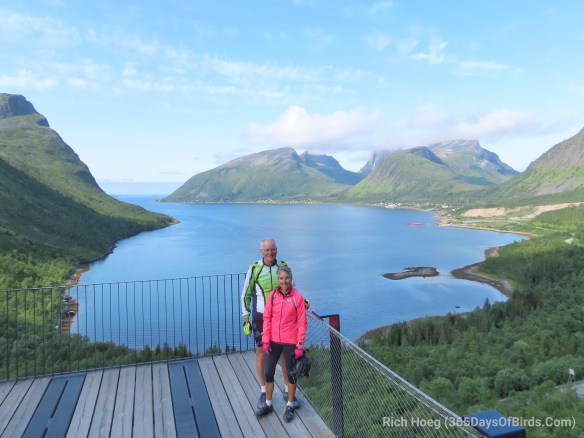
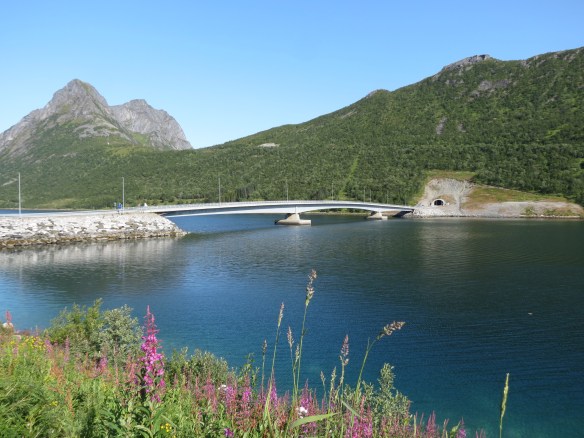
Although the whole purpose of tunnels is to avoid going over the mountain pass, it often requires a decent climb, perhaps even involving switchbacks, to reach the entrance. But the payoff is in the views en route. After a grueling ascent, we reached this unique roadside viewpoint, with a 44-meter long curvy platform for ogling the fjord down below. we weren’t the only cyclists stopping there for the view. And the rest.

Not all scenery involves tunnels. I rather enjoyed scrambling over the rocks to get closer to the Devil’s Teeth.

Today we did the unthinkable. We skipped a tunnel and a bridge in favor of the old road over the pass and around the fjord. Even Rich agreed it was well worth the extra effort.

Next time we’re likely to return to our senses and mind our manners, as we pedal through the tunnel.

Reflections atop a fjord

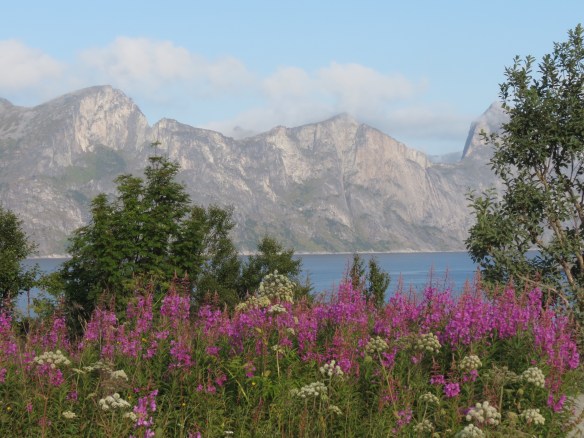
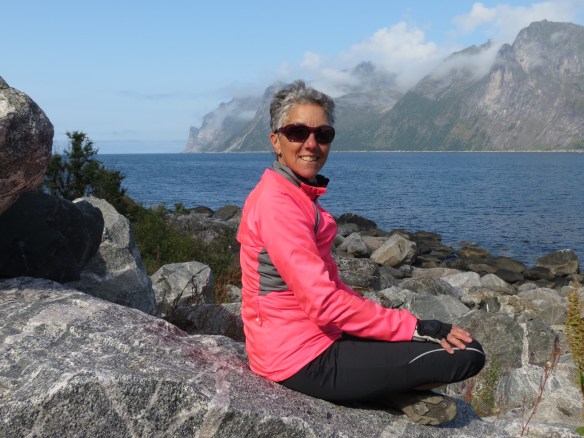
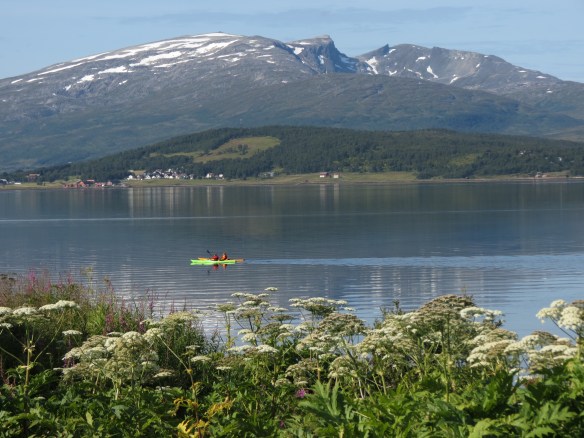
My back toasts in the sun while the ocean breeze cools my face and hands. I sit on a high rocky outcropping, the surrounding hillside covered with scrub grass. Across the way craggy peaks line the fjord for its full length. I know because we cycled its length today, following their majesty shrouded by local clouds. Their sheer sides are carved with narrow vertical crevices resembling dry waterfalls, likely the remnants of ancient glaciers.

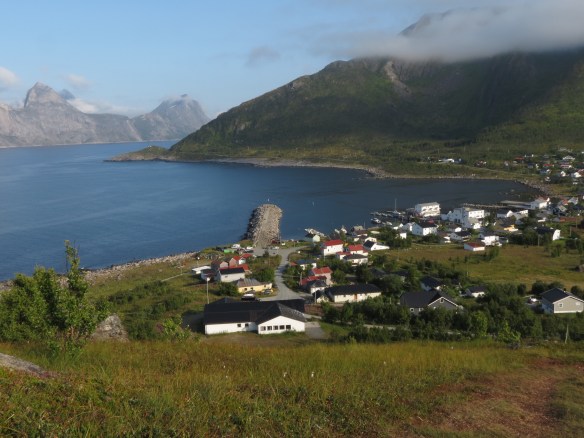
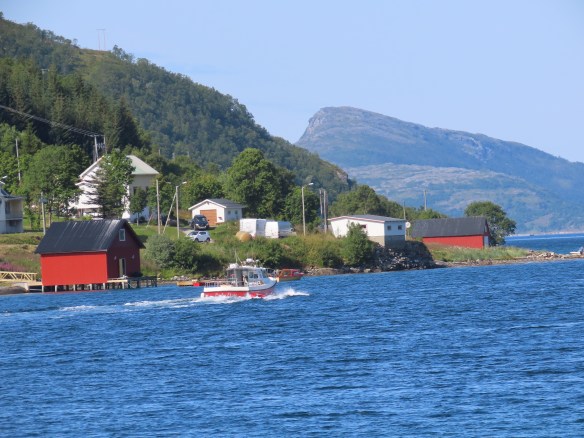
Far below, the deep blue waters of the fjord ripple and a small fishing boat races for port leaving behind an ephemeral jet stream. His home is the same as mine tonight. A small fishing village nestled on a bay near the mouth of the fjord. The buildings hug the shoreline, hemmed in by another mountain range behind.

I set out to walk the breakwater, but got diverted. The notice board showed a map of local hikes. The words Peak and View attracted my attention. It was an short easy climb to the top of this rise. And it just invited a stay. For no reason other than to breathe deeply. Reflect. Ponder the beauty.

I hear water falling. The afternoon shadows on the mountainside behind me hide the stream tumbling in a narrow column to the seas below. Soothing. Like the wafts of thin grass bowing to the wind before me.

There is a lot more to bike touring than cycling. This tour in particular has a slower pace. Fewer miles, less time on the bikes. More opportunity to be spontaneous. To follow a sign. Sit high on a peak towering over a Norwegian fjord. To be grateful for the day’s memories.

Waiting for the morning ferry

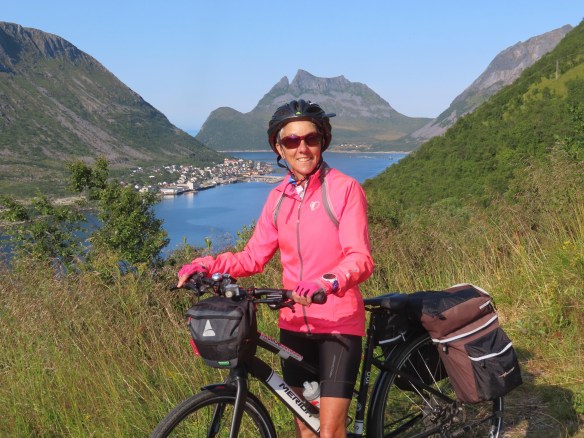
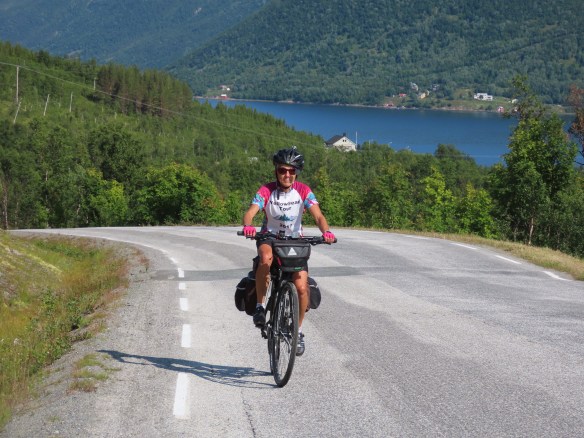
Rich cycling up another mountain pass

Navigating four tunnels

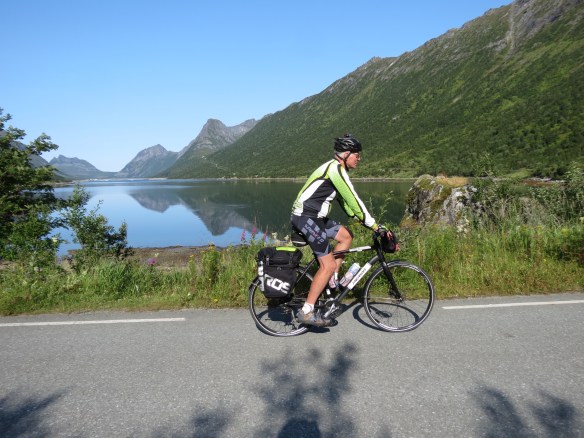
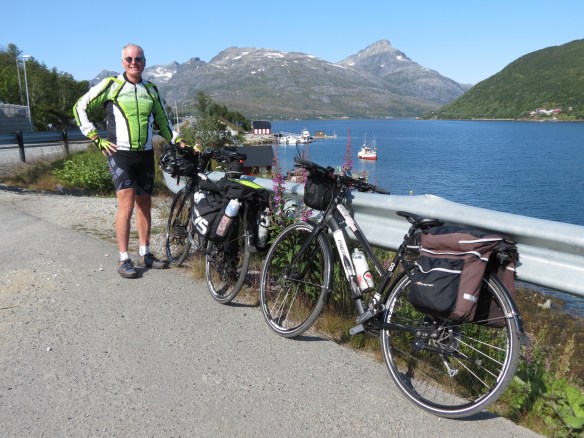
A picnic lunch by the fjord

Passing through a colorful town

Arctic Perfection

Anticipation is half the fun of taking a vacation. And in dreaming about that upcoming adventure everything is always perfect. The weather, the activities, the food and lodging, the scenery. When bike touring, throw in good roads, little traffic, easy navigation and smooth riding. Today, day one of cycling in Norway, was all of that and more.

Our route took us 62 kilometers from Tromsø to the far outer edge of that region of Arctic islands. Starting off with 22k on a wide bike trail was an unexpected bonus, and a nice way to ease into the ride. That was followed by roads that got narrower the further afield we got, yet cars always made room for us. I couldn’t help but wonder how they could have such good pavement when they have brutal winters like ours.

Most of our biking followed water. First we skirted the outer edges of the islands as we moved from one to another. As long as we were next to the water, it was easy flat riding. Yet we had plenty of mountains to ogle in the distance.

Moving inland, we had a steep climb to get up into a mountain valley. Just like Duluth, as soon as we left the water it got warm! Traveling down the valley the rocky outcroppings were dotted with pools of leftover snow and ice.

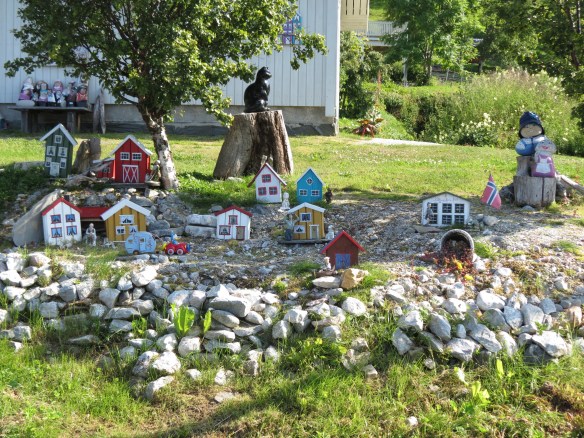
At the end of our descent at the far end, we met Nordfjorden. We cycled right on the edge of this fjord where a narrow band of azure blue water followed the shoreline. My favorite part was going all the way down one side and back on the other around a narrow inlet lined with houses and boats bobbing in the water. The tidy colorful houses with steep roofs epitomized my expectations of a Norwegian scene. Even the lawn ornaments complied.

That let to wider sections that eventually opened out to the open sea. The stiff ocean breezes were chilly but invigorating!

Our final stretch took us out to a small island facing the sea. More azure water greeted us in the sheltered areas, along with sandy beaches. It seemed a study in contrasts.

Reaching our lodgings on a quiet cove while still under clear blue skies clinched it. Cycling in Norway was all I’d envisioned it to be. And then some. No matter how the rest of the tour goes, the first day attained perfection.

Red throats in Tromsø

The sun was still high in the sky even after lingering over a late dinner. In a effort to fight our arrival-day jet lag, Rich proposed hiking the steep hillside to Prestvannet, a lake at the highest point in Tromsø. Always up for a good walk I agreed, even knowing he had an ulterior motive.

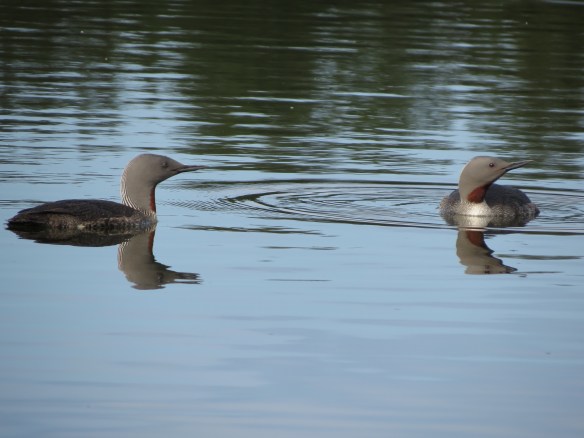
We could hear the birds before even seeing them. Despite being loons, the wails emanating from their throats bore no resemblance to the yodels I am used to hearing. These were red throated loons. Rare in Minnesota, they have been eluding Rich for years. No longer. At least 30 populated the small lake.

I’m no birder, but I couldn’t help but be captivated by the quirky behavior of these loons. A handful would swarm, rear up then forge ahead as if in a race, their bodies skimming the water with beaks pivoting. All the while, emitting what Cornell Ornithologists call a prehistoric “gayorworrk” sound. Meanwhile, their cohorts around the lake chimed in with a chorus of cries that sounded like kittens mewing. Then it would all stop. And repeat.

It was entertaining enough that I followed Rich up the hill again in this morning for a repeat performance. With the warm sun on my back and dappling the quiet water, it was all the more pleasant. And this time I could truly see those red throats. With better light for photography, Rich was in his element. Even I pointed my camera at these exotic specimens.

Want to hear the cacophony? Rich captured it well in this video.

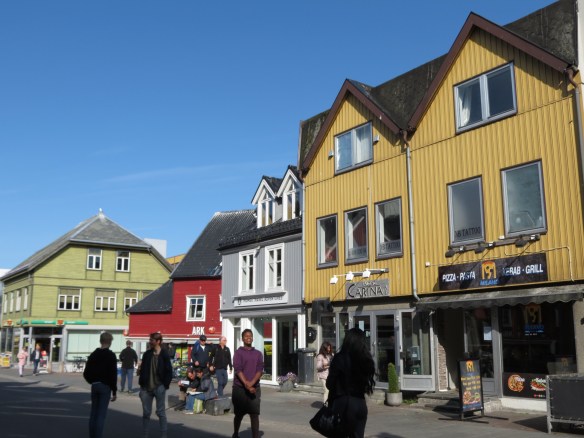
It was an unexpected way to spend a chunk of our time in Tromsø, but it didn’t keep me from meandering the rest of the city. Last time we were here was in the dead of winter, when we came to chase the northern lights and go cross-country skiing. I enjoyed the contrast with flowers blooming, long hours of sunshine and the relative warmth. Ok, so the high was in the mid-50s today. Sort of like a Duluth summer day.

The harbor is always a favorite.

I love the colorful buildings.

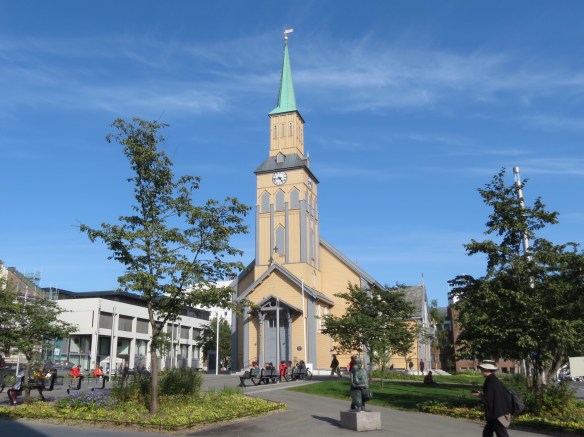
We are staying right across from the Tromsø Cathedral.

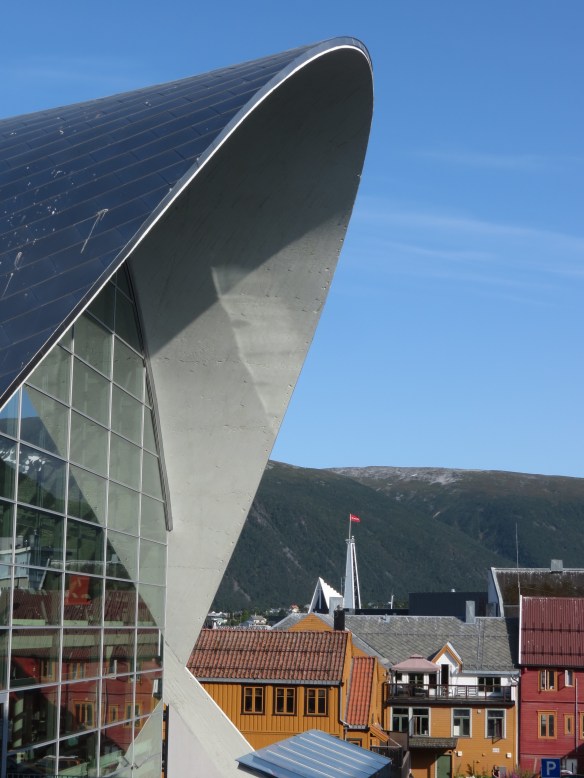
A mix of the old and new. Tromsø’s starkly modern library stands in the middle of the quaint shopping district, with the Arctic Cathedral across the harbor in the background.

It was well worth planning a recovery day in Tromsø. We figured we’d need the time to sort ourselves out, get some rest and do a bit of sightseeing. We just didn’t count on the red throats. They turned out to be the highlight of the day. Who knows what we might find tomorrow, when we pick up our rental bikes and start out Arctic Islands Cycling Tour.

A Dramatic Departure

Norway Flag LogoNorway, here we come!  Our next cycling tour adventure will take us above the Arctic Circle through the coastal islands of northern Norway.  We’re calling this one the Arctic Islands Cycling Tour.  But the destination is not the only unique aspect of this tour.

First, we are traveling in prime tourist season.  In the Arctic, there is a limited window between snow melt and the onset of winter.  If we wanted to see the beauty of this land, it had to be in July or August.

Next we discovered that the rest of the world wants to be there at the same time for the same reason, and accommodations are scarce.

It was time to call in the experts.  For the first time in our cycle touring history we are handing the reins over to someone else.  Rather than traveling as a self-supported duo, we booked two back-to-back cycling tours with Discover-Norway.

The appeal of these tours is that they are self-guided.  Each day we will be handed our itinerary and we are on our own to make our way to the evening’s lodgings.  Most of our meals are included.  Oh, and our bags will be there waiting for us when we arrive.  We only need carry extra clothing layers and the day’s supplies in our panniers.  Sweet!

Speaking of bikes, they are providing those as well.  After some minor trauma taking our own bikes to Scotland, we opted to rent bikes for this trip – one small, one large.  Heck, we even bought off-the-shelf Norway cycling jerseys instead of designing our own.

I have no idea who our fellow cyclists will be, or even how many of them we’ll have.  But I rather like the idea of swapping stories with them at the end of each day.

Perhaps the biggest adjustment for me will be adapting to the pace of this tour.  I have to get into my vacation mode.  My sightseeing and stop to smell the flowers mindset.  Our daily mileages range from a measly 10 miles to 37 miles.  This isn’t about racking up the distances, it’s about taking in the scenery and experiencing life on these coastal islands.  I’m expecting the views to work their magic on me.

Norway area of tour

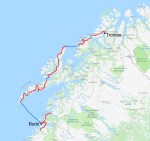
All this takes place above the Arctic Circle.  We start in Tromso and work our way out to the barrier islands, using ferries where necessary.  The Arctic Coast Tour tour lasts eight days, taking us to Svolvaer.  From there we immediately join the Lofoten Islands Tour for another six days.  That takes us down to the very tip of that archipelago, where we ferry to Bodo on the mainland.

For the next four days, we have Norway Tour Mapadded two out-and-back side trips on our own – mini adventures more in our usual style of cycle touring.  Just to remind us what it’s like.  And believe me, Rich booked those lodgings months ago.
Our finale will be hopping aboard the Hurtigruten Ferry, a near-cruise-ship vessel that hugs the coastline.  After four days of close-up shoreline views it will deliver us to Kirkenes, just miles from the border with Russia.  The end of the line for the ship.  A dramatic ending to our tour.

Million Dollar Views

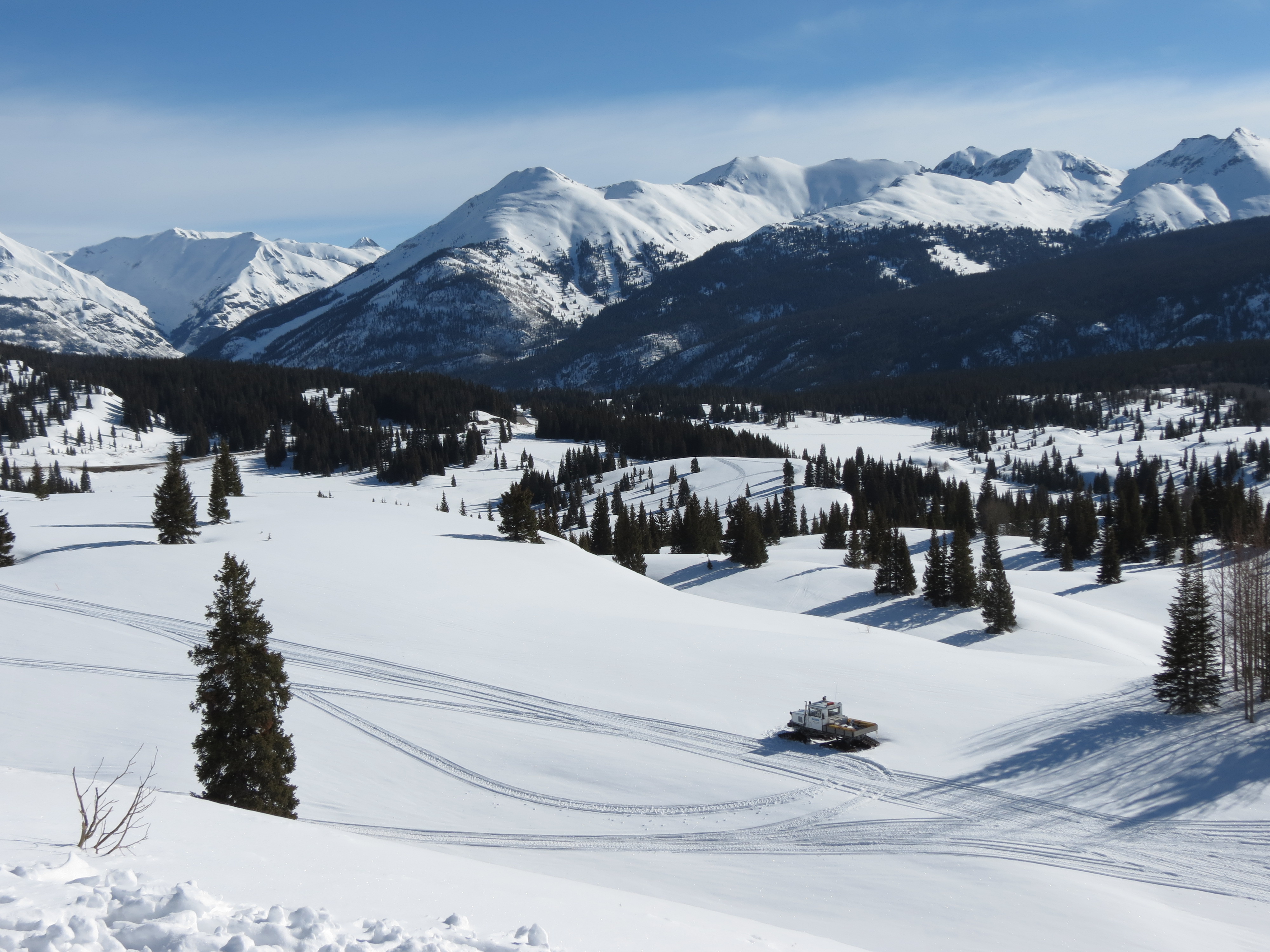
We arrived in Durango, Colorado by pure happenstance two years ago.  Today’s return was very deliberate.  On our last visit, we took a short drive on the Million Dollar Highway, a 70-mile stretch through the Rocky Mountains with hairpin curves surrounded by snowy peaks in all directions.  We vowed to return to complete the journey.

We were selective about our plans.  For days we monitored the weather reports, only intending to make the drive if we had a clear sunny day.  Luck was with us, and with the promise of good weather we booked our room at the Adventure Inn once again.

Over dinner last night, we eagerly shared our plans with our waiter.  “You know, that road’s only been open for 4 or 5 days,” he said.  It never occurred to us to check the snow conditions.  At breakfast this morning, motel owner Nigel showed us videos of the double avalanche that blocked the road between Silverton and Ouray.  Two massive columns of snow blew down the mountainside, taking trees and boulders down with it as it ripped through the forest.  Crossing the road, it filled the 150-foot canyon below and “splashed” up the opposite side.  Leaving 60 feet of debris-filled snow on a lengthy stretch of the highway in the Red Mountain Pass, it took highway crews 20 days to reopen the road.  Little did we know.

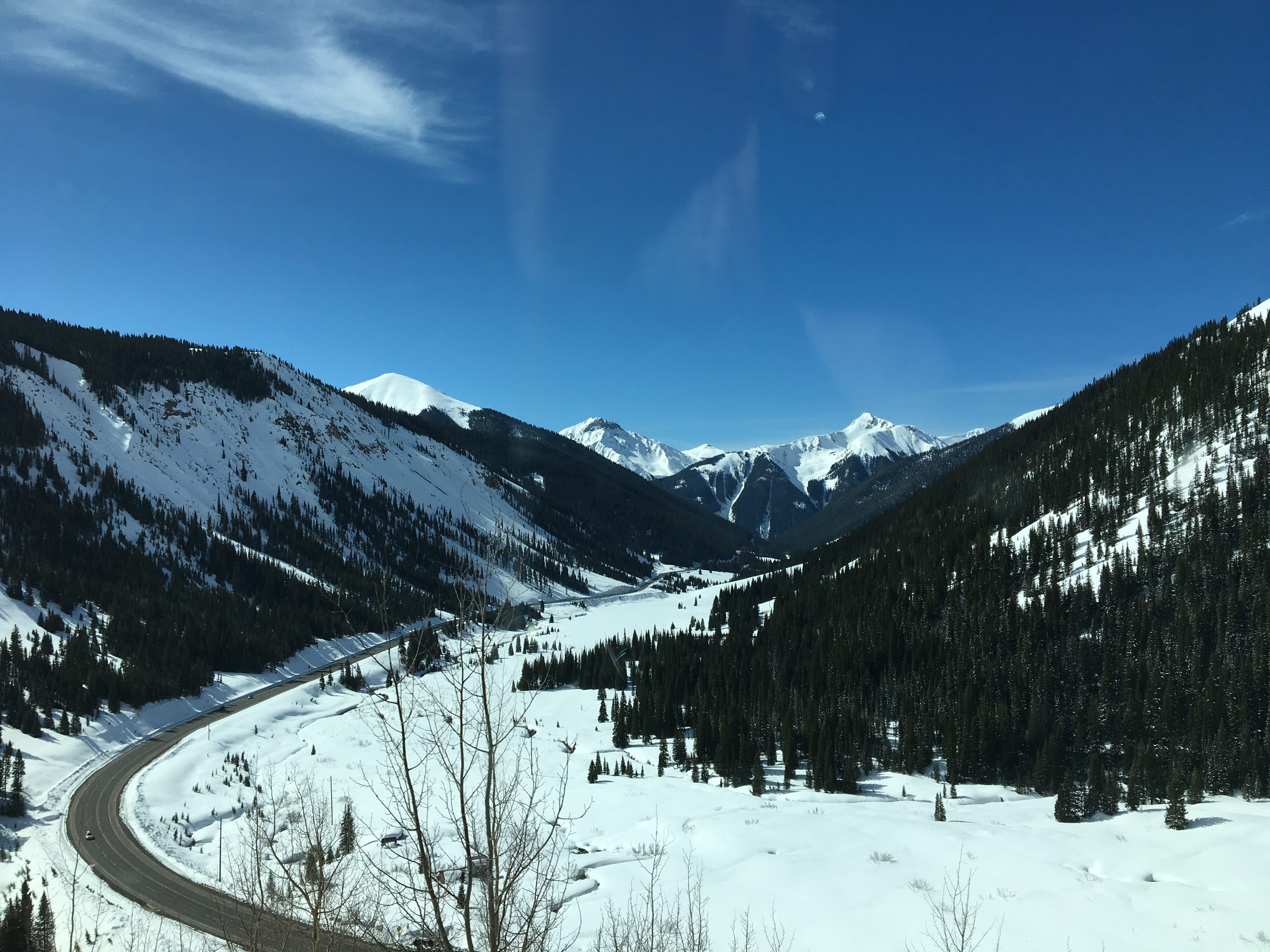
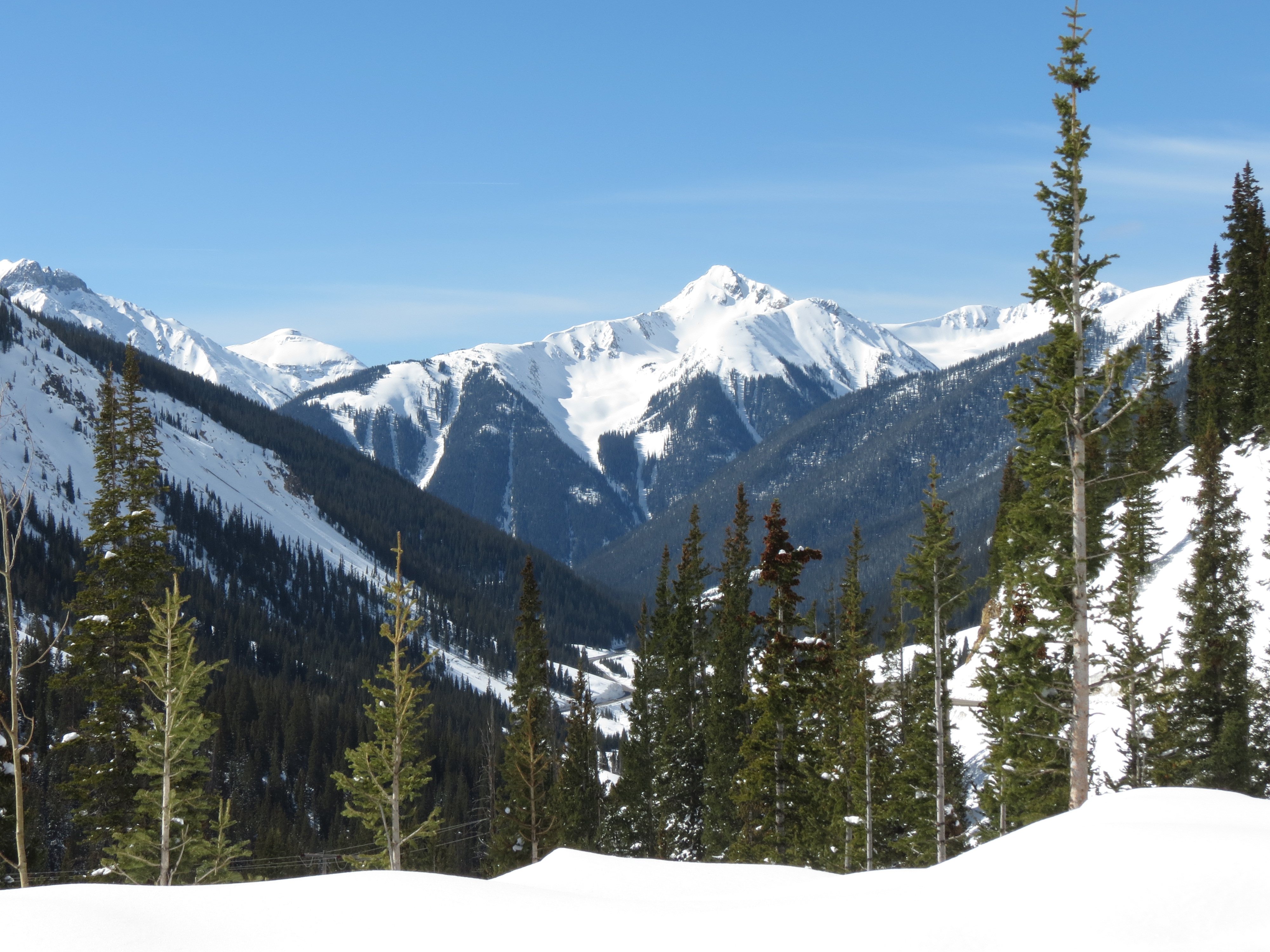
Today we drove that highway under blue skies on perfectly dry pavement.  We had learned that they had record snowfalls this winter, topping 360 inches.  It was still very much in evidence even on this April day.  With each turn of the road, we had more snowy peaks to admire.  At our elevation, the snow was pristine with only a few snowmobile and ski tracks crossing its silky mounds.  Occasionally I could make out curvy trails through the mountainsides, evidence of some intrepid skiers enjoying pure powder.

Million Dollar Highway 1 Million Dollar Highway 2 Million Dollar Highway 3 Million Dollar Highway 4 Million Dollar Highway 5

The wintry journey from Durango to Ouray was well worth the return trip.  With the avalanche video replaying in my mind, I had renewed respect for the seemingly pastoral scenes passing outside my car window.  Million dollar views indeed.

Chilling out on Mount Lemmon

The forecast was for another day in the mid 90s.  Our northern Minnesota blood was too thick for the heat. Sylvia, our AirBnB hostess, had just the answer.

“Have you been to Mount Lemmon?  It’s always 30 degrees cooler up there.”  That’s all we needed to hear.  It was also on my left-over wanna see list from last year’s stay in Tucson.

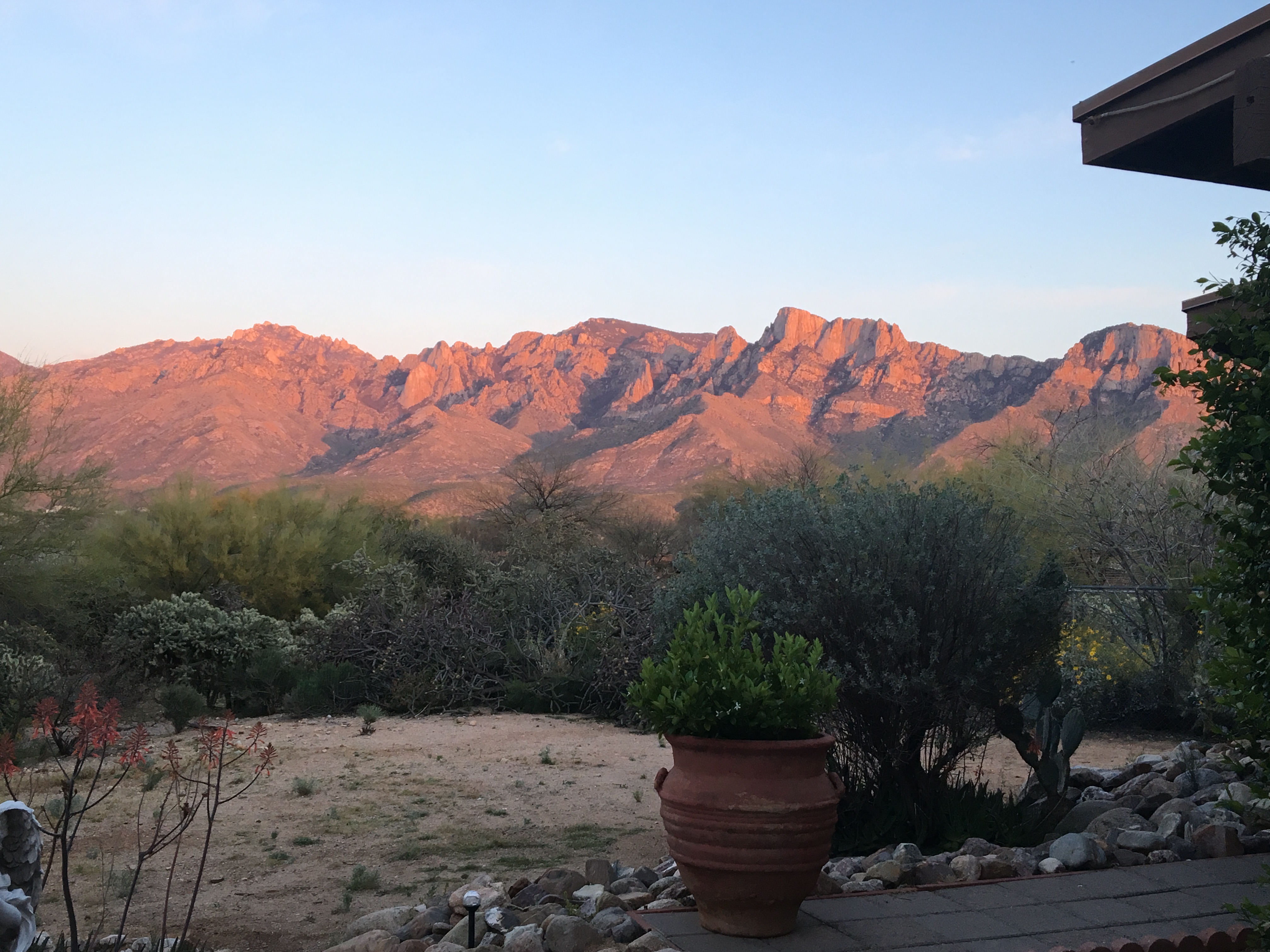
At 9,100 feet, Mount Lemmon is the highest peak in the Santa Catalina Mountains, the same range we’ve been admiring from our patio all week long.  It boasts a ski hill at the top, so there is a good paved road and a small community called Summerhaven near the summit.

Sunset view from our patio Tucson

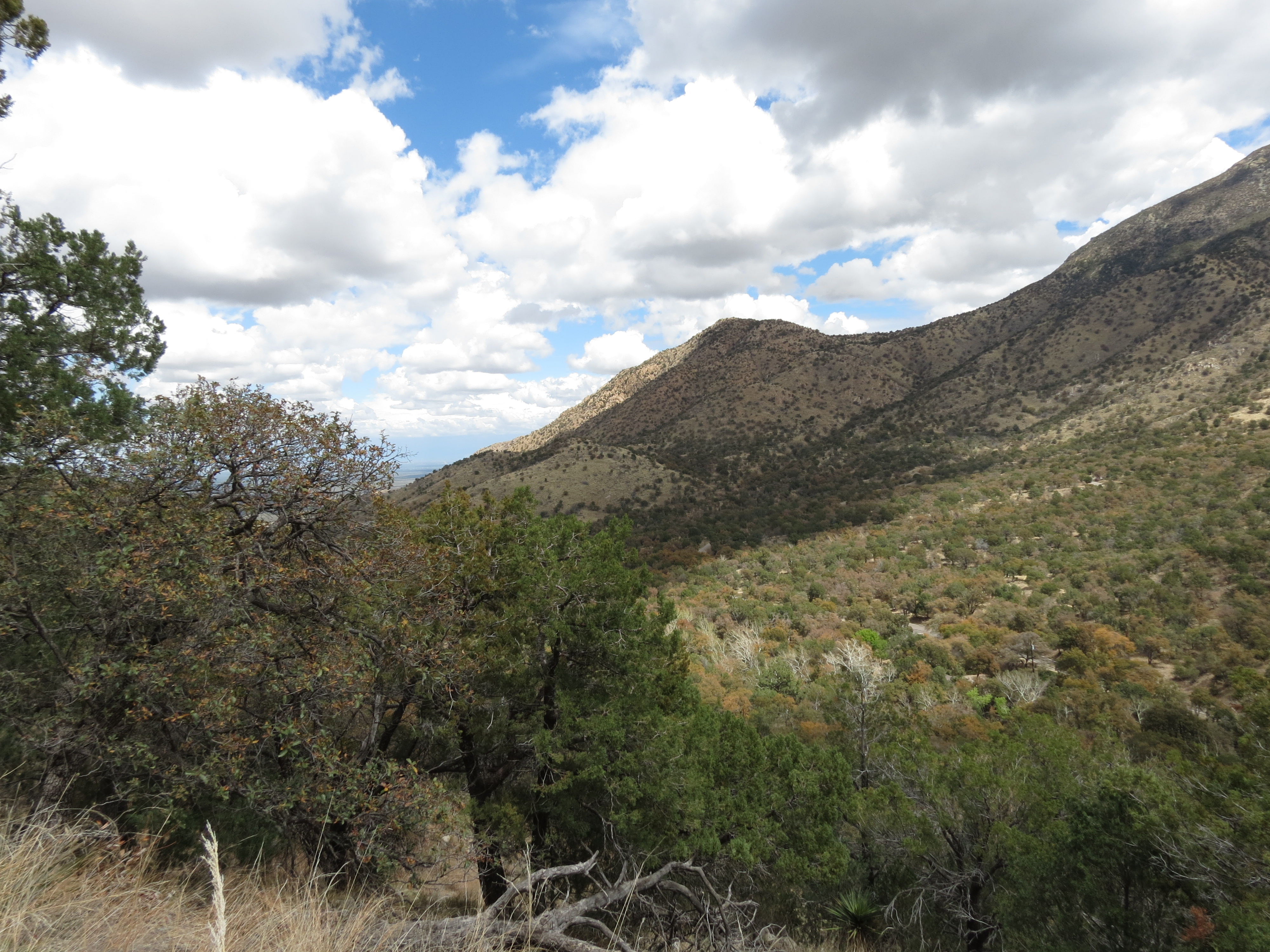
We crossed town to reach the start of the Sky Island Scenic Byway.  I settled in to enjoy the ride, as the 27-mile journey is an attraction in itself. We started out in the now-familiar Sonoran Desert environment, surrounded by cacti and scrub brush.  As we rose, saguaro and a sea of yellow wildflowers took over the landscape.  The city of Tucson dropped below us, a miniature playset of streets and buildings just visible over the edge of the cliff.  Fortunately, there were frequent pull-outs for safe gazing.

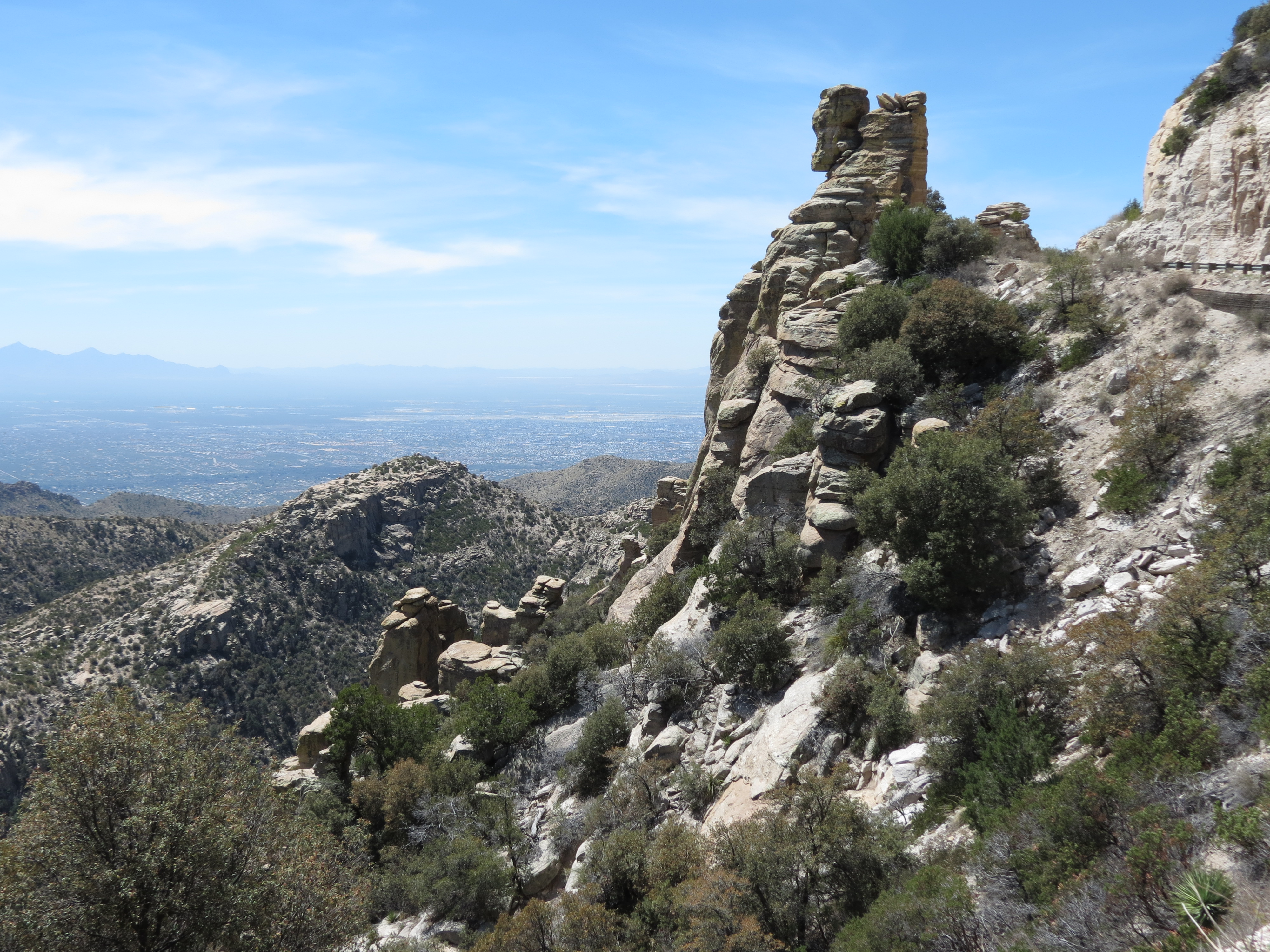
Each curve delivered new scenery.  Saguaro giants gave way to real forest, with Aspens and Ponderosa Pines looming overhead.  Wildflowers changed suit as well.  But it was the rock formations that demanded my attention, and added a new term to my vocabulary.  “Hoodoos.”  Tall thin columns of weather-beaten rocks stood at attention on the slopes as we navigated the switchbacks.

Mt Lemmon rocky view

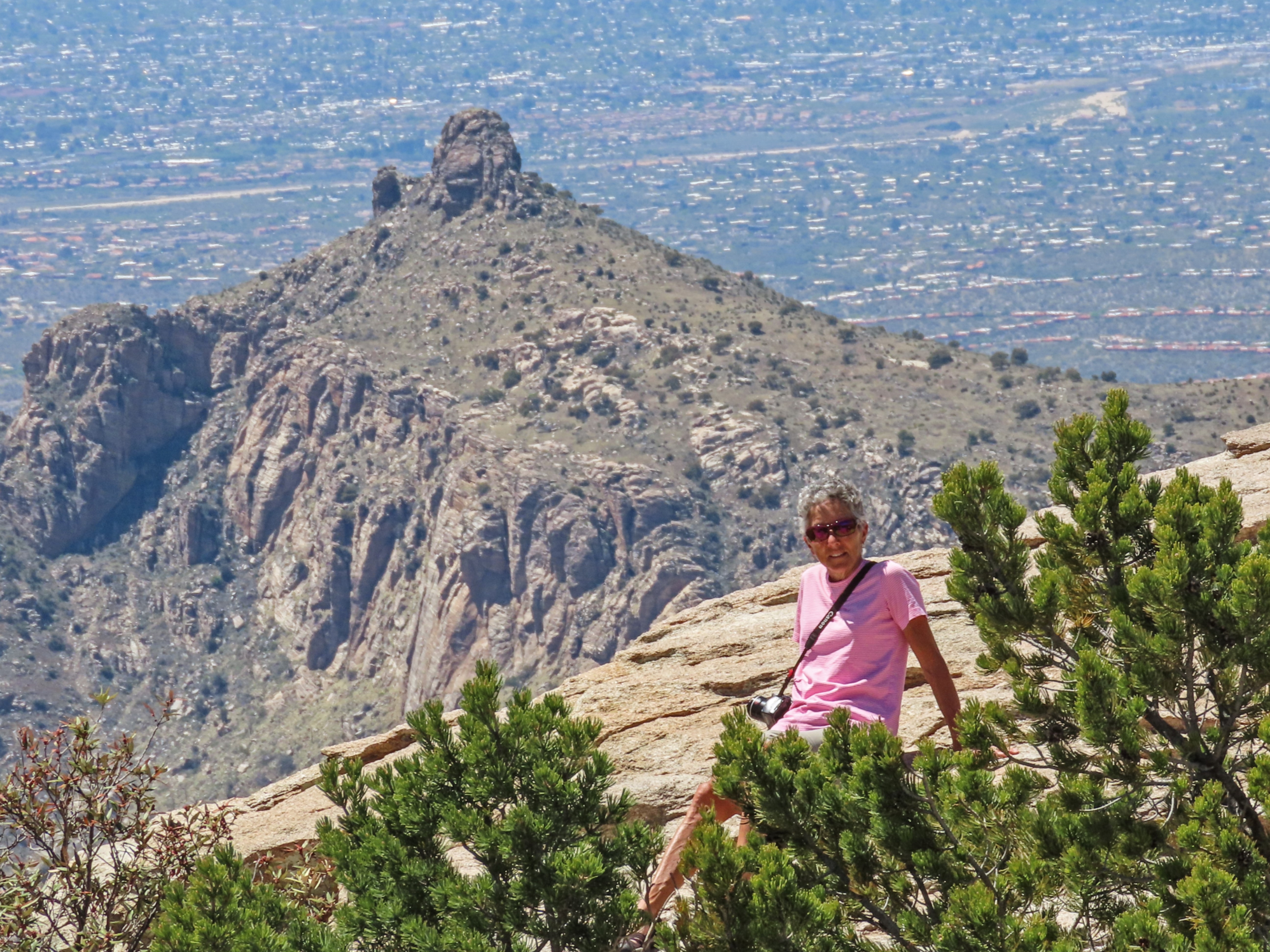
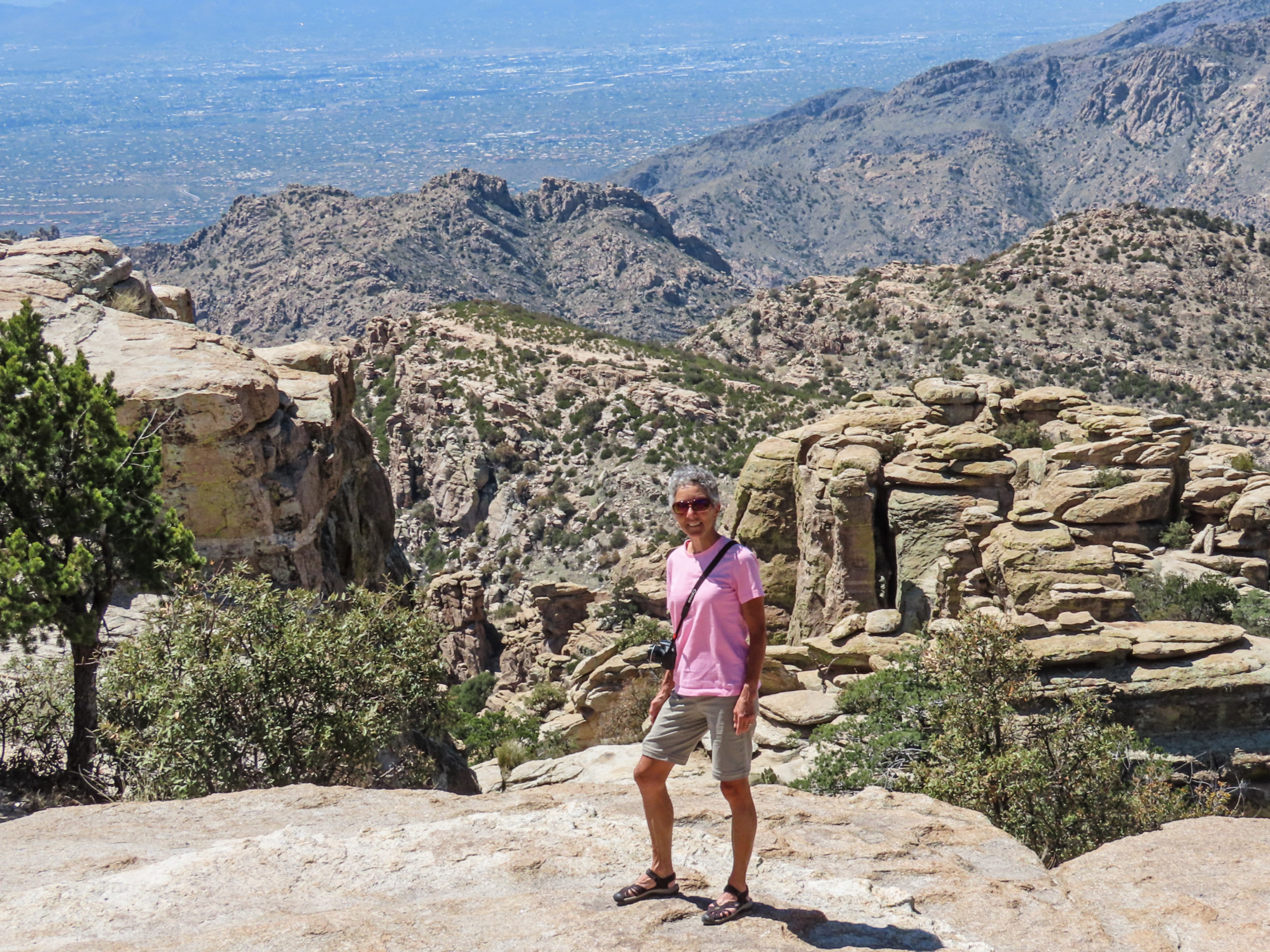
At Windy Point, I just had to get out and mingle with these giants.  Numerous other visitors populated this stopping point, clambering up rocky promontories for pictures and posing for selfies.  I enjoyed the same views and poses from safer flat rocks.  And there was no mistaking the refreshing breezes that cooled the higher air.

Molly at Windy Point Mt Lemmon 1 Molly at Windy Point Mt Lemmon 2Rich at Windy Point Mt Lemmon

A pool of cyclists congregated at this vista as well.  The byway is a popular challenge for cyclists, and by this point the intrepid athletes had already climbed 18 miles and 3,600 feet.  We would continue to see bicycles all the way up and down the mountain.  Never once did we wish ourselves in their seat!

Near the summit, we continued on past Summerhaven and beyond the ski hill to reach the very end of the road and a trail head.  Those last few cliff hanging miles justified the 10 mph speed limit.

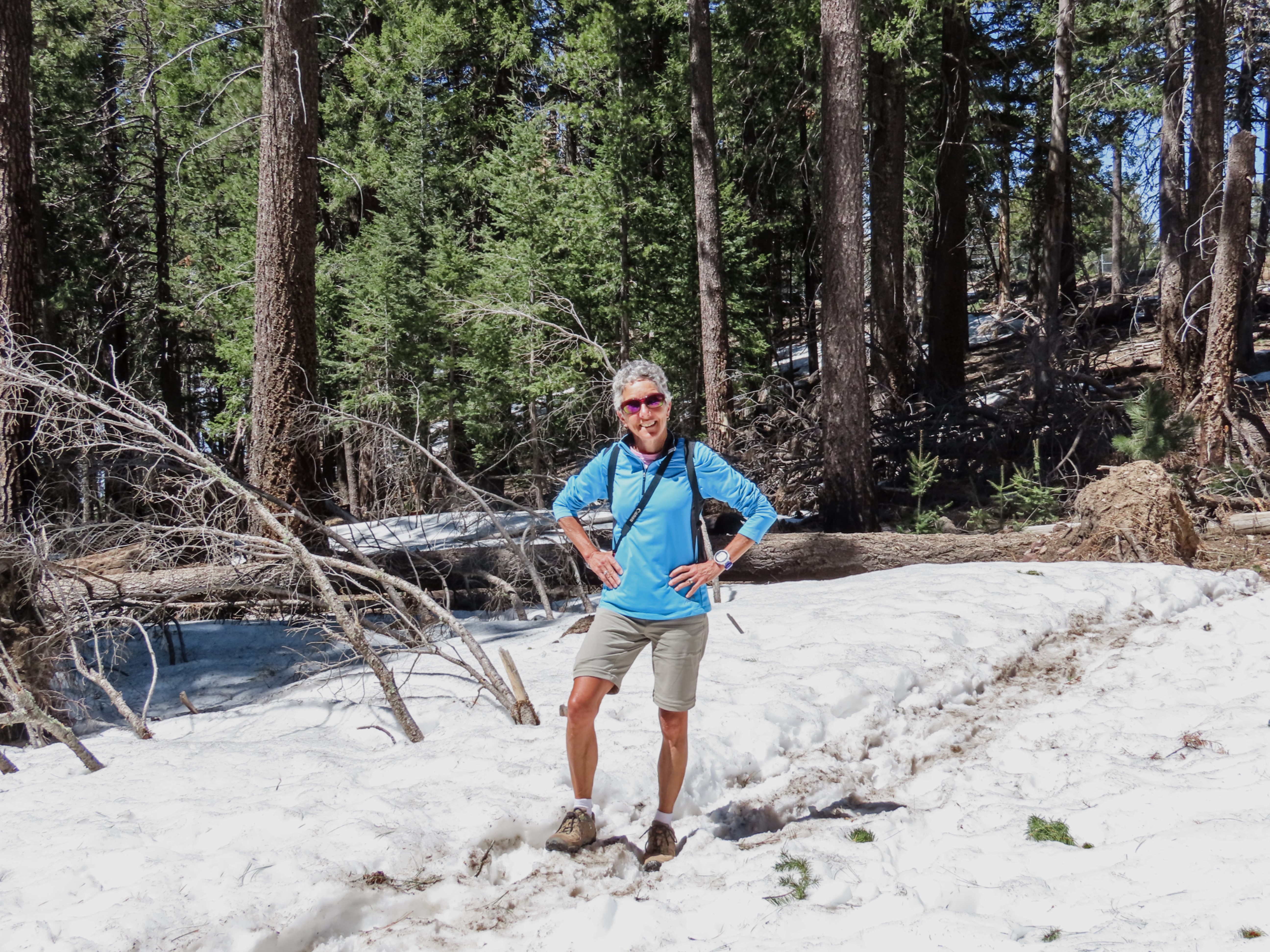
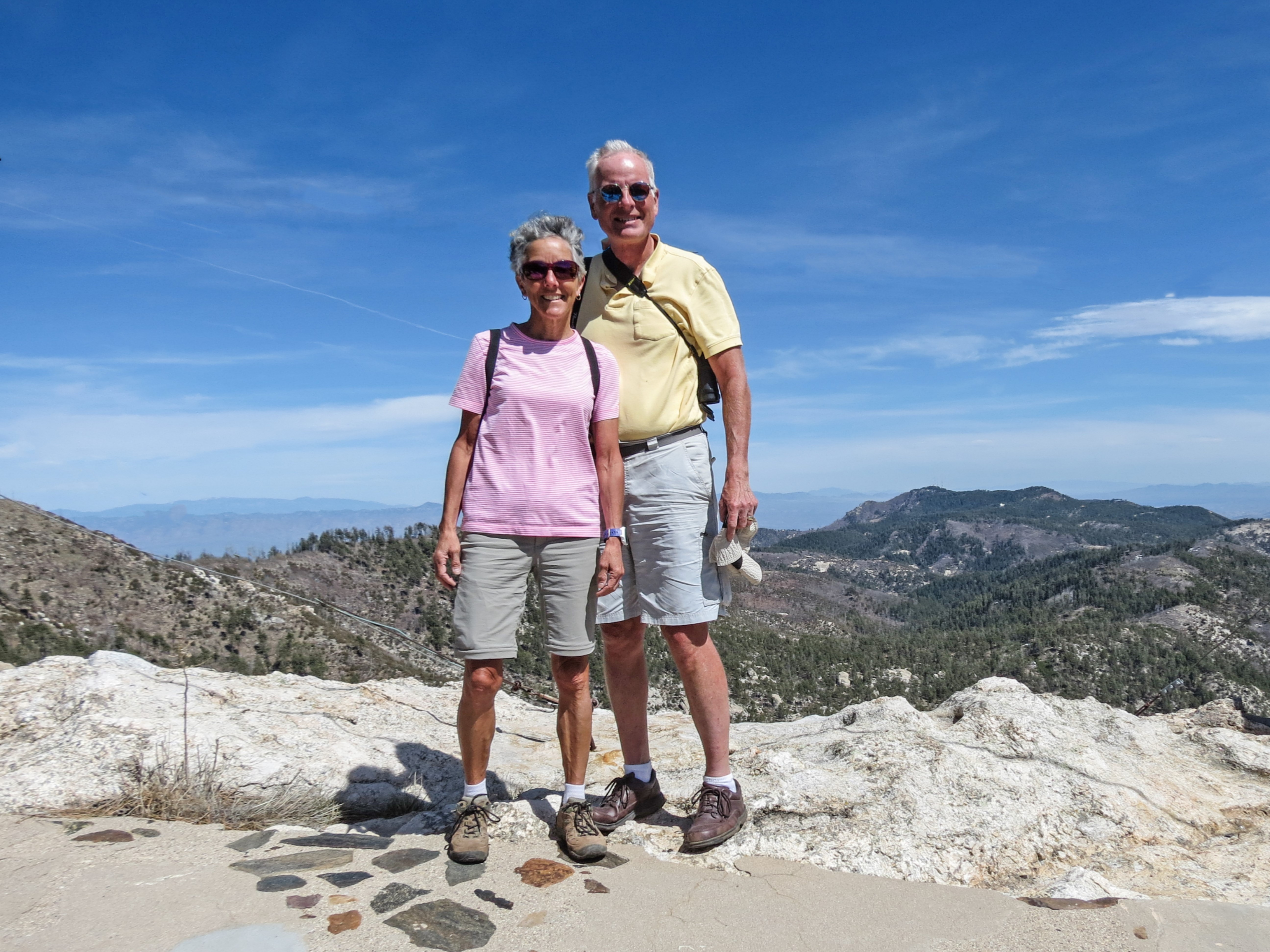
Itching to get out and experience the mountain up close, I insisted on a hike.  Sylvia was right, the car thermometer registered 64 degrees, and we each donned an extra layer before setting off.  Left over snow was not confined to the ski hill, as we traversed thick patches on our trek.  We felt right at home in the pine forest.

Molly hiking in snow Mt Lemmon

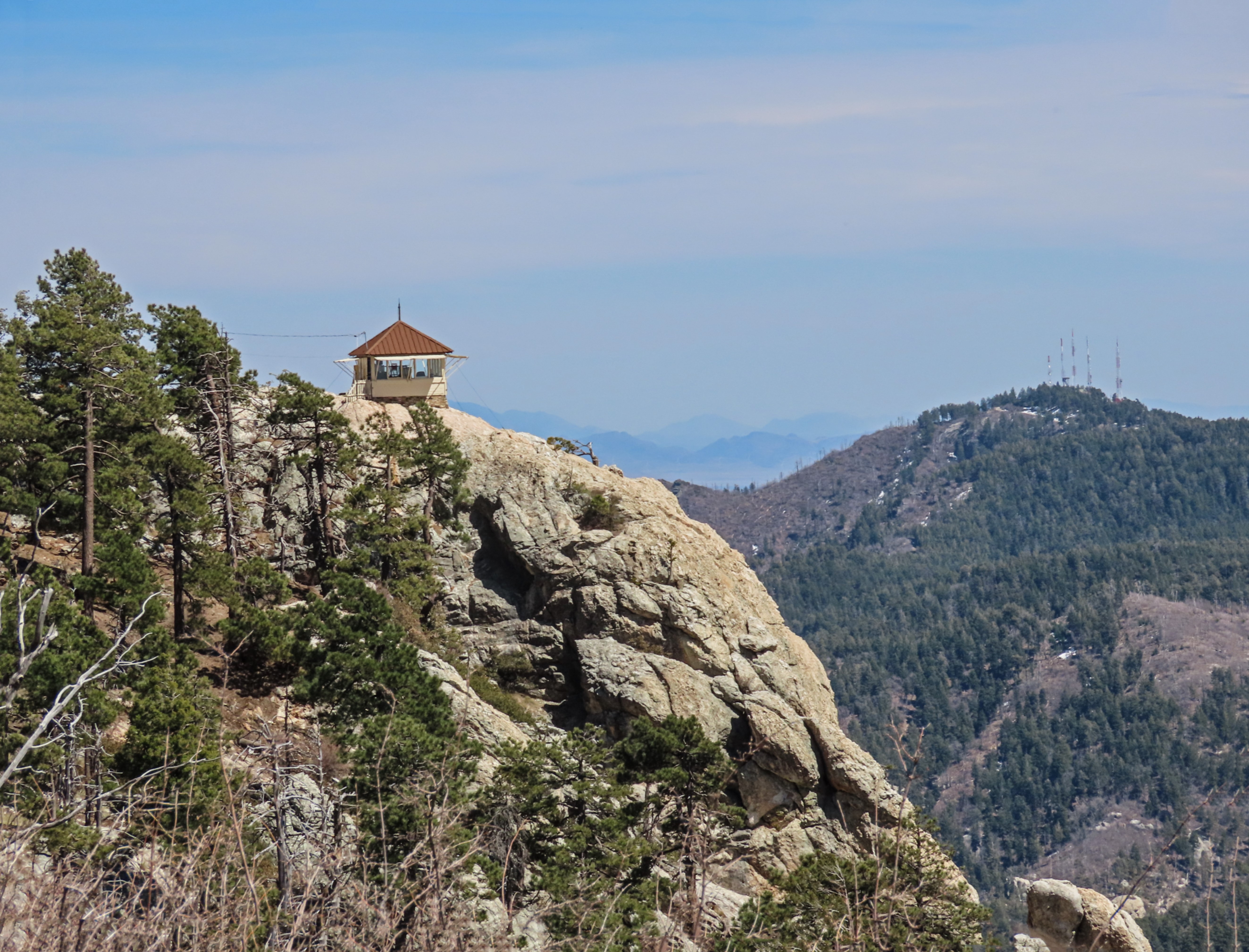
We noticed the lookout tower in the distance, but it took a fellow hiker to entice us down another path to take in its views.  The wind whipped around us as we stood on the rocky promontory.

Mt Lemmon Lookout Molly and Rich Mt Lemmon Lookout 1 Molly and Rich Mt Lemmon Lookout 2

The trip back down the mountain let us view the whole scene in reverse.  Cyclists continued to struggle up and whiz down, even as the afternoon waned.  The temperature rose in reverse proportion to our elevation, but we had successfully missed the peak heat of the day.  Instead we had a delightful Minnesota type day, chilling out on the mountain.

Life with a Birder

The plan was to go hiking.  We were going to Madera Canyon, in the Santa Rita Mountains south of Tucson.  Even though it’s a birding destination, Rich assured me he was there to hike with me.  But there were caveats.  We had to stay near the flowing river.  Making our way up the canyon, I wasn’t allowed on the Nature Trail that ventured away from the water.  (This was the desert, after all, and birds flock to water.)

Medera Canyon

Reaching the top trailhead, we headed up the Carrie Nation Trail.  Yes, it followed a stream.  I tried to ignore the huffing and puffing behind me as I forged upward on the trail.  And then I heard it.  “I think I’m nearing my limit.”  He didn’t say he was done yet, so I kept going.

A young woman came down the trail toward us, and hoping to prolong this hike I pumped her for information.  How steep was it beyond here?  The news was reassuring.  But then she said the magic words.  “I just saw an Elegant Trogon.  He loves the sycamore trees, just above here.”

Suddenly Rich’s legs gained new strength.  He strode purposefully past me with a burst of energy.  He was on a mission.  I could barely keep up.

The Elegant Trogon has been in Rich’s sights for two years now.  The brilliant tropical bird’s range only barely reaches into far southern Arizona, Medera Canyon included.  Last year’s visit to this canyon was too early in the season and proved fruitless.  Last week’s visit was better timing, but also came up empty.  This trail is not where the bird had been sighted.  Rich wasn’t even looking for it.  But he smelled victory.

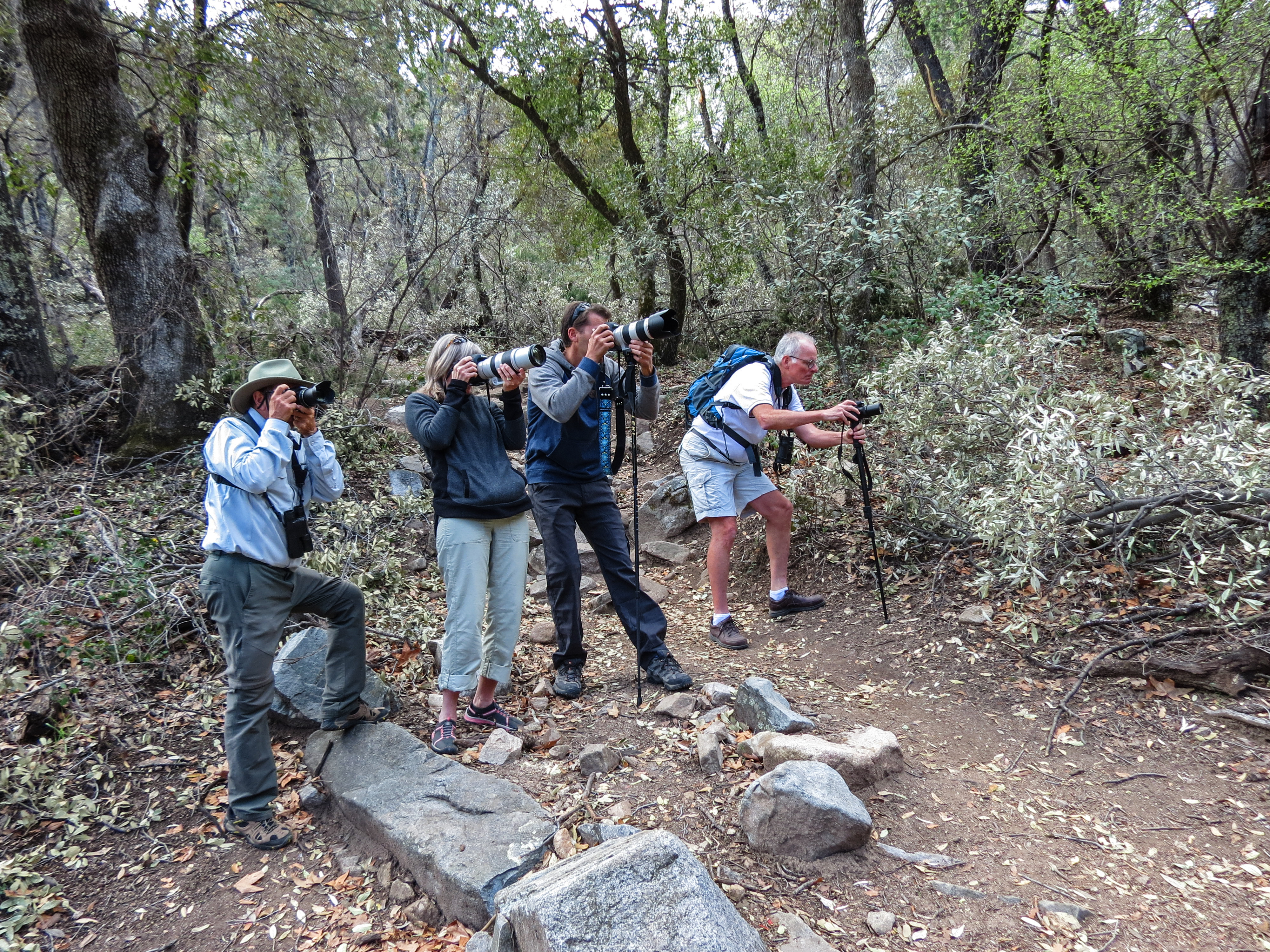
We soon ran into a handful of other birders toting cameras with obscenely long lenses.  They had already seen and photographed the elusive bird, and were hoping for another glimpse, more photographs.  Rich eagerly joined the little enclave, whispering, pointing, gesticulating and searching.  I did my best to melt into the background.  To remain silent and motionless, lest I spook the very bird they sought.

Tiring of the hushed drama, I left them to their hunt and continued up the trail.  We were here to hike, remember?  The trail petered out sooner than I expected, so I reluctantly turned around.  I found Rich and the pack further downstream than where I had left them.  But they didn’t notice me.  All cameras were trained on The Bird.

Birders photographing Elegant Trogon Rich photographing Elegant Trogon

Lenses pointed and shutters clicked incessantly.  Arms stretch out and fingers silently pointed when the bird moved.  Photographers shifted accordingly.  New vantage points, more photographs.  And still I was blind to the subject that took over the souls of these intrepid birders.  All I saw was trees and leaves.

The hunt slowed temporarily and Rich took in the fact that I was there.  “Have you seen it?” he asked excitedly.  I shook my head.  I didn’t even know what the bird looked like.

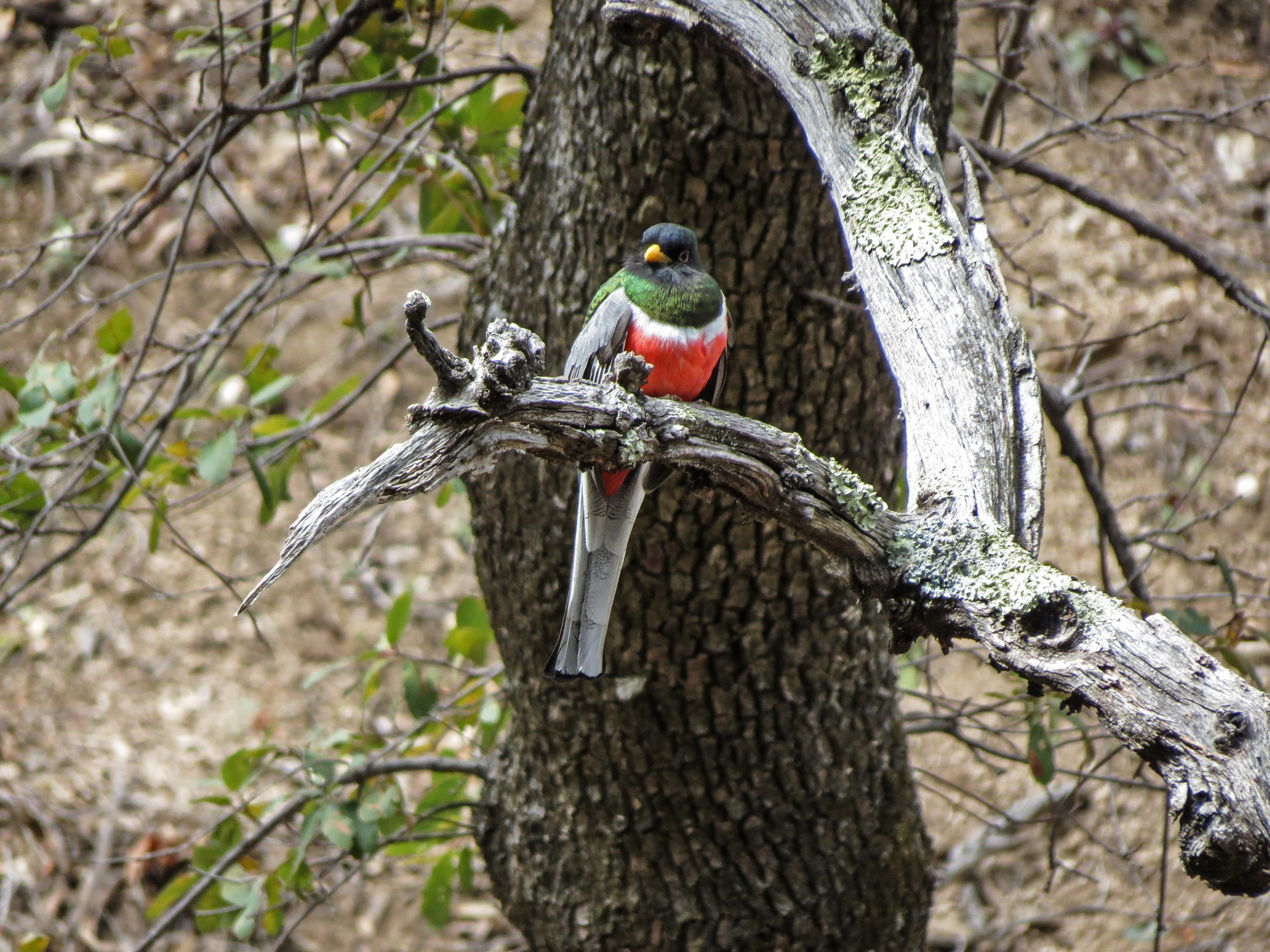
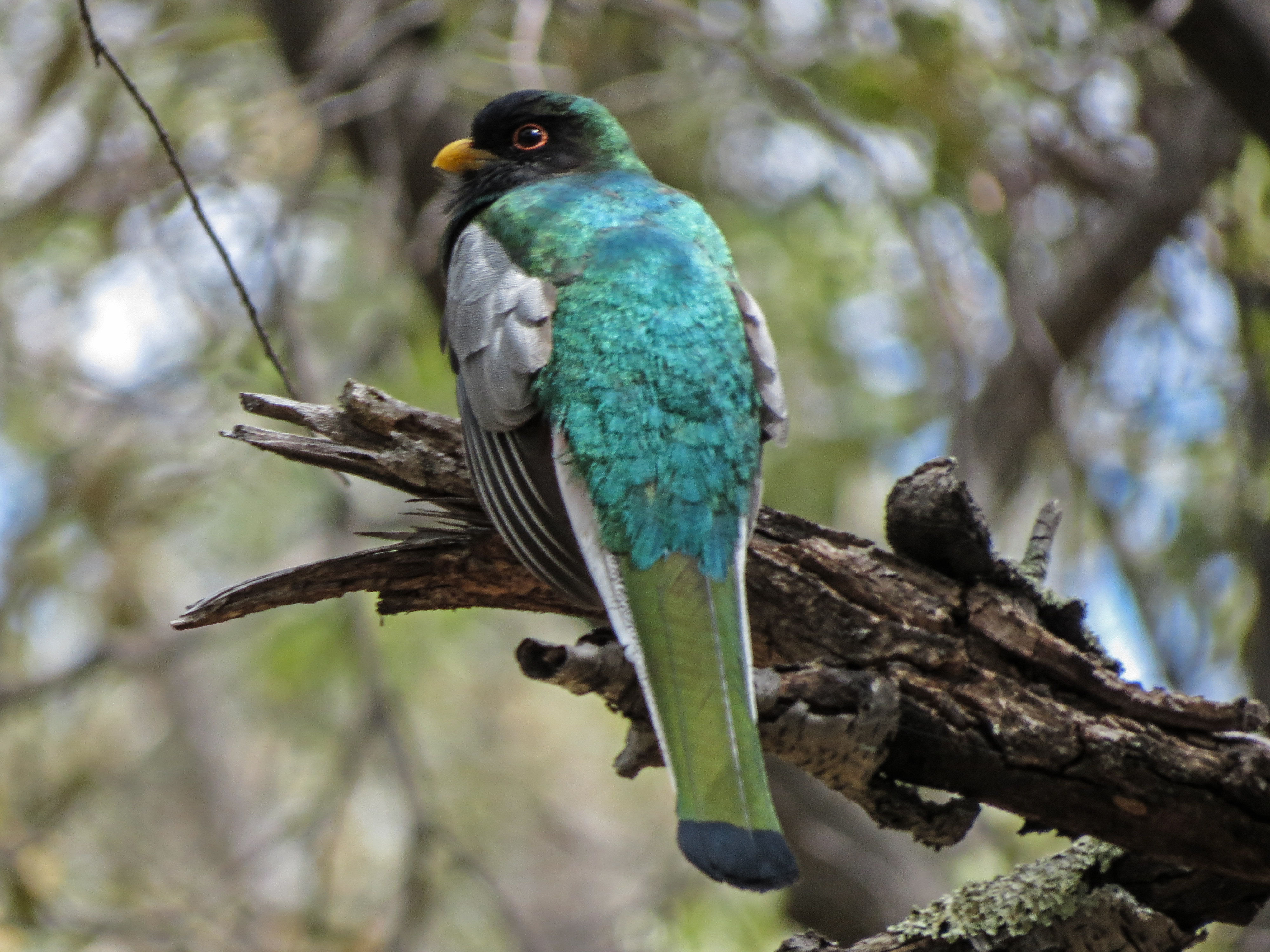
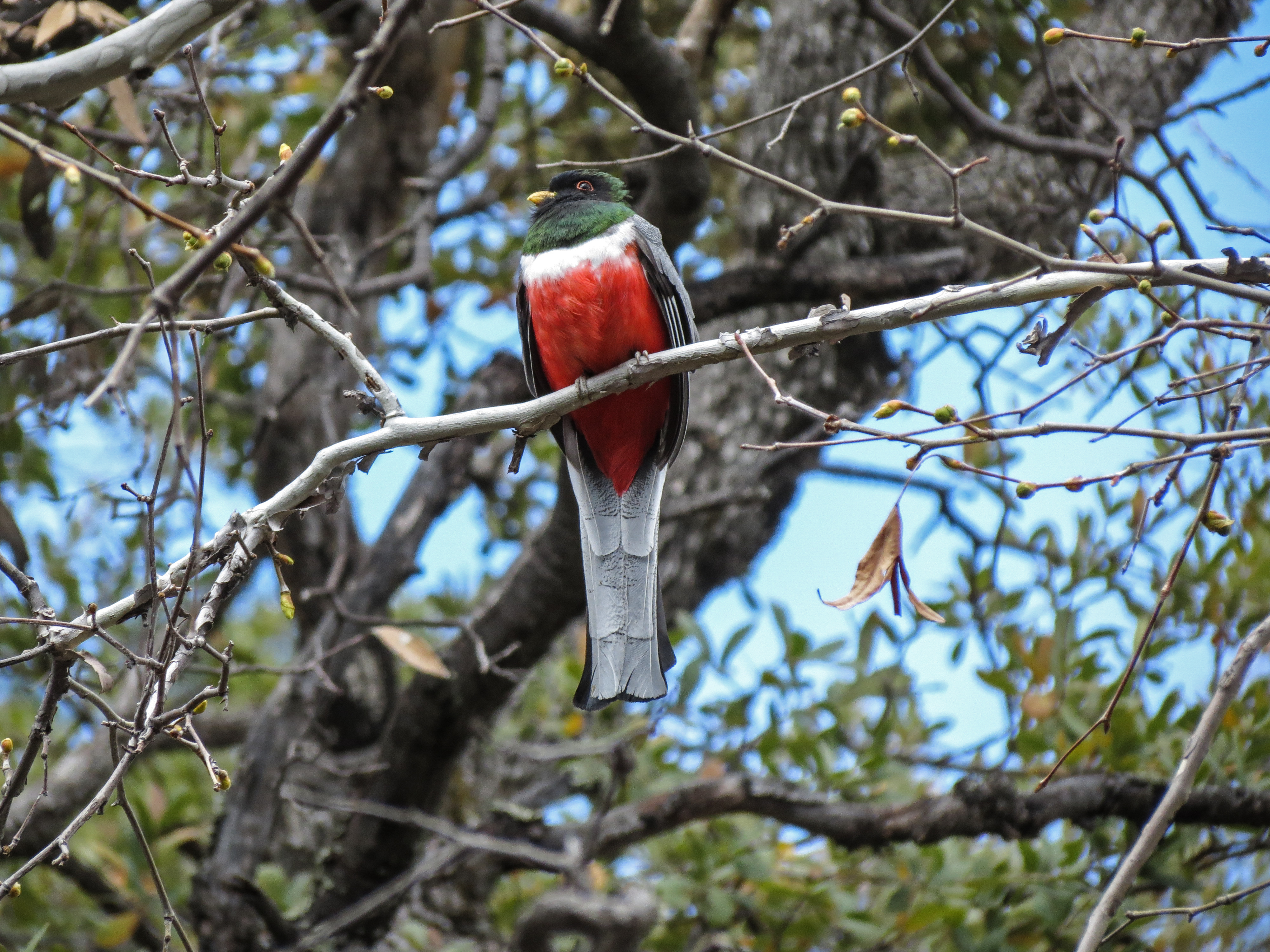
With hundreds of images already safely saved to the memory disks on their cameras, Rich and the photographers eased up a bit.  Rich pointed out the bird, and I finally focused in on its brilliant red breast, the luminescent green glow of the feathers on its back.  Despite my firm stand that I am not a birder, would never be a birder, I couldn’t help but appreciate the beauty of this particular specimen.

The solitary bird toyed with these camera toting devotees all the way back down the trail.  He flitted from tree to tree, never too far to disappear from sight.  Even I got the hang of glimpsing the red breast as he took flight and following it to his next perch.

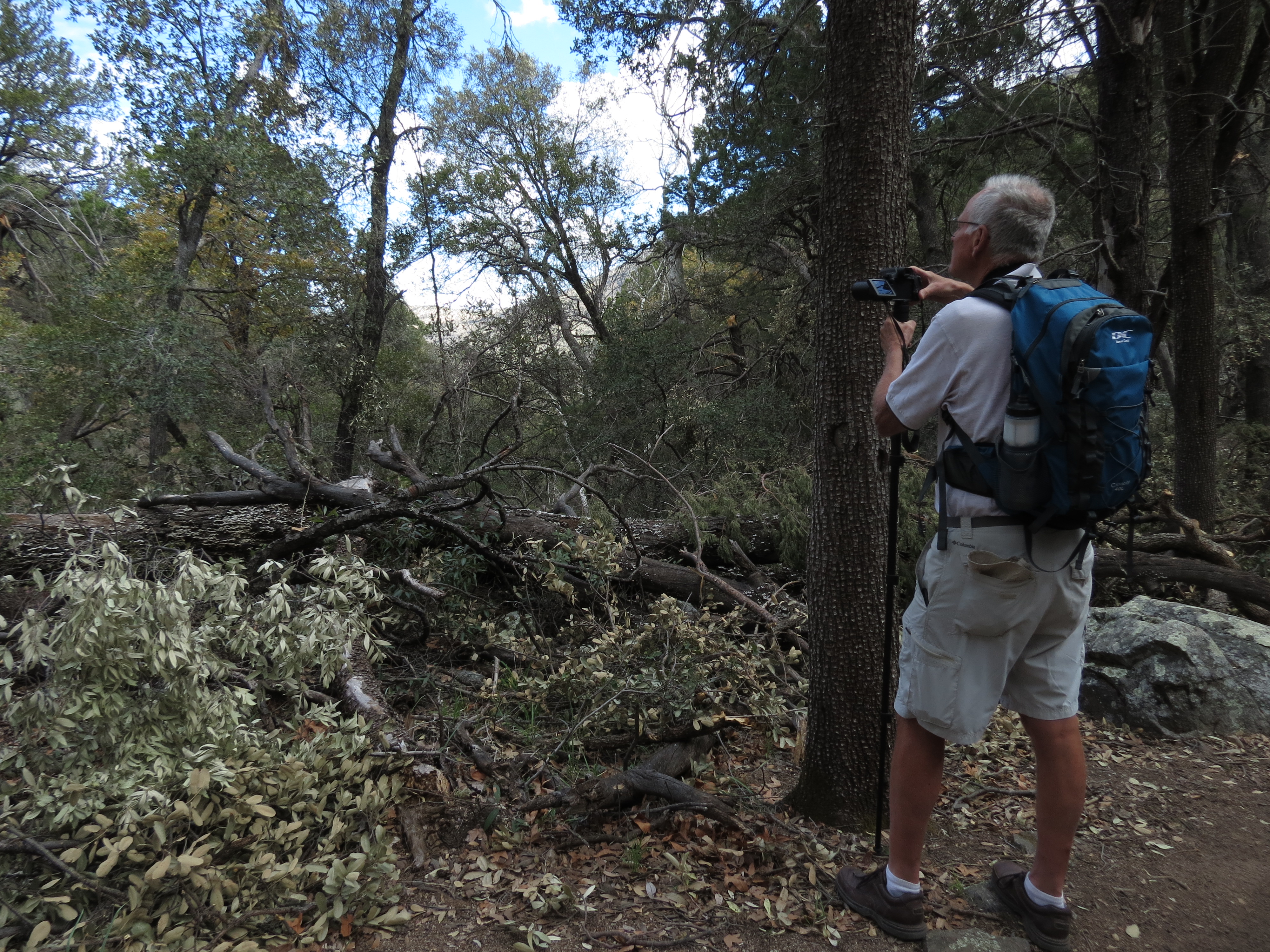
The camaraderie of the little group grew as we inched our way along, and they even drew me into their huddle to make sure I could see the bird’s latest landing.  Having nothing else to do, I succumbed to the impulse to remove the lens cap from my own camera, hunker down to steady my zoom lens and click the shutter.  Oh cool, I got him!  I tried again.  And again.

Elegant Trogon 1 Elegant Trogon 2 Elegant Trogon 3

By the time we reached the trailhead, Rich was bursting with excitement.  And gratitude for my patience while he pursued the Elegant Trogon.  So I seized the opportunity.  “That’s okay.  You can keep birding.  While I take the Nature Trail back down to the car.”  I was happy for him.  But I still had some hiking to do.

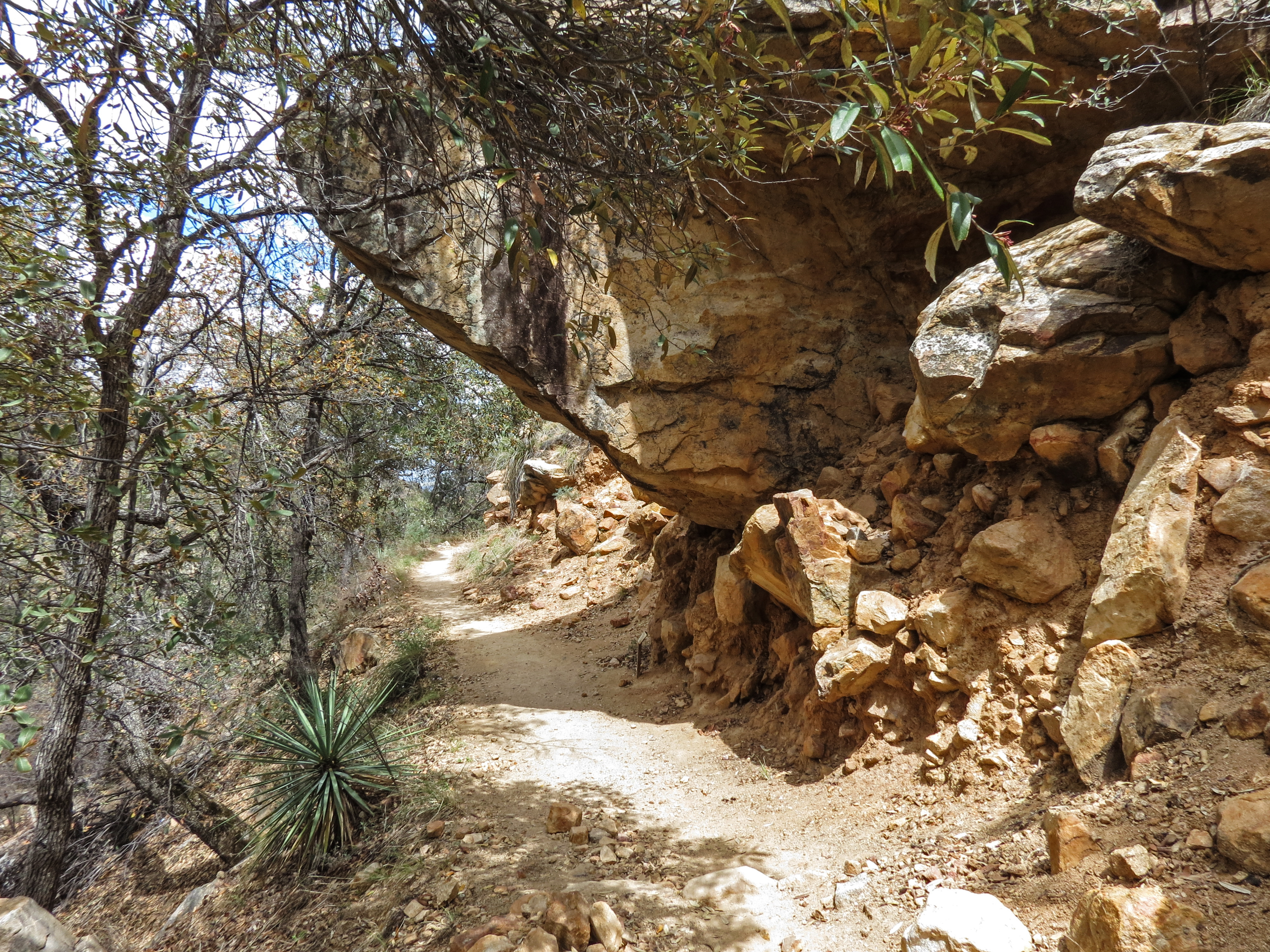
Medera Canyon Nature Trail

The Big Bend Experience

Sometimes the feature attraction is not the star in the theater of travel experiences. In our recent visit to Big Bend National Park I’d have to say it was the entire cast of desert offerings that made the visit memorable.

It started with our accommodations. Choosing to stay just outside the park where there were more amenities, we had reservations in the Terlingua Nights Cabins. Situated in the desert dust, the little sleeping rooms were just that. We had electricity, a mini fridge and barely enough room to walk around the double bed in our pristine minimalist room. We shared the bathhouse and an outdoor living area with a fire pit with our cabin neighbors.

Terlingua Nights Cabins

Our Cabin at Terlinqua Nights

It was 93 degrees when we arrived, with a brisk wind sweeping through the grounds. By evening, it was comfortable to sit out on our porch to read. It felt like the desert.

The revitalized ghost town of Terlingua lay a few miles down the road. Driving over to search for dinner options, we surveyed some of the competing lodgings – tents, tepees, a pastel “Easter” motel and shacks dotted the dry countryside. Hardly your typical National Park tourist environs. We stumbled on a humble eating establishment and settled into the last two seats out on the shaded patio. The slow service suited the warm air and we lingered over our Tex-Mex meals while chatting with nearby diners.

The long bench on the porch of the Trading Company was reputed to be the place to watch the sunset play out on the distant mountains. I insisted we do just that.

Sunset from the Trading Company porch

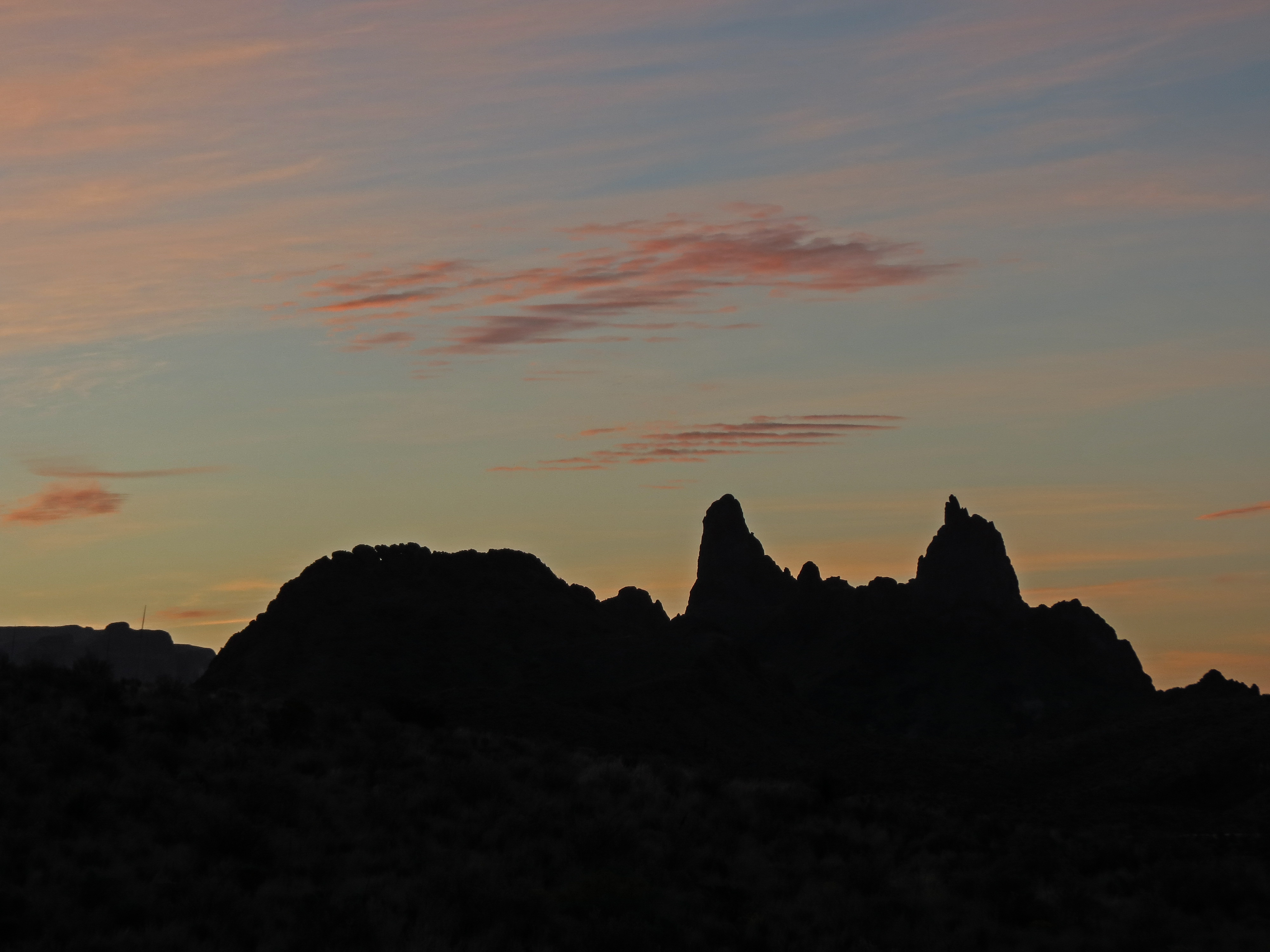
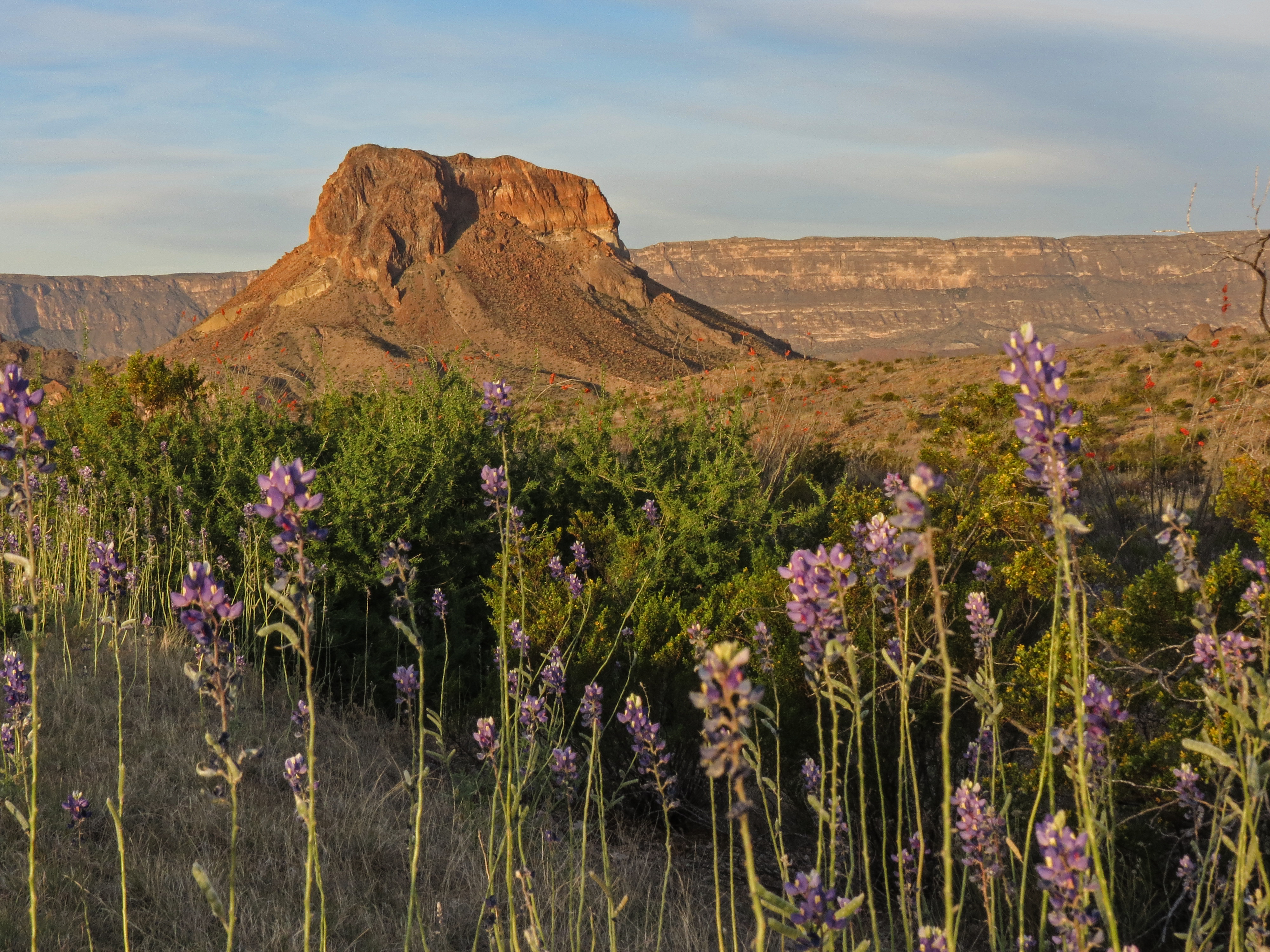
We left our little cabin well before dawn in order to watch the sunrise in the park. We didn’t count on a rough dirt road to reach our chosen scenic location, and decided to detour on the paved but still-slow road. The Mule Ears rock formation materialized in time to stop for the sun’s arrival. Finally having light to see our environs, we took in the bluebonnets blooming on the roadside – uniquely tall and stringy, compared to their short, dense Hill Country cousins.

Sunrise behind the Mule Ears Big Bend Bluebonnets

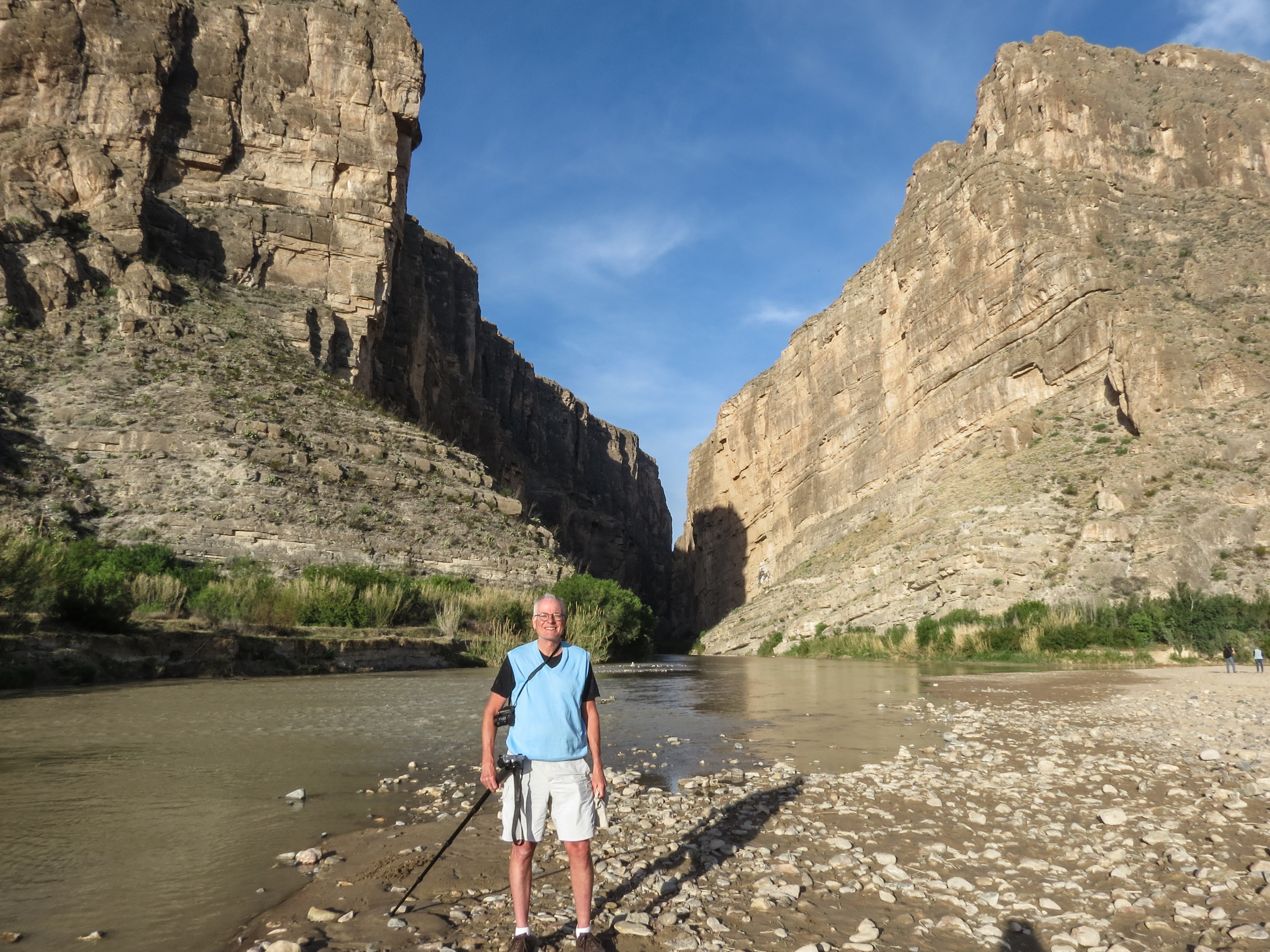
Our destination was Santa Elena Canyon. A short walk took us to the Rio Grande and a view of the entrance to the canyon. But the best part was the hike into the canyon. Crossing a narrow flow of water from a side stream, we followed a well-worn path with switchbacks up the edge of the canyon wall. The trail stretched back into the narrow canyon where we could appreciate the river’s handiwork in carving this deep crevice. Nearing the end of the trail, faint musical notes floated through the air. The pipe flute blended naturally with the environment, lending a mystical air to the experience.Rich at Santa Elena CanyonMolly in Santa Elena Canyon

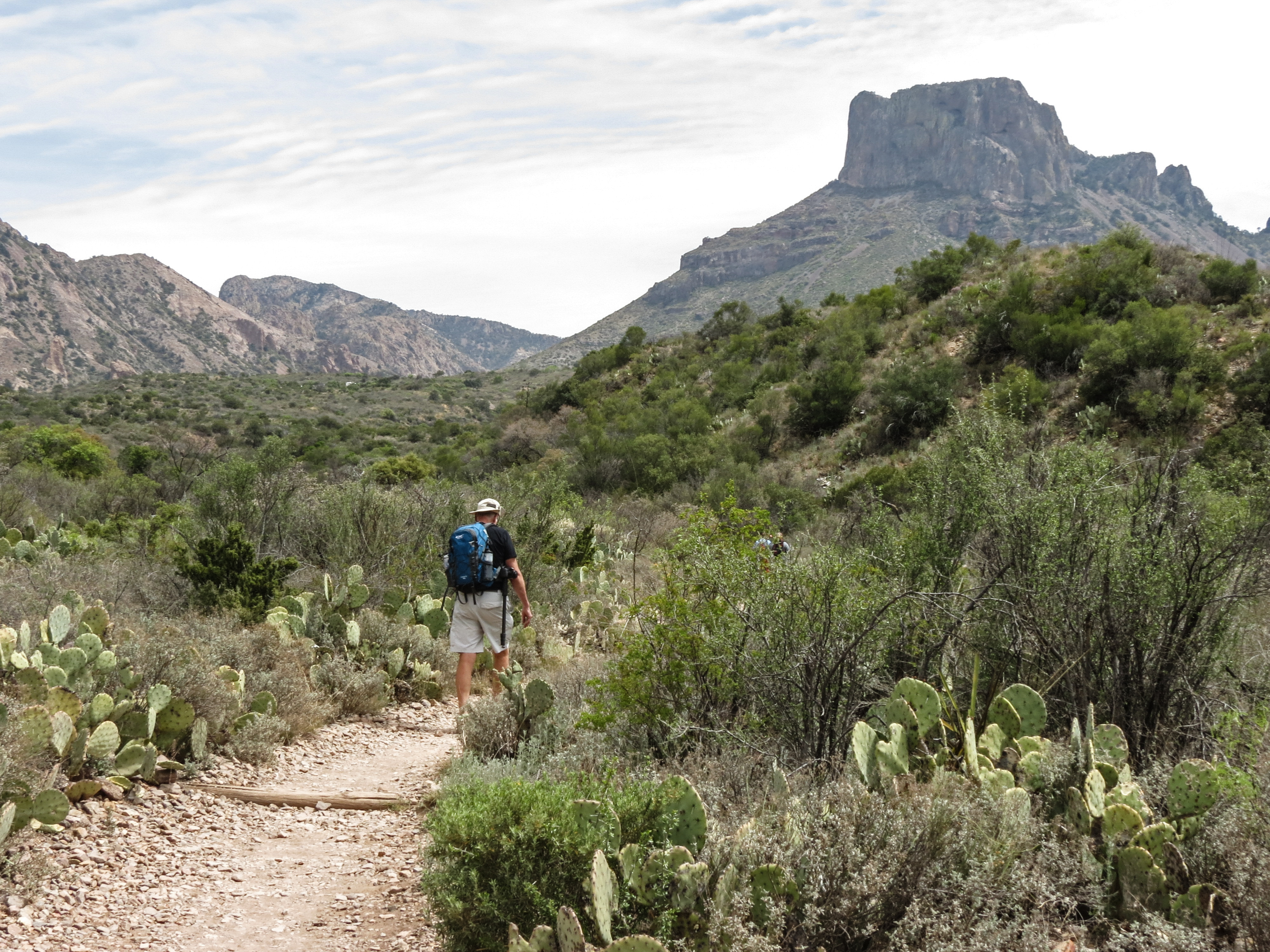
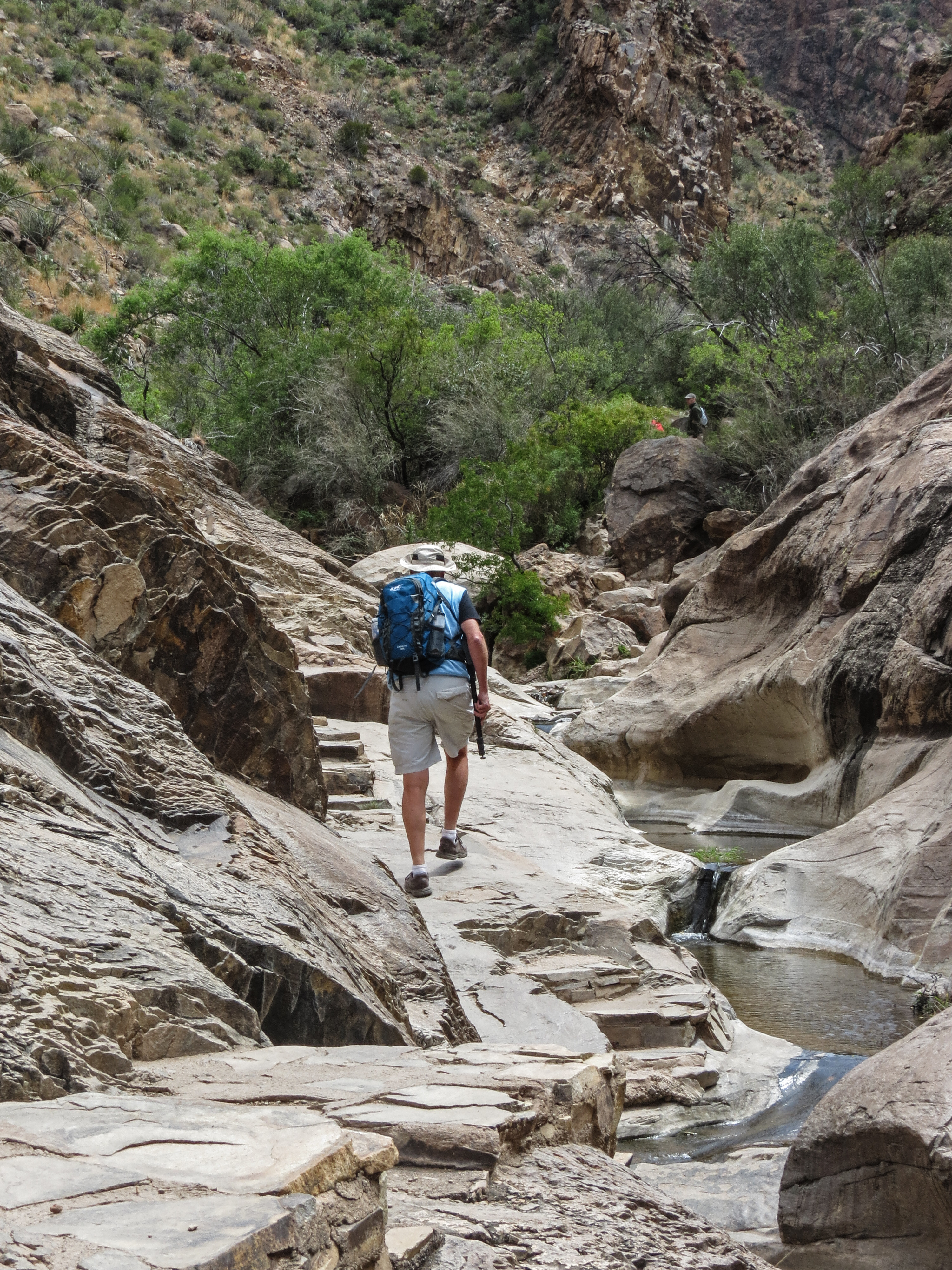
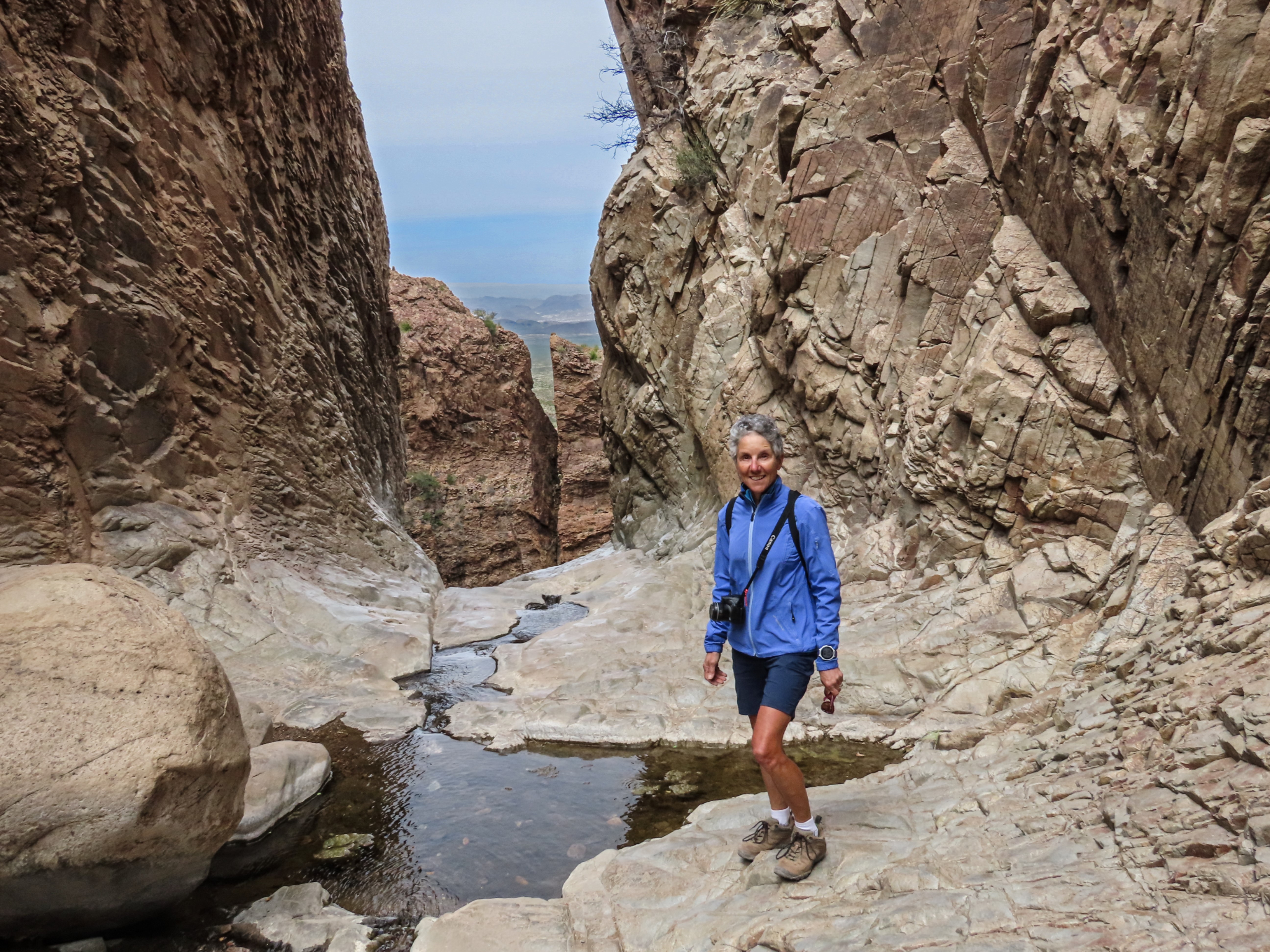
Our second hike of the day was in the Chisos Mountain area in the center of the park. A three-mile walk through scrubby desert environs took us gradually down into the valley. We were at the beginning of the desert bloom, with plentiful wildflowers of all colors and cactus flowers just popping out. The easy path ended with clambering over boulders and hopping across slightly flowing mountain streams. But the end view was worth it – The Window provided an opening with a straight drop below and a narrow crevice beyond. A fierce wind whipped through that window, and I kept well away from the opening.

The Window Hike 1The Window Hike 2Molly at The Window

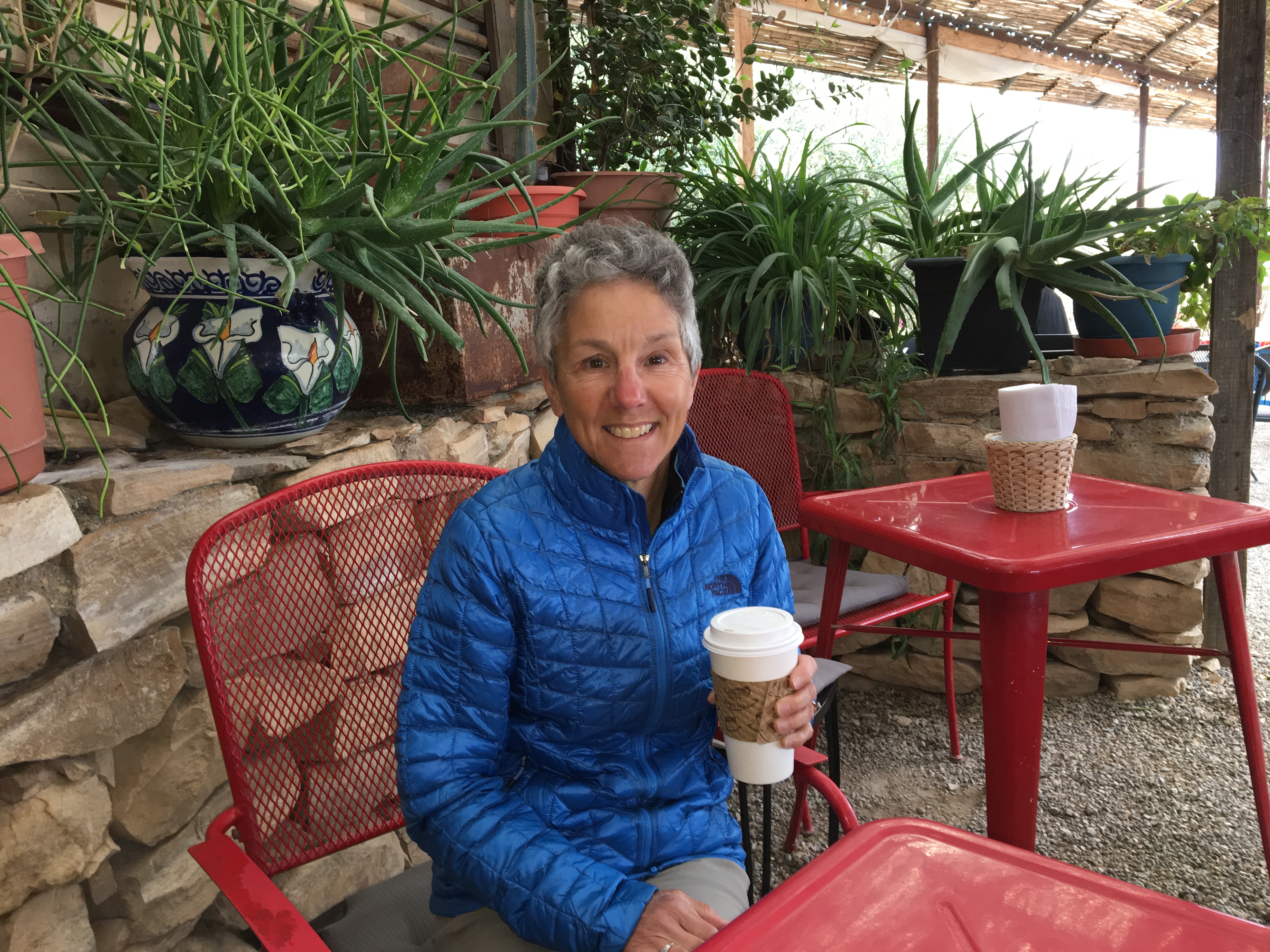
We experienced the extremes of the desert climate when the next day dawned cloudy, super windy and 46 degrees. In no hurry to rush out into the chill we headed back into Terlingua to Espresso Y Poco Mas. Geared for the desert heat, the eclectic café offered only outdoor seating. Settling ourselves at a well sheltered table, we were surprisingly comfortable and delighted with the breakfast tortillas. But we were thankful for our Minnesota clothes stashed in the car!

Molly at Espresso Y Poco Mas

With low expectations we returned to the park under the cold cloud cover. But on our first hike, while scouring the environs for elusive birds (Rich) and wildflowers (Molly) the sun emerged. As the sky cleared, the temperature zoomed to a comfortable warmth.

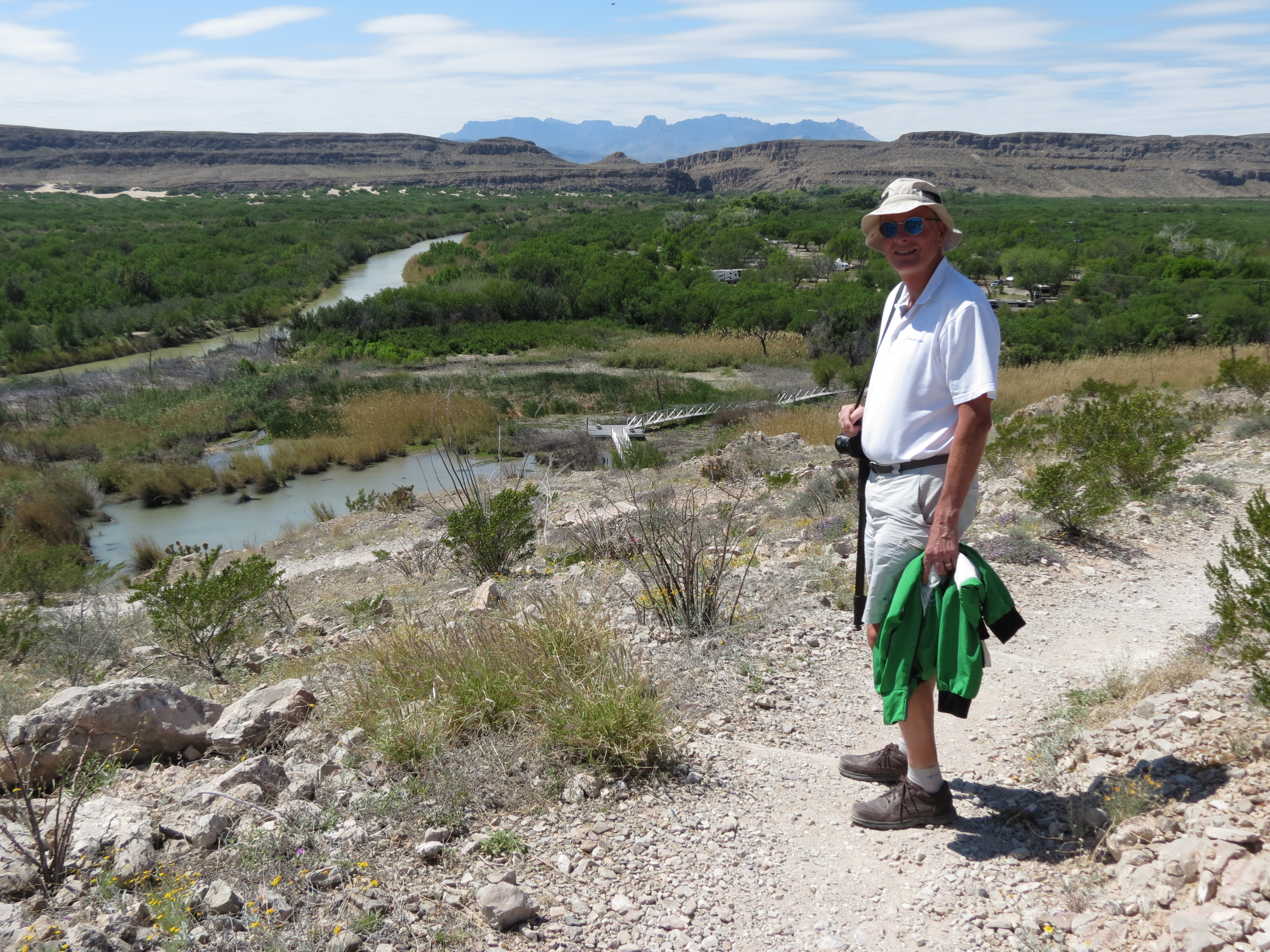
Driving to Rio Grande Village at the far end of the park provided a constant panorama of its nature. We were surrounded by rolling desert land covered in bushy vegetation, surrounded by soaring rocky peaks and mesas. It was majestic in its own way, in sharp contrast to the dense forest and white capped mountains that define National Park in my northern mind. The wilderness experience is all relative. By the time we arrived, I regretted forgetting my swim suit to soak in the hot springs. It just didn’t enter my mind that morning. Instead, we walked the local nature trail where we watched nutria at play in the pond, and climbed to a view of the Rio Grande.

Rich on Rio Grande Nature Trail

We capped our visit with dinner at the popular Starlight Theater restaurant.  We lucked out that night, getting in without the normal 1.5 hour wait to take in the western décor among patrons clad in cowboy hats and listen to the local guitar playing singer.

I’ve decided on one word to describe the overall experience – Quirky.  How often do you frequent a former ghost town? Consider a tiny sleeping cabin to be among the best of the lodgings? Hike in winter jacket, mittens and hat, and remove them all within an hour? Explore a narrow canyon and wide-open desert land? Big Bend with its Terlingua neighbor was all that and more.