What a difference a week makes

Our last day in the Canadian Rockies. It meant retracing our route back down the Icefields Parkway to Banff for our final night. Just one week since we journeyed north, but already there was change.

The timing of this trip was no accident. It had to fit between Erik’s graduation and starting his new job. But it also coincided with our philosophy of traveling in the shoulder or off-season. There are a few drawbacks to be sure, but the advantages suit our style. It means avoiding crowds and having places to ourselves. It’s simpler, less stressful and more economical.

The main barrier on this trip was the reduced access to hiking trails. Many were still closed due to snow, and more than once we had to change plans on the fly when faced with weather conditions. Today was a prime example. On reaching our chosen trail head, not only could we see that the hike started in the snow, but hikers preparing to leave were outfitted with gear and clothing we clearly did not have. Good sign that we should seek a different trail at a lower elevation. But fortunately, the area is filled with alternate options.  We were not able to summit peaks or access some passes.  Wildflowers were only just beginning to bloom, temperatures were chilly to cold at times, and some areas had yet to green up. But early spring conditions have their own appeal.

On the flip side, we rarely shared trails with anyone. Major sites had only a handful of visitors. Restaurants greeted us eagerly and offered prime tables with views. Innkeepers were still fresh with the season opening and offered lower rates. And the volume of RVs and tour buses on the roads was easily tolerable.

Our return route gave us a taste of high season. We traveled on a Saturday, and visitors abounded in each turnout and viewpoint. Reaching Johnston Canyons which we visited practically by ourselves the previous Saturday (granted it was the day that snowed), we were astounded to see cars, trucks and RVs spilling out of the ample parking lots onto both sides of the road! If we weren’t convinced of our early season strategy by then, that sealed it.

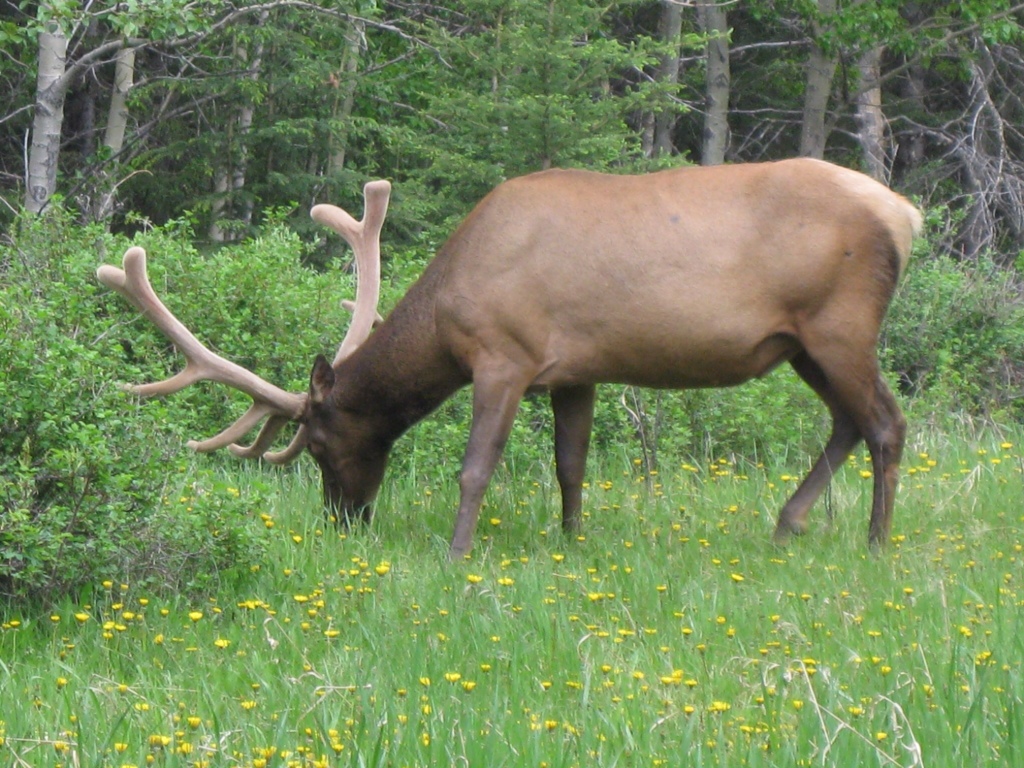
We also found previously ice bound lakes to be opening up. And wildlife was in great evidence. We got our first close up look at elk with huge racks, at two different spots along the road.
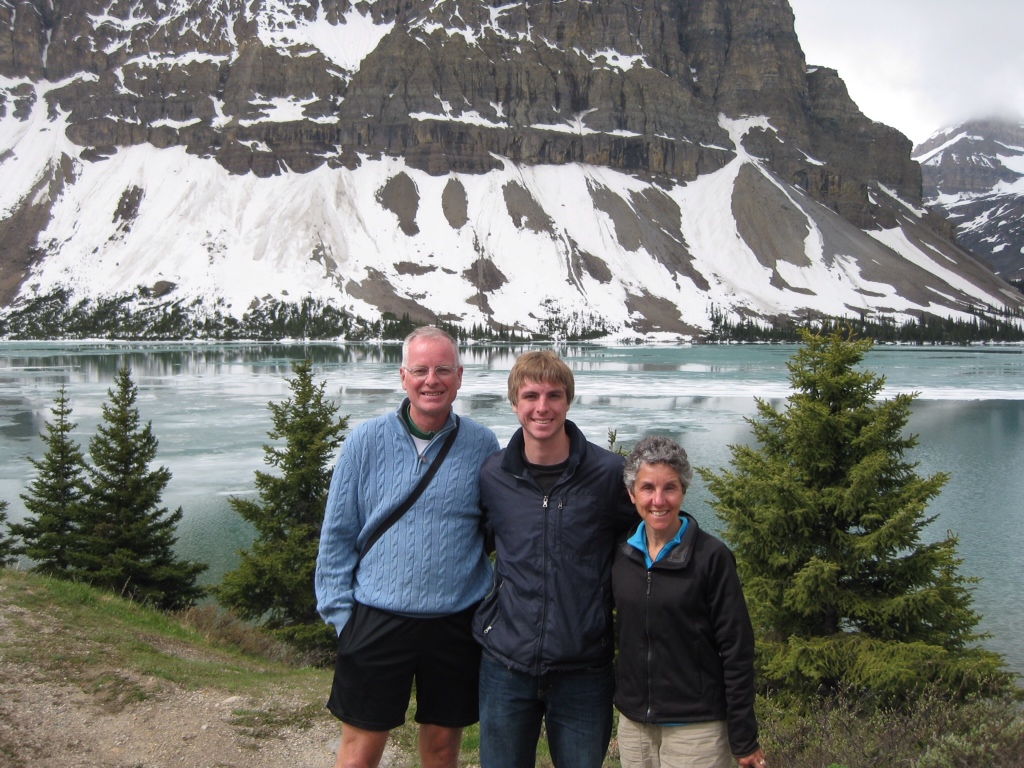
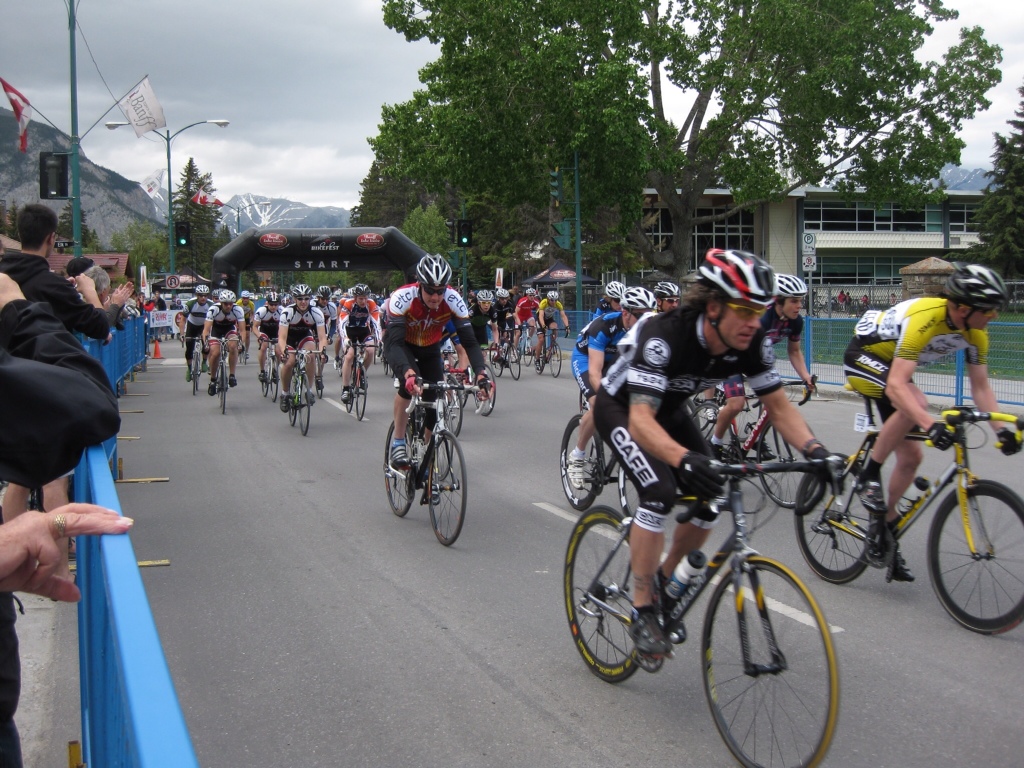
Banff was teaming with activity when we arrived. The source was the annual Banff National Park Bike Fest, and that day they were holding criterium races, on a 1 km loop around the main streets of town. We’d never seen such events before, and with the help of a local who explained the rules to us, we joined the spectators lining the route and enjoyed the excitement of the races.  It was a fun and unexpected way to end our trip.

We’re sticking with our strategy.  We picked the right week.

Tour de Pepin

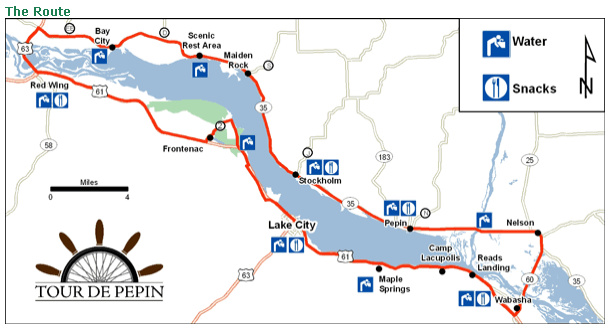
“You cycled all the way around Lake Pepin?” was the astonished reaction. Yes, and we had a great time doing it!  The Tour de Pepin is just that – a 72 mile cycling tour (not race) around the famed widening in the Mississippi River that is known as Lake Pepin.  The ride provided prolific panoramic views of the lake, charming historic towns, impressive river bluffs, and beautiful spring flowers along the route.  In a word, scenic. And we had a gloriously sunny day on which to enjoy the whole experience.

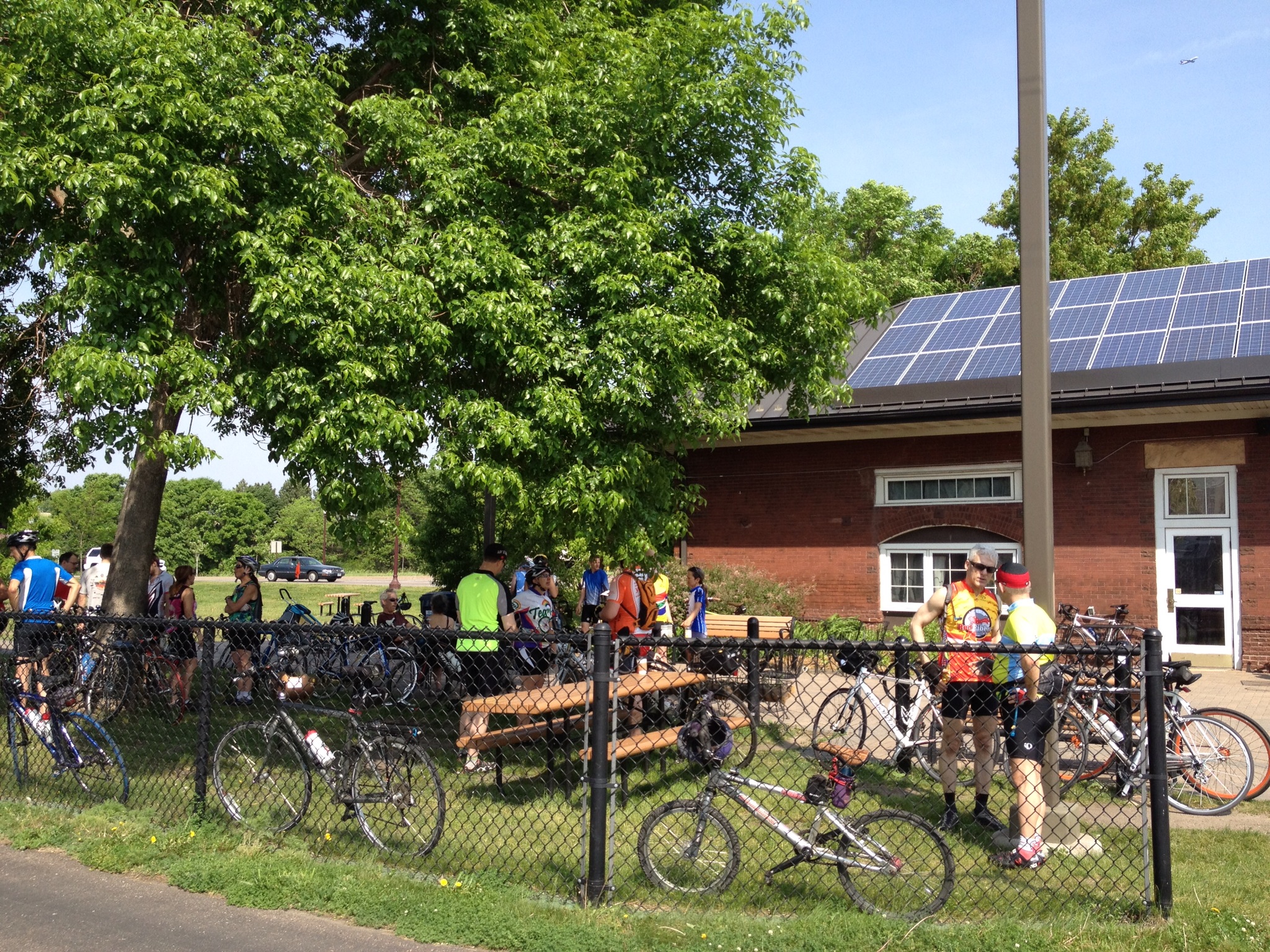
Coming from a background of running marathons, I had to readjust my expectations in terms of event logistics for a cycling tour.  Rather than traveling on a closed course, we shared the local 2-lane highways circling the lake with car traffic.  However, my skepticism was quickly allayed, finding generous shoulders on nearly the whole route, which provided a comfortable margin for cyclists.  Instead of rushing through water stops for only enough time to sip without choking, we took advantage of the rest stops to dismount, wiggle any stiffness out of our bodies, refill our water bottles, grab a snack and chat with other cyclists.  Socializing was half the fun!  There were no mile markers to chart our progress, but the route was well signed and mileage was posted at each rest stop.  Besides, we had our Garmin GPS watches to tell us how far we’d come.  The one odd dissimilarity came at the end. While we didn’t expect roaring crowds or need a finisher’s medal, we did feel a sense of let-down finding only a few leftover refreshments on a small table dwarfed by the event awning – and not a single person.  Granted, we had been well supported along the way, but we were looking forward to that final opportunity to exchange experiences with other participants.  Perhaps such is the nature of tours, where the two-hour starting window narrows the flow of finishers down to a dribble.

The course had a reasonable number of hills on the Wisconsin side.  But there was a distinct stand-out.  Just one look at the elevations of the course makes it obvious…

Personally, I think this view overstates the case – yes, it was long and steep, but it was very doable, even for a new cyclist like myself.  But it does make for a dramatic story!  And best of all, the rest stop on the other side featured free ice cream cones, courtesy of Flat Pennies Ice Cream in Bay City.  That was the best ice cream we’ve ever tasted!

For cyclists wanting the scenery, but not the full distance, there are 32-mile and 50-mile routes available.  They also feature a ride on the Pearl of the Lake Paddlewheel boat across Lake Pepin back to the start.  And I’m sure it’s no coincidence that they don’t have to do that monster hill.  But they miss out on the ice cream.

Minneapolis – Most Bikeable City

As part of the commentary on yesterday’s National Bike to Work Day, I heard a report on NPR announcing that Minneapolis came out #1 in a new ranking of the Most Bikeable Cities.  Curious to learn more, I went on to find out about the method behind the scoring process.  I discovered that it was developed by Walk Score, which describes itself as “the only site that makes it easy for apartment renters and homebuyers to find neighborhoods where they can drive less and live more.”  They launched Bike Score just this week, and currently report details on on the top 10 most bikeable cities in the US, and the 10 largest cities in Canada.  The primary factors in computing the score are the availability of bike infrastructure (lanes and trails), the hilliness of the area, amenities and road connectivity, and the number of bike commuters, then weighted by population density.

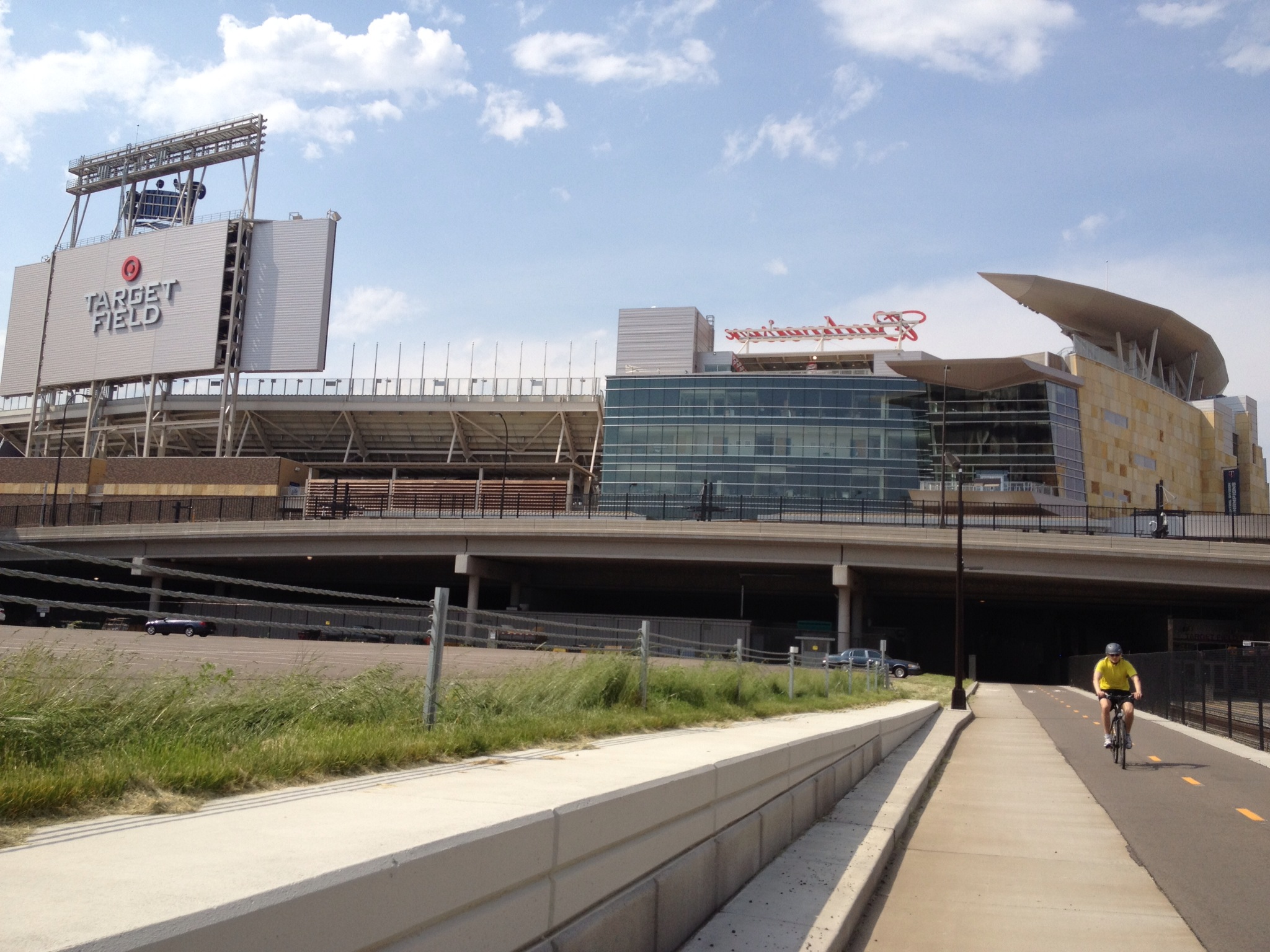
As it happened, I had planned a bike route through the Minneapolis area this morning to meet a friend for coffee at the Depot Coffeehouse in Hopkins.  That location is a magnet for cyclists, as it is situated at the juncture of three urban bike trails.  So I decided to do a bit of exploring myself on my return route.  I had never cycled into Minneapolis proper on the Cedar Lake Commuter Trail, and I was amazed at the extensive trail system with numerous spurs into local neighborhoods and how it drew me right across town in the safety of a secluded bike lane.  First I found myself cycling right alongside the base of Target Field, under the superstructure of the stands. Continuing along, I made it all the way to the Mississippi River – back to my old stomping grounds from my lunch-time running days.  From there, access to the West River Parkway and miles of additional bike trails beckoned.  What a delightful surprise – I can’t wait to plan another ride there and beyond.

My limited experiment quickly confirmed the results of the Bike Score, and gave me pride in this metro area for developing such bike-friendly routes.  Bike Score deliberately publishes its criteria, to encourage other cities to invest in these elements to make their environment more attractive to cyclists.  I’m all for it!  I hope other cities in the Northland are checking it out.

Cycling Milestones

I’m trying to ratchet up my cycling miles.  If we’re going to do 70 miles a day for the first 5 days of the Trans-Superior Cycling Tour, I need to keep upping my longest distance.  To date, my max has been 40 miles.  I’ve had my sights set on 50, and decided today was the day.  Beautiful sunny day, no wind, and temps in the high 60’s – perfect!  It was a glorious day to be out cycling, and although I started to feel the curse of the saddle after about 30 miles, and found myself choosing easier gears after 40 miles, overall it was a great ride!  Sort of like marathon training – after while, you are on auto-pilot, and the miles melt away behind you.

The other reason for the push was that we have registered for the Tour de Pepin, a cycling tour around Lake Pepin on June 2.  We intended to do the 50 mile ride, thinking it would be fun to take the paddlewheeler back to the start.  But the best ferry times fill up quickly (lesson learned!), so we defaulted to doing the full 72 mile ride.  Being the overachiever I am, I harbored secret desires to do the full ride anyway, so I’m not too disappointed.

I’ll worry about putting consecutive days of long rides together later. And adding more hill work.  I think I have plenty to keep me challenged until the final test in mid-August.

Cycling progress?

For almost two months now, I have been diligently training.  Cycling 3-4 days a week, with at least one and more often two long rides.  I’m up to 40 miles at a stretch now.  I’ve even worked in some hill training.  It has felt good.  I can feel my strength increasing, my endurance improving and the early pain in my knees has melted away.  I really feel like I’m making progress!  Bring on the Trans-Superior Cycling Tour – I’m going to be good and ready!

Just for fun, I thought I’d check on my overall mileage.  My favorite tracking software, SportTracks, calculates cumulative mileage for my equipment.  So a quick check after today’s ride gave me the answer.  598 miles.  Seriously?  That’s all?  Working the math backwards through my recent rides, I figured out that I hit 500 miles some time during last Tuesday’s ride.  It took me 1.5 months to cycle what we’re planning on doing on a 9-day Tour…  What a blow.

Good thing that Tour isn’t until August.  I think I have more training to do.

Planting the Seed

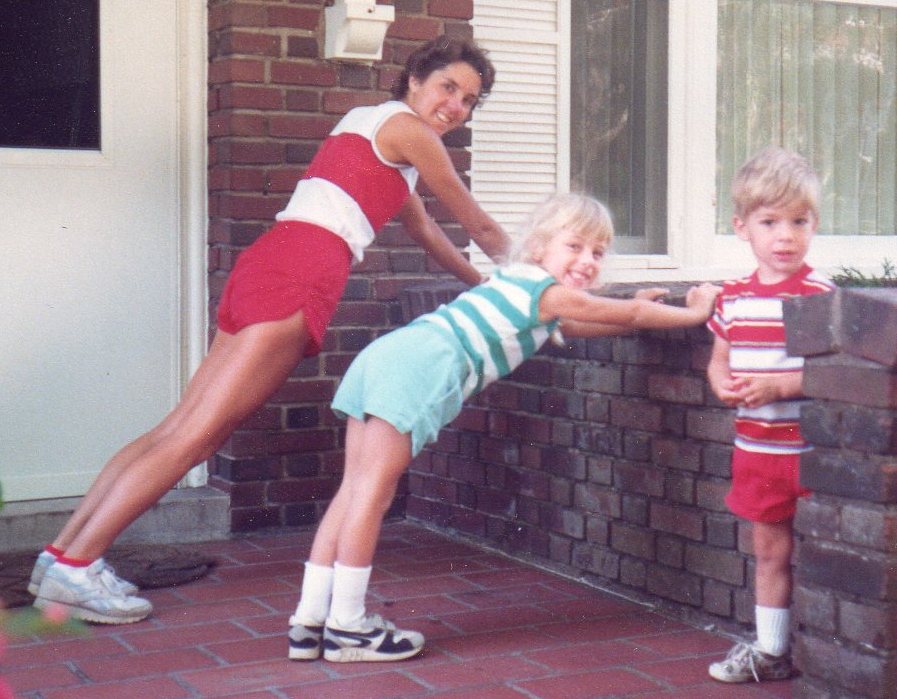
When my children were very little, I took up running to stay in shape.  As in most things I do, I jumped into it wholeheartedly, and was soon hooked on running and entering local races.  When I could, I’d bring the kids along and enter them in the kids’ Fun Runs.  They even humored me when they got older, and joined me in some 10k races.

Time marches on.  Kids grow up and become more independent, and parents have more time.  I moved up to half-marathons and then marathons.  It was Mom’s running obsession, but they were always there to cheer me on.  That was the extent of their involvement, or so I thought.

It wasn’t until they got into college that the seeds started to grow.  One by one, they took up running or cycling.  It wasn’t long before they too were reaching for extreme goals.  My daughter joined my husband and me running Grandma’s Marathon.  Two years later we added my youngest son as well!  Our middle son – always the independent thinker, no running for him, thank you – did the MS150 bike ride and the week-long RAGBRAI bike ride across Iowa.  And that was just the beginning – we have shared numerous races and events since then.

How did we become such an athletic family?  Those seeds must have germinated.

Trans-Superior Cycling Tour Unveiled

This is it, the cause of my sudden attachment to my bicycle, the reason for my forays out into the wind and weather for training, the shift from running to cycling.  It’s the Trans-Superior Tour!

Never heard of it?  Probably because it was my husband Rich’s brainchild.  The route, the idea of spending 9 days cycling together, the challenge, and the custom cycling jersey.  It’s not his first such adventure, but it is mine.  I’m a cycling novice, remember?  But I’m up for it!

I have to admit, his route is rather ingenious.  We wanted to focus on Lake Superior, and many of the best views from the road are on the Western end.  So how to contain the trip to that portion of the lake?  No problem – we’ll just ferry across using Isle Royale as a stop-over!  Not a bad way to get a rest mid-trip and perhaps a few hours of hiking in the wilderness.

So here is the official route.  We start in Duluth, work our way along the South Shore and up the Keweenaw Peninsula, right up to the top at Copper Harbor.  That takes five days and is the most challenging part of the route, with the longest cycling days and the most hills.  From there we ferry across the lake and return along the North Shore to Duluth.

I suspect that whittling down my travel essentials to one set of panniers is going to be one of the trickier aspects of the trip.  However, Rich’s mode of travel involves staying at inns and little motels along the way, so I am spared the need to schlep real gear on this venture.  And I admit I like the idea of reliable shelter, hot showers and real beds.

I have between now and mid-August to be ready for this cycling tour.  I will periodically update my training progress and the finer details of our trip plans during that time.  And if you want the male point of view on this journey, visit Rich’s blog, NorthStarNerd.org.

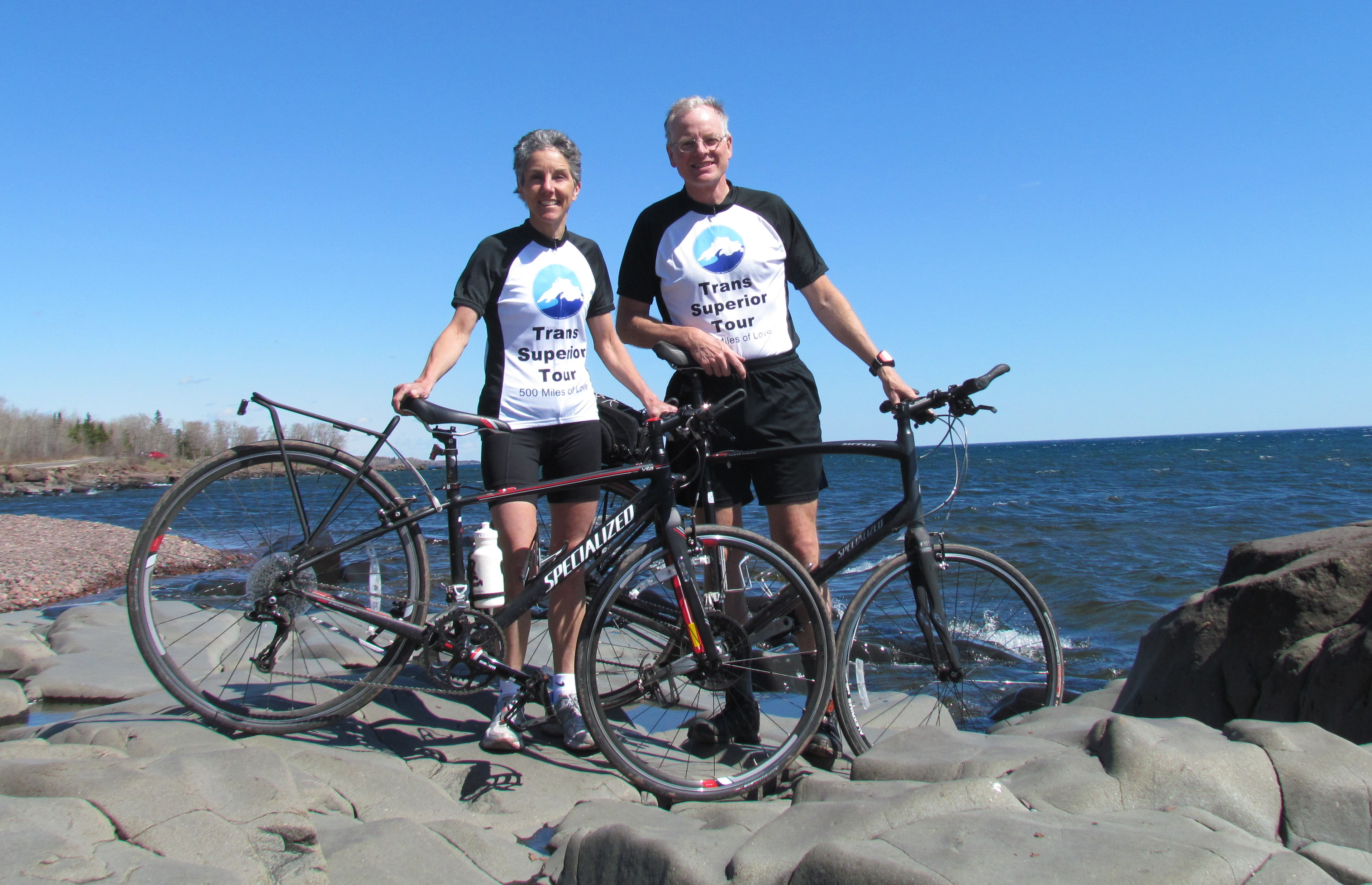
Oh, and did you read the fine print on the jerseys?  That last line reads “500 Miles of Love.”  It has to be, or we wouldn’t be doing this!

Recycling Sports Apparel

I have taken up a new activity – cycling.  That opens up a whole new world of “needs” for workout gear that I’ve never had before, right?  Or does it?  In my efforts to resist the marketing efforts of sportswear gurus and the peer pressure to wear the “right stuff” when I head out on my bike, I have been doing my best to recycle my existing sports clothes.  And I’d say I’m doing quite well!

  • My cross-country ski jackets work beautifully.  No pockets in the back, but they are long in the back, taper higher in front, and are reasonably streamlined.  I have two different weights for varying temperatures and wind.
  • I have a pair of cross-country ski gloves that see little action on the trails because they are just too light.  But they are great for cold weather cycling.
  • Thin wool hiking socks – doubled up they help keep my feet warm on cold rides.
  • Long sleeve running and skiing shirts – they are swell for those cooler days, under my  jacket.  So are the various layers of long underwear I own.
  • Arm warmers, nifty new accessory for last year’s marathons – perfect when paired with a short sleeved top for the early parts of the ride before warming up.
  • Ski club hat – it’s thin enough to fit under my helmet, even with the little tassel on top, and sure keeps my ears warm.
  • Running tights and capris – just what I need for my legs…

Well, okay, there is one piece of cycling apparel that I learned I do need – cycling shorts.  It only took a few longer rides to discover the discomforts of the saddle, and off I went to Erik’s Bike Shop to get properly outfitted with padded shorts.  Sometimes there is no substitute for the real thing.

Map before you run

GPS is great.  But it doesn’t do much for planning routes in new areas, or figuring out where to run or cycle in an unfamiliar city.  That’s where mapping websites come in handy.

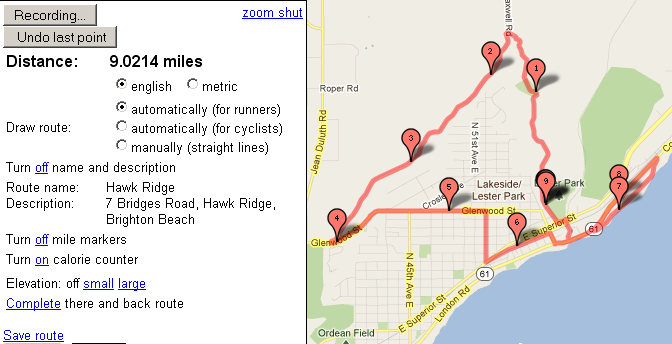
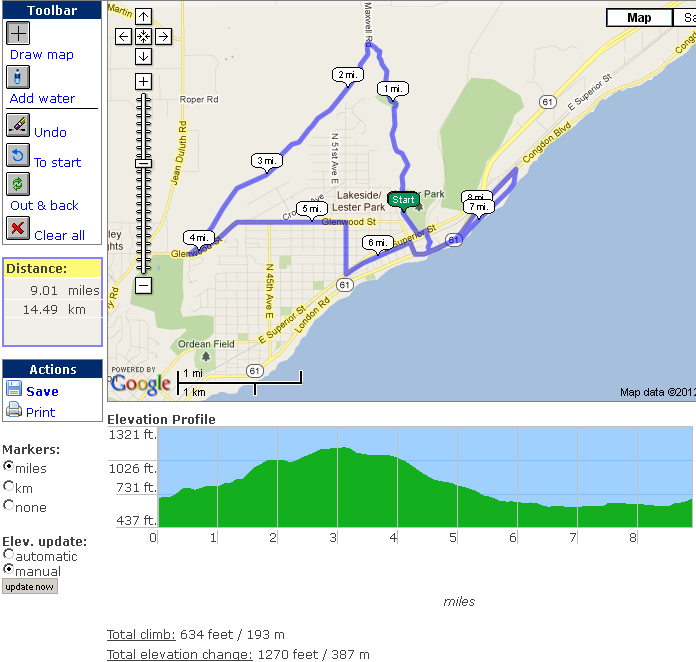
I happen to use the Gmap-Pedometer website.  It’s a handy mapping tool that allows you to click on roads and trails to create a route.  It shows mile or kilometer markers and allows you to “undo” if you want to change a section.  There are several types of maps to choose from, including satellite maps and terrain.  It understands running and cycling paths, and if you just need to get from one spot to another, you can tell it to just draw a straight line.  Sometimes I use all three methods to draw the map I want.  The mileage calculates as you go, and records the final distance.  When you are satisfied with your map, you can save it and bookmark the URL.  Alternately, if you create an account you can name and save your maps there, which I find to be a lot more convenient.  The site also allows you to record your workouts.

USA Track & Field website has similar capabilities.  I find it a bit more tedious for mapping as it only uses straight lines, while gmap-pedometer will automatically follow the curves of a path or road.  However, it does calculate total climb, and present a graph of the elevation profile.  The site also has a database of routes entered by other runners.  You can search for routes in a particular location based on distance, starting point and route rating.

Note the accuracy – each of these examples follows the same route that I ran and captured on my Garmin GPS and SportTracks in my previous post.  The mileage is almost identical.

Check these out to eliminate guesswork and plan your next route!